Tag Archives: Kelsay Books

Political poem: Janet Kenny, ‘Broken’

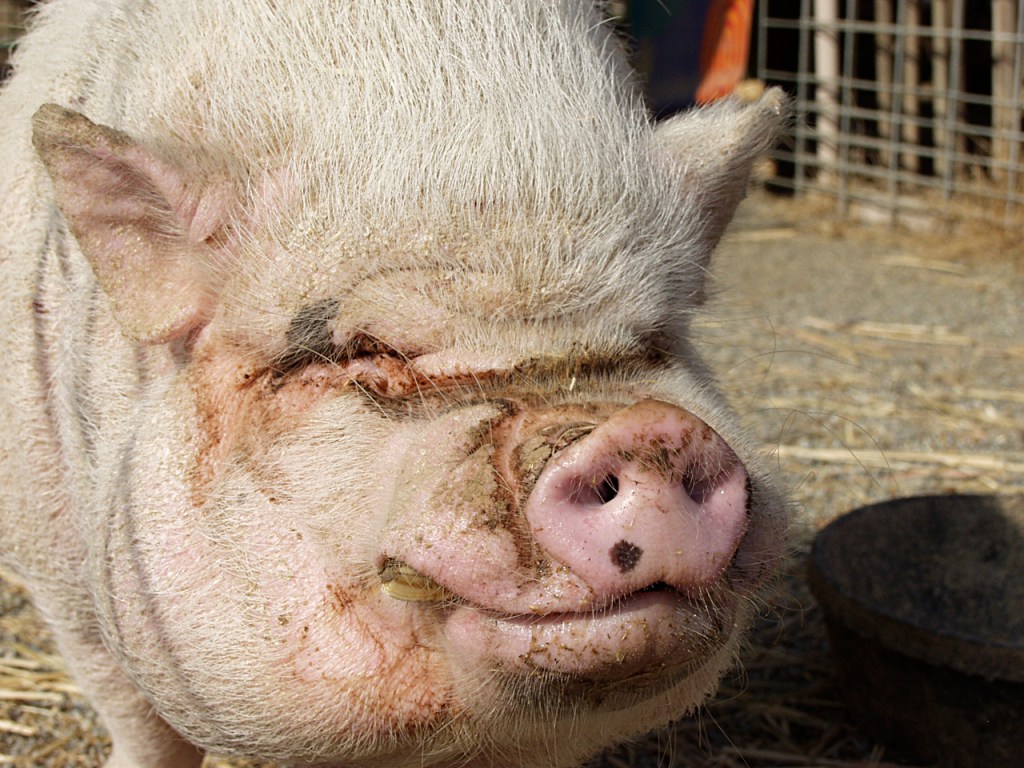
The pig smashed the music
and turned off the sun.
As the pig couldn’t use it
nor should anyone.

O remember the time when the violins played
and the meadows were blooming and we, unafraid
dared to splash in the river and lie in the grass.
But they’re mowing the field now and scattering glass.

The mother in China,
the daughter in Spain,
must learn to design a
new habit again.

The athletes are anxious, the singers are dumb,
the children are fractious and calling for Mum.
Now Dad is in futures and selling his shares
and his foreign computers are yesterday’s wares.

Who let the pig loose
in the garden? and why
have we cooked our own goose?
I await a reply.

*****

This poem was originally published on Facebook. Concerning the trigger for creating it, Janet Kenny writes: “The only event was the world economy being interfered with by the folly of one awful man. One ignorant bully can dismantle the world.”

Janet Kenny left New Zealand to pursue a career as an operatic and concert singer in London, then settled in Sydney, Australia, where she worked in the anti-nuclear movement and jointly compiled, wrote and edited a book about the nuclear industry, Beyond Chernobyl, published by Envirobook in 1993.

Her poems have been published in printed and online journals, including AvatarThe ChimaeraFolly14 by 14Iambs & TrocheesThe Literary ReviewMi PoesiasThe GuardianThe SpectatorThe New FormalistThe Barefoot MuseThe Raintown ReviewThe Shit Creek ReviewSnakeskinLavender ReviewSoundz ineVictorian Violet PressThe Susquehanna Quarterly and Umbrella. Her work is in the collections The Book of Hope and Filled With Breath: 30 sonnets by 30 poets and in the Outer Space anthology, Cambridge University Press. She shared an anthology of bird poems, Passing Through, with Jerry H. Jenkins. She has received three Pushcart nominations.

Her latest book, Whistling in the Dark (2016, Kelsay Books) can be ordered from https://www.amazon.com/Whistling-Dark-Janet-Kenny/dp/1945752092. Her previous book, This Way to the Exit (White Violet Press), can be ordered from http://www.amazon.com/This-Way-Exit-Janet-Kenny/dp/0615615937. You can read several poems from her books at https://janetkenny.netpublish.net/

Photo: “Pig-hog” by Kusukhtak is licensed under CC BY 3.0.

Sonnet: Jane Blanchard, ‘Between Rounds’

Year after year the very best in golf
head to Augusta. Fans come, too, and those
who live and work here either take time off
to travel or adopt a Masters’ pose.
One local woman hosts a party for
alumni of our alma mater. I
attended with my husband once. The hors
d’oeuvres were delicious, drinks well worth a try.
Invitees wandered through the house into
the garden, where the talk had lots of fizz.
One liquored man when asked “What do you do?”
replied: “I fly for Delta—soon to Rome.”
My husband looked my way as I looked his;
we both were more than glad to stay at home.

*****

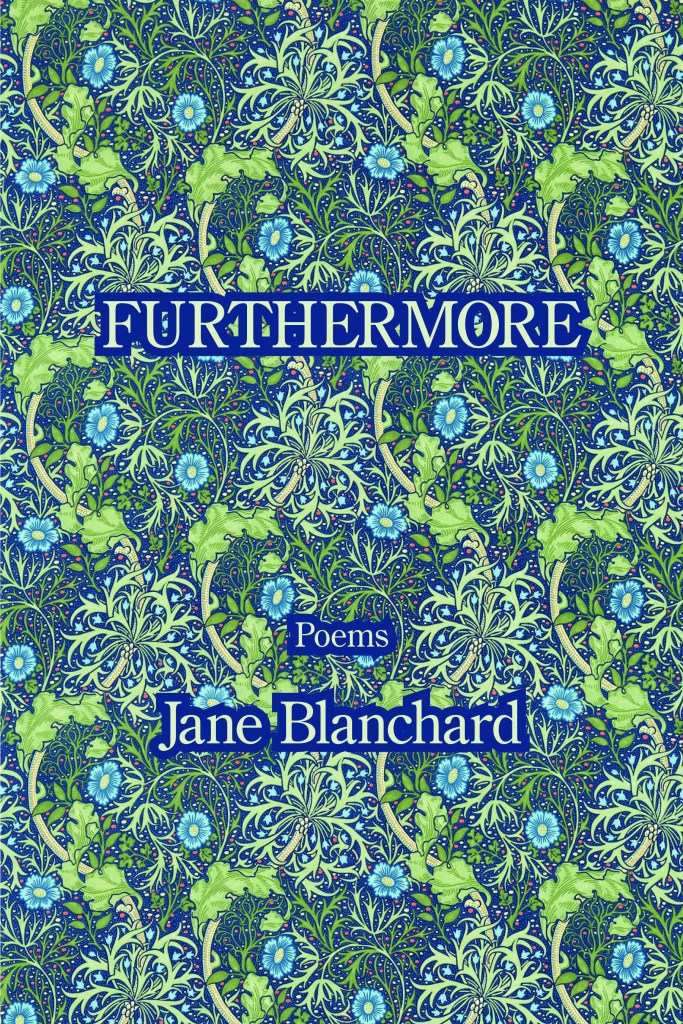
Congratulations to Jane Blanchard, who has just had her collection ‘Furthermore’ published by Kelsay Books. (Blurbs by Steve Knepper among others can be found at her Amazon listing.) I asked her for a favourite poem to represent the book, and she sent me ‘Between Rounds’, originally published in Valley Voices: A Literary Review.

A native Virginian, Jane Blanchard lives and writes in Georgia. Her collections with Kelsay Books include Metes and Bounds (2023) and Furthermore (2025).

Using form: Parody: Brian Allgar, ‘Irretrievable Breakdown’

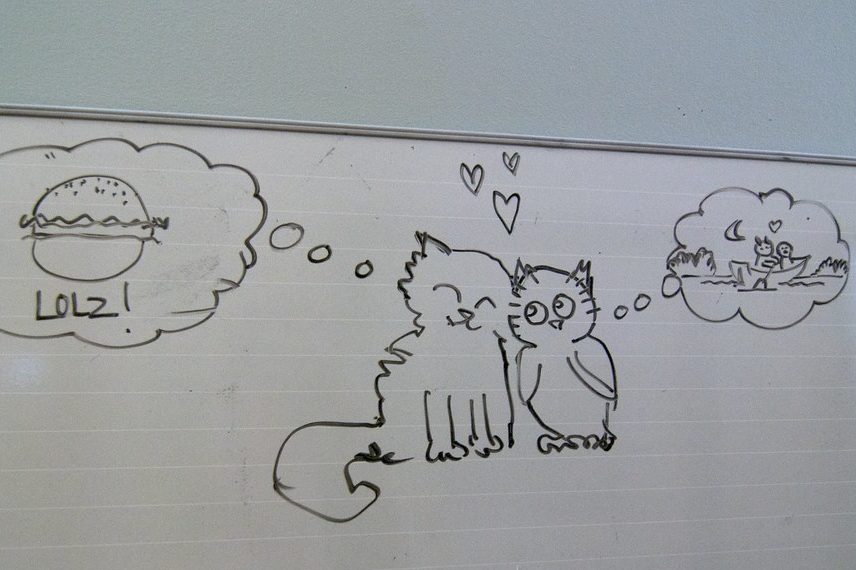
The Owl and the Pussycat went to the Judge,
For they sought to obtain a divorce.
“My dear Sir”, said the Owl, “I’ve no wish to be foul,
Though I fear you’ll consider us coarse.

Our plight’s anatomic; my efforts are comic
To exercise conjugal rights.
With our different bits, there is nothing that fits,
And this failure our happiness blights.”

The Pussycat spoke: “He’s a feathery bloke,
Whereas I’m rather furry and feline.
In vain we have tried to get Owly inside,
So to you we are making a beeline.”

Said her husband: “Your honour, I’ve struggled upon her
And hoped she would prove ‘pussycatable’.
It was useless, of course, and we’re seeking divorce
On the grounds that we’re quite incompatible.” 

So the Judge set a date to determine their fate:
“I’ll decide at the end of next week.”
But the cat came alone, though she carried a bone
And a handful of feathers and beak.

Said the Judge with a scowl: “Where’s your husband, the Owl?
Are you thinking to mock or deride me?”
Then the Pussy confessed:  “I have eaten the rest,
So my husband, at last, is inside me.”

*****

Brian Allgar writes: “What parodist can resist Edward Lear? A gold-mine probably second only to Lewis Carroll.”

Brian Allgar was born a mere 22 months before Adolf Hitler committed suicide, although no causal connection between the two events has ever been firmly established. Despite having lived in Paris since 1982, he remains immutably English. He started entering humorous competitions in 1967, but took a 35-year break, finally re-emerging in 2011 as a kind of Rip Van Winkle of the literary competition world. He also drinks malt whisky and writes music, which may explain his fondness for Mendelssohn’s Scottish Symphony. He is the author of The Ayterzedd: A Bestiary of (mostly) Alien Beings and An Answer from the Past, being the story of Rasselas and Figaro. He is also the co-author, with Marcus Bales, of Baleful Biographica, all published by Kelsay Books and available from the publisher or from Amazon.

Photo: “What She’s Really Thinking” by lumachrome is licensed under CC BY-SA 2.0.
Barbara Loots, ‘Love Song’

You are the butterfly whose wings
stir up a rainfall in Peru.
The tropic fern unfurled that brings
an earthquake in Tibet is you.

The cry bursting from blackbirds’ throats
that turns the tide on Iceland’s shore
is you, and Sahara’s dusty motes
rosing the sunset in Lahore.

Who is the breath of an infant’s sigh
that sparks the heart of a unicorn?
The rock streaking the moonless sky
that wafts a feather around Cape Horn?

You, the invisible silver thread
between Zanzibar and Amsterdam.
Even by thought unlimited,
whatever the you may be, I am.

*****

Barbara Loots writes: “On my way to copy out the poem I meant to send you, I ran across this one. It has appeared only once in print, so I decided to give it another chance at immortality. Love is too small a word to contain the energy field of creation, evolution, and eternity. But this little verse (published in my second collection Windshift, from Kelsay Books, 2018) helps connect me with ‘whatever the you may be‘ right here and now.”

Barbara Loots resides with her husband, Bill Dickinson, and their boss Bob the Cat in the historic Hyde Park neighborhood of Kansas City, Missouri. Her poems have appeared in literary magazines, anthologies, and textbooks since the 1970s. She is a frequent contributor to lightpoetrymagazine.com. Her three collections are Road Trip (2014), Windshift (2018), and The Beekeeper and other love poems (2020), at Kelsay Books or Amazon. More bio and blog at barbaraloots.com

Photo: “September 1st 2008 – They’re Back” by Stephen Poff is licensed under CC BY-NC-ND 2.0.

Donald Wheelock, ‘Worthless’

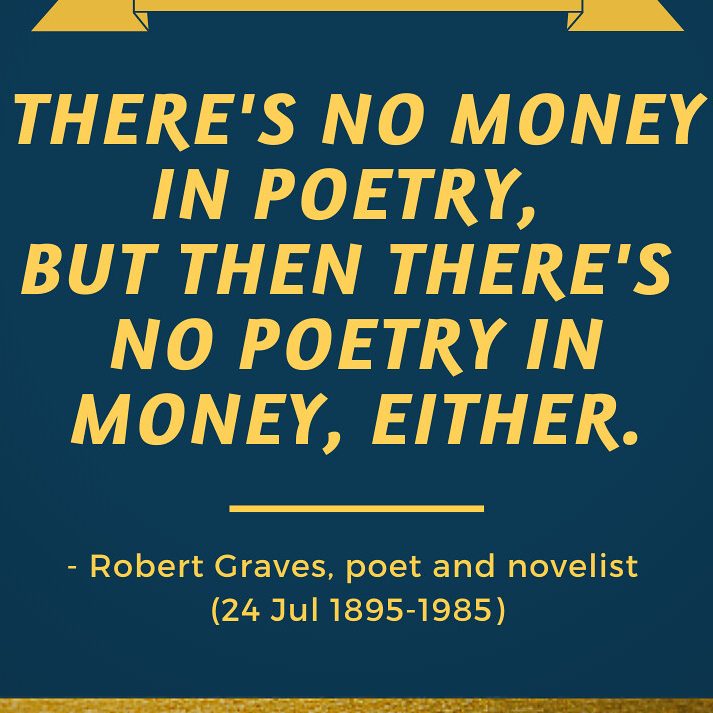
What a worthless thing is poetry,
a product of hard labor I adore;
a counter full of year-old toiletries
will always fetch considerably more.

A merchant selling gift-wrapped bars of soap
will come away with profit and some change;
to sell a poem is no more than a hope
washed clean of what a market can arrange.

Here! Have a few of mine, two for a quarter—
a dime apiece—the bargain of the day…
just name it! I’m here to take your order.
Hard labor’s even hard to give away.

*****

Donald Wheelock writes: “I have spent most of my life as a composer of vocal, orchestral and chamber music. While remuneration for song cycles and string quartets is not unknown, the profits from commissions and other sources rarely exceed the expenses. I don’t have to tell the readers of formalverse that the same could be said for formal poetry. The conceit of this poem has been an assumption in my life for many years, and equivalent jokes among composers of “classical concert music” are not uncommon.

I have written formal poetry for almost as long as I have music, often to set to music. But it is relatively recently that I have submitted it to journals welcoming formal poetry. Snakeskin (where this poem was first published), Able Muse, Think, Blue Unicorn, Rue Scribe, Quadrant and many other journals have published my poems. My first full-length book, It’s Hard Enough to Flywas published by Kelsay Books in 2022. My second book, With Nothing but a Nod, will appear in May of this year from David Robert Books.”

Photo: “A THOUGHT FOR TODAY from A.Word.A.Day” by Wordsmith.org is licensed under CC BY-NC-SA 2.0.

Using form: Experimental: Edmund Conti, ‘Solace’

I know, I know it’s tough.
I know. It’s tough. I know.
It’s tough. I know it’s tough.
I know. I know. It’s tough.
I know it’s tough. I know.

It’s tough.

I know.

*****

Edmund Conti writes: “I guess I like because it uses just four words to say a lot.”

Edmund Conti has recent poems published in Light, Lighten-Up Online, The Lyric, The Asses of Parnassus, newversenews, Verse-Virtual and Open Arts Forum. His book of poems, Just So You Know, is published by Kelsay Books,
https://www.amazon.com/Just-You-Know-Edmund-Conti/dp/1947465899/
and was followed by That Shakespeherian Rag, also from Kelsay
https://kelsaybooks.com/products/that-shakespeherian-rag

Photo: ‘Solace’ by Edmund Conti

Edmund Conti, ‘My Son the Critic’

Read me a bedtime poem, said my son.
So I read him this:

We say hippopotami
But not rhinoceri
A strange dichotomy
In nature’s glossary.

But we do say rhinoceri, he said. Look it up.
So I read him this:

Life is unfair
For most of us, therefore
Let’s have a fanfare
For those that it’s fair for.

I smell a slant rhyme, he said, sniffing.
So I read him this:

While trying to grapple
With gravity, Newton
Was helped by an apple
He didn’t compute on.

My teacher says that’s not poetry, he said.
So I read him this:

René Descartes, he thought
And therefore knew he was.
And since he was, he sought
To make us think. He does.

That made me think, he said. But not feel.
So I read him this:

My hair has a wonderful sheen.
My toenails, clipped, have regality.
It’s just all those things in between
That give me a sense of mortality.

Did the earth move? I asked. Anything?
Nothing moved. He was asleep.

*****

Edmund Conti writes: “This is one of my favorites today. Tomorrow I might have different ones. I like it because it makes me nostalgic for an event that never happened. (My persona has a better life than me.) It came about after I sent the following quatrain to John Mella of Light Magazine (with appropriate punning title, of course).

We say hippopotami
But not rhinoceri
A strange dichotomy
In nature’s glossary.

John liked it and accepted it. I few weeks later he wrote and said he couldn’t use. Talking to a fellow editor, he learned there is such a plural as ‘rhinoceri.’ But now I was in love with my little piece and wanted to salvage it. But how? All I could think of was to take advantage of the poem’s failing. I came up with the idea of showing several possibly flawed quatrains to my son and having him disparage each one. And lo, the poem! I have 2 sons and when either one questions the reality, I just say it was the other one.”

Edmund Conti has many reasons for wanting his poems published—Power! Fame! Money!—but not (as you can see) as a venue for his bio notes.

Edmund Conti has recent poems published in Light, Lighten-Up Online, The Lyric, The Asses of Parnassus, newversenews, Verse-Virtual and Open Arts Forum. His book of poems, Just So You Know, is published by Kelsay Books,
https://www.amazon.com/Just-You-Know-Edmund-Conti/dp/1947465899/
and was followed by That Shakespeherian Rag, also from Kelsay
https://kelsaybooks.com/products/that-shakespeherian-rag

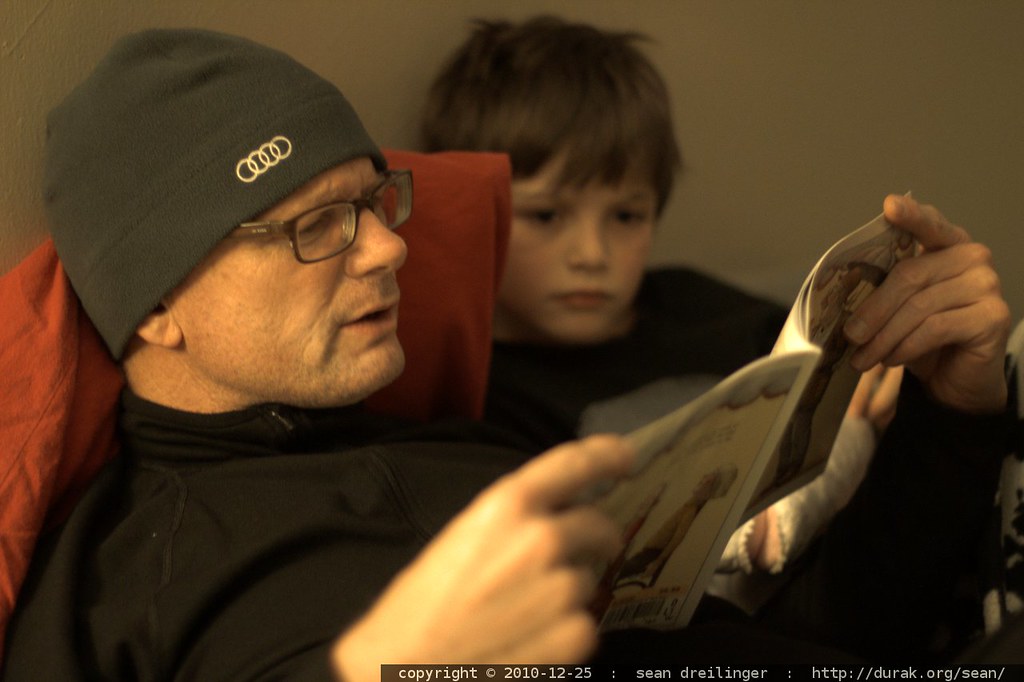
Photo: “grandpa reading nick a bedtime story – MG 6291.JPG” by sean dreilinger is licensed under CC BY-NC-SA 2.0.

Barbara Loots, ‘Small Things’

Things have a tendency to lose themselves:
hammer, needle, the necessary spring,
a button, the keys–they disappear like elves,
like roses, wishes, the words for everything.

Dive in. Ransack a drawerful of debris.
Wrestle with irritation, grief, self-doubt.
One earring, that pen, eyesight, dignity:
small things we learn, in time, to do without.

*****
Barbara Loots writes: “The small losses and lapses of memory that happen to everyone seem more vivid and alarming as I grow older. I realize that it isn’t things but myself I must gradually, inevitably let go of. Even so, the vast, abundant universe brings perspective to the human situation, including mine.”

Barbara Loots resides with her husband, Bill Dickinson, and their boss Bob the Cat in the historic Hyde Park neighborhood of Kansas City, Missouri. Her poems have appeared in literary magazines, anthologies, and textbooks since the 1970s. She is a frequent contributor to lightpoetrymagazine.com. Her three collections are Road Trip (2014), Windshift (2018), and The Beekeeper and other love poems (2020), at Kelsay Books or amazon. More bio and blog at barbaraloots.com

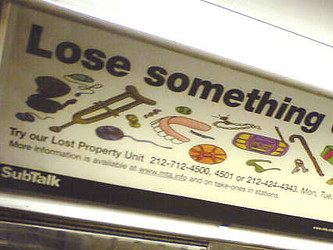
Photo: “Things you might lose on the subway” by Hippolyte is licensed under CC BY 2.0.

Using form: irregular sonnet: Jane Blanchard, ‘Premises’

After an argument I listen hard
to noises in our common house—the ticking
of clocks, the humming of fans, the creaking of floors,
the rumbling of pipes, the ringing of phones, the groaning
of springs, the clacking or clinking of keys, the droning
of television, the drumming of laundry, the clicking
of locks, the tumbling of ice, the squeaking of doors—
all louder once a morning has been marred.
Hours may pass as I interpret sound
by sound—source, frequency, duration. Some
attention goes to silences, which pound
and pound, but not to show where each comes from.
Throughout, peace can be found in knowing you
are also wondering when words are due.

*****

Jane Blanchard writes: “This sonnet from Metes and Bounds was first published in Mezzo Cammin (Summer 2017). It is rather irregular, especially in the octave, but such deviation seems appropriate for the subject, at least to me. This poem is largely a list, yet it has narrative and lyrical elements, too, and the experience described, I hope, is easily perceived.”

A native Virginian, Jane Blanchard lives and writes in Georgia. Her latest collection with Kelsay Books is Metes and Bounds (2023).

Photo: detail of the cover of Metes and Bounds.

Edmund Conti, ‘The Straight Skinny’

To say that only I am fat,
To say that I am only fat,
To say only that I am fat,
To only say that I am fat,
Is not to say, however, that
They equally are definitive.

One statement says fat’s mine alone,
One says no other trait I own,
One just has a plaintive tone,
And–overlooked and overblown–
One just splits the infinitive.

*****

Edmund Conti writes: “I guess this began with the observation that ‘only I am fat’ and ‘I am only fat’ have different meanings depending on the placement of one word. Which made me wonder if placing ‘only’ in other parts of the sentence would change it again. Which it did. Why did I use ‘fat’ as a trait? Well, it’s an easy rhyme and people can relate to it—in themselves or others. Also, it gave me a good excuse for the title.
I thought writing the second stanza would be trickier, but the rhymes just fell into place. And noticing the split infinitive and using it saved the poem. Assuming it was worth saving.”

Edmund Conti has recent poems published in Light, Lighten-Up Online, The Lyric, The Asses of Parnassus, newversenews, Verse-Virtual and Open Arts Forum. His book of poems, Just So You Know, released by Kelsay Books
https://www.amazon.com/Just-You-Know-Edmund-Conti/dp/1947465899/
was followed by That Shakespeherian Rag, also from Kelsay
https://kelsaybooks.com/products/that-shakespeherian-rag

His poems have appeared in several Potcake Chapbooks:

Tourists and Cannibals
Rogues and Roses
Families and Other Fiascoes
Wordplayful
all available from Sampson Low Publishers

Photo: “Why Am I So Fat?” by morroelsie is licensed under CC BY-NC 2.0.