Tag Archives: Marcus Bales

Sonnet: Marcus Bales, ‘This Bar’

In the middle of their movie each arrives
Smiling in this gutter, still the stars
Of broad moments in their narrow lives.
They tell of other people, other bars,
Other husbands, lovers, friends, and wives,
Re-writing both their pleasures and their scars;
How one thing given up another strives
To get; how what one shines another tars
With one of the varieties of hate.
But here the villain is a dead-end job
Or marriage, or failing kids; it would be great
If Yankees, Nazis, drug lords, or The Blob  
Were why we’re lost, or losing, or alone –
But here the tales and failures are our own.

*****

Marcus Bales writes: “The bar culture was a mystery to me. For much of the western developed world, though, it seems central to the human experience. The only reason I went to bars for a long time was to see a performer, and then only for that. The genes for enjoying intoxication and for enjoying the taste of alcohol seem to have missed me. I’d have a soft drink, enjoy the show, and go home. I thought bars were noisy theaters full of fairly rude people who were missing the point of the entertainment. Yeah, well. 

“As usual in these sorts of tales, it was a woman who showed me I had mistaken the whole thing. 

“When I met Linda ‘going out’ for me meant a poetry reading. Linda’s idea of a good time was a fried baloney sandwich and a few glasses of wine at a bar. After a couple poetry readings we went to bars. And while everyone at a poetry reading has a story, they are there to tell those stories, often in the kind of detail, physical, mental, and emotional, that can be pretty harrowing. A  poetry reading is more like therapy than a lot of therapy. 

“The stars of the show, the featured readers, do not, for the most part, mix with the common folk of the open mic. Most of the time the feature readers come late, perform, and leave, giving no one a chance to chat with them or get to know them. There is a distinct class system, and if the performer is known more than locally, those exalted folks prefer to be kept separate from the audience, deigning to meet only a selection of the organizer’s favored few friends in a private room beforehand. You can judge your status in the local hierarchy by whether you are never, sometimes, or often invited to be in that room. 

“In bars, though, you can talk to anyone and everyone, if you’re willing. Well, middle-class bars, anyway. Dive bars are a whole other phenomenon. But in middle-class bars people talk to the people around them, and listen to one another, and drink. And talk some more. And drink. The point is the social drinking, the freeing-up, the letting-down. And for a collector of stories it’s a gold mine. 

“I still have a soft drink, but if you tip well you can get it served to look like it’s alcoholic. And you can remember what people said, afterwards.”

Not much is known about Marcus Bales, except he lives and works in Cleveland, Ohio, USA, and his work has not appeared in Poetry or The New Yorker. His latest book is 51 Poems (which includes ‘This Bar’); reviews and information at http://tinyurl.com/jo8ek3r

Photo: “Down Drinking at the Bar” by swanksalot is licensed under CC BY-NC-SA 2.0.

Marcus Bales, ‘Suddenly’

Suddenly the kids, the car,
the house, the spouse, the local bar,
the work, have made you what you are.
What doesn’t chill you makes you fonder.

Should you stay or should you go?
The thrill you’re looking for, you know,
could be right here at home, although
what doesn’t thrill you makes you wander.

If, avoiding common truth,
you dye your hair and act uncouth,
will you find your misplaced youth –
really, will you if you’re blonder?

It doesn’t matter if you’re strong
or if you sing a pretty song,
something, and it won’t be long,
will come to kill you, here or yonder.

You’re human in the human fray,
and choose among the shades of grey.
No matter if you go or stay
what might fulfill you makes you ponder.

*****

Marcus Bales writes: “This is a little more than a decade old, back when I still had a full time job. There is something looming in a life about a full time job that’s hard to escape entirely even when you’re determined to try. Must have been a bad day on the sales floor.

“This is one of those poems where a rhythm enters my mind and won’t go away until I put words to it. Of course it already HAD words to it, but I couldn’t use those. So after one quatrain it became a challenge to see how many of that refrain rhythm it was possible to make sense with. That’s actually sort of freeing, because once that becomes the challenge, it opens the poem, for me anyway, to using the randomness of the rhyme words, as they arise, to drive each stanza’s, and thus the whole poem’s, sensibility. This is a good example of how the aleatory dice of rhyme can be used to open up opportunities to say things I wouldn’t have thought of to say at all without having to work toward the rhyme word. This can be very bad for a poem, of course — one of the main ways to judge poems in meter and rhyme is on how hard it is to tell whether the poet was using the rhyme words that way or not. The goal, of course, in almost all rhyme, is to delicately decorate the poem rather than for it to be clear that the poet was merely chasing a rhyme. And when there’s a rhyming refrain line the danger is extreme.

“I remember being pretty happy with it at the time. I do like the way something seems to loom over the narrator, pressing him onward through his meditation, and providing, I hope, the reason that meditation is needed.”

‘Suddenly’ was first published in The Rotary Dial, which is now offline… but this issue, the Best of 2015, is at https://midnightlanegalleryii.wordpress.com/wp-content/uploads/2014/10/7c8e9-december15.pdf

Not much is known about Marcus Bales, except he lives and works in Cleveland, Ohio, USA, and his work has not appeared in Poetry or The New Yorker. His latest book is 51 Poems; reviews and information at http://tinyurl.com/jo8ek3r

Photo: “Decisions decisions ..” by monkeywing is licensed under CC BY 2.0.

Marcus Bales, If Elizabeth Browning Had Written “I Will Survive”

How do I love you? Well, not any more —
I love you? Not even to bread slice height
That has been toasted, buttered, rye or white,
And dropped the wrong side down upon the floor.
I love you like a mildew or a spore
Or pestilential fungal blastocyte
That makes one’s breath itself a mortal fight
And living life seem like a choking chore.
I love you? The one who made the try
To break me with goodbye, yet kept that key
Because you thought that I’d lay down and die
If you returned, assuming I’d be free?
Oh no — I snarl and spit, deny your lie,
And save my love for one who’s loving me.

*****

I Will Survive‘ – Song by Gloria Gaynor ‧ 1978 on YouTube

At first I was afraid, I was petrified
Thinking I could live without you by my side
And after spending nights
Thinking how you did me wrong
I grew strong
And I learned how to get along

Now you’re back
From outer space
And I find you here
With that sad look upon your face
I should’ve changed that stupid lock
Or made you leave your key
If I’d’ve known for a second
You’d be back to bother me

Go on, go, walk out the door
Turn around now
You’re not welcome anymore
You’re the one who tried to hurt me with goodbye
Think I’d crumble?
You think I’d lay down and die?

No, not I, I will survive
Long as I know how to love, I know I’ll stay alive
I’ve got my life to live
And all my love to give and
I will survive
I, I, I will survive

It took all my strength not to fall apart
Trying with all my might to mend my broken heart
I spent so many nights feeling sorry for myself
How I cried
But now I hold my head up high

And you see me, somebody new
I’m not that lonely little person
Still in love with you
Now you come droppin’ in
Expectin’ me to be free
Now I’m saving my lovin’
For someone who’s loving me

Go on and go, walk out the door
Turn around now
You’re not welcome anymore
You’re the one who tried to hurt me with goodbye
Thinkin’ I’d crumble
Did you think I’d lay down and die?

No, not I, I will survive
Long as I know how to love, I know I’ll stay alive
I’ve got my life to live, and all my love to give
And I will survive
I, I will survive

Go on, go, walk out the door
Turn around now
You’re not welcome anymore
You’re the one who tried to hurt me with goodbye
Think I’d crumble?
You think I’d lay down and die?

No, not I, I will survive
Long as I know how to love
I know I’ll stay alive
I’ve got my life to live
And all my love to give and
I will survive
I, I, I will survive

Songwriters: Frederick J. Perren / Dino Fekaris

Marcus Bales writes: “It started after I’d posted If Shakespeare Had Written ‘Itsy Bitsy Spider’ to Sonnet Central, and Mike Alexander asked me if I was going to do the entire Mother Goose in Shakespearean sonnets. That sounded too much like real work to me, so I said I hadn’t thought of it, but I did have another “If Shakespeare Had Written” poem, “If Shakespeare Had Written ‘I Will Survive‘”. Looking that up in my files produced “If Yeats Had Written ‘I Will Survive‘”, as well, so I posted both those, and then Milton tapped me on the shoulder and cleared his throat. So I wrote that one. 

“My method is to find a stash or cache of poems by the next poet who seems particularly likely — or unlikely — to have written ‘I Will Survive‘ if they’d been asked, and read through it, looking for characteristic modes, moods, tones, concerns, and sometimes just an old favorite that seems ripe for it. A sort of instant immersion in a poet’s work, and then try to flow into their tonality. Like a singer interpreting a song I try to inhabit the poet’s mise en scene.  Some are more successful than others.”

Marcus Bales has now produced a dazzling array of his “If X Had Written ‘I Will Survive‘”, over 40 and still growing, with a dozen in the current Brazen Head, including this Elizabeth Browning as well as Dorothy Parker, Dylan Thomas, Wendy Cope, Robert Frost and of course Shakespeare. Go ahead, give them a try! – RHL

Not much is known about Marcus Bales, except he lives and works in Cleveland, Ohio, USA, and his work has not appeared in Poetry or The New Yorker. His latest book is 51 Poems; reviews and information at http://tinyurl.com/jo8ek3r

Illustration: Portrait of Elizabeth Barrett Browning in 1859. Public domain

Marcus Bales, ‘Rule Number One’

For Linda, who said it first

 If you’re going to have a reading
then no matter where you are
for a minimum of breeding
you have got to have a bar.

You will fill up all the seating,
they will come from near and far,
if the best part of your greeting
is “Why, yes we have a bar!”

But the evening will be fleeting
even if you’ve booked a star
when it’s alcohol they’re needing
and you do not have a bar.

They will freeze in scanty heating
and they’ll swelter till they char
if you advertise by leading
with the fact you have a bar.

Though it’s raining or it’s sleeting
if you offer them a jar
they’ll be aleing, beering, meading,
and absinthing at the bar.

But when poetry starts bleeding
out of every scab and scar
all you’ll see is me retreating
if you haven’t got a bar.

*****

Marcus Bales writes: “For an interesting while I had an art gallery in a downtown mall in Cleveland. The mall rules said it had to be open on Saturdays — when there was no mall traffic and so no real reason to be open. So I held the Every Saturday at Noon in the Galleria Poetry Reading. Dramatically unsuccessful at first it eventually found its audience and we had a good time. But in talking about why, serving only coffee, Linda pointed out that if we could serve alcohol attendance would improve. Since it was an art gallery, and there is a tradition in art galleries of serving wine at openings, I changed the title to the Poetry Reading Art Opening and said wine and coffee would be available in limited quantities. That did the trick. It quickly became the best-attended poetry reading in the city, any day, any time. Then the authorities got wind of it and someone from the city visited and pointed out gently that while it was a tradition to serve wine at art openings in art galleries, it is technically illegal by state law, even if it is free, and they cited the appropriate code. In the end it didn’t matter much, since even the most successful poetry readings count their audiences in the low-to-mid-tens of people, and by then people had got in the habit of Saturday At Noon, and kept coming anyway even after we stopped serving wine. But the idea for the poem had formed.” 

Not much is known about Marcus Bales except that he lives and works in Cleveland, Ohio, and that his work has not been published in Poetry or The New Yorker. However his ‘51 Poems‘ (which includes the above) is available from Amazon. He has been published in several of the Potcake Chapbooks – Form in Formless Times.

Photo: “Open Bar” by Trevor Benedict – MrEcho is licensed under CC BY-NC-ND 2.0.

Marcus Bales, ‘A Rainy Day in Cleveland’

A rainy day in Cleveland. I almost said
“The skies are gray.” Of course the skies are gray,
It’s raining, so — what could they be instead?
I meant to mow the rest of the lawn today,
But it’s a day to watch the garden grow.
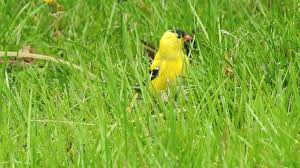
The finches, flashing in the too-long grass,
Are pecking dandelion seeds, and glow
Their special yellow through rain-dotted glass.
The internet is off. I sit and watch
The irises and roses in the rain,
And do not read about the ugly botch
The greedy criminals in charge sustain
So they can strut around, so white, so male,
And cheat and lie to keep themselves from jail.

*****

Marcus Bales writes: “The rap against democracy has until now always been that the public, once it realized they could simply vote themselves money and benefits, would bankrupt the state voting themselves benefits and money. For 250 years the US public managed not to do that, though the reactionaries always accused them of it. It turns out the real danger is that if you have enough money you can just buy the government and operate it as a racket to benefit yourself and your cronies, even when there are laws in place that you have to break in order to do so. The problem with democracy, it turns out, is not that people are irresponsible but that the wealthy are liars and thieves.”

Not much is known about Marcus Bales except that he lives and works in Cleveland, Ohio, and that his work has not been published in Poetry or The New Yorker. However his ’51 Poems’ is available from Amazon. He has been published in several of the Potcake Chapbooks – Form in Formless Times.

Photo: Danny redd Photography https://www.facebook.com/watch/?v=1605166609548538

Weekend read: Parody poem: Marcus Bales, ‘Slash Wednesday’

I
Because I do not do the limerick line
Because I do not do
Because I do not do the limerick
Desiring this man’s schtick or that man’s joke
I will stick to knocking out free verse
(If here and there a rhyme so much the worse)
In mournful moans
Presented ragged-right upon the page.

II
There once was a Lady with three
White leopards, a juniper tree,
And a bag full of bones
That sang their sad moans
Of what they had once hoped to be.

III
At every turning of the turning stair,
Your breathing hard, your eyesight edged with dark,
You see the face of hope and of despair.

You breathe the vapor of the fetid air
And toil as if some atmospheric shark
At every turning of the turning stair

Was hunting through the gathering darkness there,
While back and forth across the narrative arc
You see the face of hope and of despair.

At every turning there’s a window where
You contemplate a drop that’s still more stark
At every turning of the turning stair.

Instead you circle upward as you swear
Like you are looking for a place to park.
You see the face of hope and of despair.

You can’t endure the future’s dismal dare
Nor drag yourself to put out your own spark
At every turning of the turning stair.

You’re learning how to care and not to care
And whether you will make or be a mark.
You see the face of hope and of despair
At every turning of the turning stair.

IV
Higgledy piggledy
Here we are all of us
Trudging along where some
Billions have trod

Smelling the flowers and
Trusting religionists’
Tergiversational
Rodomontade.

V
If the word that is lost isn’t lost,
And the word that is spent isn’t spent
Then silence is actually speaking,
And meaning is something unmeant.

If the meaning is what is unheard
And the word is the thing that’s unspoken
Then how do you hear if a word
Has a meaning that hasn’t been broken.

If the unspoken word must be still
And the unheard is what it’s about
To have heard the unhearable meaning
The inside has got to be out.

If the unheard were out of this world
And the light shone in darkness were dark
Then the unlit unheard would be meaning
If the snuffer provided the spark.

If the yadda can yadda its yadda
And the pocus was what hocus took
Then gobble must surely be gobble
Though dee separates it from gook.

VI
Awake! Your hope to turn or not to turn
Is wasting time – but go ahead and yearn
To see the light or hear the word to know
A heaven human beings can’t discern.

There’s nothing there for such as you and me;
We make our meaning up from what we see
And hear and touch and taste and smell and think —
But all there is is fragments and debris.

The steps are just the steps, the stairs the stairs,
The rest is merely human hopes and prayers
That do no more than hopes and prayers can do,
And nothing’s chasing you except your heirs.

No unmoved mover writes upon some slate
That mortals may abate or not abate;
No hope and no despairing of that hope
Reveals what nothing states, or doesn’t state.

Whatever happens happens because of us
We get a muss when we don’t make a fuss
Demanding right from wrong not mere convenience:
We’re all complicit underneath this bus.

Awake! Don’t hope to turn or not to turn,
Don’t pray that this is none of your concern.
Awake! What will it take for you to learn
That if it all burns down you, too, will burn?

*****

Marcus Bales has produced this wonderful set of parodies of the long T.S. Eliot poem ‘Ash Wednesday‘, beginning with a piece in the poem’s style for Part I,
Because I do not hope to turn again
Because I do not hope
Because I do not hope to turn
Desiring this man’s gift and that man’s scope

but then moving into a limerick for Part II’s
Lady, three white leopards sat under a juniper-tree

and a 22-line villanelle for Part III’s
At the first turning of the second stair

and a double dactyl for Part IV’s
Who walked between the violet and the violet

and quatrains for Part V’s
If the lost word is lost, if the spent word is spent
If the unheard, unspoken
Word is unspoken, unheard;

and finally rubaiyat with a strong flavour of FitzGerald’s Omar Khayyam for Part VI’s
Although I do not hope to turn again
Although I do not hope
Although I do not hope to turn

Ash Wednesday‘ has proved one of Eliot’s best-known and most quoted poems, with its signature mixture of Christian mysticism, personal emotion, loose form and scattered rhyme, rich imagery and memorable wordplay. Bales’ ‘Slash Wednesday‘ is an appropriate tour de force of a back-handed homage, mocking Eliot’s ragged rambling with a sampling of forms that could have been used (inappropriately) instead.

Not much is known about Marcus Bales except that he lives and works in Cleveland, Ohio, and that his work has not been published in Poetry or The New Yorker. However his ’51 Poems’ is available from Amazon. He has been published in several of the Potcake Chapbooks (‘form in formless times’).

This is being posted a couple of days late for Ash Wednesday, but as it’s for the already late T.S. Eliot that shouldn’t matter too much…

Photo: “File:T S Eliot Simon Fieldhouse.jpg” by Simon Fieldhouse is licensed under CC BY-SA 3.0.

Using form: Parody with a message: Marcus Bales, ‘The Easy Way Taken’

Two friends diverged in a yelling mood
And sorry I could not keep them both
And still maintain one attitude,
I scrolled down through one’s page, and viewed
Some green and gold of writing growth.

Then saw the other was just as good,
With maybe even a better claim
Because so well misunderstood
Within the writing neighborhood,
Though as for that they’re much the same.

And each that morning equally laid
The blame upon the other’s back.
I had no way to tell who’d made
The first or worst move; I’m afraid
I have no feel for clique or claque.

Online I have too many friends
To keep good track, so, nothing loath
To making enemies or ends
Where there are no real dividends,
I shook my head – and blocked them both.

*****

Marcus Bales writes: “Most of the fraught relationships online are due to people not being able to write very well on one end, or read very well on the other. Stuff that in in-person conversation would go completely unnoticed is taken up as deliberate slighting. Mostly its merely awkward phrasing, or one interlocutor is already two comments past when the reply to the third interaction scrolls by and it’s misinterpreted as an instant response to the most recent reply when it was really intended to answer something two or three comments back.

“Now in the case of political disagreements where the polarized sides are already firmly established and one side or the other or both are determined to fight that’s a whole other thing. There it’s got nothing to do with how well or ill something is read or written and everything to do with the sport of online woofing.

“It’s one of those things where over the years people block and get blocked and complain to their friends about either end of it and then it all goes away pretty fast as the opportunity to be triggered — again at either end — fades with the blocking.”

(The original poem on which this parody is based, for those not familiar with it, is Robert Frost’s ‘The Road Not Taken‘. – RHL)

Not much is known about Marcus Bales except that he lives and works in Cleveland, Ohio, and that his work has not been published in Poetry or The New Yorker. However his ‘51 Poems‘ is available from Amazon. He has been published in several of the Potcake Chapbooks (‘Form in Formless Times’).

Photo: “Yotsuba & Tech Support” by Liberty Photos is licensed under CC BY-NC 2.0.

Poem on poetry: Sonnet: Marcus Bales, ‘White Water’

A poem is so obdurate and small
Compared to what you wanted it to say
And sometimes isn’t even close at all.
For instance, this. I’ve worked on it all day,
A metaphor for all of love’s affairs.
I failed to ride the energy it gave,
My form and balance gone. Nothing prepares
You for the wildness of the standing wave.
Possessing and possessed and then propelled
Abruptly past the point of no control
To merely peril, having once beheld
The moving stillness of it all, all whole.
Your head’s what every poem wants to split,
While you stroke hard to stay ahead of it.

*****

Marcus Bales writes: “My online pal, the poet Liam Guilar, was a kayak adventurer, sneaking across borders to paddle the most dangerous rivers in the world. I went white water rafting once. You’re stuck in cold, wet, awkward positions that often turn suddenly painful. Why people do it over and over seems not just unreasonable but cold, wet, and painful. There are exhilarating moments, but you’re still cold, wet, and out of control. I could feel in my one experience that the out of controlness might be the point. Still, it was wet and cold. Very wet. Very cold. 

“The confluence of Liam’s many tales, my paltry experience, and he and I both struggling to write poems is the impetus for this poem. I’ve often thought that maybe what it needs is a bucket of ice water suspended over the reader like a, well, like a bucket of Damocles, that sloshes over the head and down the back of the neck in order to make it work.”

Not much is known about Marcus Bales except that he lives and works in Cleveland, Ohio, and that his work has not been published in Poetry or The New Yorker. However his ‘51 Poems‘ is available from Amazon. He has been published in several of the Potcake Chapbooks (‘Form in Formless Times’).

Photo: “Kayaking through the white waters of the Gorge” by Grand River Conservation Authority is licensed under CC BY-NC-ND 2.0.

The Two-State Dissolution (3): Smith, Burch, Foster, McCarthy, Helweg-Larsen, Bales

J.D. Smith, ‘Apology in Siege’

I hope you will forgive me
for having given you hope—
Too late for youthful indiscretion, though
I believed my story and felt young in it
until the metal facts fell.

I’d still like to imagine some god
would help, but that line looks broken
like the water, the gas and electricity.

What we have is hours, and in them
you should have the bread and fruit
before they feed the rats.
I am keeping the wine for myself.
It is piss-poor, anyway, and I have
far more to forget.

J.D. Smith, ‘Slant Psalm’

My right hand has never known cunning,
yet I remember thee, O Jerusalem,
not as others’ sacred city
but capital and emblem of loss,
origin of far wandering
without prophecy of return.

My right hand has never known cunning.
May I have, as recompense, forgetting.

Michael R. Burch, ‘Starting from Scratch with Ol’ Scratch’
for the Religious Right

Love, with a small, fatalistic sigh
went to the ovens. Please don’t bother to cry.
You could have saved her, but you were all tied up
complaining about the Jews to Reichmeister Grupp.

Scratch that. You were born after World War II.
You had something more important to do:
while the children of the Nakba were perishing in Gaza
with the complicity of your government, you had a noble cause (a
religious tract against homosexual marriage
and various things gods and evangelists disparage.)

Jesus will grok you? Ah, yes, I’m quite sure!
Your intentions were noble and ineluctably pure.
And what the hell does THE LORD care about Palestinians?
Certainly, Christians were right about serfs, slaves and Indians.
Scratch that. You’re one of the Devil’s minions.

Gail Foster, ‘On The Heights Above Jezreel’

War’s harvest then is of these bitter fruits
Hot shards of shrapnel buried in the flesh
Of children, olives ripped up from the roots
The horrid cries that fly from the nephesh
And blinded eyes. Who benefits from this?
Warmongers, metal forgers, men who plan
Whole cities while still smoking ruins hiss
Black marketeers and strategists. Who can
Sleep peacefully while others have to hide
Their families beneath their mothers’ skirts
And bury them before their tears have dried?
When will this harvest of these bitter hurts
Be over? On the heights above Jezreel
The storm clouds gather. Over soon I feel

Martin McCarthy, ‘The Unkillables’

There’s no great reason here to sing,
but still they sing and play once more …
the filthy, ragged children of the poor,
who shall, as always, inherit nothing.

There’s no beckoning paradise
beyond these war-torn streets of dirt,
where chalked slogans outline their hurt,
and yet, the unkillables rejoice!

Robin Helweg-Larsen, ‘Photo of a Dead Palestinian’

Hard to describe blown-off-ness of a head:
no head, neck, shoulder – only flopping flesh,
unfinished ending of a smooth-limbed, fresh,
strong, naked body on white-sheeted bed;
a tangled, mangled churning; then, instead
of the anticipated face (serene
as marble statue, Christmas figurine)
instead, disorganised meat, spilling red.

No face or brains or hair. We’re sick, confused.
The torn-off torso seems to have the calm
proportions of an adult – look again:
the genitalia of a boy of ten.
“Collateral damage” is the term that’s used.
Beside the body, on the sheet, an arm.

Marcus Bales: Right-Wing Semite-Murderer’s Song

Netanyahu:
I am the very model of a right-wing Semite-murderer,
Since I’m a Semite, too, the thing cannot get much absurderer.
My people were abused by every tribe and nationality,
So I, instead of empathy, embraced provinciality.
Because we were oppressed I’m now oppressing weaker other folks,
It gives me cover that we’re killing our Semitic brother-folks.
It isn’t ethnic cleansing if I swear that in my piety
I’m killing and I’m maiming only folks of my variety.

Nazi Chorus:
It isn’t ethnic cleansing if we swear that in our piety
We’re killing and we’re maiming only folks of our variety.
We’re killing and we’re maiming only folks of our varie- riety.

Netanyahu:
The same way each religion has its zealots kill for true-ishness
Islamic zealots have declared that they’ll erase all Jewishness,
And we have trained our own to act with criminal lethality
To counterbalance enemies of lethal criminality.

Nazi Chorus:
And we have trained our own to act with criminal lethality
To counterbalance enemies of lethal criminality.
To counterbalance enemies of lethal criminali- nality.

Netanyahu:
I play the left against the right. My politics are strenuous.
I say “If you hate one Jew …” Well, the rest is disingenuous.
That propaganda works so well is not much of a mystery
By pointing out how badly Jews were treated throughout history.
We’ve rarely had an easy time, with ghettos, rape, and slavery,
Our holidays still celebrate the mass of unmarked gravery.
But we survived because we had our own ulteriority —
And now we’re in a place at last where I am the authority.

Nazi Chorus:
But we survived because we had our own ulteriority,
And now we’re in a place at last where we are the authority.
And now we’re in a place at last where we are the authori- thority.

Netanyahu:
The Stern Gang and the Irgun were the Hamas of their day and time
They killed and maimed the British, and they justified dismaying crime,
And now my brave Israeli right-wing zealots take that bow for theirs,
And use exactly those excuses Hamas uses now for theirs.

Nazi Chorus:
And now our brave Israeli right-wing zealots take that bow for theirs,
Exactly with the same excuses Hamas uses now for theirs.
Exactly with the same excuses Hamas uses now for now for theirs.

Netanyahu:
When everyone is furious that everyone is furious,
And injury is contemplating things yet more injurious;
When money spent on arms and planning how to break the breakerage
Could buy opponents whole, including buildings, stock, and acreage;
When every group is cheering zealots’ grim religiosity
And everyone is trembling with the fear of new atrocity,
I stay in office by appealing to the prejudicial dumb —
While filling my Swiss bank accounts just like Hamas officialdom.

Nazi Chorus:
I stay in office by appealing to the prejudicial dumb —
While filling my Swiss bank accounts just like Hamas officialdom.
While filling my Swiss bank accounts just like Hamas official- licialdom.

Netanyahu:
No policy’s absurd enough that mine is not absurderer.
I am the very model of a right-wing Semite-murderer.
It isn’t ethnic cleansing if I say that in my piety
I’m killing and I’m maiming only folks of my variety.

Nazi Chorus:
It isn’t ethnic cleansing if we say that in our piety
We’re killing and we’re maiming only folks of our variety.
We’re killing and we’re maiming only folks of our vari- variety.

Robin Helweg-Larsen, ‘Roots of Terrorism’

Step back a moment, and reflect:
not saying that it’s good or right
that chained, starved, beaten dogs would bite–
but what did you expect?

*****

Michael R. Burch, ‘Starting from Scratch with Ol’ Scratch’, first published in The HyperTexts
Martin McCarthy, ‘The Unkillables’, first published in The HyperTexts

Robin Helweg-Larsen, ‘Photo of a Dead Palestinian’ and ‘Roots of Terrorism’ first published in The HyperTexts

Photo: Anadolu Agency photographer Ali Jadallah – Gaza https://x.com/alijadallah66?lang=en
https://www.theguardian.com/world/2024/oct/05/one-year-in-gaza-since-the-7-october-attack-photo-essay

The Two-State Dissolution (2): Landsman, Burch, Lehr, Foster, Galef, Soderling, Kenny, Helweg-Larsen, Smith, Bales, Shore

Peggy Landsman, ‘Go Tell It On The Mountain

Hagar and Sarah should have talked,
Laughed together when alone.
Who did Abraham think he was?
Ha-Yehudi ha-rishon?*

Ishmael and Isaac should have been
Boon companions, closer than brothers,
Passing their days doing their chores,
Tending their father’s sheep together…

Staying up late entertaining themselves
Arguing over the numbers of stars
Each was the first to have named.

*”Ha-Yehudi ha-rishon” means “The first Jew” in Hebrew.

Michael R. Burch, ‘Frail Envelope of Flesh’
for the mothers and children of Gaza

Frail envelope of flesh,
lying cold on the surgeon’s table
with anguished eyes
like your mother’s eyes
and a heartbeat weak, unstable…

Frail crucible of dust,
brief flower come to this—
your tiny hand
in your mother’s hand
for a last bewildered kiss…

Brief mayfly of a child,
to live two artless years!
Now your mother’s lips
seal up your lips
from the Deluge of her tears…

Quincy Lehr, ‘Passive Voice’

History is back in passive voice.
All you can do is watch. The teams were picked;
the commentary doesn’t match the plays.
The game is rigged, and everybody sees.

The game is rigged, and everybody sees,
but referees ignore it, and debate
is limited to the cheap seats far away.
The villains are the only proper nouns.

The villains are the only proper nouns,
the only ones worth mentioning besides
the nebulous abstractions for the rest.
None believe what everyone accepts.

History is back in passive voice.
The game is rigged, and everybody sees
the villains are the only proper nouns.
None believe what everyone accepts.

Gail Foster, ‘The Heap’

How many does it take to make a right?
Go fling another on. The heap grows high
Before too long it will obscure the light
And then where will we be. The end is nigh
And still it reaches up towards the sky
How many more, the village women weep
Of all our sons and brothers have to die
While we pile wrong on wrong upon the heap

Remember sky, how blue it was and bright
And wide, when only birds and clouds did fly
And moons and stars were visible at night
When women laughed and children didn’t cry
What use is wrong for wrong and eye for eye
The world grows blind and bitter and we reap
What we have sown and see our rivers dry
While we pile wrong on wrong upon the heap

What use a pile of pacifists? The sight
May cause a running man to stop and sigh
The wise man said, and think about the fight
And for a fleeting moment wonder why
They chose to sacrifice themselves, deny
The life force and there lie in peaceful sleep
They make a monument, he said, nearby
While we pile wrong on wrong upon the heap

Dear God, when will it end? When will you try?
The heap grows higher and the sides too steep
We love our neighbours with the guns we buy
While we pile wrong on wrong upon the heap

Daniel Galef, ‘Desert Kite’

These endless shifting sands—
They’re always changing hands,
But you can’t make bricks without breaking a little hay.
With oil the streets are pavèd;
Since Solomon and David,
They draft a brand-new atlas every day.
The apostles! The epistles!
And the fossil fuels and missiles—
Like manna in the wilderness they fall!
The land of Abrahamics
Now hosts General Dynamics
With their guardian angels gliding over all.

Janice D. Soderling, ‘Out of Paradise’

A closely woven stillness lines the air,
like linen bedding in a lifted coffin.
Though silence is a hallmark of our time, not often
has the hush been so oppressive. Where
the sand fox sprawls, sprawls too the shattered hare.
Cadavers of gazelle and roe deer stiffen;
the wadded pods of thorn trees burst. If when
you ponder on this devastated garden,
its wretched shame, its bottomless despair,
think not animal, but human, shreds in Eden.
And human was the animal lately passing there.

Janet Kenny, ‘After’

We saw them sweep in like a wolf on the fold.
We hypocrites judge as if time was involved.

Lament, all you lovers whose loved ones are gone.
Condemn, all you judges now grief is your song.

After the fury what’s left to repair?
Oh impotent jury, your conscience is there.

No poem will save us no tears will avail.
No weapons will spare us from history’s gale.

No art can encompass the scale of this rage.
“Tomorrow” is yesterday trapped in a cage.

Robin Helweg-Larsen, ‘Books’

When Science and Experiment
were done through myth and dream, it meant
that Bronze Age herders showed their bent
in naïve tribal Books.

The Israelites searched 40 years
for good land, unprotected, bare,
and slaughtered all those living there –
justified by their Book.

The Muslims conquered far and wide
(and called it peace, and millions died)
to spread new tales we now deride,
new versions of that Book.

The Christians sent wave after wave
crusading, claiming that they’d save
the “Holy Land”… made it a grave,
thanks to their stupid Book.

You advertise benevolence
but justify intolerance
by quoting this or that sentence
from one or other Book.

You bomb a house, a baby dies…
lift up your eyes so we can rise
above the vicious tribal lies:
those stupid, stupid Books.

J.D. Smith, ‘Report from the Field’

I rang the doorbell
of the demolished house
and was met by its generations,
fully armed.

Marcus Bales, ‘Heal or Hate’

You lift or do not lift the weight;
You’re either dealt-to or you deal.
Pick the other, pick the one,
The choice you have is heal or hate,
And you can’t ever hate and heal

Call it nature, nurture, fate
Genetics, fantasy, or real —
Blame whatever – when you’re done
You lift or do not lift the weight.
You’re either dealt-to or you deal.

Short-term crooked looks like straight;
Short-term truth sounds like a spiel.
In both the short and longer run
The choice you have is heal or hate —
And you can’t ever hate and heal

I know, the choices don’t seem great.
They lack in zip or sex appeal.
But no one said this would be fun.
You lift or do not lift the weight.
You’re either dealt-to or you deal.

You must massage your mental state
To organize the way you feel
In spite of all the bullshit spun.
The choice you have is heal or hate,
And you can’t ever hate and heal

You often have to simply wait
And sift to see what’s really real
Since growing needs both rain and sun.
You lift or do not lift the weight;
You’re either dealt-to or you deal.

Late or early, it’s too late.
You’re living through the slow reveal.
The game is rigged: it can’t be won
Or even stopped once it’s begun.
You lift or do not lift the weight;
And though you’re dealt-to or you deal
The choice you have is heal or hate.
You cannot ever hate and heal.

Marion Shore, ‘Peace’

I came upon a garden in the sun,
where children ran and played among the trees,
and entering, I asked two little ones:
“Why are you here? And where are your families?”
One answered, “I was with my dad and mom.
We went into a café for a Coke.
And then I heard somebody scream ‘a bomb!’
and all that I could see was fire and smoke.”
The other said, “I went outside to play,
the street was crowded. Tanks were all around.
Soldiers were shooting. I tried to run away.
I heard a shot and fell down on the ground.
No one heard me crying for my mother.”
The first child said. “I wish I could go home.”
“So do I. But at least we have each other.”
The sun was rising higher in the sky:
my dream was fading, and as I waved goodbye,
‘Salaam,’ said one. The other said ‘Shalom.’


Yuval Noah Harari: We suffer not from the narrowness of the land, but from the narrowness of the mind. https://youtu.be/Uncfi9cgZWo

It’s all about stories: https://youtu.be/L82XOw9sVkY


Acknowledgements:
Peggy Landsman: ‘Go Tell It On The Mountain’, first published in The HyperTexts
Michael R. Burch: ‘Frail Envelope of Flesh’, first published in The Lyric
Daniel Galef: ‘Desert Kite’, first published in Light
Janice D. Soderling: ‘Out of Paradise’, first published in The Rotary Dial and included in her collection ‘War: Make that City Desolate’

Photo: “Scenes from Gaza Crisis 2014” by United Nations Photo is licensed under CC BY-NC-ND 2.0.