Tag Archives: aging

Using form: Bill Bowler, ‘Portrait of the Artist as an Old Man’

Most of the time I’m zonked
maybe more often than I might want
here between high and dizzy
tired of looking busy
waiting to see what comes my way
9:11 comes twice a day

Look in the mirror: what do you see
a distinguished gentleman, what’s left of me
a formerly handsome young man,
gray hair, gray beard, wrinkles, laugh lines,
crow’s feet, bags… Why go on?

Grunting, groaning, ache all over,
Moving slowly, bent and stiff
No use trying to ignore
that throbbing, shooting pain
in my elbow, in my wrist,
there it goes again
in my ankle, in my hip

I’m occupying space,
not doing much at a steady pace,
treading water, riding it out
for Now, which is all we’ve got

Most of the time
in bed at nine
reading time
conk out by ten
sleep till eight
lounge in bed
get up late
and start again

No goal, no productivity,
drinking vodka, smoking weed,
writing verses, cooking dinner
anchovies, butter, cheese and cream
garlic, capers, medium heat

I don’t expect you youngsters here
to understand, but if you can,
my bladder’s shot, the plumbing leaks
an endless stream or more a trickle
with brief pauses in between
marking out my territory
or so it seems

It’s not what you expect to hear
but never fear!
Money’s not a problem
we have plenty
our friendly neighborhood ATM provides
an unlimited supply of twenties

*****

Bill Bowler writes: “Portrait of the Artist…” is one of a long series of poems called It Never Gets Old that I’ve been working on for a while. They’re all up on Bewildering Stories. The poems all explore from one angle or another the weird sensation of one’s parts wearing out, and one’s friends and loved ones disappearing one by one. Some of the titles are: “Death can be so inconvenient”, “At day’s end, nearing sunset”, “Circling the Drain”, “The Party’s Over”, “Poopie and PeePee”, “No One Seems Alarmed”, “Into the Bubble”, etc. I find that humor goes a long way in alleviating despair. (Смех сквозь слезы – laughter through tears)

“What I try to do in my verse is to use casual idiomatic vernacular, complete with slang, i.e., natural spoken speech, but to render the lines using meter and rhyme, so that the patterns are hardly noticed, though they hold the whole structure together. It has to sound natural even if it’s rhymed trimeter, which is fun to do. I’m fine with approximate rhyme, approximate rhythm (like mixed dactyls and trochees), and approximate meaning, but it has to be smooth. One forced rhyme blows the whole thing.”

Bill Bowler was born in New York City in 1950. He graduated from Columbia University in 1972 and received a Ph.D. in Slavic Languages & Literatures from the University of Michigan in 1981. He has a wry biography at https://www.bewilderingstories.com/bios/bowler_bio.html#biblio, with links to his poems and stories.

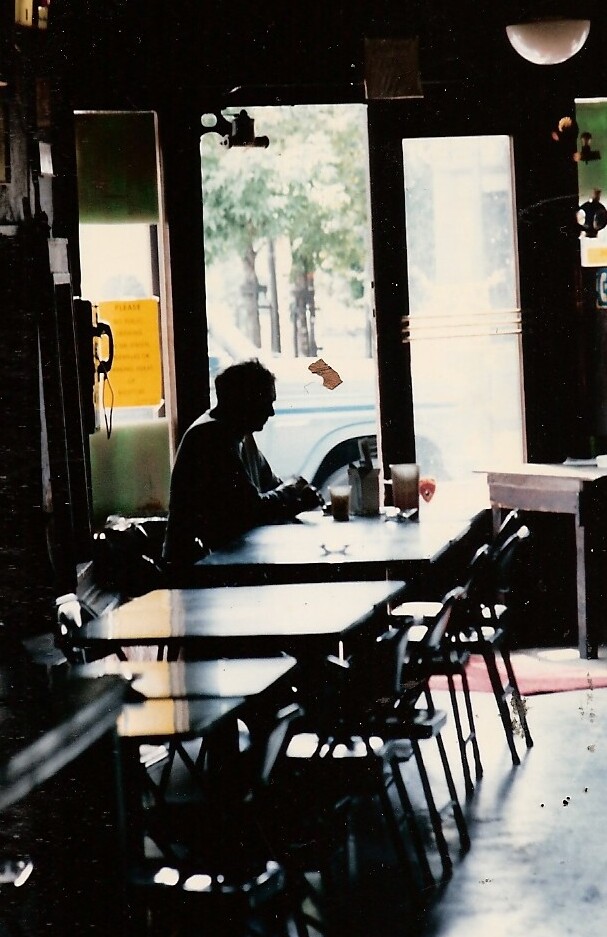
Photo: “KELLYS IN KCMO” by roberthuffstutter is licensed under CC BY 2.0.

Sonnet: Richard Fleming, ‘The Attic’

The attic, once unreachable, taboo
in childhood, is a temple laid to waste.
I climb the ladder, face the overdue
clear-out of debris with a mild distaste.
A View-Master, kaleidoscope, a kite,
a rocking-horse in much need of repair,
a reel-to-reel recorder I’d recite
poems into as though speaking them ‘on air’.
I dust them off, then pack them in a case
and glimpse in a chipped mirror on a shelf,
the look of an intruder on his face,
a fellow who can only be myself,
the last one left, unsportingly miscast
as tomb-raider, despoiler of the past.

*****

‘The Attic’ was first published in a set of ten semi-autobiographical poems in The High Window, where Richard Fleming was the Featured Poet.

Richard Fleming is an Irish-born poet and humorist based in Guernsey, a Channel Island between Britain and France. Widely regarded as one of the island’s foremost literary voices, his versatile work blends lyricism, sharp wit, emotional depth, and a strong sense of place. Drawing from his Northern Irish roots and adopted home, his poetry and prose explore love, loss, nostalgia, identity, and modern life. Collections include Strange Journey (2012), held in the National Poetry Library, and Stone Witness (Blue Ormer) featuring the BBC-commissioned title poem. His work can be found on
Facebook https://www.facebook.com richard.fleming.92102564/
or Bard at Bay www.redhandwriter.blogspot.com

“VIEW-MASTER” by Kim Hanwool is licensed under CC BY-NC-SA 2.0.

Melissa Balmain, ‘Freud Drops by to Analyze My Remodeling Project’

Your teeth are looking yellow
and your hands and face are spotty?
Don’t fret a smidge! Your stainless fridge
is one unblemished hottie.

Your arms have gotten squishy
and your gut’s no longer jocky?
Your counters (quartz!) are strong as forts,
and rockier than Rocky.

Whenever you feel foggy,
“smart” new lighting is omniscient.
Although you’re tired, your oven’s wired
and energy-efficient.

So never mind the birthdays
that you’re obviously rich in:
Spend big and—whee!—pretend to be
as youthful as your kitchen.

*****

Melissa Balmain writes: “If I have to become a middle-aged cliché, I at least want to get a poem out of it.”

‘Freud’ was first published in Crab Orchard Review.

Melissa Balmain’s third poetry collection, Satan Talks to His Therapist, is available from Paul Dry Books (and from all the usual retail empires). Balmain is the editor-in-chief of Light, America’s longest-running journal of comic verse, and has been a member of the University of Rochester’s English Department since 2010.

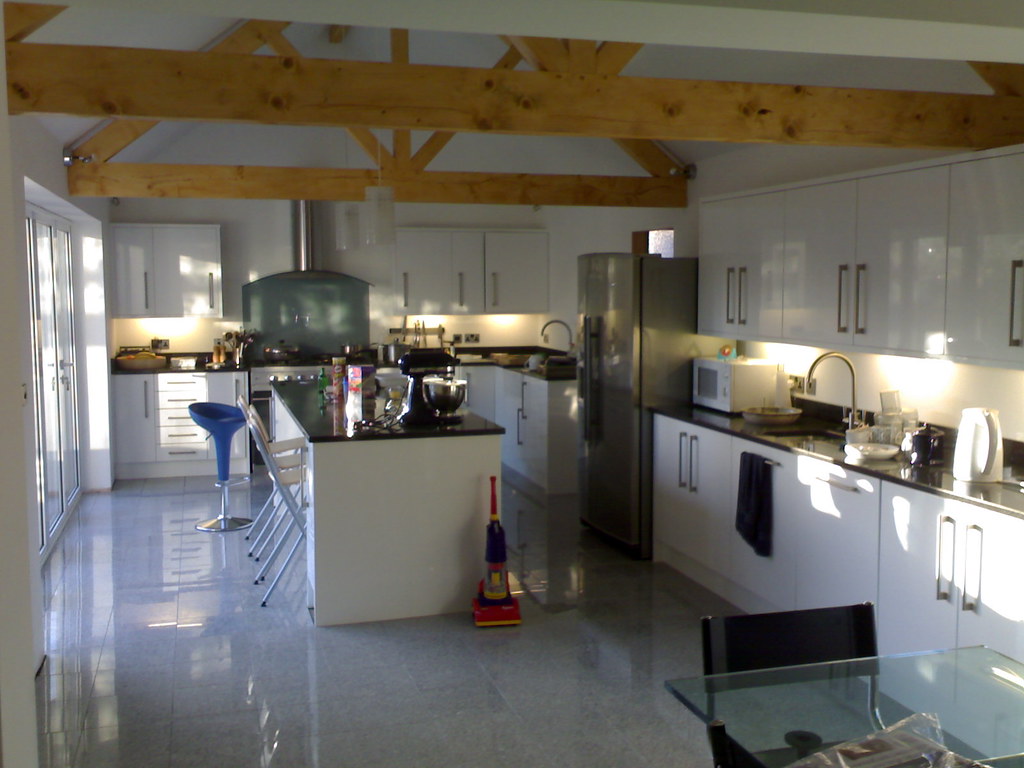
Photo: “New Kitchen” by Graeme_S is licensed under CC BY-NC-ND 2.0.

Lee Evans, ‘Late in the Evening’

The more she strained her mother wit
To put the jigsaw into place,
The more the pieces wouldn’t fit.
 
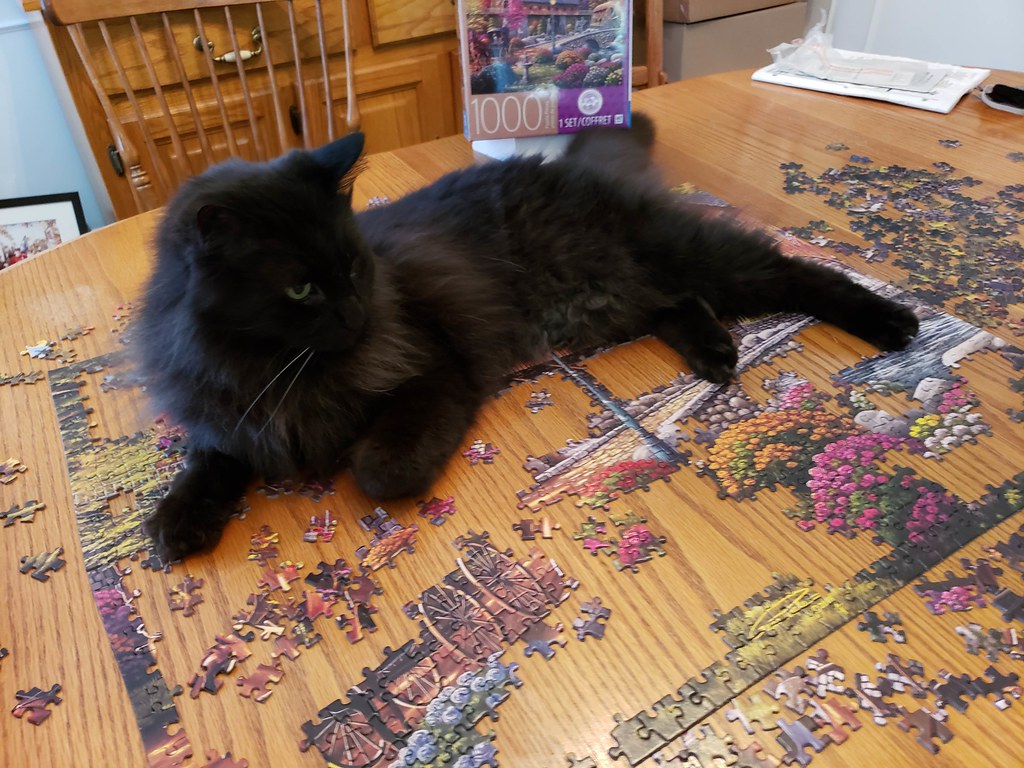
Too bad the cat had felt the need
To leap into the midst of things—
The puzzle would have been complete.
 
Somehow she had misplaced the lid,
Which had a picture stamped on it
Of what she searched for in her head.
 
The work lay spread in front of her;
The shapes appeared and disappeared,
Each morphing into metaphor.
 
Sometimes they’d stay where they belonged—
But then, to her weak eyes, it seemed
She’d put them all together wrong.
 
She kept on shuffling scattered bits;
Meanwhile a lifetime passed beneath
Her aged, trembling fingertips.

*****

Lee Evans writes: “This particular poem arose from the year-long habit my wife and I have of doing jigsaw puzzles. (Big surprise!) In such circumstances one gets to thinking a lot about putting the pieces of one’s life together, especially those of us who are in our mid seventies. I may have stolen the title from a Paul Simon song, but that has nothing to do with it. Several people I have known have suffered from dementia late in life, but the poem is more about trying to grasp fluid realities than dementia, and attempting this in the frailty of one’s declining years. But that’s not all there is to the poem…”

‘Late in the Evening’ was first published in Snakeskin.

Lee Evans was born in Annapolis, Maryland and worked for the Maryland State Archives. Having retired to Bath, Maine, he worked for the local YMCA and retired from there. He has self-published 13 books of poetry, which can be found on Amazon and Lulu.com. He occasionally puts poems on a blog, The Road and Where It Goes  (Formal purists should be forewarned that he has written a fair amount of free verse!)

Photo: “Cosmo Helping with Jigsaw Puzzles – 2020” by cseeman is licensed under CC BY-NC-SA 2.0.

Marcus Bales, ‘Suddenly’

Suddenly the kids, the car,
the house, the spouse, the local bar,
the work, have made you what you are.
What doesn’t chill you makes you fonder.

Should you stay or should you go?
The thrill you’re looking for, you know,
could be right here at home, although
what doesn’t thrill you makes you wander.

If, avoiding common truth,
you dye your hair and act uncouth,
will you find your misplaced youth –
really, will you if you’re blonder?

It doesn’t matter if you’re strong
or if you sing a pretty song,
something, and it won’t be long,
will come to kill you, here or yonder.

You’re human in the human fray,
and choose among the shades of grey.
No matter if you go or stay
what might fulfill you makes you ponder.

*****

Marcus Bales writes: “This is a little more than a decade old, back when I still had a full time job. There is something looming in a life about a full time job that’s hard to escape entirely even when you’re determined to try. Must have been a bad day on the sales floor.

“This is one of those poems where a rhythm enters my mind and won’t go away until I put words to it. Of course it already HAD words to it, but I couldn’t use those. So after one quatrain it became a challenge to see how many of that refrain rhythm it was possible to make sense with. That’s actually sort of freeing, because once that becomes the challenge, it opens the poem, for me anyway, to using the randomness of the rhyme words, as they arise, to drive each stanza’s, and thus the whole poem’s, sensibility. This is a good example of how the aleatory dice of rhyme can be used to open up opportunities to say things I wouldn’t have thought of to say at all without having to work toward the rhyme word. This can be very bad for a poem, of course — one of the main ways to judge poems in meter and rhyme is on how hard it is to tell whether the poet was using the rhyme words that way or not. The goal, of course, in almost all rhyme, is to delicately decorate the poem rather than for it to be clear that the poet was merely chasing a rhyme. And when there’s a rhyming refrain line the danger is extreme.

“I remember being pretty happy with it at the time. I do like the way something seems to loom over the narrator, pressing him onward through his meditation, and providing, I hope, the reason that meditation is needed.”

‘Suddenly’ was first published in The Rotary Dial, which is now offline… but this issue, the Best of 2015, is at https://midnightlanegalleryii.wordpress.com/wp-content/uploads/2014/10/7c8e9-december15.pdf

Not much is known about Marcus Bales, except he lives and works in Cleveland, Ohio, USA, and his work has not appeared in Poetry or The New Yorker. His latest book is 51 Poems; reviews and information at http://tinyurl.com/jo8ek3r

Photo: “Decisions decisions ..” by monkeywing is licensed under CC BY 2.0.

Using form: Villanelle: Rachel Hadas, ‘However Cool’

However cool X may have thought he was
made very little difference in the end.
We are transformed as we approach the close.

Everyone is subject to these laws.
Ozymandias collapsed in sand,
however cool he may have thought he was.

We live in structures—marriage, job, or house—
steered steadily toward an unknown land,
slyly transfigured as we near the close,

additions and subtractions dealt by whose
enormous unseen hand?
However cool Y may have thought Z was,

her freshness faded like a poet’s rose,
malady no medicine can mend
disguising her before she reached the close.

Think of it as time; a veiled command;
a principle: I do not give. I lend.
However cool we might have thought A was,
we all are changed as we approach the close.

Rachel Hadas writes: “The villanelle ‘However Cool’ was occasioned by a conversation with a friend; she and I were talking about a mutual acquaintance who was ill, and my friend uttered a perfect iambic pentameter line which became the first line of the poem, as well as, with variation, one of the repeated lines.  It was fun to keep switching initials – the “however cool…” downward arc applies in different ways to so many people.

“A.E. Stallings has commented that villanelles are more fun to write than to read, and she may have a point.  At this point in life, I certainly find them easier to write than sonnets. But I hope there’s a bit of rueful fun to be had in ‘However Cool’.”

Rachel Hadas’s recent books include Love and Dread, Pandemic Almanac, and Ghost Guest. Her translations include Euripides’s Iphigenia plays and a portion of Nonnus’s Tales of Dionysus. Professor Emerita at Rutgers-Newark, where she taught for many years, she now teaches at 92Y in New York City and serves as poetry editor of Classical Outlook. Her honors include a Guggenheim fellowship and an award from the American Academy-Institute of Arts and Letters.

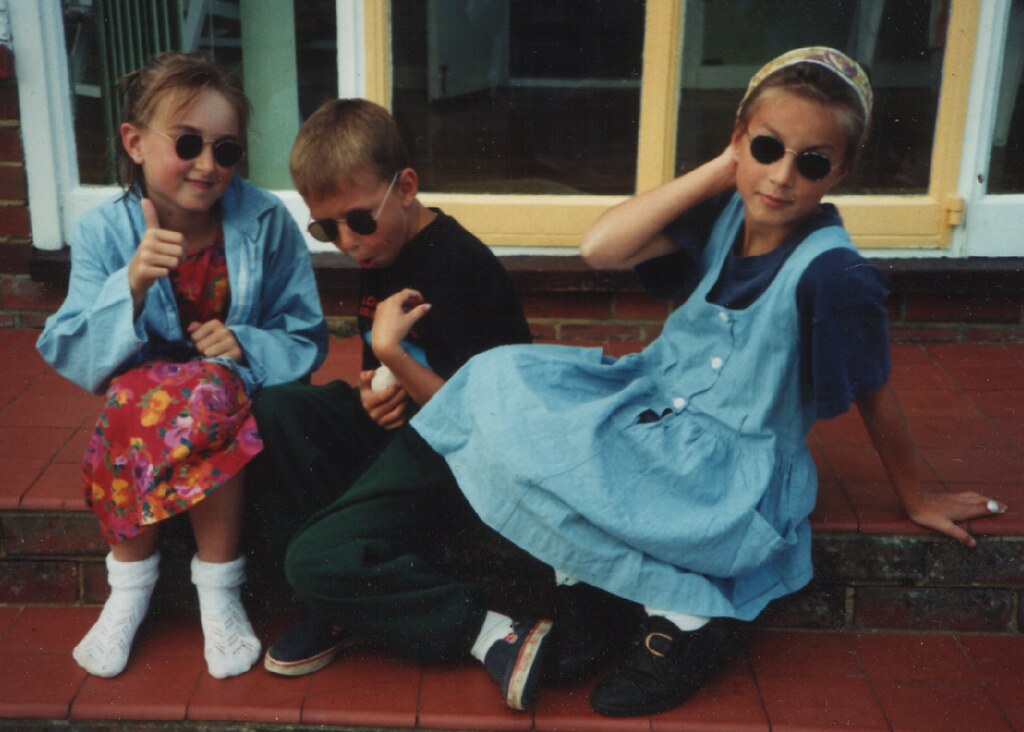
Photo: “cool for kids – summer holidays” by oddsock is licensed under CC BY 2.0.