Tag Archives: mirror

Sonnet: RHL, ‘Mirror Shades’

Trust’s been essential to our global rise,
and humans have a unique way to build trust:
we’ve left all other primates in the dust
because, alone, we have whites to our eyes.

With dark eyes, what they look at they disguise,
whether they see it with disgust or lust.
Why we look may leave other folks nonplussed,
but that they know what we’ve seen stops some lies.

We’ve sacrificed a natural secrecy
to raise our social aspects several grades.
Hiding your eyes now means active deceit.
So, those upholding laws and decency
can’t be allowed sunglasses; mirror shades,
especially, alienate and self-defeat.

*****

I guess this isn’t a good example of a sonnet. There’s no real turn, it’s just an essay beating on the same point over and over: the eyes being the windows of the soul (even to an agnostic), if you are trying to build trust and community you have to be able to see each other’s eyes. If you are just trying to dominate, then sure, go ahead, hide behind shades and mirrors and blinds and curtains… but you’re giving up one of the greatest innovations that let our species of ape achieve social complexity.

The poem was recently published in the weekly ‘Bewildering Stories‘.

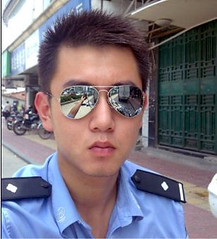
As for the photo, it appears to be a selfie by a young Chinese police officer, more concerned with style and image than with making his community safer. But who knows what is important in his life and for his career.

Cutie Police” by Beijing Patrol is licensed under CC BY 2.0.

Oliver Butterfield, ‘Self-reflection’

Y’know — it ain’t a lot of fun
negotiating one-on-one
with the person in the mirror who
is staring blankly back at you
with hollow, soporific eyes —
but you penetrate his deep disguise,
and then it is you realize
that you’re in for loads of gloom and doom
cooped up within this little room
all by your empty, woeful self,
all, all alone, with no one else —
and the guileful guy you’re talking to
isn’t talking back at you —
’cause he knows there’s nothing left to say.
But the sonvabitch won’t go away.

*****

This poem was originally published in Better Than Starbucks. I have been unable to find Oliver Butterfield, I only know he retired and closed his law practice in Kelowna, British Columbia. I’d be interested in seeing more of his poetry.

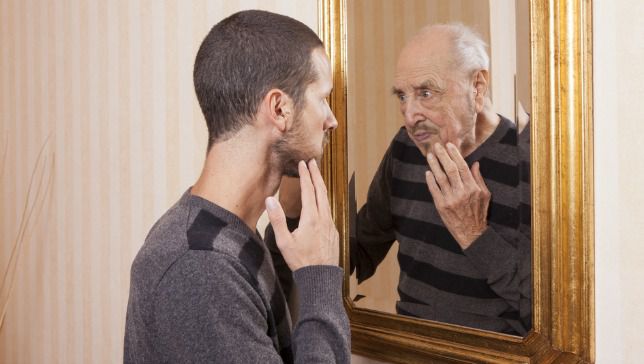
Photo: “Man in the Mirror” by airguy1988 is licensed under CC BY-ND 2.0.

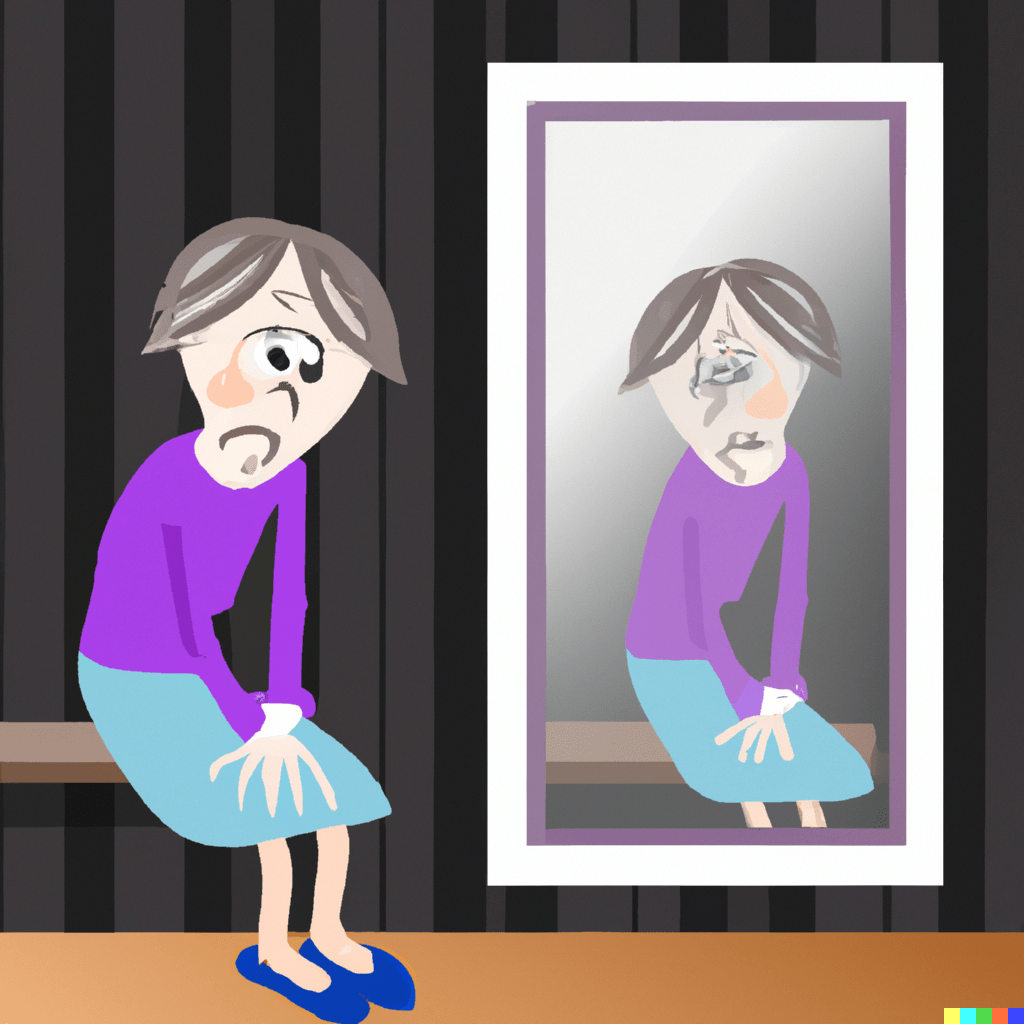
Susan McLean, ‘The Mirror’s Desolation’

Once you adored me. I would bask
in looks you saved for me alone,
giving no hint—if any ask—
of secrets only I have known.
But now you find me hard to face.
I care for you too much to lie,
copying lines you would erase.
You hurry past, head down, and I,
sensing your pained indignity,
return your look of mute distress.
Though you no longer cherish me,
I do not love you any less.

*****

Susan McLean writes: “I took the idea of a talking mirror from Sylvia Plath’s poem ‘Mirror,’ but whereas she presents the mirror as being totally dispassionate, my mirror reflects the emotions as well as the faces of those who look into it. Sometimes, if you see someone beautiful, you may think “the mirror loves her (or him).” But it occurred to me that mirrors love everyone. They just as gladly reflect the old and ugly as the young and beautiful. In this poem, I imagine the mirror’s sorrow that its love is not returned. In French, “I’m sorry” is “je suis désolé” (“I’m desolated”), which always seemed charmingly over-the-top to me. It occurred to me that the phrase “the mirror’s desolation” could refer both to the sorrow the mirror feels and to the devastation it causes. This poem first appeared in Valparaiso Poetry Review, and then in my second poetry book, The Whetstone Misses the Knife.

Susan McLean has two books of poetry, The Best Disguise and The Whetstone Misses the Knife, and one book of translations of Martial, Selected Epigrams. Her poems have appeared in Light, Lighten Up Online, Measure, Able Muse, and elsewhere. She lives in Iowa City, Iowa.
https://www.pw.org/content/susan_mclean

Illustration: DALL-E

Haiku: “Young Man”

Ageing Man in Mirror

(In the mirror)

Where’s the young man gone,
who lived in mirrors so long?
Putting old masks on.

This was published in Asses of Parnassus, a most worthy site for short verse, especially the flippant, frivolous or sarcastic. “Young Man” seems to be a theme I keep returning to, probably because I keep having birthdays. It’s easy enough to feel in your early 30s when you’re climbing a tree to pick fruit, or swimming, or reading; but a mirror may offer an unexpectedly different opinion.

Technically a loose sort of haiku, this poem meets the requirements of 5-7-5 syllables and the volta between lines 2 and 3, but hardly addresses a season and its sensibilities. The rhyme and near-rhyme of the three lines is not something required in Japanese, but seems to me to be necessary in an English haiku to make it a poem, i.e. to differentiate it from 17 syllables of prose written over three lines.