Tag Archives: Pulsebeat Poetry Journal

David Stephenson, ‘Payday’

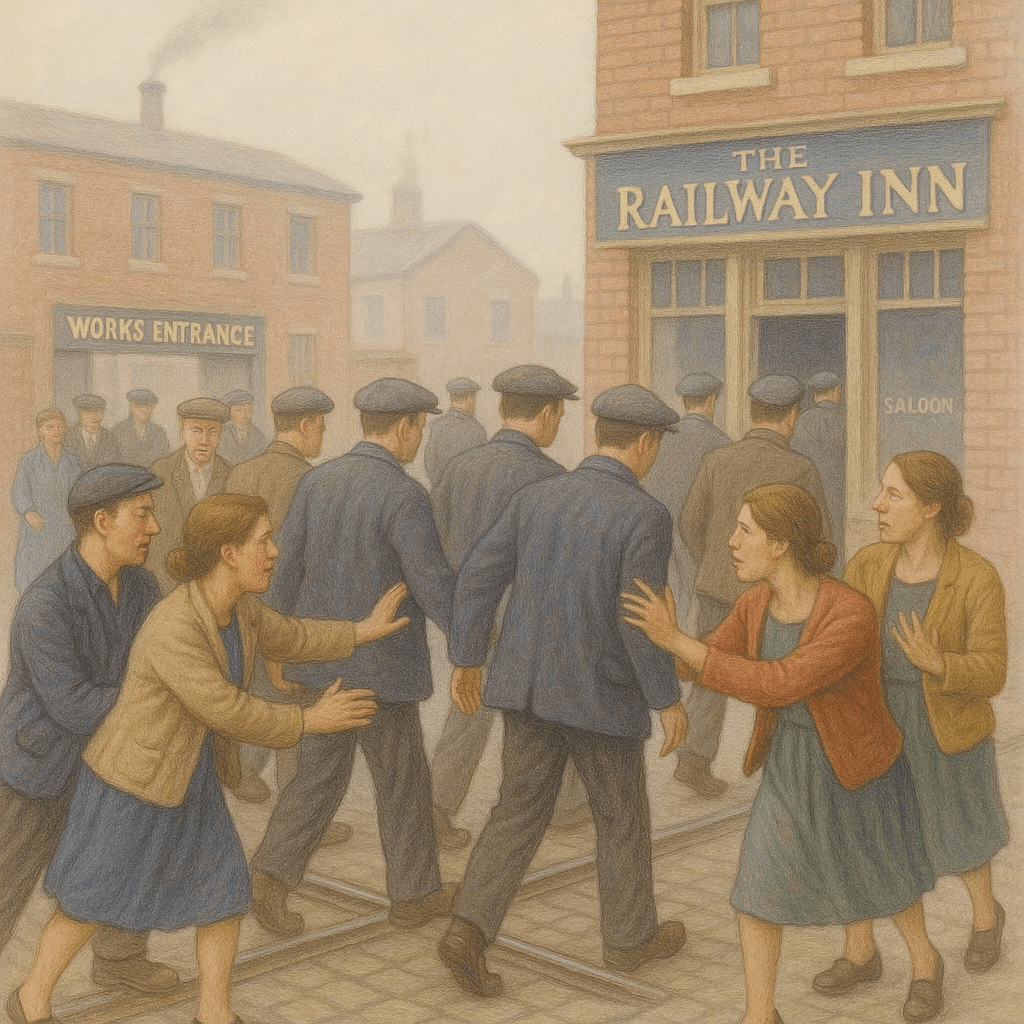
My dad’s plant was across the railroad tracks
from half a dozen shot and chaser bars,
and on paydays the bars were visited
and stocked with stacks of bills by armored cars,
 
and women waited at the gates and tracks
at shift changes, to try to intercept
their thirsty husbands in the passing throng
before they cashed and drank up half their check.
 
At the time, I didn’t think about
how desperate those women must have been
to go out on a crowded public street
and chase after their irresponsible men;
 
I guess I found it droll.  But if I’d been
more aware, what could I have done or said?
When people’s lives are going off the rails
strangers only frown and shake their heads.

*****

David Stephenson writes: “When I was in high school, my dad worked at John Deere Plow-Planter—now called Seeding and Cylinder—in Moline, Illinois.   This was before direct deposit, so the workers got paper paychecks.  As with many factories, there were several taverns nearby, any of which would happily cash a paycheck.  If I borrowed Dad’s car, I would have to pick him up and drop him off, so I was sometimes there during shift changes.  On paydays you would see armored cars outside the bars, and at the end of the afternoon shift you would see women waiting on the railroad tracks, as described in the poem.  It didn’t really register with me at the time, but later on I realized it was quite sad.  I wrote the first two stanzas of the poem four or five years ago, but was stuck as to how to proceed, since I didn’t know what to say about the scene.  What can you say?  I finally came up with the current ending, which says there isn’t anything to say, but says it well.”

‘Payday’ was first published in Snakeskin.

David Stephenson is a retired manufacturing engineer from Detroit, and the editor of Pulsebeat Poetry Journal.  His most recent collection is Wall of Sound (Kelsay Books, 2022).

Illustration: RHL and ChatGPT

Semi-formal verse: RHL, ‘False Analogies’

The Universe is made of false analogies –
flawed observations, secondhand “I see”s,
discarded dreams.
Nothing is truly as it seems.
We build our intellectual shelter from life’s gales
from scraps of lumber and found nails,
anything within reach,
rope washed up on a beach,
a sliding glass door, still intact,
used as a wall. And all because
the Universe we sense has flaws,
disobeys its own laws,
is just a framework for the Mind That Plays,
a sketch, hypothesis; a tract, not fact;
a work in process, changing with the days.
Dig deeper, and find fresh discrepancies.
Our shelter, in fair weather, keeps us warm,
can stand up to a breeze…
will be no shelter in the coming storm.

*****

I marvel at the impossibilities of the quantum mechanisms of the universe being revealed. I enjoy Nick Bostrom’s speculations on everything being a simulation. I wonder at the powerful who are jockeying for development and control of AI, at our Nietzschean will to power, at our eternal quest for immortality. I am aware that nature constantly sacrifices billions in the process of advancing a few. I wonder if we are in that process now. I am not bothered that I have no answers.

This poem was first published in the current edition of Pulsebeat. Thanks, David Stephenson!

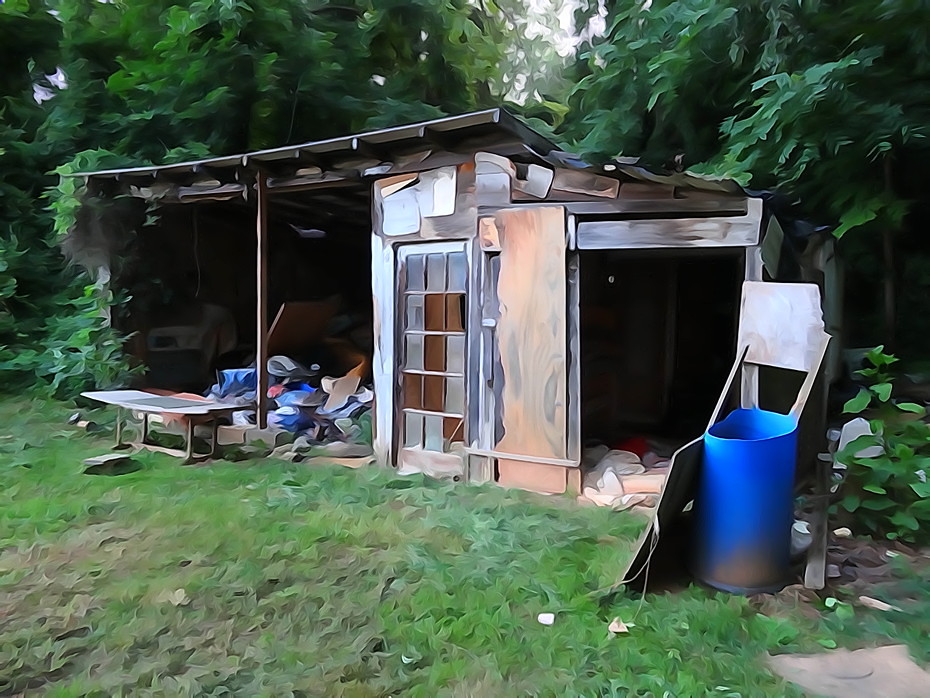
Photo: “wc west avl homeless gathering spot” by zen is licensed under CC BY-NC-SA 2.0.

Using form: Ottava Rima: Max Gutmann, ‘Conscious Agents’ (from Don Juan Finish’d)

You sages aren’t surpris’d to learn that cowardice
Is courage. Truths illumine and conceal.
The dulcet affirmation and the sour diss
Can equally be true. That’s no big deal.
The world is full of paradox — and now word is
That even space and time may not be real.
We only think we see and smell and touch things.
The “world” is like, say, Donkey Kong and such things.

It’s all just icons on an interface:
The sound of rain, that contract you just sign’d,
The microbe on a slide, the feel of lace,
The smell of skunks, the corner you were fined
For parking at, your arm, the very space
You (think you) move through — products of your mind.
And even little quarks, atomic particles,
Are not, as thought, the fundamental articles.

No, “conscious agents” are what’s fundamental.
The theory says it’s they and they alone
We’re sure of. Space? Time? Objects? Incidental.
They hint at some reality unknown.
The dawn, the dung, the breeze, the brain, the lentil:
In all of these, our faith is overblown.
Those conscious agents compass us and we
Create those things — though not, um, consciously.

*****

Max Gutmann writes: “Don Juan Finish’d fancifully completes Lord Byron’s unfinished comic epic. Excerpts have been contributed to LightLighten Up Online, Orbis, Slant, Think, the website of the Byron Society, and Pulsebeat, where ‘Conscious Agents’ is among the excerpts to have appeared. Formalverse has also reprinted another excerpt. ‘Conscious Agents’ is part of a digression from the plot, digression being an aspect of Byron’s epic mimicked in Don Juan Finish’d.”

Max Gutmann has contributed to dozens of publications including New StatesmanAble Muse, and Cricket. His plays have appeared throughout the U.S. and have been well-reviewed (see maxgutmann.com). His book There Was a Young Girl from Verona sold several copies.

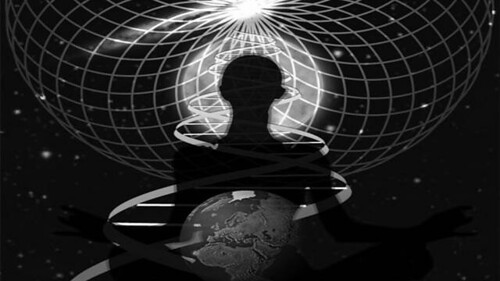
Photo: “Consciousness Awakening on Vimeo by Ralph Buckley” by Ralph Buckley is licensed under CC BY-SA 2.0.

RHL, ‘The Sun is Always Setting’

The sun is always setting, always setting on your day;
you sense the dark approaching, wish that it would stay away.
Do you want a life unchanging? Wish to still be a newborn?
Don’t you know life’s not a rosebud, but has root and leaf and thorn?

The sun is always setting and the black drapes are unfurled;
but notice that the sun sets on your world, not on the world:
it’s rolling into brightness in another’s happy land,
and the dark is evanescent and the brightening is grand.

The sun is always setting on the dinosaurs, but birds
are flocking into being, as are Serengeti herds;
and the sun that lights humanity? Of course it’s going to set,
and elsewhere light new tales of which we’ll just be a vignette.

The sun is always setting, but that view is just your choice;
I say the world is turning and evolving; I rejoice.

*****

Sometimes I’m told that my poetry is too bleak. But I think that’s only so if you want everything to stay as it is now. If, on the other hand, you expect change, and that change will ultimately provide more benefit than loss to the universe as a whole, then <shrug>… so it goes.

This poem has 14 lines but is hardly a sonnet. It was recently published in Pulsebeat Poetry Journal. Thanks, David Stephenson!

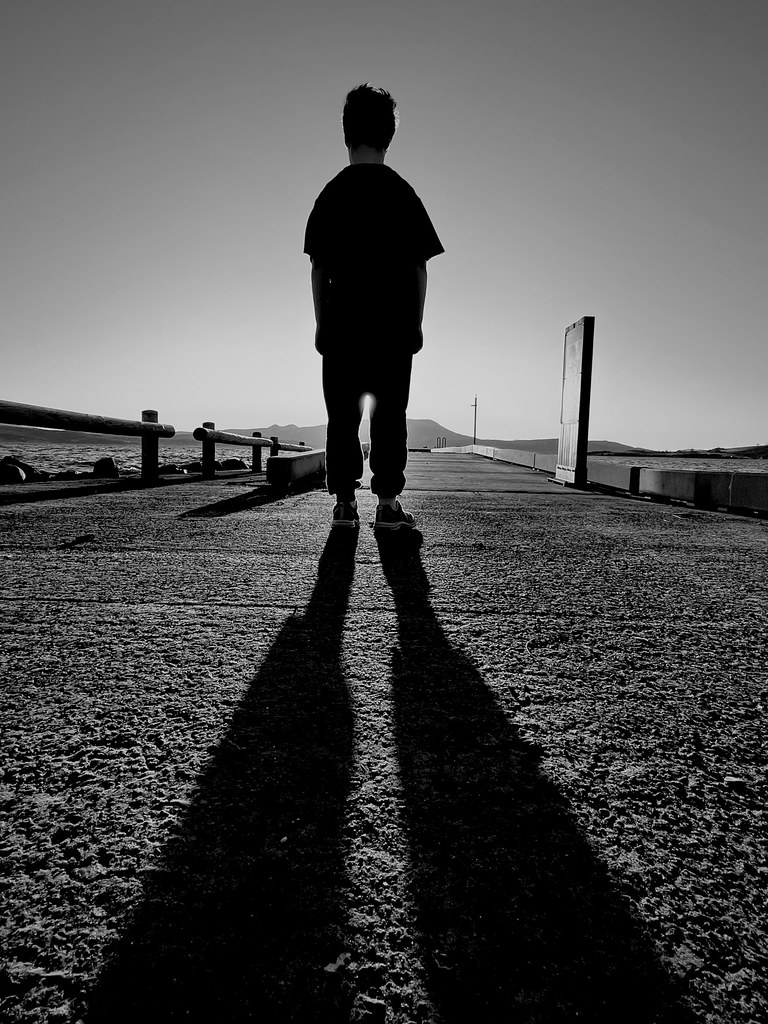
Photo: “Sunset Sadness” by BaboMike is licensed under CC BY-NC 2.0.

Sonnet: RHL, ‘Your Lot’

From prairie city to an island town;
from city festivals to empty sea;
from continental seasons, white, green, brown
to changeless warmth and high humidity.
No one could hope for love more fierce, more loyal,
more honest, constant through good times, harsh tests,
raising our varied children as they boil
off along individual paths and quests
with a fierce love for them in their success
and even more, their fulfilled happiness.
You miss the north’s reliable forethought,
but not your parents, siblings and cold strife.
There’s always trade-offs, getting where you’ve got.
Just don’t look back. You chose your lot in life.

*****

Two questions: Is it a “sonnet” if the rhyme scheme is non-standard and there’s no real volta? And is it better to accept the unconventional form that the poem was comfortable in, or to try to beat it into more standard shape?

Obviously, I chose to leave it with its imperfections as I wrote it; but that might be from laziness more than anything else. Yes, I *do* work on poems after the first draft… usually… but once I’ve got something halfway acceptable I tend to stop. If I’ve got it to the point where I could easily learn to recite it, then it’s good enough.

But non-traditional sonnets are simply not as engaging, as well-balanced, as rhetorically forceful, as either the Petrarchan or the Shakespearean can be. Those forms have an elegance, a beauty, a structure that leads to a sudden insight or a punchline in a way that at its best (partly due to the rhyme scheme and partly due to the unbalanced “halves” separated by the volta) feels not just well-phrased but unquestionably true.

So this sonnet, if it is a sonnet, is second best. Still good enough to have been published recently in Pulsebeat – thanks, David Stephenson!

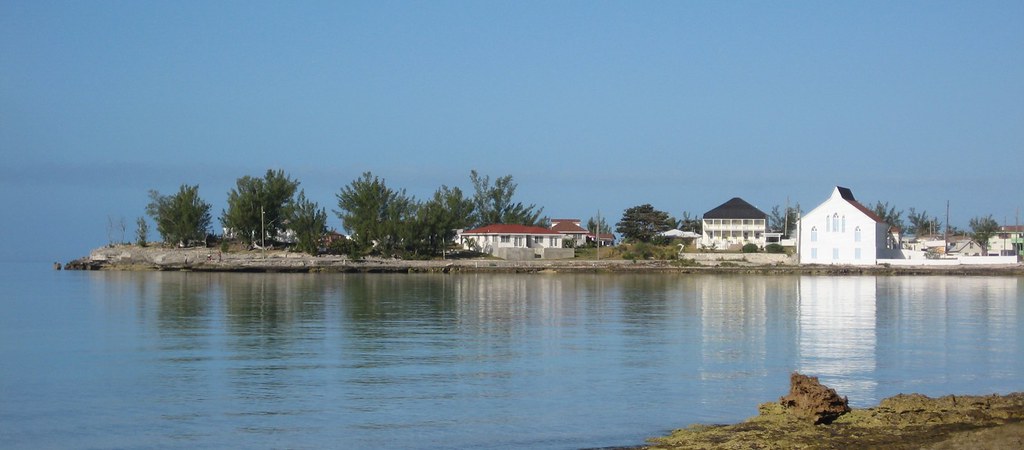
Photo: “Part of Governor’s Harbour, Across the Bay” by tylerkaraszewski is licensed under CC BY 2.0.

Using form: Ottava Rima: Max Gutmann, ‘Life, That Hack!’ (from Don Juan Finish’d)

If we could but instill in Life–that hack!–
The element’ry rules of composition,
Prevent the crude and sloppy maniac
From spoiling every scene with his tradition
Of shouting in our faces like a pack
Of drunken sailors wailing their rendition
Of “Captown Races” or “My Drawlin’ Clementime,”
Their rhythmic belching almost keeping them in time.

For Life to utilize the art of Art
Could help in many ways that we could mention.
Some structure and suspense would be a start.
To get us upright in our seats, fists clenchin’,
A little rising action would be smart
(Or something that would help us pay attention,
Instead of simply zoning out a lot
And missing half the details of the plot).

But Life, I fear, shall never learn to craft
A decent tale. (It hasn’t that ambition.)
It uses characters extremely daft,
And wastes far too much time in exposition.
It never bothers to revise a draft,
Too taken with its own first thoughts. Perdition!
Each aspect of the story is a shame–
And worst, the ending’s always just the same.

Max Gutmann writes: “Don Juan Finish’d fancifully completes Lord Byron’s unfinished comic epic. Excerpts have been contributed to Light, Lighten Up Online, Orbis, Slant, Think, the website of the Byron Society, and Pulsebeat, where ‘Life, That Hack!’ is among the excerpts to have appeared. The complete poem is still unpublished, though I privately printed some copies to share with friends and colleagues.
Like Byron’s poem, Don Juan Finish’d is often philosophical, at times facetiously, as here.”

Editor’s note: As with Byron’s original, Gutmann’s Don Juan Finish’d is written in ottava rima: eight-line stanzas in iambic pentameter rhyming ABABABCC, with the final line or two typically used to humorously deflate whatever more high-sounding statements were made earlier in the stanza.

Max Gutmann has worked as, among other things, a stage manager, a journalist, a teacher, an editor, a clerk, a factory worker, a community service officer, the business manager of an improv troupe, and a performer in a Daffy Duck costume. Occasionally, he has even earned money writing plays and poems.

Photo: “comedy/tragedy masks, waterfall” by milagroswaid is licensed under CC BY-SA 2.0.

Poem: ‘And, If I Could’

And, if I could, I’d sing my love with unicorns in chains of flowers,
With endless oceans greyly battering by misty moors,
With joyful hunting dogs with muddy paws,
With soft spring showers –
With anything eternal, wistful, happy, sad.
But all my dogs inside are snapping, yapping, mad,
My showers are wintry, my sea-shores are lined
With unkind tourists drinking bourbon,
And unicorns are dead, and flowers suburban.

And, if I could, I’d steal my love on midnight horse and overseas,
To city-sacking buccaneering round the reckless earth,
Settle at last to farm some quiet firth:
Goats, orchards, bees;
Explosive starts, wild-beating hearts, and peace at last.
But ungeared fantasies spin lies torn from the past:
I’m a slum-quarter city-sprouting weed,
My planted seeds die in deserted gardens,
My wandering’s my weak will; and my heart hardens.

And, if I could, I’d love my love with wayside flowers, fresh fruit, a kiss,
With secondhand-in-hand shops’ dazzling, puzzling oddities,
With evening at the theater or a fair,
With wordless stare,
With dreams and smiles, and laughter at my foolishness.
But all my city streets are drizzle and drains, not bliss;
Traipsing to shows and shops is soul-destroying,
And, toying with my rural lie,
Commitment-scared, I flee the searching Eye.

And, if I could, I’d give my love all children, chosen and our own:
Their love – their moody silences – their smiles like wind and sun –
Their seashell searching – riots – sense of fun –
Pregnant to grown
We’d share kaleidoscope Life’s spectrum-brilliant rays.
But I drift unfamiliar down decaying days
Where trees are concrete and the ground is stone,
Bemoan I knew but left that love…
And, if I could, you know I’d have my love.

*****

This is a poem from my 20s, when I was more skilled at the creation of nonce forms. Formal poetry was essentially unpublishable at the time; decades later, this poem has just been published in David Stephenson’s Pulsebeat Poetry Journal.

File:Philadelphia Flower Show 2011 Unicorn of flowers HPIM4354.jpg” by Mary Mark Ockerbloom is licensed under CC BY-SA 4.0.

Max Gutmann, ‘A Letter Home’

One flat fall evening, as an undergrad,
I left the library to mail a letter
and at the mailbox had
a stirring–-I don’t know what else to call it,
but I felt certain, drifting back
on brittle leaves, surrounded by the gray,
this was my life–-a feeling new,
whole, deeply and vibratingly unstrange.

Back at the carrel, where my books still lay,
I sat some time immersed there in that moment:
me, having walked away
from books for some slight, distant human contact,
returning through the coming winter
to my small space. It struck me as both sad
and right; young as I was, I knew
it wasn’t something I would ever change.

*****

Max Gutmann writes: “Though it takes the perspective of an older man looking back, ‘A Letter Home‘ was written shortly after the experience it shares, years before I wrote any other verse (aside from some limericks); the drive to record the experience as a poem had nothing to do with habit. I couldn’t have anticipated that the “distant human contact” in my life would come to include a community of writers with whom I’ve only ever exchanged words on a screen (a community you do a lot to nourish, Robin. Thank you.)”

A Letter Home‘ was first published in the Pulsebeat Poetry Journal.

Max Gutmann has worked as, among other things, a stage manager, a journalist, a teacher, an editor, a clerk, a factory worker, a community service officer, the business manager of an improv troupe, and a performer in a Daffy Duck costume. Occasionally, he has even earned money writing plays and poems.

Photo: “McAllen mailbox” by Drpoulette is licensed under CC BY-NC-SA 2.0.

Poem: ‘Homage From British Expats’

Thou noble, purest British race!
Thy children we,
Inheriting thy every trace;
From thy straight back, unmoving face,
We learn the truest social grace,
Pomposity.

To thee the new is never good,
’Tis duty shirked.
Thou’dst never think, and much less brood;
Thou duty-bound eatst wooden food;
Thou ever ramrod-straight hast stood,
And never worked.

Britain! Served on a silver tray
Thine Empire’s tea –
Respectfully we beg to say
We praise thee, but we cannot stay,
We have our duty far away,
Escaping thee.

*****

This is the third of the poems recently published by Pulsebeat Poetry Journal, and I’m pleased at how different the three of them are. ‘Ultimate Control’ is a Science Fiction sonnet, ‘Ticking Away’ is a meditation on time, life and death, and this one was written almost 50 years ago in reaction against (some aspects of) being sent to boarding school in England.

A little personal context: I was raised as an expat in the Bahamas by my Danish father and English mother. After five years of Church of England primary boarding school in Jamaica (when at least I came home three times a year) I went to England for five more years of boarding school, and came home rarely. The countryside setting of Stowe was delightful, and I got a good education with a lot of poetry, and I learned sarcasm. It all uprooted me from being fully Bahamian, but failed to make me fully English. In the 1970s the Bahamas didn’t want me and I didn’t want England. So… Denmark, then Canada, then the US, and finally the Bahamas again as a foreign resident. I have been an expat all my life – and frequently sarcastic about it.

The poem is a nonce form – I used to produce them easily in my 20s, I wish I still did. It’s in iambics rhyming ABAAAB, with four feet to the A lines and only two to the B lines – the last line of each verse being a punch line and the shortness of the line helping strengthen that effect.

Image” by spock-ola is licensed under CC BY-NC-SA 2.0.

Sonnet: ‘Ultimate Control’ (from the series ‘Voices from the Future’)

If you’ve the aptitude and love the role,
the Army’s always been the place to be.
Rise in the ranks, absorbing strategy:
coordinate, consolidate, control.
And what a blessing when those new implants
gave mind-to-mind awareness… and command.
Like the unthinking fingers on your hand
you can maneuver thousands with a glance.
The battle then’s to see what you can wrest
from other leaders, fighting mind-to-mind;
you have to grow, or you get left behind:
can you control ten million, like the best?
Of would-be kings there’s never been a dearth…
will it be only one who rules all Earth?

*****

This sonnet has just been published in Pulsebeat Poetry Journal’s 3rd issue (thanks, David Stephenson!) It is one of a series written in response to a comment from Maryann Corbett (a brilliant formalist poet) about the bleakness of my vision of the future. Well, she’s a Christian, so she has a totally different take on humanity’s future from my irreligious SF-infused speculations. Another sonnet in the series, ‘Exiled Leader‘, was published by Star*Line.

I don’t find it bleak to think that there will be unprecedented individual and planetary disruptions. I’m not distressed at the thought of humans being supplanted some posthuman higher intelligence. Should the earliest rat-like mammals of 145 million years ago be upset to learn that their human descendants build cities and kill any rats they find in them? Should they identify only with the familiar rats and wish that evolution had stopped there, or instead be proud that they have also developed into humans (and dogs, and whales, etc)?

For myself, life is a wild ride, and I long to see where it will take humans in a hundred or in a thousand years. Because of the current revolutions in genomics, robotics, AI and nanotechnology, I doubt we can reasonably forecast even a hundred years into the future. We can speculate all we like but once we merge a human with AI, create a cyborg, all bets are off.

20120401 – Hand – IMG_2898” by Nicola since 1972 is licensed under CC BY-NC-ND 2.0.