Tag Archives: relationships

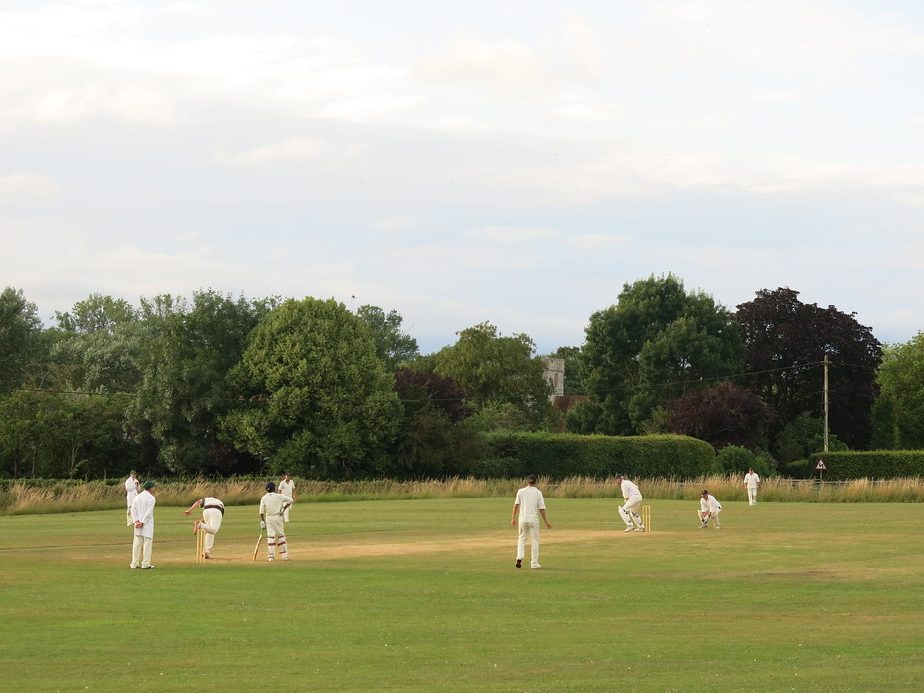
Iambic hexameter: Martin Parker, ‘Man of the Match’

You swore at me and hurled your ring into the pond
then drove off back to London “for some bloody fun”
with friends whose Chelsea coven held you in its bond.
I was next in, scored twelve and hit the winning run.

The beers were long and cool, the Captain shook my hand.
Dusk shaded in, a final liquid blackbird sang.
A coughing tractor crawled a strip of fading land.
An owl flew low across the pitch, a church bell rang.

Two muddy urchins with a shrimp-net dredged the pond
their hopeful piping rippling in the cooling air
while you choked on exhaust at Guildford or beyond
along your golden road to Knightsbridge and Sloane Square.

Another world and just two perfect hours away
your eyes had been bright green. Or brown. Or were they blue?
I still recall the details of that Summer day
so much more clearly than I now remember you.

*****

Martin Parker writes: “The only point I might add is my hope that if the muddy urchins’ dredging efforts were rewarded they were not too disappointed to learn that the ring’s diamond might not have been a real one! The intervening sixty-five-plus years have, mercifully, erased the fact that I may have been nothing but a cheapskate!”

‘Man of the Match’ was first published in Snakeskin.

Martin Parker is a writer of mainly light and humorous verse much of which has appeared in national publications including The Spectator, The Oldie and The Literary Review. In 2008 Martin founded the quarterly light verse webzine, Lighten Up Online at www.lightenup-online.co.uk, now edited by Jerome Betts. His website at www.martinparker-verse.co.uk gives details and excerpts from his two “hopefully humorous and only occasionally wrily depressing books”.

Photo: “Village cricket” by Peter Curbishley is licensed under CC BY 2.0.

Lindsay McLeod, ‘She’

She drinks a bit more
she loves a bit less
she no longer fits
in her wedding dress.

She’s given up trying,
accepted her fate,
feels herself thinning
while she stacks on the hate.

Doesn’t feel like his partner
his mate or his wife,
all she feels is as hard
and as sharp as a knife.

She reels her mind back
but can’t seem to recall,
what she ever saw in him,
why she married at all.

It’s a dead man’s float,
face down on the bed,
they sleep separate, unsound
in their queen sized dread.

So she’ll tread bitter water
as she has done for years,
not so much married to him
as she is to her fears.

*****

Lindsay McLeod writes: “‘She’ was written in my head, wearing ear protection in a factory. It was about my (then) partner who had recently escaped a toxic relationship.” The poem was originally published in Fine Flu.

Lindsay McLeod is an Australian writer who lives quietly on the coast of the great southern penal colony with (yet another ferocious Aussie animal) his cattle dog,  Mary. Lindsay still drives a forklift to support his poetry habit.

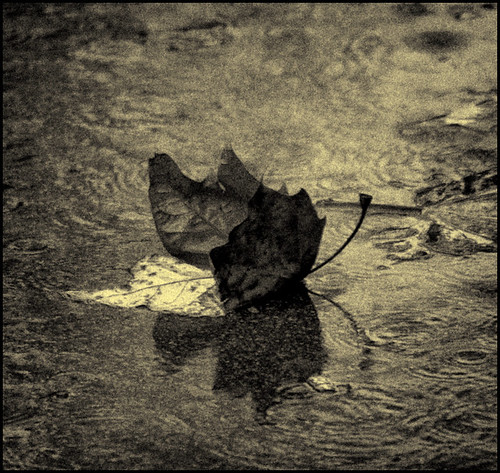
Photo: “fulla-ocell / leave-bird ( Every little thing she does is magic )” by Jordi@photos is licensed under CC BY-NC-SA 2.0.

Sonnet: Joe Crocker, ‘Stick and Twist’

The more that you dislike the way I am,
the less I worry what it is you like.
I let go the way that you don’t like
the rattled heart of me, the way I am.

 
Perhaps we’re going through a sticky patch.
The patch that stuck us down long years ago
is not as sticky now. But even so,
its tar has held us close enough to catch.
 
It covers up the cracks and hides the shabby
seams we couldn’t mend. We still pretend
to rub along regardless. In the end,
perhaps we are just averagely unhappy.
 
The way we blister love and twist its scar.
We sort of stick it out. And peel apart.

*****

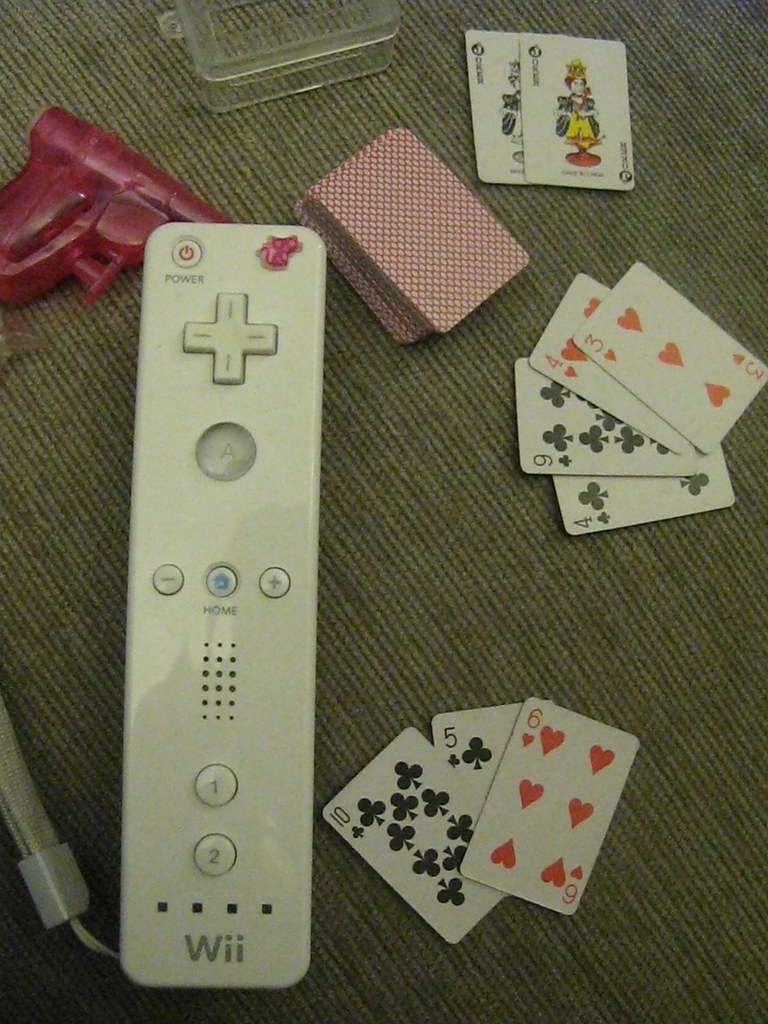
Joe Crocker writes: “I wrote this poem a year or two ago as an expression of frustration and sadness about the slow decline of a long marriage. The title is  an allusion to the UK card game Pontoon (Blackjack in the States?) where you can either hold your cards (stick) or ask the dealer for another (twist). It’s written from the perspective of one person in two voices. The italic lines are pained and self-pitying and the middle stanzas are him trying to figure out what has happened.”

‘Stick and Twist’ was originally published in the current Rat’s Ass Review.

Joe Crocker has a 25 yds breast-stroke certificate, several Scouting badges and “O” level Epistemology. He has won prizes – bubble bath mostly, a bottle of Baileys once. His poems squat in obscure corners of the internet. He doesn’t have a pamphlet or a website but if you Google his name and add “poetry” you’ll find most of his published work (as well as links to a deceased Sheffield rock singer.) He gets by with little help from friends.

Photo: “Playing Pontoon with tiny cracker cards” by Rain Rabbit is licensed under CC BY-NC 2.0.

Petrarchan Sonnet: Jane Blanchard, ‘Microsania imperfecta’


She was the one who went off on her own.
She was the one who filed for the divorce.
You gave her what she wanted in due course.
Still she will never leave your life alone.

Available through email more than phone,
You have remained a favorite resource.
She contacts you supposedly perforce,
Less for herself than for a son long grown.

She seeks a certain something left behind,
A sterling ladle or an antique chest,
A recipe or record you must find.
Your common past has yet to enter rest
Since fire so often burns within her mind.
For smoke fly’s sake, you try to do your best.

*****

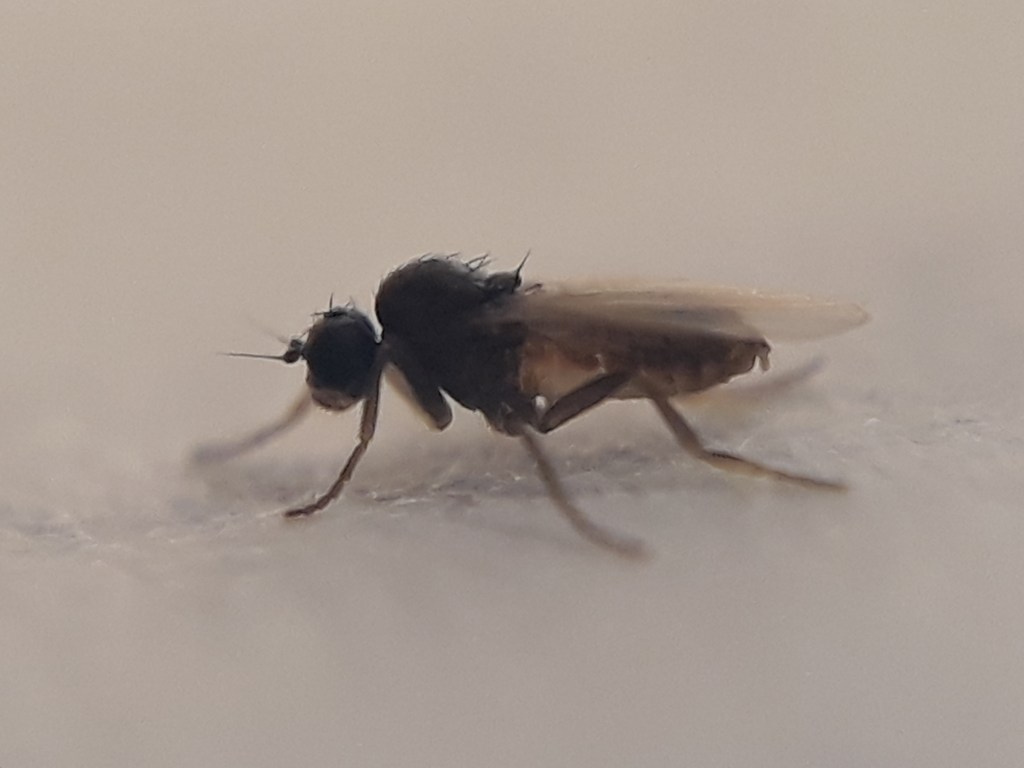
Jane Blanchard writes: “I came across the Latin term for this insect in an article in The Guardian about New York City in the summer of 2023, and the metaphor seemed curiously applicable to a particular person. A somewhat-Petrarchan sonnet then manifested itself. 
New Yorkers baffled by tiny flying bugs swarming city in wake of smoke | US news | The Guardian

On the Ecology of a Smoke Fly, Microsania imperfecta12 | Annals of the Entomological Society of America | Oxford Academic
I am gIad that Clarence Caddell chose to include the poem in the second issue of The Borough.”

A native Virginian, Jane Blanchard lives and writes in Georgia. Her collections with Kelsay Books include Metes and Bounds (2023) and Furthermore (forthcoming, 2025).

Photo: “Microsania” by Guilherme A. Fischer is licensed under CC BY-NC 4.0.

Lindsay McLeod, ‘Last Call’

If this isn’t what you’ve yearned for
or indeed what you are craving
then cup your hands, drink deeply
of a sweeter misbehaving.

If you cannot find your wine inside
the glass that you were given,
taste the new with eyes and thighs
and dye your lips a deep vermillion

with a juice that has been pressed
from vines let grow out of control
that taste of summertime and
sex and drugs and rock and roll

because if you…

find distaste in your final breath
dressed in another’s ill fit clothes
remember, this did not just happen
sweetheart, this is what you chose.

*****

Lindsay McLeod is an Australian poet that has won a few things and is widely published. He just had to start messing about with words again lately. You’d think he’d know better by now, but oh no. Some of his most recent work can be found in DILLYDOUN REVIEW, GRAND LIL THINGS, DRAWN TO THE LIGHT, POETiCA and MORTAL MAGAZINE.

RHL: In addition to Mr McLeod’s self-description, let me add that I have been trying and failing to contact him. I don’t even have permission to post this poem. If anyone can put me in touch with him, I would be grateful.

Photo: “98/365: ♫ Red, Red Wine…” by rogersmj is licensed under CC BY-NC 2.0.

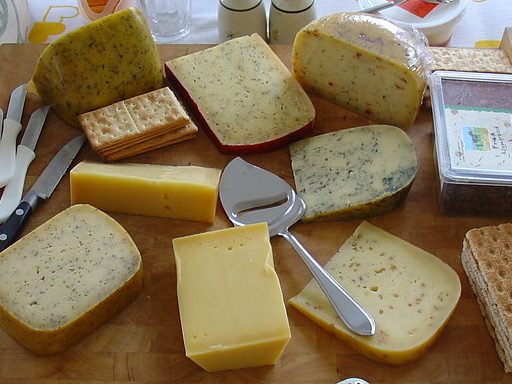
Odd poem: Brian Bilston, ‘Brie Encounter’

the skies are gruyere since she left me
i’ve never felt so danish blue
caught between a roquefort and a hard cheese
i stilton’t know what to do

don’t give edam about the future
now my babybel’s walked out the door
can’t believe i’ve double gloucester
i camembert it any more

i’ve ricotta get myself together
and build my life back caerphilly
cheddar tear for the final time
say goodbye to us and halloumi

*****

Brian Bilston is “the Banksy of the poetry world”.
You can find a daily poem on Facebook, and his books here.

Photo: “Cheese, cheese, cheese” by kurafire is licensed under CC BY-NC 2.0.

Sonnet: RHL, ‘Communication Breakdown’

I love you with that love floppy and large,
As one of us a man – the other, dog;
Involved, detached, our life’s a travelogue
Of countrysides seen from a rented barge,
“Travels With You” along some river’s marge,
Failing at interspecies dialogue
Till tries at talk are lost in night and fog,
Drifting with batteries we can’t recharge.

Yet there’s no option but to travel on,
Each varied day no different than before,
Wondering if we’ll find some magic door
Which, risking entry, gives communion;
And if, by talking, love would be enhanced,
Or if we’d then destroy all we have chanced.

*****

Sonnet originally published in Candelabrum in 2007.

Photo: “Accordion player” by eltpics is licensed under CC BY-NC 2.0.

Armen Davoudian, ‘Coming Out of the Shower’

I shut my eyes under the scalding stream,
scrubbing off last night’s dream,
when suddenly I hear your voice again
as though it caught in the clogged drain

and was sent bubbling back up from the other
world where you’re not my mother.
This time, it’s really you. I’m really here.
I blink. We do not disappear.

Dad left, you say, to shower at the shop
so I don’t need to stop
just yet—and yet I do, unable to
resume old customs, unlike you.

In a one-bath four-person household, we
learn what we mustn’t see,
growing, in time, so coolly intimate
with one another’s silhouette

behind the opaque frosted shower screen
that once more stands between
us two. While at the mirror you apply
foundation and concealer, I

wash out my hair with rosewater shampoo,
which means I’ll smell like you
all day. Mama, I shout, I’m coming out,
and as you look away I knot

around me tight your lavender robe de chambre,
cinching my waist, and clamber
out of the tub, taking care not to step
outside the cotton mat and drip

on the cracked floor you’ve polished with such zeal
we’re mirrored in each tile.
Yet, you’d forgive spillage, or forget.
What else will you love me despite?

*****

‘Coming Out of the Shower’ by Armen Davoudian is reprinted with permission from Tin House Books from the book The Palace of Forty Pillars (2024). The poem was originally published in Literary Matters.

Armen Davoudian is the author of the poetry collection The Palace of Forty Pillars (Tin House, US; Corsair, UK) and the translator, from Persian, of Hopscotch by Fatemeh Shams (Ugly Duckling Presse, US; Falscrhum, Germany). He grew up in Isfahan, Iran, and is a PhD candidate in English at Stanford University.

Shower Silhouette” by tausend und eins, fotografie is licensed under CC BY 2.0.

Morri Creech, ‘Mileage’

The car mechanic’s counting out his bills
behind the E-Z Mart at one a.m.;
he’ll toss rocks at beer bottles just for thrills
until his dealer comes, it’s fine with him.

He draws in a deep breath and sees the light
swerve from the highway, puzzling the back wall
he leans against just to keep out of sight.
A quarter bag and some fentanyl, that’s all.

His phone vibrates again though nothing’s wrong.
For two years he’s been living in a trailer
with a girl who works at Publix. They get along
even if sometimes she says he’s a failure—

what can he say to that? Sure. He lives cheap.
They’ll fight until she forces a decision,
then roll around on the couch. Once she’s asleep
he’ll take a dose and watch some television.

At night he dreams of cylinders and sprockets,
the trucks and cars too busted up to fix;
startled awake, eyes aching in their sockets,
he’ll watch the clock hands grope their way to six.

A car pulls up but he can see it’s not
his hookup. Just kids with nothing else to do
but drink a six-pack in the parking lot
before they head out to the lake to screw.

He had his share of mischief, too, Lord knows.
The girls don’t eye him in the check-out aisle
much anymore, the ones with painted toes.
A few years back, at least, they used to smile.

The boys can see the grease that stains his hands;
they all think, damn, who wants to work that hard?
He spends the day beneath their dads’ sedans
while they play tackle football in the yard.

Chasing a football blew out both his knees
and broke his wrist. That was three years ago.
Customers say, “go Stags,” and toss their keys,
then look at him real close as if they know.

A text says no one’s coming. The BP sign
flickers over the pumps, and though it’s half-
past two now, and he’s tired, he’s feeling fine
enough to think it’s all a bust, and laugh.

And, anyway, it’s good to be alone
with the gas fumes and blinking traffic light
and fifteen missed calls lighting up his phone.
Later, he thinks, once he and his girl fight,

and once she falls asleep on his left arm,
he’ll stare at the divots on the ceiling tile
and wait to hear the clock sound its alarm
while the night’s odometer counts one more mile.

*****

Morri Creech comments: “As Mark Strand once said, I write to find out what I have to say. I don’t start a poem with an idea; I start with a line, an image, a rhetorical stance. Then I write in search of context: how can I situate this in a situation, a narrative moment, an argument, a meditation? The language takes me wherever I end up. This poem was constructed like that. I started with a first line and then wrote toward trying to figure out the context of the line. In this case, it led me to a character sketch. It was fine to discover what this character was about; the decisions I made about his character and circumstances were largely directed by rhymes. They steered me in what I hope was the right direction.”

Morri Creech is the author of five collections of poetry, including the Sleep of Reason, a finalist for the Pulitzer Prize, Blue Rooms, and The Sentence (published by LSU Press, and which includes this poem). A recipient of NEA and Ruth Lilly Fellowships, as well as North Carolina and Louisiana Artists Grants, he teaches at Queens University of Charlotte.
www.morricreech.com

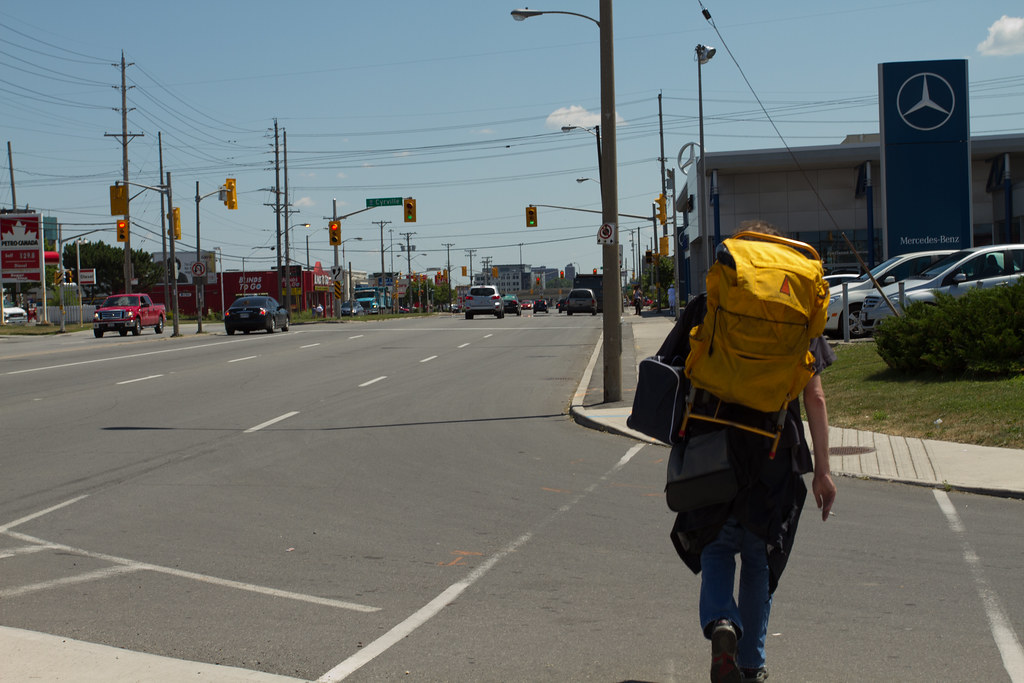
Photo: “Let’s Talk Tires” by gfpeck is licensed under CC BY-ND 2.0.

Sonnet: Matthew Buckley Smith, ‘Youth’

I miss believing that I’ll never die,
Or is it that there won’t be a tomorrow?
Both lines work out about the same: deny
The day you’ll have to pay back what you borrow.
It used to be I never went to bed
A second night with any girl I found.
No breakfast in those days–a smoke instead,
Then out the door before she came around.
Last night I passed a toppled garbage bin,
Its liner sagging with a rat’s remains.
He sank a little when I squinted in
And seemed embarrassed by his greedy pains.
And so much like a man, the way he sat
Still in his death, and so much like a rat.

*****

Matthew Buckley Smith writes: “I wrote most of Dirge” (his first book of verse, winner of the 2011 Able Muse Book Award. – Ed.) “in a summer. I was wading through a bad depression, and having written almost nothing but free verse to that point, I set myself the challenge of writing one sonnet a day for the rest of the summer. ‘Youth’ is a survivor of that experiment, written while walking late at night through the campus of Johns Hopkins on the way to the apartment of the woman who is now my wife.”

Matthew Buckley Smith is the author of Midlife (Measure, 2024) and Dirge for an Imaginary World (Able Muse, 2012). He hosts the poetry podcast SLEERICKETS and serves as Poetry Editor of Literary Matters.
https://www.matthewbuckleysmith.com/

Photo: “rats” by Lance McCord is licensed under CC BY-NC-SA 2.0.