Tag Archives: Robin Helweg-Larsen

Poem: ‘Wild Oats’

He sowed wild oats
From John O’Groats
As far as Walvis Bay;
West to Cancun,
Up to the Moon,
And back to old Cathay.

Who will forgive
The way he lived?
Where are the children, though?
Daughters and sons
Under what suns?
Who’ll ever even know?

Now settled down,
Mayor of his town,
Friend to both poor and rich,
He’s no regrets
For he forgets…
That selfish son of a bitch.

This poem started with those first two lines, triggered by a photographer’s fundraising paramotor trip from John O’Groats to Land’s End this past summer. BBC story and photos here. No wild oats are involved in the story, but ‘John O’Groats’ is such an evocative name, you have to rhyme it with something… and then you just end up following the rhymes wherever they go. That’s how it often is for me, anyway. No editorial opinion is implied, no persons living or dead, no animals were harmed, etc.

The poem was published in Snakeskin 289, i.e. this October. Editor George Simmers was good enough to point out a particularly weak rhyme and a suggested improvement for it, which I happily took.

“wild oats” by john curley is licensed under CC BY-NC-SA 2.0

Poem: ‘Love Poetry’

All the love expressed in poems overtly
Seems so pure they can be taught in schools,
Yet reading lives of all these divine fools
You realise that the impulses
That drove them to express themselves in verse
Include love that repulses
(Differing by era), and was forbidden:
Incest, same sex, underage, interracial,
Interfaith, cross-generational,
BDSM – even a pet, a dog.
Scandalous, and kept hidden,
At worst horrific and at best uncouth –
Yet all identity is just a fog
Of “You, my love”, expressed covertly.
And kids in school are never taught the truth.

Seriously, no one seems to pay any attention to the realities behind the love poetry that is taught and studied in schools. But much of the reason for the admired poem being so forceful is often that the poet was conflicted about being able to express their love at all – gay in a time of homosexual suppression is the one most easily identified now (in Shakespeare, Byron, etc, just as there are similar non-poetic gay passages in the Bible), but any strong but forbidden desire is capable of producing fine art.

This poem is not really formal. It has rhyme and meter but it is unstructured. Semi-formal, then, like much of the best work of Arnold and Eliot. It was published in that edgy, carefree journal the Rat’s Ass Review – thanks, Rick Bates!

“Love Poetry” by Kez Price is licensed under CC BY 2.0

Sonnet: ‘Fat-shaming’

Gorging on food, an atavistic trait
useful, essential, in the paleolithic–
like a man’s lust for teenage girl as mate–
is one not needed now, shamed as horrific.
It’s healthy, though, to recognise such drives,
note where they came from, why they once were good:
these traits in which the primitive survives,
inbuilt components of our personhood.

It’s acting on them, though, that we deplore:
those who fuck teens and those who overfeed,
like those who steal, or lie, or start a war,
aren’t shamed for primitive desire, but deed–
like those who pray to gods, follow religions,
or skry the future from entrails of pigeons.

It’s not PC these days to even mention various issues, and I seem to have covered a lot of them in this sonnet. But it’s a decent enough Shakespearean sonnet (iambic pentameter, ABAB CDCD EFEF GG, volta between the octave and sestet) and also a good enough expression of an opinion, so what is there to complain about? Originally published in that not-always-comfortable but always formal ‘The Road Not Taken – A Journal of Formal Poetry’. Thanks, Dr. Kathryn Jacobs!

“Young and Fat” by Tobyotter is licensed under CC BY 2.0

Short Poem: ‘Cryo Limerick’

The correct thing to do, when you’re dead,
Is have someone take care of your head;
There’s no chance of more drama
Without Futurama –
Don’t say you weren’t warned – act, instead.

Humans have tried to beat death since forever. Chinese herbs, Egyptian mummification, unlikely (but lucrative) promises of Paradise. In the present rapidly-evolving environment, transhumanism thrives on the ideas of physically and genetically modifying us for a longer life, and cryonics suggests being frozen as an “ambulance to the future” when repairs might be possible. The “head in a jar” image captures the wry appreciation that this stuff may work in the future, but won’t be of any use to us. But so what if the chance of success is a fraction of a percent? That still beats the chances of further life after cremation, or after being processed through the bodies of worms…

This limerick was originally published in ‘Transhumanity‘, edited by James Hughes. Both the magazine and the transhumanist movement have gone through changes of name and state, but the ideas are no longer as far on the fringe as they were a couple of decades ago.

“Futurama…?” by Emanuele Rosso is licensed under CC BY-NC-ND 2.0

Sonnet: ‘The Fall of Rome’

Jesus, a preacher with fake miracles,
his “Sea” of Galilee just eight miles wide–
rebelling against Rome and crucified–
his failure clear (though words were lyrical)…
you’d think “Messiah” was satirical!
But epileptic Paul a chance descried
to shut out other gods and thoughts worldwide,
thus sealing up Rome’s vital spiracles.
So, building on apocalyptic fears,
the Jewish Jesus ends where Paul begins.
Scientists, artists, poets, engineers,
are suffocated as the new faith wins.
All progress is set back a thousand years.
The Roman Empire died for Jesus’ sins.

Belief is strange. Take Covid vaccination: two thirds of us believe it’s an effective way to save lives, one third of us believe it’s a dangerous and unscrupulous way to make money and control people. Virtually no one has actually done any research and analysis of the issue, we just listen to our preferred sources of information and the community we’re a part of.

Or take religion: for the most part, children raised in Christian families remain Christian believers all their lives, Muslims remain Muslim, Buddhists remain Buddhist, and so on. Which makes it all the more impressive when someone can radically change the belief structure that surrounds them. Kudos then to the epileptic Paul of Tarsus, who created a Jewish-Mithraist-polytheist mishmash that has lasted almost 2,000 years. Pity about the Roman Empire, though.

This happily Petrarchan sonnet (iambic pentameter, and rhyming ABBAABBA CDCDCD) was originally published in Rat’s Ass Review, where respectfulness and respectability are not required. Thanks, Roderick Bates!

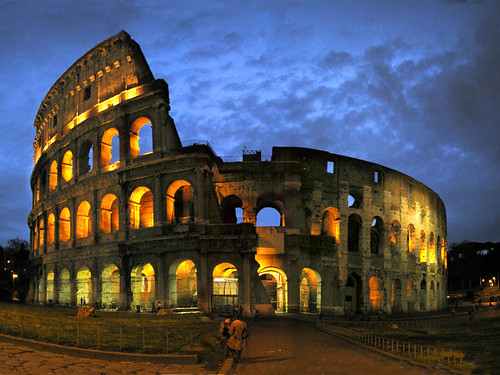
“Darkness Falls in Rome” by Storm Crypt is licensed under CC BY-NC-ND 2.0

Short Poem: ‘Days’

Where do they go, the days, twirling around?
Leaves in a dust-devil, swirled on the ground –
Water makes whirlpools just touching a drain –
Then the basin is empty. And no days remain.

September, heading towards the equinox and (in the northern hemisphere) winter. The end of the summer, back to school, back to work, loss of freedom, into the cold and the dark. Another year gone–having a September birthday doesn’t help!–the trees giving up, dry leaves falling and whirling in outside corners of asphalt and concrete… Head south, where it is still summer!

This short poem was published on a page of short pieces in the September issue of Lighten-Up Online – thanks, Jerome Betts!

“Water down the drain” by David Blackwell. is licensed under CC BY 2.0

Sonnet: ‘The Thief’

More than the actual loss, it’s helplessness
That we most loathe when suffering a theft:
The arbitrary way one daring, deft,
Brass act leaves careful order in a mess;
The knowledge the thief’s wilder and cares less;
The easy way he tears the warp and weft
Of dull security; the insight left
The cosmos can as quickly curse as bless.

Therefore the fears are mostly overblown-–
The thief himself causes no loss or strife
More than insurance or day’s work redeems.
But there’s a greater thief, and more unknown,
Who comes each night and steals one third your life,
Leaving no more than fingerprints, your dreams.

Sleep and dreams are so large a part of our existence that they seem to merit more attention than most people pay them. Sure, we need some rest, but we can get physical rest while awake during the day. So do we really need seven or eight hours every night to defrag our minds and delete unnecessary memories?

I like to think (this is close to “I believe”, but it isn’t belief) that there is something crucial going on that we are missing. The occasional “big dream” that resonates life-changingly. The dream of a distant loved one saying goodbye, before you get the news the next day of their death. The awareness that your unconscious is actually running your show, and that you better pay attention and assist where you can. All these reduce the apparent dominance of the waking mind, and open cans of existential worms. There are no certain answers. We are nowhere near understanding how our bodies, our minds or the universe works.

It’s all wonderful; but I still resent the amount of time I have to sleep. (And to those who say “It’s possible to sleep a lot less” I say “Yes, but at what cost? We have no idea.”)

I’m proud of this sonnet on a technical level. It is a true Petrarchan sonnet (iambic pentameter, and rhyming ABBAABBA CDECDE); the flow of words finds natural tiny pauses at the line breaks; only the volta, the twist to the exposition, is arguably in the wrong place, being strongest after the 11th line rather than after the eighth. But I feel it is all redeemed by a strong last line.

‘The Thief’ was originally published in ‘Candelabrum‘ – a magazine stolen by time.

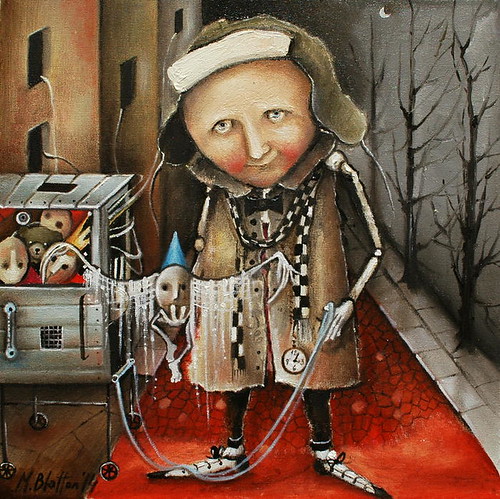
Photo: “Thief Of Dreams” by Monica Blatton is licensed under CC BY-NC-ND 2.0

Short poem: ‘Every Little Mammal’

Every little mammal
Likes a little cuddle.
Man or mouse or camel,
Life becomes a muddle
If there is no cuddle
For the simple mammal.

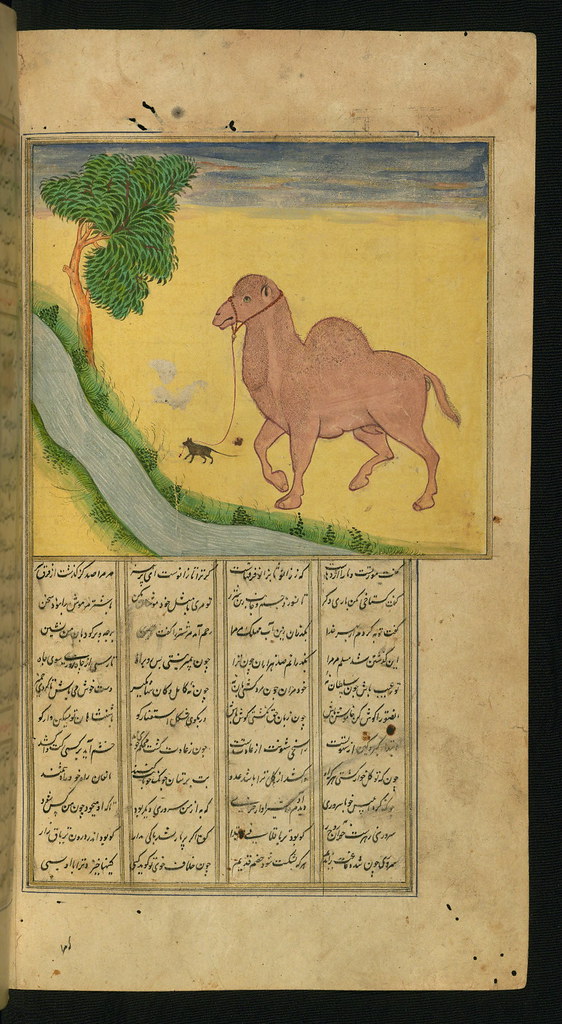
There’s nothing much to this little poem. Sometimes an awareness of a rhyme or near-rhyme sparks a thought, sometimes a random thought contains words that rhyme, or nearly… and if it’s not a large thought, it’s not a large poem. But it’s there all the same. And if you’re really lucky, you can find an appropriate illustration…

This short poem was originally published, like a hundred others of mine, in Snakeskin. Thanks for all of them, editor George Simmers!

“Illuminated Manuscript, Collection of poems (masnavi), A mouse, clutching the reins of a camel, at a stream of water, Walters Art Museum Ms. W.626, fol. 94b” by Walters Art Museum Illuminated Manuscripts is marked with CC0 1.0

Short Poem: ‘Cultural Field Trip’

Properly stroppily,
Off to Thermopylae
Busloads of schoolchildren
Grudgingly go;
Hoovered, manoeuvred
Off into the Louvre’d
Be better for profs who are
Trudgingly slow.

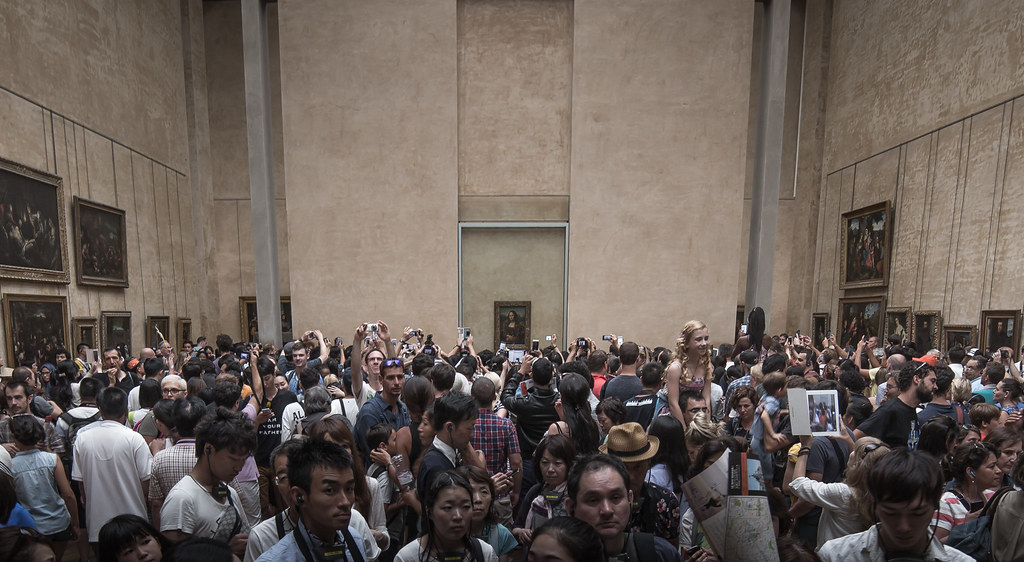
No, I agree, that’s not a true Double Dactyl because it doesn’t have a single-word double dactyl line. It’s just one of those poems I’ve written for no other purpose than to play with rhymes. The poem was published in this month’s Snakeskin, editor George Simmers privately commenting: “As an ex-teacher I empathise with the trudging profs.”

“Mona Lisa Madness” by Joe Parks is licensed under CC BY-NC 2.0

Sonnet: ‘One True Religions’

No vision brings the whole world to its knees.
Jains, Hindus, Buddhists, Mithraists, Parsees,
Moses, Muhammad, Jesus or St. Paul,
One True Religions never conquer all.
Humans are simply too cantankerous
for any one belief to anchor us.

Success at once leads into sects and schisms:
the One Pure Ray of Light hits human prisms,
and egos, power grabs, love of dispute,
traditions, curiosity, all loot
the intellectual wealth of strong belief.
This year’s great guru’s merely last year’s thief.

Control’s maintained by sword and flame, not thought.
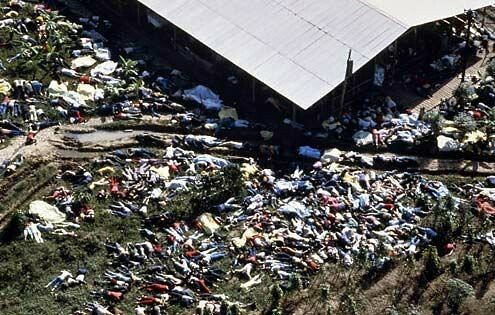
In failure, drink the Kool Aid or get shot.

Well, maybe 14 lines rhymed in pairs isn’t really a sonnet, even if it’s in iambic pentameter. But when you’ve got a structure that works for a poem, I don’t think it’s worth trying to hammer it into a different shape just to try to reach a “higher” standard. Anyway, sonnet or not this poem was published in Rat’s Ass Review – as you could guess from the journal’s name, editor Roderick Bates publishes whatever appeals to him, with no apologies for treading on other people’s sensibilities, religious, poetic or anything else. It’s a good place to submit a poem that other journals might be squeamish about, and a good place to read a wide range of outspoken poetry.

“Jonestown massacre” by johndavison883 is marked with CC PDM 1.0