Tag Archives: rondeau

Rondeau: Political Poem: J.D. Smith, ‘Citizen Vain’

Who burned his sled? That would explain
The wisps of hair coiffed like a mane,
The name writ large on thrusting towers,
His rating of his works and powers.
Who wouldn’t take up his refrain?

A loser, say, without a brain
And envious he can’t obtain
Fresh wives imported like cut flowers.
(Who burned his sled?)

A nation may endure a reign
Of fire once tended with some pain
Outlasting its appointed hours
Yet starved, for all that it devours.
The question holds fast like a stain–
Who burned his sled?

*****

J.D. Smith writes: “I try not to say or write the name of the moral homunculus who is currently the 47th President of my country, lest my words get entangled in his omnipresent branding. That said, in verse I have occasionally renounced him and all his works. This poem was first published during the 2016 primary season, when speculating on how that troubled and troubling man became that way was still an interesting parlor game with low stakes. While others with credentials in psychology have discussed his origin story, perhaps most notably in this book, as a poet I gravitated toward metaphor. As some will ask a badly behaved person “Who broke you?” or “Who hurt you?”, I began to wonder ” Who burned his sled?” in the sense of some analog to the loss of Charles Foster Kane’s sled Rosebud in Citizen Kane. What early personal trauma made the current collective trauma possible?”

J.D. Smith’s seventh collection of poetry, The Place That Is Coming to Us, was published in September by Broadstone Books. His first fiction collection, Transit, is available from Unsolicited Press. Further information and occasional updates are available at www.jdsmithwriter.com.

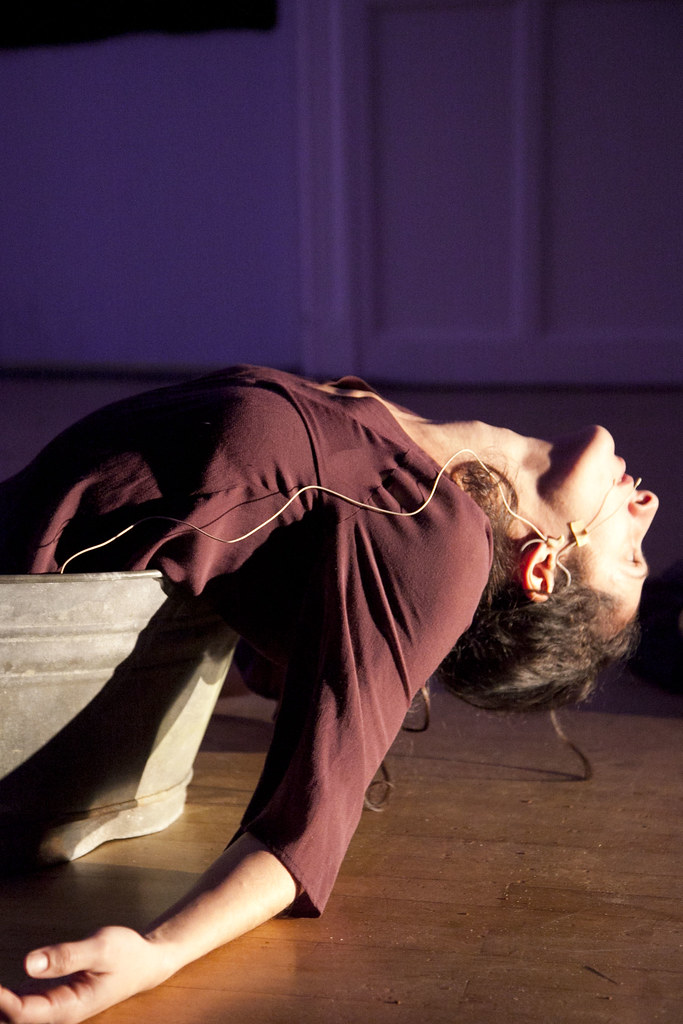
Photo: screenshot from that unbelievably offensive AI-generated video that Trump posted of himself as King Trump in a King Trump fighter-jet, bombing American protesters with his diarrhoea.
Using form: Rondeau: Jean L. Kreiling, ‘At the Realtor’s Office’

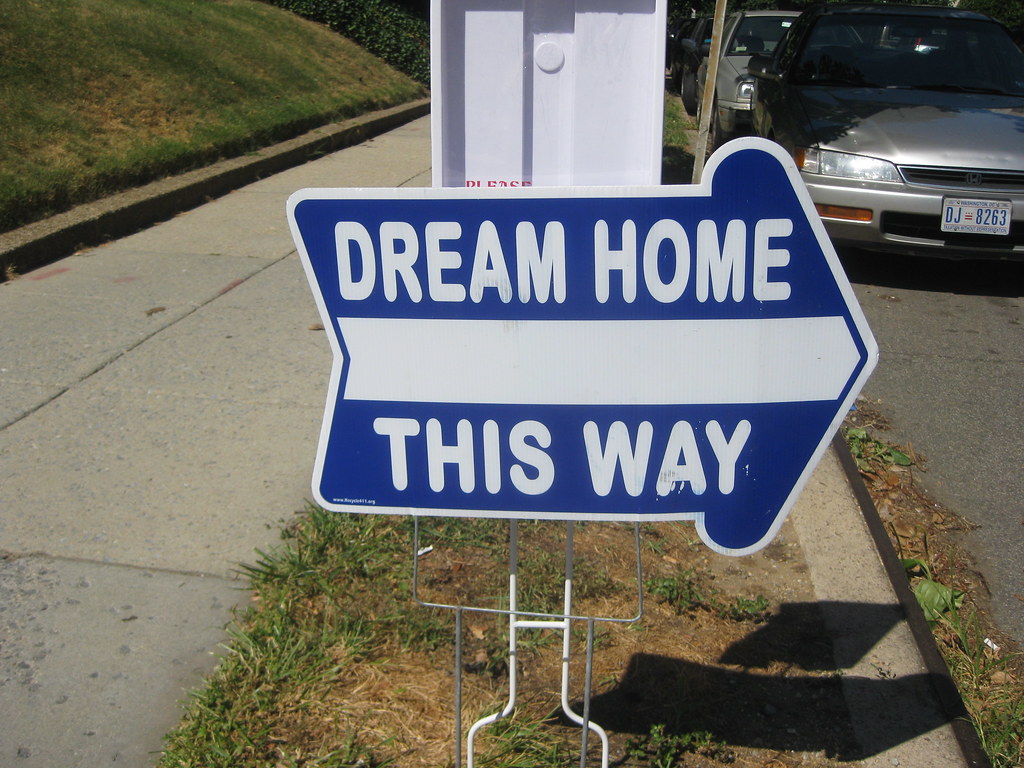
dream home sign

They’re selling dreams, they like to say;
their storefront photographs display
the pricey, well-staged fantasies
they call rare opportunities
and gems. They hope you’ll overpay

for your townhouse, ranch, or chalet,
your great investment, your doorway
to debt. You’re lured in by degrees:
they’re selling dreams

of closet space, kitchens (gourmet!),
and pride. Why shouldn’t wants outweigh
misgivings and realities?
The realtors ply their expertise,
and you’re an easy mark to sway—
they’re selling dreams.

*****

Jean L. Kreiling writes: “The rondeau form seemed appropriate for suggesting a realtor’s technique—that insistent commitment to your purchase, both nerve-wrackingly relentless and, somehow, appealing.”

‘At the Realtor’s Office’ was first published in the Crab Orchard Review, and collected in her new book, Home and Away  (Kelsay Books, 2025)

Jean L. Kreiling is the author of three collections of poems, with another forthcoming soon from Able Muse Press. Her work has been awarded the Kim Bridgford Memorial Sonnet Prize, the Rhina Espaillat Poetry Prize, and the Frost Farm Prize, among other honors. An Associate Poetry Editor for Able Muse: A Review of Poetry, Prose & Art, she lives on the coast of Massachusetts.

Photo: “Dream home” by futureatlas.com is licensed under CC BY 2.0.

Using form: Rondeau: J.D. Smith, ‘Sans Issue’

What ends with me? A set of genes,
The notion that my slender means
Might turn into a son’s estate,
The hope that, at some distant date,
Beside my grave, my line convenes

To recollect my days’ routines,
My counsels, and the vanished scenes
Whose witnesses would recreate
What ends with me:

The consciousness that struts and preens
In holding that its passing means
An altering of our species’ fate,
My thought possessed of untold weight.
Yet, on that thought, the question leans–
What ends with me?

*****

J.D. Smith writes: “After reaching a certain age and making certain commitments, I found myself coming to grips with never being a parent. As in other instances of following form, the repetitions of the rondeau gave me a way to enclose and develop my response to the situation.”

J.D. Smith has published six books of poetry, most recently the light verse collection Catalogs for Food Loversand he has received a Fellowship in Poetry from the United States National Endowment for the Arts. This poem is from The Killing Tree (Finishing Line Press, 2016). Smith’s first fiction collection, Transit, was published in December 2022. His other books include the essay collection Dowsing and Science, and his seventh collection, The Place That Is Coming to Us, will be published by Broadstone Books in 2025. Smith works in Washington, DC, where he lives with his wife Paula Van Lare and their rescue animals.
X: @Smitroverse

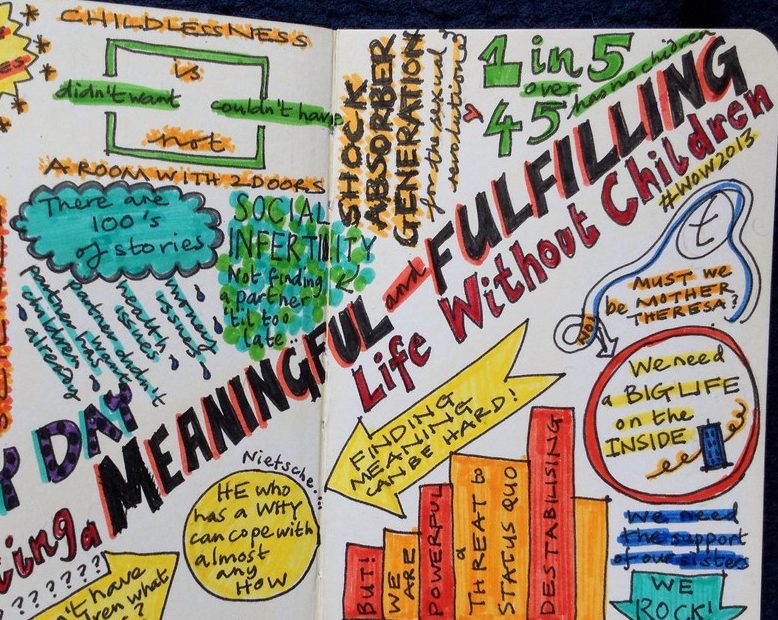
Photo: “Creating a meaningful and fulfilling life without children #sketchnotes #gatewaywomen #jodyday” by etcher67 is licensed under CC BY-NC-ND 2.0.

Using form: Rondeau: Gail White, ‘Opera Rondeau’

And then she dies—since men are no damn good—
Mimi, consumptive and misunderstood,
or Desdemona, most defamed of brides—
the woman is abandoned on all sides—
she so believes in love (as women should)
and in the end she burns like firewood.

Here Tosca on the tower a moment stands,
first throwing back her hood and then her hands
and then one step—invisibly she flies—
and then she dies.

Poor Butterfly, who meant to be so good.
Tough Carmen, using all the wiles she could
to get her man. So many suicides,
so many murders. Violetta hides
but can’t escape—she’s found, she’s understood—
and then she dies.

*****

Gail White writes: “One of my favorites in my new book Paper Cuts is ‘Opera Rondeau’.  It was written after a friend pointed out to me that most summaries of opera plots could end with the words “then she dies.” Although the poem doesn’t conform perfectly to the rondeau rhyme scheme, it does provide the perfect refrain. And gives me a chance to mention a few of the many opera heroines who win, lose, or miss love altogether – and die.”

Gail White is the resident poet and cat lady of Breaux Bridge, Louisiana. Her books ASPERITY STREET and CATECHISM are available on Amazon. She is a contributing editor to Light Poetry Magazine. “Tourist in India” won the Howard Nemerov Sonnet Award for 2013. Her poems have appeared in the Potcake Chapbooks ‘Tourists and Cannibals’, ‘Rogues and Roses’, ‘Families and Other Fiascoes’, ‘Strip Down’ and ‘Lost Love’. ‘Opera Rondeau’ was first published in Mezzo Cammin and is collected in her new light verse chapbook, ‘Paper Cuts‘, also available on Amazon.

Photo: “Heroine – a female lament” by Yo! Opera is licensed under CC BY-NC-SA 2.0.

Susan McLean, ‘My Evil Twin’

My evil twin is full of feminine
self-deprecation. Don’t be taken in
by her rapt nods and deference, which mask
her sly, satiric humor. While you bask
in her respect, she’ll turn away and grin.

You think you’ve won an argument? Her chin
is cocked. She’s packing nitroglycerin.
Why can’t she let the matter slide? Don’t ask
my evil twin.

One minute she’s as sweet as saccharin,
but then, like any snake, she sheds her skin.
If you suspect that it’s a hopeless task
to coax this genie back into her flask,
you’re right. But don’t be fooled: I’ve always been
my evil twin.

*****

Susan McLean writes: “I have always loved the French repeating forms for their songlike appeal. The villanelle is my favorite among them, and I have also written a fair number of triolets, but the rondeau is a form I have rarely tried. At fifteen lines long, with only two rhymes, it is extremely demanding to write, since in English most words have relatively few rhymes. That difficulty made for a fascinating challenge and some unusual rhymes. It’s hard to imagine another poem in which I would use both ‘nitroglycerin’ and ‘saccharin.’

Twins have a long history of featuring in comedies of mistaken identity, from Plautus to Shakespeare and onward, but the ‘evil twin’ is a relatively recent development, I think, with origins in Stevenson’s Jekyll and Hyde. Soap operas, comic books, and serial dramas are full of them. Yet in real life, most people behave differently at different times and with different people. Actors often prefer playing the villain to playing the hero; viewers love to watch characters who break taboos with impunity, a sort of vicarious release from the inhibitions of civilized life. So, is this poem a self-portrait? More a self-caricature, but caricatures are often more recognizable than photographs.

This poem was originally published in the online journal Umbrella, and it also appears in my second book, The Whetstone Misses the Knife.”

Susan McLean has two books of poetry, The Best Disguise and The Whetstone Misses the Knife, and one book of translations of Martial, Selected Epigrams. Her poems have appeared in Light, Lighten Up Online, Measure, Able Muse, and elsewhere. She lives in Iowa City, Iowa.
https://www.pw.org/content/susan_mclean

Photo: “(Be Gone) Evil Twin Gum” by found_drama is licensed under CC BY-NC-SA 2.0.

Potcake Poet’s Choice: Juleigh Howard-Hobson, ‘I’ll Keep My Ghosts’

“…presence, if it has been real presence, does not ever leave.”
–May Sarton

I’ll keep my ghosts. Each morning down we go
Through the hallway, where they begin to show
As grey reflections of themselves in frames
That do not answer when I call their names
But swirl and curve around me, to and fro.
Sometimes, in this house that they used to know
So well, their unseen numbers swell and grow
Until I am overwhelmed. All the same,
I’ll keep my ghosts–
By choice–for what else would I have? Hollow
Spaces between walls? Albums? And sorrow
That has no feeling to it left? Who blames
Me for my preference? I make no claims
That they bring only joy, but even so
I’ll keep my ghosts.

Juleigh Howard-Hobson writes: “It’s so hard to name a favorite poem of my own, (after all, they are all my favorite poetic children!) but this one, written a decade ago, is a little closer to my heart than the others.
Over time, I’ve collected quite a few post-card sized Edwardian portrait photographs, with their original frames, so I can hang them on my walls. These stranger’s images mix with my own vintage family photographs and after a while, they stop being photographs of strangers, they become photographs of familiar faces. After a longer while, some join my family ghosts. Which I find inspiring, if slightly unsettling. This rondeau owes its existence to my collection, both related and adopted.
The Rondeau, with its self-imposed restrictiveness that limits how far a poet may go before she or he must return to the refrain and readdress it, is one that I’ve always been fond of. When I was 16 I came across Dunbar’s “We Wear the Mask” and immediately sensed that the Rondeau was the perfect form for conveying the complicated simplicity of life (granted, I was a strange 16 year old). This one first appeared in Poets’ Touchstone 2010 having won 1st Prize in the 2010 Poetry Society of New Hampshire National Contest; later collected in my book The Cycle of Nine (RavensHalla Arts, 2012).”

Juleigh Howard-Hobson’s poetry has appeared in Valparaiso Poetry Review, Mobius, The Lyric, Dreams and Nightmares, 34 Orchard, Capsule Stories, Birds Fall Silent in the Mechanical Sea (Great Weather for Media), Lift Every Voice (Kissing Dynamite) and other places. Nominations include Best of the Net, the Rhysling, and the Pushcart. Her latest book is the Elgin nominated Our Otherworld (Red Salon). English born, US/Australian raised, she currently lives on an off-grid homestead in the middle of a dark woods in the Pacific Northwest USA, with her husband and her ghosts.

Contact: “I maintain an irregular Twitter presence as ForestPoet@PoetForest https://twitter.com/PoetForest where I follow every writer who follows me.”

The Best Short Poem Ever: “Jenny kiss’d Me” by Leigh Hunt

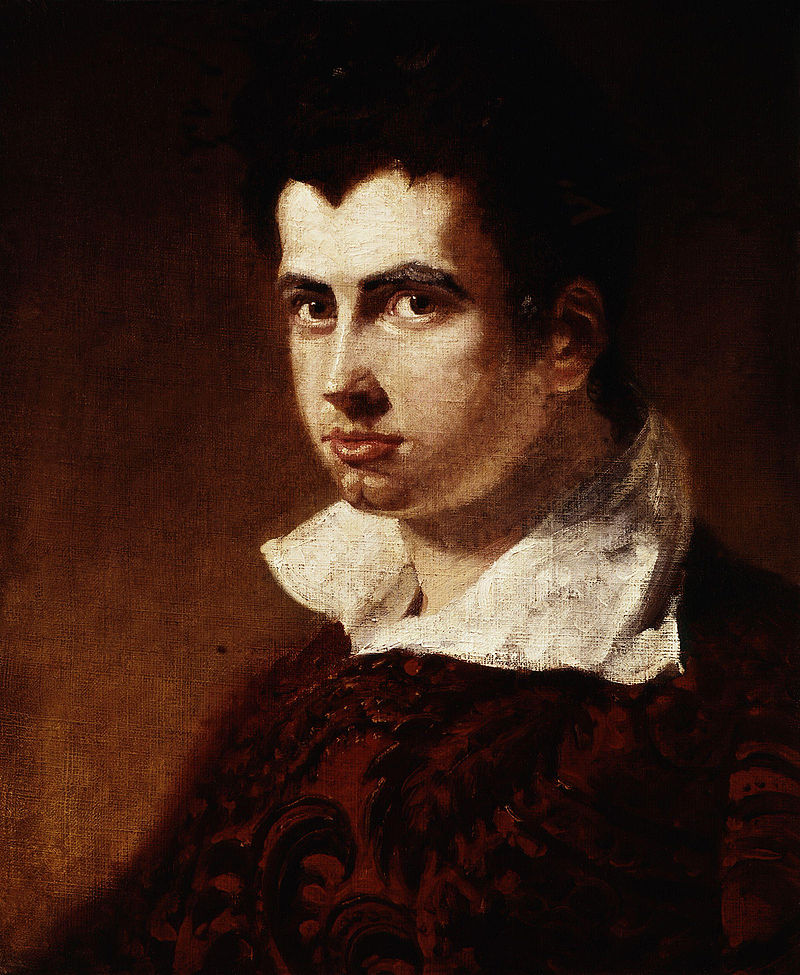
Leigh Hunt, young

Leigh Hunt when young

Jenny kiss’d me when we met,
Jumping from the chair she sat in;
Time, you thief, who love to get
Sweets into your list, put that in!
Say I’m weary, say I’m sad,
Say that health and wealth have miss’d me,
Say I’m growing old, but add
Jenny kiss’d me.

I love the sentiment, the versification, the tightness, the back story, everything. If you erased everything else Leigh Hunt ever wrote, this poem should still be in every anthology of English poetry.

As the Poetry Foundation says, Hunt was “a central figure of the Romantic movement in England, but he was not, as he wished to be and knew he was not, one of its great poets.” But he was the author of Abou Ben Adhem (often taught in schools for its quietly uplifting morality); The Glove and the Lions (ditto, for its more boisterous morality); and the Song of Fairies Robbing an Orchard (taught less often, as schoolchildren hardly need encouragement in the heightened pleasures of theft).

Jenny kiss’d Me was originally entitled Rondeau, but the poem doesn’t really meet any of the various definitions of the form. It rhymes ababcdcd instead of holding to the rondeau’s tighter requirements of rhyme and repetition, but the alternating feminine and masculine rhymes give it a strong rhythm that is tightly adhered to. It has four feet to each line, but only two in the last, and the effect of the poem is heightened by the fact that, when reading the poem aloud, you can’t help creating a longer pause than usual before the last line – it is as though Hunt has dropped the first two feet, not the last two in that line. That last line repeats the first words of the poem (which is common in a rondeau), but does it as a fresh punch line. It is a remarkably effective piece of versification.

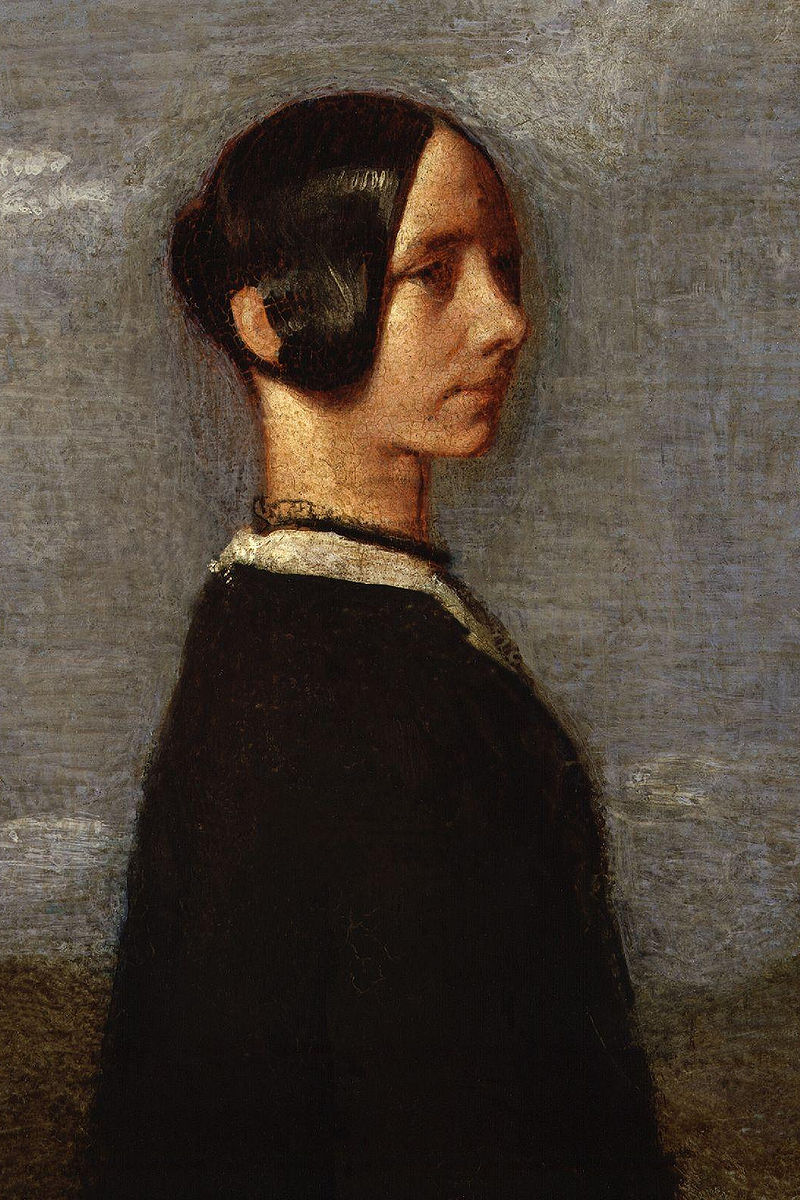
Jenny Carlyle

Jenny: Jane Baillie Carlyle, née Welsh

The back story is that Hunt had been severely ill during a flu epidemic, but, recovering, paid an unexpected visit to Thomas and Jane Carlyle, Jane being “Jenny”. The Carlyles had a difficult relationship to each other and the world in general. Samuel Butler once remarked “It was very good of God to let Carlyle and Mrs Carlyle marry one another, and so make only two people miserable and not four”. But clearly Jane Carlyle was capable of showing affection and making an impression. Hunt at that time was no longer young.

Leigh Hunt

Leigh Hunt at about 66

The poem manages in its eight brief lines to touch on themes of time, age, mortality and failure; also on affection, love, spontaneity and success; and to combine them all into a single image. I cannot think of a more perfect short poem in English.