Tag Archives: The Whetstone Misses the Knife

Using form: Shakespearean sonnet: Susan McLean, ‘Foreshadowing’

You’re a holiday.
—”Holiday,” The Bee Gees

One month from when you met me, when you brought
the first of many gifts, a 45
of plaintive praise and longing, who’d have thought
that forty-five years later we’d survive
on weekends, holidays, and summer breaks,
a foretaste of the end in every start,
anticipation ballasted with aches
as we put love on hold and live apart?

You are a holiday. The working week
unspools like toilet paper from a roll.
My attitude goes airborne when we speak,
and when we meet, my heart swoops like a shoal
of fish. Would we have lost this giddy glow,
living together? Better not to know.

*****

Susan McLean writes: “It makes me feel ancient to realize that for younger readers I will have to explain that a 45 was a record with one song on each side, which played on a record player at 45 revolutions per minute. Love poems themselves tend to feel old-fashioned these days, though this one is about a relatively modern problem, the long-term, long-distance relationship in which both people are employed full time at jobs far apart from one another. The form, a Shakespearean sonnet, mirrors the content, in that the rhymes are separated from one another until the end, when they are reunited. The poem was originally published in the online journal of female formalist poets Mezzo Cammin, and it later appeared in my second book of poetry, The Whetstone Misses the Knife.

Photo: “File:45 record.png” by laurianne is marked with CC0 1.0.
Susan McLean, ‘Home Economics’

Like other teenage girls in ‘65,
I learned to knit, embroider, and crochet,
so if I’m teleported back in time
a century or two, I’ll do okay.

I learned the way to wrap a package neatly,
to tie a range of plain and froufrou bows,
to minimize my body flaws discreetly,
using the cut and pattern of my clothes.

I also learned to iron, hem, and baste,
to sew on zippers, trim, and appliqué,
to choose a hairdo that would suit my face—
and nothing that I ever use today.

*****

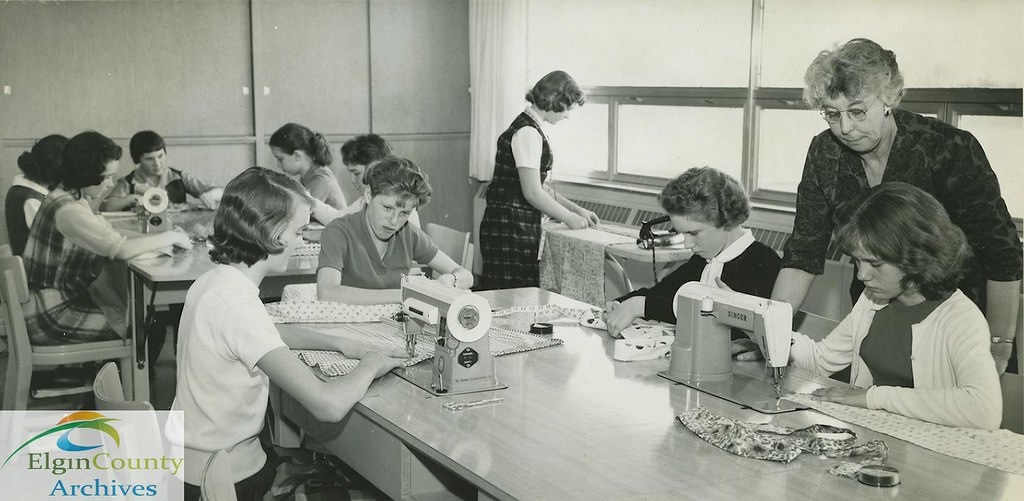
Susan McLean writes: “In the mid-Sixties, the times were changing, but the education of teenage girls was not. In junior high school home economics classes, which girls were required to take, the girls were trained in sewing and cooking skills as preparation for their future roles as wives and mothers. The ideas that men might need to know any of those skills or that women might have full-time careers were not considered. In addition to teaching girls domestic skills, the classes served to reinforce the gender roles and expectations of the time (which had not changed significantly from those of the previous few centuries).

“I slightly overstate my case when I say that I never use anything now that I learned in the two years of sewing classes I took. I still wrap a package and sew on a button occasionally, but I had learned both of those skills well before I took the classes. And even when I was taking the classes, I was already determined to have a career of my own. I petitioned successfully to be allowed to skip the cooking classes so that I could take art classes in their place (though, ironically or not, I am now an enthusiastic home cook). I didn’t mind learning various sewing skills, which had an artistic side, but I had no interest in spending a lot of time using them afterwards, and the view of my options that the classes conveyed was quite dispiriting. No one foresaw how radically the roles of many women would be changing soon afterwards. But I am very glad that they changed.

“The rhymed quatrains that the poem is written in are a standard poetic form, though the mix of slant rhymes with true rhymes suggests an underlying dissonance that ties in with the poem’s themes. The poem originally appeared in the online journal Umbrella and was later published in my second poetry book, The Whetstone Misses the Knife.”

Susan McLean has two books of poetry, The Best Disguise and The Whetstone Misses the Knife, and one book of translations of Martial, Selected Epigrams. Her poems have appeared in Light, Lighten Up Online, Measure, Able Muse, and elsewhere. She lives in Iowa City, Iowa.
https://www.pw.org/content/susan_mclean

Photo: “Home Economics Class at Elgin Court School, St. Thomas, 1961” by Elgin County Archives is licensed under CC BY-NC-ND 2.0.

Using form: Heterometric verse: Susan McLean, ‘Teaching to the Test’

I know you have no use for them,
poems with their sly quicksilver words
that won’t just speak their minds,
but carom through your head like startled birds.
Is that despair or longing in their cries?
Their dolors make no sense.
They’ll never buy you larger-screened TVs
or seats at sports events.

But someday, as you watch a pair hold hands
and leap from a burning tower,
as you wait for test results or hear
your phone ring at an unaccustomed hour,
what you feel will circle wordlessly—
tense, accusing, gaunt.
You’ll find that you are tested and found wanting,
and these are what you’ll want.

*****

Susan McLean writes: “As a professor myself and a person who once worked on writing standardized tests, I am familiar with the complaint of teachers that they are often forced to “teach to the test,” i.e., teach only the sort of knowledge and skills that students need for passing that sort of test. But as a poet, I know that we are tested in life in all sorts of ways. Most people think that they can get through life just fine without poetry. They tend to find poetry annoying and impenetrable, something that needs to be decoded, that has no practical use. Yet in tragedies, when all hope and comfort are gone, there is some comfort in hearing that others who have been in similar situations were able to put into words the feelings that you can’t. And the most memorable and condensed of those responses are often poems.
This poem is rhymed and metrical, but the lines are of different lengths in unpredictable patterns, a form called “heterometric,” and the rhymes occur only every other line. That unpredictability is meant to mirror life, in which the bad news always seems to come out of nowhere. The poem originally appeared in Able Muse and later in my second poetry collection, The Whetstone Misses the Knife.”

Susan McLean has two books of poetry, The Best Disguise and The Whetstone Misses the Knife, and one book of translations of Martial, Selected Epigrams. Her poems have appeared in Light, Lighten Up Online, Measure, Able Muse, and elsewhere. She lives in Iowa City, Iowa.
https://www.pw.org/content/susan_mclean

Photo: “When Young Children ‘Hate’ School” by wecometolearn is licensed under CC BY 2.0.

Using form: Villanelle with a limp: Susan McLean, ‘Instructions for Climbing and Descending’

Good foot goes to heaven; bad foot goes to hell.
When every step torments and pain is chronic,
you can’t do as you did before you fell

and sprained your ankle. As the tendons swell,
don’t make things even worse. Learn this mnemonic:
good foot goes to heaven; bad foot goes to hell.

Take one step at a time. Do not rebel
or grumble that restrictions are moronic.
You can’t do as you did. Before you fell,

you bounded up the stairs like a gazelle,
but now your gait is nearly catatonic:
good foot goes to heaven; bad foot goes to hell.

You’ve always known it doesn’t help to dwell
on loss. You should let go, but (how ironic!)
you can’t. Do as you did before you fell,

but try to play it safe while getting well.
The best advice is simple, yet Miltonic:
good foot goes to heaven; bad foot goes to hell.
You can’t do as you did before. You fell.

*****

Susan McLean writes: “I love villanelles. I like them partly because they are songlike and partly because they present interesting challenges for rhyming and for varying the repeating lines, known as repetends. I thought at first that I had set myself an impossible task with my “-onic” rhymes, but they kept surprising me and leading me in new directions. I was not planning to refer to Milton when I started, for example, but when I stumbled on “Miltonic,” it fit perfectly with the metaphors in the first line. When I started, I also didn’t realize how many ways the second repetend could be varied while still making literal sense.
“The idea behind the poem came from real-life experiences. I had sprained my right ankle once, and after I wrote this poem, I broke it twice. However, the first line, which is literally the mnemonic device offered by a physical therapist as a reminder of which foot to step on when going up or down stairs, was one I heard secondhand. My partner John was told it by his therapist when he had a painful foot. The rest of the poem is in lines with five beats (iambic pentameter), but that line has six. I decided to use it, nevertheless, because the extra beat in that repetend slows the line down, mimicking the slow gait of the person with the sprain. It also makes the line itself seem to limp.
The poem was originally published in First Things and later appeared in my second poetry book, The Whetstone Misses the Knife.”

Susan McLean has two books of poetry, The Best Disguise and The Whetstone Misses the Knife, and one book of translations of Martial, Selected Epigrams. Her poems have appeared in Light, Lighten Up Online, Measure, Able Muse, and elsewhere. She lives in Iowa City, Iowa.
https://www.pw.org/content/susan_mclean

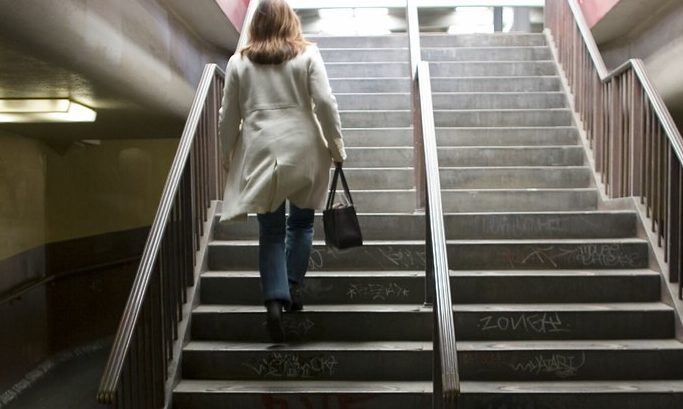
Photo: “How Many Times Do You Have to Fall Before You End Up Walking” by Thomas Hawk is licensed under CC BY-NC 2.0.

Susan McLean, ‘The Only Feminist in High School’

Two roads diverged in high school when a student
chose to study women’s liberation
to write her senior paper. Though imprudent,
that choice provided her an education

in bias, inequality, derision,
The Second Sex, The Feminine Mystique,
historical erasure, long division,
and talent gagged and shackled by physique.

She swore off make-up, wanted a career
but maybe not a family. She read
Kate Millett, Gloria Steinem, Germaine Greer,
and gave a speech on beauty, which, she said,

turned women into objects and betrayed
their goals. She didn’t want to be a mom
or movie star. When she went out, she paid.
Though never asked, she boycotted the prom.

The boys were baffled and the girls disdainful,
for who would want to talk to, much less date her?
And what she lost was obvious and painful,
while what she gained was only clear years later.

*****

Susan McLean writes: “This poem starts with the opening phrase from Robert Frost’s ‘The Road Not Taken‘ and it records a turning point in my own life of the sort that his poem describes. Though I hope that feminists are not such a rarity among high school students anymore, the term “feminist” is still so loaded that I tend to think of it as “the new F-word.” At one level, it still mystifies me that looking for equal opportunity and equitable treatment remains so controversial, but at another level, every society has been built on unequal opportunity and inequitable treatment since recorded history began, so it is not surprising that each step away from that system has made some people feel that the world was ending.

“I learned long ago that what a poem doesn’t say is as important as what it does say, so the ending of this one does not specify what was lost or what was gained. I want the readers to think about those things, so I don’t want to tell them what to think. As for why I wrote this in the third person, these events happened so long ago that it almost feels as though they happened to someone else. I am and am not that girl.

“The poem first appeared in my second poetry book, The Whetstone Misses the Knife.”

Susan McLean has two books of poetry, The Best Disguise and The Whetstone Misses the Knife, and one book of translations of Martial, Selected Epigrams. Her poems have appeared in Light, Lighten Up Online, Measure, Able Muse, and elsewhere. She lives in Iowa City, Iowa.
https://www.pw.org/content/susan_mclean

Photo: “Two Road Diverged…” by wackybadger is licensed under CC BY-SA 2.0.

Using form: Hybrid sonnet: Susan McLean, ‘Your Other Women’

Your secretaries, eager to assist you;
your colleagues, protégées, even your dean;
the shopgirls who, you joke, cannot resist you;
my own best friends; the maid who comes to clean;
the women whom you’ve charmed in conversation;
the students who adore you from afar—
how can I resent their admiration,
knowing, better than they, how good you are?

So pick your favorite starlets for your spree,
and rent each film they’ve been in from the start—
I won’t complain. How can I say you’re wrong
to ogle blondes you swear all look like me?
For when our jobs require long weeks apart,
we both know what it takes to get along.

*****

Susan McLean writes: “I was surprised to discover the range of interpretations this poem has received. I had meant to subvert the title with the poem’s content, but I have learned in the past that readers are more likely to twist the content to fit the title than to suspect that the title might be ironically meant. A poem can have many different interpretations, depending on what the reader brings to it, so I have accepted that what a reader sees in it may not be what I intended. This poem was originally written in response to Alfred Nicol’s poem ‘Your Other Men’, a much edgier poem. But mine was intended as a humorous love poem to my partner, a man who likes women and whom women tend to like.
The sonnet is a hybrid, with the first eight lines conforming to the Shakespearean model and the last six lines to the Petrarchan model. That dichotomy felt right for decribing an often-long-distance relationship in which our similarities and differences have learned to work together in harmony.”

‘Your Other Women’ was originally published in Hot Sonnets: An Anthology. Eds. Moira
Egan and Clarinda Harriss. Washington, DC: Entasis, 2011. It later appeared in her second poetry book, The Whetstone Misses the Knife.

Susan McLean has two books of poetry, The Best Disguise and The Whetstone Misses the Knife, and one book of translations of Martial, Selected Epigrams. Her poems have appeared in Light, Lighten Up Online, Measure, Able Muse, and elsewhere. She lives in Iowa City, Iowa.
https://www.pw.org/content/susan_mclean

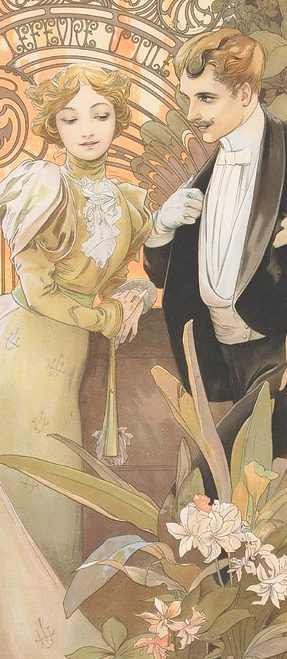
Photo: “Alphonse Mucha – Flirt Biscuits” by sofi01 is licensed under CC BY-NC 2.0.

Short verse: Susan McLean, ‘Jeopardy’

The first thing she requests post-surgery,
awake but drifting in the morphine glow,
is that my sister turn on the TV
so that the two can watch her favorite show.
Weak but alive, unsure if she has cancer,
my mother turns to questions she can answer.

*****

Susan McLean writes: “I wrote this poem while I was over a thousand miles away from the scene it describes, based on my sister’s phone account of what happened. The irony of the show’s title under the circumstances was the first stimulus for the poem, but also I almost laughed when I thought of how characteristic my mother’s action was. Given that she was in her eighties when she had major surgery, my mother’s jeopardy was very real, and I wrote the poem while we still didn’t know whether she had cancer. She did not. There is another irony, in that the game show Jeopardy! provides answers for which the contestants have to supply the appropriate questions. Yet, in context, those questions are answers.
The hardest challenge when writing about an emotional situation is to focus on the facts and let the emotions emerge by suggestion. A hint of humor acts as a counterweight to unspoken anxieties. The poem was first published in Measure and later appeared in my second poetry book, The Whetstone Misses the Knife.”

Susan McLean has two books of poetry, The Best Disguise and The Whetstone Misses the Knife, and one book of translations of Martial, Selected Epigrams. Her poems have appeared in Light, Lighten Up Online, Measure, Able Muse, and elsewhere. She lives in Iowa City, Iowa.

Susan McLean has two books of poetry, The Best Disguise and The Whetstone Misses the Knife, and one book of translations of Martial, Selected Epigrams. Her poems have appeared in Light, Lighten Up Online, Measure, Able Muse, and elsewhere. She lives in Iowa City, Iowa.
https://www.pw.org/content/susan_mclean

Photo: “Filming Jeopardy!” by jurvetson is licensed under CC BY 2.0.

Susan McLean, ‘Received Wisdom’

Unpacking it, we wondered who had sent it
and why they felt we needed it. We thought
we’d managed fine without it. Had they meant it
as tribute or rebuke? We had been taught
to view unsought donations with suspicion.
Inspecting it, we found a hairline crack.
It doesn’t suit our taste or disposition.
In short, we must insist they take it back.

*****

Susan McLean writes: “Finding new meanings in old phrases is one of my favorite games. In the case of the poem’s title, I was thinking about how each generation wants to pass along advice to the next generation, which the next generation tends to reject. Advice always feels like criticism, however well intended it may be. Moreover, the world is changing so fast that advice that worked for one generation no longer fits the reality of the next generation.

“The alternating feminine and masculine rhymes in the poem are meant to mimic the interplay between two generations, or any two groups that have differing views. ‘Received Wisdom’ was originally published in Free Inquiry and later appeared in my second book of poems, The Whetstone Misses the Knife.”

Susan McLean has two books of poetry, The Best Disguise and The Whetstone Misses the Knife, and one book of translations of Martial, Selected Epigrams. Her poems have appeared in Light, Lighten Up Online, Measure, Able Muse, and elsewhere. She lives in Iowa City, Iowa.
https://www.pw.org/content/susan_mclean

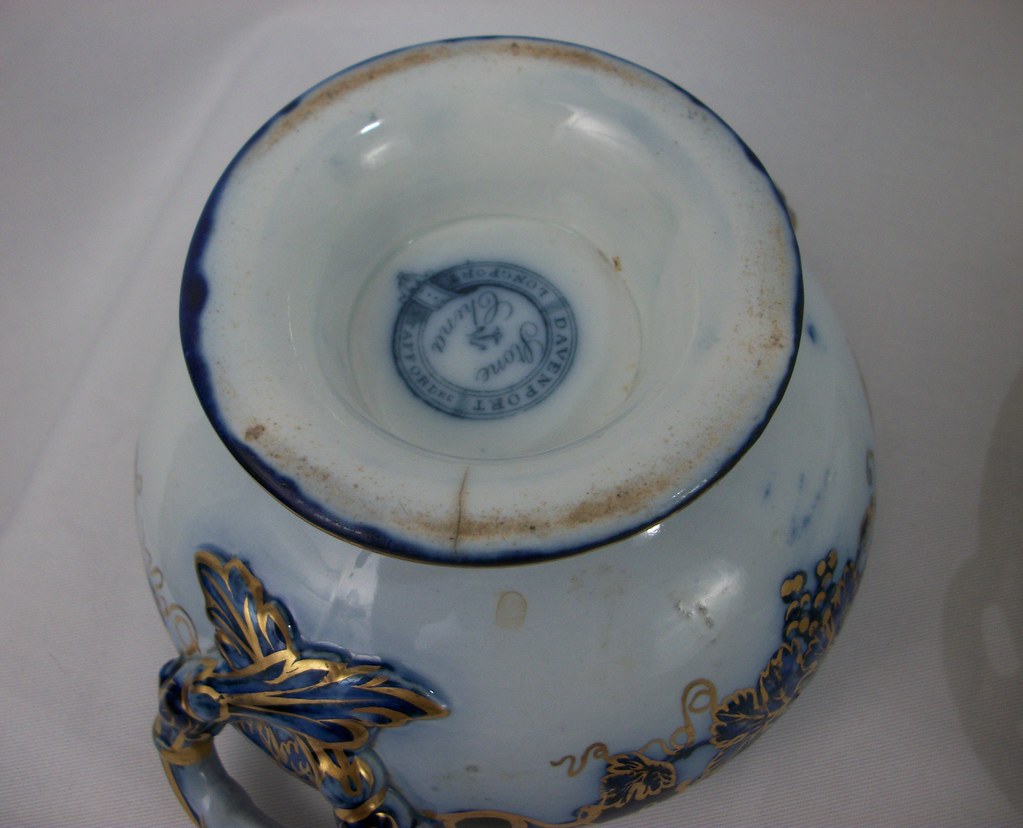
Photo: “sauce tureen 2, hairline” by pgintx1128 is licensed under CC BY-SA 2.0.