
Tag Archives: tradition

Weekend read: Sonnet variation: Michael R. Burch, ‘Erin’

All that’s left of Ireland is her hair—
bright carrot—and her milkmaid-pallid skin,
her brilliant air of cavalier despair,
her train of children—some conceived in sin,
the others to avoid it. For nowhere
is evidence of thought. Devout, pale, thin,
gay, nonchalant, all radiance. So fair!

How can men look upon her and not spin
like wobbly buoys churned by her skirt’s brisk air?
They buy. They grope to pat her nyloned shin,
to share her elevated, pale Despair …
to find at last two spirits ease no one’s.

All that’s left of Ireland is the Care,
her impish grin, green eyes like leprechauns’.

*****

Michael R. Burch writes: “My poem is set in the present and really has nothing to do with poverty. All that’s left of Ireland of yore is the young mother’s red hair, fair skin, a tendency toward melancholy (“despair), and her train of children. She’s a practicing Catholic except for a few affairs. Otherwise she’s a modern woman, drinking and flirting in a pub. I was trying to capture a bit of Ireland in a young mother, very loosely inspired by one of my Irish cousins who was a bit of a “wild child” in her youth.”

(Editor’s aside: My bad for thinking that “All that’s left” implied poverty, which was not in Michael R. Burch’s mind at all. True, Ireland goes through enormous swings of fortune, but the Ireland of even some years ago no longer matches the fabulously rich Ireland of today – the people are 50% richer than Americans or Norwegians…

2024 top GDP.png

… putting the UAE and Switzerland in the shade as well.)

Michael R. Burch’s poems have been published by hundreds of literary journals, taught in high schools and colleges, translated into 22 languages, incorporated into three plays and four operas, and set to music, from swamp blues to classical, 61 times by 32 composers. He is also the founder and editor-in-chief of The HyperTexts.

Photo: “Irish Fire at the Barn” by Trey Ratcliff is licensed under CC BY-NC-SA 2.0.
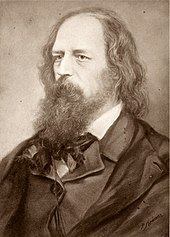
Odd poems: Tennyson dialect verse, ‘The Northern Farmer’, Old Style and New Style

Wheer ‘asta beän saw long and meä liggin’ ‘ere aloän?
Noorse? thoort nowt o’ a noorse: whoy, Doctor’s abeän an’ agoän;
Says that I moänt ‘a naw moor aäle; but I beänt a fool;
Git ma my aäle, fur I beänt a-gawin’ to breäk my rule.

This is the opening stanza of Alfred, Lord Tennyson‘s poem ‘The Northern Farmer: Old Style’. The farmer is dying, but obstinately overrules the doctor’s order that he not drink any more ale, just as he obstinately clings to traditional attitudes towards land and class, farming and money.

Where have you been so long and me lying here alone?
Nurse? You’re no good as a nurse; why, the doctor’s come and gone:
Says that I mayn’t have any more ale; but I’m not a fool;
Get me my ale, because I’m not going to break my rule.

It’s one of a series of poems he wrote that recapture the dialect of his Lincolnshire youth, and that reflect the old traditions and the modern changes of that part of the country. It is paired specifically with ‘The Northern Farmer: New Style’–Here the “new style” farmer, out in a cart with his son Sammy, hears the horse’s hooves clip-clopping “Property, property” and chides his son for not thinking enough about money:

Me an’ thy muther, Sammy, ‘as been a’talkin’ o’ thee;
Thou’s beän talkin’ to muther, an’ she beän a tellin’ it me.
Thou’ll not marry for munny–thou’s sweet upo’ parson’s lass–
Noä–thou ‘ll marry for luvv–an’ we boäth of us thinks tha an ass.

Seeä’d her todaäy goä by–Saäint’s-daäy–they was ringing the bells.
She’s a beauty, thou thinks–an’ soä is scoors o’ gells,
Them as ‘as munny an’ all–wot’s a beauty?–the flower as blaws.
But proputty, proputty sticks, an’ proputty, proputty graws.

or, in more modern words:

Me and your mother, Sammy, have been talking of you;
You’ve been talking to mother, and she’s been telling me.
You don’t want to marry for money–you’re sweet on the parson’s daughter–
No, you want to marry for love–and we both think you’re an ass.

Saw her today going by–Saint’s day–they were ringing the bells.
She’s a beauty, you think–and so are scores of girls,
Those with money and everything–what’s a beauty?–a flower that fades.
But property, property sticks, and property, property grows.

Tennyson was meticulous in trying to recapture the life and language of his youth. He wrote:

When I first wrote ‘The Northern Farmer’ I sent it to a solicitor of ours in Lincolnshire. I was afraid I had forgotten the tongue and he altered all my mid-Lincolnshire into North Lincolnshire and I had to put it all back.

And apart from the accuracy of the dialect, Tennyson was as skilled as ever with his carefully conversational metre, and natural rhymes working comfortably with the natural breaks of the lines.