Tag Archives: universe

Semi-formal verse: RHL, ‘False Analogies’

The Universe is made of false analogies –
flawed observations, secondhand “I see”s,
discarded dreams.
Nothing is truly as it seems.
We build our intellectual shelter from life’s gales
from scraps of lumber and found nails,
anything within reach,
rope washed up on a beach,
a sliding glass door, still intact,
used as a wall. And all because
the Universe we sense has flaws,
disobeys its own laws,
is just a framework for the Mind That Plays,
a sketch, hypothesis; a tract, not fact;
a work in process, changing with the days.
Dig deeper, and find fresh discrepancies.
Our shelter, in fair weather, keeps us warm,
can stand up to a breeze…
will be no shelter in the coming storm.

*****

I marvel at the impossibilities of the quantum mechanisms of the universe being revealed. I enjoy Nick Bostrom’s speculations on everything being a simulation. I wonder at the powerful who are jockeying for development and control of AI, at our Nietzschean will to power, at our eternal quest for immortality. I am aware that nature constantly sacrifices billions in the process of advancing a few. I wonder if we are in that process now. I am not bothered that I have no answers.

This poem was first published in the current edition of Pulsebeat. Thanks, David Stephenson!

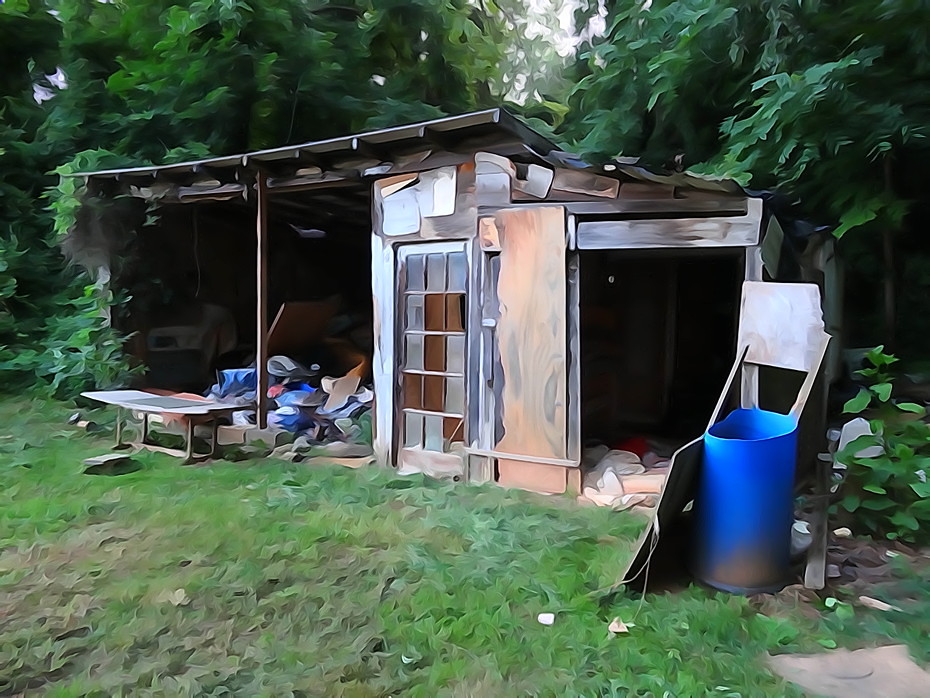
Photo: “wc west avl homeless gathering spot” by zen is licensed under CC BY-NC-SA 2.0.

Weekend read: Aaron Poochigian, ‘Not Atoms’

When, strolling through the Village, I discover

one lonesome shoe, a jeweled but dogless collar,
the crushed rose of a hitman or a lover,
barf like an offering, a half-burnt dollar,
“Scream” masks holding traffic-light-top vigil,
loose lab rats among the morning glories
or Elmo trapped inside a witch’s sigil,

I love the universe because it’s made of stories.

*****

Aaron Poochigian writes: “I live in the East Village, which is party central, especially on the weekends. The images in this poem are mostly random stuff I saw the mornings after. I didn’t include the people passed out on the sidewalk (just check to make sure they’re still breathing). The structure (one-line beginning, six-line list, one-line ending) came to me from a beautiful Tang-dynasty poem, ‘Visiting the Taoist Priest Chang’, by Liu Changqing.”

Aaron Poochigian’s ‘Not Atoms’ was originally published in New Verse Review. For reference, here is Liu Changqing’s poem in Aaron Poochigian’s translation:

Under the faint trail’s guidance I discover

a footprint in the phosphorescent moss,
a tranquil lake where low clouds love to hover,
a lonesome door relieved by rampant grass,
a pine grown greener since the thundershowers,
a cold springs fed by mountains far away.

Mingling with these truths among the flowers,
I have forgotten what I came to say.


Aaron Poochigian earned a PhD in Classics from the University of Minnesota and an MFA in Poetry from Columbia University. His latest poetry collection, American Divine, the winner of the Richard Wilbur Award, came out in 2021. He has published numerous translations with Penguin Classics and W.W. Norton. His work has appeared in such publications as Best American Poetry, The Paris Review and Poetry.
aaronpoochigian.com
americandivine.net

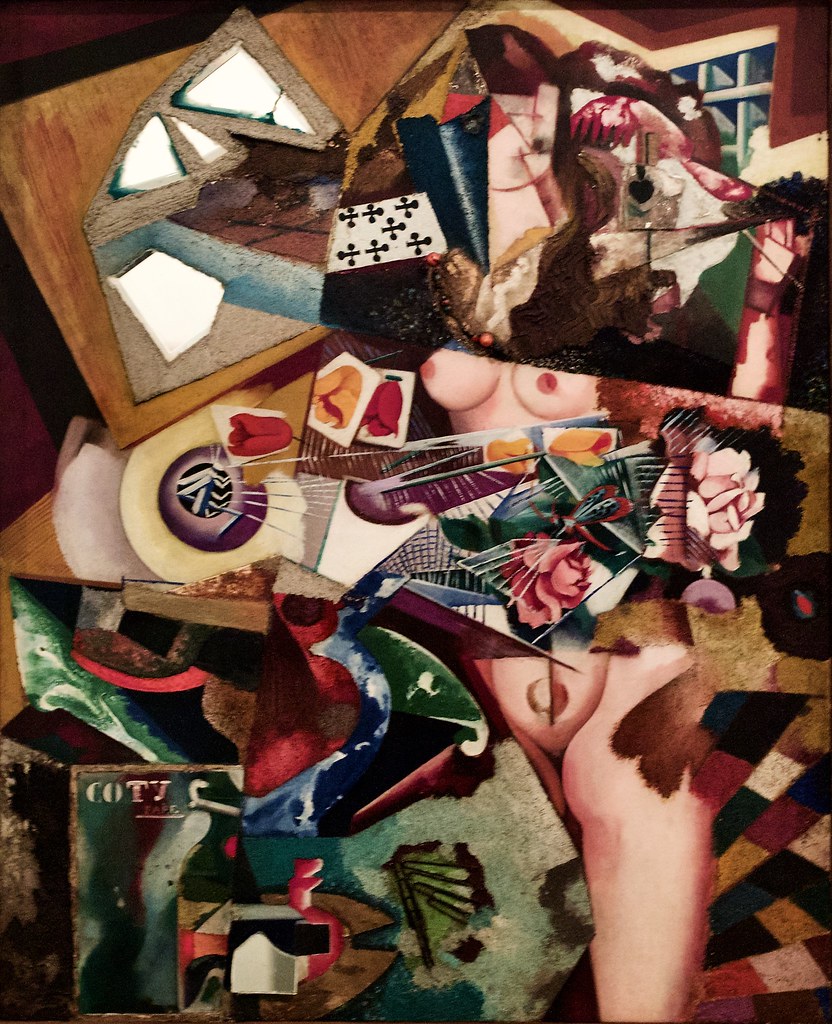
Photo: “Untitled [Coty] (c.1917) – Amadeu de Souza-Cardoso (1897-1918)” by pedrosimoes7 is licensed under CC BY 2.0.

Semi-formal poem: RHL, ‘Layered Understanding’

The Universe with which we grapple
searching for structure, meaning, is no apple
with glossy skin outside, substance beneath,
where deep within its core it meets our needs
to find its meaning: seeds.
No, it’s an onion – peel off the outer sheath
of sensory impressions,
and you uncover explanations
coming first from mystic revelations
and then from faith’s and Science’s professions.
Research from Galileo through to Quantum realms
reveals, and contradicts, and overwhelms
until you take away the final layer
and find: there’s nothing there.

*****

I’m a Militant Agnostic: “I don’t know, and neither do you!” We keep searching and probing, the certainties get disproved, new lines of enquiry open up… and off we go again, Quixote-like, because we’re humans.
This poem rhymes irregularly, and is in iambics of different line lengths. Semi-formal.

‘Layered Understanding’ was first published in the Shot Glass Journal #43.

Photo: “half onion peeled” by Hanna Khash is licensed under CC BY 2.0.

Semi-formal? or Spoken Word? RHL, ‘Life is a Bubble’

A life is a bubble:
somewhere the Grand Druid
dips his wand into the universal fluid
and then a new life is formed, floating
on chance breezes until it – pops –
and the thin skin coating
falls back to earth as mere drops,
the shape and rare rainbow glint gone to air,
and the bubble is where?

Earth is a bauble
in the universal flux,
as it foams, boils and freezes,
just dust from God’s various mucks,
sneezes afloat on chance trans-solar breezes.

The humans babble,
rabble rising from the rubble of other lives cut to stubble,
they burble some Bible as they gab, grab and gobble,
cobbling conning towers of Babel and Hubble,
their progress hobbled by their wobbly bobble,
reams of hopes, dreams and schemes
just a bubble.

*****

Sometimes a chance-occurring phrase in some moody mode of thought lets me ramble wildly through tangled words and ideas. It’s not amenable to regular form, but it’s fun. It seems in the spirit of Spoken Verse, though I’ve never performed. The earliest poem I wrote in this style is from over 50 years ago… which is 30 years before I ever had a poem accepted for publication. I was definitely out of step with the non-verse that then controlled the poetry industry to the exclusion of almost all actual verse. Things have eased in recent years, and dozens of poems from those early years have since been published. (Note to struggling young poets: Don’t give up! But have another career that pays money!)

Anyway, ‘Life is a Bubble’ only needed a couple of years to be published in 2024 in The Lyric.

Photo: “Blowing bubbles” by Song_sing is licensed under CC BY 2.0.

Light verse: RHL, ‘Question the Universe’

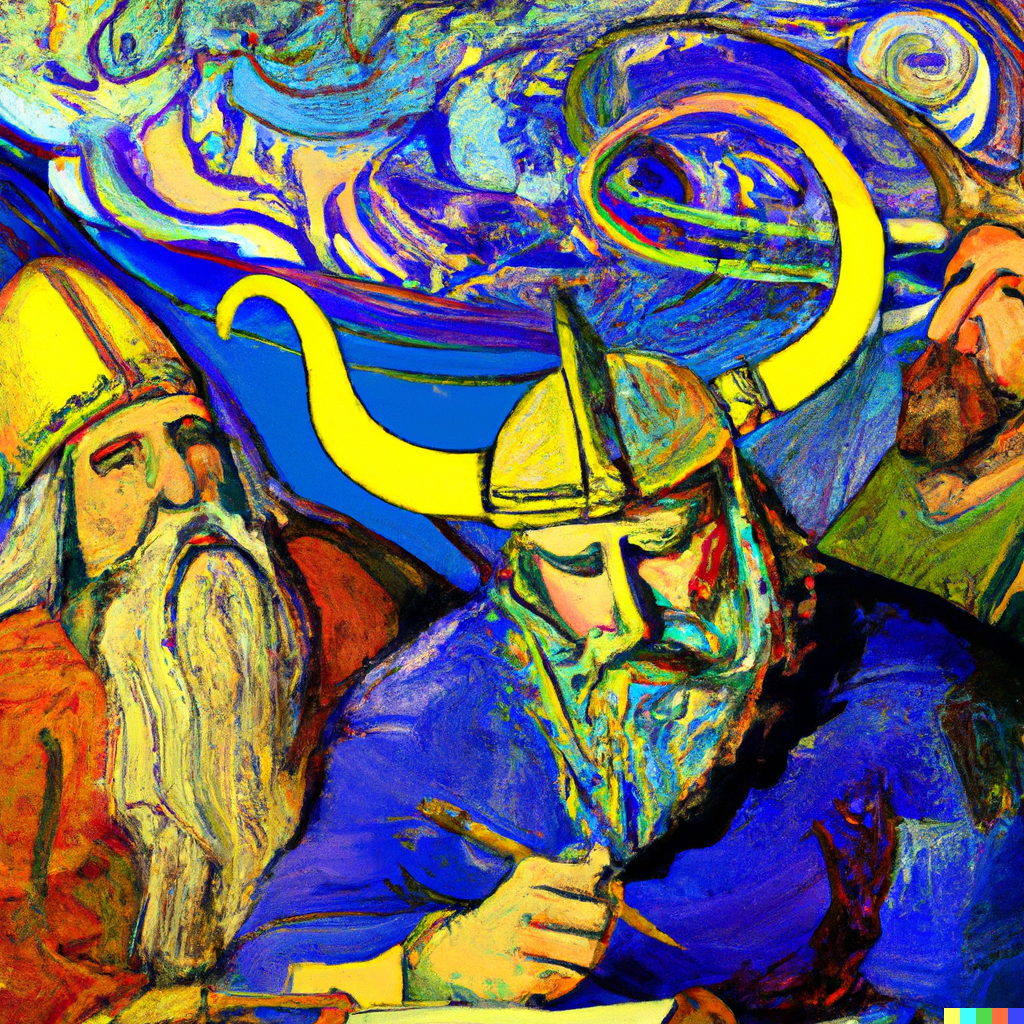
Odin wrote runey verse
Rumi wrote Sunni verse
Edward Lear? Loony verse.
Question the universe
with your buffoony verse.

*****

Sometimes you jot down a little light piece inspired more by wordplay than anything else, and the more you look at it the more it resonates. This is one such. The characters are diverse, coming from pre-literate Scandinavia, Renaissance-inspiring Islam, and Victorian England – they touch the roots of my cultural identity. They are from the past, but their searches are timeless, fully modern, quintessentially human. And I fully subscribe to the idea that we should question everything, and that the Fool‘s tools of succinct and enigmatic wordplay may be as good an approach as any in trying to formulate – let alone answer – all questions, physical and existential.

It further resonates for me in being published (which I find important); in being published just now in Light (which is a wonderfully reassuring place to be); in having been improved in response to Light’s editorial comments (meaning, yes, I am proud that sometimes I am open to criticism and it’s useful); and in being my 400th poem published (by one of my conflicting counts).

Nothing is definite, not the historical reality of historical and semi-historical figures, not the permanence of printed words, not the definition of a poem, not the count of things hard to define, not the nature of physical reality. So though we have to make prosaic choices based on appearances and best guesses, that should be balanced by questioning everything. Preferably in verse.

TL;DR: Even short poems can be unpacked.

Illustration: DALL-E by RHL, ‘Rumi, Odin and Edward Lear are writing poetry to question the universe’

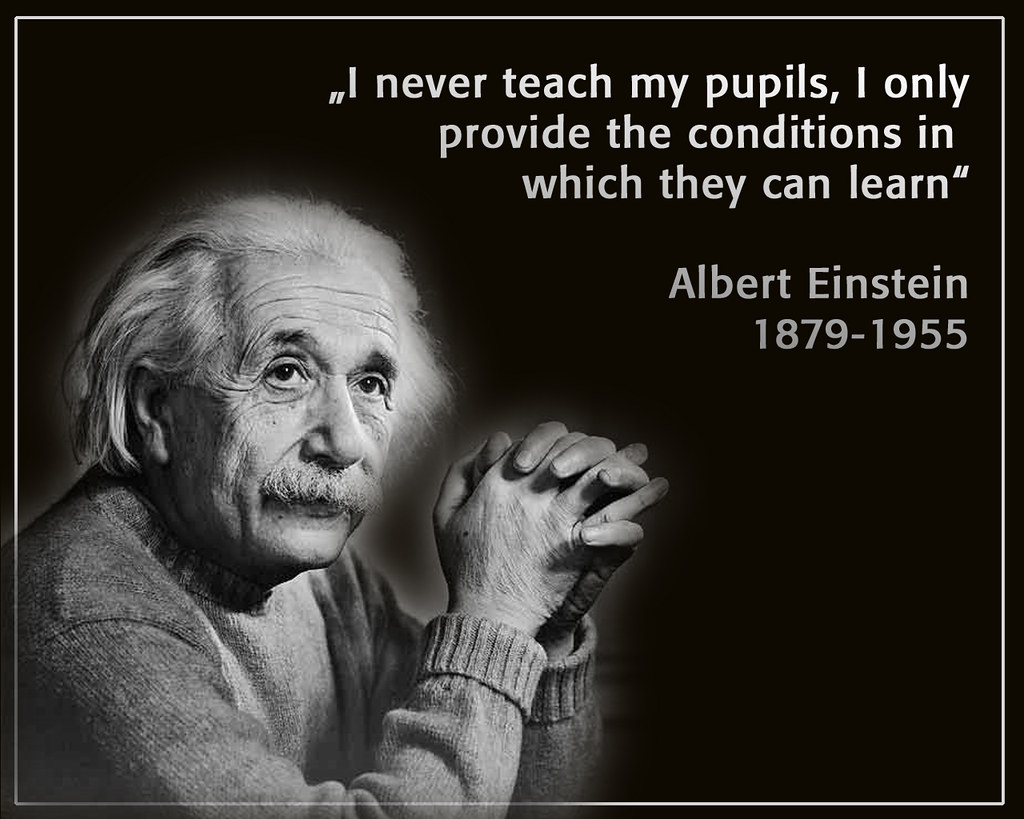
Odd poem: ‘We Dance For Laughter’ by Albert Einstein

We dance for laughter,
we dance for tears,
we dance for madness,
we dance for fears,
we dance for hopes,
we dance for screams,
we are the dancers,
we create the dreams.

*****

I can’t find anyone other than Einstein credited with this verse, but I also can’t find the source for it. Regardless, Einstein had an appropriate attitude for studying the universe: look at it and ourselves in the spirit of dance, learning, dreaming and creativity.

Photo: “Aðstæður til náms” by sfjalar is licensed under CC BY 2.0.

Poem: ‘Poems Like Motes of Dust’

Like tiny midges, poems in the air
were unseen all my life, presence unclear,
occasionally one would land, bite, sting…
I’d be aware
a poem had come, was singing by my ear.
Now everything, literally every thing,

is a poem: a car, a dog, a glass,
a chair, a seagull, every blade of grass,
all people and each thing they pass.
Now I see swarms, millions of flies,
or like light’s dots of darkness thickening as day dies,

the poems are visible in the air around,
a pointillist canvas, every dot
a poem in itself, an image, word, rhyme, thought,
or like neutrinos streaming from the sun,
billions a second passing with no sound
unseen, unfelt, through everyone,
the poetry of existence, raw, untaught.

The Universe: a cloud of dust that hangs and floats,
dust like a drive of cattle on the range,
or when you fill a barn with dusty motes
by sudden action, and a sunbeam’s slice;
or as Sumerian gods convene, converse,
swarming like flies around burnt sacrifice,

summoned by smell of sacrificial meal…
was it my sacrifices made this change,
made poems visible like motes of dust?
Is this the Universe’s thrust?
Hide them, and then reveal?
For all the poems make one UniVerse.

This is the fourth of a series of five poems recently published in The Brazen Head. It is semi-formal: written in iambics with lines of uneven length, fully rhymed but not to any pattern. My model for this style of verse is Matthew Arnold’s ‘A Summer Night‘, a poem that I have loved and recited since high school. (We can leave for another time the debate about whether his poem should have stopped as originally at the final question mark, or whether the years-later addition of the subsequent lines is an improvement.)

Smoky Dusty Light Rays Texture” by Sprogz is marked with CC BY-NC 2.0.

Sonnet: ‘We Know We Will Be Dead’

We know we will be dead, who are alive.
But should some element of us survive –
fragment of consciousness or memory –
what value could it have? What should it be
that the whole universe might benefit?
The atom matters – what’s not made of it?
And we’re not large – not like a conscious star
(if time will let us all evolve that far).
You’re not much different in real magnitude
from an ant crushed for going for your food,
a gnat rubbed out, its tiny consciousness
a dot… but does it build the universe?
If that gnat can’t, I don’t see how you can:
there’s not much difference between gnat and man.

Does a poem of 14 lines, rhymed in pairs, count as a sonnet? Perhaps, but it doesn’t feel quite right. Petrarchan and Shakespearian sonnet structures, with more complex structures of rhyme, produce a much greater impact with the final line–a sense of revelation, inevitability, an impression of absolute truth–purely by the successful rounding out of the pattern. I like this poem’s ending couplet… but it would be stronger if the previous 12 lines were better structured.

‘We Know We Will Be Dead’ was published in the most recent Allegro, edited by British poet Sally Long.

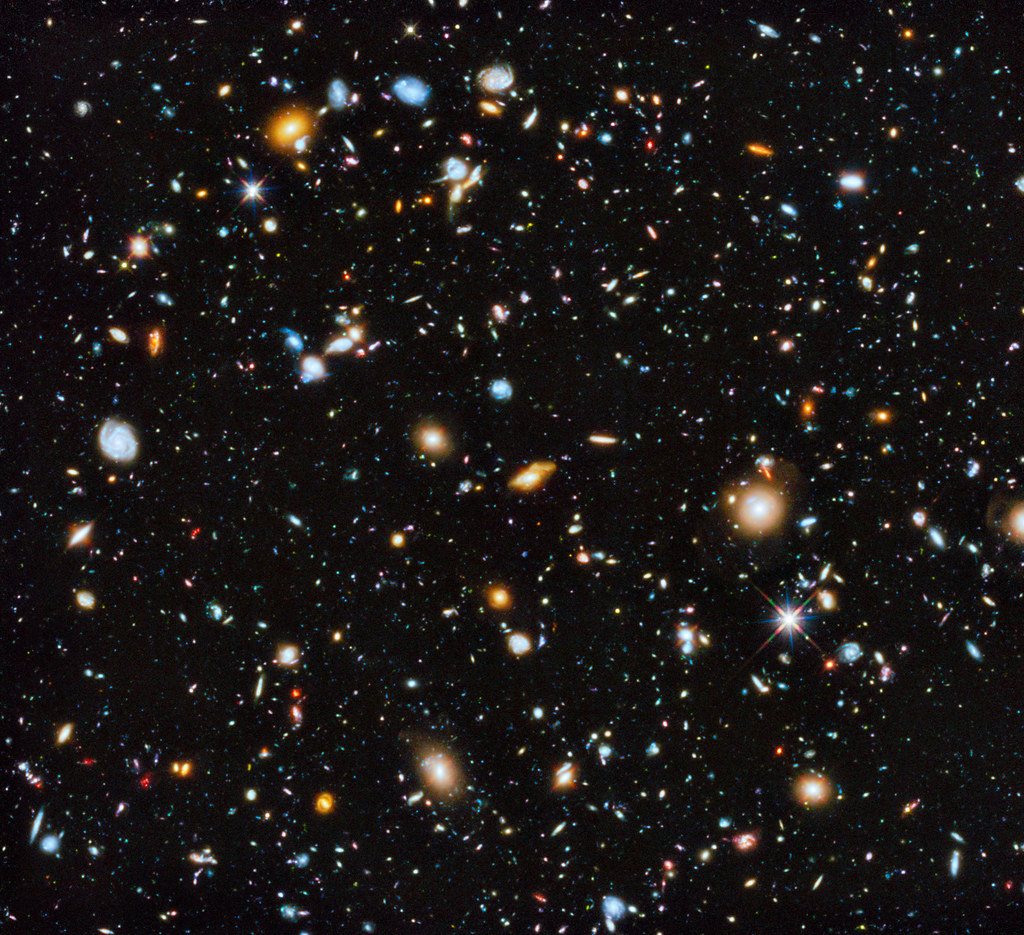
Hubble’s colourful view of the Universe” by Hubble Space Telescope / ESA is marked with CC BY 2.0.