Tag Archives: Chinese poetry

Odd Poem: Hu Mingfu (胡明复) , ‘Lion-Eating Poet in the Stone Den’

Lion-Eating Poet in the Stone Den is crafted entirely from the syllable “shi,” distinguished only by tonal variation, yet it still conveys a complete and coherent story in Chinese. The poem was originally written by Hu Mingfu (胡明复) and published by linguist Yuen Ren Chao in Volume 11 of The Chinese Students’s Monthly in 1916.[2][3] It was then refined by Yuen Ren Chao in the 1930s for demonstrative purposes in his lectures.

In Chinese:

“Shi Shì shí shĩ shĩ”

Shíshì shishì Shi Shì, shì shi, shì shí shí shĩ.
Shì shíshí shì shì shì shĩ.
Shí shí, shì shí shi shì shì.
Shì shí, shì Shi Shì shì shì.
Shì shì shì shí shĩ, shì shĩ shì, shĩ shì shí shĩ shìshì.
Shì shí shì shí shi shi, shì shíshì.
Shíshì shĩ, Shì shĩ shì shì shíshì.
Shíshì shì, Shì shĩ shì shí shì shí shĩ.
Shí shí, shĩ shí shì shí shĩ shĩ, shí shí shí shĩ shĩ.
Shì shì shì shì.

English Translation:

In a stone den lived a poet named Shi, who loved lions and had resolved to eat 10 lions.
He often went to the market to look for lions.
At 10 o’clock, 10 lions had just arrived at the market.
At that moment, Shi also arrived at the market.
He saw those 10 lions and, using his arrows, slayed them.
He brought the bodies of the 10 lions back to the stone den.
The stone den was damp, so he asked his servants to wipe it clean.
After it was cleaned, he tried to eat the 10 lions.
When he began eating, he realized that those 10 lions were actually 10 stone lion statues.
Try to explain this matter.

*****

If you chase this odd poem down in more detail, you will find arguments about the original poet’s intent, and the subsequent modifications by Yuen Ren Chao (who apparently claimed full ownership), and which language is appropriate for it, and more, in Wikipedia and elsewhere. I leave you with a long excerpt from pinyin.info:

“Yuen Ren Chao was the leader of the group that designed National Romanization. He knew that National Romanization (Guóyǔ Luómǎzì) could only write “modern vernacular Chinese,” and not Classical Chinese. In order to demonstrate this point he playfully wrote a classical essay consisting entirely of “homophones” entitled “Record of Mr. Shi Eating Lions.” The whole essay is copied as follows:

Shi2 shi4 shi1shi4 Shi1 shi4 shi4 shi1, shi4 shi2 shi2 shi1. Shi4 shi2shi2 shi4 shi4 shi4 shi1. Shi2 shi2, shi4 shi4 shi4, shi4 shi2 shi* shi1 shi4 shi4. Shi4 shi2, shi4 shi4 shi4 shi2 shi1, shi3 shi2 shi2 shi3 shi4, shi3 shi4 shi2 shi1 shi4shi4. Shi4 shi2 shi4 shi2 shi1 shi1 shi4 shi2 shi4. Shi2 shi4 shi1, shi3 shi4 shi4 shi3 shi2 shi4. Shi2 shi4 shi4. Shi4 shi3 shi4 shi2 shi4 shi2 shi1 shi1. Shi2 shi2, shi3 shi4 shi4 shi2 shi* shi1 shi1 shi2 shi2 shi* shi2 shi1 shi1. Shi4 shi2, shi4 shi3 shi4 shi4 shi4shi2. Shi4 shi4 shi4 shi4.” (The original article had no punctuation.) (* The character 硕 shuò, meaning huge, was pronounced as shí in the past.)

The vernacular translation of this essay is:

Shítou wūzi lǐ xìng Shī de shīrén xǐhuan chī shīzi, tā juéxīn yào chīdiào 10 tóu shīzi. Tā shíshí dào shìchǎng shàngqu kàn shīzi. Shí diǎn zhōng, tā dào shìchǎng, gānghǎo 10 tóu zhuàngdà de shīzi láidào shìchǎng. Zhè shíhou, tā kàn le zhè 10 tóu shīzi, yīkào 10 zhī shítou zuò de jiàn, bǎ zhè 10 tóu shīzi shāsǐ. Tā jiǎn qǐ zhè 10 tóu shīzi de shītǐ, huídào shítou wūzi lǐ qù. Shítou wūzi cháoshī. Tā jiào shìzhě mǒgān shítou wūzi. Shítou wūzi mǒgān le, tā kāishǐ chángshì chī zhè 10 tóu shīzi de shītǐ. Chī de shíhou, cái zhīdào zhè 10 tóu zhuàngdà de shīzi de shītǐ, shíjì shì 10 tóu zhuàngdà de shítou shīzi de shītǐ. Zhè shíhou, tā cái míngbai zhè jiàn shì de zhēnxiàng. Qǐng nǐ jiěshì, zhè shì zěnme huíshì?

The English translation of the essay is:

Mr. Shi, a poet who lived in a stone house, liked to eat lions. He vowed to eat ten lions. He often went to the market to look at lions. At ten o’clock, he went to the market, (and) just then ten large lions (also) came to the market. At that time, he saw these ten lions. Relying on the power of ten arrows with stone tips, he caused the ten lions to pass away. He picked up the bodies of the ten lions and went back to his stone house. The stone house was damp, so he told his servant to try and wipe it (dry). After the house had been wiped (dry), he began to try to eat the bodies of the ten lions. As he was eating, he realized that the bodies of the ten large lions were actually bodies of ten large stone lions. Only then did he understand the real situation. Can (you) explain what happened? (Translated by Victor H. Mair)

The point is that, if Chao’s classical essay were written in Hanyu Pinyin, everything would be shi and naturally no one could read and understand it. In other words, it is a kind of tour de force tongue twister. Even if it were written in characters, people still would not be able to understand it when it is read aloud. There are people who use this (playful) piece (that is forced and unnatural even in Classical Chinese) to oppose Hanyu Pinyin. They have completely misunderstood Yuen Ren Chao’s original intention!”

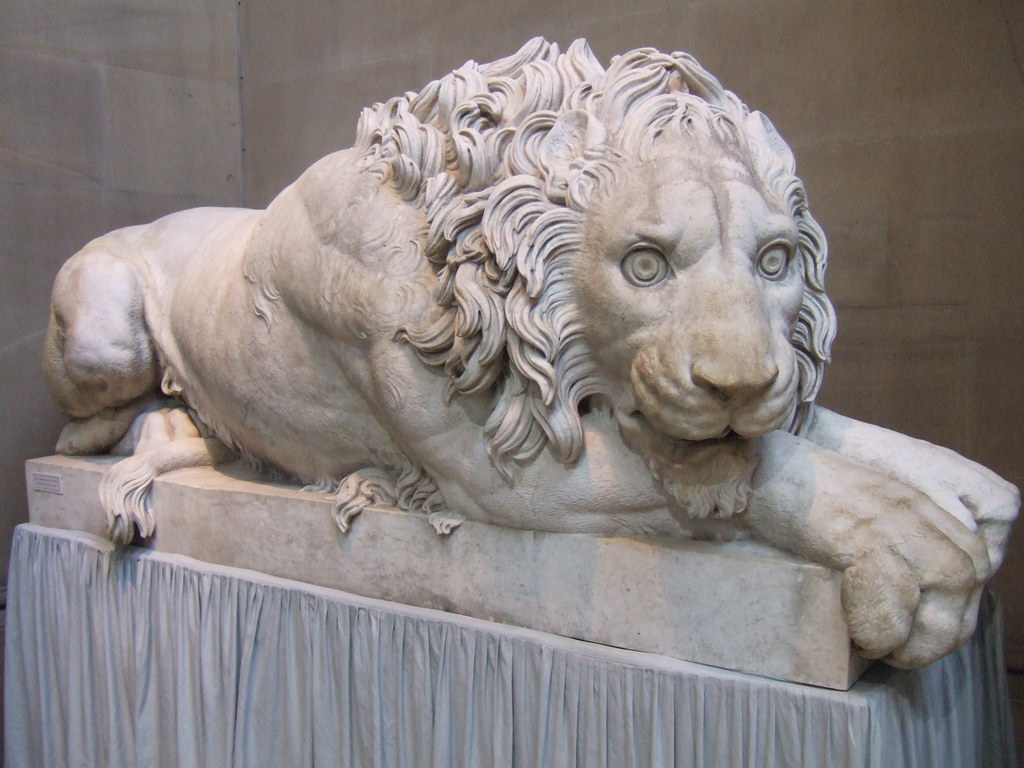
Stone lion” by Ben Sutherland is licensed under CC BY 2.0.

Odd poem: Xi Jinping, ‘In Memory of Jiao Yulu’

Ten thousand miles away your soul has flown;
the rivers, mountains and land yearn for your return.
The people mourn the loss of a caring official,
tears flooding under the empress trees you planted.
Having dedicated your life to the desert,
to the betterment of people’s lives, your legacy lives on
no matter how many years come and go.

The moon shining bright as always,
I think of you and your life’s work.
You toiled long and hard, claiming no credit.
Serving and benefiting the people:
such was your ambition and is also mine.
Many a trickle will add a touch of green to the desert
and create a wellspring of hope.”

*****

Xi Jinping, born in 1953, has been the general secretary of the Chinese Communist Party and chairman of the Central Military Commission, and thus the paramount leader of China, since 2012. Since 2013, Xi has also served as the president of China.

Jiao Yulu was a Chinese politician, highly respected for his hard work even as he was dying of liver cancer in his early 40s.

From the Chinese Embassy in the US:
Xi Jinping has always held Jiao Yulu in high esteem and regarded him as a role model. At the time of writing this poem, Xi was the Party Secretary of Fuzhou. One night in July 1990, he read an article entitled “People Yearn for the Return of Jiao Yulu.” The poem was inspired as literary thoughts surrounding the deceased upright man welled up in Xi’s heart. When he inspected Lankao in 2014, Xi recalled emotionally how he learned from the example of Jiao Yulu more than 40 years ago. “On February 7, 1966, the People’s Daily carried a long article by Comrade Mu Qing and others entitled ‘Jiao Yulu: A Model County Party Secretary.’ Back then, I was a grade one student in junior high school. The teacher of political education choked with sobs while reading the article to us. I was deeply moved when I heard Comrade Jiao Yulu kept on working even in the late stage of liver cancer, pressing a stick against his liver to relieve the pain. The pressure from the stick wore a hole into the right side of his rattan chair over time.”

Jiao Yulu is no stranger to the Chinese people. After being appointed Party Secretary of Lankao County, he mobilized the local residents in a great struggle to tackle water-logging, sandstorm, and alkaline soil. Leading by example, he was always at the frontline at the height of sandstorms and in torrential rainfalls to identify the wind corridor, forecast quicksand and gauge flood waters. Amid blinding blizzards, he visited poor families to deliver food and financial relief to their homes. He was devoted entirely to all the people of his county but himself. Despite severe illness, he carried on work till the last moment of his life, and is revered as the “model county Party secretary.”

Weekend read: Aaron Poochigian, ‘Not Atoms’

When, strolling through the Village, I discover

one lonesome shoe, a jeweled but dogless collar,
the crushed rose of a hitman or a lover,
barf like an offering, a half-burnt dollar,
“Scream” masks holding traffic-light-top vigil,
loose lab rats among the morning glories
or Elmo trapped inside a witch’s sigil,

I love the universe because it’s made of stories.

*****

Aaron Poochigian writes: “I live in the East Village, which is party central, especially on the weekends. The images in this poem are mostly random stuff I saw the mornings after. I didn’t include the people passed out on the sidewalk (just check to make sure they’re still breathing). The structure (one-line beginning, six-line list, one-line ending) came to me from a beautiful Tang-dynasty poem, ‘Visiting the Taoist Priest Chang’, by Liu Changqing.”

Aaron Poochigian’s ‘Not Atoms’ was originally published in New Verse Review. For reference, here is Liu Changqing’s poem in Aaron Poochigian’s translation:

Under the faint trail’s guidance I discover

a footprint in the phosphorescent moss,
a tranquil lake where low clouds love to hover,
a lonesome door relieved by rampant grass,
a pine grown greener since the thundershowers,
a cold springs fed by mountains far away.

Mingling with these truths among the flowers,
I have forgotten what I came to say.


Aaron Poochigian earned a PhD in Classics from the University of Minnesota and an MFA in Poetry from Columbia University. His latest poetry collection, American Divine, the winner of the Richard Wilbur Award, came out in 2021. He has published numerous translations with Penguin Classics and W.W. Norton. His work has appeared in such publications as Best American Poetry, The Paris Review and Poetry.
aaronpoochigian.com
americandivine.net

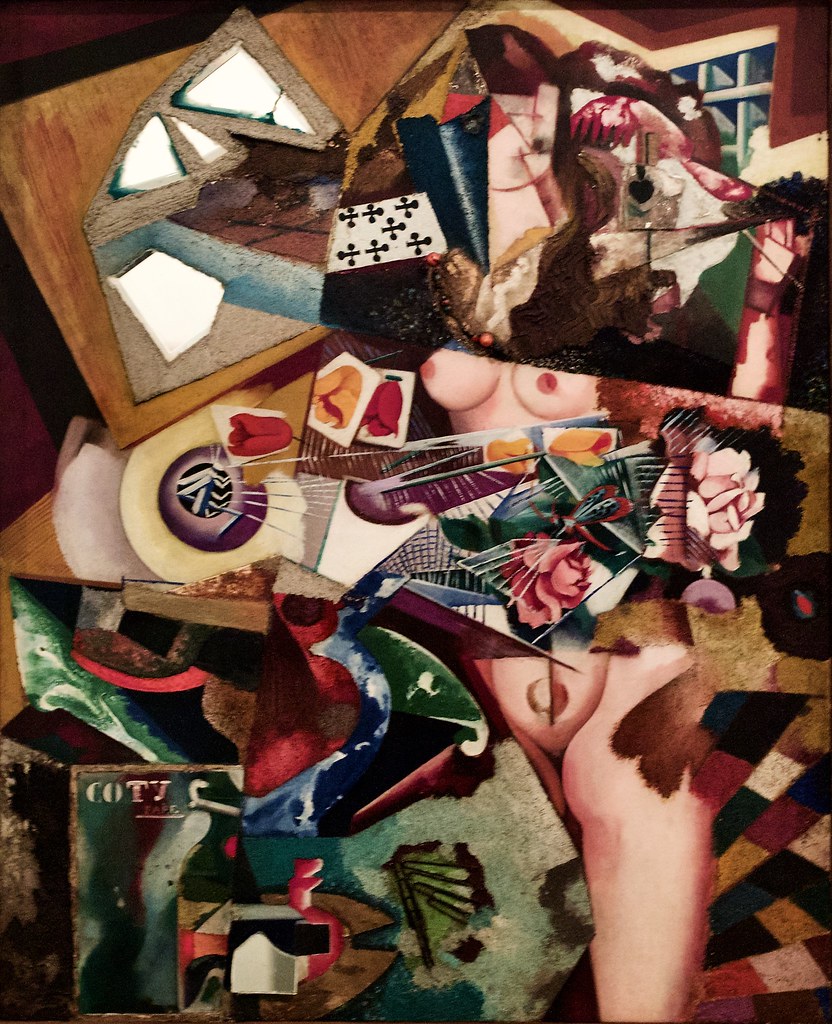
Photo: “Untitled [Coty] (c.1917) – Amadeu de Souza-Cardoso (1897-1918)” by pedrosimoes7 is licensed under CC BY 2.0.

Odd poem: ‘Changsha’ by Mao Zedong

Alone I stand in the autumn cold
On the tip of Orange Island,
The Xiang flowing northward;
I see a thousand hills crimsoned through
By their serried woods deep-dyed,
And a hundred barges vying
Over crystal blue waters.
Eagles cleave the air,
Fish glide under the shallow water;
Under freezing skies a million creatures contend in freedom.
Brooding over this immensity,
I ask, on this bondless land
Who rules over man’s destiny?
I was here with a throng of companions,
Vivid yet those crowded months and years.
Young we were, schoolmates,
At life’s full flowering;
Filled with student enthusiasm
Boldly we cast all restraints aside.
Pointing to our mountains and rivers,
Setting people afire with our words,
We counted the mighty no more than muck.
Remember still
How, venturing midstream, we struck the waters
And the waves stayed the speeding boats?

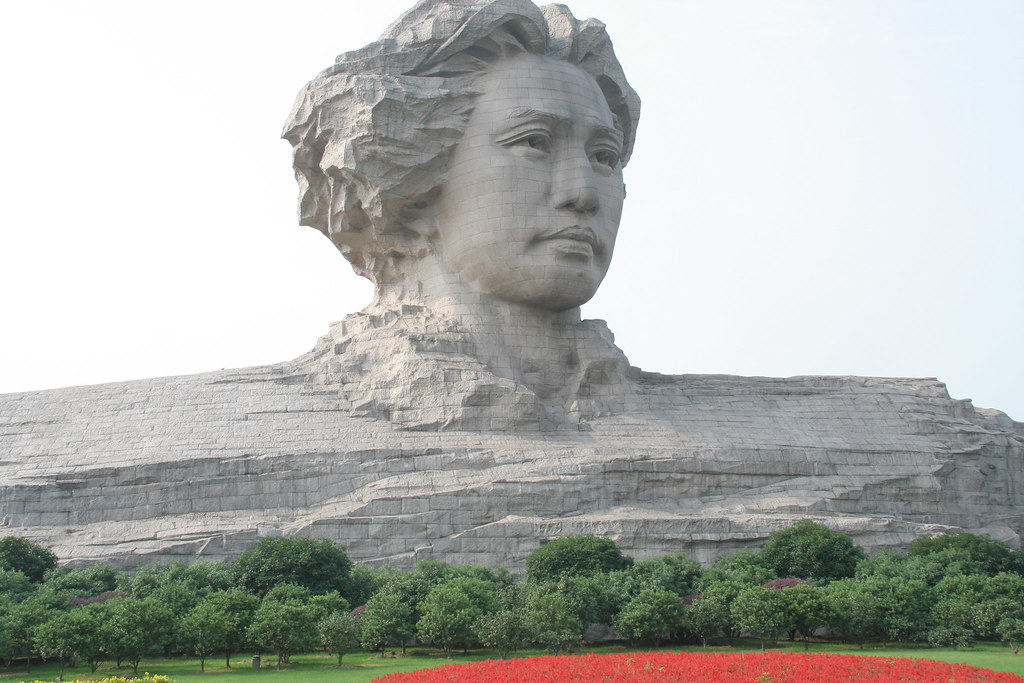
Mao Zedong wrote this poem in 1925, when he was 31. He had previously spent five years in Changsha at university, young, bold and enthusiastic. Now he returned, reflected, remembering his student days, pondering the land’s immensity and the nature of destiny, and he wrote his poem. And today the young Mao gazes again at the river from Orange Island… or would, if it wasn’t just a stone statue of his head.

Despite his revolutionary tendencies in other areas, Mao wrote in Classical Chinese verse. ‘Changsha’ is annotated “to the tune of Chin Yuan Chun”, marking it as belonging to the type of verse called tzu. The tzu originated in the Tang Dynasty (618-907 CE) as lines sung to certain tunes. Each tune prescribes a strict tonal pattern and rhyme scheme, with a fixed number of lines of a standardised varying length. Obviously, a translation into a European language is going to lose the structural form inherent in the original. Mao may not be one of the best Chinese poets, but his poems are generally considered to have literary quality. Arthur Waley, the eminent British translator of Chinese literature, however, described Mao’s poetry as “not as bad as Hitler’s paintings, but not as good as Churchill’s.”

Photo: “A young Chairman Mao” by timzachernuk is licensed under CC BY-NC 2.0