Tag Archives: waves

Sonnet: RHL, ‘An Observation’

If particles only exist as waves,
precipitating out only when measured, seen,
till then just ghostly, nebulous, roughed-in…
If that’s the way the universe behaves,
then who’s to say the moons of Jupiter
existed before Galileo scoped
them out? Our simple world had coped,
pre-Hubbell, without needing to infer
a billion galaxies. Again, if things
newly observed are different than before,
then things that once were real are real no more,
especially nebulous, wave-form, with wings,
hence dragons, fairies, elves all now seem odd…
and angels, demons, giants, ghosts… and God.

*****

This sonnet was recently published in Bewildering Stories (thanks, Don Webb), and seems to have touched a chord with that issue’s theme of esse est percipi; so it leads off that week’s questions in the magazine:

  1. In Robin Helweg-Larsen’s An Observation:
    1. George Berkeley’s philosophy of Idealism is based upon the principle: “To be is to be perceived.” How does the theory of Quantum Physics support the principle of perception? Or does it?
    2. The poem concludes by listing a number of supernatural beings whose reality is implicitly denied as long as they have not been perceived. How does “God” differ — by definition — from the others in the list?
    3. By whom or what must something be perceived in order to exist? And how does a perception take place?

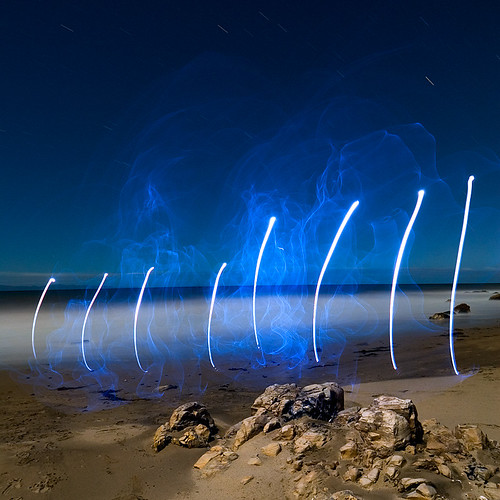
Photo: “Nebulous in Blue” by Toby Keller / Burnblue is licensed under CC BY-NC-SA 2.0.
Double Dactyl: ‘Emily Dickinson’

Yellow rose, yellow rose,
Emily Dickinson
lived in seclusion, was
never a wife;
wrote of her garden most
anthropocentrically,
talking with God, Satan,
Death, all her life.

*****

There’s an old suggestion that all of Emily Dickinson’s poetry can be sung to the tune of ‘The Yellow Rose of Texas’.

I never saw a moor,
I never saw the sea;
Yet know I how the heather looks,
And what a wave must be.

(Brave words, but I think that waves would have surprised her with their complexity and power and sensuousness.) There’s a newer suggestion that she lived so reclusively because she suffered from epilepsy, and wanted to hide it as much as possible out of a sense of shame.

Strange woman, strange life, strange little poems… but remarkably insightful, accessible, and word-for-word memorable.

My double dactyl on her was recently published in The Asses of Parnassus – thanks, Brooke Clark!

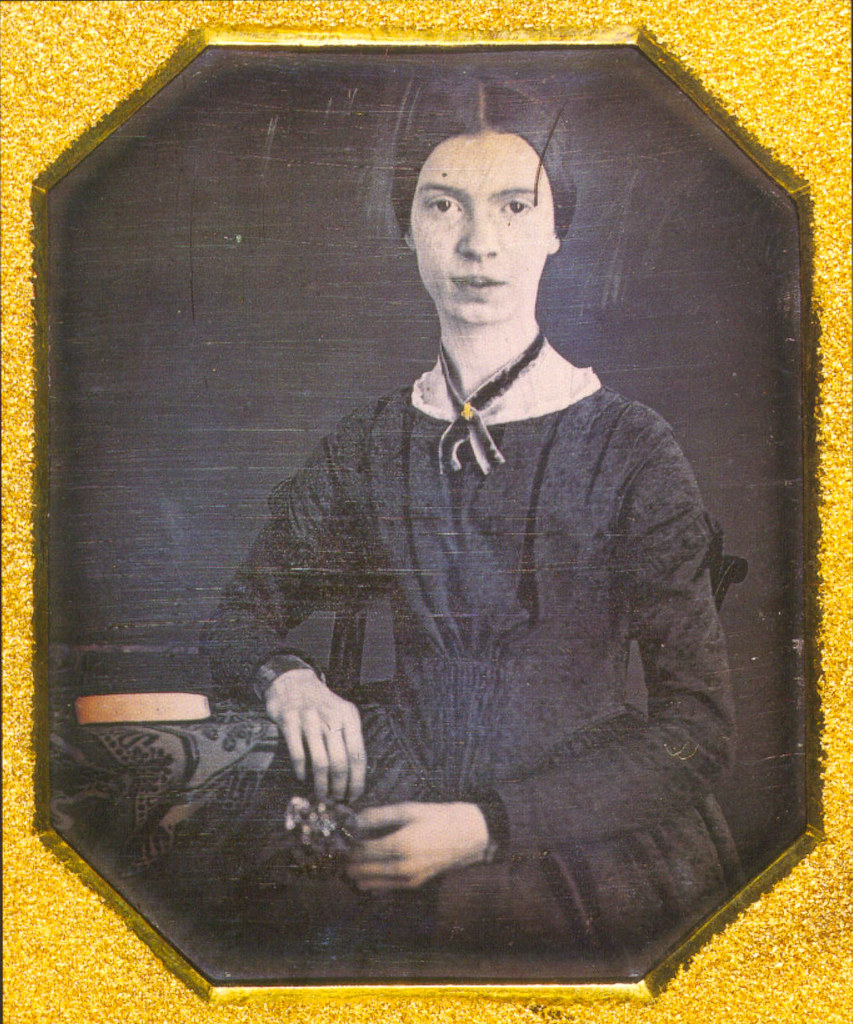
Emily Dickinson” by Amherst College Archives is marked with Public Domain Mark 1.0.

Potcake Poet’s Choice: Jean L. Kreiling, ‘The Waves’

Sprawled on a pew of sand, you meditate
on miracles of tide and time. Without
a prayer but apparently devout,
and humbled by the water’s shifting weight,
you watch with wonder, even venerate
this higher power rolling in and out:
omnipotence too obvious to doubt,
authority too awful to debate.
Like salty spray, some blue-green grace may cling
and seep unsanctified into your soul,
without a psalm or sermon—for the sea
makes its own joyful noise: the breakers ring
uncounted changes, and no church bells toll
more faithfully or irresistibly.

Previously published in 14 by 14. 

Jean L. Kreiling writes: “Growing up on the beach, and living on another coast in adulthood, I have never lost the sense of awe and humility that the sea inspires.  And of course I have never succeeded in capturing its magic in words, but I hope I’ve made a start in this poem.  Its form, my favorite, imposes the sonnet’s graceful structure onto what might otherwise have been an amorphous rhapsody; in addition, its meter and rhyme might suggest a bit of the ocean’s own rhythms and harmonies.”

Jean L. Kreiling is the author of two collections of poetry: Arts & Letters & Love (2018) and The Truth in Dissonance (2014). Her work appears widely in print and online journals, and has been awarded the Able Muse Write Prize, three New England Poetry Club prizes, the Plymouth Poetry Contest prize, and several other honors.  She is Professor Emeritus of Music at Bridgewater State University, and an Associate Poetry Editor for Able Muse: A Review of Poetry, Prose & Art.   

Her poem ‘The Salisbury Crags’ which first appeared in the Orchards Poetry Journal, is included in the ‘Travels and Travails’ Potcake Chapbook.

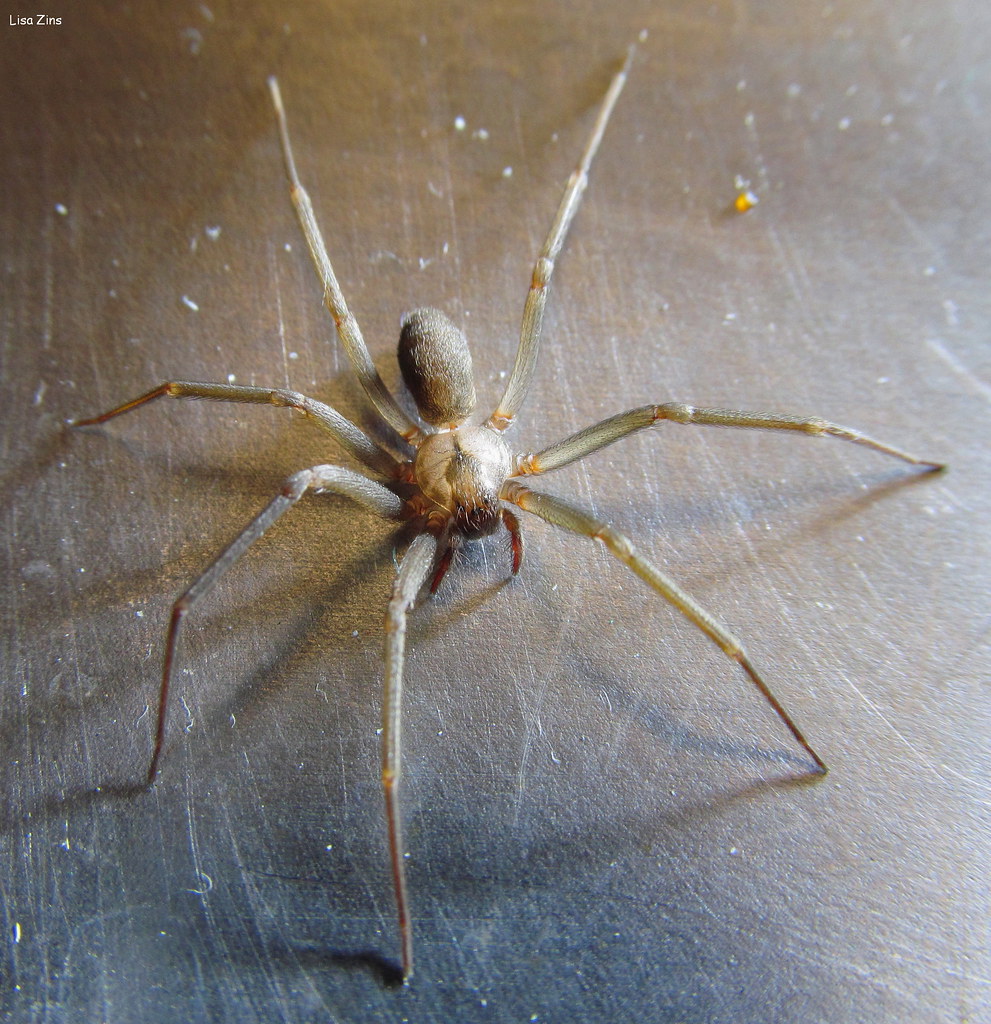
Short poem: ‘White Recluse’

Her thoughts were all inside her –
Free from reality –
Poor little cramped-up spider
Who never saw the sea.

Much though I love her insightful and often wicked little poems, and deeply though I sympathise with her for (as I have heard) the traumatic and embarrassing seizures that restricted her life, I still have difficulty with this specific Emily Dickinson poem:

I never saw a Moor —
I never saw the Sea —
Yet know I how the Heather looks
And what a Billow be.

I never spoke with God
Nor visited in Heaven —
Yet certain am I of the spot
As if the Checks were given —

(There are two versions of this poem in circulation; but her poems were only edited and published after her death, and subsequently researched, de-edited and republished.) With all due respect, Miss Emily, if you had actually experienced the sea you would have realised that there is no way that a description and a couple of paintings can hope to capture the totality of waves: their warmth or chill, their taste, their sound, their movement against the body, the enjoyment, the danger, their feel in the water, their feel on a boat, their impact on a sandy beach or on a reef or against a cliff…

This also suggests to me that her understanding of God and Heaven is way too simplistic. She is making a good unwitting case for agnosticism. ‘White Recluse’ was published in The Asses of Parnassus, a suitable place for snippy little poems.

“Six Eyed Danger (Brown Recluse Spider)” by Lisa Zins is licensed under CC BY 2.0