Tag Archives: winter

Daniel Brown, ‘Isn’t That The Way’

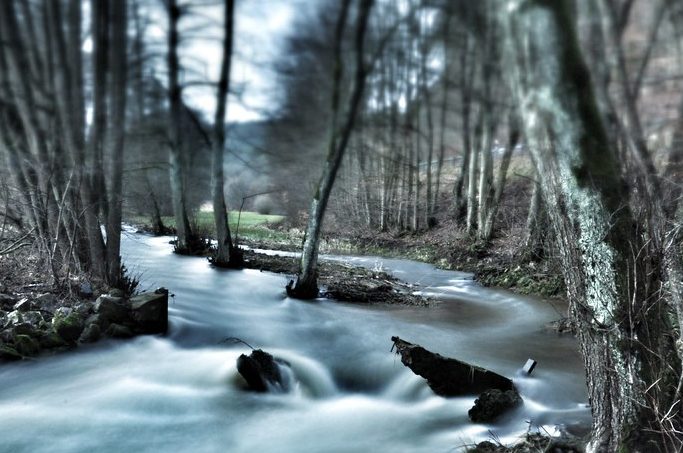
A river’s winter-silver
Discerned through screening trees
Takes on a certain sorrow
From the barrenness of these;

Of these whose summer glory
Can seem a little sad,
There being not a glimmer
Of river to be had.

*****

Daniel Brown writes: “I used to live in a seventh-story apartment in Manhattan whose kitchen window gave on Riverside Park and the Hudson River beyond. But this prospect had its limitations. I could see the river’s grandeur only in winter, when the intervening trees in the park were bleakly bare.  In the summer the trees were in glorious leaf—thereby blocking my view of the river. I wrote to a friend that this impossibility of having it all, view-wise, was “an emblem of our plight.”  Over the years I’d occasionally think about doing this predicament up as a poem, but my heart would sink at the anticipated tedium of laying out the situation’s physical set-up—the apartment, its location and elevation, its view—so I never attempted the piece. Then, not long ago, I found myself re-interrogating the poem’s possibilities—and recalling the phrase “emblem of our plight.”  It occurred to me that the poem could be cast as, well, emblematic: that laying out the physical set-up needn’t be burdensome because I didn’t have to lay it out; I could leave it out. Suddenly the poem seemed worth a try.”

‘Isn’t That The Way’ was published some years ago in a journal called Parnassus: Poetry in Review.

Daniel Brown’s poems have appeared in Poetry, Partisan Review, PN Review, Raritan, Parnassus, The New Criterion and other journals, as well as in a number of anthologies including Poetry 180 (ed. Billy Collins) and The Swallow Anthology of New American Poets (ed. David Yezzi). His work has been awarded a Pushcart prize, and his collection Taking the Occasion (Ivan R. Dee, 2008) won the New Criterion Poetry Prize. His latest collection is What More?  (Orchises Press, 2015). Brown’s criticism of poets and poetry has appeared in The Harvard Book Review, The New Criterion, PN Review, The Hopkins Review  and other journals, and the LSU Press has published his critical book, Subjects in Poetry. His Why Bach? and Bach, Beethoven, Bartok are audio-visual ebooks available at Amazon.com. His website is danielbrownpoet.com .

Photo: “Riverside Park South, June 2014 – 01” by Ed Yourdon is licensed under CC BY-NC-SA 2.0.

Max Gutmann, ‘Spring Villanelle’

Sandro Botticelli. (Alessandro di Mariano di Vanni Filipepi) 1444-1510.Florence. La Naissance de V?nus. Florence. Le Printemps. 1480. Florence. Mus?e des Offices.

Plants flower, swallows sing, and bunnies boff.
All nature gleams with joy. But time’s a sprinter.
When spring arrives, can winter be far off?

Take care. The festive glass from which you quaff–
at least half empty–soon will freeze and splinter,
though tulips bloom, swifts fly, and bunnies boff.

I glance away, then clear my throat and cough
to see you celebrating spring, that minter
of tender babes whose end is not far off.

You’ll soon require that heavy coat you doff,
eyes glinting so. Each year I see that glint err
as pansies flare, doves coo, and bunnies boff.

A peak makes more acute the coming trough.
Life’s script is not by Disney; it’s by Pinter:
one knows a heavy pause is not far off.

This bitter wisdom’s scorned, but, though you scoff,
each spring remains a harbinger of winter.
The primrose shines, wrens chirp, and bunnies boff,
all certain signs that winter’s not far off.

*****

Max Gutmann writes: “In this one, I tried to balance newness and repetition, like spring.”

‘Spring Villanelle’ was originally published in Light.

Max Gutmann has contributed to New StatesmanAble MuseCricket, and other publications. His plays have appeared throughout the U.S. (see maxgutmann.com). His book There Was a Young Girl from Verona sold several copies.

Photo: “IMG_6269A Sandro Botticelli. (Alessandro di Mariano di Vanni Filipepi) 1444-1510.Florence.” by jean louis mazieres is licensed under CC BY-NC-SA 2.0.

Bruce McGuffin, ‘Tunnels’

A snowy field — sun sparkles on the ice —
Devoid of life to those who do not know
That underneath a furtive swarm of mice
Live out their lives in tunnels through the snow.
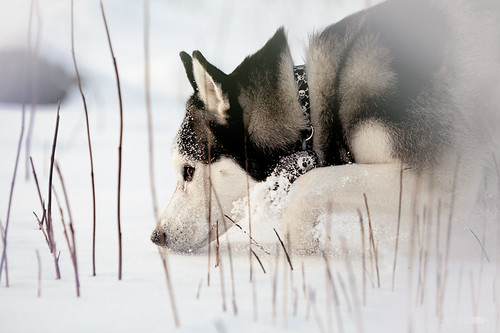
My dog, who finds them out by smell or sound,
Runs snorting through the snow in wriggling glee.
Then back and forth ecstatically he’ll bound
Until some mouse has nowhere left to flee.
For so it goes with mice as well as men,
Those tunnels where we run turn into traps
When forces that are far beyond our ken
Play out their game until our ways collapse.
Do waiting mice envision what impends?
That somewhere up above a canine snout —
Deus ex machina to mice — descends
To pierce the snow and pull those trapped mice out?
Few things in life will make that dog as glad.
The mouse may not rejoice — its life is through.
But whether killing mice is good or bad
Depends completely on your point of view.

*****

Bruce McGuffin writes: “When I was a boy winters were longer, colder, and snowier than they are today, and I had a suitably adapted dog: An 80 pound husky of indeterminate parentage. By which I mean a local ski instructor took his Siberian husky to Alaska one winter and she came home pregnant. We named him Frosty. In my defense I was 7 years old. His favorite pastimes were eating, sleeping outdoors in the snow, and hunting. Dogs roamed free in those days, and he brought home squirrels, mice, and more than one skunk. Frosty also bit the older boy next door after he punched me, which made Frosty The Best Dog Ever.
This poem started out as a paean to The Best Dog Ever, but slipped the leash and went off in a different direction, as poems sometimes do. It turns out that some of my favorite poems are the ones that get away.”

‘Tunnels’ was first published in Better Than Starbucks.

Bruce McGuffin grew up in rural Central NY, where children and dogs ran free through the frozen woodlands in winter, and waded in the creek all summer. It was ok if you like that sort of thing. His graduating class voted him Class Intellect, which was not exactly a compliment. Spurred on by lack of economic opportunity in that region, and the desire to know more people who didn’t think reading books was “weird”, he spent too many years in college then moved to the Boston area and worked for 37 years as an engineer in the field of radio communications. It was fun. Now semi-retired, he lives in Antrim NH with his wife Ann and occasional visits from two children who come for the skiing if not the company. His poetry has appeared in Light, Lighten Up Online, The Asses of Parnassus, Better Than Starbucks, and other journals.

Photo: “Sniffing the Prey” by Emyan is licensed under CC BY-NC-ND 2.0.

Short poem: RHL, ‘Home Thoughts from the North’

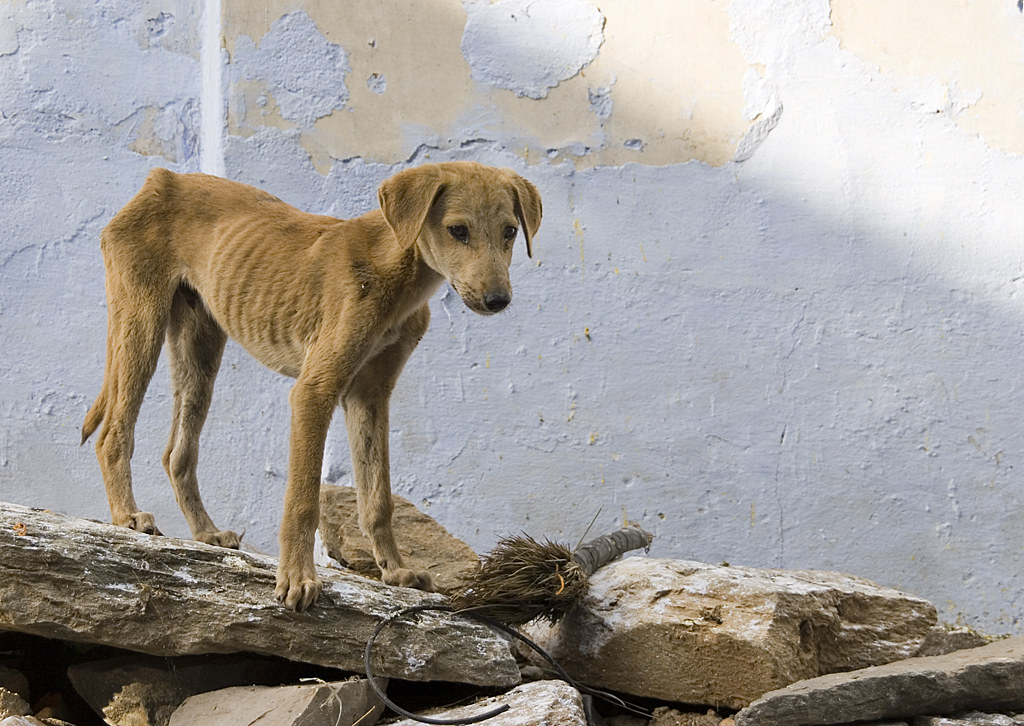
Dog-skinny, winter’s mangy sun
Slinks between clouds.
A West Indian dog – there are none such here in the UK ….
Nor, there, such mangy suns.

*****

Some people equate a good Christmas with a family walk in the snow, others with family time on a beach. It all depends on what you grow up with, doesn’t it? With my first twelve years being on islands with palm trees, it has remained difficult for me in my decades of climate exile to appreciate more than a month or two of bleaker weather at a time. ‘Home Thoughts from the North’ was originally published in Snakeskin – thanks, George Simmers!

Best wishes for an appropriately weathered Merry Christmas to all… and apologies to Eliza for subjecting her to non-Canadian winters for so many years!

Photo: “Skinny puppy in Udaipur” by Dey is licensed under CC BY-NC-SA 2.0.

Semi-formal at best, RHL, ‘Remembering Winter’

I remember winter when it was only
Mostly too cold to swim –
The churning suck and drag of waves under the rock.
Yes, there are flowers – there are always flowers –
But, with the poinciana stripped of leaves,
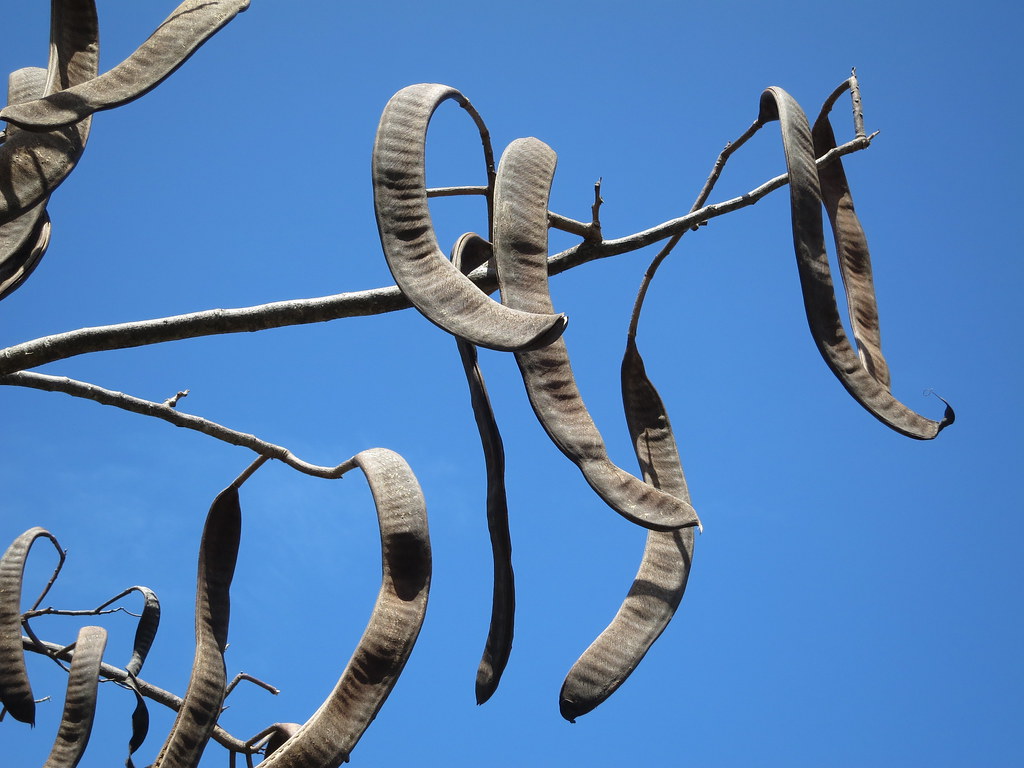
Its pods like forearms thinned and bent with age,
The rattling of sticks, the hiss of wind,
The broken sea stuck futilely on Wash
With endless turning, churning, foaming pulse –
How long can waves beat on a rock before
The tired rock gives up?

Yes, I remember later northern winters –
The bitter satisfaction of a too-thin sun,
Beauty without the joy, light without heat.
Feet always cold, clothes never quite enough;
Skin drying back from fingernails, lips chapped, throat raw,
The smell of damp coats, never fully dry.

I dream of alternating south and north
And never having to be cold again,
Turning, returning, always in the sun –
Or settling in an equatorial land
And swimming year-round, mellowing on the sand
Flattening my temperature, my will,
Soaking up sun, and dreaming I’m asleep.

Bitter it is, the winter argument,
Betrayed by world that slices off the years,
I have no love of winter, and I feel
Trapped, and betrayer of true kids of mine –
But look – they love it, so I’m further trapped,
Bound to the year that crushes as it turns,
And has become their home – are they then kids of mine?
Ice – snow – the winding down of life and year.

And I’ve known other winters all too well –
Where years of spring gave way to years of warmth,
Blossoms to children sparkling in the light,
The wonders of the world’s sharp sense delight;
Then years of fruit, as independent seeds
Form their own thoughts and follow darkening paths
Falling away, on purpose shrivel up,
And days grow shorter, moods swing soft and harsh
Drizzle sets in for weeks, cold in the bones,
Cold in the head, and colder in the heart –
That’s how the years of endless winter start.

Bleakness to bleakness, blackness into black;
Lives dry and crack,
Sap gone from tree and house and bone.
Who knew that emptiness could weigh so much?
Give me the strength to last to Spring, or start my own.

*****

This poem is from decades ago, in one of those periods where life felt bleak. (But such seasons pass!) For a long time I was unsure of the poem because it always feels like sloppiness and cheating when my rants are low on rhythm and rhyme; but George Simmers liked it enough for inclusion in Snakeskin, and that’s more than good enough for me.

Photo: “Shack-Shacks” by Chris Hunkeler is licensed under CC BY-SA 2.0.
Using form: Monorhyme: D.A. Prince, ‘Cold’

Outside the glittering air is bright,
frost crystals glisten in the light,
a bitter wind sharpens its bite,
teasing a few stiff leaves to flight.
It finds in restlessness a tight
fierce chill, like muscles clenched to fight,
needling uncovered skin with spite
and then breathes out a cloud of white,
a moment’s ghost, a shape so slight
it freezes almost before sight
has marked its passing. Snowflakes write
their shaky message to unite
cold’s elements in silver night.

*****

D.A. Prince writes: “This poem came together very quickly: the garden thick with frost and the idea of catching the vowel sound in ‘ice’ as a way of capturing the sharpness of the scene. A mono-rhyme, playing with this crispness, seemed the way forward. It was fun, and that’s an important element in poetry.” The poem was published in the February 2024 Snakeskin (issue 314).

D. A. Prince lives in Leicestershire and London. Her first appearances in print were in the weekly competitions in The Spectator and New Statesman (which ceased its competitions in 2016) along with other outlets that hosted light verse. Something closer to ‘proper’ poetry followed (but running in parallel), with three pamphlets, followed by a full-length collection, Nearly the Happy Hour, from HappenStance Press in 2008. A second collection, Common Ground, (from the same publisher) followed in 2014 and this won the East Midlands Book Award in 2015. HappenStance subsequently published her pamphlet Bookmarks in 2018, with a further full-length collection, The Bigger Picture, published in 2022.

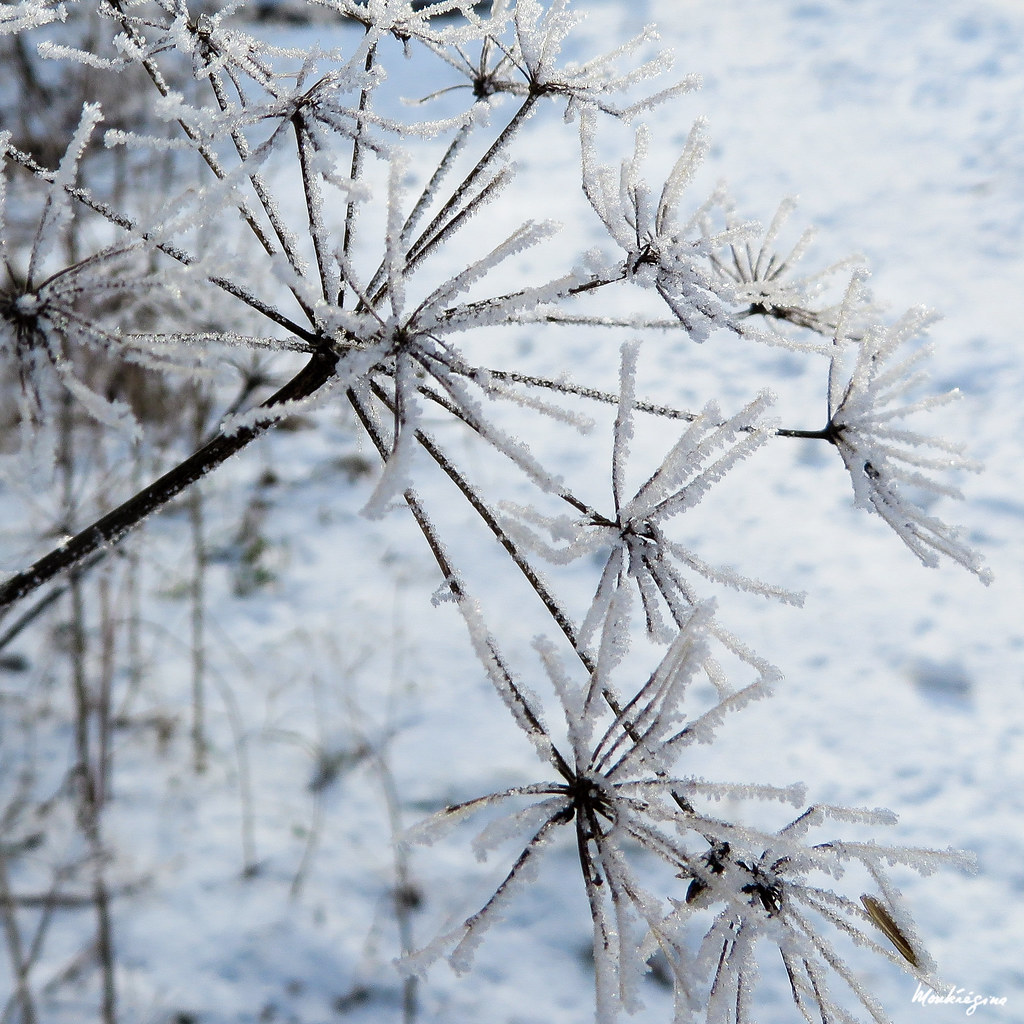
Frost Blooms – Fleurs de givre” by monteregina is licensed under CC BY-NC-SA 2.0.

Ann Drysdale, ‘Winter Song’

When blizzards blow under the tiles
and the dishcloth crisps on the draining board
and the snowscape stretches for miles and miles
and only the idiot ventures abroad.
When it’s early to bed, and thank heavens for that,
then coldly keens the cast-out cat:
Miaow! Miaow! – a doleful din –
and who will rise and let him in?

When slippery stones by the pond
make filling a bucket an effort of will
and you’re walled-up for weeks in the back of beyond
in a farm at the foot of a hell of a hill
then it’s early to bed, and thank heavens for that,
till coldly keens the cast-out cat:
Miaow! Miaow! – a doleful din –
and who will rise and let him in?

*****

Ann Drysdale writes: “It was published in my very first collection, The Turn of the Cucumber (Peterloo Poets 1995) and dates from a time when I was bringing up three children as a single mum on a hand-to-mouth smallholding on the North York Moors.”

Editor’s note: Ann Drysdale takes the structure, but not the precise metre, of Shakespeare’s ‘Winter Song’ from Love’s Labours Lost. Her rollicking metre allows her “and the snowscape stretches for miles and miles” and the wonderful “in a farm at the foot of a hell of a hill”, for a bigger wintry landscape than Shakespeare shows.

Ann Drysdale now lives in South Wales and has been a hill farmer, water-gypsy, newspaper columnist and single parent – not necessarily in that order. Her eighth volume of poetry, Feeling Unusual, has recently joined a mixed list of published writing, including memoir, essays and a gonzo guidebook to the City of Newport.
http://www.poetrypf.co.uk/anndrysdalepage.html
http://www.shoestring-press.com

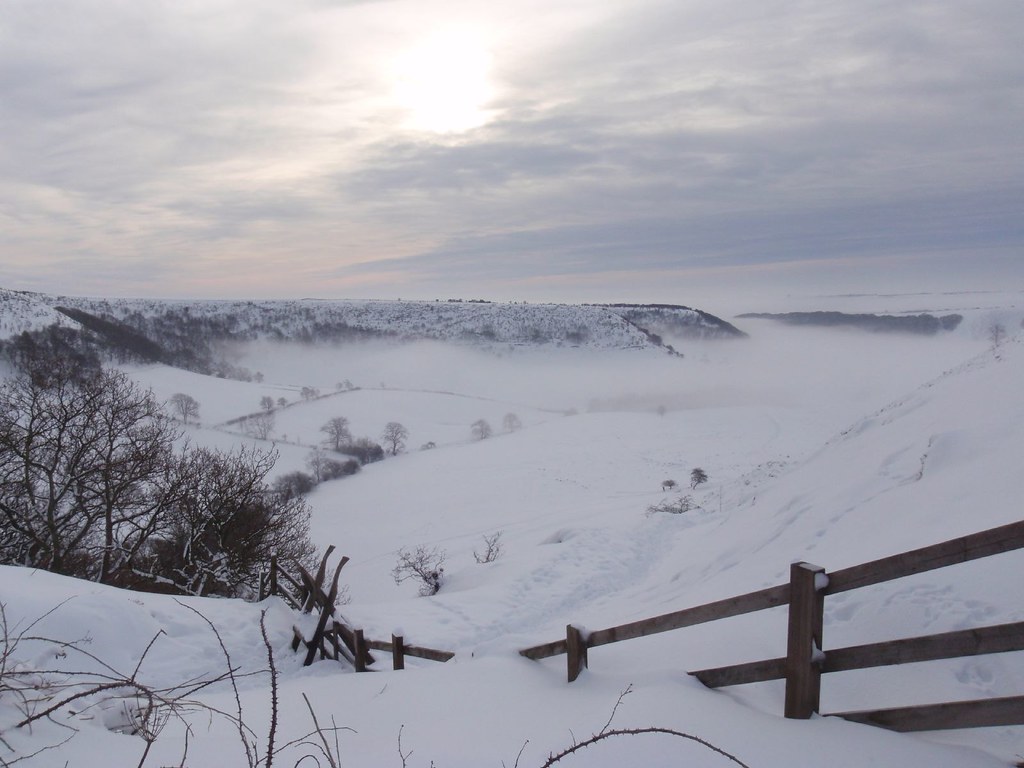
Photo: “Hole of Horkum, North York Moors” by reinholdbehringer is licensed under CC BY-NC-SA 2.0.

Semi-formal poem: ‘The Viking in Winter’

O it is a wide winter, windy with gales,
Hard, harsh and horizonless, cold,
And I can do nothing more this year
But sharpen the swords, mend the gear,
Mend cloth, patch sails,
Listen to tales told by the old,
Listen to horses stamp in stalls.
Feel the blood in my veins going nowhere,
Feel the river halt, the bay iced in,
The sun brief and thin
The food dried, smoked, salt
And no fresh fruit, fresh meat,
No fresh lands, fresh goods,
No fresh deeds, fresh girls,
No seas running and blood running
And people running and tales running…
For what is the good of inaction
Save to prepare for fresh action;
And what is the good of fresh action
Save for fresh tales;
And what is the good of fresh tales
Save for the glory and the name
And the fame that lives past the death rattle
For the sword singer,
Word winger,
The Bard of Battle?

*****

I feel the same fascinated connection to my Viking ancestors that I feel to my even earlier chimp-like forbears and modern chimp and bonobo cousins. All have social networks, hierarchies, politics, violence and ways of overcoming violence, cherished families, a sense of fairness and ways of cheating. I suspect the Viking gods would be far easier for chimps and bonobos to accept than modern scientific understanding could ever be. I greatly enjoy Vikings, chimps and bonobos, recognise that a lot in me comes from them, and am thankful to have outgrown much of their limitations. (And to neo-Nazis who think they are Vikings, I say this: “You’re not; don’t be so stupid.”)

This rambling semi-formal poem was first published in Snakeskin; thanks, George Simmers!

Icy sea” by piropiro3 is licensed under CC BY 2.0.

Potcake Poet’s Choice: Martin Elster, ‘The Woolly Bear’

Along a sylvan lane, you spy a critter
creeping with a mission, a woolly bear
fattened on autumn flora. So you crouch,
noting her triple stripes: the middle ginger,
each end as black as space. Her destination
is some unnoticed nook, a sanctuary
to settle in, greet the fangs of frost,
then freeze, wait winter out—lingering, lost
in dreams of summer, milkweed, huckleberry.
Though she’s in danger of obliteration
by wheel or boot, your fingers now unhinge her.
She bends into a ball of steel. No “ouch”
from bristles on your palm as you prepare
to toss her lightly to the forest litter.

She flies in a parabola, and lands
in leaves. Though she has vanished, both your hands
hold myriad tiny hairs, a souvenir
scattered like petals. When this hemisphere
turns warm again, she’ll waken, thaw, and feast
on shrubs and weeds (the bitterer the better)
then, by some wondrous conjuring, be released
from larval life. At length she will appear
a moth with coral wings—they’ll bravely bear
her through a night of bats or headlight glare,
be pulverized like paper in a shredder,
or briefly flare in a world that will forget her.

Martin Elster writes: “In the New England autumn, the leaves aren’t the only colorful feature in the landscape. Caterpillars are on the move, so they are more easily chanced on. A few years ago I lived briefly in a mainly rural and hilly town called New Hartford in the state of Connecticut. On my daily walks, I encountered many kinds of animals, including numerous lepidopterans (moths and butterflies), one species of which inspired this poem, an appropriate poem, I think, for late autumn or early winter.
The Isabella tiger moth (Pyrrharctia isabella) in its larval form is called the “banded woolly bear” (or “woolly bear” or “woolly worm”). The most remarkable attribute about the little critter is this (from Wikipedia):
“The banded woolly bear larva emerges from the egg in the fall and overwinters in its caterpillar form, when it literally freezes solid. First its heart stops beating, then its gut freezes, then its blood, followed by the rest of the body. It survives being frozen by producing a cryoprotectant in its tissues. In the spring it thaws.”
Covered in thick, fluffy-looking hair, the woolly bear sports bands of black and reddish-brown. There’s an age-old belief that the amount of brown on this critter can predict the severity of the coming winter. The more brown, the milder winter will be.
For the geeks: the rhyme scheme of the first stanza of the poem, similar to the bands on a woolly bear (ABA), is a chiasmus: ABC . . . CBA.

Martin Elster, who never misses a beat, was for many years a percussionist with the Hartford Symphony Orchestra (now retired). He finds contentment in long woodland walks and writing poetry, often alluding to the creatures and plants he encounters. His honors include Rhymezone’s poetry contest (2016) co-winner, the Thomas Gray Anniversary Poetry Competition (2014) winner, the Science Fiction Poetry Association’s poetry contest (2015) third place, and four Pushcart nominations. A full-length collection, Celestial Euphony, was published by Plum White Press in 2019.
This poem has appeared in The Road Not TakenAutumn Sky Poetry Daily, and The HyperTexts. His work has appeared in the Potcake ChapbooksCareers and Other Catastrophes‘ and ‘Robots and Rockets‘.

“Banded Woolly Bear (Isabella Tiger Moth) Caterpillar, Virginia” by Dave Govoni is licensed under CC BY-NC-SA 2.0

Potcake Poet’s Choice: Brian Gavin, ‘Country Church, Family Visit’

On the funeral road, five miles beyond the farm
it looms still, like a silo, then diminishes
as you get close. Your sound won’t raise alarm
out here. There’s none but you. The wishes
of no one left alive will keep you out,
or let you in. The door is probably locked
anyway, closed upon itself, redoubt
for certainties. Surrounding it the block
foundations — reservoirs of ice and weed —
still cluster, like white holes around the heart.
You will not try the door — where it might lead,
you cannot say. The dead have done their part,
for here you are among them once again,
between the legacies of grief — the snow,
the boxes of white quiet, the leaving, then
the watching it loom larger as you go.

Brian Gavin writes: “I like this piece because the church-image haunted (or taunted!) me for several years before I got around to giving it some context in a poem.  When it finally came to the page it felt like I had paid off a debt — like I had finally given the image a chance to tell its story.  The fact that this story turned out to be no story at all — just a bunch of hints and implications — seemed to fit the image.

Brian Gavin is a retired Distribution Manager who started writing poetry about 7 years ago. His poems have appeared in The Journal of Formal Poetry, Peninsula Poets and Snakeskin Magazine, and in the Potcake Chapbook ‘Careers and Other Catastrophes. He lives in Lakeport, Michigan, USA, with his wife Karen.