Monthly Archives: December 2024

Poem on poetry: Sonnet: Marcus Bales, ‘White Water’

A poem is so obdurate and small
Compared to what you wanted it to say
And sometimes isn’t even close at all.
For instance, this. I’ve worked on it all day,
A metaphor for all of love’s affairs.
I failed to ride the energy it gave,
My form and balance gone. Nothing prepares
You for the wildness of the standing wave.
Possessing and possessed and then propelled
Abruptly past the point of no control
To merely peril, having once beheld
The moving stillness of it all, all whole.
Your head’s what every poem wants to split,
While you stroke hard to stay ahead of it.

*****

Marcus Bales writes: “My online pal, the poet Liam Guilar, was a kayak adventurer, sneaking across borders to paddle the most dangerous rivers in the world. I went white water rafting once. You’re stuck in cold, wet, awkward positions that often turn suddenly painful. Why people do it over and over seems not just unreasonable but cold, wet, and painful. There are exhilarating moments, but you’re still cold, wet, and out of control. I could feel in my one experience that the out of controlness might be the point. Still, it was wet and cold. Very wet. Very cold. 

“The confluence of Liam’s many tales, my paltry experience, and he and I both struggling to write poems is the impetus for this poem. I’ve often thought that maybe what it needs is a bucket of ice water suspended over the reader like a, well, like a bucket of Damocles, that sloshes over the head and down the back of the neck in order to make it work.”

Not much is known about Marcus Bales except that he lives and works in Cleveland, Ohio, and that his work has not been published in Poetry or The New Yorker. However his ‘51 Poems‘ is available from Amazon. He has been published in several of the Potcake Chapbooks (‘Form in Formless Times’).

Photo: “Kayaking through the white waters of the Gorge” by Grand River Conservation Authority is licensed under CC BY-NC-ND 2.0.
Short poem: RHL, ‘Coat’

Sew, sew, sew your coat
Gently down the seam;
Threadily, threadily, threadily, threadily,
Joseph wants a dream.

*****

A throwaway poem. For anyone unfamiliar with the references, it blends what is often sung as a round:
Row, row, row your boat
Gently down the stream;
Merrily, merrily, merrily, merrily,
Life is but a dream

with the idea behind the Andrew Lloyd Webber / Tim Rice musical Joseph and the Amazing Technicolour Dreamcoat.

The poem was published in Lighten Up Online (aka LUPO). Thanks, Jerome Betts!

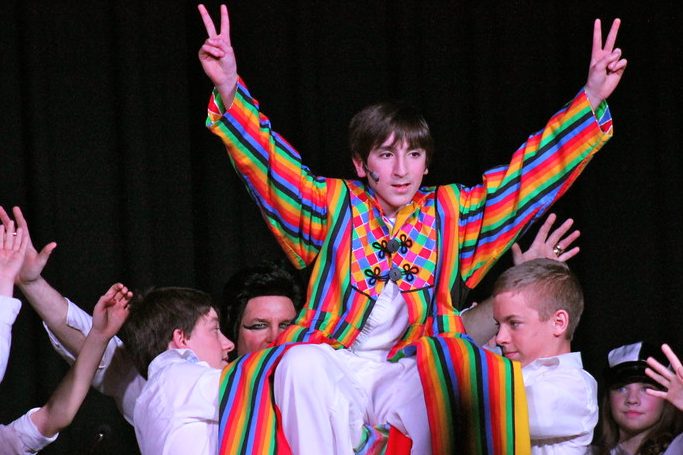
Photo: “Benjamin School District 25 production of ‘Joseph and the Amazing Technicolor Dream Coat’. March 9th, 2013.” by old06cphotos is licensed under CC BY-NC-ND 2.0.

Using form: William Trowbridge, ‘Song of the Black Hole’

radially extracted by NASA

You can almost see Vincent Price, black-robed,
hunched above the console of a jumbo organ
in the bowels of his creaky haunted manse; or
maybe a stadium of damned souls, strobed
in lurid red and howling nettle-robed
as they plummet into Pandemonium, pore
and pith aflame. It’s no troubadour,
undoubtedly, this vast atonal gob.

As with the Roach Motel, we’d check in,
but never out—us or anything, since
it can swallow errant planets whole, and still,
however much the mass, can’t eat its fill.
Though it’s larger far than Jupiter or Mars,
we can barely see it, thank our lucky stars.

*****

 William Trowbridge writes in Rattle, where this poem was published: “I’ve spent most of my years as a poet writing free verse, though lately I find myself turning toward form. Unlike those who see formalist verse as dry and effete, I find it can generate power by means of barriers to play against—‘the net’ as Frost put it, by which he also meant boundary lines. If you pour gunpowder in a pile and light it, a mere flash occurs. But pack it tightly into a container, and you can get something more powerful. And, as opposed to the notion that form is restrictive, I agree with Richard Wilbur that it often liberates one from choosing the easy word in order to discover the better, surprising one. I haven’t moved into this part of town yet, but I stop there more and more.”

William Trowbridge’s tenth poetry collection, Father and Son, was published by Wayne
State College Press Press in April. His poems have appeared in more than 45
anthologies and textbooks, as well as on The Writer’s Almanac, AnAmerican Life in
Poetry, and in such periodicals as Poetry, The Gettysburg Review, The Georgia Review,
The Southern Review, Plume, Rattle, The Iowa Review, Prairie Schooner, Epoch, and
New Letters. He is a mentor in the University of Nebraska-Omaha Low-residency MFA
in Writing Program and was Poet Laureate of Missouri from 2012 to 2016. For more
information, see his website, williamtrowbridge.net.

YouTube: Data Sonification: Black Hole at the Center of the Perseus Galaxy Cluster (X-ray), NASA’s Marshall Space Flight Center

Weekend read: Semi-formal: Darlene Young, ‘Sisters’

for Marilyn

Litter mates. Glitter mates. Mirror
of what you hate, what you adore
about yourself. Sleep together on the floor.
Giggles and snorts, kicks, forts
of chairs and furry blankets. Fury. Tangle.
Tussle and brush. Braid and wrangle, pulling hair;
it’s just not fair. One of you is picked.
Not it! On your mark, get set and go! Kicked
gameboards; slam and pout. Crossing the street
when the mean dog is out. I dare you.
A secret meeting place under the willows
against the fence. Sheets and pillows.
Toothbrushes, blood, things buried in mud.
All-ee, All-ee in free! Quit looking at me.
Canned peaches, cold beaches. You
and not-you;
anyone but you.

So sick of that piano song! Scented
markers. Shotgun! Wishing she was anyone.
Wanting to be anyone. Else. Lure the cat
to your lap from hers, pointing out
how loud he purrs. Making cookies.
Making up. Stealing make-up. Just shut up.
Together, bang the pots on New Year’s.
Pretend that you don’t hear her tears. Her
bad boyfriend that you hate. And yours.
Get home late. Will you, won’t you? Tattle-tell.
Pounding on the bathroom door, shirt that’s wadded
on the floor. You,
not you.

Share a mattress in the tent,
trees and stars and what you meant.
The thrilling doorbell. That weird noise
she makes in her throat. You both finish
the movie quote. Belting songs in underwear,
saying that you love her hair. Midnight soda run,
car windows down—U2 blasting to the edge of town.
Knowing look, shared favorite book,
all the things
you’ll always keep.
Someday, you’ll rock her child to sleep.

*****

‘Sisters’ was published in New Verse Review, and nominated for a Pushcart Prize. Darlene Young writes: “I’ve been blessed with two radiant, hilarious, gifted sisters. The one closest to my age has been battling cancer this year, something that took our mother when we were in our early twenties. I wrote this poem in honor of her, her courage, and all she has meant in my life.”

Darlene Young is the author of three poetry collections (most recently, Count Me In from Signature Press, 2024). She teaches writing at Brigham Young University and has served as poetry editor for Dialogue and Segullah journals. Her work has been noted in Best American Essays and nominated for Pushcart Prizes. She lives in South Jordan, Utah. Find more about her at darlene-young.com and @darlylar.

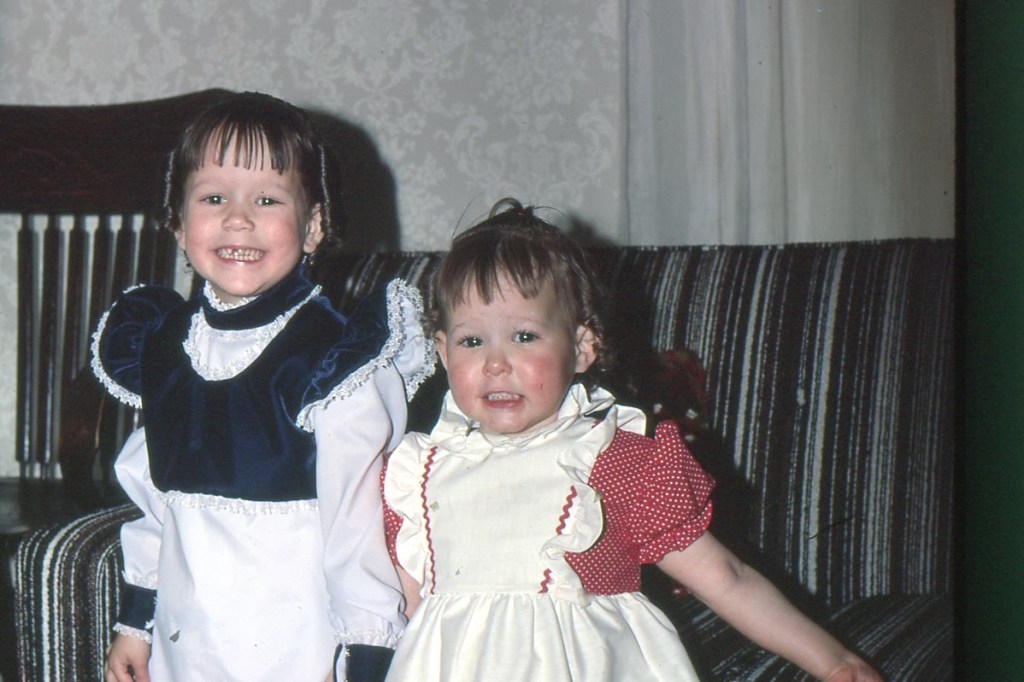
Photo: Darlene Young and her sister.

Stephen Kampa, ‘Someone Else’s Gift’

Always to long for someone else’s gift—
To blow that blistering alto sax, to lift
Into the flash-bulbed air

For a reverse slam dunk while stunned guards gawk,
To have a punster’s cheek or porn star’s cock,
To capture, share by share,

Gold-plated Wall Street fame, to meditate
Beyond nirvanic depths or radiate
Beatitudes of prayer

Like any frescoed saint, even to make
A perfect triple-decker dark-fudge cake
Or master the éclair—

Means answering a roguish shout we follow
Down some smashed-bottle alley to a hollow
Recess, a doorway, where

If luck has tailed us on that lonely walk,
When we knock, because we have to knock,
No one will be there.

*****

‘Someone Else’s Gift’ was first published in Literary Matters, and then in Best American Poetry 2024. As I was unable to capture the original indentation, I have taken the liberty of introducing line spaces as an alternative way of clarifying the structure; it will sound the same when read aloud… – RHL

Stephen Kampa has three books of poems: Cracks in the Invisible (Ohio University Press, 2011), Bachelor Pad (Waywiser Press, 2014), Articulate as Rain (Waywiser Press, 2018), and World Too Loud to Hear (Able Muse Press, 2023). He teaches at Flagler College in St. Augustine, FL and works as a musician.

Photos: “Dreams” by яғ ★ design is licensed under CC BY-NC 2.0.
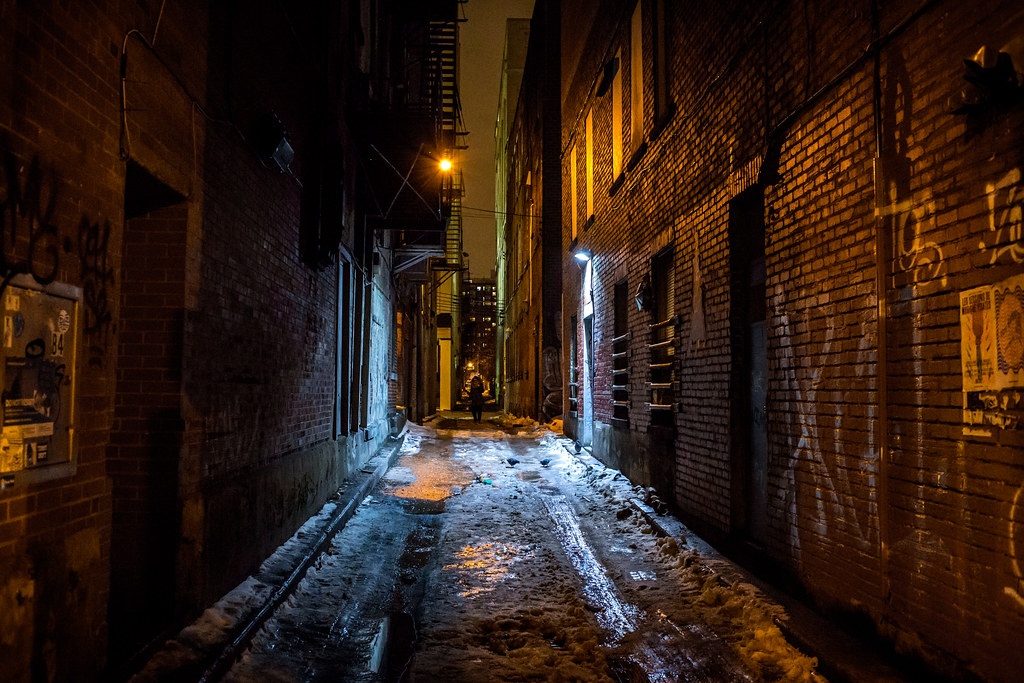
Dark Alley #2 [Explored]” by _Franck Michel_ is licensed under CC BY 2.0.

Short poem: RHL, ‘Sassy, Classy’

Easy to be young and sassy;
add experience, and it’s classy.

*****

I have absolutely no idea what inspired this couplet. Be that as it may, it was published in The Asses of Parnassus in October – thanks, Brooke Clark!

Photo: “Cece 220223 (1)” by ceciliajaner is licensed under CC BY-SA 2.0.

Odd poem: Brian Bilston, ‘Brie Encounter’

the skies are gruyere since she left me
i’ve never felt so danish blue
caught between a roquefort and a hard cheese
i stilton’t know what to do

don’t give edam about the future
now my babybel’s walked out the door
can’t believe i’ve double gloucester
i camembert it any more

i’ve ricotta get myself together
and build my life back caerphilly
cheddar tear for the final time
say goodbye to us and halloumi

*****

Brian Bilston is “the Banksy of the poetry world”.
You can find a daily poem on Facebook, and his books here.

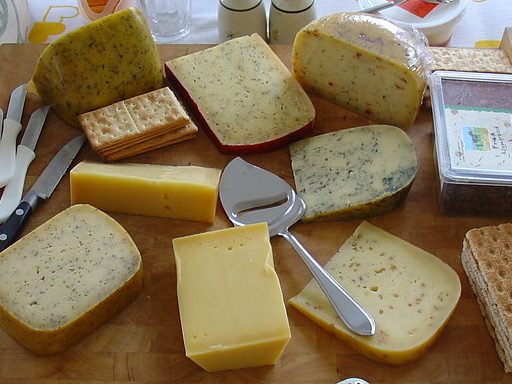
Photo: “Cheese, cheese, cheese” by kurafire is licensed under CC BY-NC 2.0.