Author Archives: Robin Helweg-Larsen

Unknown's avatar

About Robin Helweg-Larsen

Director, Andromeda Simulations International, Bahamas: a global education company providing online and in-person workshops in business finance. Series Editor, Sampson Low's 'Potcake Chapbooks'. Formal verse about traveling, family, love, etc...

Potcake Poet’s Choice: Maryann Corbett, ‘The Vanished’

 In the autumn of 2015, the production of paper cards for library catalogs ceased.

No matter how long ago they completed their disappearance,
I still expect them,
perhaps in a sort of narthex just past a pillared entry,
or off to the side
as if in a private chapel, or straight ahead like an altar.
Shrined in the silence,
modest and single, or ranged in ranks and banks and rows,
the gods of Order
lived in their tabernacles of honey and amber maple
or oak like chocolate,
darkened at times from the touch of a hundred thousand fingers.
On every drawer-front
the face of a tiny gargoyle waggled its brazen tongue out.
And so we pulled them.
And the drawers slid waxen-smooth, and the fingers flicked like a weaver’s
through card upon card,
and above the drawers were our faces, our heads all bobbing and davening.
A kind of worship
it was, with an order of service. A physical act of obeisance.
Its cloudy replacement
(perfect in plastic efficiency, answering almost to thought,
near-disembodied)
hurries us past the notion of order itself as a Being
worthy of honor.
So here I am, misplaced as a balky fourth-century pagan
mulling conversion,
but nursing doubts that the powers should be called from the general air,
seeking the numinous
still in its tent of presence, and longing to keep on clutching
the household gods.

Maryann Corbett writes: “This was one of those poems that spent several years stewing at the back of my brain as soon as I read the factoid that actually library catalog cards were no longer being produced. It’s a disappearance not likely to be noticed much by younger people, and I wanted to give it attention. What eventually let my brain’s stew boil over in images of all the card catalogs I’ve known, I can’t say. But it did so in a rush, a rush and roll that took the form of very long lines. I’ve written several other poems in hexameters–lines with six stresses–and I wanted to do something a bit different–and to leave space to breathe!–so I decided to alternate the hexameter lines with much shorter ones: dimeters, or two-stress lines.

 ‘The Vanished‘ appeared first in Alabama Literary Review, was anthologized in The Orison Anthology, Vol. II, and was included in my most recent book, In Code.

Maryann Corbett lives in Saint Paul, Minnesota, where she worked 35 years for the Legislature. Poetry: Breath Control (2012), Credo for the Checkout Line in Winter (2013), Mid Evil (2014 Richard Wilbur Award), Street View (2017), and In Code (2020). Past winner, Willis Barnstone Translation Prize. Work included in The Best American Poetry 2018, as well as in the Potcake Chapbooks Families and Other Fiascoes and Robots and Rockets.

Photo: “Catalog Cards” by Travelin’ Librarian is licensed under CC BY-NC-SA 2.0
Potcake Poet’s Choice: Michael R. Burch, ‘Bible Libel’

If God
is good,
half the Bible
is libel.

Michael R. Burch writes: “This may be the first poem I wrote. I read the Bible from cover to cover at age 11, and it was a traumatic experience. But I can’t remember if I wrote the epigram then, or came up with it later. In any case, it was probably written between age 11 and 13, or thereabouts. It would be kinda cool to be remembered by a poem I wrote at such an early age. Plus, it’s short, so readers would probably finish it!

I have been using Google results to determine which of my poems are the most popular on the Internet. Some of my poems have gone viral, appearing on hundreds or thousands of web pages. That’s a lot of cutting and pasting, and I like to think people must like a poem in order to take the time to replicate it. This epigram, which I wrote around age 11 to 13, at one time returned over 405,000 results for the last two lines, and over 51,000 results for the entire poem. The last time I checked, it still returned over 292,000 results. I was especially pleased to see one of the first poems I wrote, and possibly the first, go viral. If I wrote anything earlier, I don’t remember it.

Michael R. Burch has over 6,000 publications, including poems that have gone viral. His poems have been translated into fourteen languages, incorporated into three plays and two operas, and set to music by seventeen composers. He also edits TheHyperTexts.

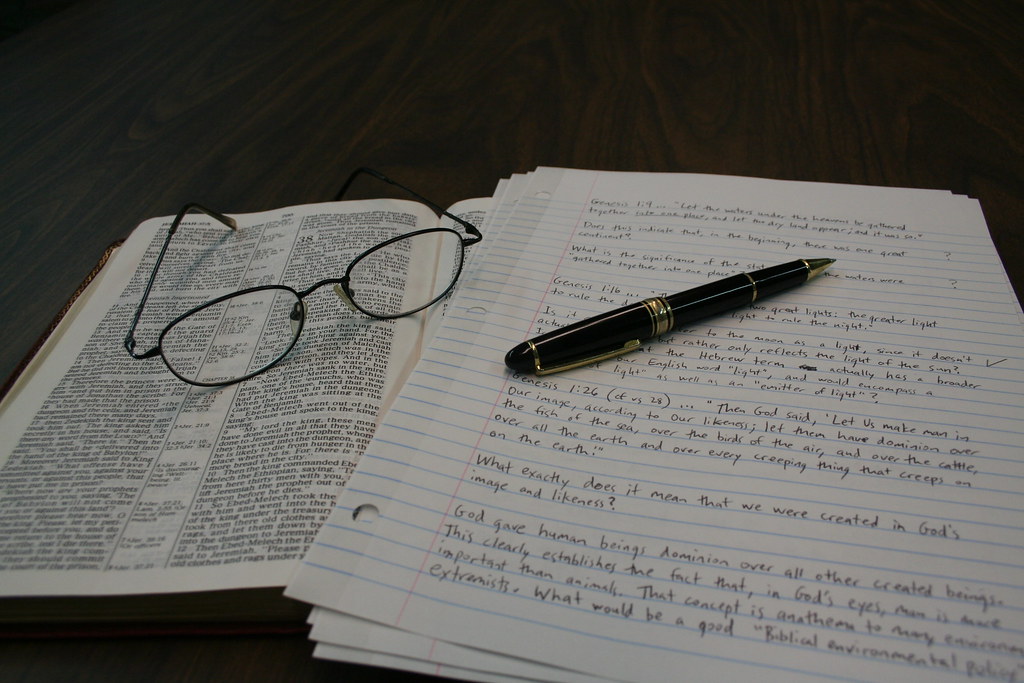
Photo: “Bible, Reading Glasses, Notes and Pen” by paul.orear is licensed under CC BY-SA 2.0

Poem on poetry: ‘Diatribe Against Unversed Poets’

Ignoring clockwork towns and fertile farms
Tied to the sun-swing as the seas to moon,
They searched for verse in deserts without rhyme,
Lifted erratic rocks nonrhythmically
In search of poetry, then through the slough
Of their emotions hunted for a trail:

“The scent is cold. Its Spirit must have fled;
The body of its work, though dead,
Has been translated to some higher plane.
Look how the world’s translated verse
Comes to us plain—why can’t we emulate?
Then if the words themselves are unimportant,
If poetry in essence is idea,
And song is wrong,
Rhyme a superfluous flamboyance
(Like colour in Van Gogh),
Rhythm a distraction to the memoring mind,
Then we determine poetry’s true form is mime!”

While in the air the deafening blare
Confounds their silence everywhere:
Before our hearts began to beat
We were conceived in rhythmic heat;
So, billions strong, we sing along
For all the time, in time, our time, the song
Goes rocking on in rhythmic rhyme. Rock on!

“Unversed” means “not experienced, skilled, or knowledgeable”. Poetry takes different forms in different languages, but the forms all have the same desirable outcome: to make it easier to memorise and recite word-for-word. Alliteration, assonance, rhyme, metre – these are all useful tools for achieving this, along with less tangible tools such as fresh or startling imagery. Metre/beat/rhythm is viscerally important to us, because the mother’s heartbeat is the background to sensory development in the womb, and our own heartbeat and breathing rhythms continue throughout life. As humans we drum, we dance, we sing, just as we walk and run rhythmically, tap our fingers rhythmically when we are bored, teach small children to clap and sing, teach older children clapping and skipping games. Rhythm is built into us from before birth.

Rhythmic poetry didn’t die when it almost stopped being publishable. It just went into folk songs, blues, rock, country-and-western, musicals, rap, hip hop… Popular music let teenagers and adults continue to thrive with what they were not given by schools: rhythm and rhyme. This drive to make words memorable and recitable is part of who we humans are. So schools do best when they leaven “creative self-expression” with getting kids to learn things by heart, and getting them to pay attention to the qualities that make it easy to memorise and recite.

Photo: “Lost in desert” by Rojs Rozentāls is licensed under CC BY-SA 2.0

Review: ‘Archaic Smile’ by A.E. Stallings

‘Archaic Smile’ was the debut poetry collection by A.E. Stallings, an American who moved to Athens, Greece, a couple of decades ago. Published in 1999, it won that year’s Richard Wilbur Award and its opening poem, ‘A Postcard from Greece’, is perhaps my favourite of all her work. It is a sonnet with slant rhymes describing a car accident:
Hatched from sleep, as we slipped out of orbit
Round a clothespin curve new-watered with the rain,
I saw the sea, the sky, as bright as pain
That outer space through which we were to plummet.
Stallings lives in the modern world of cars and planes and thinks in terms of orbits and outer space; the Greece of this poem is not there yet – there is no guardrail on the cliff-sided road, the only warnings are the memorials to those who have died there, who
sliced the tedious sea once, like a knife.
Luckily, her car hits an olive tree on the edge of the cliff and they don’t go over.
We clung together, shade to pagan shade,
Surprised by sunlight, air, this afterlife.
And so the ancient world steps in to save her from rash modernity, and in this first poem she weaves the present and the past together, living as a pagan shade in a refreshed existence. And the rest of the book, and indeed all her work, carries on this integration of past and present.

The first section of the book is titled ‘Underworld’, appropriate for that near-death event, but mostly being poems such as ‘Hades Welcomes his Bride’ and ‘Persephone Writes a Letter to her Mother’ – there is a lot of Greek mythology in Stallings’ work, but filtered through a modern sensibility:
Death, the deportation officer,
Has seen your papers and has found them wanting.

In the second section, ‘A Bestiary’, she writes of her American experiences of animals and birds, in life and death and freedom and captivity, with her customary detached amusement. Take ‘Watching the Vulture at the Road Kill’:
We stopped the car to watch. Too close.
He bounced his moon-walk bounce and rose
With a shrug up to the kudzu sleeve
Of a pine, to wait for us to leave.
She observes that most other birds have to get in and out in a hurry, whether raptors or prey, and draws a lesson from it:
There is no peace but scavengers.

The third section, ‘Tour of the Labyrinth’, returns to Greek themes, but again weaving past and present, as in the reaction to an antique pot being broken. The final section is ‘For the Losers of Things’, echoing the sense of loss or near-loss in the rest of the book, but staying in the present – ‘Watching the News After the Tornados’ – or even the far future, with another of my personal favourites, ‘The Machines Mourn the Passing of People’:
The air now is silent of curses or praise.
Jilted, abandoned to hells of what weather,
Left to our own devices forever,
We watch the sun rust at the end of its days.

As can be seen from the excerpts quoted, Stallings is a formalist, and very comfortable with whatever form and metre is appropriate for the particular piece she is producing. ‘Archaic Smile’ is a superb collection, readable and rereadable, memorable, quotable. Her subsequent collections have been equally impressive. If there is a better poet currently writing in English, I haven’t run across them.

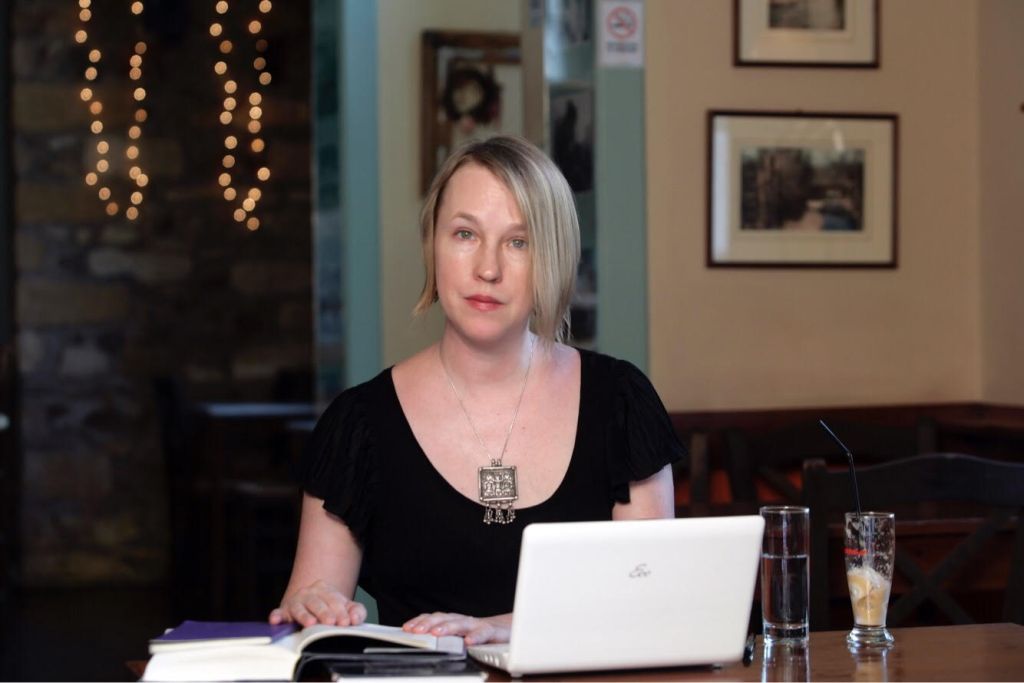
Photo of A.E. Stallings by Milos Bicanski

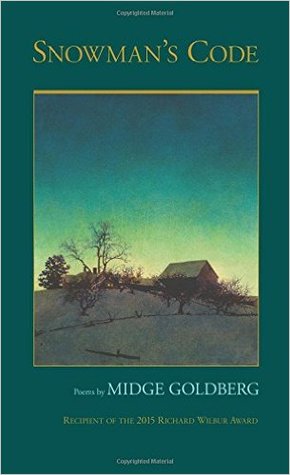
Review: ‘Snowman’s Code’ by Midge Goldberg

‘Snowman’s Code’ won the 2015 Richard Wilbur Award. And the first poems are all right, most of them being competent sonnets with a strong final line or couplet – ‘On Getting a Record Player for Christmas’ strongly evoked that era when a high point of childhood was having a couple of albums that you could replay when you wanted, ending with
I memorized not only every word,
But all the scratchy silences I heard.

But gradually the collection goes downhill, into villanelles (a verse form that is exceptionally difficult to make interesting, needing the oratorical power of a Dylan Thomas), and short insights arranged on the page as though they were verse – as in the title poem, with its
Be proud of lumpy hereness,
made by hands that carry
you, scoopful by scoopful,
to this place, at this moment,
patting you into existence.

In short, though there are poems I like in this book, I didn’t find enough to justify it as a prize-winning collection.

Potcake Poet’s Choice: Gail White, ‘Orthodox Christmas Eve’

What am I doing here with all these Greeks?
Hoping, perhaps, at midnight Christmas Eve,
the unintelligible tongue God speaks
will summon even those who don’t believe
to Mary’s manger. Now the Virgin bears
the Master in the cave. As light through glass
he passes from her body. Joseph dares
believe the story; I can let it pass.
The incense rises like the church’s breath
into a frosty world. This night of birth
swells to a tide that tosses me past death.
But tides recede: I know this moment’s worth.
If love of beauty were the same as faith,
I’d walk in heaven with my feet on earth.

Gail White writes: “I love this poem and always secretly hoped it would become a classic, so I welcome the chance to bring it out again. The to-and-fro of faith and doubt is typical for me, as is the creeping into faith by way of aesthetics. But at this time of year faith wins, and I never let the day pass without listening to the King’s College choir singing ‘Once in Royal David’s City‘.”

Gail White is the resident poet and cat lady of Breaux Bridge, Louisiana. Her books ASPERITY STREET and CATECHISM are available on Amazon. She is a contributing editor to Light Poetry Magazine (lightpoetrymagazine.com). “Tourist in India” won the Howard Nemerov Sonnet Award for 2013. Her poems have appeared in the Potcake Chapbooks ‘Tourists and Cannibals’, ‘Rogues and Roses’, ‘Families and Other Fiascoes’ and ‘Strip Down’.
https://www.amazon.com/Asperity-Street-Gail-White/dp/1927409543

Sonnet: ‘Portraits’

Easy enough, the people in the park,
A subway addict, or some screaming child:
Knock off five lines from some chance-heard remark,
A tic observed, or mood or clothes gone wild.

A longer piece for loves, coworkers, friends,
People you’ve bonded with, played some life game;
Can’t be so flip – unless the portrait bends,
Fictionalizing thoughts in formal frame.

And closer to you than your own bed mate
Is, tougher yet, perspective and full view
Of parents, more than threaded through your fate,
They’re warp and weft, the loom, the weavers too.

So, last of all, the golden trophy shelf:
That great and grand grotesquery, yourself.

… which is merely to say that writing about people has difficulties that increase as the subjects are closer to you. Technically, a Shakespearean sonnet (iambic pentameter, rhyming ABAB CDCD EFEF GG), though without a volta, that delightful twist that reverses the mood or imagery or argument. Oh well.

Originally published in The Poetry Porch, edited by Joyce Wilson.

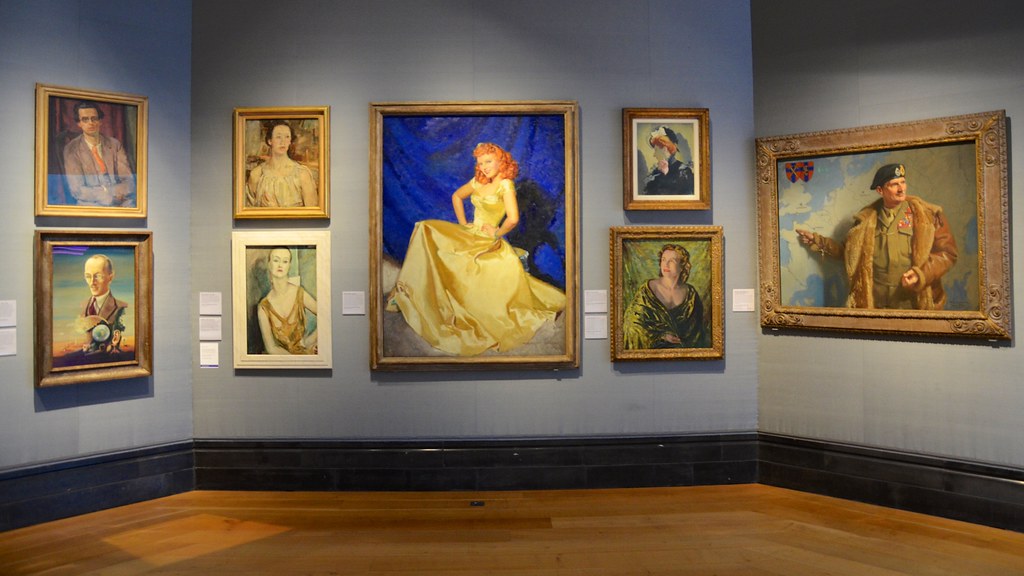
Photo: “National Portrait Gallery” by Joe Shlabotnik is licensed under CC BY-NC-SA 2.0
Potcake Poet’s Choice: Tom Vaughan, ‘Afterwards’

Afterwards, I’ll shake the hand
of total strangers in the street
as though they were my oldest friend
and as and when that friend I’ll meet

we’ll stroll across Green Park towards
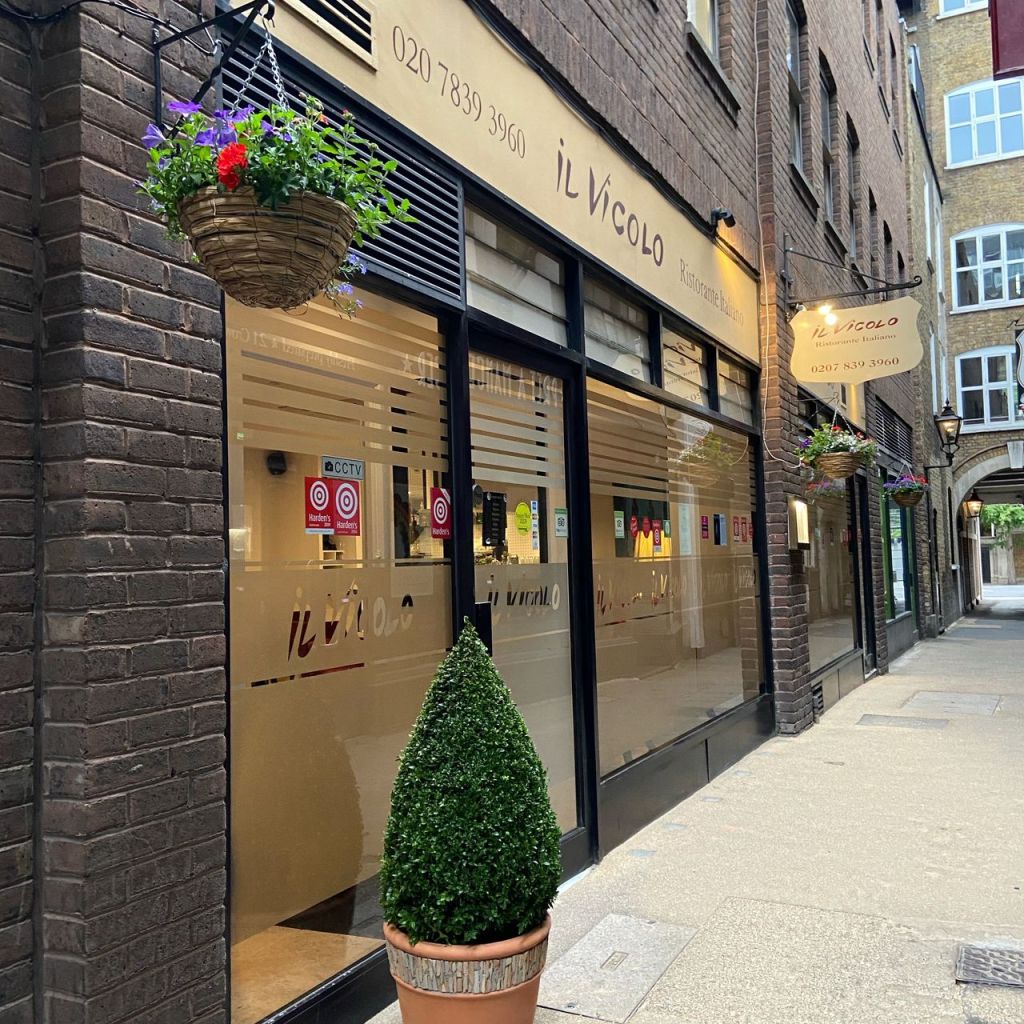
Crown Passage’s Il Vicolo
to dip our bread in olive oil
and drink wine till our faces glow

and talk of this and maybe that
as if we had all day to kill
then we’ll argue who should pay, aware
we’ll agree at last to split the bill

and when we say goodbye, we’ll know
how rare and wonderful it was
to be together, even though
neither will say so. Why? Because

why even hint the day might come
when public or private fresh disaster
prevents we two from sitting there
to share a salad and a pasta?

First published in Snakeskin 276, September 2020.

Tom Vaughan writes: “I have a soft spot for Afterwards because I hope it strikes the balance I often try to achieve between light-heartedness and seriousness. Plus it’s pinned in the real world: a London restaurant I very much like. I had submitted it originally The Spectator, which originally rejected it. George Simmers then accepted it for the September 2020 Snakeskin. Shortly thereafter I noticed a very positive restaurant review of Il Vicolo in The Spectator and, apparently quite independently, their poetry editor came back to me saying that on reflection he wanted to publish it, which he then did in October that year (with a suitable acknowledgement to Snakeskin as its first home). Then I learnt that the much-loved owner of Il Vicolo had died a few months previously – although not of Covid – but that his admirable daughters had decided to continue to run the restaurant. So, somewhere underneath the poem, the note of all-too-actual human mortality.”

Tom Vaughan is not the real name of a poet whose previous publications include a novel and two poetry pamphlets (A Sampler, 2010, and Envoy, 2013, both published by HappenStance). His poems have been published in a range of poetry magazines, including several of the Potcake Chapbooks:
Careers and Other Catastrophes
Familes and Other Fiascoes
Strip Down
Houses and Homes Forever
Travels and Travails.
He currently lives and works in London.
https://tomvaughan.website

My own favourites: ‘To Myself In 50 Years Time’

Old fool! You really think yourself the same
As I who write to you, aged 22?
Ha! All we’ve got in common is my name:
I’ll wear it out, throw it away,
You’ll pick it up some other day….
But who are you?

My life’s before me; can you say the same?
I choose its how and why and when and who.
I’ll choose the rules by which we play the game;
I may choose wrong, it’s not denied,
But by my choice you must abide….
What choice have you?

If, bored, I think one day to see the world
I pack that day and fly out on the next.
My choice to wander, or to sit home-curled;
Each place has friends, good fun, good food,
But you sit toothless, silent, rude….
And undersexed!

Cares and regrets of loss can go to hell:
You sort them out with Reason’s time-worn tool.
Today’s superb; tomorrow looks as well:
The word “tomorrow” is a thrill,
I’ll make of mine just what I will….
What’s yours, old fool?

This poem, first published in Snakeskin No. 147, September 2008 and recently reprinted in the Extreme Formal Poems Contemporary Poets anthology edited by Beth Houston, is symptomatic of my constant concern with mortality. It was also a way to be provocative: under the guise of insulting myself, I got to insult all older generations. And it was also an exercise in poetic structure: each stanza presents an aspect of the superiority of present youth over future age. (Premise and conclusion aren’t necessarily made as statements, many times rhetorical questions are used instead.) The structure of each stanza is to begin with pentameters for a sense of reasonableness in the first three lines, pick up the pace for the next two lines, and end with a short punchline. Aggressive and effective.

Yes, I wrote it when I was 22. I don’t know if I will be able to concoct a suitably terse and dismissive answer when I’m 72. But it’s a favourite poem of mine, and I owe it a response.

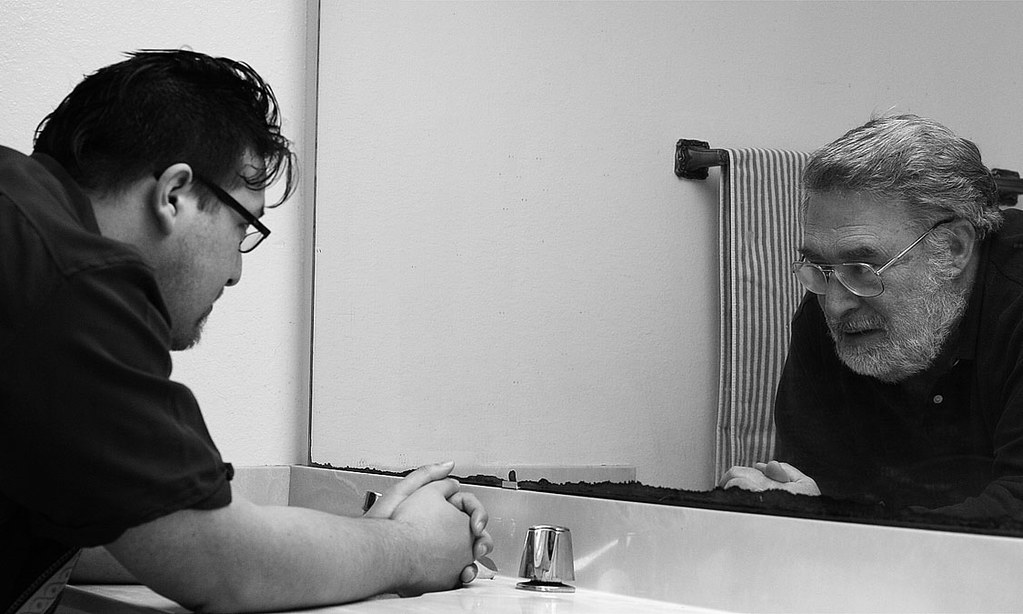
Photo: “Day 005: The child is father to the man.” by JesseMenn is licensed under CC BY-NC-ND 2.0

Potcake Poet’s Choice: Rob Stuart, ‘Hitchcock Acrostic’

My looming silhouette, obese and bald,
As well as my distinctive semi-slur
Still resonate, and even now I’m called
The cinema’s preeminent auteur,
Epitomising what François Truffaut
Revered: a moviemaker in control
Of everything on screen. I ran the show:
Finessing scripts and casting every role,
Selecting music and the mise-en-scène.
Unwilling as I was to look beyond
Simplistic plots that featured guiltless men
Plus pretty women (preferably blonde)
Entangled in intrigues, they all had doubt,
Not payoffs, situated at their heart:
Set bombs a-ticking, tension builds throughout,
Explode them and you blow it all apart.

Rob Stuart writes: “This poem was previously published in ‘Snakeskin’ although I have revised it since.

“Is this my best poem? Probably not, but it’s certainly the fiddliest I’ve ever written and consequently the most satisfying to have (perhaps) finished. A rhymed acrostic gives one very limited room for manoeuvre as it imposes constraints at both the beginning and end of each line, and this led to all manner of contrived rhymes and clunky word choices in my early drafts, including the version that was originally published a few years ago, and I have literally spent hours poring over lists of verbs beginning with a ‘u’ and synonyms for ‘suspense’ in the search for suitable replacements. I may yet go on to revise the poem further (I’m still not sure that the second to last line quite works), but I think it reads pretty damned well now. It’s a dinky little lesson in film history, too.”

Rob Stuart’s poems and short stories have been published in numerous magazines, newspapers and webzines including Ink Sweat and Tears, Light, Lighten Up Online, M58, Magma, New Statesman, The Oldie, Otoliths, Popshot, The Projectionist’s Playground, Snakeskin, The Spectator and The Washington Post. His work appears in the Potcake Chapbooks ‘Careers and Other Catastrophes‘ and ‘Wordplayful‘. He lives in Surrey, England with his family.

http://www.robstuart.co.uk/