Author Archives: Robin Helweg-Larsen

Unknown's avatar

About Robin Helweg-Larsen

Director, Andromeda Simulations International, Bahamas: a global education company providing online and in-person workshops in business finance. Series Editor, Sampson Low's 'Potcake Chapbooks'. Formal verse about traveling, family, love, etc...

Potcake Poet’s Choice: Tom Vaughan, ‘Happiness’

It’s easy to forget they’d fought a war:
his father drowned, half-brother bayoneted;
her kilted sibling captured at Dunkirk,
locked up for five long years. But yes they met

in uniform, lost half their friends, before
the normal world re-started when they wed:
mortgage; children; grinding office work –
all I suppose they wanted when they set

out as a couple. We must have been a shock:
busting their rulebook; scornful of sacrifice;
mocking their past and their belief in ‘progress’;

too young, too smashed, too angry to unlock
their silence, or to understand the price
they’d paid for what they’d still call happiness.

Tom Vaughan writes: “I chose Happiness it because I hope it gets right not just my own retrospective feelings about my parents, but also something more general about the generational shift between those who went through WW2 in their youth, and their less-tested offspring.

Secondly, because it’s a sonnet (a favourite form of mine), but in what I call a ‘roller’ rhyming (not always full rhymes) pattern, which tries to pull the reader down to the final line with a lurch which I hope is also of the emotions.

It was published in Dream Catcher in 2016, but has been picked up a couple of times elsewhere since then, including in your Families and Other Fiascoes chapbook.”

Tom Vaughan is not the real name of a poet whose previous publications include a novel and two poetry pamphlets (A Sampler, 2010, and Envoy, 2013, both published by HappenStance). His poems have been published in a range of poetry magazines, including several of the Potcake Chapbooks:
Careers and Other Catastrophes
Familes and Other Fiascoes
Strip Down
Houses and Homes Forever
Travels and Travails.
He currently lives and works in London.
https://tomvaughan.website


Potcake Poet’s Choice: Susan McLean, ‘Deep Cover’

Nakedness is the best disguise.
When you discard the final veil,
it always takes them by surprise.

Because men think that compromise
is weak—that if you yield, you fail—
nakedness is the best disguise.

Though you expose your breasts and thighs,
your mind is as opaque as shale.
It always takes them by surprise

to find out that the body lies.
Surrender can conceal betrayal.
Nakedness is best. Disguise,

equivocation, alibis
can be seen through. To lay a trail
that always takes them by surprise,

hide nothing and you’ll blind their eyes.
Go ask Judith. Go ask Jael.
Nakedness is the best disguise.
It always takes them by surprise.

Susan McLean writes: “When I think of which subjects have lasting appeal in poems, I think of the subjects that have never changed and never will, such as human nature, but also of the questions that have no definitive answers, such as the nature of truth.  This poem expresses several paradoxes: that overt shows of openness are the most successful ways to deceive someone; that everyone lies, so telling the truth is always surprising–and is often not believed; that no matter how much truth you tell, there is always much that you don’t say; that when there is a power difference between two people, surrendering can be a tool of resistance. 

“Another thing that I think gives a poem lasting appeal is the use of rhythm and sound to create a music with words.  Though we live in a time in which free verse is dominant and ubiquitous, I don’t think people will ever lose their innate love of the songlike in poetry, a quality that also makes poems easier to remember. One of the most songlike of poetic forms is the villanelle, and it has been one of my favorite forms for many years.  Though I know that many readers find the repeating lines in villanelles to be tedious, small variations in the lines, in their punctuation, and in the surrounding lines can enable the narrative to move forward without losing the appeal of a songlike refrain.” 

Susan McLean grew up in Oxon Hill, Maryland, attended Harvard University and Rutgers University, and taught English for thirty years at Southwest Minnesota State University. She has published two books of poetry, The Best Disguise (winner of the 2009 Richard Wilbur Award) and The Whetstone Misses the Knife (winner of the 2014 Donald Justice Poetry Prize), and one book of translations of the Latin poet Martial, Selected Epigrams. She lives in Iowa City, Iowa.

‘Deep Cover’ was originally published in Mezzo Cammin, a journal of modern formalist poetry by women. Susan McLean’s ‘Lessons From A Fool’ appears in the Potcake Chapbook Careers and Other Catastrophes.

https://www.pw.org/directory/writers/susan_mclean

Potcake Poet’s Choice: Martin Elster, ‘The Woolly Bear’

Along a sylvan lane, you spy a critter
creeping with a mission, a woolly bear
fattened on autumn flora. So you crouch,
noting her triple stripes: the middle ginger,
each end as black as space. Her destination
is some unnoticed nook, a sanctuary
to settle in, greet the fangs of frost,
then freeze, wait winter out—lingering, lost
in dreams of summer, milkweed, huckleberry.
Though she’s in danger of obliteration
by wheel or boot, your fingers now unhinge her.
She bends into a ball of steel. No “ouch”
from bristles on your palm as you prepare
to toss her lightly to the forest litter.

She flies in a parabola, and lands
in leaves. Though she has vanished, both your hands
hold myriad tiny hairs, a souvenir
scattered like petals. When this hemisphere
turns warm again, she’ll waken, thaw, and feast
on shrubs and weeds (the bitterer the better)
then, by some wondrous conjuring, be released
from larval life. At length she will appear
a moth with coral wings—they’ll bravely bear
her through a night of bats or headlight glare,
be pulverized like paper in a shredder,
or briefly flare in a world that will forget her.

Martin Elster writes: “In the New England autumn, the leaves aren’t the only colorful feature in the landscape. Caterpillars are on the move, so they are more easily chanced on. A few years ago I lived briefly in a mainly rural and hilly town called New Hartford in the state of Connecticut. On my daily walks, I encountered many kinds of animals, including numerous lepidopterans (moths and butterflies), one species of which inspired this poem, an appropriate poem, I think, for late autumn or early winter.
The Isabella tiger moth (Pyrrharctia isabella) in its larval form is called the “banded woolly bear” (or “woolly bear” or “woolly worm”). The most remarkable attribute about the little critter is this (from Wikipedia):
“The banded woolly bear larva emerges from the egg in the fall and overwinters in its caterpillar form, when it literally freezes solid. First its heart stops beating, then its gut freezes, then its blood, followed by the rest of the body. It survives being frozen by producing a cryoprotectant in its tissues. In the spring it thaws.”
Covered in thick, fluffy-looking hair, the woolly bear sports bands of black and reddish-brown. There’s an age-old belief that the amount of brown on this critter can predict the severity of the coming winter. The more brown, the milder winter will be.
For the geeks: the rhyme scheme of the first stanza of the poem, similar to the bands on a woolly bear (ABA), is a chiasmus: ABC . . . CBA.

Martin Elster, who never misses a beat, was for many years a percussionist with the Hartford Symphony Orchestra (now retired). He finds contentment in long woodland walks and writing poetry, often alluding to the creatures and plants he encounters. His honors include Rhymezone’s poetry contest (2016) co-winner, the Thomas Gray Anniversary Poetry Competition (2014) winner, the Science Fiction Poetry Association’s poetry contest (2015) third place, and four Pushcart nominations. A full-length collection, Celestial Euphony, was published by Plum White Press in 2019.
This poem has appeared in The Road Not TakenAutumn Sky Poetry Daily, and The HyperTexts. His work has appeared in the Potcake ChapbooksCareers and Other Catastrophes‘ and ‘Robots and Rockets‘.

“Banded Woolly Bear (Isabella Tiger Moth) Caterpillar, Virginia” by Dave Govoni is licensed under CC BY-NC-SA 2.0

Potcake Poet’s Choice: Brian Gavin, ‘Country Church, Family Visit’

On the funeral road, five miles beyond the farm
it looms still, like a silo, then diminishes
as you get close. Your sound won’t raise alarm
out here. There’s none but you. The wishes
of no one left alive will keep you out,
or let you in. The door is probably locked
anyway, closed upon itself, redoubt
for certainties. Surrounding it the block
foundations — reservoirs of ice and weed —
still cluster, like white holes around the heart.
You will not try the door — where it might lead,
you cannot say. The dead have done their part,
for here you are among them once again,
between the legacies of grief — the snow,
the boxes of white quiet, the leaving, then
the watching it loom larger as you go.

Brian Gavin writes: “I like this piece because the church-image haunted (or taunted!) me for several years before I got around to giving it some context in a poem.  When it finally came to the page it felt like I had paid off a debt — like I had finally given the image a chance to tell its story.  The fact that this story turned out to be no story at all — just a bunch of hints and implications — seemed to fit the image.

Brian Gavin is a retired Distribution Manager who started writing poetry about 7 years ago. His poems have appeared in The Journal of Formal Poetry, Peninsula Poets and Snakeskin Magazine, and in the Potcake Chapbook ‘Careers and Other Catastrophes. He lives in Lakeport, Michigan, USA, with his wife Karen.

Potcake Poet’s Choice: Chris O’Carroll, ‘Postcard from the Afterlife’

How cool is Heaven? Where do I begin here?
The nightlife’s hipper than pre-war Berlin here,
Yet wholesome as a cozy country inn here.
I’m suave as Cary Grant or Errol Flynn here.
I’ve got broad shoulders and a dazzling grin here,
Plus perfect hair, flat abs and strong, cleft chin here.
(We all look like some sexy film star’s twin here.)
Nobody hates the color of your skin here.
Yang enjoys perfect harmony with yin here.
The food is rich, yet all of us stay thin here.
Nobody has to lose for me to win here.
We’re all on friendly terms with all our kin here.
No politicians practice crooked spin here.
I never get hung over from the gin here.
None of my favorite vices is a sin here.
Damned if I can tell how I got in here.

Chis O’Carroll writes: “I set out to write a matched pair of afterlife poems, assuming that the message from Hell would be inherently funnier.

The Internet’s top bloggers, your ex-lovers,
Share details of how bad you were in bed.
All books, despite the titles on their covers,
Are Dianetics or The Fountainhead.

That sort of stuff. Eternal bliss struck me as less promising comedy material somehow. But my lack of saintliness is pretty hilarious, and one of my many sins is loving monorhyme way more than I should, so the Paradise poem worked out OK after all. I’m often indebted to my wife or to various poet friends as I polish and fine-tune a poem. In this case, it was my late father who read an early draft and helped me punch the thing up. Naturally, this blog is available in Heaven, so he knows I’m giving him a shout-out.

Chris O’Carroll, author of The Joke’s on Me and Abracadabratude (both from Kelsay Books’ White Violet Press), is a Light magazine featured poet as well as a contributor to the Potcake Chapbooks series (Rogues and Roses, Families and Other Fiascoes, Wordplayful and Murder!) and The Great American Wise Ass Poetry Anthology. His poems appear in An Amaranthine Summer (published in memory of Kim Bridgford), Extreme SonnetsLove Affairs at the Villa Nelle, and New York City Haiku, among other collections. Chris is a member of Actors Equity and has performed widely as a stand-up comedian. He lives in Massachusetts with his wife, historian Karen Manners Smith.

Postcard from the Afterlife‘ was originally published in The Spectator.

Sonnet (?): ‘Sleep is Like’

Sleep is like heading to the locker room at halftime
Sleep is like stepping into the wings between acts
Sleep is like going outside for a cigarette.

And then you go back to work
Back to the performance
Back to the game.

The game that may go thirty thousand rounds;
But who you really are is when you’re on break;
The rest is just your job, performance, game, not you.

And when at last it ends, and you go home,
Back to where you came from,
Who are you? and where do you go?

Perhaps you know this while you’re deep
Asleep…

This poem–if it is a poem–on (one of) the mysteries of the universe was just published in Snakeskin. I suppose you could call it a sonnet if you want… it has 14 lines. With four thoughts in four sets of three lines and a concluding sort of rhymed couplet, it has an organised form. Sonnetish. But it’s not elegant, it’s coarse–like life and death, consciousness and sleep.

It has no regular beat, let alone formal metre. And it’s not reasonable to claim that ABC DEF GHI JKL MM is a rhyme scheme. The piece simply doesn’t have the carefully balanced exposition of a sonnet, the flow of rhythm, the inevitability of rhyme.

If I put together a collection of my sonnets, I wouldn’t include it.

Probably.

“Smoking outside London Bar” by macabrephotographer is licensed under CC BY-SA 2.0

Sonnet: ‘Exiled Leader’ (from the series ‘Voices From The Future’)

I’ve few wants on my planet, fewer needs –
I like seas, trees, exploring what I’ve made,
Prospecting for the transgalactic trade,
Composing music while collecting seeds.
I like green islands, but won’t interfere
If eco climate needs a waste of ice
Or rock-filled deserts simply are the price
Of balancing the seas and atmosphere.
I’m rarely lonely, happy to create:
Atonal opera, atoning for
Those antisocial acts that led to war,
Jailed on the planet that I populate.
So I plant trees, make insects, have a swim,
Watch, read, compose… my life’s an endless whim.

This sonnet is one of four I wrote after Maryann Corbett commented on the bleakness of my future visions. I suppose this doesn’t really contradict that comment… we’ll have good news and bad news: the good news is, obnoxious leaders will still (occasionally) be deposed, jailed, or exiled to play golf; the bad news is, transgalactic warfare will be pretty awful. But to me, the future’s not bleak if humans keep on developing, changing, growing, exploring, discovering, creating. I think that’s the most likely scenario, that we move out into the galaxy as transhumans and then as post-humans. Though when I say “we” I don’t mean to suggest that includes me! Neither moon nor Mars excite me. I like woods and gardens by the sea.

This poem was published in Star*Line, the official print journal of the Science Fiction and Fantasy Poetry Association (thanks, Jean-Paul Garnier). Its poetry includes the full range of styles from formal to free. And the SFPA has another, online, journal called Eye To The Telescope. For reasons unknown my poems haven’t found lodging in ETTT yet.

“The Little Prince” by manfred majer is licensed under CC BY-SA 2.0

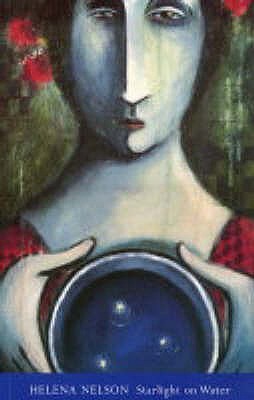
Review: Helena Nelson, ‘Starlight on Water’

Helena Nelson’s 2003 poetry collection ‘Starlight on Water‘ is quiet, reflective, beautiful and intensely intimate. Not necessarily personal – in some of the poems the poet has no children, in others a daughter or two, so there is no guarantee Nelson is writing of herself – but intimate with the senses and memories of existence. One of my favourite poems is ‘Ironing Day’:

I’ve never had an ironing board cover that fits
or a baby of my own.
None of the doors here properly shuts
and the garden wall’s come down.

But I shouldn’t ever want to lose my iron.
Pressing hard, I remember
grass between my toes
and the soft rain of September.

This speaks to several of my biases: going barefoot, enjoying rain, tolerating imperfection, triggering memories… and the music of casually rhythmical rhymed verse.

Not all of her verse is in the same style. Some poems are formally structured, some are free; the bulk of the book wanders all over internal and external landscapes, while the last third circles around and around Mr. and Mrs. Philpott, first one and then the other, a very caring couple of very distinct individuals in their mature second marriage. Here are some opening lines at random from the 19 Philpott Poems:

At the kitchen window
in his dressing gown,
Philpott stands alone
his sons have gone.
He’s on his own.

and

The sweetness of June, a summons conveyed
from strawberry fields, calls her to pick.
She drives to the farm, the car arrayed
with Tupperware tubs.

and

His father died at fifty-eight
and so he will die at fifty-eight.
He fetches a tumbler.
Two years to go.

and

Philpott’s anger lives in his shoes.
It tangles in the laces
and he wrestles like a lover

The first part of the book is about all manner of things – the spirit of a dead cat, say, or a night in an isolated Scottish cottage, or the teasing poem ‘Genderalisation’:

Women keep scales in their bedrooms;
Men keep weights.

The latter part of the book is just the Philpotts. What the whole book has in common is, without any sentimentality, the deep love that comes from respect, patience and close observation. It is all very intimate, and Nelson appropriately ends the Philpotts and the book with this short poem, ‘Love’:

He has tipped, he has spilled
his soul into her
and she carries it still
like starlight on water.

Potcake Poet’s Choice: Paula Mahon, ‘Driven to the Mall in December’

I must go back to the mall again for the holidays are nigh
and all I ask is a parking space with direction posts nearby
in a covered lot, or a shoveled spot with room for a Chevy van.
There are two more days till the 25th and I have no Christmas plan.

I must go down to the mall again for the lure of the discount sale.
There’s just empty space ‘neath my Christmas tree, and I simply cannot fail.
And all I ask is some helpful clerk and ample stock for buying.
If there’s nothing left or the cost too dear, there will be a lot of crying.

I must go back to the mall again for the twinkling Christmas lights
that bedeck the trees and storefront shows of holiday delights.
I have had it with the crowds and lines, I’m no happy shopping rover
I can’t wait till the 26th when the holidays are over.

Paula Mahon writes: “I have just the timely thing for your blog… a holiday parody poem of John Masefield’s Sea-Fever.  This was originally published in Light.”

Paula Mahon is a practicing family physician and medical director of Health Care for Homeless in Manchester, NH. Her essays, poems and stories have been published in the Boston Globe, Light, The Lyric, The Road Not Taken, Pulse and the Potcake Chapbook ‘Strip Down – poems of modern life‘; she won The Lyric’s 2020 New England Prize for a poem called Two Points of View. She is married to Robert d’Entremont and mother to a son, Raymond, adopted from Kazakhstan.

‘Old Sailors’ – one poem, two forms

Two tars talked of sealing and sailing; one said with a sigh
“Remember gulls wheeling and wailing, we wondering why,
“And noting bells pealing, sun paling — it vanished like pie!
“And then the boat heeling, sky hailing, the wind getting high,
“And that drunken Yank reeling to railing and retching his rye,
“John missing his Darjeeling jailing, and calling for chai?
“While we battened, all kneeling and nailing, the hurricane nigh,
“And me longing for Ealing, and ailing?”
His mate said “Aye-aye;
“I could stand the odd stealing, food staling, not fit for a sty,
“And forget any feeling of failing, too vast to defy –
“Home-leaving your peeling-paint paling too far to espy –
“All because of the healing friend-hailing, the hello! and hi!
“And, with the gulls squealing, quick-scaling the mast to the sky.”

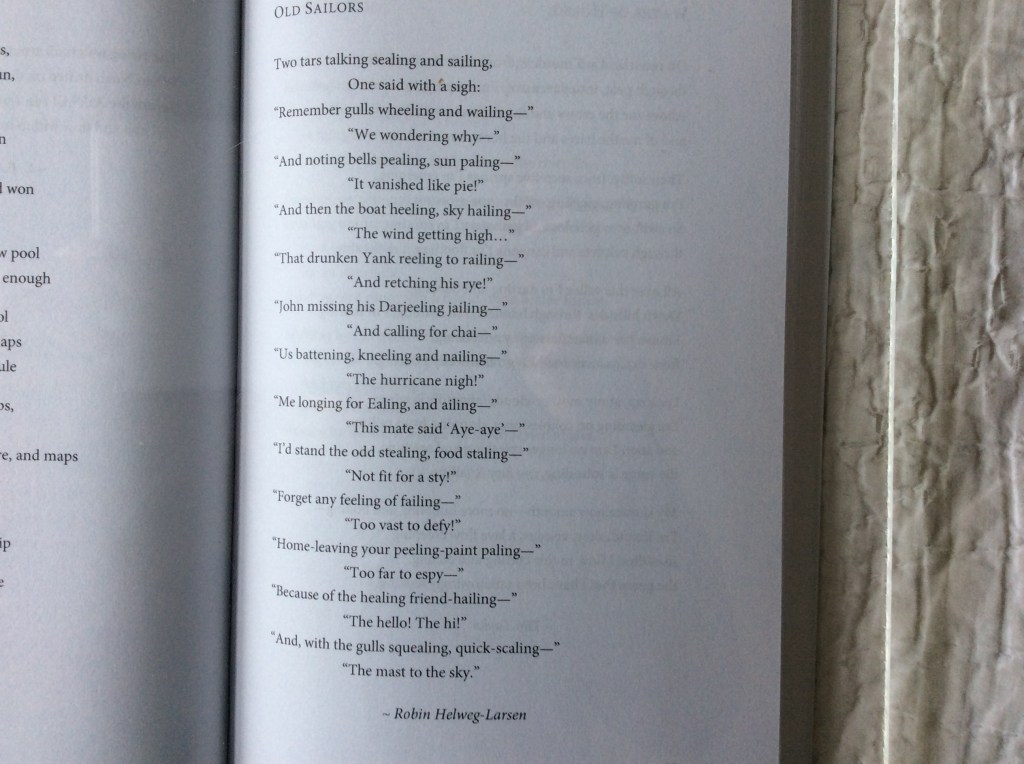
That was the original version, published in Snakeskin. Two sailors talking, each with a long, rambling reminiscence. When I submitted the poem to Beth Houston for consideration for the ‘Extreme Formal Poems: Contemporary Poets‘ anthology she was assembling, she suggested reformatting it to break each line between the two talkers, leading to a rapidfire (and constantly interrupted) flow of memories.

Two tars talked of sealing and sailing,
One said with a sigh:
“Remember gulls wheeling and wailing—”
“We wondering why—”
“And noting bells pealing, sun paling—”
“It vanished like pie!”
“And then the boat heeling, sky hailing—”
“The wind getting high…”
“And that drunken Yank reeling to railing—”
“And retching his rye!”
“John missing his Darjeeling jailing—”
“And calling for chai—”
“Us battening, kneeling and nailing—”
“The hurricane nigh!”
“Me longing for Ealing, and ailing—”
“This mate said ‘Aye-aye’—”
“I’d stand the odd stealing, food staling—”
“Not fit for a sty!”
“Forget any feeling of failing—”
“Too vast to defy!”
“Home-leaving your peeling-paint paling—”
“Too far to espy—”
“Because of the healing friend-hailing—”
“The hello! The hi!”
“And, with the gulls squealing, quick-scaling—”
“The mast to the sky.”

Here the two sailors alternate every half-line. (I’m having difficulty insetting the second half in WordPress, the way it shows up in the printed book.) Beth Houston made a couple of other editorial changes, in part to create better sense within this alternation (for example, the original break of ‘His mate said “Aye-aye” is modified to “This mate said ‘Aye-aye’—”) and in part because her Extreme Formalism manifests in rigorous syllable-counting, and she ruthlessly eliminates the occasional excess syllable at the beginning of a line which I allow for conversational flow.

But I find it interesting to see essentially the same poem structured in two different ways. Does it make a difference? Does the new variant lose the “good nautical rhythm” and “finely composed wordy-whirlwind of images” that others have commented on, or does it enhance them? Is version preferable to the other? Does one read more easily, or is one more vivid, or is one easier to memorise? I’m stuck on this, and need outside opinions. I would truly appreciate a comment below from anyone reading this.