Category Archives: Chapbooks

Calls for Submission: formal verse

Of the various publication opportunities specifically for formal/traditional poets, three are taking submissions until July 15, and four other formal-friendly publications have submission deadlines of July 31. There is no submission fee for any of them. Here they are – the links are to the submission requirements:

Able Muse (magazine) Deadline, July 15.
Submit one to five metrical poems (or one long poem), rhymed or unrhymed. (A poem of more than 40 lines is considered a “long” poem.)
All types of formal poetry are welcome, from traditional to boundary-pushing. We want well-crafted poems that use meter skillfully and imaginatively (with rhyme or not), in a contemporary idiom that reads as naturally as free verse.

Able Muse Press (book-length manuscript) Deadline, July 15.
At least 50 pages of poems – same preferences as for the magazine.
There’s NO reading fee.
“We respond within 9 months or so.”

Helen Schaible International Sonnet Contest Deadline, July 15.
Categories:
1 Traditional Sonnet – Shakespearean or Petrarchan
2 Modern Sonnet
Open to All. Free. Enter only one poem in either Category #1 or #2, or one poem in each.
Prizes for both categories: First Prize: $50. Second Prize: $30. Third Prize: $20.

Formal-friendly magazines, themed and with July 31 cut-offs:

Snakeskin (short poem issue, nothing over 10 lines). At the link, read the tabs on the left side for submission details. Submit earlier than the very end of July, as publication is scheduled for August 1st. Editor: George Simmers.

Allegro (theme: Freedom) Four poems max. Editor: Sally Long.

Amsterdam Quarterly (theme: City and/or Country) Two poems max. Editor: Bryan R. Monte.

Rat’s Ass Review (unthemed – the editor publishes whatever he damn well feels like publishing, as you might have guessed.) Five poems max. Editor: Roderick Bates.

In addition:

Rhizome Press (not to be confused with Rhizome Books) publishes anthologies of formal verse. Editor Beth Houston is taking submissions of up to 10 sonnets for Extreme Sonnets III, and up to 10 “extreme formal poems of at least twelve lines” for Extreme Formal Poems II. The submission deadlines are not given on the website, but will presumably follow on the publication of Extreme Sonnets II which is currently in the works.

UPDATE from Beth Houston, 11 July 2022: “At long last Extreme Sonnets II is published and available on Amazon! Will there be an Extreme Sonnets III? Likely, but not for awhile. In the meantime I’ll be putting together an anthology of love sonnets—extreme sonnets, of course. I’ll post submission details on the Rhizome Press website soon. All sonnets included in Extreme Sonnets, Extreme Sonnets II, and Extreme Formal Poems will automatically be considered. Stay tuned for more details.”
Potcake Poet’s Choice: Marcus Bales, ‘Cleveland Krater’

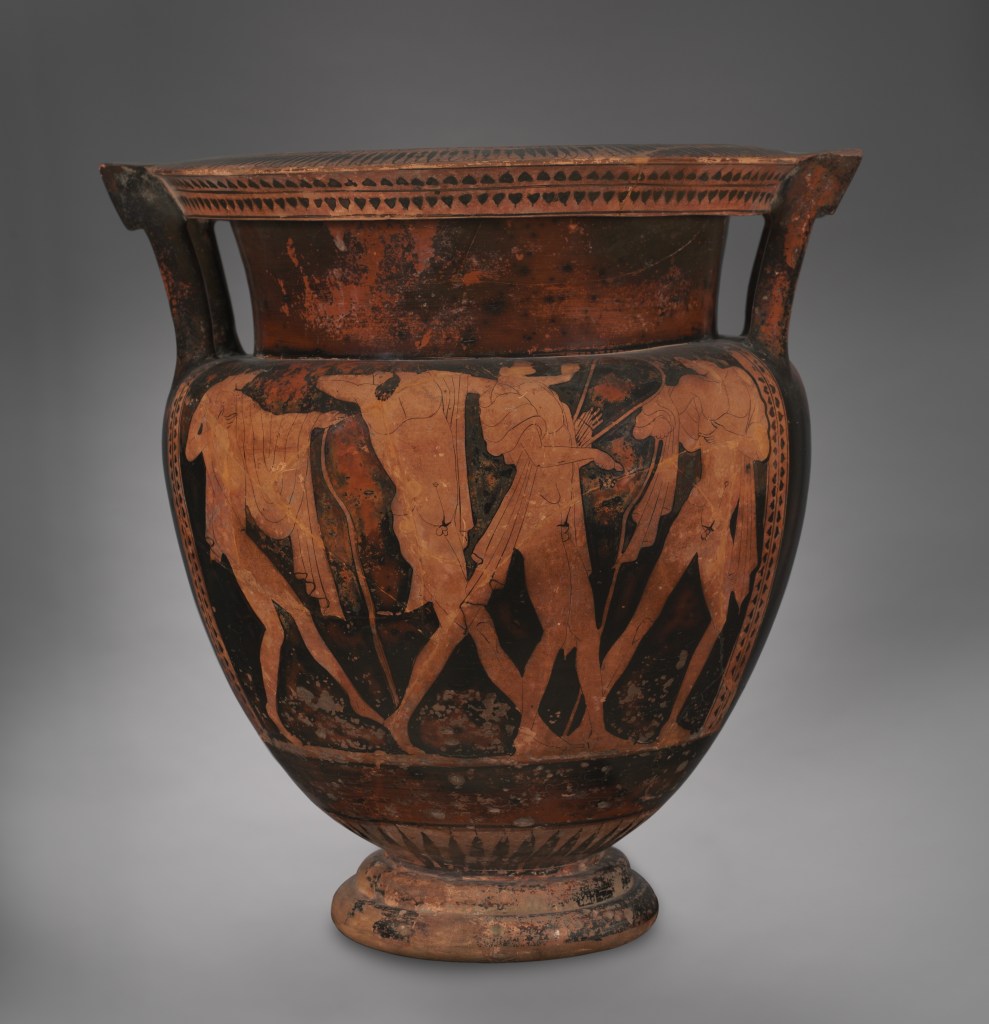
This column krater once held watered wine,
Its figures, red on black, an illustration
Of how it served the daily and divine.
On one side Hera offers a libation
With Artemis, Apollo, and their mother,
While three nude athletes and a bearded man
Are drunk with more than liquor on the other.
I stare through all four panes of glass that ban
All but my eyes from learning every curve,
And I can only dream that luck and nerve
And my own art may earn a chance to feel,
As one of few who cares to understand
That ancient try to make one ideal real,
To feel it push through time with my own hand.

*****

Marcus Bales writes: “A poem is language in meter that evokes emotion in the reader. Those who write to express themselves are doing something other than writing poetry. No reader accomplished enough to be engaged in reading poems is in it for the writer’s blurt. It may be that the writer is trying to evoke the same emotion in the reader that the writer felt in the poem’s circumstances, but the goal remains to evoke that emotion in the reader, not merely recount the writer’s emotion.

Poems that fail to evoke emotion in the reader are failed poems and, alas, every poet has several. They wait patiently like the mythic swordsman in fairytales to keep the protagonist from going through the door behind them. Our hero or heroine arrives in the room, the swordsman puts down Kant’s ‘Critique of Pure Reason’ – in the original German – and smiles, drawing a sword. The writer, however already wounded or tired from the effort of getting there, engages and soon enough, after an elaborate exploration of the waiting swordsman’s skills, is disarmed. The swordsman bows, kicks the writer’s sword back to him, sheathes his own, picks up his book, and sits down again, angles it to the light from the only window, nods goodbye, and resumes his perusal. The writer picks up the disgraced weapon, and trudges back out the way they came in. That poem still does not do what the writer intended to do: evoke emotion in the reader; all it remains as is an account of his or her own emotion.

It is the strength of that felt emotion that keeps the writer coming back to the failed poem, ever hopeful that it is an exception to the unyielding rule that the poem is for the reader, not the poet. Some poets make careers out of performing such things, their agents guaranteeing that the poet will cry during the performance, sure that the promoters are only interested in the performance, not in its effects on the audience. And there are audiences for whom watching the performer fail in their presentation is the point. No one involved in that scenario is there for poetry.

Unfortunately, this poem, ‘Cleveland Krater’ is one of those failed poems. Absent the actual krater, I have finally come to realize, the reader is not going to experience the emotion I did. I have come back and back to this piece, always after having visited the krater again, examining it closely through its Plexiglas box, looking for the clues that moved me and still move me, to try to shove them into words that will bring that impact I felt to the reader. Maybe if I just admit my failure I will get free of the draw of its blade when I arrive at it, again, hoping that this time I’ll do better than the dismissive kick of my sword clattering across the stone floor.”

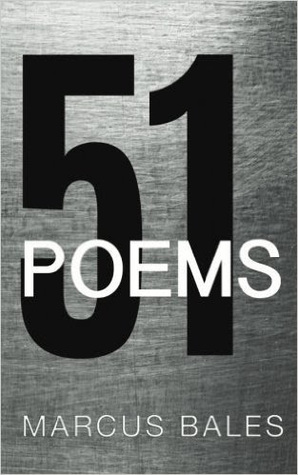
Not much is known about Marcus Bales except that he lives and works in Cleveland, Ohio, and that his work has not been published in Poetry or The New Yorker. However his ’51 Poems’ is available from Amazon. He has been published in several of the Potcake Chapbooks (‘form in formless times’).

An extensive review of the Cleveland Krater and its creator can be found at https://www.academia.edu/12708103/The_Cleveland_Painter. You don’t need to log in or register, you can simply scroll down to read the entire pdf.

Photo: provided by the Cleveland Museum of Art https://www.clevelandart.org/art/1930.104#

Potcake Poet’s Choice: Richard Fleming, ‘Blackbird’

With catapult, once school was finished,
I went to hunt in woodland, high
above the town, in summer light
and heard, among leafed branches spread,
a blackbird, singing like a bell.
I took aim, shot; the missile flew
unerringly, my aim was true,
with awful suddenness it fell,
all broken. Exultation fled,
to be replaced by sickly fright.
I knelt to watch it slowly die.
Within me somewhere, light diminished.

*****

Richard Fleming writes: “I wrote Blackbird, an autobiographical poem, many years ago, with a rhyme scheme that I believed I’d invented. I’ve since learned that the pattern is well established and is known as Chiasmus, the repetition of any group of verse elements in reverse order, such as the rhyme scheme ABCDEEDCBA. Examples can be found in Biblical scripture (“But many that are first / Shall be last, / And many that are last / Shall be first”; Matthew 19:30). The poem records a coming-of-age event and such experiences can sometimes be traumatic.”

Richard Fleming is an Irish-born poet currently living in Guernsey, a small island midway between Britain and France. His work has appeared in various magazines, most recently Snakeskin, Bewildering Stories, Lighten Up Online, the Taj Mahal Review and the latest Potcake Chapbook ‘Lost Love’, and has been broadcast on BBC radio. He has performed at several literary festivals and his latest collection of verse, Stone Witness, features the titular poem commissioned by the BBC for National Poetry Day. He writes in various genres and can be found at www.redhandwriter.blogspot.com or Facebook https://www.facebook.com/richard.fleming.92102564/

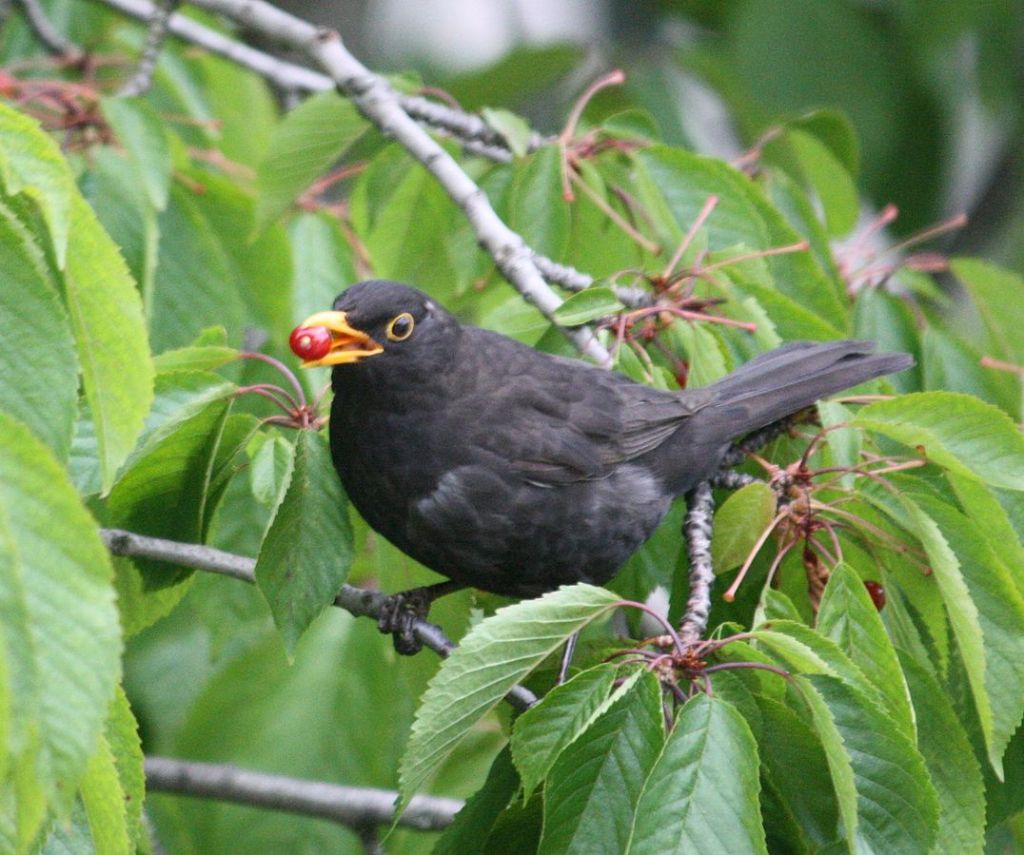
Photo: Male common blackbird with feed in Lausanne, Switzerland, by Shantham11, is licensed under CC BY-SA 3.0

Calling the Poem: 5. ‘Of Muses’

When thoughts, fantastic dreams, bright images,
invade you from inside without relief –
thoughts that aren’t yours, nor come from the outside –
then, heedless of the real world’s scrimmages,
you can’t ignore, forget, refute, refuse.
Forces not you, that ride you and bestride,
when viewed with self-delusion, self-belief,
must therefore be some spirit, god, or muse.

*****

This is the fifth of the 15 poems in the ‘Calling the Poem’ series, published as a Snakeskin e-chapbook. From the awareness of the creative mood to the valuing of an idea, to the attempt at expression, to the crafting and polishing of the item, there are several stages in the creation of a piece of art. I am trying to lay out my sense of this process, and of how any individual can choose to develop it, and produce more and better art.

It’s my belief that many, many people could be the most amazing poets or other creators, but they don’t go down that path because they choose not to pay attention to the stray thoughts and images that come their way. For those of us who try to follow and develop the images, there is always the question of where they come from: from within us, or from the outside? I think humanity’s self-understanding is very primitive so far, and that there are layers under layers still to be peeled back. All our answers are best guesses, working hypotheses, delusions… but they are all we have, and valid and valuable when seen in that light.

Most of the poems in this series are semi-formal – they have enough rhythm and rhyme to facilitate their recitation, but lack the formal structures, the appropriate patterns, that can be aspired to. To me the recitation is key, because poetry is auditory in nature, in its origin, at its heart. It is almost as old as singing, which is in turn almost as old as rhythmic babbling and drumming. The poem printed on the page is not the poem itself, it needs to be read (aloud, or in your mind’s voice) in order to become the poem.

So I don’t have strong opinions on whether to capitalise the first letter of each line of a poem: it doesn’t impact the sound. But if it can help with the reading and comprehension – by not capitalising and thereby showing the flow of the sentence, or by capitalising in order to differentiate from spillover part-lines and thereby retaining the metre or rhythm – then an appropriate choice should be made. The version of this work that I am using is all first-letter capitalised. I’ve modified that today because I felt the poem was more comprehensible when the individual sentences were more clearly marked; the issue isn’t otherwise important.

And, no, I’m not impressed with concrete poems or shape poems as verse, although they can be excellent as jokes and witticisms.

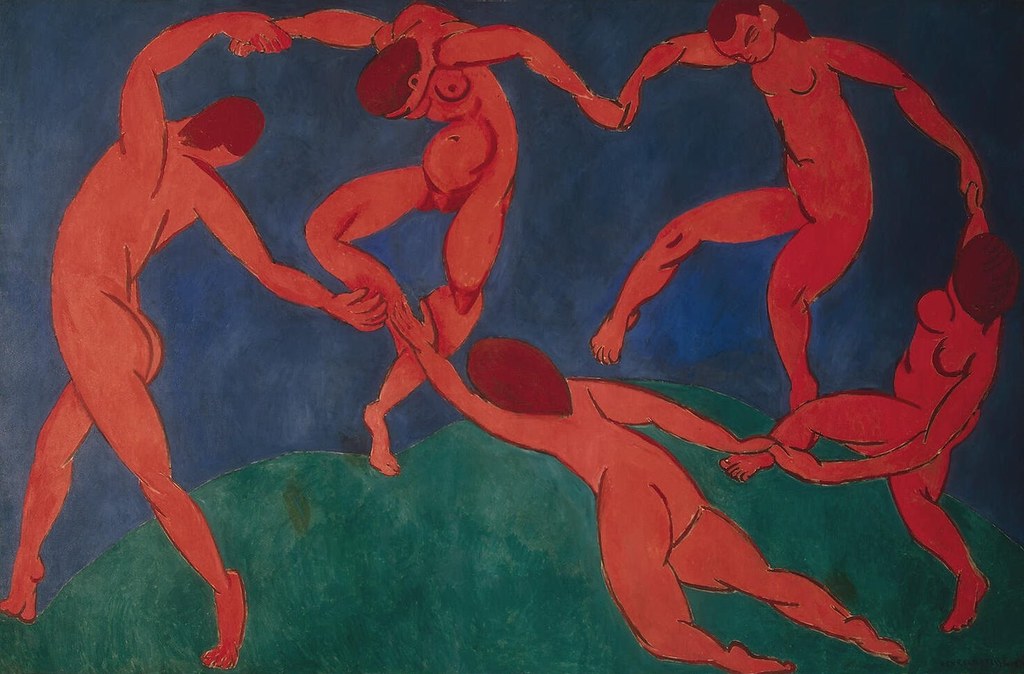
Photo of “Henri Matisse – Dance [1910]” by Gandalf’s Gallery is licensed under CC BY-SA 2.0.

Calling the Poem: 1. ‘Invocation’

O Odin,
Living outside me or within,
Share your mead of poetry you earned in night’s delight,
Spare me from the mead you shitted out in flight and fright.
By Thought and Memory, I swear
A poem needs your care,
For poems… magic poems… are nothing,
and come from your nowhere…

A poem comes in flurries:
A phrase that catches, sticks,
A rhyme that matches
With some thought that dog-worries,
And a verse that clicks.

*****

Just to be clear, I’m no more a believer in the Norse gods than I am in Yoruba, Hindu or Christian deities. Also, I’m not a white nationalist. But mythology has a couple of uses for me: pure enjoyment of the tangled tales; a way of looking at historical mindsets; and a tool for trying to communicate with the unconscious, i.e. to let the creative unconscious funnel ideas and images to the conscious mind.

What I do believe is that invoking the Muse, or a god, is a way of telling your unconscious that you are receptive to its comments… it is a fishing expedition, and you never know what you’re going to get. But I believe it is a system that works (sometimes), and I don’t practise another. (Various drugs are alleged to get results, too.)

So a few years ago I set out to describe the process that I follow to try to bring poetry to me. The result was a series of 15 poems, published by Snakeskin as an e-chapbook in January 2017. It was available as a free download from Snakeskin No. 236, and it should be again, when the Snakeskin archives are again operational. I named it ‘Calling the Poem’.

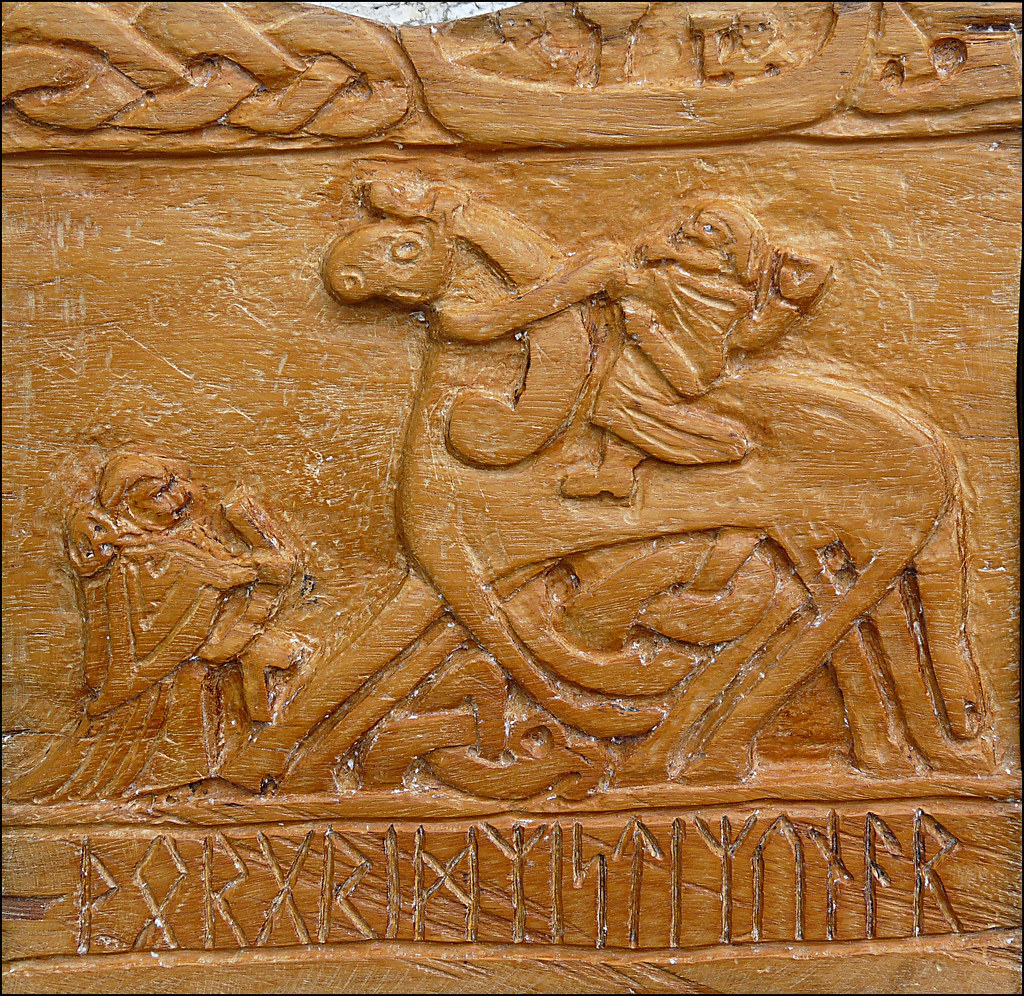
‘Calling the Poem’ starts by invoking the Muse – male, female, human, animal, I think the Muse can be however you choose to imagine it. But the Muse should be a dream-image, for the Muse, the unconscious, is as likely to communicate through dream as anywhere. Odin is a good figure, with his ravens of Thought and Memory who give him the news of the world, his eight-legged horse Sleipnir who can carry him through all the worlds, his ability to shapeshift and prophesy, the sacrifices he made to obtain wisdom such as gouging out an eye to put in Mimir’s well, and of course the mead of poetry that he stole and disburses as he feels.

And so the first poem – somewhat rough-hewn, semi-formal – is the invocation addressed to Odin.

Photo: “Odin on Sleipnir” by Hornbeam Arts is licensed under CC BY-NC 2.0.

Resources: Salt Publishing returns!

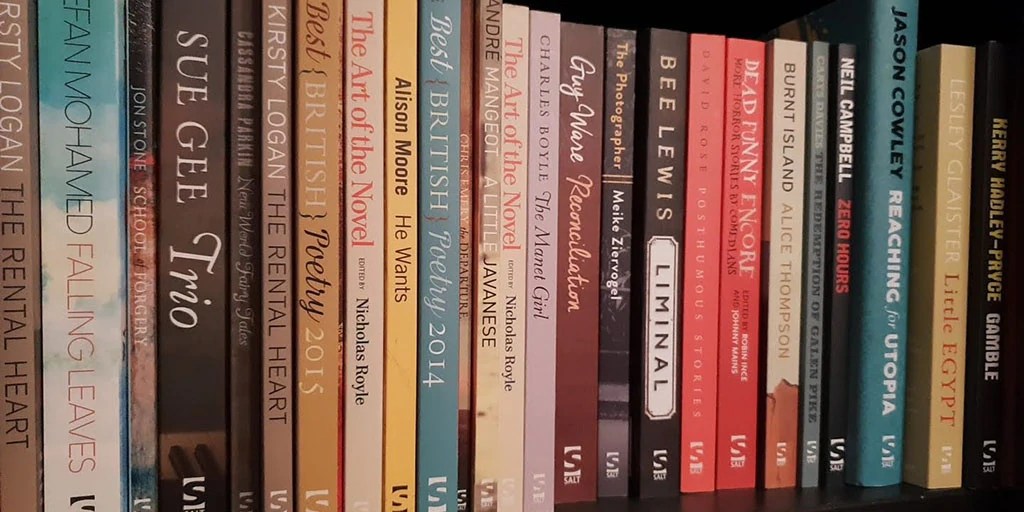
Begun in 1999 as a wide-ranging British literary publisher, Salt ran into difficulties with a declining market for poetry. In 2013 they posted in their blog that “after thirteen years and over 400 poetry collections, many by debut authors,” they were going to stop publishing poetry by individual poets and instead limit themselves to anthologies. For those who want to see how depressingly small the poetry market could be, here is a Guardian article on it and Salt from 2013.

By 2018 it looked as though Salt might be dissolving entirely, despite the wide praise and support they had from the literary community; and then came Covid and the halt to library and bookstore gatherings. Life got miserable for everyone (except, of course, Boris Johnson).

Happily, Salt hung on, focusing on fiction, and has now strengthened enough to once again be accepting submissions of poetry manuscripts. They may be very much a contemporary publisher, but can’t be completely averse to formal verse if their author list includes Christina Rossetti and Emily Brontë. From their Submissions page:

We are happy to consider full-length poetry collections by Welsh, Scottish, Irish or English poets of circa 64 pages. It will help if poets live in the British Isles to participate in publicity and promotion.
Please send your complete collection along with your magazine publication history and a biographical note.

Their blog even has a useful Guide to Poetry Submissions. Salt, distributed by Penguin Random House and with e-book distribution by Faber Factory, is a top-class independent publisher in the UK. It’s good to see them looking fully active again.

Launch: Potcake Chapbook 11, ‘Lost Love’

‘Lost Love – poems of what never happened, and of the end of things that did’… how bittersweet; but what a collection of poets, and what a diversity of stories and observations!

Seventeen poets are packed into this chapbook. Seven have appeared before: Marcus Bales, Melissa Balmain, Michael R. Burch, Vera Ignatowitsch, Martin Parker, Gail White and myself. Ten are new to the series, with wicked little pieces from Brooke Clark, Cody Walker and three from Wendy Cope, and with longer poems from N.S. Thompson, James B. Nicola, Mary Meriam, Helena Nelson, David Whippman, Richard Fleming and Vadim Kagan. Bios, photos and links to read more of their work can all be found on the Sampson Low site’s Potcake Poets page, while all the chapbooks in the series, showing which poets are in which, are here. Each of the 11 chapbooks is profusely illustrated (of course) by Alban Low, and can be yours (or sent to an ex) for the price of a coffee.

Heartbreak has never had a happier manifestation!

Potcake Poet’s Choice: Jerome Betts, ‘Morning Calls’

Though buds, light-headed, arrow to the sun,
Wood-pigeons cautiously descend to drink
As through the roof the first faint cheepings run
From half-fledged nestlings in some straw-warm chink,
While welling far and near − to float and sink
Like spidery fibre silvered on the lawn −
Mercurial lark song trails out link by link,
Rocking serrated-throated crows have drawn
Their broad indelible raw weals across the dawn.

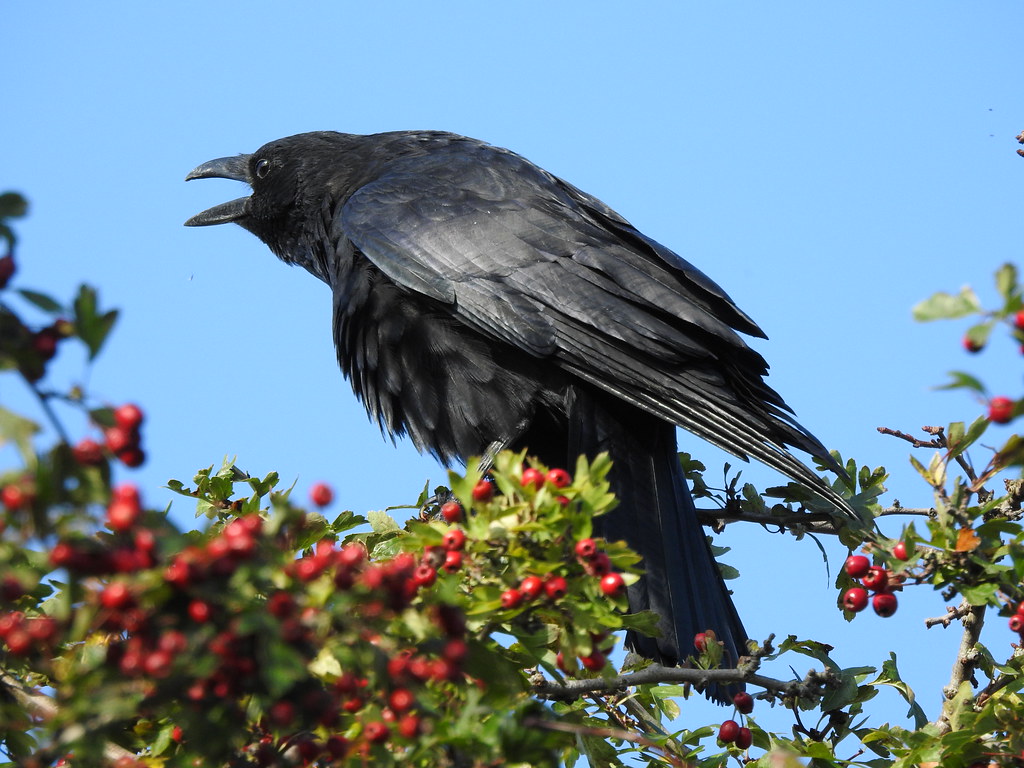
Jerome Betts writes: “Have only tried the intricate patterning of the ‘Spenserian stanza‘ a couple of times. On the first occasion it seemed to suit a comment on the design of a 4th century Roman mosaic floor and on the second, in ‘Morning Calls’, appearing in Snakeskin, a memory of the rich dawn chorus in rural Herefordshire many years ago. The point of particular interest for me is the phrase ‘rocking serrated-throated crows’ in Line 8, unchanged from one jotted at the time. The words fitted a rocking or bobbing movement, but why ‘serrated-throated’?  This is appropriate for ravens with their ‘shaggy throat feathers’  (RSPB Handbook 2014) but not, I thought, crows. The words resisted attempts at tweaking and the stanza stalled. Some weeks later I saw a crow standing on top of a Devon street light rhythmically calling and rocking . . . and as it did so its neck feathers briefly parted on the upstroke of the movement. The line had preserved an exact observation made when young and then forgotten.”

Jerome Betts edits the quarterly verse webzine Lighten Up Online in Devon. His work has appeared in Amsterdam Quarterly, Angle, Autumn Sky Poetry Daily, Pennine Platform, Light, The Rotary Dial, and Snakeskin, other American, British and Canadian publications and two Iron Press anthologies.
www.lightenup-online.co.uk

Photo: “A Crow calling – gardenDSCN9711” by ianpreston is marked with CC BY 2.0.

Review: ’51 Poems’ by Marcus Bales

This is poetry as it is meant to be: evocative and word-for-word memorable. Fair disclosure: I am an online friend of Marcus Bales – and I am so because his poetry is evocative, memorable, witty… and it all rhymes and scans in the most natural and elegant way.

His collection of ‘51 Poems‘ contains sections with very different moods. The first ones recapture childhood and wartime experiences and then give way to my personal favourites, a series of poems of love, love that in one way or another is unattained, incomplete: Pre-Flight, “I called goodbye. By then she couldn’t hear.//I pulled the chocks away, and she was gone.” Broken Sunlight “streaming down his face.” Have You Forgotten “it all, and all so soon?” Me and the Moon. Dancing with Abandon. And Precipice: “and knowing everybody knows//I’m dancing on a cliff edge, unaware//of where the precipice gives way to air.”

Others of his poems are portraits of very diverse people, political or social commentary, and (most memorably) flawless parodies of Keats, Poe, W.S. Gilbert, Auden, Shakespeare, Kipling among others. It is in the parodies that he shows the greatest diversity of rhyme and metre, because his ear catches the rhythms of other poets as easily as it understands iambic pentameters.

Online you will find him knocking out sarcastic little quatrains almost daily in Facebook. He was a standard contributor in The Rotary Dial (now sadly defunct), and frequently appears in the Potcake Chapbooks. Read 51 Poems for the wit and the human insights, and you will be rewarded with memorable earworms of wordplay and verbal dexterity.

Potcake Poet’s Choice: Michael R. Burch, ‘Neglect’

What good are tears?
Will they spare the dying their anguish?
What use, our concern
to a child sick of living, waiting to perish?

What good, the warm benevolence of tears
without action?
What help, the eloquence of prayers,
or a pleasant benediction?

Before this day is over,
how many more will die
with bellies swollen, emaciate limbs,
and eyes too parched to cry?

I fear for our souls
as I hear the faint lament
of theirs departing …
mournful, and distant.

How pitiful our “effort,”
yet how fatal its effect.
If they died, then surely we killed them,
if only with neglect.

Michael R. Burch writes: “This original poem has over 3,000 Google results, perhaps because it has been published by Daily Kos, Black Kos, Course Hero, Think Positive, Katutura (Namibia), Vanguard News (Nigeria), Best Naira News (Nigeria), The World News Platform, Darfur Awareness Shabbat, Genocide in Art, Genocide Awareness, and other human rights organizations including the UNHCR (United Nations Refugee Agency).”

Photo: “Carrying a lifeless and dying child (Famine Memorial)” by Can Pac Swire is marked with CC BY-NC 2.0.

My own comments: The statue in the photo is at House Quay, Dublin, and relates specifically to the Great Famine, the Great Hunger, the Irish Potato Famine of 1845-1852 in which a million died and two million left the country then and in the next couple of years. The potato blight also impacted continental Europe, causing a further 100,000 deaths there and becoming a contributory cause of the widespread Revolutions of 1848.

So let us be clear: whether children are dying from famine, climate disaster, pandemics, government inaction, or warfare (all present in today’s world)–dying without in any conceivable way being culpable–there is not just a moral duty to help, there is self-interest in helping, self-interest in preventing civil unrest and floods of refugees. Refugees are the product of an intolerable domestic situation: all other things being equal, people would rather make their future in the place they were raised, with familiar friends, family, foods, festivals. It is the duty of all governments to make all places so pleasant that no adults or children feel forced to leave, that no one is left to die.

Happy Easter. Happy Passover. Ramadan kareem.