Category Archives: couplets

Short poem: Michael R. Burch, ‘Not Elves, Exactly’

Something there is that likes a wall,
that likes it spiked and likes it tall,

that likes its pikes’ sharp rows of teeth
and doesn’t mind its victims’ grief

(wherever they come from, far or wide)
as long as they fall on the other side.

*****

Michael R. Burch comments: “I wrote ‘Not Elves, Exactly‘ thinking of Trump’s border wall and Robert Frost’s mischievous elves in ‘Mending Wall‘.”

The poem was first published in Snakeskin.

Michael R. Burch’s poems have been published by hundreds of literary journals, taught in high schools and colleges, translated into 23 languages, incorporated into three plays and four operas, and set to music, from swamp blues to classical, 78 times by 35 composers. He is also the founder and editor-in-chief of The HyperTexts.

Photo: “Spiked wall, Lewes” by ♔ Georgie R is licensed under CC BY-ND 2.0.

RHL, ‘The Beat Goes On’

A pounding beat to drug, enhance, enfold –
iambics are the dance floor of the old.

*****

Published in The Asses of Parnassus, home of “short, witty, formal poems”. Thanks, Brooke Clark!

Illustration: ‘Iambics’ by RHL and ChatGPT

Amit Majmudar, ‘Poem that Almost Rhymed’

Sometimes I visit bodies where I almost roamed
and the curves are made of clouds I almost dreamed,

a consummation missed by just a touch,
an air-to-air refueling broken off,

the hose retracted and the thirst abandoned
as both planes bank in opposite directions.

I hold my almosts in a contact list
of hands I never held, and never lost,

my store of acorns, little lids on ache,
my unmates boarding, one by one, an ark

that sails them, as it must, away from this life,
where I have these three kids, this house, and this wife,

although it could have been somebody else,
a past I passed on quickening my pulse.

When I pull my present closer by the waist,
almost wears the skin of never was.

*****

Amit Majmudar writes: “Poem That Almost Rhymed operates by slant rhymes, mimicking phonetically the speaker’s romantic near-matches that ended up being near-misses. “Close but no cigar,” as the saying goes: the  speaker reflects on friends who almost made love using words that almost chime in melodiously coupling couplets. Incomplete. The sexual imagery is clear but hopefully sophisticated enough not to seem vulgar–particularly the coitus interruptus implicit in the image of mid-air refueling. The last slant rhyme “waist” almost consummates with “was”–two more letters, and the rhyme would fulfil itself as “waste,” the word that epitomizes the underlying regret of the speaker, who acknowledges his happiness but knows, too, that his happiness could have taken another form, perhaps (sigh) one that would have been an ever-so-slightly better match….”

Amit Majmudar is a poet, novelist, essayist, and translator. He works as a diagnostic nuclear radiologist in Westerville, Ohio, where he lives with his wife and three children. Recent books include Twin A: A Memoir (Slant Books, 2023), The Great Game: Essays on Poetics (Acre Books, 2024), and the hybrid work Three Metamorphoses (Orison Books, 2025). “Poem That Almost Rhymed” was first published in Bad Lilies. Majmudar’s next collection, Things My Grandmother Said, is scheduled for early 2026. 
More information at www.amitmajmudar.com

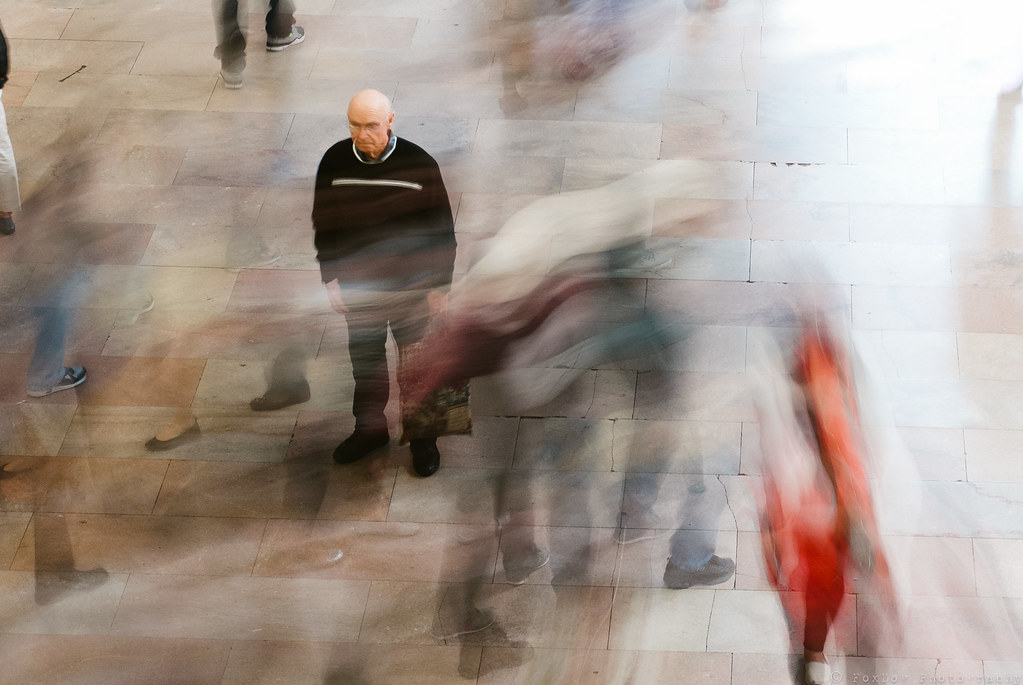
Missed Connection [day 111 of 366]” by Wondermonkey2k is licensed under CC BY-NC-ND 2.0.

Brooke Clark, ‘High Standards’

I hate whatever novel everybody’s praising now,
I hate any café that draws a crowd,
I hate the kind of people who are friends with everyone—
they’re always “dropping by,” always “have to run”—
I hate, in truth, popularity and the eager horde it brings.
I prefer to seek out rarer things,
and beauty—beauty like yours—is vanishingly rare—but then,
you’ve shared it with so many other men.

*****

Brooke Clark writes: “I hate all common things,Callimachus says in the original of this poem, which is the Callimachean aesthetic in a nutshell: the search for the unusual word, the lesser-known version of the famous story, to lend your poetry the interest of the unusual. Like other poets of his time, he was searching for a way to get out of the massive shadow cast by Homer, the Epic Cycle, and the earlier lyric poets. I’ve always found the shift from the literary concerns of the first two thirds of the poem to the personal, romantic concerns at the end fascinating; do literary tendencies become a model for how one conducts one’s personal life? Or were the literary concerns just a metaphor for the personal? In those long-ago days when people criticized poetry on Twitter, I was criticized for repeating the phrase “I hate” when Callimachus uses a different verb for “hate” or “dislike” each time (the Callimachean aesthetic at work). I liked the anaphora, though, and I stuck with it.”

This poem originally appeared in Arion, Boston University’s Journal of Humanities and the Classics.

Brooke Clark is the author of the poetry collection Urbanities and has published work in ArionLiterary ImaginationTHINKThe WalrusLA Review of Books, and other places. He is also the editor of the online epigrams journal The Asses of Parnassus and the book reviews editor at Able Muse.
Twitter: @thatbrookeclark
Bluesky: @brookeclark.bsky.social

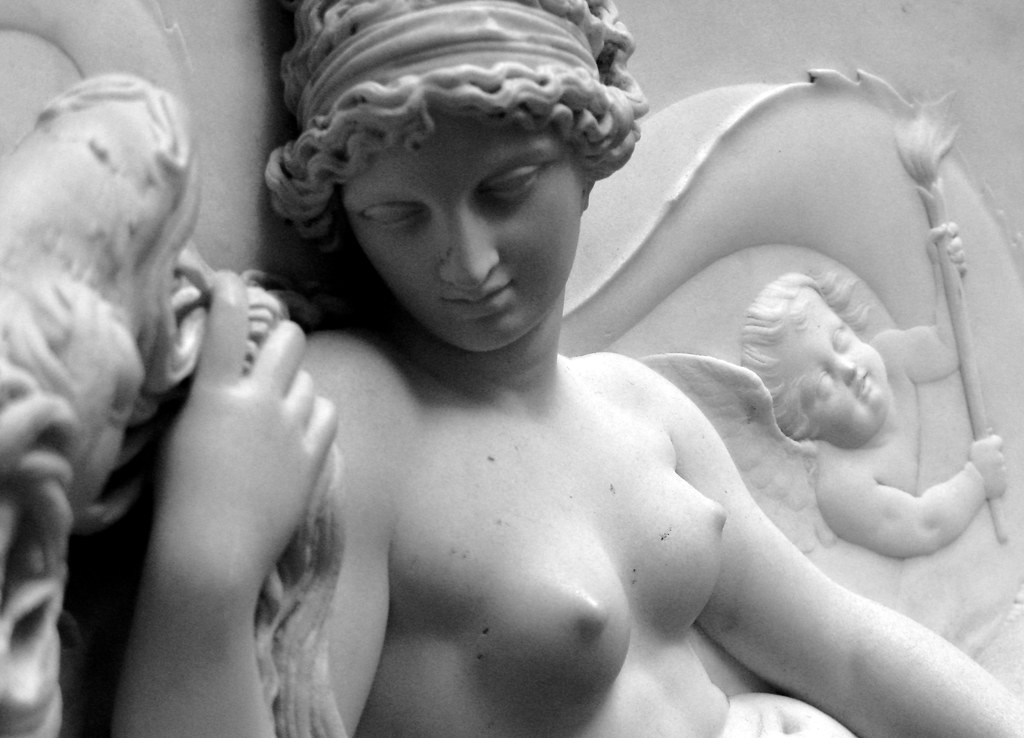
Photo: “Getty Museum” by kevin dooley is licensed under CC BY 2.0.

Political poem: Michael R. Burch, ‘Not Elves, Exactly’

after Robert Frost’s “Mending Wall”

Something there is that likes a wall,
that likes it spiked and likes it tall,

that likes its pikes’ sharp rows of teeth
and doesn’t mind its victims’ grief

(wherever they come from, far or wide)
as long as they fall on the other side.

*****

Michael R. Burch writes: “Many people misunderstand the most famous phrase in Robert Frost’s poem ‘Mending Wall.’ In the poem Frost’s neighbor quotes his father’s adage that “Good fences make good neighbors” as they work together to repair an unnecessary wall on the border of their properties. Talk about a misunderstanding: this phrase has even been used by politicians to justify apartheid walls and similar barriers! But Frost did not share his neighbor’s belief and compared him to a stone-armed savage who moved in primitive darkness and could not go beyond his father’s saying. Frost’s own belief about such walls was expressed in the poem: “Before I built a wall I’d ask to know / What I was walling in or walling out / And to whom I was like to give offense.” At the end of the poem, Frost considers teasing his neighbor with the idea that mischievous elves are responsible for the wall falling down, but decides to hold his peace. My title questions who builds such walls: ‘Not Elves, Exactly’ but something much darker and more ominous.”

Michael R. Burch’s poems have been published by hundreds of literary journals, taught in high schools and colleges, translated into 22 languages, incorporated into three plays and four operas, and set to music, from swamp blues to classical, 61 times by 32 composers. He is also the founder and editor-in-chief of The HyperTexts.

The Wall Has Spikes” by Kevan is licensed under CC BY 2.0.

Michael R. Burch, ‘Funding Fundamentals’

“I found out that I was a Christian for revenue only and I could not bear the thought of that, it was so ignoble.” — Mark Twain

Making sense from nonsense is quite sensible! Suppose
you’re running low on moolah, need some cash to paint your toes …
Just invent a new religion; claim it saves lost souls from hell;
have the converts write you checks; take major debit cards as well;
take MasterCard and Visa and good-as-gold Amex;
hell, lend and charge them interest, whether payday loan or flex.
Thus out of perfect nonsense, glittery ores of this great mine,
you’ll earn an easy living and your toes will truly shine!

*****

Originally published by Lighten Up Online. NOTE: A flex loan is a payday loan with a “personal line of credit” that makes it even harder to pay off than traditional payday loans. Caveat emptor.

Michael R. Burch writes: “Living in allegedly ‘Christian America’ where 80% of evangelicals voted for the Antichrist Trump, I am forced to resort to foxhole humor. ‘Funding Fundamentals’ is tongue-in-cheek foxhole humor, but I think we would be better off forming our own religions than donating money to false profits like the bible-hawking Trump and his cronies.”

Michael R. Burch’s poems have been published by hundreds of literary journals, taught in high schools and colleges, translated into 22 languages, incorporated into three plays and four operas, and set to music, from swamp blues to classical, 61 times by 32 composers. He is also the founder and editor-in-chief of The HyperTexts.

Using form: Couplets/Sonnet: Gail White, ‘Prayer Updated’

To Anyone who still may be
attentive from Infinity,
we bless you from our dot in space
and thank you for our privileged place.

Give us this day on which to feed
a bit more gluten than we need,
and when we’re adequately fed,
help us to get and stay ahead
and save for our retirement
enough plus twenty-five per cent.

May old age find us cheerful still,
our life in order like our will,
with neither pain nor care nor debt.
Thy kingdom come, but not just yet.

*****

Gail White writes: “Religion and irony are not incompatible I find that a good deal of poetry comes from taking a speculative or questioning view of Bible stories (e.g, how did Adam and Eve react to the murder of Abel by Cain? We don’t hear a peep out of them about it.) And I’ve often said that if God hadn’t wanted at least one cynical feminist poet, I wouldn’t exist.”

‘Prayer Updated’ was published in the current issue of Lighten Up Online.

Gail White is the resident poet and cat lady of Breaux Bridge, Louisiana. Her books ASPERITY STREET and CATECHISM and the chapbook SONNETS IN A HOSTILE WORLD are available on Amazon. She is a contributing editor to Light Poetry Magazine. “Tourist in India” won the Howard Nemerov Sonnet Award for 2013. Her poems have appeared in the Potcake Chapbooks ‘Tourists and Cannibals’, ‘Rogues and Roses’, ‘Families and Other Fiascoes’, ‘Strip Down’ and ‘Lost Love’.

Illustration: “Global Prayer” by thorntonsdigital is licensed under CC BY-ND 2.0.

Weekend read: Odd poem: French President Emmanuel Macron, ‘Pour Sophie’

On a trip to Paris one day, little Sophie
Met a giant lady lighting up the night sky.
“What’s your name, you magical monster?”
“My many visitors call me the Eiffel Tower.”
“In all your attire, don’t you sometimes tire
Of being seen only as a humdrum tower?
You, a dragon, a fairy watching over Paris,
An Olympic torch held aloft in grey skies?”
“How you flatter me! So few poets these days
Ever sing the praises of my Parisian soul,
As did Cocteau, Aragon, Cendrars,
Trénet and Apollinaire… Since you’re so good
At seeing beneath the surface, you could
– If you like, when you’re back from France –
Take up your pen and write down
Why you like me – it would be nice and fun!”
“You can count on me! There’s so much to say!
I’ll write twenty lines… but who will read them?”
“Well, I know a man who’ll read your verse.”
“Really? Who?”
“The President of France.”

En voyage à Paris, la petite Sophie
Croisa une géante illuminant la nuit.
“Comment t’appelles-tu, monstre surnaturel?”
“Mes nombreux visiteurs m’appellent Tour Eiffel.”
“N’es-tu pas parfois lasse, avec tes mille atours
Que l’on ne voie en toi qu’une banale tour?
Toi le dragon, la fée, qui veille sur Paris,
Toi, immense flambeau planté dans le ciel gris!”
“Quel plaisir tu me fais! Ils sont devenus rares
Ceux qui comme Cocteau, Aragon ou Cendrars,
Trenet, Apollinaire, avaient su célébrer
Mon âme parisienne aux charmes singuliers.
Puisque tu sais si bien percer les apparences,
Tu pourrais, si tu veux, à ton retour de France,
Prendre à ton tour la plume et conter en anglais
(It would be nice and fun) ce qui chez moi te plaît!”
“Tu peux compter sur moi! Il y a tant à dire!
Je t’écrirai vingt vers… Mais qui voudra les lire?”
“Oh, moi j’en connais un qui lira ton cantique.”
“C’est?”
“Monsieur le président de la République.”

*****

This poem by French President Emmanuel Macron is in French alexandrine: 12 syllable lines, rhyming couplets. The translation is either by him (he is fluent in English) or by the French Embassy in London, as the poem was written for the English girl Sophie’s 13th birthday. She herself had initiated everything with the poem below, which she had sent in April 2017 to the French President… at that time the President was François Hollande, but Macron won the presidency later that year, and responded for Sophie’s birthday on November 1st. Her poem was 20 lines long, written out on her drawing of the Eiffel Tower; his response is also 20 lines long (counting the final question and answer as a single line, which it clearly is by metre and rhyme).

Here is 12-year-old Sophie’s ‘Centre of Attention’:

She has four beautiful legs,
Which help her stand proud,
She looks over everyone,
With her head in the clouds,
She is elegant and tall,
Wears a pretty, lacy skirt,
Whilst staring at her in awe,
Your eyes will not avert,
Her spine is amazingly straight,
Whilst her head touches the sky,
People look up and take pictures of her,
As they are passing on by,
You need to tilt your head up,
To be able to see all of her,
But when you do,
She is as pretty as a picture,
She is the centre of attention,
Noticed by everyone.
She is the Eiffel Tower,
She is second to none.

Macron created a nice circularity with his response to Sophie’s poem, by pretending it was written first and caused Sophie’s poem, rather than the other way round. All very playful.

Photo: “170714-D-PB383-151” by Chairman of the Joint Chiefs of Staff is licensed under CC BY 2.0.

Max Gutmann, ‘Villaintine’s Day’

It’s horrible and rather stupid
To hold each year a day for Cupid
Whose claim to fame is shooting folks,
Aggression none of them provokes.
Is this behavior to condone?
We have no day for Al Capone.
No holidays are lavished on
John Dillinger or Genghis Khan.
We don’t exalt the memories
Of vicious monsters such as these.
Would we have changed our attitude
If they had been in flight and nude?

*****

Max Gutmann writes: “Since this was written, we’ve found other ways of celebrating villains.”

The poem was originally published in Light.

Max Gutmann has contributed to New StatesmanAble MuseCricket, and other publications. His plays have appeared throughout the U.S. (see maxgutmann.com). His book There Was a Young Girl from Verona sold several copies.

Photo: Used by permission of the creator, DS:
WWW.DSART.CO.UK
Instagram: @DS__ART
Twitter: @DS__ART

Couplets: Richard Meyer, ‘The Benighted States of America’

now we, the people, willingly obtuse
and largely satisfied with self-abuse

elect a narcissistic psychopath
who rules with lies, incompetence, and wrath;

accept a healthcare system that’s a mess
and limp from life to death with less and less;

continue to dismiss without a care
the shit we dump in water, land, and air;

allow the filthy rich to have their way,
to run the world, to bleed us day by day;

abandon logic, reason, vital news
and swallow whole all sorts of crackpot views —

we piss away our brains, our soul, our nerve
and get the fucked up country we deserve

*****

Richard Meyer writes: “Current cultural and political circumstances have me feeling ornery, so I hammered out this verse about the great American democratic experiment. My caustic verse was partly inspired by the comments of various prominent writers throughout history, including Thomas Jefferson who said, “The government you elect is the government you deserve”.”

Richard Meyer, a former English and humanities teacher, lives in Mankato, MN. A book of his collected poems, Orbital Paths, was a silver medalist winner in the 2016 IBPA Benjamin Franklin Awards. He was awarded the 2012 Robert Frost Farm Prize for his poem “Fieldstone” and was the recipient of the 2014 String Poet Prize for his poem “The Autumn Way.” His poetry has appeared in a variety of print and online journals and has also received top honors several times in the Great River Shakespeare Festival sonnet contest. His most recent book, Wise Heart, is a memoir of his mother Gert who was born in poverty, came of age during the Great Depression, enlisted in the army during World War II, served overseas, and was awarded the Bronze Star for meritorious service performed during the Battle of the Bulge. His books are available through Amazon.

Photo by Fort George G. Meade is licensed under CC BY 2.0.