What is she doing, the mad old bat, Down on her knees in the garden? In her busted boots and her happiness hat She doesn’t know and she wouldn’t care That the size of the arse sticking up in the air Is shading so much of the garden.
She pulls out a weed, the mad old bat, Out of the face of the garden. She tuts at the trauma and fusses it flat While the waste-not weed she will put to use By turning it into salubrious juice And giving it back to the garden.
What is she up to, the mad old bat As she struts, stiff-kneed in the garden With her doo-dah dog and her galloping cat? Spreading compost and scattering seed So one may sprout and the other may feed In the windmill world of the garden.
She’s a cruel cartoon, is the mad old bat As she talks to herself in the garden. What on earth is this? and Good Lord, look at that! And she squats and she mutters and giggles out loud And informs her potatoes they’re doing her proud As she creeps like a crone in the garden.
Where is she going, the mad old bat As the sunset blesses the garden? She is going nowhere, and that is that. She will dig in the dark till the dawn sky pales And the damp on her knees and the dirt in her nails Go singing the song of the garden.
*****
Ann Drysdale, who died unexpectedly on August 16th (apparently in her sleep) was a superb poet and self-aware, self-directed, life-rich eccentric lover of the natural world, of gardens, of animals and birds, of unpretentious people in all walks of life. I knew her only through her poetry and our correspondence – which is to say, well enough to deeply regret that I never got to meet her in person.
The poem above was collected in Miss Jekyll’s Gardening Boots, Shoestring Press, 2015; as was the poem that I put up on this blog earlier this month, ‘When Mister Nifty Plays the Bones‘. Here is the bio that she chose to represent herself with:
“Ann Drysdale still lives in South Wales. She has been a hill farmer, water-gypsy, newspaper columnist and single parent – not necessarily in that order. She has written all her life; stories, essays, memoir, and a newspaper column that spanned twenty years of an eventful life. Her eighth volume of poetry – Feeling Unusual – came together during the strange times of Coronavirus and celebrates, among other things, the companionship of a wise cat and an imaginary horse.”
She was a much-loved member of the world of (especially formalist) poetry. George Simmers posted her ‘Song of Wandering Annie’ in the Snakeskin blog, and there is a tribute (and an enormous selection of her verse) in The HyperTexts. She was a truly good person.
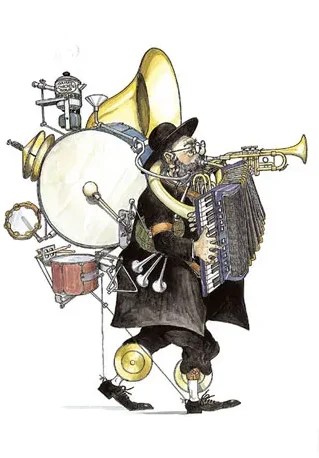
With things like tongs in the palm of his hand Tongue-depressors or langues-de-chat He tappets the rhythm of his one-man-band As he struts in the gutter with a tra-la-la.
He twinkles his fingers and he flicks his wrist Hey-diddle-diddle and fiddle-de-dee And his two tame twiddlesticks jump and twist With a click-click-clackety, one-two-three
For Nifty’s bones are made of wood And they click like sticks with a restless chatter His brass as he passes is loud and good But his rattling bones are a different matter
His drum tum-tums and his trombone groans And his hi-hat cymbal softly sighs But all I can hear is the homely bones That sing out the song in his small sad eyes
He dances a foxtrot, quick-quick-slow And the hi-hat hisses with a whispered yes But the bones, bones, bones with their no-no-no Tick-tock to the tune of uselessness
When Mister Nifty dances by His fingers flicker and his brass bells shine But a part of my heart feels cold and dry As his lonely bones call out to mine.
*****
Ann Drysdale writes “I made this poem because I wanted to see if I could turn words into music, with assonance and dissonance, chiming and clashing like the components of Mr. Nifty’s one man marching band. Laying aside conventional metre and putting boom, boom, boom alongside tum titty tum titty tum. I wanted it to sing and to dance to itself, and for the reader to dance along with it.”
The poem was collected in Miss Jekyll’s Gardening Boots, Shoestring Press, 2015.
Ann Drysdale still lives in South Wales. She has been a hill farmer, water-gypsy, newspaper columnist and single parent – not necessarily in that order. She has written all her life; stories, essays, memoir, and a newspaper column that spanned twenty years of an eventful life. Her eighth volume of poetry – Feeling Unusual – came together during the strange times of Coronavirus and celebrates, among other things, the companionship of a wise cat and an imaginary horse.
“I just need help,” the homeless man announces to the train And, somehow, to himself as well. And everybody cares, Though no one makes a move.
“I just need help.” He mumble-shouts again his one refrain. And everybody sees his hell, Despite our downward stares. But how can we improve
His plight when I still can’t afford both surgery and food, And you live drowned in college debt And she just froze her eggs For when the rent hikes stop?
“I just need help,” he tries once more. Our eyes stay navel-glued. We want to fill his need and yet Just what’s the help he begs For? Should we call a cop?
We know the way that that has gone before. We know he’d simply suffer even more. We know he’s not what cops are really for. We hope we’re wrong, but we just see no choice, Except to steel our ears against his voice And, staidly silent, mourn inside As though he had already died.
*****
‘The Subway 2023’ was first published in The Lyric. Benjamin Cannnicott Shavitz writes:
The entire poem is in iambs.
Every line rhymes with at least one other line.
In the first four stanzas, the rhyme scheme is ABCDABCD repeated twice.
In each of the first four stanzas, the line lengths are as follows: line 1: seven feet; line 2: four feet; line 3: three feet; line 4: three feet.
In the last stanza, the rhyme scheme is AAABBCC.
In the last stanza, the line lengths are as follows: lines 1-5: five feet each, lines 6-7: four feet each.
Points (3)-(6) create a pattern in which any lines that rhyme are of the same length as each other.
“Some background about my approach to form: I received my PhD in linguistics last year and I have been using my knowledge of language structure and the math background I have from my undergraduate engineering studies to innovate and sometimes re-conceptualize form in poetry. As I’m sure you know, the past century has seen a massive decline in knowledge of how form works in general. What you may be less aware of is that that same period has seen major developments in linguistics that can be brought in to expand our understanding of form. Most people know nothing about form anymore and the few people who do are working with an understanding that, while based on a lot of sound information, would benefit from being updated by the last century’s developments in linguistics research. There is an expansive future for formal verse ahead of us if we not only revive interest in form but also recognize that we are still learning about it. Form is not just tradition. It is an aspect of nature and there is a lot more we haven’t done with it yet. There is an essay in the back of two of my books that deals with the way formal verse and its history have been mischaracterized by proponents of free verse, I have developed a short course for teaching formal verse writing from a linguistically informed perspective, and I hope to use my academic knowledge (and credentials) to provide further support for the revival and expansion of formal verse in the future.”
Benjamin Cannicott Shavitz is a writer and linguistics scholar whose studies in language have led him to a great enthusiasm for formal poetry. He lives in Manhattan, New York City and received his PhD in linguistics from the Graduate Center at The City University of New York. He has published two collections of his own poetry (Levities and Gravities), as well as an anthology of poems by New York City poets from throughout history (Songs of Excelsior). His work has also been published in The Lyric, The Fib Review, and the journal of The Society of Classical Poets. See www.kingsfieldendeavors.com/writing for links to his writing.
No, Wilfred, I never believed your endeavour was more than a clever display. Did you think you could rescue the boys in the mess queue, or – no less grotesque – you’d betray your comrades by opting to stay in shock in Craiglockhart’s sick bay? Naive pretence is no defence for senseless sacrifice. Admit it, you were stupid to ignore Sassoon’s advice and blithely return to the fray, quite deaf to the price you would pay.
You based your decision on lack of a vision and fear of derision combined. You went back to that battle where kids died “as cattle” to leave tittle-tattle behind, regardless of what you might find. No doubt you were out of your mind! Or, more exact, you lacked all tact. Death was not your “chum”. One week passed, and then, at last, the Armistice had come. You thought you were helping mankind. Your nerves were so numb you were blind.
The telegram telling the news reached your dwelling as people were yelling “Hooray!” You were inconsequential despite your potential. What did you essentially say? “Was it for this the clay…?” Whose drum did you dumbly obey? You grew obsessed with your new quest; it made you big and bold. Was it fulfilled when you were killed, just twenty-five years old? I have to report with dismay there’s no lack of soldiers today.
*****
The following is an explanatory essay by Duncan Gillies MacLaurin, entitled ‘Owen, Sassoon, Barker and Me’:
If anything might rouse him now The kind old sun will know. – from Wilfred Owen’s sonnet, “Futility”
It would have been late 1976 or early 1977 when my English teacher, Peter MacDonald, introduced me, a 14-year-old Scottish public schoolboy, to Wilfred Owen. Pixie, as he was called by the boys, had hardly given us the gist of Owen’s life, death, and poetry, when I found myself pole-axed. I hadn’t got my head around the fact that Owen chose to return to fight in the war that he was denouncing in his poetry even though serious shellshock exempted him from service, when I was told that he was killed just one week before the Armistice. It was too much for me.
Reciting Wilfred Owen’s sonnet “Futility” in chapel a few weeks later, I sensed in poetry an alternative to the spiritual life I had known hitherto. Not that I reacted immediately. I didn’t begin writing poetry until I was 20. And it was not until late 1989 that I returned to the poet whose fate had hit me so hard.
It started the way it sometimes does, with a couple of lines scribbled down just before bedtime. The lines were: “If your heart is your legend,/ if your pen is your weapon…” The next day I sat down with my guitar and put the lines to a tune. Although I hadn’t had Wilfred Owen in my thoughts, I found that the piece was to be about him. A year later, “Letter to a Dead Poet” was published in The Dolphin Newsletter, an internal journal of the English Department at Aarhus University, Denmark.
Letter to a Dead Poet
Hey Wilfred Owen, where were you going when you got blown away? Had your heart been your legend, had your pen been your weapon, had your conscience elected to stay watching the sparrows play, you might have been here today. I don’t believe your sacrifice was generous or free; the fact you paid the highest price betrayed “Futility”: “Was it for this the clay…?” What were you trying to say?
What use are the laurels? What use are the morals in all of your quarrels combined? You went back to that battle where kids died “as cattle” to leave tittle-tattle behind and claimed you were just being kind. You must have been out of your mind! And when at last your blood was spilled Death was not your friend; one week after you were killed, the War was at an end. How could you be so blind? What were you hoping to find?
My English literature professor, Donald Hannah, who specialised in WWI poetry, was full of praise.
In 2008 (by chance the year Donald Hannah died) I started revising the piece, enlisting the help of other poets on a couple of online workshops. In the process I became even more critical of Wilfred Owen, and people were saying things like: “If he wasn’t already dead there’s a fair chance this would finish him off.” Even my wife, a novelist and investigative journalist, disliked my revisions. One poet, Janet Kenny, was sympathetic though. She commented:
You must have known that this would upset everybody. Owen is so beautiful and touches us in the deepest way. But I admire the courage this must have taken. It reminds me of Edward Bond’s “First World War Poets”:
You went to the front like sheep And bleated at the pity of it In academies that smell of abattoirs Your poems are still being studied You turned the earth to mud Yet complain you drowned in it Your generals were dug in at the rear Degenerates drunk on brandy and prayer You saw the front—and only bleated The pity! You survived Did you burn your general’s houses? Loot the new millionaires? No, you found new excuses You’d lost an arm or your legs You sat by the empty fire And hummed music hall songs Why did your generals send you away to die? They saw a Great War coming Between masters and workers In their own land So they herded you over the cliffs to be rid of you How they hated you while you lived! How they wept over you once you were dead! What did you fight for? A new world? No — an old world already in ruins! Your children? Millions of children died Because you fought for your enemies And not against them! We will not forget! We will not forgive! I just wanted to show that there was at least one other naughty boy. I love the poems of Wilfred Owen. I seriously like your poem. It would be impossible to imitate his voice (and unacceptable) but the irreverence IMO hits the correct note. Your poem is deliberately “vulgar” and unpretentious and is all the more telling for that reason.
(From the online workshop, Eratosphere, 2008, quoted with Janet Kenny’s permission)
Thus encouraged, I persevered, and in 2012 my new version was published in the newly-founded poetry e-zine, Angle. One of the editors was Janet Kenny.
The Real Pity
No, Wilfred, I never believed your endeavour was more than a clever display. Did you think you could rescue the boys in the mess queue, or – no less grotesque – you’d betray your comrades by opting to stay in shock in Craiglockhart’s sick bay? Naive pretence is no defence for senseless sacrifice. Admit it, you were stupid to ignore Sassoon’s advice and blithely return to the fray, quite deaf to the price you would pay.
You based your decision on lack of a vision and fear of derision combined. You went back to that battle where kids died “as cattle” to leave tittle-tattle behind, regardless of what you might find. No doubt you were out of your mind! Or, more exact, you lacked all tact. Death was not your “chum”. One week passed, and then, at last, the Armistice had come. You thought you were helping mankind. Your nerves were so numb you were blind.
The telegram telling the news reached your dwelling as people were yelling “Hooray!” You were inconsequential despite your potential. What did you essentially say? “Was it for this the clay…?” Whose drum did you dumbly obey? You grew obsessed with your new quest; it made you big and bold. Was it fulfilled when you were killed, just twenty-five years old? I have to report with dismay there’s no lack of soldiers today.
The two lines that inspired the piece are gone, yet the sentiment they express is still its backbone. My new title is a reference to something Owen wrote in a preface to a posthumous collection of his poetry: “My subject is War and the pity of War. The Poetry is in the pity.”
A significant new element in the latest version is the fact that Owen’s mother received the dreaded telegram just as the church bells in Shrewsbury were ringing out in celebration of the Armistice.
The alleged advice from Siegfried Sassoon in the first stanza is undocumented. It was an idea that came from reading about their relationship in Pat Barker’s historical novel, Regeneration (Viking Press, 1991), which is centred around the humane treatment that Owen, Sassoon and others received from the man in charge at Craiglockhart, Dr Rivers. Sassoon was at Craiglockhart (in Edinburgh) because his declaration proclaiming the futility of the war had been read aloud in Parliament. Sassoon wasn’t ill, but the government didn’t know what else to do with this war hero turned pacifist. Owen and Sassoon became good friends, and they had a lot in common. They were both homosexual and both strongly ambivalent about the war. Sassoon, the seasoned poet, recognised Owen’s budding poetical talent and helped him with it. There is no doubt that it was a case of hero worship on Owen’s part. Even though they would not allow themselves to refuse to go back to the front, because they saw it as their duty, on a personal level they would not have wanted each other to have to return. While Sassoon’s return to the front was merely the result of a mature adult’s battle with his own conscience, Owen was a damaged young man who should never have been allowed to return. I have imagined that Sassoon told Owen that he (Owen) didn’t need to return to the front, but that Owen chose to follow his hero’s example rather than his advice. Sassoon grieved bitterly over Owen’s death and claimed he would never be “able to accept that disappearance philosophically”. (Siegfried’s Journey, Faber and Faber, 1945, p. 72)
In an interview with critic Rob Nixon in 1992 Barker talks about issues that were central for the two poets: Barker: Yes, it is about various forms of courage. What’s impressive about Sassoon’s courage actually is not just the obvious thing that it takes a lot of courage to get decorated, and that it takes a lot of courage to protest against the war, so he’s being brave in two distinct ways. In fact, it’s a much deeper form of courage than that because—partly because of his sexual makeup—he had a very deep need, I think, to be visibly tough and heroic and hypermasculine and prove he could do it. The bravest thing he does, it seems to me, is to deny that psychological need in order to protest against the war. Nixon: I think one of the great strengths of the novel is the way it deals with the complexity of the condition of the pacifist-warrior rather than simply taking head-on the question “Is war good or bad?” It’s not an ethical book in that narrow, straightforward sense, but ethical by staging the dilemmas of that condition. Barker: It’s not an antiwar book in the very simple sense that I was afraid it might seem at the beginning. Not that it isn’t an antiwar book: it is. But you can’t set up things like the Somme or Passchendaele and use them as an Aunt Sally, because nobody thinks the Somme and Passchendaele were a good idea. So in a sense what we appear to be arguing about is never ever going to be what they [the characters] are actually arguing about, which is a much deeper question of honor, I think. “Honor” is another old-fashioned word like “heroism”, but it’s very much a key word in the book. p.7 of “An Interview with Pat Barker” in Contemporary Literature 45.1 (2004)
The ethos of the committed pacifist scorns mere personal safety. Both Owen and Sassoon returned to the War despite their opposition to it. Yet Barker also points to the ambivalence of the positions the two poets held: Barker: …part of the paradox of Sassoon’s position and, indeed, of Wilfred Owen’s, is that they are simultaneously condemning the war wholeheartedly and claiming for the combatant a very special, superior, and unique form of knowledge, which they are quite implicitly saying is valuable. That you cannot know what we know, and what unites us is something you cannot enter. (Ibid., p.8)
Barker later states the ambivalence the two men felt even more baldly. She is also astute in her assessment of the class privileges they enjoyed despite their pacifism: Barker: On the one hand, you’ve got the war poets telling everybody the horrors as vividly as they can. But at the same time, in both Owen’s and Sassoon’s cases, refusing to say the other truth, which is that a lot of it those two particular men enjoyed. So you get an alternative area of silence developing, and that interests me. The other thing that interests me is how in the second year of the war you had the increased persecution of the pacifists and the increased persecution of homosexuals. There were two very, very nasty campaigns going on. A lot of state spying of a very nasty kind. There was one poor woman, Alice Wheeldon, who was sent to prison with ten years’ hard labor because a police spy alleged that she had plotted to kill Lloyd George by sticking a curare-tipped blowdart up through his shoe. This was a woman who kept a second-hand clothes shop in Leicester. And she got ten years’ hard labor. Unlike Sassoon, you see, who didn’t get sent to prison. You need to be working class and a woman to actually get yourself sent there. (Ibid., p.19)
What spurred me to write this piece? As is often the case, it was the combination of two factors. On the one hand, my own public-school background meant that I was able to identify with and feel sympathy for Wilfred Owen. On the other hand, I wanted to condemn the elitist culture and stiff-upper-lip ethos that sent an excellent poet to an early grave.
Duncan Gillies MacLaurin, 4th November 2018
*****
Duncan Gillies MacLaurin is a Scottish poet who was born in Glasgow in 1962. He studied Classics at Oxford, left without a degree, and spent two years busking in the streets of Europe. He met a Danish writer, Ann Bilde, in Italy in 1986 and went to live in Denmark, where he teaches English and Latin. His collection of 51 sonnets, I Sing the Sonnet (2017), is online at Snakeskin. He blogs here.
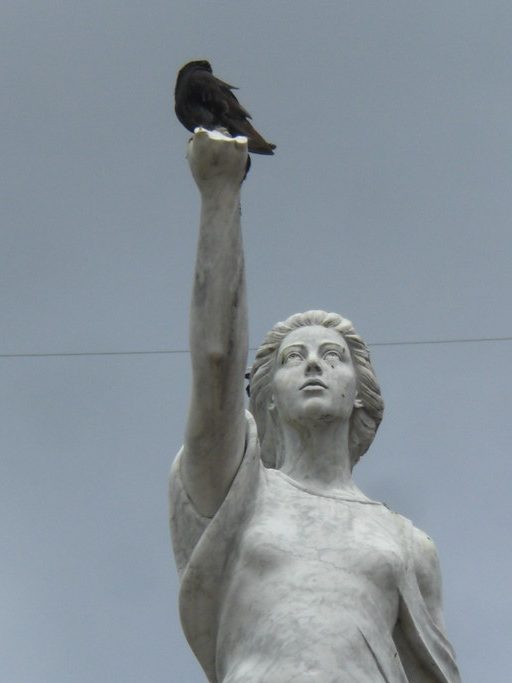
It doesn’t caw or hunt or fly. It can’t peck anybody’s eye, or even grow a single lousy feather. One-clawed, no match for any tom, it’s stranded on a leafless palm, regardless of the season, time or weather.
Yet what’s the bird that, all alone, sticks up for you when gibes have flown and you don’t care to verbalize or linger; when someone’s mocked you to your face or cut you off or swiped your space – what bird? The one that moonlights as a finger.
*****
Melissa Balmain writes: “I’m pretty sure this would have been the Sphinx’s riddle if she had guarded the Brooklyn Bridge.”
Melissa Balmain’s third poetry collection, Satan Talks to His Therapist, is available from Paul Dry Books (and from all the usual retail empires). Balmain is the editor-in-chief of Light, America’s longest-running journal of light verse, and has been a member of the University of Rochester’s English Department since 2010. She will teach a three-day workshop on comic poetry at the Poetry by the Sea conference in Madison, CT, in May 2024.
Inside his penthouse office he views his Inuit artwork, carvings from a culture reduced to buy-and-hold, then scans the evening city, his bar chart on the skyline where real estate has grown his stake but cost him bonds he’s had to break – he hadn’t meant to so forsake his parents. They looked old
that day outside the croft house when cowed farewells were murmured as cattle lowed in wind blasts keening from the sea. His mother and his father stood waving from the porch step; next year she’d crack her pelvic bone, when winter iced that slab of stone, and never walk again. I’ll phone, and he was history.
(…)
He downs his drink and glances again at his computer – an email from a neighbour: Your father died last night. He’d lately gotten thinner and seldom had a fire on – what little peat he had was soft. Some things of yours are in the loft so mind them when you sell the croft. The city lights are bright;
he turns again and faces his metamorphic sculptures of walruses in soapstone that never will break free from rock that locks the sea waves – past fused against the future. Another gin? That’s six. Or eight? So be it. Clarity’s too late. His real estate’s no real estate – he’s left his legacy.
*****
John Beaton writes: “This is a composite. Elements of it are taken from my life but I’ve borrowed significantly from the trajectories of others, especially some of my father’s contemporaries who left Camustianavaig physically but never in their hearts. There are also aspects of the lives of some people I’ve known in business.
I worked out the form so that each stanza would start out steadily and rhythmically for six trimeter lines then build pace for three rhymed tetrameter lines and rein to a halt with a single trimeter line that has a masculine rhyme with line four. Even though they limit word-choices, I thought feminine endings for the first three lines and lines five and six were worth it for the rhythm. And I like how they form a sort of rhyme and closure gradient with lines four and seven to ten.”
John Beaton’s metrical poetry has been widely published and has won numerous awards. He recites from memory as a spoken word performer and is author of Leaving Camustianavaig published by Word Galaxy Press, which includes this poem. Raised in the Scottish Highlands, John lives in Qualicum Beach on Vancouver Island. https://www.john-beaton.com/
The day I left for Canada my mother and father quelled their tears. We held and hugged. He said, “We three may never see each other alive again.” That leaving hooked my gut and tugged.
We never did. He died and left her widowed so next time we three met was at his tomb. Our parting afterwards had been foreshadowed– the breakage of the cord that fed me from her womb.
We rode on gondolas to summits she had never dreamed of. Mountains could not buy her heart from where they’d raised the family– we shared reunions linked by contrails in the sky.
II.
Hi, Mum. It’s me, from Canada, your John. Och, John! You’ve caught me in an awful state! I know. I’m sad to hear that Henry’s gone. The one that was my brother? My memory’s not great.
He’s back now, from the War. Oh dear, they’re here. Who? They’re all against me. Who? The clique. They’ve done such nasty things. They think I’m queer. I think I’ll kill myself. So how’s the house this week?
Och this one’s grand. I moved two days ago. And Johnny helped. I think he’s at the door. I’ll have to run now, Henry. Cheerio. Don’t go. The phone is dead. The cord exists no more.
III.
A winter storm comes sweeping down the hills and, gusting, blasts umbrellas inside-out. They ring the grave like blighted daffodils and rain-black mourners hold, like buffeted peat-burn trout.
I take the tasselled pall rope, let it slide, and with my brothers ease the coffin down; it slips across the lip of a great divide and sinks what was my mother– a shuck, a wrinkled gown.
Gales carry off the prayer as it is spoken. I cast the rope adrift. The rains of Skye slap my back. Again, a cord has broken– this time my lungs won’t fill. I try but cannot cry.
*****
John Beaton writes: ” This one is autobiographical. Using the metaphor of an umbilical cord, it tells how emigration stretches and breaks family connections. The title refers to the old practice alluded to in the last stanza of holding the newborn upside down and slapping it on the back till a cry indicates its lungs have started to work and it is breathing on its own. At the end of the poem, grief prevents such a cry. The dementia dialog is taken pretty much verbatim from an international phone call to my mother. That’s the part that crystallized the abacb rhyme scheme and 55533 meter. The dialog fell into place with that pattern and I felt it worked for the rest of the poem too. I think the last two lines of each stanza, with the first being unrhymed and the second linking through masculine rhyme with line two, act like an alexandrine and combine to give a closure effect. The three-part structure represents three stages of escalating disconnection.”
John Beaton’s metrical poetry has been widely published and has won numerous awards. He recites from memory as a spoken word performer and is author of Leaving Camustianavaig published by Word Galaxy Press, which includes this poem. Raised in the Scottish Highlands, John lives in Qualicum Beach on Vancouver Island. https://www.john-beaton.com/
“Come closer and I will tell you a secret To you, to you, only to you. Come Closer.”
You’re perched sultry on a craggy cliff, curvy on a windswept rock with red dress clinging to your breasts: you play that tune, that tune you play it’s calling out to me.
And I’m sailing, roving, lost at sea, bedraggled by the ocean spray and changing course for you.
Because, that tune, that tune you play it jolts me, hooks me, reels its prey: from silent waves to violin, from moonless numb to sun-kissed-skin from topsail calm to snatching whip, from steady course to daring trip.
I hear that tune, that tune you play it takes me further, far away: your spiral smile, your whirlpool lips, they whisper songs to rolling ships.
That tune you play, with gravity hypnotic moonstruck melody, there’s no escape, the heavens swarm electrostatic pulses form –
I’d love to be your thunderstorm, whipping up the specks of you, teasing you; perplexing you not pleasing you; just vexing you yet needing the effects of you, a feeling that projects on you, it’s squeezing me and sexing you.
And yet, that tune, that tune you play it leads me on in some strange way – I see beached skulls and broken hulls shadows changing, screeching gulls, till I’m marooned, a castaway, a shipwreck in your taloned splay.
*****
Michael Tyldesley writes: “The poem was inspired by the trap of damaging relationships earlier in my life and the metaphor that sits behind the poem and continues to burn in me is the irresistible lure of hypomania. The poem structure was inspired by the freeform rhyming style of Jenni Doherty and the language of Dylan Thomas’s Under Milk Wood. It’s been gathering dust in my drawer over the years and it’s quite an old poem. I wrote most of it at 26 and I’m now 42. It’s slightly raunchy and I suppose I didn’t want to be judged negatively due to that but it’s always been a very popular poem when I shared it.”
Michael Tyldesley works in British submarine design. At the time of writing this post he is in Australia, doing performance poetry at Melbourne’s Vibe Union. ‘Ballad of the Siren Song’ was published in this month’s Snakeskin.
Nine thousand quarts of orange juice Five thousand loaves of bread Eight hundred fifty bars of soap Three hundred lipsticks (red) A gross of bras A score of scarves A dozen wallets (black) Ten cars Eight dogs Six cats Three homes Two canes One granite plaque
Editor’s note: If this poem doesn’t look like formal verse to you, and the only structure you see is the declining number of the items listed, then read it aloud to pick up the swing!
Melissa Balmain writes: “As you might guess, this one came about when I’d been doing some birdwatching. I considered starting one of those ‘life lists’ that birders have—then thought: what if there were other kinds of life lists? I never did get around to listing birds.”
Speaking of shopping, Melissa Balmain’s third poetry collection, Satan Talks to His Therapist, can be preordered from Paul Dry Books (and from all the usual retail empires). Balmain is the editor-in-chief of Light, America’s longest-running journal of comic verse. Her poems and prose have appeared in such places as The American Bystander, McSweeney’s Internet Tendency, The New Yorker, The New York Times, Lighten Up Online,The Hopkins Review, Poetry Daily, Rattle, and The Washington Post. Her other poetry collections are Walking in on People (chosen by X.J. Kennedy for the Able Muse Book Award) and The Witch Demands a Retraction: Fairy Tale Reboots for Adults.A member of the University of Rochester’s English Department since 2010, she lives nearby with her husband and (for now) one of their two children. She is a recovering mime.
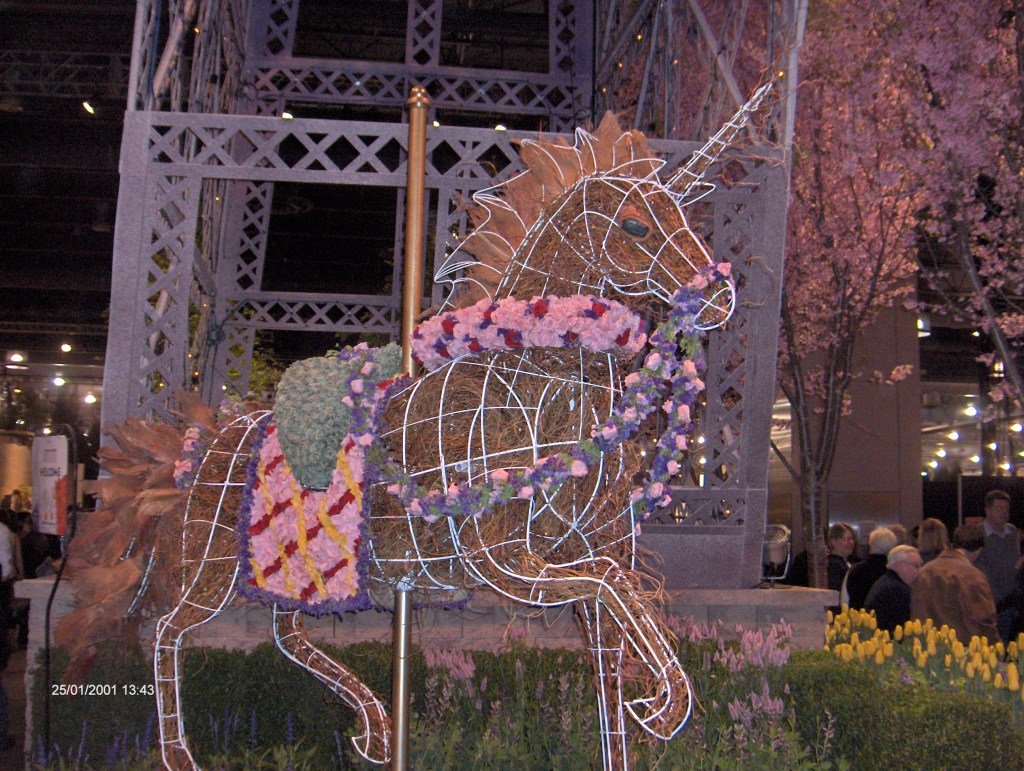
And, if I could, I’d sing my love with unicorns in chains of flowers, With endless oceans greyly battering by misty moors, With joyful hunting dogs with muddy paws, With soft spring showers – With anything eternal, wistful, happy, sad. But all my dogs inside are snapping, yapping, mad, My showers are wintry, my sea-shores are lined With unkind tourists drinking bourbon, And unicorns are dead, and flowers suburban.
And, if I could, I’d steal my love on midnight horse and overseas, To city-sacking buccaneering round the reckless earth, Settle at last to farm some quiet firth: Goats, orchards, bees; Explosive starts, wild-beating hearts, and peace at last. But ungeared fantasies spin lies torn from the past: I’m a slum-quarter city-sprouting weed, My planted seeds die in deserted gardens, My wandering’s my weak will; and my heart hardens.
And, if I could, I’d love my love with wayside flowers, fresh fruit, a kiss, With secondhand-in-hand shops’ dazzling, puzzling oddities, With evening at the theater or a fair, With wordless stare, With dreams and smiles, and laughter at my foolishness. But all my city streets are drizzle and drains, not bliss; Traipsing to shows and shops is soul-destroying, And, toying with my rural lie, Commitment-scared, I flee the searching Eye.
And, if I could, I’d give my love all children, chosen and our own: Their love – their moody silences – their smiles like wind and sun – Their seashell searching – riots – sense of fun – Pregnant to grown We’d share kaleidoscope Life’s spectrum-brilliant rays. But I drift unfamiliar down decaying days Where trees are concrete and the ground is stone, Bemoan I knew but left that love… And, if I could, you know I’d have my love.
*****
This is a poem from my 20s, when I was more skilled at the creation of nonce forms. Formal poetry was essentially unpublishable at the time; decades later, this poem has just been published in David Stephenson’s Pulsebeat Poetry Journal.





 Form in Formless Times