Category Archives: Poems

Sonnet: Matthew Buckley Smith, ‘Youth’

I miss believing that I’ll never die,
Or is it that there won’t be a tomorrow?
Both lines work out about the same: deny
The day you’ll have to pay back what you borrow.
It used to be I never went to bed
A second night with any girl I found.
No breakfast in those days–a smoke instead,
Then out the door before she came around.
Last night I passed a toppled garbage bin,
Its liner sagging with a rat’s remains.
He sank a little when I squinted in
And seemed embarrassed by his greedy pains.
And so much like a man, the way he sat
Still in his death, and so much like a rat.

*****

Matthew Buckley Smith writes: “I wrote most of Dirge” (his first book of verse, winner of the 2011 Able Muse Book Award. – Ed.) “in a summer. I was wading through a bad depression, and having written almost nothing but free verse to that point, I set myself the challenge of writing one sonnet a day for the rest of the summer. ‘Youth’ is a survivor of that experiment, written while walking late at night through the campus of Johns Hopkins on the way to the apartment of the woman who is now my wife.”

Matthew Buckley Smith is the author of Midlife (Measure, 2024) and Dirge for an Imaginary World (Able Muse, 2012). He hosts the poetry podcast SLEERICKETS and serves as Poetry Editor of Literary Matters.
https://www.matthewbuckleysmith.com/

Photo: “rats” by Lance McCord is licensed under CC BY-NC-SA 2.0.

Weekend read: Essay: Victoria Moul, ‘On rugby and metre’ (excerpt)

Victoria Moul writes: When I hear or read people — often though not only American “formalists” — discussing “correct” metre in English, and the supposed dominance of accentual-syllabic forms in general and the iambic pentameter in particular, I often think rather impatiently of poets like Arnold and Yeats. Arnold’s verse is musical, highly memorable and — to my ears at least — mostly very straightforward to speak correctly. But it’s often not very iambic at all and he typically uses lines of very varying syllable length. ‘Rugby Chapel’ is a good example of this — its pattern is, technically speaking, more trochaic (rugby) than iambic (endured), the trochaic pattern is established very clearly at the outset (‘Coldly, sadly descends’) and the lines have between six and nine syllables each. If you (inexplicably) wanted to spend an hour “scanning” it you’d find a complex variety of combinations of stressed and unstressed syllables. But its music is easy to hear and read, and very easy to remember, because regardless of the number of the syllables all the lines have three stresses.

Repeated three-stress lines are relatively unusual in English, especially in longer poems, but the four-stress line is very common, perhaps in fact the most natural English line of all, and indeed a lot of so-called iambic pentameter has a tendency to drift towards four rather than five stresses. ‘The Wild Swans at Coole’ establishes an iambic pattern at the outset (‘The trees are in their autumn beauty / The woodland paths are dry’) but is in stanzas of 4/3/4/3/5/3 stresses, with quite varied syllable length and relatively few perfectly iambic lines. Day-Lewis’ poem, by contrast, looks to the eye like it might be iambic pentameter, since the line-length hovers around 10 syllables (ranging from 9 to 12). But most of the lines are spoken naturally with four stresses, not five (‘A sunny day, with leaves just turning’; ‘Wrenched from its orbit, go drifting away’), and only a handful of lines certainly have five.

As far as I know — do comment if you can think of any counter-examples — there are no really good poems about rugby itself, so the poems I discussed today were just those which came into my mind as I watched the practices. None of these English poems are obscure — all are by poets who were considered major in their own lifetime, and all three have been very well-known at some point even if they are not now — and not one of them is in iambic pentameter. In fact, not one of them is obviously in a ‘syllabic’ metre, strictly speaking, at all (as in the familiar statement that traditional English verse is ‘accentual-syllabic’, i.e. where both the number of stresses and the number of syllables are set by the metrical pattern). These poems, like a great deal of English poetry, establish and follow an accentual pattern — of a certain number of stresses in a line, though this too is open to variation — but not, or only very loosely, a syllabic one. Verse of this kind is very common in the English tradition, and the hundred years of poetry between the mid-19th and mid-20th century, even if you set aside the full-blown “modernists” completely, is particularly rich in metrical variety. It is puzzling that this is not better reflected in most discussions of English metre and form. But the best way to get a feel for the actual — rather than imagined — conventions of a literary tradition is, of course, by reading it.

*****

Editor: The passage above is excerpted with permission from a recent Substack post by Victoria Moul in her ‘Horace & friends’ – the full thing is at https://vamoul.substack.com/p/on-rugby-and-metre. In it, with thoughts inspired by watching her nine-year-old son playing rugby, she discusses Cecil Day-Lewis’ ‘Walking Away’, Yeats’ ‘The Wild Swans at Coole’ and Arnold’s ‘Rugby Chapel’. The piece is engaging in several ways, but the point that stands out the most for me is this:
“These poems, like a great deal of English poetry, establish and follow an accentual pattern — of a certain number of stresses in a line, though this too is open to variation — but not, or only very loosely, a syllabic one.”

This is much on my mind when I consider the forms that create formal verse. From my school days on, I have felt that analysing English grammar with Latin rules was wrong, just as straightjacketing English verse into syllabic requirements was not always useful, beautiful or appropriate. English is a Germanic language, and plays effectively by looser accentual rules: perhaps harder to define and analyse, but truer to the work of poetry which is to be word-for-word memorisable. Rhythm is one of the essential tricks of memorisation, along with rhyme, alliteration, assonance and a host of rhetorical tricks; and rhythm plays a variety of casual games. Also, accentual pattern corresponds to the continuum that I see at the root of poetry: from womb heartbeat, to dance, to music, to song, to formal verse. Formal verse is at its best when it is rhythmic and rich in musicality as well as in ideas and images and wordplay. Without the music, without the rhythm, it is prose… no matter how well expressed.

So rap and spoken word are inherently more poetic because more memorisable than 99% of what has been published as ‘poetry’ in the past 50 or 60 years. All songwriters are of course genuine poets – not all are good ones, but Bob Dylan certainly deserves his Nobel Prize (and I wish it could have been shared with Leonard Cohen).

Another point is that French too, and other Romance languages, are more accentual than professors often claim. When Françoise Hardy sang
Tous les garçons et les filles de mon âge
Se promènent dans la rue deux par deux
she was following the accentual beat, not giving every syllable equal weight, and completely skipping a couple of unstressed syllables. (Are French professors still teaching that all syllables have equal weight in French verse? Surely not! I hope that died out some time last century…)

Not all poetry is singable – but at its best it has a musicality that both creates enjoyment and enhances its ease of memorisation.

Photo: Matthew Arnold

Melissa Balmain, ‘Fatal Mistakes’

The pill you’re sure is good for you,
the mole you think you can neglect,
the ache you blame on winter flu:
it’s always what you least expect.

The mat that pads your shower floor,
the flight you take from home, direct,
the car that’s never stalled before:
it’s always what you least expect.

The oddly coiffed New York tycoon
whom no one ever would elect
because he’s nutty as a loon . . .
it’s always what you least expect.

from Satan Talks to His Therapist, by Melissa Balmain (Paul Dry Books, 2023).

Melissa Balmain writes: “In light-verse workshops, writers are sometimes surprised when I suggest trying forms that weren’t designed for funny stuff (unlike, say, limericks or double dactyls). But comic poets can get a lot of mileage out of “serious” forms, from sonnets to sestinas–especially if their humor tends to skew dark. For anxious or obsessive topics, I’m often drawn to repeating forms like the villanelle, rondeau, or (in this case) the kyrielle. The challenge lies in finding ways to surprise the reader even though they know the line that’s coming.”

Melissa Balmain’s third poetry collection, Satan Talks to His Therapist, is available from Paul Dry Books (and from all the usual retail empires). Balmain is the editor-in-chief of Light, America’s longest-running journal of light verse, and has been a member of the University of Rochester’s English Department since 2010. She is a recovering mime.

Pratfall” by Life Imitates Doodles is licensed under CC BY-NC-ND 2.0.

Short poem: RHL, ‘Many Marriages’

Lots of marriage is good –
go ahead! We all should…
but bigamy sadly‘s illegal.
The solution, of course,
is: Encourage divorce!
And remarry. Kings do it. Be regal!

*****

Just published in The Asses of Parnassus – thanks, Brooke Clark!

Photo: “Charles Camilla Jamaica 2008” by Mattnad is licensed under CC BY-SA 3.0.

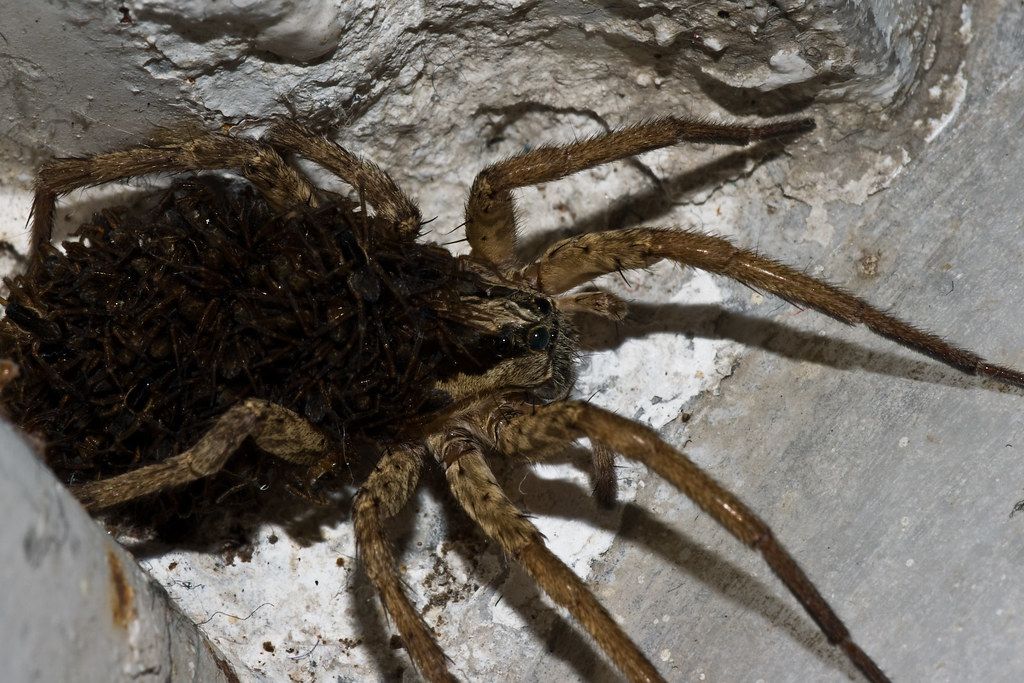
Sonnet: Janice D. Soderling, ‘September Morning’

Across a sun-lit pane, deft, unconcerned,
a spider struts the steps of an old dance,
a set design, in no part happenstance:
and I again to sun and rune returned.
Stumbling along, half blind, half deaf, half-learned,
in yet a day of quarrel and circumstance,
I turn from cluttered web to view askance
night’s daughter, she who never can be turned.

Sleek spider dame with one plan, to consume,
to suck the juice from each unwary fly,
with no grand need to query or presume
if there was meaning in your quarry’s sigh.
Here, in the corner of my fog-filled room,
Atropos grins, her scissors lifted high.

*****

Janice D. Soderling writes: “I don’t write much these days, preferring to use the shortening days to read. But I woke up this morning with the last two lines in my head, and knowing it was an ending to a sonnet, I proceeded to write the rest. Perhaps it asks too much of the reader. Perhaps it is a pretentious piece, of interest only to me. Never mind, I shall keep it, having poured three hours into it.”

Janice D. Soderling has published poems, fiction and translations in hundreds of print and online journals and anthologies over the years. Her most recent poetry collection is ‘Rooms and Closets‘ available at all online bookshops.

Photo: “Spider In Window” by trekkie313 is licensed under CC BY 2.0.

Weekend read: Odd poem: Benjamin Disraeli, ‘To A Beautiful Mute (The Eldest Child of Mr. Fairlie)’

Tell me the star from which she fell,
Oh! name the flower
From out whose wild and perfumed bell
At witching hour,
Sprang forth this fair and fairy maiden
Like a bee with honey laden.

They say that those sweet lips of thine
Breathe not to speak:
Thy very ears that seem so fine
No sound can seek,
And yet thy face beams with emotion,
Restless as the waves of the ocean.

‘Tis well. Thy face and form agree,
And both are fair.
I would not that this child should be
As others are:
I love to mark her indecision,
Smiling with seraphic vision

At our poor gifts of vulgar sense
That cannot stain
Nor mar her mystic innocence,
Nor cloud her brain
With all the dreams of worldly folly,
And its creature melancholy.

To thee I dedicate these lines,
Yet read them not.
Cursed be the art e’er refines
Thy natural lot:
Read the bright stars and read the flowers,
And hold converse with the bowers.

*****

This poem for a mute girl and another (‘To a Maiden Sleeping After her First Ball’) can be found in All Poetry; they each have an accurate but uninspiring AI-driven analysis after them; the subsequent comments are more engaging:
WolfSpirit – “keep writing, Benjamin. you may just be a known poet someday. 
Linda Marshall – “I know Disraeli as a novelist and (of course) as a politician.
This is the first poem of his I’ve ever read!
It has its moments and of course tastes were different in those days but there are rhythmical infelicities and some rhymes that verge on the comic.
I can see why he’s known for his prose rather than his poetry!”

Benjamin Disraeli was born into a Jewish family in 1804; his father quarrelled with the synagogue and renounced Judaism, and had all the children baptised into the Church of England when Disraeli was 12. After school, Disraeli was articled to a law firm at age 16, and his career went from there to stock market speculation, financial ruin, novel writing, and then politics. He was twice Prime Minister of the United Kindom, and was appointed Earl of Beaconsfield by Queen Victoria in 1876. He died in 1881, unmourned as a poet.

Photo: Earl of Beaconsfield, K.G. Photographed at Osborne by Command of H.M. The Queen, July 22, 1878. This file was derived from: Benjamin Disraeli CDV by Cornelius Jabez Hughes, 1878.jpg

Sonnet: ‘Maz’ Griffiths, ‘The Bateleur’

She was returning to the gauntlet when
some dolt yee-hawed a horn. She slewed left, fetched
off course, alarmed, towards the misty fen.
I heard the sharp cries of the crowd, and stretched
my ungloved wrist out wide. She landed there
as softly as a stork re-sits its nest.
She gazed at me and I absorbed her stare.
She preened her wind-combed quills, then came to rest
sphinx-still, her eyes a blaze of feral gold.
The handler bustled up to break the charm.
He mentioned luck, unlocked her talon-hold,
and claimed the eagle from my unscathed arm.
Between her wingbeats, Nature spurned the rule
that beauty shows no mercy to a fool.

*****

Margaret Ann Griffiths, aka Maz, aka Grasshopper, was a British poet known almost exclusively for her online work. She had been active on Eratosphere, and when she died in 2009 ‘The Bateleur’ was a frequently mentioned poem by other contributors remembering her. In his Preface and Personal Recollection to her posthumous collection ‘Grasshopper‘ (Arrowhead Press and Able Muse Press), editor Alan Wickes writes: “There is much in the poem that typifies Margaret Griffiths’ art. The subject matter seems both ancient and modern simultaneously. The sonnet itself is wonderfully organised, metre, form and meaning honed into a rich amalgam. Most of all the poem is beautifuly phrased. Maybe it seems a bit far-fetched to suggest the way the startled eagle settles upon the poet’s ungloved wrist is a metaphor for the power of art over nature, nevertheless there is something mythic about the bird’s return. It is a magical piece in the best sense of that over-used word.”

Bateleur (eagle), Terathopius ecaudatus at Kruger National Park” by Derek Keats is licensed under CC BY 2.0.

Sonnet: RHL, ‘Zombies and Wolves’

Women I’ve failed or wronged or left behind
approach my thoughts like zombies for the kill;
I’ve literary walled defences – still
given the chance, they’ll eat my brains, my mind.

Through forest, orchard, farmyard in decay,
a shadow of a wolf slips greyly in,
my thoughts of death, grim, wasted, ill, rib-thin,
tracking my weak resolve, hungry to slay.

Mountaintops blown apart, forests clear-cut,
where’s there to hide? Nature doesn’t exist;
her landscapes crushed in patriarchal fist.
This former farmland hides my ruined hut.

Impotent, I still write, thus giving birth
to future wolves and zombies of the earth.

*****

This sonnet was originally published in Candelabrum (a twice-yearly print magazine of formal verse that ran bravely from 1970 to 2010… now sadly defunct, eaten by wolves or zombies or whatever snacks on print poetry magazines), and republished in Bewildering Stories #1039, a decades-old online magazine of primarily speculative fiction.

Photo: “Full ‘Wolf’ Moon – January 22, 2008” by Rick Leche is licensed under CC BY-NC-ND 2.0.

Donald Trump’s favourite poem: ‘The Snake’ by Oscar Brown Jr.

On her way to work one morning
Down the path ‘longside the lake
A tender-hearted woman saw a poor half-frozen snake
His pretty colored skin had been all frosted with the dew
“Oh well,” she cried, “I’ll take you in and I’ll take care of you”
“Take me in, tender woman
Take me in, for heaven’s sake
Take me in, tender woman,” sighed the snake

She wrapped him up all cozy in a comforter of silk
And laid him by thе fireside with some honеy and some milk
She hurried home from work that night, and soon as she arrived
She found that pretty snake she’d taken in had been revived
“Take me in, tender woman
Take me in, for heaven’s sake
Take me in, tender woman,” sighed the snake

She clutched him to her bosom, “You’re so beautiful,” she cried
“But if I hadn’t brought you in, by now you might have died”
She stroked his pretty skin again and kissed and held him tight
Instead of saying thanks, that snake gave her a vicious bite
“Take me in, tender woman
Take me in, for heaven’s sake
Take me in, tender woman,” sighed the snake

“I saved you,” cried the woman
“And you’ve bitten me, but why?
And you know your bite is poisonous and now I’m gonna die”
“Oh shut up, silly woman,” said the reptile with a grin
“You knew damn well I was a snake before you took me in”
“Take me in, tender woman
Take me in, for heaven’s sake
Take me in, tender woman,” sighed the snake
“Take me in, tender woman,” sighed the snake

*****

Donald Trump has repeatedly read this poem in his political rallies as a way of attacking immigrants and the US Government’s immigration policies. The ironies are endless:
– that two of Trump’s wives are themselves immigrants (the current one having a very sketchy background as a “model”);
– that Trump always fails to credit Oscar Brown Jr as the song’s author, consistently naming Al Wilson instead;
– that Oscar Brown was a civil rights activist and for ten years a member of the Communist Party (he left when he decided he was “too black to be red”);
– that the song’s message, a variant on one of Aesop’s Fables, is that kindness can be betrayed;
– that Oscar Brown’s daughters have sent Trump cease-and-desist letters because Trump’s message is antithetical to all their father stood for;
– and as one of the daughters said on CNN, “the elephant in the room is that Trump is the living embodiment of the snake that my father wrote about in that song.

Photo: “JAZZ: Portrait of Oscar Brown, Jr.” by Professor Bop is licensed under CC BY-NC-ND 2.0. (Note: the portrait is by Edwin German.)

Poems on poets: ‘Maz’ Griffiths, ‘Lies’

Perhaps it’s true, as Twain implies,
statistics are the greatest lies
but point for point and size for size,
I think they tie for major prize
with poets’ modest little ‘i’s.

*****

Margaret Ann Griffiths, aka Maz, aka Grasshopper, was a British poet known almost exclusively for her online work. In his Preface and Personal Recollection, editor Alan Wickes speaks of her “belligerent modesty” and her lack of interest in the preservation of her verse. In 2008, after winning Eratosphere‘s annual Sonnet Bake-off with “Opening a Jar of Dead Sea Mud” and being praised by Richard Wilbur, she was a Guest Poet on the Academy of American Poets website, where she was hailed as “one of the up-and-coming poets of our time”.

Her poem ‘Lies’ speaks volumes (in a brief space) about the different types of modesty available to creative figures. Her reputation for wit, intelligence, astute criticism and kind-heartedness goes well with her wide-ranging subjects and diverse styles of verse. She was the preeminent English-language online poet of the early 21st century.

Her work was posthumously collected by fans and fellow poets in the 2011 ‘Grasshopper‘ from Arrowhead Press and Able Muse Press.

Photo: “Anjo da Vila, Vila Madalena, São Paulo, Brazil.” by ER’s Eyes – Our planet is beautiful. is licensed under CC BY-NC-SA 2.0.