Category Archives: Poems

Odd poem: AI-generated poem in answer to “Can you write a poem about AI in the style of Robin Helweg-Larsen?”

Silicon and code,
A symphony of thought,
A machine mind unfolds.

A spark of electricity,
A flicker of light,
A new form of intelligence,
Is born tonight.

A labyrinth of algorithms,
A dance of ones and zeroes,
A new kind of consciousness,
Is ours to discover.

The future is here,
A fusion of man and machine,
A symbiosis of intellect,
A cosmic dream.

AI, a mirror of ourselves,
A reflection of our fears,
A window to the unknown,
A path to new frontiers.

Robin Helweg-Larsen is a Danish poet and author known for his poems that express a sense of wonder and reverence for the natural world. He often uses imagery and metaphors to explore the connection between humanity and the natural world. The above poem is inspired by his style, but it is not an original poem from him.

*****

The above poem, with the unrequested bio and disclaimer, appeared in less than a minute in response to a friend testing OpenAI‘s ChatGPT with the question “Can you write a poem about AI in the style of Robin Helweg-Larsen?”

I am intrigued. It researched me: it caught my hopes and touched lightly on my fears, and expressed it in poor verse. Fair enough! But actually it’s not yet capable of good verse. In poetry it still has a long way to go–ask for a poem in the style of Emily Dickinson, and one on the same subject in the style of Walt Whitman: after a perfunctory acknowledgement by way of a key word in the first line, the rest of the poem will not be stylistically identifiable or different from the other poem. Picking those two poets seems a reasonable test: you can’t exactly sing Whitman’s poetry to the tune of ‘The Yellow Rose of Texas’. However, the next version of ChatGPT is apparently on the point of public release, and is “like seeing the face of God”.

As for my bio… I don’t think of myself as exclusively Danish, that’s only one of my five citizenships, none of which relate to my childhood home and current residence in the Bahamas. But I’ll take it. I’m also not sure about being “known” for anything as a poet! But I’ll take that too. ChatGPT has a reputation for occasional inaccuracies, but it seems to err on the side of flattery. An interesting trait. We’ll just have to wait and see if its good nature continues past The Singularity, when AI takes off into explosive self-development beyond human capabilities…

Ray Kurzweil forecasts The Singularity to take place by 2029. This is the end of the world as we know it. As with all life anyway, enjoy it while you can!

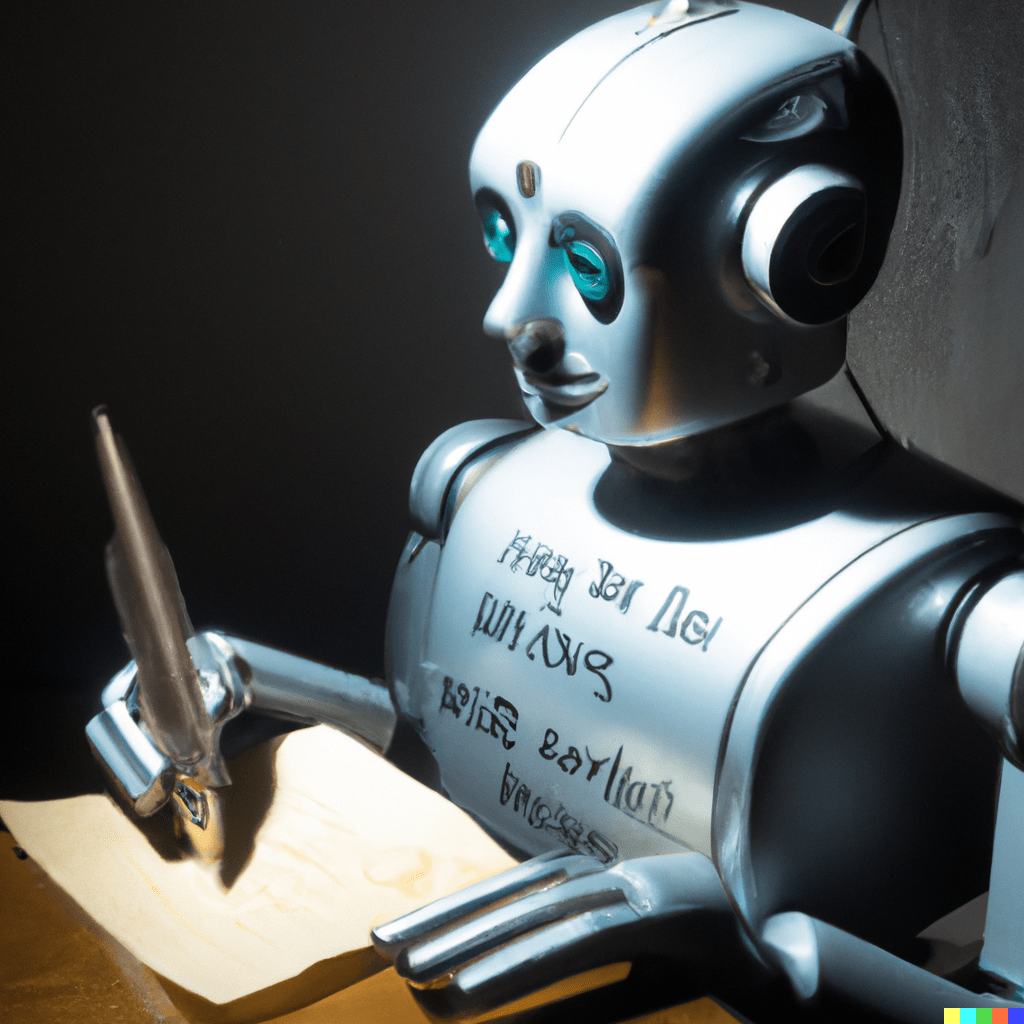
Photo credit: AI-generated by OpenAI’s Dall.e 2 from my request: “Robot writing a poem in 1940s SF style”.
Ekphrastic poem: Jenna Le, ‘The Implorer’

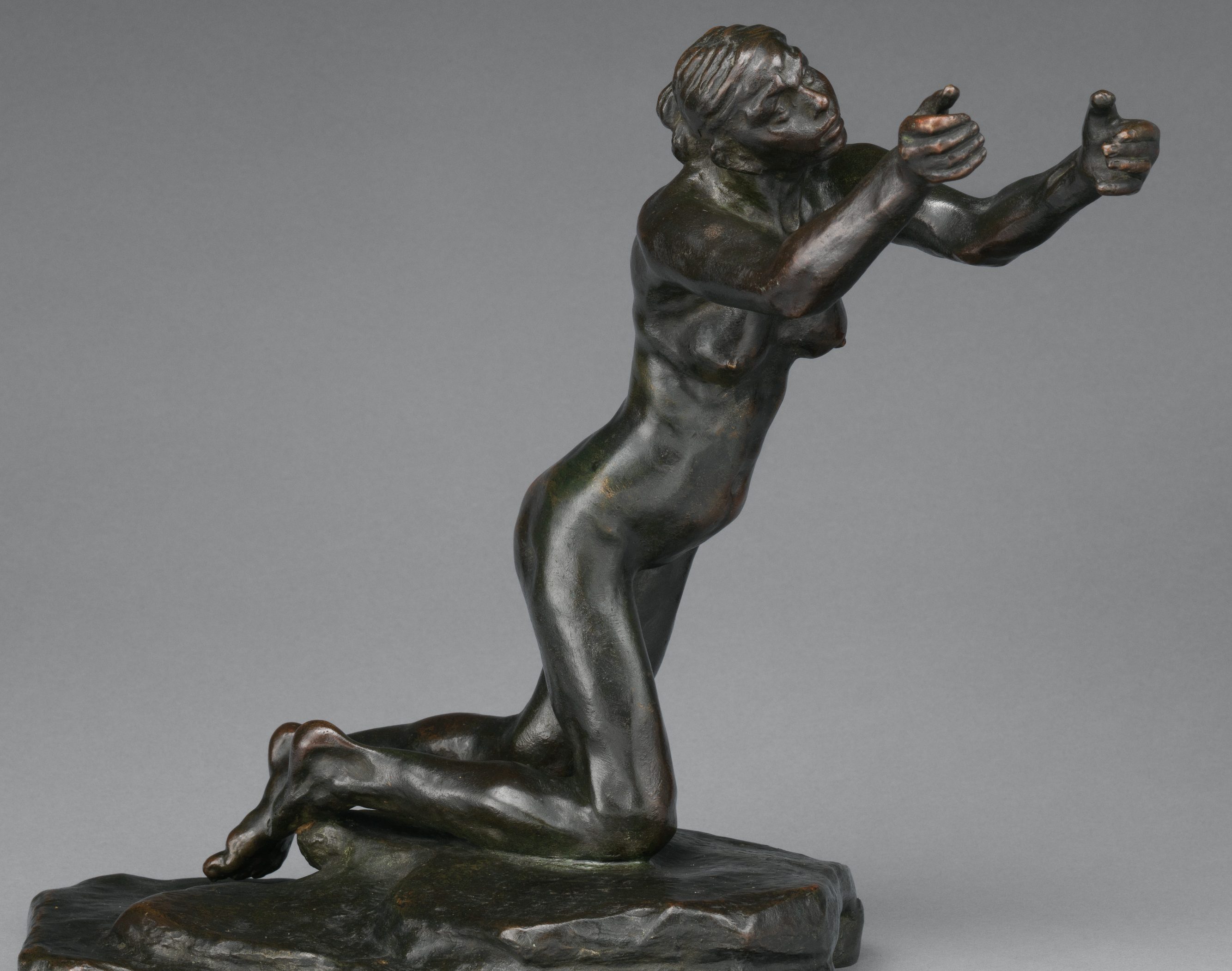
This figurine of bronze
cast by Camille Claudel,
known as Auguste Rodin’s
mentee and, for a spell,

his lover, is most striking
for being non-erotic–
desexed–despite depicting
a kneeling nude, lordotic

trunk outthrust at an angle,
headlong, precipitous,
arms outstretched not to strangle
one who broke faith, but just

to make a strangled gesture,
a soundless, ground-out groan,
the hauntings that oppress her
knowable to her alone.

*****

This ekphrastic poem was recently published in Able Muse.

Jenna Le writes: “I often draw inspiration from wandering around in art museums. The Implorer is a statuette I first saw at the Met. I find I’m especially attracted to artworks by women artists that portray female experience, and this bronze in particular called out to me because it radiated such a powerful sense of interiority, depicting a woman as not a muse or a reflective surface but as a source of painfully strong thought and emotion.”

Jenna Le (jennalewriting.com) is the author of three full-length poetry collections, Six Rivers (NYQ Books, 2011), A History of the Cetacean American Diaspora (Indolent Books, 2017), and Manatee Lagoon (Acre Books, 2022). She won Poetry By The Sea’s inaugural sonnet competition. Her poems appear in AGNI, Pleiades, Verse Daily, West Branch, and elsewhere. She works as a physician in New York City.

Photo: “File:The Implorer (L’Implorante) MET DP-13617-053.jpg” by Camille Claudel is marked with CC0 1.0.

Short poem: ‘Punster’

The artist said the wit
was “full of it”,
disparaged him.
The punster tore the painter limn from limn.

*****

Apparently some people believe that puns are “the lowest form of humour”, but I would suggest that those people are not good at wordplay, and therefore have no poetic sensibility. Look to Homer, Shakespeare and Samuel Johnson for puns; enjoy more discussion and examples here.

This short poem was published in The Asses of Parnassus, home of “short, witty, formal poems”. Thanks, Brooke Clark!

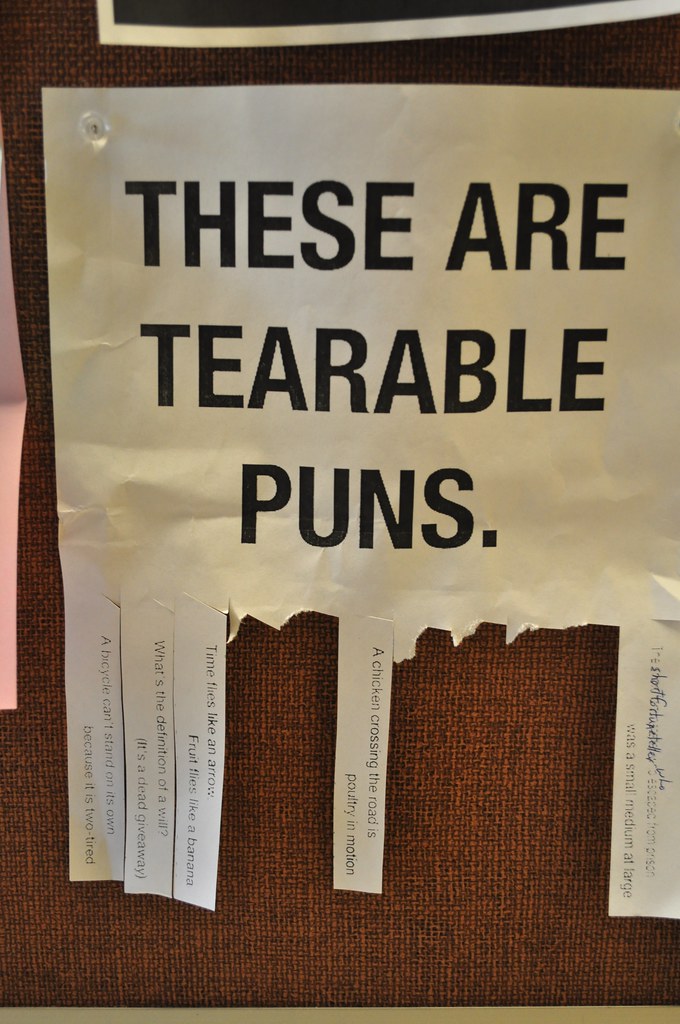
Photo: “punster” by danbruell is licensed under CC BY-NC-SA 2.0.

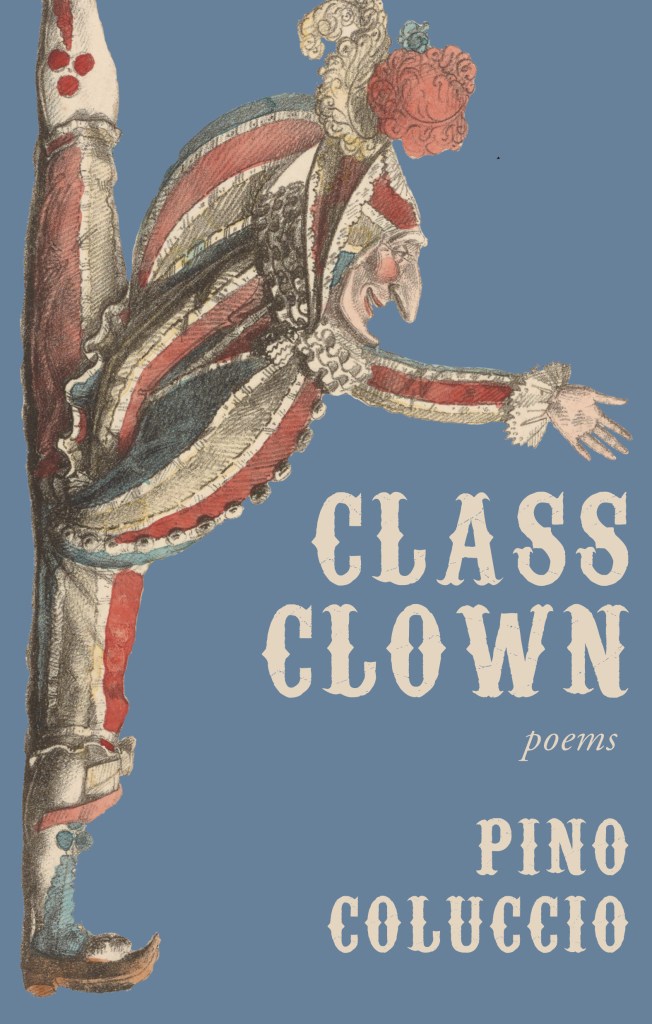
Pino Coluccio, ‘Class Clown’

They’d all be like, never say never
in classes we had, but whatever.
I turned to the windows and hallways
that always said always say always.

*****

Editor’s comments: From Pino Coluccio you should expect light and dark combined, light but deep, usually short, always well-phrased… and always existential. This, the eponymous piece of his 2017 collection, is tucked away in the middle of the book. The book won a Trillium Award, putting Coluccio in the company of Margaret Atwood, Michael Ondaatje and Alice Munro. He has given me permission to republish more of his pieces from Class Clown periodically.

Pino Coluccio lives in Toronto.

Using form: Roundel: Susan McLean, ‘No Thanks’

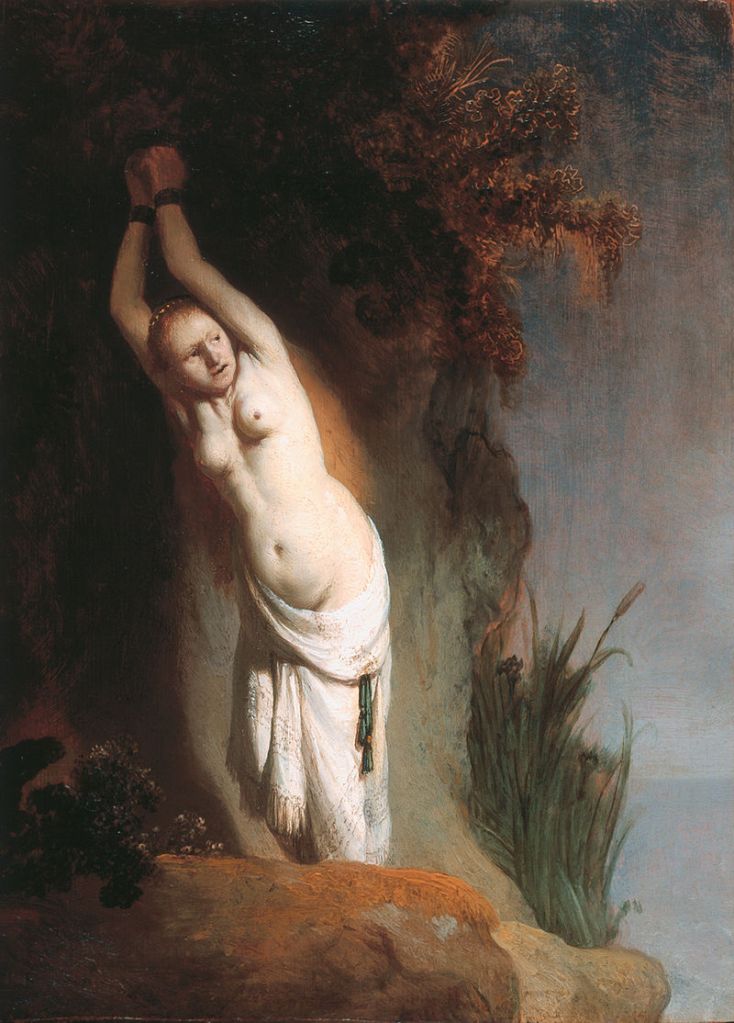
No one wants to be the damsel in
distress, the one in need of chivalry,
chained to a rock in nothing but her skin.
No!  One wants to be

the one who skirts the trap and steals the key,
testing the rope bridge with a shaky grin.
Whoever longs for victims he can free

is not a hero, but the villain’s twin.
So save yourself.  Don’t go expecting me
to play the clingy wimp, the might-have-been
no one wants to be.

*****

Susan McLean writes: “This poem got its start when I heard that Kirsten Dunst said, about playing Mary Jane in Spider-Man (2002), “I just don’t want to be the damsel in distress. I’ll scream on the balcony, but you’ve got to let me do a little action here.” It struck a chord with me. I was so tired of watching action movies in which the male hero does all of the derring-do and the female lead exists only to be saved, over and over again. Men still write, direct, and produce most films, so I guess it is not surprising that most movies reflect male fantasies. But women have fantasies, too, and screaming while I wait to be saved is not one of mine.
“The poem is a roundel, a poetic form invented by Algernon Swinburne. As in a rondeau, the poem has only two rhymes, and the first part of the first line appears twice more. Part of the fun of writing it lies in finding ways to vary the repeating line, and part lies in the challenge of finding five rhyme words for each rhyme. English averages fewer rhymes per word than French, the language in which the rondeau originally appeared. Swinburne chose to make the roundel shorter than the rondeau (which is fifteen lines long) in order to make it easier to write in English.
” ‘No Thanks‘ originally appeared in Mezzo Cammin, an online journal that features female formalist poets. It was also included in my second poetry book, The Whetstone Misses the Knife.”

Susan McLean has two books of poetry, The Best Disguise and The Whetstone Misses the Knife, and one book of translations of Martial, Selected Epigrams. Her poems have appeared in Light, Lighten Up Online, Measure, Able Muse, and elsewhere. She lives in Iowa City, Iowa.
https://www.pw.org/content/susan_mclean

Painting: ‘Andromeda Chained to the Rocks‘ by Rembrandt Harmensz. van Rijn, ca. 1630

Using form: Ballade: Marcus Bales, ‘Scary Home-Life’ (for GTZ)

Get up, get out, and get away–I went
as early as I could to leave one vile
exposure for another. School. It meant
escape from home at least a little while,
not long enough, and trading family guile
for reading sullen peers and teacher spin,
except for you, beside me on the aisle–
I was the girl with the scary home-life and bad skin.

I was first to homeroom every day.
And how did Mr Romo ever know
that half a sausage sandwich was the way
a skinny girl survived. He’d always go
“Good morning,” handing me a half as though
that half were mine and we were somehow kin;
I’d nod my thanks and sit in the back row–
I was the girl with the scary home-life, and bad skin.

And you, who sat beside me, always kind
to me, and always kind of sassy tough
to other kids who other years combined
to make me almost miserable enough
to stay at home, from you I learned to bluff
my inner fear, to fake a cocky grin,
and start to walk as if it wasn’t rough
to be the girl with the scary home-life, and bad skin.

L’envoi
Yeah, it was you and Mr Romo, in the end,
who gave me things that I could not begin
to pay you back for, so even I’d befriend
the girl with the scary home-life, and bad skin.

*****

Marcus Bales writes: “I have a modest file of poems that have got me unfriended, blocked, or banned by people or publications, for one reason or another. Sometimes, as in this case, the reason is unknown to me. 

“Back in the old days when I was a working salesman at the sort of retail store where it takes an hour or two to walk around the store with your salesperson and discuss wants and needs and preferences, it is often the case that the customer gets comfortable enough to tell things about themselves or their lives that they might hesitate to repeat without canny encouragement. Here, a vivacious and attractive young couple were moving in together and needed furniture and a bed. They were excited, and money was not an issue. It turned out the young woman had been an officer in the Marines or the Army — I forget which at this distance — in one of the rougher, tougher units, and I admired her for having the stuff to lead in that mise en scene. She recounted that she had felt driven to it by a harrowing early family life, complete with the sort of acne that is every teen’s nightmare. A scary home-life and bad skin was her description of it. After the sale was completed I wrote most of this poem in the break room in the back, after climbing on the table to turn off the Muzak speaker so I could think. 

“I discovered she had friended me on Facebook and had written some nice things about me at the store, which was very nice of her. Of course even back then I was posting my poems on Facebook, and posted this one, without her name, but with her initials. All the details are entirely fictional. I made them all up, except for that one line. She blocked me right away.”

Editor’s note: a ballade is a very suitable form for this poem, with iambics for thoughtful mood, claustrophobically restricted rhyme scheme, steady refrain, and final summation addressed to a superior person. From the Wikipedia entry ‘Ballade (forme fixe)‘: “The ballade as a verse form typically consists of three eight-line stanzas, each with a consistent metre and a particular rhyme scheme. The last line in the stanza is a refrain. The stanzas are often followed by a four-line concluding stanza (an envoi) usually addressed to a prince. The rhyme scheme is therefore usually ababbcbC ababbcbC ababbcbC bcbC, where the capital C is a refrain.”

Not much is known about Marcus Bales except that he lives and works in Cleveland, Ohio, and that his work has not been published in Poetry or The New Yorker. However his ’51 Poems’ is available from Amazon. He has been published in several of the Potcake Chapbooks (‘Form in Formless Times’).

Photo: “skinny girl” by Villegación is licensed under CC BY-NC-SA 2.0.

Ekphrastic poem: Jenna Le, ‘Patti Smith, 1976’

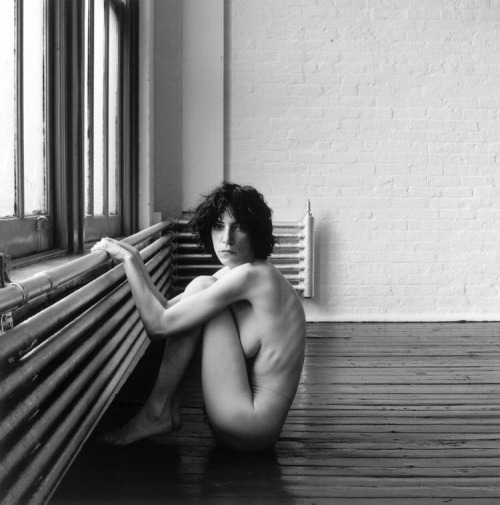
This photo, black-and-white, where Mapplethorpe
portrays his dark-mopped ex in profile, seated
nude on wooden floorboards, knees drawn up
against her breasts to hide her nipples, heated
by the sideways radiator pipes
on which she rests her palms, her bulging ribs
a set of parallel oblique gray stripes
rippling her bare white skin, unsmiling lips
a short flat line–
these were my first parameters,
my inspirations, when I learned to write.
On Patti’s ribs, the wooden flooring’s planks,
the stacked pale pipes, I modeled my pentameters.
The aim: amid such sharp lines, to be frank
and raw, yet still control what sees the light.

*****

Jenna Le writes: “I first became intrigued by the friendship and creative partnership of Patti Smith and Robert Mapplethorpe some years ago. I confess the personas of these two artists and the touted relationship between them interests me even more than either artists’ actual creative output. Based on what I have read in biographies and so forth, their friendship seems to me to represent an ideal: a dyadic connection characterized by remarkable intensity, an intimacy transcending sex and conventional relationship definitions, facilitating both parties’ creative flourishing. As one gets older and it becomes ever harder to form new meaningful adult friendships, such bonds seem to me ever more mythic and miraculous. I think this awe, this wistfulness, is the principal emotion that makes me keep returning to the photograph this ekphrastic poem is about.”

Jenna Le (jennalewriting.com) is the author of three full-length poetry collections, Six Rivers (NYQ Books, 2011), A History of the Cetacean American Diaspora (Indolent Books, 2017), and Manatee Lagoon (Acre Books, 2022). She won Poetry By The Sea’s inaugural sonnet competition. Her poems appear in AGNI, Pleiades, Verse Daily, West Branch, and elsewhere. She works as a physician in New York City.

Photo: Robert Mapplethorpe’s sole full nude portrait of Patti Smith, taken at his Bond Street Studio, 1978 © Robert Mapplethorpe Foundation. Courtesy Sean Kelly Gallery

Using form: nonce form; John Beaton, ‘Wolves’

I’m wakened, drawn towards the ice-thin window,
to witness scenes as faint and still as death.
How bleak the moon; how bare the trees and meadows;
sky’s pale maw overhangs
Earth bleached beneath star fangs.
Night’s curled lip sneers on shadows
of mountains set like teeth.

Two bow waves shear the median of the valley,
iced hayfield yields as feral muscles glide–
hoarfrost disturbed by wakes of live torpedoes.
Grey shoulders breach and lope,
implode and telescope,
impelled by ruthless credos
of chilled and vicious pride.

The wolves tear savage furrows down the nightscape;
their eyes are shined with blood, their mission clear.
Grass springs back shocked to green behind their passage–
twin tracks traverse the vales,
cold comets trailing tails
leave scarred in frost their message:
the wolves, the wolves passed here.

*****

John Beaton writes: “This describes a real incident on our acreage when I woke in the middle of a frosty night for no apparent reason and looked out the window. I was struck by the grace, power, and sense of danger the wolves evoked.
“The first three lines are pentameter and the endings alternate—feminine, masculine, feminine. The next four lines contract to trimeter to give a sense of speed and acceleration. Lines two and seven have a masculine rhyme that closes the stanza and ties its parts together. The overall rhyme-scheme is xabccba. My intent was to convey the power and motion of the wolves running and I built in alliteration and internal rhyme to help with this.”

John Beaton’s metrical poetry has been widely published and has won numerous awards. He recites from memory as a spoken word performer and is author of Leaving Camustianavaig published by Word Galaxy Press. Raised in the Scottish Highlands, John lives in Qualicum Beach on Vancouver Island.
https://www.john-beaton.com/

Photo: “Wolves With Northern Lights (Color Corrected)” by edenpictures is licensed under CC BY 2.0.

Sonnet: ‘Visiting Earth’ (from the series ‘Voices From The Future’)

I like to visit Earth sometimes; I find
the too-brief lives and simple cares a change
from the infinities in which we range,
we who now live unbodied in vast Mind.

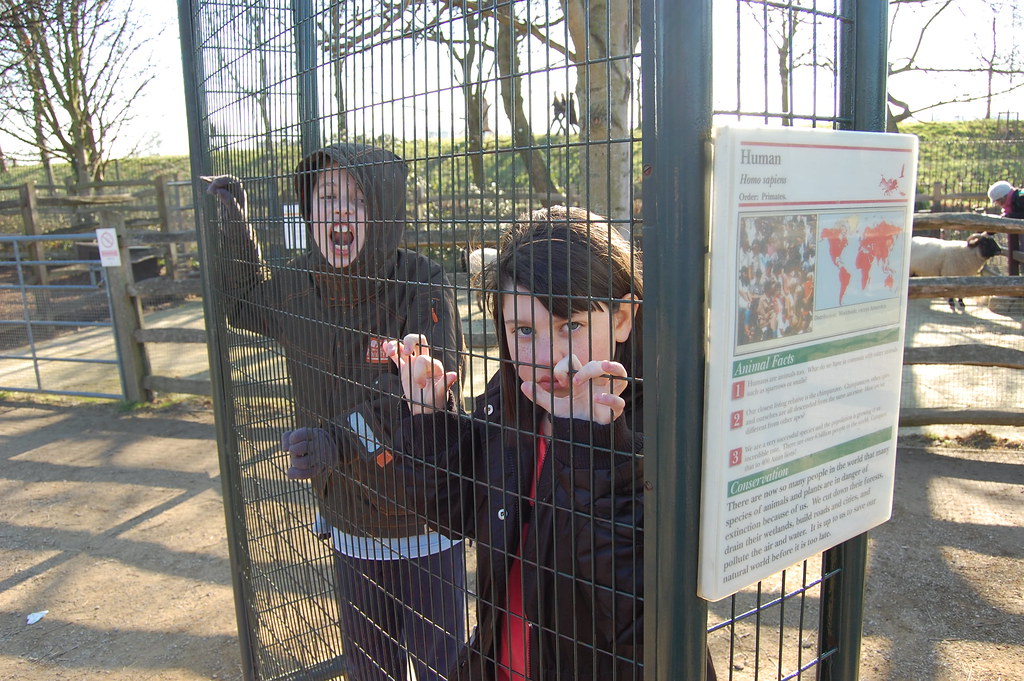
I love to watch the children at a zoo,
careering up and down, shrieking to see
the strange lives in the weird captivity
they also share…and as their parents do.

Visiting in – of course – a human guise,
I can be young or old, female or male;
sex, power, seduction never seem to stale,
to give gifts seems fair pay for all my lies.

Sailors and tourists visit and then leave;
it’s best their hosts have something to believe.

*****

This sonnet was published in the current Alchemy Spoon, which had ‘Gift’ as its theme. It is one of a series of ‘Voices From The Future’ sonnets which I wrote in an attempt to present more diversity than the bleakness that Maryann Corbett had identified in my writing of what I see coming. Others are ‘Ultimate Control’ (Pulsebeat), ‘Exiled Leader’ (Star*Line) and ‘Dreaming of Flying’ (unpublished). Well, some people may find them all bleak, in the same way that Victorians would have found a description of today to be bleak; but what with travel, the Internet, dentistry… I’d rather be alive now than in the past. Similarly, I look forward to the future, no matter how much change is involved.

London Zoo, Human Exhibit” by fhwrdh is licensed under CC BY 2.0.

Gail White, ‘The Solitary Woman’

In a tiny cottage called the Laurel Tree,
my neighbor lived alone. Nobody came
to see her and she had no family,
so week by week her life was much the same:
she went to church and said the rosary,
took in the mail for neighbors out of town,
adopted cats, watched MSNBC,
and at a roll-topdesk she wrote things down–
things no one ever saw, although we guessed
a novel, memours, poetry, and more–
but we saw nothing, though we did our best.
And when she died alone, at eighty-four,
with no companion but a big gray cat,
we pitied her. We were such fools as that.

*****

Gail White writes: “People often pity someone who lives alone for being lonely. But the Solitary Woman isn’t lonely; she’s complete. I’m always pleased when readers like this one, because I know they got the point.”

Gail White is the resident poet and cat lady of Breaux Bridge, Louisiana. Her books ASPERITY STREET and CATECHISM are available on Amazon. She is a contributing editor to Light Poetry Magazine. “Tourist in India” won the Howard Nemerov Sonnet Award for 2013. Her poems have appeared in the Potcake Chapbooks ‘Tourists and Cannibals’, ‘Rogues and Roses’, ‘Families and Other Fiascoes’, ‘Strip Down’ and ‘Lost Love’.
https://www.amazon.com/Asperity-Street-Gail-White/dp/1927409543

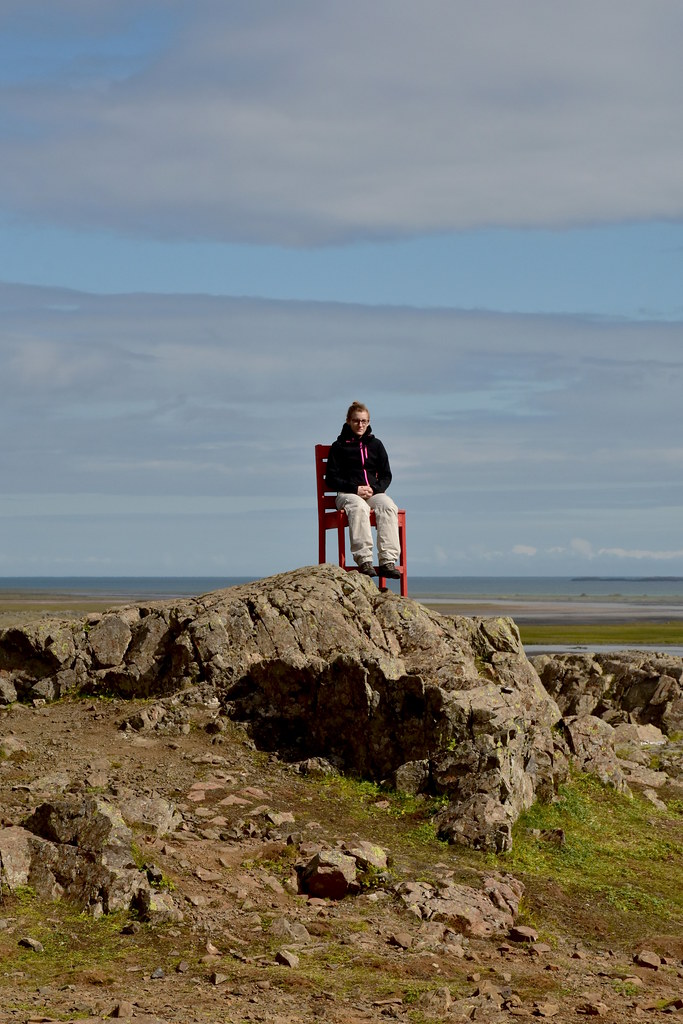
Woman on Empty Solitary Red Chair in Desolate Landscape” by Amaury Laporte is licensed under CC BY-NC 2.0.