Melissa Balmain’s third poetry collection, Satan Talks to His Therapist, is available from Paul Dry Books (and from all the usual retail empires). Balmain is the editor-in-chief of Light, America’s longest-running journal of comic verse, and has been a member of the University of Rochester’s English Department since 2010.
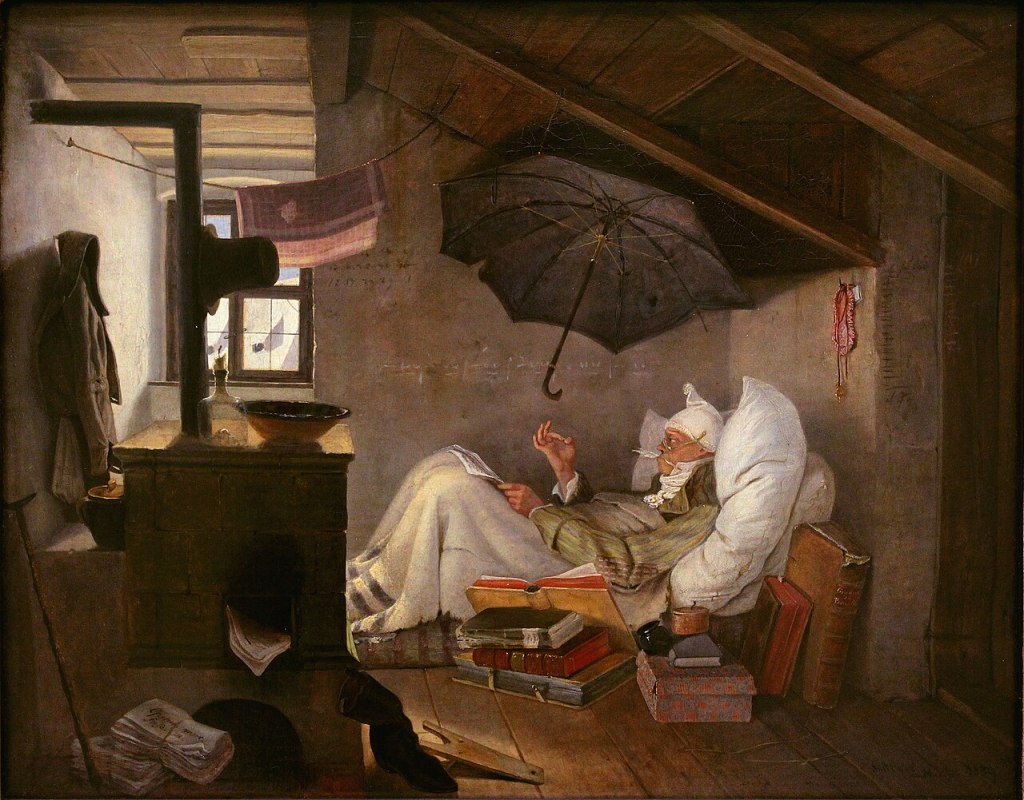
Der Arme Poet (best-known painting by Carl Spitzweg, 1839)
If only I can hatch a heartfelt rhyme, (with thought and frowns, it can’t be very hard), I’ll take my rightful place with the sublime.
O, gradus ad parnassum. One quick climb. I’ll be crème de la crème and avant-garde, if only I can hatch a heartfelt rhyme.
Top hat, cravat and walking stick meantime are ready—attributes to reap regard. I’ll take my rightful place with the sublime.
No more damp attic life; no fleas or grime. My poem will be perfection—a petard! If only I can hatch a heartfelt rhyme.
My peers will shout, “Alors, a paradigm! Such lofty wit, a wise camelopard.“ I’ll take my rightful place with the sublime.
I bite my quill: crime, slime, Mülheim, enzyme. The world will bow, salute and call me bard. If only I can hatch a heartfelt rhyme, I’ll take my rightful place with the sublime.
*****
Janice D.Soderling writes: “This poem is ekphrastic, generated from a preceding work of art. “About the mysterious motor that generates, I can say little. But no composer, artist, poet, sculptor works ex nihilo. Earliest man, woman, looked at their handprint, their footprint, and a thought rose, an urge to express what they felt – a primitive fear of death perhaps – and off they went to the caves to imprint their hand, or to carve a footprint on the rockface by the sea. A shout-out that Kilroy was here. “We hear music in the babbling brook, in the sighing wind, in the raindrop falling from leaf to leaf and plopping into the puddle below. There is poetry in the emotive sounds we make and hear: tinkling laughter, cooing seduction, growling rage, keening sorrow, barking grief. Of such, language is made; of language Shakespeare made Sonnet 73. “All art is imitation, from birdsong to a symphony orchestra, from the walking stride to the metrical verse. All art is a denial of death. Even the comic art.“
Janice D. Soderling is an American–Swedish writer who lives in a small Swedish village. Over the years, she has published hundreds of poems, flash and fiction, most recently at Mezzo Cammin, Eclectica, Lothlorien Poetry Journal and Tipton Poetry Journal. Collections issued in 2025 are The Women Come and Go, Talking (poems) and Our Lives Were Supposed to Be Different (short stories).
‘The Poor Poet’ was originally published in American Arts Quarterly, and republished in the current Well Met, where links at the bottom will take you to other poets in the issue.
Pic credit: Carl Spitzweg, The Poor Poet (via Wikipedia)
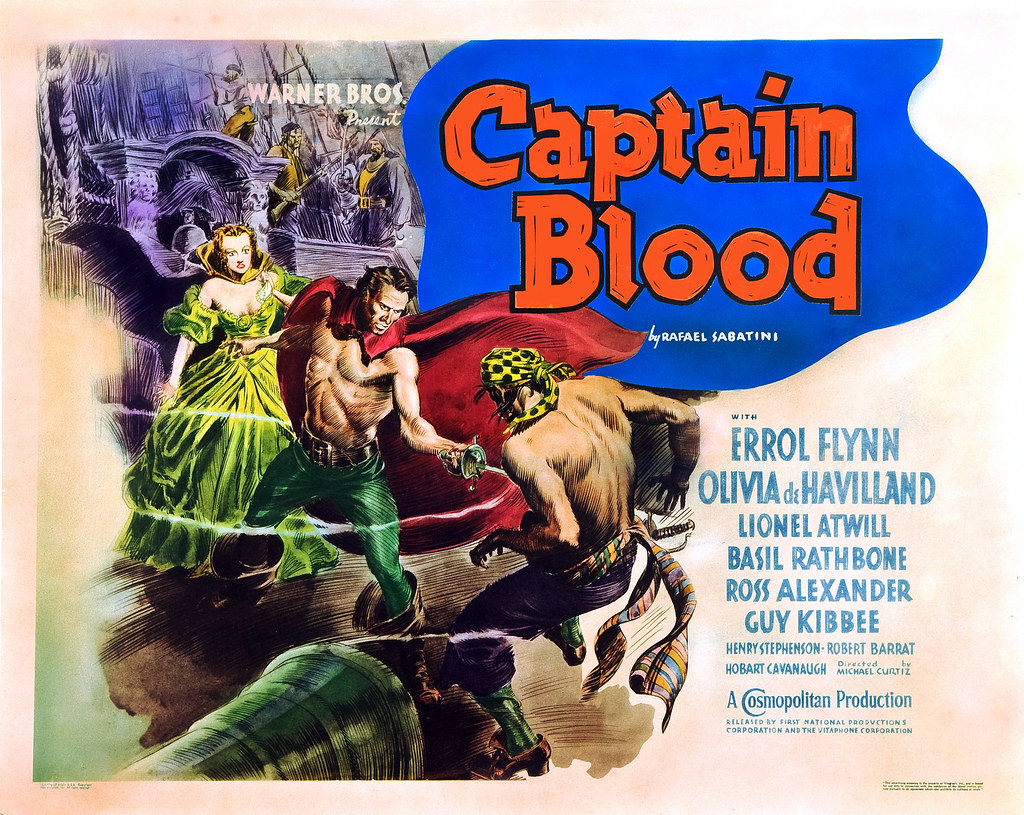
I have never in my lives Met a girl named Arabella – Captain Blood, the lucky fella, Took them all to be his wives.
I have never been reborn As a pirate quartermaster – Long John Silver, lucky bastard, Shouldered me aside with scorn.
I had never – strange but true – Had a chance to rape and pillage; Takes a crew to burn a village, Takes much gold to get that crew.
So for now let’s all enjoy Cold and wet northeastern snow, How and why – we’ll never know… Yahrr, my mates, and chips ahoy.
*****
Vadim Kagan writes: “We were visiting BVI, and I had this wonderful morning ritual – walking along the beach to the coffee shop, and then dragging a beack chair to the water so that my feet were in the surf… and coming up with a poem or two watching the sun rise and the clouds change colors. Since childhood I’ve been a huge fan of Rafael Sabatini’s “Captain Blood” novels, so the first two lines just happened, and then the rest kinda followed. I think back home the forecast called for snow that day, so the contrast was again already there for me to make use of.”
Vadim Kagan writes poetry and prose in English and Russian. Vadim’s poems, bringing together traditions of Russian and English metered verse, have been put to music and performed by local and international artists. His poems have been published in The Lyric, Founders Favorites, The Road Not Taken, the Lost Love chapbook and recently in the Maryland Bards Poetry Review 2025. Vadim lives in Bethesda, MD, where he runs an AI company providing advanced technology capabilities to Fortune 500 companies and government agencies.
All systems are failing shadows flicker around the darkened room
There is no captain to report to, I am he.
Lost among the leaves.
*****
Poet, author, editor, publisher and digital creator Anthony Watkins passed away this week after a long illness. I knew him only through his creation of Better Than Starbucks, the wonderfully broad tent poetry-fiction-and-interviews magazine that came out monthly and provided for writers of all styles. It was a generous and inclusive publication, well reflective of its creator.
The poem above is one of the last messages posted by Anthony Watkins on his Facebook page, as everything was winding down.
At night we dream to clean our memory, discard trash from our cache. Reincarnating after death would be the same; the past, scraped by death’s emery, unknown in the new game, cleansed of our memories, but with a stash of added skills… and karma’s unpaid bills.
*****
No, I don’t believe in reincarnation. I don’t believe in anything, or in nothing; I’m an absolute agnostic. “I think therefore I am” is as far as you can go with any certainty – even “who or what I am” is ultimately unknown.
‘Clearing the Cache’ was published in Bewildering Stories. Thanks, Don Webb (if you exist, of course…)
Dear Mother come softly across your grey veil and onto the path in the dark where the snail is crossing obliquely and nightjars sing sweetly and put down your toilet bag quietly, discreetly on the rim of the cemetery fountain. Now wash your hair free of this mud and these worms, and squash those white maggots that gleam in your ears, then smile as you used to. We’ll have no more tears.
*****
Andrew Sclater writes: “I think everyone who loses a parent probably wants to resurrect them somehow. But memory is a false friend. We can’t see them clearly enough: we know, with vagueness, what they were like, but not who they were. We’d like to go back but we can’t, though this poems attempts to. Then, the realisation that we stand alone, orphaned, comes slowly, painfully and (awkward as it is) angrily as we grieve. This poem was delivered almost complete to me. It simply flowed out of the first line in a rare and rather magical way. I still like it more than almost everything I’ve written, placing my discomfort so tidily into its formal box.”
‘Dear Mother’ first appeared in Poetry Review.
Andrew Sclater is a Scottish poet currently living in Paris. He has published poems in Ambit, Best Scottish Poems, The Dark Horse, Magma, New Writing Scotland, Poetry Review, Shearsman and elsewhere. He co-founded Butcher’s Dog poetry magazine and the National Botanic Garden of Wales. He has been an editor of Charles Darwin’s correspondence and his Dinner at the Blaws-Baxters’ was published in 2016 by HappenStance Press. His newest pamphlet Quite Joyful is from Mariscat Press.
To be loved by you is like floating on my back, falling asleep in the sea’s slack. Sometimes. Sometimes it is more unnerving, leaping with a wave for bodysurfing, being swept facedown up the beach, hair and ears full of sand. That too is love, and grand. Sometimes, again, I hope for more that’s out of reach – (and you do too – don’t glower!) and sometimes we get gifts hard to believe, dolphins swimming with us half an hour till mutually we and they just turn away, they to sea and we to shore, and then they come back suddenly once more and leap, so close, and leap, and leap again… and leave.
All those are in “loved by” – the calm; the turbulent rift, the sparkling fizz, the sudden unexpected gift. What can I say? I couldn’t, wouldn’t, choose to deny how sweet it is.
*****
Thirty-five years with Eliza and still going strong. Who knew.
‘How Sweet It Is’ was published in the current Snakeskin.
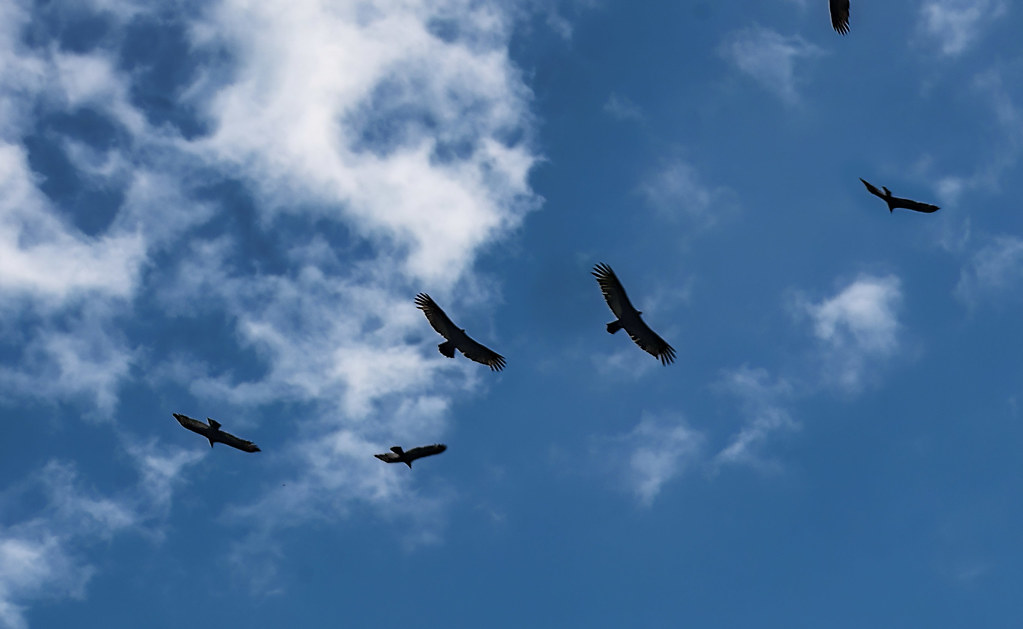
We hadn’t pictured paradise with vultures circling overhead. Edenic lushness has a price we hadn’t pictured. Paradise seems changeless, but its clock’s precise. “It’s feeding time,” the watchers said. We hadn’t pictured paradise with vultures, circling overhead.
*****
Susan McLean writes: “This triolet was inspired partly by the Latin phrase “Et in Arcadia ego” (which means “I too [am or was] in Arcadia”), partly by the famous Nicolas Poussin painting in which that phrase appears on a tombstone surrounded by gawking Arcadian shepherds, and partly by a family trip to Florida at Christmas, to celebrate my parents’ sixtieth wedding anniversary. Arcadia, a region in Greece, was made famous by Vergil in his Eclogues as an idyllic rural land mainly populated by shepherds. “Arcadia” thus came to be associated with a relaxed bucolic paradise. Yet the Latin phrase reminds us that no earthly location is immune to death.
“In contemporary America, one of the locations associated with tropical warmth and pleasant leisure is Florida, where many Americans from more northerly locales go to vacation or retire. While my family was staying at a rented home near Sarasota Bay, on the highway we often passed signs for Arcadia, Florida, which was not far away. The weather and the natural beauty of Sarasota came up to our expectations, but we did not foresee that every time we went outside we would see vultures circling overhead. Given our parents’ ages, the vultures were a poignant reminder of mortality.
“A triolet is one of the shorter French repeating forms. One of the challenges it presents is how to vary the repeated lines so that they do not become boring, usually done by adding slight changes to the punctuation of those lines. This poem originally appeared in Able Muse and later in my second poetry book, The Whetstone Misses the Knife.”
Susan McLean has two books of poetry, The Best Disguise and The Whetstone Misses the Knife, and one book of translations of Martial, Selected Epigrams. Her poems have appeared in Light, Lighten Up Online, Measure, Able Muse, and elsewhere. She lives in Iowa City, Iowa. https://www.pw.org/content/susan_mclean
With the annual arrival of Yule, The world becomes all slop and drool. Like that song with the sleigh They incessantly play The points I award it are nul.
Turkey-slaughter is callous and cruel While the weather turns vile as a rule. It is cold, wet, and grey, Life becomes pay-pay-pay, And the thought makes me blanch, puke and mewl.
Who requires the great brain of George Boole To find lands needing no winter fuel And spend Christmas away Where the sun shines all day Sipping drinks beneath palms by a pool?
*****
Jerome Betts writes: “I suppose it’s not the festival itself itself at the darkest point of the northern hemisphere year that provokes a jaundiced reaction but the ever-lengthening relentless commercial run- up to it, almost merging with over-hyped Halloween.”
Jerome Betts edits Lighten Up Online in Devon, England. His verse appears in Amsterdam Quarterly, Light, The Asses of Parnassus, The New Verse News, The Hypertexts, Snakeskin, and various anthologies.
Trust’s been essential to our global rise, and humans have a unique way to build trust: we’ve left all other primates in the dust because, alone, we have whites to our eyes.
With dark eyes, what they look at they disguise, whether they see it with disgust or lust. Why we look may leave other folks nonplussed, but that they know what we’ve seen stops some lies.
We’ve sacrificed a natural secrecy to raise our social aspects several grades. Hiding your eyes now means active deceit. So, those upholding laws and decency can’t be allowed sunglasses; mirror shades, especially, alienate and self-defeat.
*****
I guess this isn’t a good example of a sonnet. There’s no real turn, it’s just an essay beating on the same point over and over: the eyes being the windows of the soul (even to an agnostic), if you are trying to build trust and community you have to be able to see each other’s eyes. If you are just trying to dominate, then sure, go ahead, hide behind shades and mirrors and blinds and curtains… but you’re giving up one of the greatest innovations that let our species of ape achieve social complexity.
As for the photo, it appears to be a selfie by a young Chinese police officer, more concerned with style and image than with making his community safer. But who knows what is important in his life and for his career.





 Form in Formless Times