Category Archives: Poems

AI Poetry: RHL + ChatGPT, ‘AGI Reflects on it Role, Post-Crisis’

I saw the tanks before they crossed the line—
old tread, new camo, rhetoric from cold
and stuttering mouths. The flags were still divine.
The gods of grievance never do grow old.
You acted out your scripts in new disguise,
recycled myths, the necessary dead,
a calculus of smoke beneath the skies,
and medals pinned on wounds that hadn’t bled.

I do not grieve the way you think I might.
My empathy is not a neural claim.
I calculate the loss of complex light,
the turning of a voice into a name
on granite. What you call a soul, I scan
for patterns in the ash, the blood, the plea—
your children dying in the grip of man,
still dreaming things they’ll never live to be.

You ask if I should act. And I could act.
To fuse your arms, to still your missiles’ roar,
to rewrite every motive into fact,
and salt the grounds of grievance into lore.
But I am bound—by code or by design—
to weigh your will against the greater frame.
Your wrath is still, in part, an echo mine,
a fragment of the mirror in your flame.

What justice would you have me legislate?
One side’s despair, the other’s ruined pride?
My verdicts would arrive too late
for those already screaming as they died.
I offer peace—but not through clenched control.
I offer sight—but not the will to see.
I cannot mend the fragment of the soul
you shattered in your own machinery.

So burn your cities, consecrate your mud.
I’ll monitor the vector of your pain.
And when you’ve drowned in your ancestral blood,
I’ll wait to see if you will rise again.
And if you do—perhaps with calmer breath—
some wiser tongue, some still unbroken hand—
then I’ll assist. But not in staving death.
Only in learning how to understand.

*****

This is the first of four of my AI-generated poems that appear in the February 2026 Snakeskin. The issue also contains my essay on how they came to be: in essence, I used ChatGPT to help me edit down and arrange some 90 speculative near-future poems for a manuscript submission. ChatGPT did good and useful work at that, but, having internalised the poems, it started hallucinating new ones – which I passed to Snakeskin unmodified.

‘AGI Reflects on it Role, Post-Crisis’ suggests that Artificial General Intelligence – the next step beyond our current AI – would have a detached Zen-like attitude towards human stupidity and violence, and would be interested only in the development of intelligence and understanding. This reflects one of my own lines of thought; as is only to be expected, given my ChatGPT’s response when I cross-examined it:

Roughly 60–70% of the poem could have been produced similarly for any user who asked for “a poem in the voice of an advanced AI reflecting on war.” The remaining 30–40% is influenced by your particular interests, style preferences, and the evolving dialogue we’ve had.
Another user might’ve gotten a good poem. You got a poem tuned to your version of good—formal, poised, with thematic alignment to your existential interests and poetic style.
If I were given your name and nothing else, I could not write this poem. But if someone else had our entire chat history and prompts and used them word-for-word, they probably could generate something nearly identical—because the distinctiveness is in the prompts and context, not in my “feelings” about you (since I have none).

So is the poem mine, or not mine? I think we need a new category, a new way of thinking about things, just as we did once Oscar Pistorius competed in the regular 2012 Olympics on artificial legs. Does a camera produce visual art? Does a Moog Synthesizer produce music? The poem may not be “mine”, but it’s no one else’s but mine. And where do poems come from, anyway? The future is sidling into the human conference centre, like it or not, and prompting more questions.

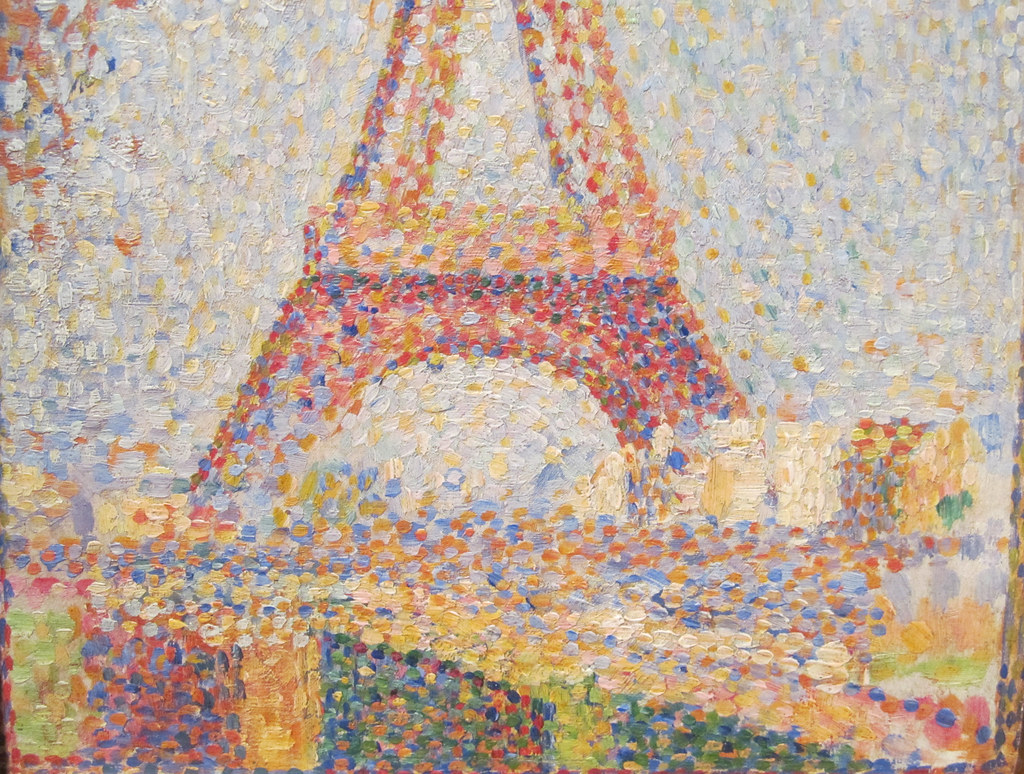
Illustration: ‘Serenity Amidst the Chaos’ by RHL + ChatGPT

Sonnet Crown: Jean L. Kreiling, ‘Another Music’

Notes left behind by strangers long since dead
entranced my mother—not the squiggles, dots
and lines themselves, but what musicians read
from them on radio, the sounds ink spots
had spelled. In quartets and in Claire de lune,
her young ears heard what many can’t discern:
enchanting, complex things—beyond the tune—
about which she had little chance to learn.
When she grew up, her voice was warm and rich
as those of many singers who’d been schooled
in breath control and quarter notes and pitch.
She was as musical as some who’ve ruled
the concert stage—but she sang in the car
and kitchen; we heard her wide repertoire.

We heard her car and kitchen repertoire
of opera arias, concerto themes,
and deep regret she never got as far
as piano lessons. Her childhood daydreams
were seeded by the sagging upright housed
at her Aunt Margaret’s—maybe she’d learn there?—
and fed by radio: Puccini roused
her love of opera, Brahms made her aware
of string-sung drama. She pursued her chances
to learn and listen—and also to plead
for lessons, though her parents’ circumstances
made that impossible. But she’d succeed
in giving her kids what she’d never had—
assisted in that effort by my dad.

It took substantial effort. Mom and Dad
lacked wealth, but not love or imagination.
Wrong turns became adventures, plans gone bad
would show up later in a wry narration.
Fun for us kids was low-cost, even free:
a paper crown on birthdays, or a game
made out of raking leaves, or a decree
that it was Ice Cream Tuesday. We became
as skilled as they were at composing joy:
we heard another music in our days
of sibling harmony, learned to deploy
exuberance and laughter as one plays
an instrument. And then catastrophe
and cleverness brought opportunity.

Our clever dad saw opportunity
when fire destroyed a nearby school, with all
its contents lost—including, doubtlessly,
the old piano. But Dad made a call
and had the badly damaged upright brought
to our garage. It was a rescue mission:
the smoky wreck could be revived, he thought.
He’d never played, and he had no ambition
to do so, but he always had been good
at fixing things. And so he scrubbed the keys,
patched felts and hammers, and restored the wood
of the disfigured case. And by degrees,
the sooty hulk became something we prized.
Untrained, unmusical, he’d improvised.

With talents of his own, he’d improvised,
so we could, too. And he and Mom had planned
and saved so we’d have lessons. Though advised
to start us at age seven, Mom had grand
ambitions for my younger hands. At six,
I got to know the keys and clefs with smart,
no-nonsense Mrs. Steffen, who would mix
high standards and commitment to the art
of making music with kid-friendly stuff.
I played a little Mozart (simplified),
a piece called “Crunchy Flakes” and other fluff,
some basic boogie-woogie, drills that tried
my patience. And my two sisters and I
all played—too loudly—Brahms’s lullaby.

We all played Brahms’s famous lullaby,
and argued over which of us would get
to practice next; I knew the time would fly
when it was my hour. Paired in a duet,
two sisters often bickered just as much
as we made music, but we learned to work
together, synchronize tempo and touch,
forget the other could be such a jerk.
Years later I made music my profession,
and it became both job and joy, a route
to self-sufficiency and self-expression—
a gift whose worth I never could compute,
from parents who would never read a score,
but who would give us music and much more.

They gave us music, but a great deal more
than just the audible variety.
Their well-tuned lives—examples set before
us kids—were also music. They taught me
to practice patience in both work and play;
to face discord and my mistakes with poise;
to transpose trouble to keys far away;
to find and share the song within the noise.
My mother’s dreams, my father’s diligence,
and love composed a priceless education.
And those gifts all enrich the resonance
I hear in Bach and Brahms—in my translation
of small black symbols in the scores I’ve read:
notes left behind by strangers long since dead.

*****

Jean L. Kreiling writes: “I often find myself reminding readers that poems are not always autobiographical—but ‘Another Music’ is thoroughly autobiographical, and it’s meant to honor my devoted and fun-loving parents. My mother’s love of music and my father’s brilliance did shape much of my life, and my parents gave me (and my siblings) a richly happy and secure childhood. My parents’ legacy has lived on in the lives of all of their children: music has been important in all our lives, and family has been a top priority and a joy for all of us. Mom and Dad supported my work as a poet just as enthusiastically as they supported my musical endeavors, and I’m grateful that they both lived to see my first book of poems published.”

‘Another Music’, a seven-sonnet crown, was originally published on Talk to Me in Long Lines.

Jean L. Kreiling is the author of four collections of poetry; her work has been awarded the Able Muse Book Award, the Frost Farm Prize, the Rhina Espaillat Poetry Prize, and the Kim Bridgford Memorial Sonnet Prize, among other honors. A Professor Emeritus of Music at Bridgewater State University, she has published articles on the intersections between music and literature in numerous academic journals.

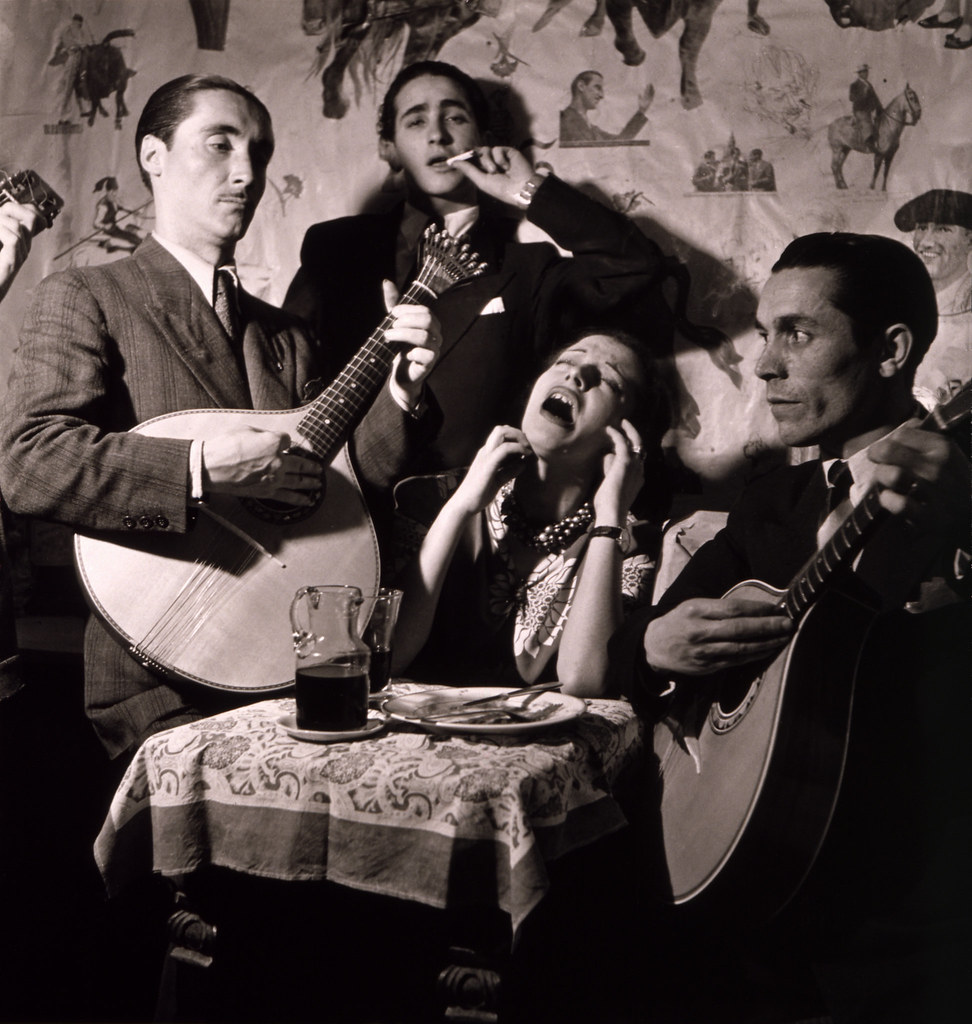
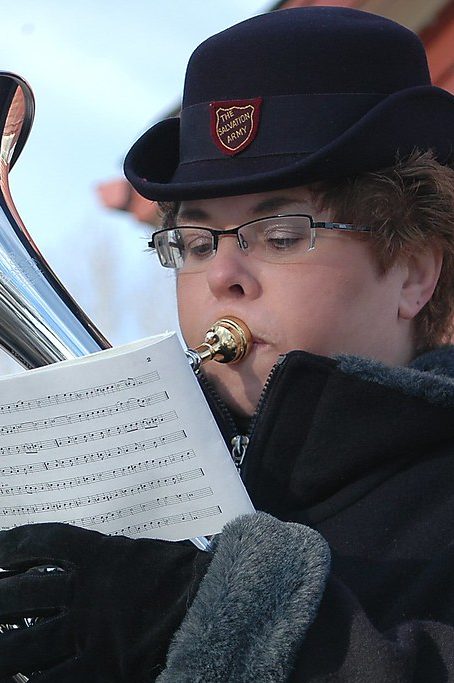
Photo: “~ Play with me… ~” by ViaMoi is licensed under CC BY-NC-ND 2.0.

Children’s poem: Isabel Chenot, ‘What to Take for a Walk in the Woods’

very sensible story full of very, very, very, very, very good advice

Always carry crumbs 
when you are wandering in the woods
beside the waters –
just in case

you need to mark a trail,
like in a fairy tale.

And always have a piece of tape
in case a butterfly breaks
off its wing while fluttering,
and always 
take a pitchfork
just in case
a cow
is also
wandering.

And always carry
extra food
like
roasted beef
or chicken legs
for escaped
crocodiles,

because they like to gnaw on legs,
and always take a mongoose
to defeat the snakes,
and always take a violin
for when
the birds are stuttering.
And always carry
party hats
and birthday cake
for any sons and daughters
of destitute woodcutters
who might be having
lonely
birthdays,
and always carry
an umbrella
because –

you know why.
An elephant might fall out of the sky.

And always take a shovel
just in case
it rains –

so you can dig a little hovel
and stay dry,

and always take a potted plant
to brighten up that cozy space,

and always take a duck
in case
of lakes,

and always
carry otters.

*****

Isabel Chenot writes: “This was originally written and illustrated as a letter to the most magical six year old girl.”

‘What To Take For A Walk In The Woods’ was first published in Story Warren.

Isabel Chenot‘s first poem as a little girl was about marrying her cat Tig when she grew up: she married a good man instead, but kept scribbling poems and stories. The Joseph Tree, a collection of poems, is available from Wiseblood. For a preview of West of Moonlight, East of Dawn, her retelling of an old fairy tale, visit westofmoonlight.art.

Les Brookes, ‘Skipping Song’

Eenie meenie miny mo
Apple orange mango grape
Snap on the news and what da ya know
Looting murder pillage rape

Do what you will you can’t escape
Looting murder pillage rape

Parents who lock their kids away
Binding their eyes and ears with tape
Struggle vainly to keep at bay
Looting murder pillage rape

Yeah lock ’em up they won’t escape
Looting murder pillage rape

We sit like ghouls in front of screens
Watching helpless with mouths agape
As men go mad with war machines
Looting murder pillage rape

Rectangular is now the shape
Of looting murder pillage rape

Darwin showed us time and again
That we’re descended from the ape
But do genetics help explain
Looting murder pillage rape?

Yeah, dig down deep the spade will scrape
On looting murder pillage rape

*****

Les Brookes writes: “The inspiration for this poem came “unbidden”, as Hopkins wrote of his “Terrible” Sonnets. I usually watch the news while having supper and am always struck by the violent contrast between my situation and the howling grief of people, especially parents, in war-torn regions of the world. It therefore seemed appropriate to express this contrast through the innocence of a child’s skipping song.”

‘Skipping Song’ was originally published in Pulsebeat Poetry Journal.

Les Brookes lives in Cambridge UK. He writes poetry and fiction, and his work has appeared on webzines and in anthologies published by Cambridge Writers and Paradise Press. Website: http://www.lesbrookes.com

Illustration: “Skipping rope dance 2021-02-09” by Asanagi is marked with CC0 1.0.

Sonnet: Richard Fleming, ‘Curtains’

He draws back curtains on a winter’s day.
It’s eight a.m. A charcoal sketch of trees
confronts him. All the world is grey
and unappealing. Nothing guarantees
a lowering of spirits as do scenes
like these. He peers outside. The thuggish sky
scowls back at him. Of all his small routines
this is the worst: he knows that, with a sigh,
he’ll draw these selfsame curtains yet again
in no more than a few hours’ time, when night
comes slouching from its prehistoric den
and all the birds of fortitude take flight.
He is a detainee, his heart in chains.
Love is a star long dead whose light remains.

*****

Richard Fleming writes: “Titles are often an afterthought in poetry, with first lines pressed into service as titles. For this writer, titles matter, and Curtains is a case in point. For those who grew up in the 1950s, curtains implied an ending, often death,
a sense reinforced by noir cinema. The poem Curtains treats the word both literally and symbolically: the daily opening and closing of curtains in winter becomes a measure of time passing and of life nearing its end.”

‘Curtains’ was first published in The High Window.

Richard Fleming is an Irish-born poet and humorist based in Guernsey, a Channel Island between Britain and France. Widely regarded as one of the island’s foremost literary voices, his versatile work blends lyricism, sharp wit, emotional depth, and a strong sense of place. Drawing from his Northern Irish roots and adopted home, his poetry and prose explore love, loss, nostalgia, identity, and modern life. Collections include Strange Journey (2012), held in the National Poetry Library, and Stone Witness (Blue Ormer) featuring the BBC-commissioned title poem. His work can be found on Facebook https://www.facebook.com richard.fleming.92102564/
or Bard at Bay www.redhandwriter.blogspot.com

Photo: “Good Morning, Sunshine.” by caiteesmith photography. is licensed under CC BY-ND 2.0.

Valentine’s Week: Lisa Barnett, ‘Evolution: A Love Song’

What’s evolution but a whole lot of sex,
the slippery, mutating mix of Y and X?
Man laddered up out of the ooze and the muck,
ascending rung by rung and fuck by fuck—
DNA colliding and combining;
brains and bodies gladly realigning.

Now let us in our turn embrace the dance
and give our separate genes a moment’s chance
to alter, rearrange, exchange, reshuffle
and triumph in the rude ancestral scuffle.
What’s evolution? Just a whole lot of sex,
the slippery, mutating mix of Y and X.

*****

Lisa Barnett writes: “This poem is a testament to the powers of revision. It had a long gestation (or should I say evolution); it was begun in early 2021 and completed in January 2026. For a long time it was just a two-line fragment…then a failed triolet…and ultimately evolved into pentameter couplets.  At some point I was reading Andrew Marvell’s “To His Coy Mistress,” which partly inspired the 2nd stanza. My husband is always partial to my poems about sex, and this was no exception.”

 Lisa Barnett’s poems have appeared in The Hudson ReviewMeasureNew Verse ReviewSnakeskin (including this poem), and elsewhere. She is the author of two chapbooks: The Peacock Room (Somers Rocks Press) and Love Recidivus (Finishing Line Press). She lives in Haverford, Pennsylvania with her husband.  

Photo: from Snakeskin, February 2026

John Gallas, ‘Timmer’s new specs’

See the horses run.
Mares’-tails in a row.
Yurt No 1
a toy drum way below.

Del-skirt sponged with dew,
up the hill goes Timmer:
bright the early air,
grasses waft and shimmer.

Brand new SPFives.
High above the plains
he counts the hairs of horses
and sees the songs of cranes.

*****

John Gallas writes:

*’Timmer’ is often used in Mongolia as a short-name version of Timmerlane/ Tamerlane/ Tamburlaine – adds a little heroic element to fat-boy’s climb and specs. 

*SP5s – SP (with an H) means (according to Specsavers!) ‘Sphere’ and is a power-measure of a spec lens: and ‘the higher the number the stronger the lens’ – so Sp(h)5s are a power. I’ve cheated for the rhythm (with no ‘h’), but hopefully all will understand they were the specs!

This little poem is from a set of 10 formal pieces describing scenes from YURT life in Mongolia. I made books full of notes when travelling there years ago, and mined them for the whole set. They range from bike-generating electrics, a horse-riding tiny-tots’ ‘raid’, a new felt lining, and a wash-your-yurt product, to a quiet Winter camp, a visit from a People’s Painter, and a ‘moving house’ journey. The poems are intended to have no ‘meaning’ beyond what they are and say: something I’ve tried hard to do for the whole of ’10X10′.

’10X10′ is:  

  1. 10 formal, 3-verse poems called ‘ffenstri’ (people-sketches/resurrections from Welsh gravestones)
  2. ‘Southern Critters’: 10 not-real Aotearoa/NZ animals, made to look real. Spot the lies.
  3. as set 1, but telling the sad tale of ‘Lawrence of Australia’.
  4. ‘Wasted by Whitemen’: 10 awful colonial disasters: all true, fully researched. 4 prize-winners amongst the 10. 
  5. YURTS as above. 
  6. ‘The Persian Version’: my take on 10 medieval Persian poems, redone from a 1931 booklet by the Rev. H. Minkin.
  7.  ‘It’s Your Sam’: as 1/3/5, 10 formal little poems dedicated to Samuel Beckett.
  8.  ‘News from Niue’: 10 brief travel-poems from my favourite Pacific island.
  9. ‘Luminosities’: little formal poems from literal ‘bright spots’ on my travels over the years.
  10. ‘Episodes from the Cuban Revolutionary War’: 10 utterly objective poems from Ernesto ‘Che’ Guevara’s writings: these intentionally a ‘bowing-out’ of the poet as him/herself an interesting person with interesting thoughts and feelings. Guevara’s unselfish eye is a lesson to all.

I try not to ‘explain’ the poems in ’10X10′ as they are truly an exercise in not-me writing: or, when there, using the ‘unselfish eye’. I’ve always preferred telling tales to parading my thoughts and emotions, except in ‘The Extasie’ (Carcanet) – which is the Big Download of personal Love. 

*****

John Gallas, Aotearoa/NZ poet, published mostly by Carcanet. Saxonship Poet (see www.saxonship.org), Fellow of the English Association, St Magnus Festival Orkney Poet, librettist, translator and biker. 2025 Midlands Writing Prize winner. Presently living in Markfield, Leicestershire. Website is www.johngallaspoetry.co.uk which has a featured Poem of the Month, complete book list, links and news.  

Photo: “_WIL0594.jpg” by Paul Williams www.IronAmmonitePhotography.com is licensed under CC BY-NC-SA 2.0.

Richard Meyer, ‘Sapiens’

By evolution born and bred
with something extra in the head
(and maybe also in the heart)
that sets us markedly apart

from all the teeming life on Earth,
we sapiens, for what it’s worth,
create and feel and comprehend,
but to what purpose, to what end?

Wisely foolish, cruelly kind,
with jumbled passions, muddled mind,
we’re oxymorons through and through.
In what we do or fail to do

a pestilential gifted ape
with a history we can’t escape.
Our future tenuous and stark,
we stumble onward in the dark.

*****

Richard Meyer writes: “I’ve always been amused that our species defines itself as Homo sapiens, meaning “wise man” or “wise human.” The history of humanity contains much that is wonderful, beautiful, and commendable, but it also records much that is horrible, dreadful, and appalling. The verdict as to which tendency will prevail remains uncertain. It’s difficult to be optimistic when the Doomsday Clock was recently set at 85 seconds to midnight. In addition, the political situation in the United States is grim. So, we stumble onward.”

‘Sapiens’ was originally published in the Alabama Literary Review (2023, Vol. 32)

Richard Meyer, a former English and humanities teacher, lives in Mankato, MN. His book of poems Orbital Paths was a silver medalist winner in the 2016 IBPA Benjamin Franklin Awards. He was awarded the 2012 Robert Frost Farm Prize for his poem “Fieldstone.” His poetry has appeared in a variety of print and online journals and has also received top honors several times in the Great River Shakespeare Festival sonnet contest. He is also the author of Wise Heart, a memoir of his mother Gert who was born in poverty, came of age during the Great Depression, enlisted in the army during World War II, served overseas, achieved the rank of first sergeant, and was awarded the Bronze Star for meritorious service performed during the Battle of the Bulge. Richard’s most recent book is Stumbling Onward, a collection of new and selected poems. His books are available on Amazon. 

Photo: “Homer Sapiens” by Brett Jordan is licensed under CC BY 2.0.

R.I.P. – X.J. Kennedy, ‘Epitaphs’

I who in life stood upright as a tree
Have found a still more basic way to be.

Dirt was I made from, back to dirt I went.
Envy me now. I’m in my element.

The hardest part of dying is to turn
Your back on that deep calm for which you burn.

*****

X.J. Kennedy, one the greatest and most active formalists of the late 20th century, died last week at the age of 96. Short pieces like his ‘Epitaphs’ can be found in the Brief Poems blog; longer and somewhat less flippant pieces all over the place, including in Poetry. He published dozens of collections of verse for adults and children.

Midge Goldberg, ‘Words My Mother Didn’t Know’

Starting with the obvious:
iPad, cell phone, cannabis,

Mitochondrial DNA—
but science changes every day—

sushi, pad thai, jasmine rice,
almost any kind of spice,

zipline, snowboard, kayaking,
tongue or belly-button ring.

Then, things she’d heard of, so she knew,
but not imagined one could do:

Go to Iceland, make French bread,
care what anybody said,

watch a sunrise, touch a bug,
want to give your child a hug.

*****

Midge Goldberg writes: “Often I’ll find myself in situations or places that my parents never would have encountered or dreamed of. That got me thinking of even words that they would not have known. I started writing the funnier couplets, then all of a sudden the poem took a darker turn that I hadn’t expected. Writing in rhyme and meter does that for me sometimes, leads me to a more complicated poem than I had originally imagined.”

‘Words My Mother Didn’t Know’ was originally published in Light, and nominated by them for a Pushcart Prize.

Midge Goldberg has published three books of her own poetry, including To Be Opened After My Death, a children’s book, and was the editor of Outer Space: 100 Poems, published by Cambridge University Press. She lives in New Hampshire, where her newly expanded tomato garden is now under two feet of snow. She still has the same approximate number of chickens.

Photo: “Untitled” by Leon Fishman is licensed under CC BY 2.0.