Category Archives: Poems

Lindsay McLeod, ‘The Swing’

The black dog comes less to me lately
I fight the bait of the Siren’s barbed songs
I’ve tightened my belt to the hunger I’ve felt
scanned the sky for a place to belong.

But I’ve been to this point of the compass before
since we twitched off our vows and our rings
alone in the dark at one end of the arc
where that half-broken pendulum swings.

Still I’ve nothing left here to hold onto
afraid I’ll fall back to the place that I came
where I’ll take up my axe to the rainbow again
and bite deep into bright shining pain.

*****

Lindsay McLeod writes: “Fear not for my current mental health, as I wrote this 20 years ago.”

‘The Swing’ was originally published in Snakeskin.

Lindsay McLeod is an Australian writer who lives quietly on the coast of the great southern penal colony with (yet another ferocious Aussie animal) his cattle dog,  Mary. Lindsay still drives a forklift to support his poetry habit.

Image: “Feeding The Black Dog” by @mich.robinson is licensed under CC BY-NC-ND 2.0.

David Stephenson, ‘Payday’

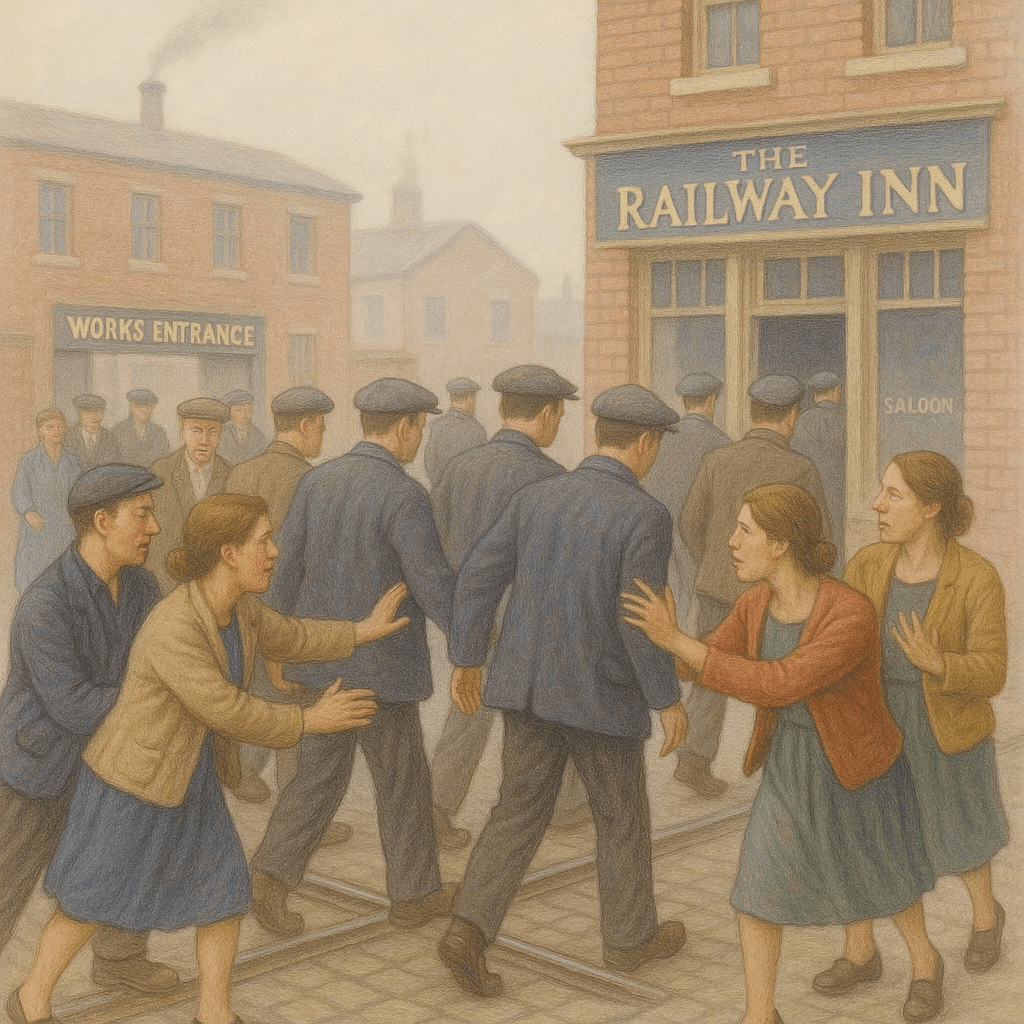
My dad’s plant was across the railroad tracks
from half a dozen shot and chaser bars,
and on paydays the bars were visited
and stocked with stacks of bills by armored cars,
 
and women waited at the gates and tracks
at shift changes, to try to intercept
their thirsty husbands in the passing throng
before they cashed and drank up half their check.
 
At the time, I didn’t think about
how desperate those women must have been
to go out on a crowded public street
and chase after their irresponsible men;
 
I guess I found it droll.  But if I’d been
more aware, what could I have done or said?
When people’s lives are going off the rails
strangers only frown and shake their heads.

*****

David Stephenson writes: “When I was in high school, my dad worked at John Deere Plow-Planter—now called Seeding and Cylinder—in Moline, Illinois.   This was before direct deposit, so the workers got paper paychecks.  As with many factories, there were several taverns nearby, any of which would happily cash a paycheck.  If I borrowed Dad’s car, I would have to pick him up and drop him off, so I was sometimes there during shift changes.  On paydays you would see armored cars outside the bars, and at the end of the afternoon shift you would see women waiting on the railroad tracks, as described in the poem.  It didn’t really register with me at the time, but later on I realized it was quite sad.  I wrote the first two stanzas of the poem four or five years ago, but was stuck as to how to proceed, since I didn’t know what to say about the scene.  What can you say?  I finally came up with the current ending, which says there isn’t anything to say, but says it well.”

‘Payday’ was first published in Snakeskin.

David Stephenson is a retired manufacturing engineer from Detroit, and the editor of Pulsebeat Poetry Journal.  His most recent collection is Wall of Sound (Kelsay Books, 2022).

Illustration: RHL and ChatGPT

Sonnet: Amit Majmudar, “The Only Holy War”

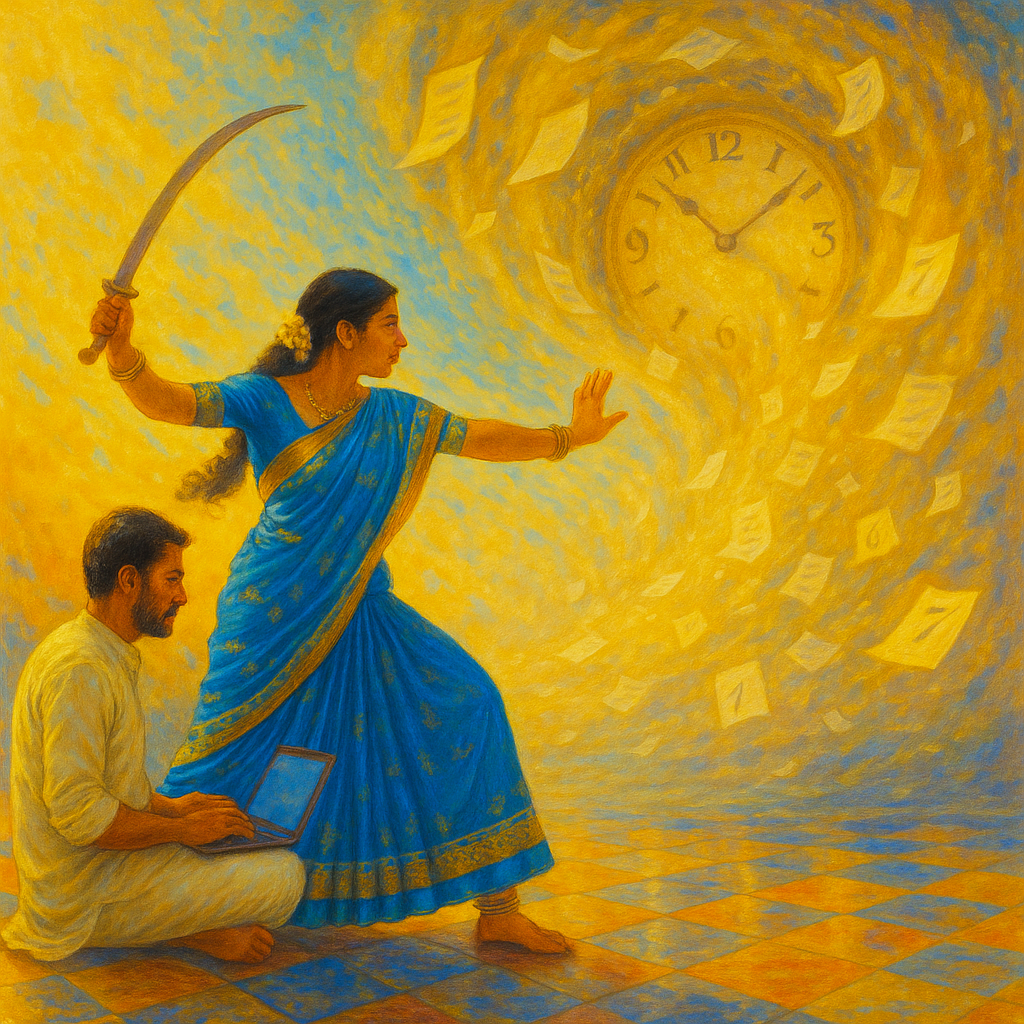
Oh what a glorious war we waged on time,
you in your peacock pleats and jasmine braid
and ankle bells portraying a warrior goddess,
me at my laptop redeploying rhyme
like roving arrows on a map of fate.
We fought our Passchendaele, entrenched in bodies,
my dugout deep in yours. We woke up, ate,
went on our morning walks, we made love, played
old board games, ditched our iPhones, stormed the beachhead,
kamikazed straight into the sun
while knowing we would likely never reach it,
while knowing no Great War was ever won,
each night, each decade together one more mission
prolonging this timeline, this lifegiving war of attrition.

*****

Amit Majmudar writes: “My twin sons, so recently in diapers, just submitted their college applications. My beard has now more white hairs than black. How did this happen? At the cellular level, at the level of fast-twitch muscular contractions and verbal elan, time causes depletion, the radioactive decay of the youthfully glowing complexion, the degradation of collagen, the degradation of memory…. Sophocles, Goethe, and Yeats wrote beautifully into their later lives. Shakespeare stopped writing, voluntarily, when he was less than a decade older than my current age. Two things take me out of time: love, and the creative flow state. This poem represents (both in its subject matter, and as an example of my creativity) the intersection of the two. Yet time really doesn’t stop during that interval. I just cease to register it. The aging goes on, unchecked: the piecemeal conquest of the body, follicle by follicle, neuron by neuron; the tick-tock wastage of love’s remaining years together…. It demands a war effort, and total war at that, all one’s resources of spirit and body utilized to fight it: a Crusade to retake one’s youth, the war against time a Manhattan Project, a veritable Mahabharata: “the only holy war.”

‘The Only Holy War’ was originally published in the New Verse Review.

Amit Majmudar’s recent books include Twin A: A Memoir (Slant Books, 2023), The Great Game: Essays on Poetics (Acre Books, 2024), and the hybrid work Three Metamorphoses (Orison Books, 2025). More information about his novels and poetry collections can be found at www.amitmajmudar.com.

Illustration: RHL and ChatGPT

Sonnet: Felicity Teague, ‘Robot Dawn’

I sensed your rising in the paper years,
when I was sitting on the garden wall
to copy edit, through my teens. My fears
were few, back then, because the threat seemed small
and I still held the tools. My pencil case
contained my biros, red and royal blue,
my trusty ruler. And at quite a pace,
the work to trim and tidy would ensue,
just as required. But slowly, over time,
the paper-scape was lost to you, your screens,
your checks, your macros. Now, you’re in your prime,
you’re winning worlds of words with your machines,
while I am, we are, shrinking, dwindling, done,
deleted. Humans, zero; robots, one.

*****

Felicity Teague writes: “Due to the advance of the robots in my profession, I’m currently exploring other employment options. These are limited as I have severe and worsening autoimmune arthritis, but I really want to keep working for as long as I can.”

‘Robot Dawn’ was first published in Snakeskin.

Felicity Teague (Fliss) has featured in a number of poetry journals and has published two collections, From Pittville to Paradise (2022) and Interruptus: A Poetry Year (2025). Since April, she has put together the monthly metrical poetry showcase Well Met, and the November issue is here.

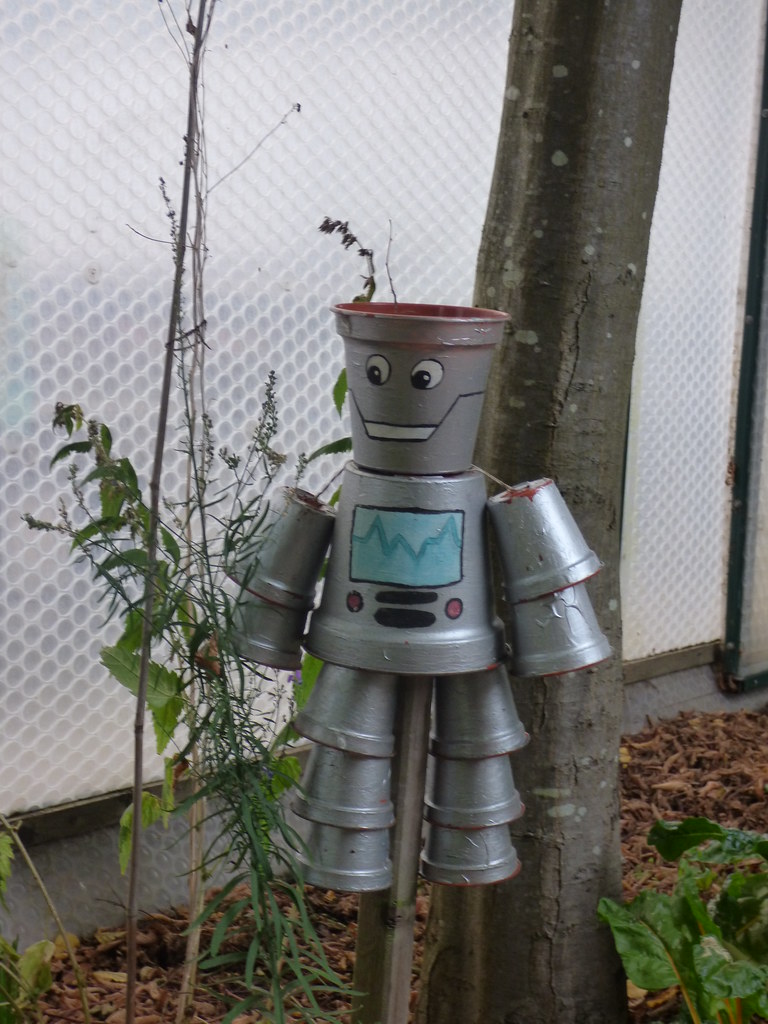
Photo: “Greenhouses – Castle Bromwich Hall Gardens – Silver robot potted man” by ell brown is licensed under CC BY-NC-SA 2.0.

Sonnet: Marcus Bales, ‘This Bar’

In the middle of their movie each arrives
Smiling in this gutter, still the stars
Of broad moments in their narrow lives.
They tell of other people, other bars,
Other husbands, lovers, friends, and wives,
Re-writing both their pleasures and their scars;
How one thing given up another strives
To get; how what one shines another tars
With one of the varieties of hate.
But here the villain is a dead-end job
Or marriage, or failing kids; it would be great
If Yankees, Nazis, drug lords, or The Blob  
Were why we’re lost, or losing, or alone –
But here the tales and failures are our own.

*****

Marcus Bales writes: “The bar culture was a mystery to me. For much of the western developed world, though, it seems central to the human experience. The only reason I went to bars for a long time was to see a performer, and then only for that. The genes for enjoying intoxication and for enjoying the taste of alcohol seem to have missed me. I’d have a soft drink, enjoy the show, and go home. I thought bars were noisy theaters full of fairly rude people who were missing the point of the entertainment. Yeah, well. 

“As usual in these sorts of tales, it was a woman who showed me I had mistaken the whole thing. 

“When I met Linda ‘going out’ for me meant a poetry reading. Linda’s idea of a good time was a fried baloney sandwich and a few glasses of wine at a bar. After a couple poetry readings we went to bars. And while everyone at a poetry reading has a story, they are there to tell those stories, often in the kind of detail, physical, mental, and emotional, that can be pretty harrowing. A  poetry reading is more like therapy than a lot of therapy. 

“The stars of the show, the featured readers, do not, for the most part, mix with the common folk of the open mic. Most of the time the feature readers come late, perform, and leave, giving no one a chance to chat with them or get to know them. There is a distinct class system, and if the performer is known more than locally, those exalted folks prefer to be kept separate from the audience, deigning to meet only a selection of the organizer’s favored few friends in a private room beforehand. You can judge your status in the local hierarchy by whether you are never, sometimes, or often invited to be in that room. 

“In bars, though, you can talk to anyone and everyone, if you’re willing. Well, middle-class bars, anyway. Dive bars are a whole other phenomenon. But in middle-class bars people talk to the people around them, and listen to one another, and drink. And talk some more. And drink. The point is the social drinking, the freeing-up, the letting-down. And for a collector of stories it’s a gold mine. 

“I still have a soft drink, but if you tip well you can get it served to look like it’s alcoholic. And you can remember what people said, afterwards.”

Not much is known about Marcus Bales, except he lives and works in Cleveland, Ohio, USA, and his work has not appeared in Poetry or The New Yorker. His latest book is 51 Poems (which includes ‘This Bar’); reviews and information at http://tinyurl.com/jo8ek3r

Photo: “Down Drinking at the Bar” by swanksalot is licensed under CC BY-NC-SA 2.0.
Tom Vaughan, ‘One of Us’

A starter British passport,
now with a French one too,
I can vote in both and put down roots
in either, and stroll through

eGates and customs checks
head high, as one of us,
legitimately pukkah, blessed
by birth/life/luck, and thus 

with paperwork in order
should copper or gendarme
ask me who on earth I am:
I smile and keep my calm

and my right to an annual break
upon a sunlit beach
where seas digesting some who yearned
my paradise to reach

lap peacefully as though
the summer days could last
as far into the future as
they failed to in the past . . .

*****

Tom Vaughan writes: “The older I get, the more I ask myself the question: ‘Where would we be without our (double) standards?’.”

‘One of Us’ was first published in Snakeskin.

Tom Vaughan is not the real name of a poet whose previous publications include a novel and three poetry pamphlets (A Sampler, 2010, and Envoy, 2013, both published by HappenStance; and Just a Minute, 2024, from Cyberwit). His poems have been published in a range of poetry magazines, including several of the Potcake Chapbooks and frequently in Snakeskin and Lighten Up Online. He currently lives in Brittany.
https://tomvaughan.website

Illustration: RHL and ChatGPT

Sonnet: Edna St. Vincent Millay, ‘I shall forget you presently, my dear (Sonnet IV)’

I shall forget you presently, my dear,
So make the most of this, your little day,
Your little month, your little half a year
Ere I forget, or die, or move away,
And we are done forever; by and by
I shall forget you, as I said, but now,
If you entreat me with your loveliest lie
I will protest you with my favorite vow.
I would indeed that love were longer-lived,
And vows were not so brittle as they are,
But so it is, and nature has contrived
To struggle on without a break thus far,—
Whether or not we find what we are seeking
Is idle, biologically speaking.

*****

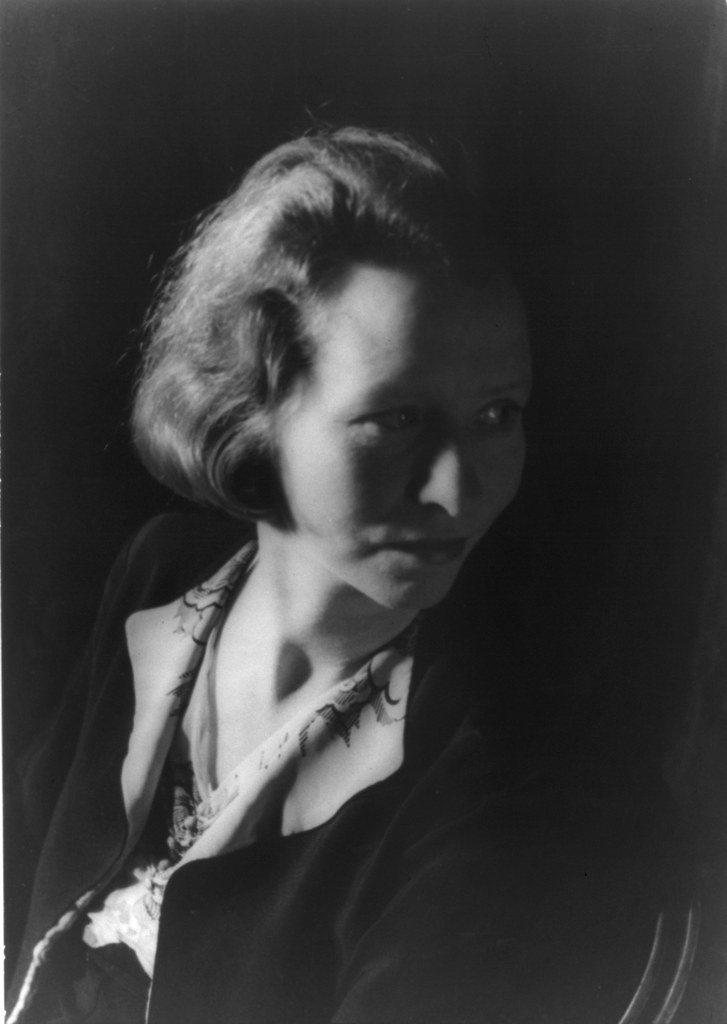
Edna St. Vincent Millay, 1892 – 1950

From Wikipedia: “After experiencing his remarkable attention to her during her illness, she married 43-year-old Eugen Jan Boissevain in 1923. Boissevain was the widower of labor lawyer and war correspondent Inez Milholland, a political icon Millay had met during her time at Vassar. A self-proclaimed feminist, Boissevain supported Millay’s career and took primary care of domestic responsibilities. Both Millay and Boissevain had other lovers throughout their 26-year marriage. For Millay, one such significant relationship was with the poet George Dillon, a student 14 years her junior, whom she met in 1928 at one of her readings at the University of Chicago. Their relationship inspired the sonnets in the collection Fatal Interview, which she published in 1931.”

Photo: “No Known Restrictions: Edna St. Vincent Millay by Carl Van Vechten, 1933 (LOC)” by pingnews.com is marked with Public Domain Mark 1.0.

Johnny Longfellow, ‘Epitaph’

If you’re dead, an’ ya’ ain’t on a mantle,
Then ya’ go in a hole in the groun’.
From a slab to a coffin, ya’ don’t move very often.
When you’re dead you’re jus’ lyin’ aroun’. 

If you’re dead, an’ you’re hauled to a graveyard,
A few fam’ly ‘n’ friends might arrive,
An’ the buzzards ‘ll buzz up above ya’ because
When you’re dead you’re no longer alive.

If you’re dead, there’ll be those who hol’ Judgment—
Say your Soul is in Heaven or Hell;
But Whatever is True (an’ regardless o’ you)
When you’re dead, that’s their story to tell.

If you’re dead . . . well, ain’t none o’ that matters.
It’s the livin’ who toss in the dirt.
What remains goes to rot. An’ though like it or not
When you’re dead ya’ don’t feel any hurt.

*****

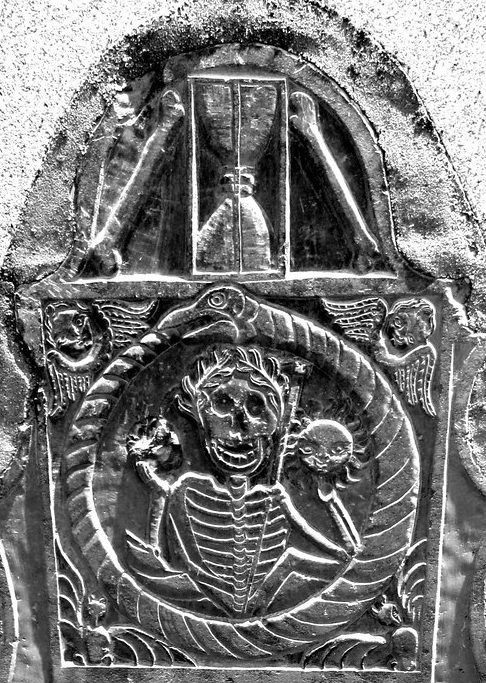
Johnny writes: “Inspired—in part, at least—by my interest in gravestones of the Colonial era, ‘Epitaph’ utilizes a second person voice. A tip of the hat, if you will, to the ‘As I am now, so you must be’ subgenre of epitaph, wherein the dead address the living to forewarn of Death’s inevitability. Seven stanzas too long at one point, I chopped it down to four. Reason being, the three stanzas I rather begrudgingly removed were written in a confessional mode that conflicted not just with the second person voice, but also with the Everyman vibe that I began sensing the Muse actually desired from me, along with greater brevity. Having made such cuts, I shelved the piece, thinking I’d revisit it in the future with a fresh(er) set of eyes. But then, a recent, troubling news event and its subsequent media fallout brought ‘Epitaph’ to the forefront of my mind. So, on a whim, I posted the abridged version on Facebook. To my pleasant surprise, that led to Robin querying me about its availability, and ultimately, its appearance here at Form in Formless Times.”

Johnny Longfellow is a poet from Massachusetts. His work has appeared in The Five-Two, The Literary Hatchet, Misery Tourism, Punk Noir, and other fine literary venues. You can learn more about both him and his work at Heeeeeeere’s Johnny . . . Longfellow, that is.

Photo: “Susanna Jayne” by In Memoriam: Mr. Ducke is licensed under CC BY-NC 2.0.

https://newenglandfolklore.blogspot.com/2022/03/the-grave-of-susanna-jayne-bats-angels.html

Short poem: Robin Helweg-Larsen, ‘Moving On’

“How old are you?” she asked. “Too old,” I said;
“sadly, my youth is gone.”
She looked like wanting to move on, though wed;
I had no wish to be the one moved on.

*****

Published yesterday in The Asses of Parnassus – thanks, Brooke Clark!

how dark how cold” by Stuti ~ is licensed under CC BY 2.0.

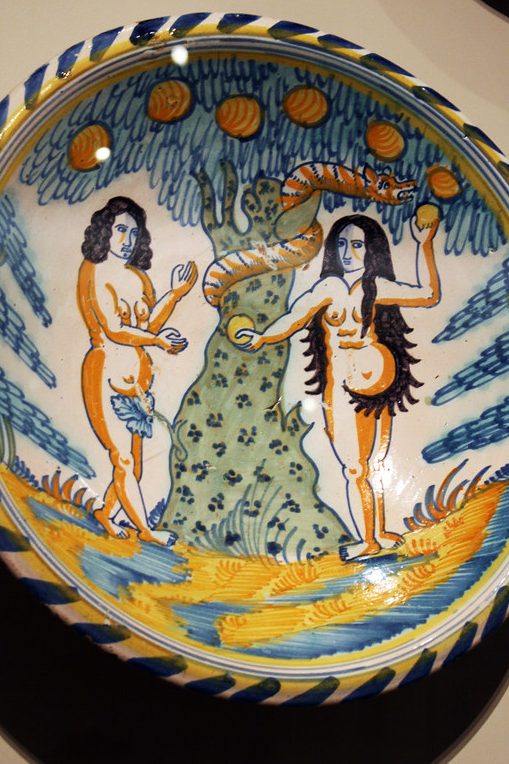
Helena Nelson, ‘The Fall (GM)’

The tree was genetically modified.
The apple was full of dioxins.
The leaves were too green;
any fool could have seen
they were vibrant with millions of toxins.

A helpful old friend (we called him ‘The Snake’)
announced he’d go up there and get it.
I said to my spouse
‘We’ve got pears in the house’
but what did he do? Adam ate it.

He snaffled a bite with a smirk of delight,
then laughed till he cried (he was manic).
‘You’ll love it my dear,’
he said, ‘and look here—
I got you some seed. It’s organic.’

Well what could I say? It wasn’t my day
for dodging his amorous athletics.
It led to sheer babel
from wee Cain and Abel—
I blame the whole thing on genetics.

*****

Helena Nelson writes: “I wrote it more than twenty years ago, and at the time people were going on endlessly about GM foods and the risks thereof. They seem to be worrying about other things these days. Anyway, this was the result, and I’ve always liked it, although it is very silly. Maybe too silly.”

Helena Nelson runs HappenStance Press (now winding down) and also writes poems. Her most recent collection is Pearls (The Complete Mr and Mrs Philpott Poems). She reviews widely and is Consulting Editor for The Friday Poem.

Photo: “Everyone’s pregnant in the Garden of Eden!” by quinn.anya is licensed under CC BY-SA 2.0.