Category Archives: Potcake Poet’s Choice

Potcake Poet’s Choice: David Galef, ‘The State of the Art’

Literature, that romantic old bastard,
Is sick again, aslant on his chair
Like a spread-eagled book, already plastered
By noon and mumbling life’s unfair.

He speaks these days, ventriloquizing
In a voice long ruined by social disease,
His brilliant spasms slowed to writhing
And minute gestures that nobody sees.

What can we do for the drunken degenerate?
Tear up his license, make sure he’s not read,
Submit him to lectures, make him aware that
We don’t want him living, we don’t want him dead.

David Galef writes: “The State of the Art reflects our era’s attitude toward literature. It was published in Pivot way back when.”

David Galef has published over two hundred poems in magazines ranging from Light and Measure to The Yale Review. He’s also published two poetry volumes, Flaws and Kanji Poems, as well as two chapbooks, Lists and Apocalypses. In real life, he directs the creative writing program at Montclair State University.
www.davidgalef.com

Photo: “Old Drunk Man” by mocheeks is licensed under CC BY-NC-ND 2.0

Potcake Poet’s Choice: Maryann Corbett, ‘The Vanished’

 In the autumn of 2015, the production of paper cards for library catalogs ceased.

No matter how long ago they completed their disappearance,
I still expect them,
perhaps in a sort of narthex just past a pillared entry,
or off to the side
as if in a private chapel, or straight ahead like an altar.
Shrined in the silence,
modest and single, or ranged in ranks and banks and rows,
the gods of Order
lived in their tabernacles of honey and amber maple
or oak like chocolate,
darkened at times from the touch of a hundred thousand fingers.
On every drawer-front
the face of a tiny gargoyle waggled its brazen tongue out.
And so we pulled them.
And the drawers slid waxen-smooth, and the fingers flicked like a weaver’s
through card upon card,
and above the drawers were our faces, our heads all bobbing and davening.
A kind of worship
it was, with an order of service. A physical act of obeisance.
Its cloudy replacement
(perfect in plastic efficiency, answering almost to thought,
near-disembodied)
hurries us past the notion of order itself as a Being
worthy of honor.
So here I am, misplaced as a balky fourth-century pagan
mulling conversion,
but nursing doubts that the powers should be called from the general air,
seeking the numinous
still in its tent of presence, and longing to keep on clutching
the household gods.

Maryann Corbett writes: “This was one of those poems that spent several years stewing at the back of my brain as soon as I read the factoid that actually library catalog cards were no longer being produced. It’s a disappearance not likely to be noticed much by younger people, and I wanted to give it attention. What eventually let my brain’s stew boil over in images of all the card catalogs I’ve known, I can’t say. But it did so in a rush, a rush and roll that took the form of very long lines. I’ve written several other poems in hexameters–lines with six stresses–and I wanted to do something a bit different–and to leave space to breathe!–so I decided to alternate the hexameter lines with much shorter ones: dimeters, or two-stress lines.

 ‘The Vanished‘ appeared first in Alabama Literary Review, was anthologized in The Orison Anthology, Vol. II, and was included in my most recent book, In Code.

Maryann Corbett lives in Saint Paul, Minnesota, where she worked 35 years for the Legislature. Poetry: Breath Control (2012), Credo for the Checkout Line in Winter (2013), Mid Evil (2014 Richard Wilbur Award), Street View (2017), and In Code (2020). Past winner, Willis Barnstone Translation Prize. Work included in The Best American Poetry 2018, as well as in the Potcake Chapbooks Families and Other Fiascoes and Robots and Rockets.

Photo: “Catalog Cards” by Travelin’ Librarian is licensed under CC BY-NC-SA 2.0

Potcake Poet’s Choice: Michael R. Burch, ‘Bible Libel’

If God
is good,
half the Bible
is libel.

Michael R. Burch writes: “This may be the first poem I wrote. I read the Bible from cover to cover at age 11, and it was a traumatic experience. But I can’t remember if I wrote the epigram then, or came up with it later. In any case, it was probably written between age 11 and 13, or thereabouts. It would be kinda cool to be remembered by a poem I wrote at such an early age. Plus, it’s short, so readers would probably finish it!

I have been using Google results to determine which of my poems are the most popular on the Internet. Some of my poems have gone viral, appearing on hundreds or thousands of web pages. That’s a lot of cutting and pasting, and I like to think people must like a poem in order to take the time to replicate it. This epigram, which I wrote around age 11 to 13, at one time returned over 405,000 results for the last two lines, and over 51,000 results for the entire poem. The last time I checked, it still returned over 292,000 results. I was especially pleased to see one of the first poems I wrote, and possibly the first, go viral. If I wrote anything earlier, I don’t remember it.

Michael R. Burch has over 6,000 publications, including poems that have gone viral. His poems have been translated into fourteen languages, incorporated into three plays and two operas, and set to music by seventeen composers. He also edits TheHyperTexts.

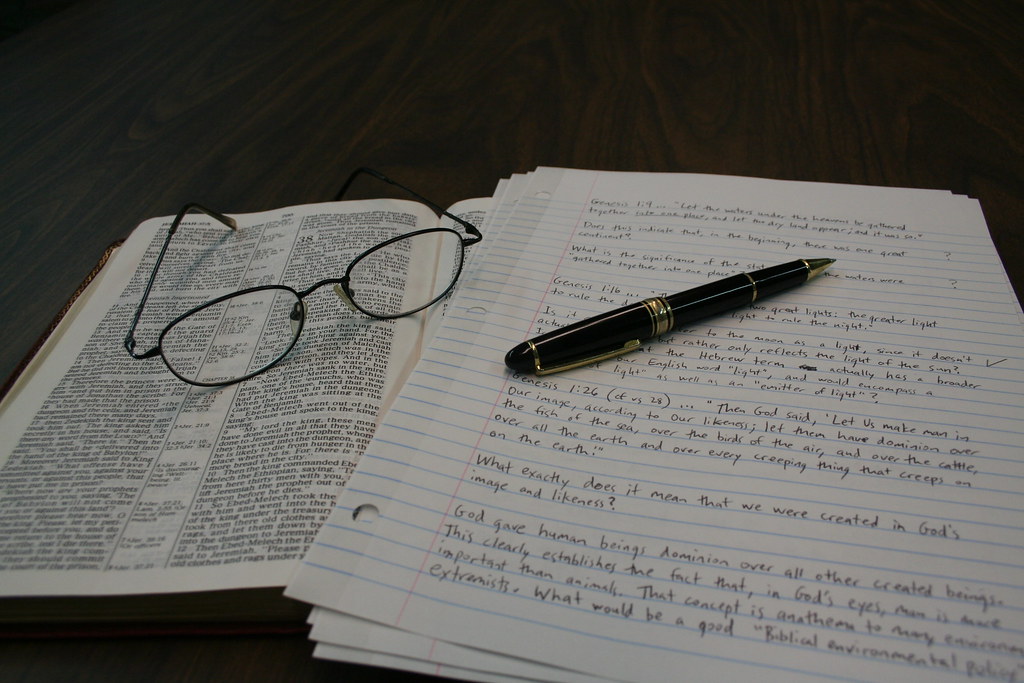
Photo: “Bible, Reading Glasses, Notes and Pen” by paul.orear is licensed under CC BY-SA 2.0

Potcake Poet’s Choice: Gail White, ‘Orthodox Christmas Eve’

What am I doing here with all these Greeks?
Hoping, perhaps, at midnight Christmas Eve,
the unintelligible tongue God speaks
will summon even those who don’t believe
to Mary’s manger. Now the Virgin bears
the Master in the cave. As light through glass
he passes from her body. Joseph dares
believe the story; I can let it pass.
The incense rises like the church’s breath
into a frosty world. This night of birth
swells to a tide that tosses me past death.
But tides recede: I know this moment’s worth.
If love of beauty were the same as faith,
I’d walk in heaven with my feet on earth.

Gail White writes: “I love this poem and always secretly hoped it would become a classic, so I welcome the chance to bring it out again. The to-and-fro of faith and doubt is typical for me, as is the creeping into faith by way of aesthetics. But at this time of year faith wins, and I never let the day pass without listening to the King’s College choir singing ‘Once in Royal David’s City‘.”

Gail White is the resident poet and cat lady of Breaux Bridge, Louisiana. Her books ASPERITY STREET and CATECHISM are available on Amazon. She is a contributing editor to Light Poetry Magazine (lightpoetrymagazine.com). “Tourist in India” won the Howard Nemerov Sonnet Award for 2013. Her poems have appeared in the Potcake Chapbooks ‘Tourists and Cannibals’, ‘Rogues and Roses’, ‘Families and Other Fiascoes’ and ‘Strip Down’.
https://www.amazon.com/Asperity-Street-Gail-White/dp/1927409543

Potcake Poet’s Choice: Tom Vaughan, ‘Afterwards’

Afterwards, I’ll shake the hand
of total strangers in the street
as though they were my oldest friend
and as and when that friend I’ll meet

we’ll stroll across Green Park towards
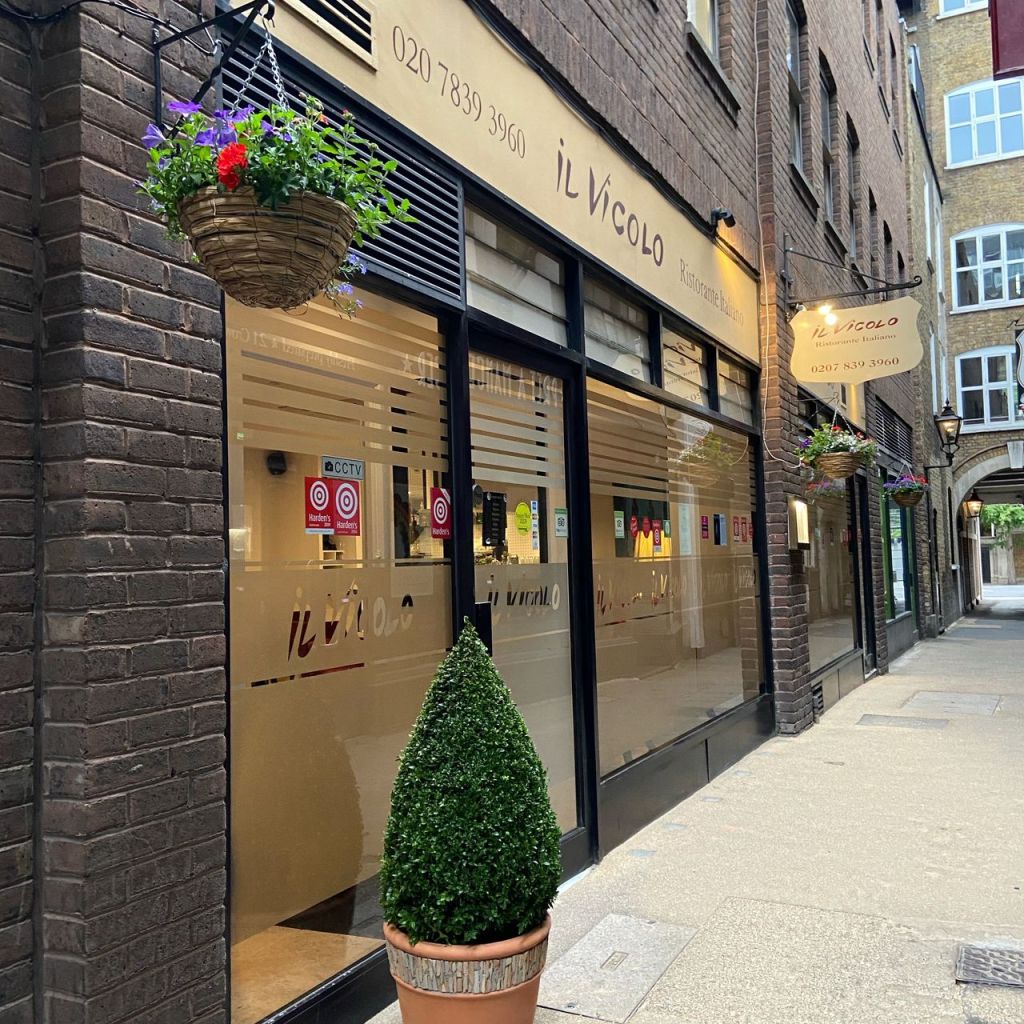
Crown Passage’s Il Vicolo
to dip our bread in olive oil
and drink wine till our faces glow

and talk of this and maybe that
as if we had all day to kill
then we’ll argue who should pay, aware
we’ll agree at last to split the bill

and when we say goodbye, we’ll know
how rare and wonderful it was
to be together, even though
neither will say so. Why? Because

why even hint the day might come
when public or private fresh disaster
prevents we two from sitting there
to share a salad and a pasta?

First published in Snakeskin 276, September 2020.

Tom Vaughan writes: “I have a soft spot for Afterwards because I hope it strikes the balance I often try to achieve between light-heartedness and seriousness. Plus it’s pinned in the real world: a London restaurant I very much like. I had submitted it originally The Spectator, which originally rejected it. George Simmers then accepted it for the September 2020 Snakeskin. Shortly thereafter I noticed a very positive restaurant review of Il Vicolo in The Spectator and, apparently quite independently, their poetry editor came back to me saying that on reflection he wanted to publish it, which he then did in October that year (with a suitable acknowledgement to Snakeskin as its first home). Then I learnt that the much-loved owner of Il Vicolo had died a few months previously – although not of Covid – but that his admirable daughters had decided to continue to run the restaurant. So, somewhere underneath the poem, the note of all-too-actual human mortality.”

Tom Vaughan is not the real name of a poet whose previous publications include a novel and two poetry pamphlets (A Sampler, 2010, and Envoy, 2013, both published by HappenStance). His poems have been published in a range of poetry magazines, including several of the Potcake Chapbooks:
Careers and Other Catastrophes
Familes and Other Fiascoes
Strip Down
Houses and Homes Forever
Travels and Travails.
He currently lives and works in London.
https://tomvaughan.website

Potcake Poet’s Choice: Rob Stuart, ‘Hitchcock Acrostic’

My looming silhouette, obese and bald,
As well as my distinctive semi-slur
Still resonate, and even now I’m called
The cinema’s preeminent auteur,
Epitomising what François Truffaut
Revered: a moviemaker in control
Of everything on screen. I ran the show:
Finessing scripts and casting every role,
Selecting music and the mise-en-scène.
Unwilling as I was to look beyond
Simplistic plots that featured guiltless men
Plus pretty women (preferably blonde)
Entangled in intrigues, they all had doubt,
Not payoffs, situated at their heart:
Set bombs a-ticking, tension builds throughout,
Explode them and you blow it all apart.

Rob Stuart writes: “This poem was previously published in ‘Snakeskin’ although I have revised it since.

“Is this my best poem? Probably not, but it’s certainly the fiddliest I’ve ever written and consequently the most satisfying to have (perhaps) finished. A rhymed acrostic gives one very limited room for manoeuvre as it imposes constraints at both the beginning and end of each line, and this led to all manner of contrived rhymes and clunky word choices in my early drafts, including the version that was originally published a few years ago, and I have literally spent hours poring over lists of verbs beginning with a ‘u’ and synonyms for ‘suspense’ in the search for suitable replacements. I may yet go on to revise the poem further (I’m still not sure that the second to last line quite works), but I think it reads pretty damned well now. It’s a dinky little lesson in film history, too.”

Rob Stuart’s poems and short stories have been published in numerous magazines, newspapers and webzines including Ink Sweat and Tears, Light, Lighten Up Online, M58, Magma, New Statesman, The Oldie, Otoliths, Popshot, The Projectionist’s Playground, Snakeskin, The Spectator and The Washington Post. His work appears in the Potcake Chapbooks ‘Careers and Other Catastrophes‘ and ‘Wordplayful‘. He lives in Surrey, England with his family.

http://www.robstuart.co.uk/

Potcake Poet’s Choice: Tom Vaughan, ‘Happiness’

It’s easy to forget they’d fought a war:
his father drowned, half-brother bayoneted;
her kilted sibling captured at Dunkirk,
locked up for five long years. But yes they met

in uniform, lost half their friends, before
the normal world re-started when they wed:
mortgage; children; grinding office work –
all I suppose they wanted when they set

out as a couple. We must have been a shock:
busting their rulebook; scornful of sacrifice;
mocking their past and their belief in ‘progress’;

too young, too smashed, too angry to unlock
their silence, or to understand the price
they’d paid for what they’d still call happiness.

Tom Vaughan writes: “I chose Happiness it because I hope it gets right not just my own retrospective feelings about my parents, but also something more general about the generational shift between those who went through WW2 in their youth, and their less-tested offspring.

Secondly, because it’s a sonnet (a favourite form of mine), but in what I call a ‘roller’ rhyming (not always full rhymes) pattern, which tries to pull the reader down to the final line with a lurch which I hope is also of the emotions.

It was published in Dream Catcher in 2016, but has been picked up a couple of times elsewhere since then, including in your Families and Other Fiascoes chapbook.”

Tom Vaughan is not the real name of a poet whose previous publications include a novel and two poetry pamphlets (A Sampler, 2010, and Envoy, 2013, both published by HappenStance). His poems have been published in a range of poetry magazines, including several of the Potcake Chapbooks:
Careers and Other Catastrophes
Familes and Other Fiascoes
Strip Down
Houses and Homes Forever
Travels and Travails.
He currently lives and works in London.
https://tomvaughan.website

Potcake Poet’s Choice: Susan McLean, ‘Deep Cover’

Nakedness is the best disguise.
When you discard the final veil,
it always takes them by surprise.

Because men think that compromise
is weak—that if you yield, you fail—
nakedness is the best disguise.

Though you expose your breasts and thighs,
your mind is as opaque as shale.
It always takes them by surprise

to find out that the body lies.
Surrender can conceal betrayal.
Nakedness is best. Disguise,

equivocation, alibis
can be seen through. To lay a trail
that always takes them by surprise,

hide nothing and you’ll blind their eyes.
Go ask Judith. Go ask Jael.
Nakedness is the best disguise.
It always takes them by surprise.

Susan McLean writes: “When I think of which subjects have lasting appeal in poems, I think of the subjects that have never changed and never will, such as human nature, but also of the questions that have no definitive answers, such as the nature of truth.  This poem expresses several paradoxes: that overt shows of openness are the most successful ways to deceive someone; that everyone lies, so telling the truth is always surprising–and is often not believed; that no matter how much truth you tell, there is always much that you don’t say; that when there is a power difference between two people, surrendering can be a tool of resistance. 

“Another thing that I think gives a poem lasting appeal is the use of rhythm and sound to create a music with words.  Though we live in a time in which free verse is dominant and ubiquitous, I don’t think people will ever lose their innate love of the songlike in poetry, a quality that also makes poems easier to remember. One of the most songlike of poetic forms is the villanelle, and it has been one of my favorite forms for many years.  Though I know that many readers find the repeating lines in villanelles to be tedious, small variations in the lines, in their punctuation, and in the surrounding lines can enable the narrative to move forward without losing the appeal of a songlike refrain.” 

Susan McLean grew up in Oxon Hill, Maryland, attended Harvard University and Rutgers University, and taught English for thirty years at Southwest Minnesota State University. She has published two books of poetry, The Best Disguise (winner of the 2009 Richard Wilbur Award) and The Whetstone Misses the Knife (winner of the 2014 Donald Justice Poetry Prize), and one book of translations of the Latin poet Martial, Selected Epigrams. She lives in Iowa City, Iowa.

‘Deep Cover’ was originally published in Mezzo Cammin, a journal of modern formalist poetry by women. Susan McLean’s ‘Lessons From A Fool’ appears in the Potcake Chapbook Careers and Other Catastrophes.

https://www.pw.org/directory/writers/susan_mclean

Potcake Poet’s Choice: Martin Elster, ‘The Woolly Bear’

Along a sylvan lane, you spy a critter
creeping with a mission, a woolly bear
fattened on autumn flora. So you crouch,
noting her triple stripes: the middle ginger,
each end as black as space. Her destination
is some unnoticed nook, a sanctuary
to settle in, greet the fangs of frost,
then freeze, wait winter out—lingering, lost
in dreams of summer, milkweed, huckleberry.
Though she’s in danger of obliteration
by wheel or boot, your fingers now unhinge her.
She bends into a ball of steel. No “ouch”
from bristles on your palm as you prepare
to toss her lightly to the forest litter.

She flies in a parabola, and lands
in leaves. Though she has vanished, both your hands
hold myriad tiny hairs, a souvenir
scattered like petals. When this hemisphere
turns warm again, she’ll waken, thaw, and feast
on shrubs and weeds (the bitterer the better)
then, by some wondrous conjuring, be released
from larval life. At length she will appear
a moth with coral wings—they’ll bravely bear
her through a night of bats or headlight glare,
be pulverized like paper in a shredder,
or briefly flare in a world that will forget her.

Martin Elster writes: “In the New England autumn, the leaves aren’t the only colorful feature in the landscape. Caterpillars are on the move, so they are more easily chanced on. A few years ago I lived briefly in a mainly rural and hilly town called New Hartford in the state of Connecticut. On my daily walks, I encountered many kinds of animals, including numerous lepidopterans (moths and butterflies), one species of which inspired this poem, an appropriate poem, I think, for late autumn or early winter.
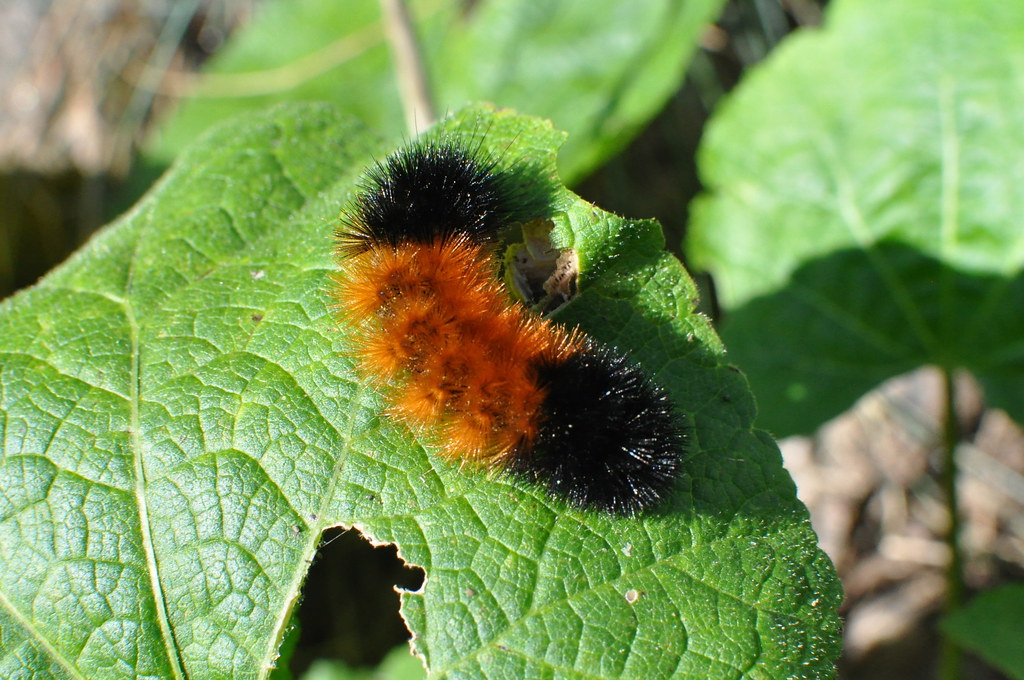
The Isabella tiger moth (Pyrrharctia isabella) in its larval form is called the “banded woolly bear” (or “woolly bear” or “woolly worm”). The most remarkable attribute about the little critter is this (from Wikipedia):
“The banded woolly bear larva emerges from the egg in the fall and overwinters in its caterpillar form, when it literally freezes solid. First its heart stops beating, then its gut freezes, then its blood, followed by the rest of the body. It survives being frozen by producing a cryoprotectant in its tissues. In the spring it thaws.”
Covered in thick, fluffy-looking hair, the woolly bear sports bands of black and reddish-brown. There’s an age-old belief that the amount of brown on this critter can predict the severity of the coming winter. The more brown, the milder winter will be.
For the geeks: the rhyme scheme of the first stanza of the poem, similar to the bands on a woolly bear (ABA), is a chiasmus: ABC . . . CBA.

Martin Elster, who never misses a beat, was for many years a percussionist with the Hartford Symphony Orchestra (now retired). He finds contentment in long woodland walks and writing poetry, often alluding to the creatures and plants he encounters. His honors include Rhymezone’s poetry contest (2016) co-winner, the Thomas Gray Anniversary Poetry Competition (2014) winner, the Science Fiction Poetry Association’s poetry contest (2015) third place, and four Pushcart nominations. A full-length collection, Celestial Euphony, was published by Plum White Press in 2019.
This poem has appeared in The Road Not TakenAutumn Sky Poetry Daily, and The HyperTexts. His work has appeared in the Potcake ChapbooksCareers and Other Catastrophes‘ and ‘Robots and Rockets‘.

“Banded Woolly Bear (Isabella Tiger Moth) Caterpillar, Virginia” by Dave Govoni is licensed under CC BY-NC-SA 2.0

Potcake Poet’s Choice: Brian Gavin, ‘Country Church, Family Visit’

On the funeral road, five miles beyond the farm
it looms still, like a silo, then diminishes
as you get close. Your sound won’t raise alarm
out here. There’s none but you. The wishes
of no one left alive will keep you out,
or let you in. The door is probably locked
anyway, closed upon itself, redoubt
for certainties. Surrounding it the block
foundations — reservoirs of ice and weed —
still cluster, like white holes around the heart.
You will not try the door — where it might lead,
you cannot say. The dead have done their part,
for here you are among them once again,
between the legacies of grief — the snow,
the boxes of white quiet, the leaving, then
the watching it loom larger as you go.

Brian Gavin writes: “I like this piece because the church-image haunted (or taunted!) me for several years before I got around to giving it some context in a poem.  When it finally came to the page it felt like I had paid off a debt — like I had finally given the image a chance to tell its story.  The fact that this story turned out to be no story at all — just a bunch of hints and implications — seemed to fit the image.

Brian Gavin is a retired Distribution Manager who started writing poetry about 7 years ago. His poems have appeared in The Journal of Formal Poetry, Peninsula Poets and Snakeskin Magazine, and in the Potcake Chapbook ‘Careers and Other Catastrophes. He lives in Lakeport, Michigan, USA, with his wife Karen.