Category Archives: Robin Helweg-Larsen

Poem: ‘Liminal Vision’

Grid of Existence, seeming minimal–
unknown extent, intent–
all-ruling, always nearing, liminal–
imminent, eminent–

the great all-seeing Eye of all the world–
the oracular Oculus–
the Stick round which our candyfloss is twirled–
the incorporate Octopus–

most active in the gap between day and night
when half-light blurs the features,
the predatory time the Unseen bite,
the time of mythic creatures,

time of illusions and profuse confusions,
the pros and cons in thrall
to every problem’s conmen selling solutions
to solve and dissolve all

the woes and worries of our warty worlds . . .
The Hunter bounds, unbound;
the Eye, the towering Wave, forever curls
over our grind, our ground.

This poem has just been published in Better Than Starbucks which gives it a seal of approval. I’m glad of that because I find it a strange poem when I come back to it, always feel that I’m having to dig my way in. It was an attempt to capture some of the half-dreams and shadow consciousness that we can glimpse when we are not fully awake and in our quotidian lives. Our unconscious rules us, our actions, our desires, our health, but we conscious puppets have so little sense of everything that is going on within us. But sometimes, when you are right on the border between conscious and unconscious…

Photo: “Liminal Space” by Theen … is licensed under CC BY-NC-SA 2.0

Poem: ‘Poets’

We are the natterers,
We are the masters of arts polyglot;
We are the patterners,
We are the marks on the paths that you plot;
We are the batterers,
We are the iron-headed rams that you fear;
We are the chatterers,
We are the sons of the sins that you bear;
We are the flatterers,
Down on our knees to those who stand tall;
We are the smatterers,
Giving out dangerous knowledge and small;
We are the shatterers,
We are the haters of forces above;
But, most, we are the clatterers,
We are the hooves of the horses we love.

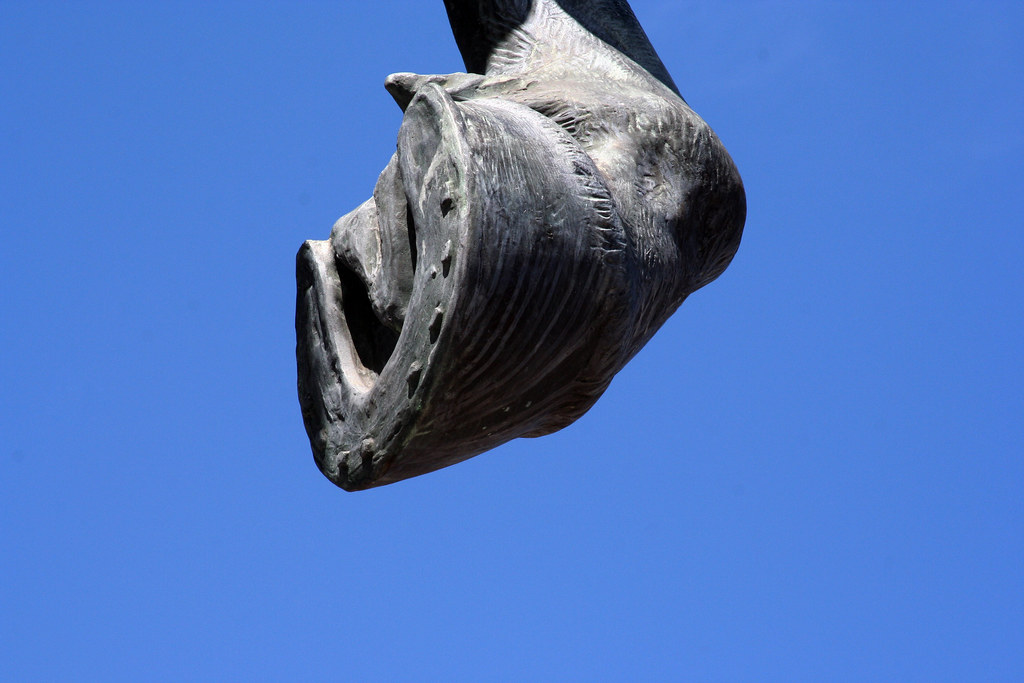
This was first published (I think) in Rubies in the Darkness (UK) and then in Metverse Muse (India). As for the word “clatter”, when I wrote the poem it only referred to sound, the verb “making a continuous rattling sound as of hard objects falling or striking each other.” The word is evolving though, as words do, with the meaning in football of a hard physical tackle that knocks your opponent over. I only meant the noise, of course…

Photo: “horse hoof” by Leo Reynolds is licensed under CC BY-NC-SA 2.0

Short poem: ‘Life Extension’

Religion leers
“Join me, or you face death”
And History jeers
“Inevitable death”,
But Science still adheres
To schemes to postpone death…
The path of a 1000 years
Starts with a single breath.

It’s interesting to speculate how long it will take before humans can start regenerating enough key pieces of our ageing and failing bodies that we can uncap our lifespan. A matter of decades rather than centuries, I think–but not soon enough for me, I fear.

The last sentence of the poem riffs on the Chinese saying attributed to Lao Tzu (also rendered as Laozi and Lao-Tze) that “The journey of a thousand miles starts with a single step.”

The poem was originally published in Bewildering Stories, a weekly of speculative writing of all types, edited by a multinational team but headquartered in Guelph, Ontario.

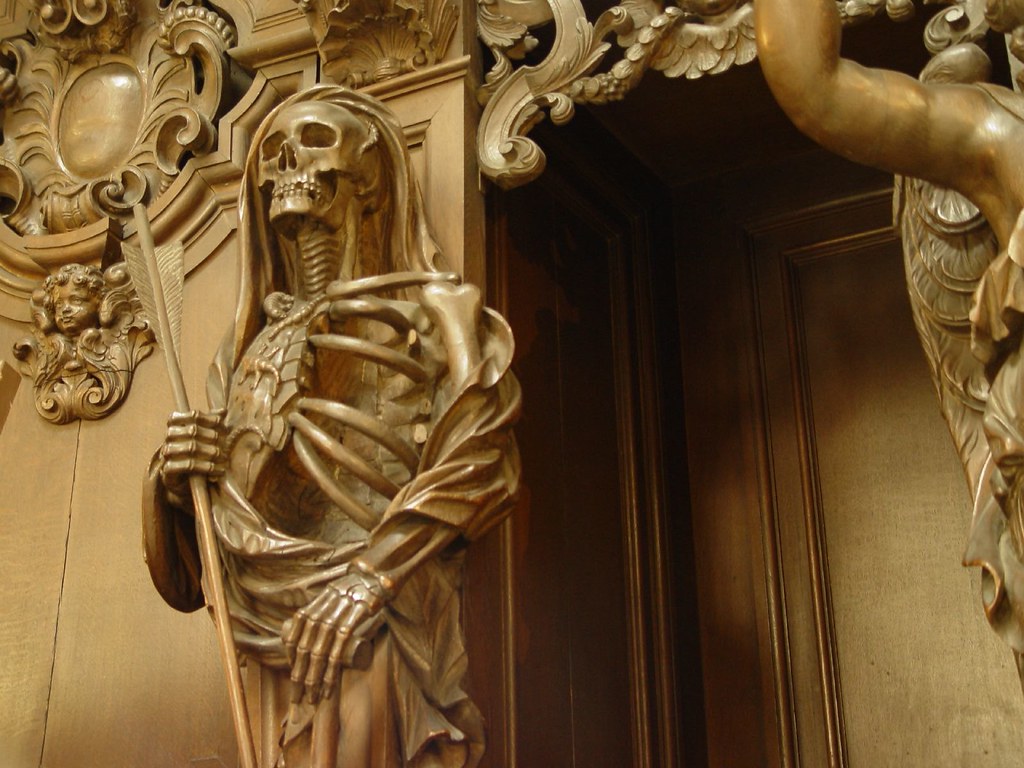
Photo: “Death” by Andrea Kirkby is licensed under CC BY-NC 2.0

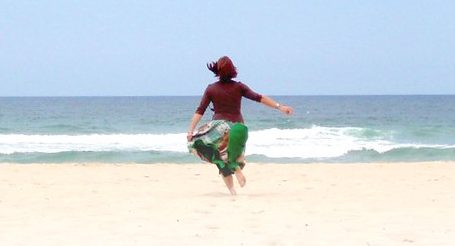
Short poem: ‘Beach’

Here on the vast beach, you, my hundred friends,
Can see how sea stretched tight round curved earth bends,
How empty sun-filled sky fills timeless Time.
My arms stretch out, but you can’t see how I’m
Trapped, caged, confined, boxed in, in love, alone.
Come, sun, burn beach and skin, bleach hair and bone,
Flay life to its essentials: love alone.

This poem was originally published in The Rotary Dial, a wonderfully rich monthly published as a pdf in Toronto, much missed after suddenly stopping publication. It was edited by Alexandra Oliver and Pino Coluccio, both prize-winning Canadian formal poets, Oliver being the more serious and Coluccio less so, as his collection titled ‘Class Clown‘ suggests.

Coluccio was very kind in comments about my poem, calling it “Borderline Hopkinsesque in a way, ecstatic quality” which made me reevaluate and revalue it. This is one of the interesting things about having your work published, or even merely read by others – things that you take for granted may be found exciting by others, just as things that excite you may just elicit yawns elsewhere. One human may have some diversity of moods, but that is nothing compared to the enormous diversity of humans as a whole. It is fascinating to hear the reactions of others, in all things.

‘Beach’ was subsequently republished in The HyperTexts and in Better Than Starbucks.

WARNING: The Rotary Dial domain name now appears to have been taken over by an unrelated and anonymous group. I would avoid it.

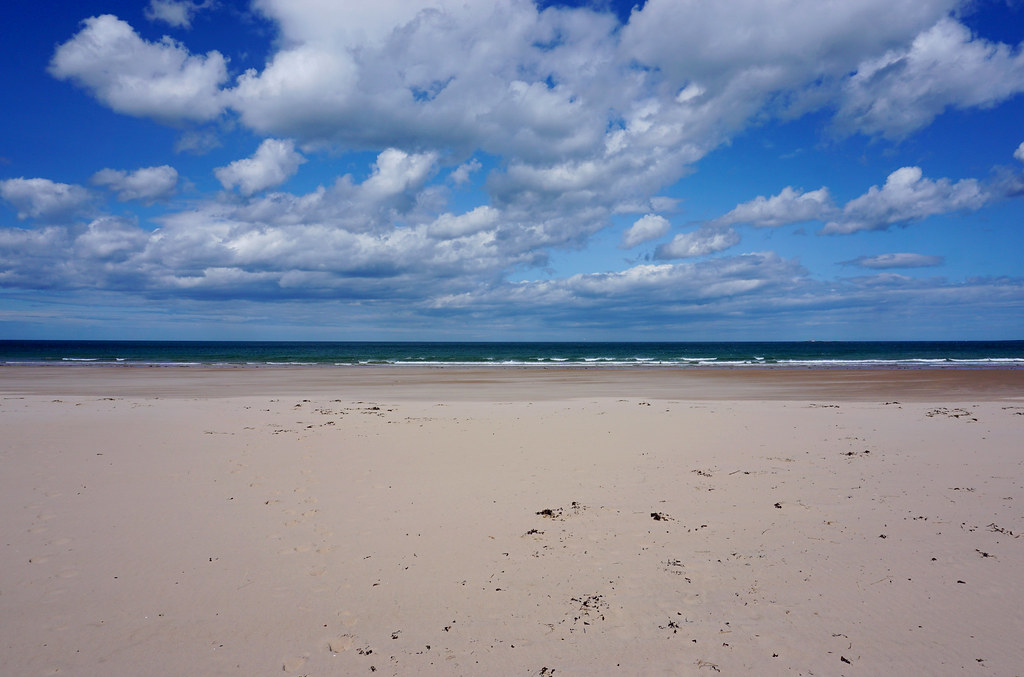
Photo: “beach” by barnyz is licensed under CC BY-NC-ND 2.0

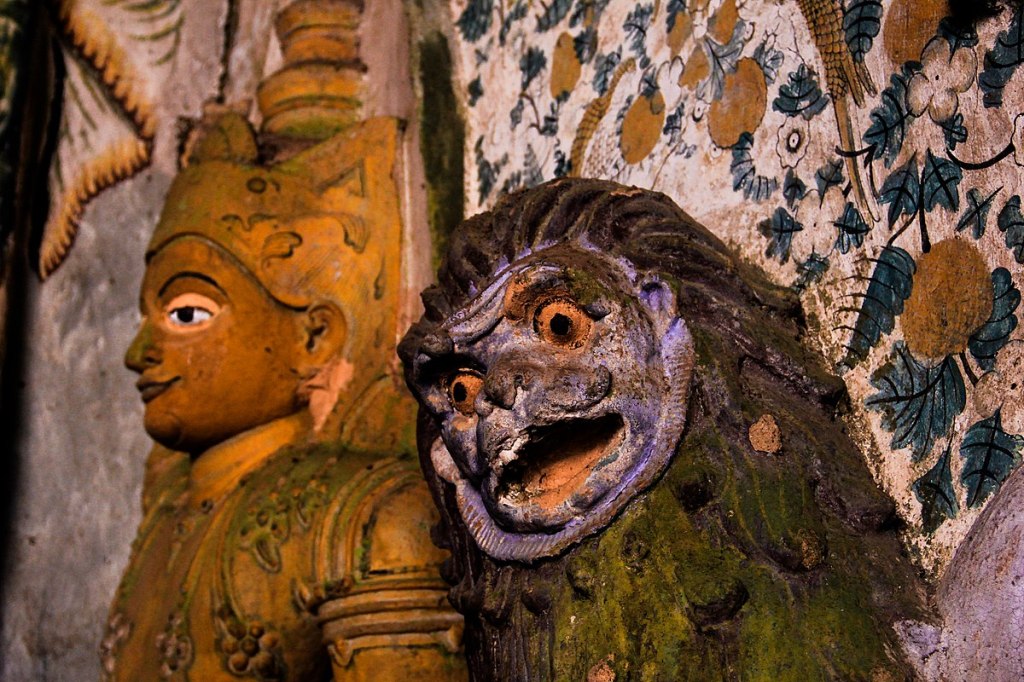
Poem: ‘The Buddha Died at 80’

The Buddha died at 80, and they say
That Lao Tzu reached 200, by the Way;
But Jesus, only 33, was stood
Arms out against the circus side-show wood:
His hands first, then his feet and side and heart
Pierced by the drunken dagger-thrower’s darts;
The crowd had lost a man, but, quite unbothered,
Named him a God, and went and killed each other.
And you and I and sanity lost out
With Christ’s name from Humanity crossed out.

Well, that’s an earlier take I had on Jesus. More recently I have seen him as a fundamentalist Jew, violently opposed to the pollution of the Promised Land by the idolatrous, beard-shaving, pig-eating military occupation by Westerners. No wonder he tried to take over the Temple and cleanse it; no wonder the Romans crucified him (the punishment reserved for rebels and insurrectionists).

Anyway, this poem (from a gentler, more naive era) was originally published by Rubies in the Darkness, a periodical now defunct.

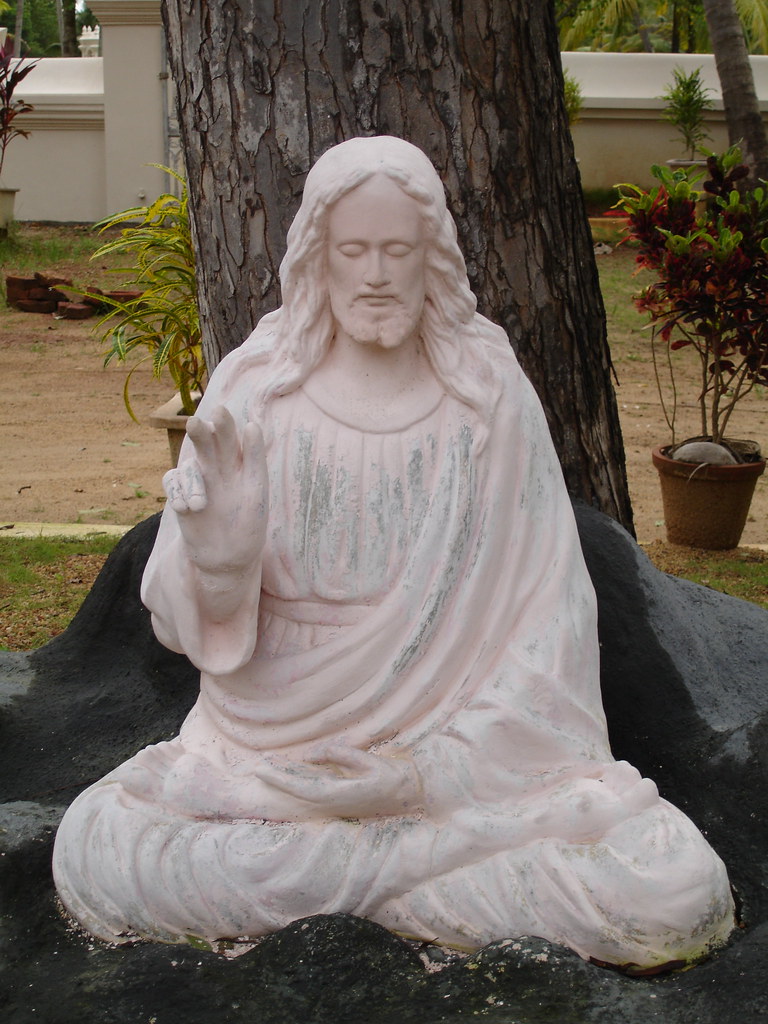
“Best Jesus Ever” by C+H is licensed under CC BY-SA 2.0

Poem: ‘Barefoot’

After your city feet in socks and shoes,
After your crowded evening with its booze,
Your air is tainted with your body’s sweat,
Unclean and laden with a vague regret.
But we are free
Who live beside the sea,
Can choose what our life spurns or craves.
Surely we reach
Purity on a beach,
Daily dallying barefoot in the waves.

I grew up barefoot. The only downside came when I was sent away to school, and shoes were always too tight even if they were EEE width. That in turn meant that in England I suffered from chilblains all winter. As an adult I still go barefoot, wear sandals in town, have shoes for rare stuations. But let’s face it – shoes make your feet sweat, and also make it hard to climb trees and to swim.

The form of the poem reflects the argument: the first four lines about shoe-wearing are regimented: iambic pentameters, rhyming AABB. The barefoot lines are less constrained, more playful, rhyming CCDEED – the short lines could be written together as iambic pentameters, but the rhymes work against seeing and hearing them that way. And the seventh line is the most unorthodox, having only four feet, while the last line is the most whimsical with its ‘daily dallying’.

The poem was originally published in The Orchards Poetry Journal.

Photo: “25/02/2009 (Day 3.56) – Definitions” by Kaptain Kobold is licensed under CC BY-NC-SA 2.0

Poem: ‘God is Two Brothers’

God is two brothers, one dark and one light,
Riding out Time in a tiny ship;
Half day and half night gives little room;
God knows that a rose, red rose or white,
Is a rose is a rose is a bud is a bloom
Is brown blown petals and a drying hip;
And the length of Time’s budding, blowing park
Walk the arm-linked arguers, Light and Dark.

I wrote this poem in Morocco in my 20s, after an encounter with some of the herbs they grow there. As an aside, I don’t necessarily believe or subscribe to the things I write in my poems – they are just expressions of thoughts, moods, landscapes, overheard conversations or whatever. That said, I still like this poem: I find it simultaneously all-embracing and meaningless, and that’s OK. Apparently my recital of it, while pulling dying petals off a rose bush, captivated a young lady at the beginning of our friendship… and we’ve now been together for 31 years.

The poem was first published by Ryerson Free Press.

Photo: God and devil.jpg by Yumeshan Lakshitha is licensed under Creative Commons Attribution-Share Alike 4.0 International

Short poem: ‘Golden Childhood’

Golden girl on a sunset beach
With a dog and a horse,
Golden boy spears a silver shark
Under the sea;

Is such a dream forever in reach
Or forever false?
We stumble, emotional, through the warm dark
Back to the sea.

I wrote this in my 20s when I was saying goodbye to the Bahamas – my father had died, my mother had sold the house and moved back to Europe. For the next few decades I lived in Denmark, Canada, the US… but eventually came back to the sea.

The poem was originally published in Candelabrum. I always had difficulty with that seventh line. Originally it had “emotionally”, and I sort of justified it with the line itself being a stumble… but it’s a bad line, too many syllables, too many consonants. Sometimes when I submit a poem to a magazine, the editor points out a flaw, and more rarely, offers a useful alternative. Poems can always be tinkered with.

Photo cropped from “Girl riding a horse at sunset on Bali” by Jimmy McIntyre – Editor HDR One Magazine is licensed under CC BY-SA 2.0

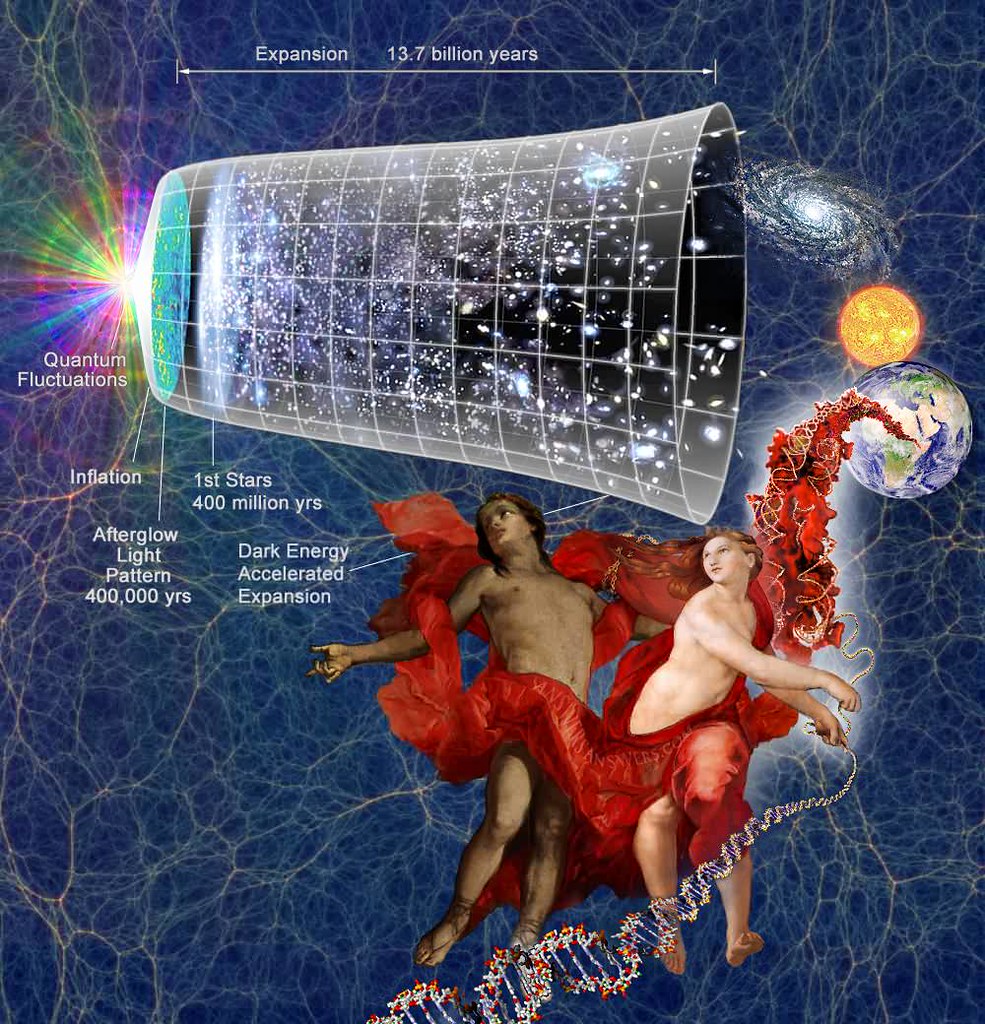
Poem: ‘Here Come the Old Gods’

Here come the old gods,
laughing in their sleeves
At all the foolishness
humankind believes.
Vishnu and Odin say
Prayers are in vain.
Loki and Shiva say
All goes down the drain.
Jesus and Buddha say
All will rise again.
Dig into the molecule,
the atom you disclose–
Search into the atom and
its particles expose–
Then to string and quantum,
to things that no one knows,
But downward still and downward
the endless staircase goes.
What yet smaller pieces
make up the smallest part?
What is outside everything?
What’s before the start?
The answer’s in the searching
through human gods and sin,
The answer’s in the clicking
of the wheel’s endless spin,
The answer’s in the angels
dancing on a pin,
The answer is the journey
you begin, begin, begin.

This poem was published this month in Snakeskin. It is rhythmic without being precise in its metre: this, together with the rhymes, means it is easy to chant (if you like chanting poetry). Philosophically it is a good expression of my personal beliefs (or lack thereof). I’m a Militant Agnostic: “I don’t know, and neither do you.” Which creates a lot of space for us all to enjoy life.

Photo: “universe” by tolworthy is licensed under CC BY 2.0

Poem: ‘Nymph’

A mayfly nymph, in water for a year,
transforms into a beauty of the air
for just one day – one day to mate, breed, die.
The essence then’s the nymph, and not the fly
which we see only thronging in death throes,
death throes of riotous sex. Everyone knows,
though, that the fly’s the cycle’s pinnacle
to artists, if not to the clinical.
Though humans for long eons lived on land,
at Science’s Nietzschean precipice we stand,
transform to things that freely live in space,
or formless Cloud-based online lives embrace…
and may survive but briefly in that state,
but, dying, will seed new worlds as we mate.

Nature poem? Piece of science fiction? The observation of how nature works and a hypothetical extrapolation of human nature into the future are not really two different things – it’s all part of life, the universe and everything… though that future will be is anyone’s guess. The only thing for sure is that tomorrow is not going to be like today.

Is a 14-line poem in iambic pentameter a sonnet, if it just rhymes as couplets? I think not. This poem has a volta after the eighth line, but it still doesn’t feel like a sonnet to me. The feel comes from a couplet closing the poem out after a series of three quatrains, or from the shift from ABBAABBA to CDCDCD. That finalising shift, that sense of completion, is integral to the feel of the sonnet. This poem fails to meet that criterion.

‘Nymph’ was first published in the Orchards Poetry Journal, whose latest issue has just come out – free online, or available in print.

Photo: “mayfly” by ian boyd is licensed under CC BY-NC 2.0