Category Archives: semi-formal

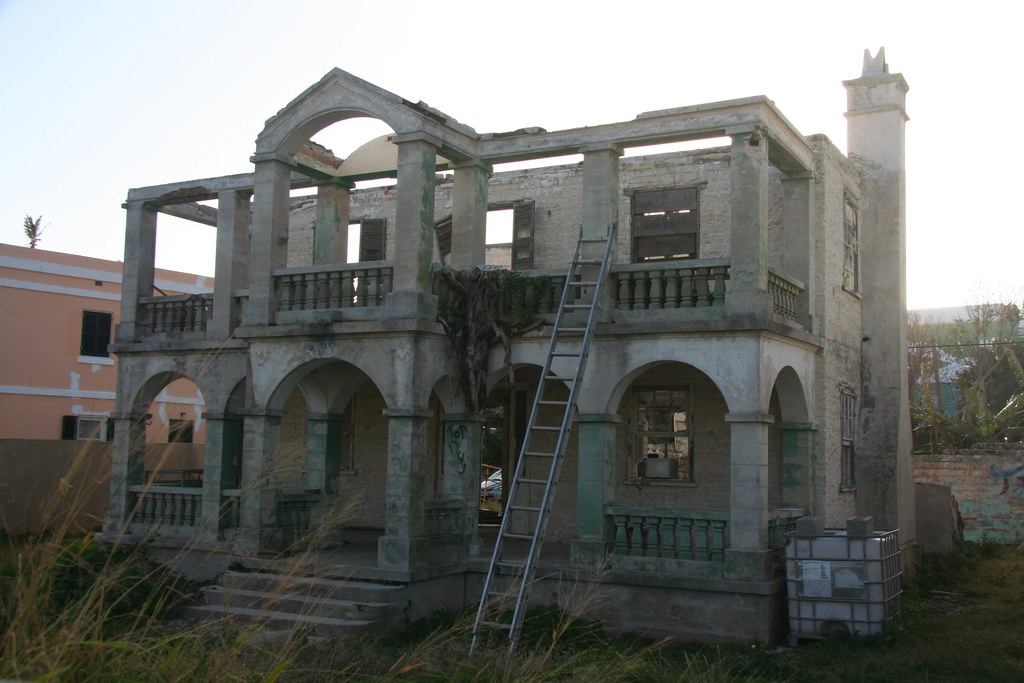
Short poem: RHL, ‘Ghosts Twitter’

Ghosts twitter in my head like the memory of predawn birds.
Digging below my present house I find
a structural supportive past with rock veins to be mined.
Upstairs the future isn’t fully built or roofed.
Has someone goofed?
The Architect is vague on final thirds.

*****

I am finding many ways to say I don’t understand existence at all; this is one of them.

This short, semi-formal poem was published recently in The Lyric.

Photo: “unfinished house” by Lodigs is licensed under CC BY-NC-ND 2.0.

Semi-formal poem: RHL, ‘Layered Understanding’

The Universe with which we grapple
searching for structure, meaning, is no apple
with glossy skin outside, substance beneath,
where deep within its core it meets our needs
to find its meaning: seeds.
No, it’s an onion – peel off the outer sheath
of sensory impressions,
and you uncover explanations
coming first from mystic revelations
and then from faith’s and Science’s professions.
Research from Galileo through to Quantum realms
reveals, and contradicts, and overwhelms
until you take away the final layer
and find: there’s nothing there.

*****

I’m a Militant Agnostic: “I don’t know, and neither do you!” We keep searching and probing, the certainties get disproved, new lines of enquiry open up… and off we go again, Quixote-like, because we’re humans.
This poem rhymes irregularly, and is in iambics of different line lengths. Semi-formal.

‘Layered Understanding’ was first published in the Shot Glass Journal #43.

Photo: “half onion peeled” by Hanna Khash is licensed under CC BY 2.0.

Semi-formal? or Spoken Word? RHL, ‘Life is a Bubble’

A life is a bubble:
somewhere the Grand Druid
dips his wand into the universal fluid
and then a new life is formed, floating
on chance breezes until it – pops –
and the thin skin coating
falls back to earth as mere drops,
the shape and rare rainbow glint gone to air,
and the bubble is where?

Earth is a bauble
in the universal flux,
as it foams, boils and freezes,
just dust from God’s various mucks,
sneezes afloat on chance trans-solar breezes.

The humans babble,
rabble rising from the rubble of other lives cut to stubble,
they burble some Bible as they gab, grab and gobble,
cobbling conning towers of Babel and Hubble,
their progress hobbled by their wobbly bobble,
reams of hopes, dreams and schemes
just a bubble.

*****

Sometimes a chance-occurring phrase in some moody mode of thought lets me ramble wildly through tangled words and ideas. It’s not amenable to regular form, but it’s fun. It seems in the spirit of Spoken Verse, though I’ve never performed. The earliest poem I wrote in this style is from over 50 years ago… which is 30 years before I ever had a poem accepted for publication. I was definitely out of step with the non-verse that then controlled the poetry industry to the exclusion of almost all actual verse. Things have eased in recent years, and dozens of poems from those early years have since been published. (Note to struggling young poets: Don’t give up! But have another career that pays money!)

Anyway, ‘Life is a Bubble’ only needed a couple of years to be published in 2024 in The Lyric.

Photo: “Blowing bubbles” by Song_sing is licensed under CC BY 2.0.

RHL, ‘On Disrespecting Ancestors’

I disrespect my ancestors fighting in wars,
Europeans fighting Europeans, blame without cause;
my English grandfather killed fighting the Germans,
my Danish uncle executed for killing with Germans,
my earlier German ancestors fighting the French,
my French ancestors fighting (and marrying) the English…
and the cause of the wars always indefensibly wrong.
Why should anyone glorify them in song?
Pride, greed and stupidity – these are the drivers of war.
I turn my back on all of them, stand on the sea shore,
marvel at wind and wave, at sun, moon and stars,
despising, ignoring, forgetting their idiot wars.

*****

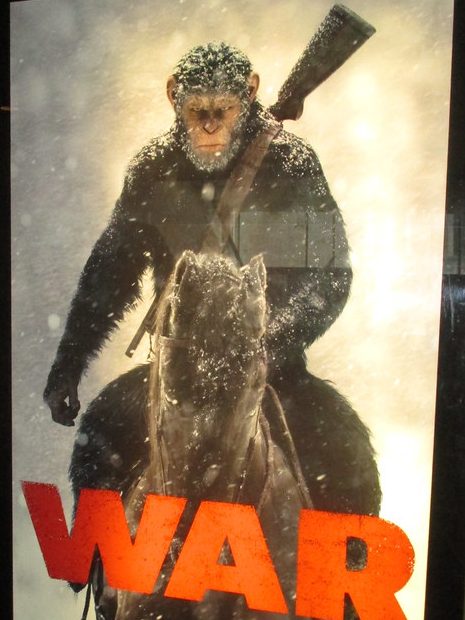
I’m so sick of Putin, Netanyahu… and Bush Jr, Dick Cheney, Tony Blair… war criminals, the lot of them. But they’re the products of our genetic makeup as social animals, dividing everything into “us” and “them”, and then through crafty hysteria and massively organised mob violence, grabbing everything they can for themselves.

Anyway, this semi-incoherent rant of a poem was published in the current Amsterdam Quarterly, and editor Bryan R. Monte wanted one change in my submission: to change the last line’s “ape-idiot wars” to “their idiot wars”. As usual, I acquiesced. Also as usual, I’m not sure whether it is a good suggestion or not. Apes figure in a lot of my verse, as being an underlying reality of humans, essential to acknowledge, equally essential to try to control. In the context of my other work, I think I prefer “ape-idiot”.

Photo: “War of the Planet of the Apes Poster 2671” by Brechtbug is licensed under CC BY-NC-ND 2.0.

Weekend read: SF poem: RHL, ‘The Uncertainty of Light’

On an asteroid
there was an alien artefact.
If such it was… a droid…
I’ve no idea, in fact.
Its metal (leg?) seemed (deployed?)
and so I touched it, but responses lacked.

Once there were women; once I was a man
(touching a leg then always brought response)
before the search for life and light began
to change me into this dark renaissance.
The teacup storms on which I’ve tossed,
when she or I have bitched and bossed
till all the loves I’d ever marked
were all the women that I’ve lost.
They chose the certainty of Dark
over the uncertainty of Light.

The joys of life are what’s uncertain:
hopes of what’s behind the curtain,
knowing the results will grate
of things that you anticipate,
knowing your life could be wrecked
by what you never could expect.
And though you think you’re circumspect,
you can’t deflect, inspect, collect.
Knowing the harvest is unknown
with crops that grew from deeds you’d sown,
while all your greatest hopes and dreams
will be exceeded by the future’s smallest gleams.

Because change never stops, you find what matters
is never really known.
You may get verbal assurance of your future status,
but was it “throne” or “thrown”?
The only certainty would be
if, offered immortality,
you feared what such an altered world would lose, would save,
and chose instead to go into the Dark
with furnace no less dark than the grave
wherein there lies no risk of further blight.
Most people choose the Certainty of Dark
over the Uncertainty of Light.

But we who strive to stay alive
long enough for rejuvenation
hope, hope only, we will thrive,
post-humans in a re-Creation,
unknowing what our ape-based genes
will do with power dominance,
with war, with sex, Earth mined and undermined,
but glad to take the chance.
How else can we see scenes
of how it all turns out — destroyed? refined? —
unless we scrape through, level up with wounds and scars
and watch a world we love and leave behind?
So at last I am here, between the stars,
transiting the darkness of the Void,
the empty galaxy’s apparent night,
chanting the mantra that keeps spirits buoyed:
Let there be Post-Humanity’s own light!

Between the spiral arms in the near-void
there’s still thin light of distant galaxy and star,
still specks of dust, rarely an asteroid.
Earth left (millennia in old Earth years ago),
I cross the dark immortally, beyond, afar,
through what is darkness only to Earth-eyes
which myriad wavelengths up and down can’t know,
but which I now apprize.
Light here abounds,
and boundlessly surrounds, astounds.

Take the smallness from slight,
take the bad from the blight,
take the fear out of flight
and you’re left with the light, the light, the light.
We stumble from dark caves of night
into day, trying not to tumble;
our parents the dark; post-humans the light;
ourselves just the stumble.

*****

This poem (published in this week’s Bewildering Stories) is a response to conversations in which people have expressed pessimism about the value of life extension, rejuvenation, cryonic preservation and resuscitation… anything beyond the certainties of a clear end to life after a normal lifespan. “How will you… why would you… what if they… you won’t understand… you won’t have…” Ah, but everyone who has immigrated into a foreign culture has done this: had to learn a new language in order to find a job and start making friends and find out how everything works. Some of us are comfortable doing this; some people aren’t. I’ll take the uncertainty, and enjoy its discomforts… because it’s just so interesting!

Photo: “Into the Light: The Future is Uncertain” by tenzin.peljor is licensed under CC BY-SA 2.0.

Annie Fisher: ‘Grumpy Grandad’s Nursery Rhyme’

Cock a buggery doodle doo!
I’m bending to lace up this buggery shoe!
You’d be buggery bad-tempered too
If the buggery cock
Woke you buggery up
At buggery, buggery five twenty two!

*****

Annie Fisher writes: “When our grandchildren were very small, we would sometimes visit to help with child care. The children would often burst into our bedroom early in the morning yelling ‘Cock-a-doodle-doo!’ (Probably encouraged by their parents). On one occasion my husband was staying with them for a few days without me. On the second day he sent me a text at the crack of dawn. The text read ‘Cockabuggerydoodledoo!’ and so I understood that his day had already begun! I thought ‘cockabuggerydoodledoo’ (a case of ‘expletive infixation’, Google tells me) had irresistible rhythmic force.
My poem is, of course, based on the traditional nursery rhyme:
Cock a doodle doo!
My dame has lost her shoe,
My master’s lost his fiddling stick
And knows not what to do.

Annie Fisher’s background is in primary education, initially as a teacher and later as an English adviser. Now semi-retired she writes poetry (this one appeared in Snakeskin) for both adults and children and sometimes works as a storyteller in schools. She has had two pamphlets published with HappenStance Press: (2016) and (2020), and is due to have another pamphlet published in the next couple of months with Mariscat Press. It will be called ‘Missing the Man Next Door’. She is a member of Fire River Poets in Taunton, Somerset and a regular contributor to The Friday Poem https://thefridaypoem.com/annie-fisher/

Photo: “cock-a-doodle-doo.” by alyssaBLACK. is licensed under CC BY-SA 2.0.
Semi-formal: Annie Fisher, ‘Today I’ll be a Slug’

I’ll flow
slug-slow,
go naked
(naked’s fine).
My only mission
is to glisten.
Watch me shine.

*****

Annie Fisher writes: “I wrote the slug poem a year ago when I was on a writing retreat on the island of Iona in the Inner Hebrides. I was writing all sorts of other stuff on the retreat and that little poem popped into my head during a free-writing morning splurge. I guess the idea of slowing down, going with the flow, being true to oneself and letting one’s inner radiance shine is very much in keeping with the vibe of Iona, but it wasn’t a conscious thing.
I do love short poems. I’ve had others published on Snakeskin, including:

SONG THRUSH, MAY MORNING

Bird at my window, early, early,
Something to say, to say, to say,
This morning will not come again,
Make the most of today today.

That poem plays with the fact that the song thrush repeats its song. I sometimes sing it with some friends as a round using a tune we wrote. Here’s one other from the Snakeskin archive which I’m rather fond of:

GRANNY ON THE NAUGHTY STEP

Granny sits on the Naughty Step
Thinks about what she has done
Wishes she’d been a bit naughtier
It might have been fun…”

Annie Fisher’s background is in primary education, initially as a teacher and later as an English adviser. Now semi-retired she writes poetry for both adults and children and sometimes works as a storyteller in schools. She has had two pamphlets published with HappenStance Press: (2016) and (2020), and is due to have another pamphlet published in the next couple of months with Mariscat Press. It will be called ‘Missing the Man Next Door’. She is a member of Fire River Poets in Taunton, Somerset and a regular contributor to The Friday Poem https://thefridaypoem.com/annie-fisher/

Photo: “Banana Slug – A Series” by goingslo is licensed under CC BY-NC-ND 2.0.

Using form: Semi-formal: RHL, ‘Hunting’

The Osprey splashes, misses, and flies by
skimming the waves, rising, five yards away.
What’s its success rate? Does it care?
The Stingray searches, gliding, mouth to sand
five yards beyond the shallows where I stand.
Its Roomba-work’s its own affair.
The water splishes, burbles random rhythms.
The sun confuses, over-hot, then hidden.
The Oystercatcher calls. The Osprey rocks
on its branch in a casuarina,
flaps down-beach to another.
Along the margins of the shore, alone, each stalks.
They hunt for food
and I hunt them for what they mean, or could.

*****

There are elements of the sonnet about this semi-formal poem: it’s in iambics (though with uneven lengths of line); it has rhyme (though some only slant rhyme, and not patterned); it has 14 lines and a final couplet (though not with a clear volta where you would hope, after the 8th line). But I think the disjointed nature of the poem, its stop-and-go lines of different length, is suitable for the nature of the hunt: the searching, the sudden swoop, the pause, the restarting. In that sense the form is appropriate for the subject matter, and therefore good. It may be that I was too lazy to beat the whole thing into pentameters with a regular rhyme scheme… but it may also be that this was the right place to stop for this particular poem.

‘Hunting’ was originally published in Obsessed With Pipework, and has just been reprinted in Green Ink Poetry (motto: “We Welcome Chaos, Calamity, And The Natural World. Hope Punks & Witches” in their current collection with the theme of ‘Forage’.

Photo: “Osprey” by Mick Thompson1 is licensed under CC BY-NC 2.0.

Light verse: Edmund Conti, ‘Man O’ War’

The men of war
in the man o’ war
(and the many more)
who rode the ship’s bottom
where the admirals put ’em
would often think
this has to stink
If we ever sink
we’re sunk.

At least
that’s what
I think
they thunk.

*****

Edmund Conti writes: “I guess I was thinking if there is a Man O’ War, then there have to be Men O’ War. And where would they be put to be kept out of the way until called on. One idea led to another, one simple rhyme led to more, and voila!”

Edmund Conti has recent poems published in Light, Lighten-Up Online, The Lyric, The Asses of Parnassus, newversenews, Verse-Virtual and Open Arts Forum. His book of poems, Just So You Know, released by Kelsay Books
https://www.amazon.com/Just-You-Know-Edmund-Conti/dp/1947465899/
was followed by That Shakespeherian Rag, also from Kelsay
https://kelsaybooks.com/products/that-shakespeherian-rag

Photo: “The Battle of Trafalgar, 21 October 1805” by lluisribesmateᥩ is licensed under CC BY-NC 2.0.

Poem on Poetry: ‘Poets Do Tricks With Words’

Poets do tricks with words,
play games, weld rhyme,
but we don’t do this nicely all the time–
we’ve also anger at unfairness, anger hot-white
at wasteful power, at greed and spite,
where fear meets selfishness, drives right and left
to persecution, torture, war and theft.

Each trick sticks bricks, fixed and unfixed,
into an apartheid verbal wall
that warbles claims to separate
sense from nonsense–though we appreciate
all’s one, all’s all the same,
word walls are just a Jenga game,
and all bricks fall.

We can play games with words,
thread and unthread them in a silly tangle,
loom and illuminate light warp, dark weft,
wrong them and wring them ringing through a mangle
as sometimes the only way
to find a new way to say
things said ten thousand times before:
how brightness has a rightness,
whether in the sky, the sea, a face or an idea.

So cook with words, mix, bake,
packing in raisins, nuts, half cherries for a cake
with flour just enough for a pretence
that it’ll hold together and make sense.

*****

Formal? Free? The arguments about the appropriate structure for poetry in English never seem to end. The semi-formal compromise has been around for a long time: take the rhythmic, rhyme-rich ramblings of Arnold’s ‘A Summer Night’ from 170 years ago, or Eliot’s ‘Prufrock’, written in 1911. To me, the test of good verse is that it is easy to memorise and recite: the ideas and imagery have to be memorable, but so does the expression, word for word. The tricks may vary by language and culture, but whatever tricks the poet can manage to achieve memorableness are legitimate.

‘A Summer Night’ was in my English A Level curriculum <cough> years ago, and the middle section which I still know by heart encouraged me to run away from school. (I was found trying to sleep in a phone booth while waiting for a morning train, and brought back to school at 2 in the morning.) The poem’s semi-formal structure has always appealed to me with its rhetorical power, and over the years I’ve often used that freedom when writing about poetry, as in ‘Some Who Would Teach‘ and ‘Inspiration 2‘ and ‘Memorableness‘.

‘Poets Do Tricks With Words’ has just been published in Orbis, edited by Carole Baldock.

Photo: “National Fruitcake Day” by outdoorPDK is licensed under CC BY-NC-SA 2.0.