Category Archives: semi-formal

Using form: Semi-formal: RHL, ‘Hunting’

The Osprey splashes, misses, and flies by
skimming the waves, rising, five yards away.
What’s its success rate? Does it care?
The Stingray searches, gliding, mouth to sand
five yards beyond the shallows where I stand.
Its Roomba-work’s its own affair.
The water splishes, burbles random rhythms.
The sun confuses, over-hot, then hidden.
The Oystercatcher calls. The Osprey rocks
on its branch in a casuarina,
flaps down-beach to another.
Along the margins of the shore, alone, each stalks.
They hunt for food
and I hunt them for what they mean, or could.

*****

There are elements of the sonnet about this semi-formal poem: it’s in iambics (though with uneven lengths of line); it has rhyme (though some only slant rhyme, and not patterned); it has 14 lines and a final couplet (though not with a clear volta where you would hope, after the 8th line). But I think the disjointed nature of the poem, its stop-and-go lines of different length, is suitable for the nature of the hunt: the searching, the sudden swoop, the pause, the restarting. In that sense the form is appropriate for the subject matter, and therefore good. It may be that I was too lazy to beat the whole thing into pentameters with a regular rhyme scheme… but it may also be that this was the right place to stop for this particular poem.

‘Hunting’ was originally published in Obsessed With Pipework, and has just been reprinted in Green Ink Poetry (motto: “We Welcome Chaos, Calamity, And The Natural World. Hope Punks & Witches” in their current collection with the theme of ‘Forage’.

Photo: “Osprey” by Mick Thompson1 is licensed under CC BY-NC 2.0.

Light verse: Edmund Conti, ‘Man O’ War’

The men of war
in the man o’ war
(and the many more)
who rode the ship’s bottom
where the admirals put ’em
would often think
this has to stink
If we ever sink
we’re sunk.

At least
that’s what
I think
they thunk.

*****

Edmund Conti writes: “I guess I was thinking if there is a Man O’ War, then there have to be Men O’ War. And where would they be put to be kept out of the way until called on. One idea led to another, one simple rhyme led to more, and voila!”

Edmund Conti has recent poems published in Light, Lighten-Up Online, The Lyric, The Asses of Parnassus, newversenews, Verse-Virtual and Open Arts Forum. His book of poems, Just So You Know, released by Kelsay Books
https://www.amazon.com/Just-You-Know-Edmund-Conti/dp/1947465899/
was followed by That Shakespeherian Rag, also from Kelsay
https://kelsaybooks.com/products/that-shakespeherian-rag

Photo: “The Battle of Trafalgar, 21 October 1805” by lluisribesmateᥩ is licensed under CC BY-NC 2.0.

Poem on Poetry: ‘Poets Do Tricks With Words’

Poets do tricks with words,
play games, weld rhyme,
but we don’t do this nicely all the time–
we’ve also anger at unfairness, anger hot-white
at wasteful power, at greed and spite,
where fear meets selfishness, drives right and left
to persecution, torture, war and theft.

Each trick sticks bricks, fixed and unfixed,
into an apartheid verbal wall
that warbles claims to separate
sense from nonsense–though we appreciate
all’s one, all’s all the same,
word walls are just a Jenga game,
and all bricks fall.

We can play games with words,
thread and unthread them in a silly tangle,
loom and illuminate light warp, dark weft,
wrong them and wring them ringing through a mangle
as sometimes the only way
to find a new way to say
things said ten thousand times before:
how brightness has a rightness,
whether in the sky, the sea, a face or an idea.

So cook with words, mix, bake,
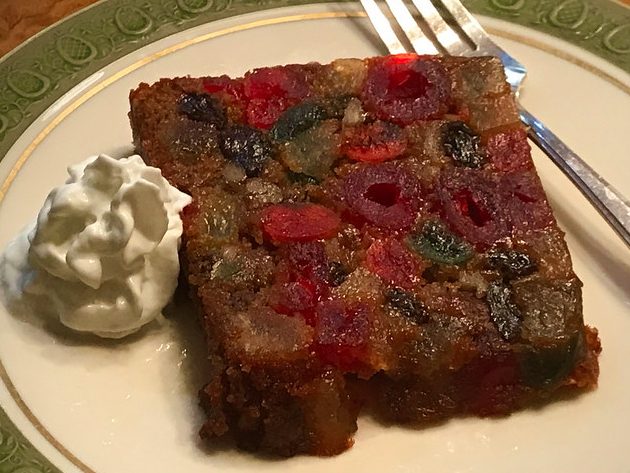
packing in raisins, nuts, half cherries for a cake
with flour just enough for a pretence
that it’ll hold together and make sense.

*****

Formal? Free? The arguments about the appropriate structure for poetry in English never seem to end. The semi-formal compromise has been around for a long time: take the rhythmic, rhyme-rich ramblings of Arnold’s ‘A Summer Night’ from 170 years ago, or Eliot’s ‘Prufrock’, written in 1911. To me, the test of good verse is that it is easy to memorise and recite: the ideas and imagery have to be memorable, but so does the expression, word for word. The tricks may vary by language and culture, but whatever tricks the poet can manage to achieve memorableness are legitimate.

‘A Summer Night’ was in my English A Level curriculum <cough> years ago, and the middle section which I still know by heart encouraged me to run away from school. (I was found trying to sleep in a phone booth while waiting for a morning train, and brought back to school at 2 in the morning.) The poem’s semi-formal structure has always appealed to me with its rhetorical power, and over the years I’ve often used that freedom when writing about poetry, as in ‘Some Who Would Teach‘ and ‘Inspiration 2‘ and ‘Memorableness‘.

‘Poets Do Tricks With Words’ has just been published in Orbis, edited by Carole Baldock.

Photo: “National Fruitcake Day” by outdoorPDK is licensed under CC BY-NC-SA 2.0.

Edmund Conti, ‘The Straight Skinny’

To say that only I am fat,
To say that I am only fat,
To say only that I am fat,
To only say that I am fat,
Is not to say, however, that
They equally are definitive.

One statement says fat’s mine alone,
One says no other trait I own,
One just has a plaintive tone,
And–overlooked and overblown–
One just splits the infinitive.

*****

Edmund Conti writes: “I guess this began with the observation that ‘only I am fat’ and ‘I am only fat’ have different meanings depending on the placement of one word. Which made me wonder if placing ‘only’ in other parts of the sentence would change it again. Which it did. Why did I use ‘fat’ as a trait? Well, it’s an easy rhyme and people can relate to it—in themselves or others. Also, it gave me a good excuse for the title.
I thought writing the second stanza would be trickier, but the rhymes just fell into place. And noticing the split infinitive and using it saved the poem. Assuming it was worth saving.”

Edmund Conti has recent poems published in Light, Lighten-Up Online, The Lyric, The Asses of Parnassus, newversenews, Verse-Virtual and Open Arts Forum. His book of poems, Just So You Know, released by Kelsay Books
https://www.amazon.com/Just-You-Know-Edmund-Conti/dp/1947465899/
was followed by That Shakespeherian Rag, also from Kelsay
https://kelsaybooks.com/products/that-shakespeherian-rag

His poems have appeared in several Potcake Chapbooks:

Tourists and Cannibals
Rogues and Roses
Families and Other Fiascoes
Wordplayful
all available from Sampson Low Publishers

Photo: “Why Am I So Fat?” by morroelsie is licensed under CC BY-NC 2.0.

Poem: ‘True Believers’

A visionary dies an ignoble death;
prophets arise
who transmute his tale to a fairytale,
uplifting, wise,
and establish themselves to receive as
on his behalf, cash from pilgrims, believers–
all of it lies.

One of the new believers rashly tries
to challenge the powers the fairytale calls Evil,
strikes at the Powers That Be, is caught and dies,
dies an ignoble death… Prophets arise
and transmute the events into a new fable,
glory surpassing the skies.
At a cost, of course, they spread out a table
for all to gather and feast. They, the deceivers,
live yet again from the wealth of the true believers;
one of whom…

*****

I love seekers after Truth, Knowledge, the Meaning of Life, no matter where they are led in belief or unbelief. I loathe those who come after them to distort the message and extort innocent followers. But it’s all an old, old story.

This semi-formal poem was first published in Snakeskin – thanks, George Simmers!

Photo: “Megachurch” by Silly Deity is marked with Public Domain Mark 1.0.

Short poem: ‘Convalescence’

Demonic nurses, finding little sin,
all leave my bedside. Doctor Death comes in.
He looks around, “I’m only here
To get a rough sense of the atmosphere. ”
“Please, don’t get up…”
He sits. “Not healing with your usual speed,
Eh, you young pup?
You’ve got a few years left still, don’t you worry.
Take all the time you need.
I’m in no hurry.”

*****

I wrote this in mid-2020; I think Doctor Death was in all our minds at that point, though I didn’t catch Covid myself for another couple of years. The poem was published in the current issue of Rat’s Ass Review – thanks, Rick Bates!

Photo: “1974 Madhouse with Vincent Price playing Dr Death 9599” by Brechtbug is licensed under CC BY-NC-ND 2.0.

Poem: ‘Full Disclosure’

“The trouble with this growing old,” he said,
“You lose so much . . . and you get what instead?
If you can hang a bath towel on your tool
it’s wasted when you’re in an all-boys school.
Time was, I’d come — as you’d expect —
with just a look, a touch.
Now, not so much.
The only thing that gets me full erect
is feeling flesh firming from kiss and grasp;
so all my work is trying to make her gasp!
I need her climax if I’m to get sated.”
He looked at her. She looked at him. He waited.

*****

This semi-formal poem was published in the Lighthearted Verse subsection of Formal Poetry in that wonderfully rich and varied magazine, Better Than Starbucks. Where else could you find such a variety of areas of expression as BTS’ Regular Feature Pages?
Free Verse
Haiku
Formal Poetry
Poetry Translations
Poetry for Children
International Poetry
African Poetry
Experimental, Form, & Prose Poetry
Poetry Unplugged
Fiction
Flash Fiction & Micro Fiction
Better Than Fiction (creative nonfiction)
The Interview
Interviewee Poems
… and From The Mind of Alfred Corn

And tolerant enough to put up with my verse on occasion! Unfortunately they have announced they are going on hiatus… hopefully they will be back in 2023, as they have been a truly excellent outlet for all manner of poetry and prose.

Photo: “Mystery Man meets a friend” by mossimoinc is licensed under CC BY-ND 2.0.

Poem: ‘Fellow Student’

I went round to Sarah’s flat one night:
“Hi man,” she said, “Yeah, you can come in, sure,”
apologising as she shut the door –
“but not for too long, you know how it is –
I’ve got two essays still to write
and then exams start – I’m in quite a tizz.”
She yawned and laughed, said “I’ve just changed Sam’s nappy,
and now he’s fast asleep – at last!” she smiled –
“Wow, but he keeps me busy!” “Also happy,”
I put in. “Yes, but not all the while –
he’s got a weak chest, coughs, cries with the pain,
I get so uptight we both end in tears…
his dad got sentenced, over drugs, eight years…
that’s long: I guess we won’t get back again;
I’ve got my Finals coming up, and then,
after, who knows? I’ve hardly time for dreams:
with Sam and studying, sometimes, it seems
my life’s nappies and essays, nothing more.”
She changed the record, sat to roll a joint,
and said “First thing I do, even before
I take Sam to that Nursery up the road –
he’s bigger every day! He’s quite a load!
But anyway, that’s not the point –
first of all, I get stoned, and stay that way,
or else I’d never make it through the day.”

A new cloud added to her soft rich room
a further depth of blue, a silent pause.

She spoke again, her thoughts already gone
back to her work: “And then, they seem such fools,
dividing all Philosophy in schools.
You know my option is the Indian course;
I know so much of what the old books mean:
things of which lecturers can’t conceive, think guff,
I understand, they’re places where I’ve been…
I’m always trying to turn the lecturers on:
if they’d drop acid, or just smoke some stuff,
they’d see so much… but they’re not brave enough.
So Transcendental just remains
a trendy course which their students can take
if other courses can’t keep them awake.
But still they try their worst,” she said, nonplussed,
and read “The Bhaghavad Gita retains
relevance for our century. Discuss.

Christ, aren’t they boring!” she said, biro poised.
I let myself out, while she found her page,
and Briggs, her hamster, woken by the noise,
went streaming up the rat-race in his cage.

*****

This poem dates to the time after I had dropped out of the University of Dundee, but still came back to it in the years that saw most of my 25,000 miles of hitchhiking. I feel I learned more by wandering in and out of jobs, countries, languages and religions than I would have if I’d stayed on Sarah’s path. But then, I have no idea how life worked out for her, so who knows.

The poem is semi-formal – rhymed but without a rhyme scheme, in iambic pentameter with some occasional liberties taken with metre… but those liberties are comparatively acceptable, even beneficial, in a longish poem as they break up the metrical monotony. That’s my excuse anyway, and I’m sticking with it. The poem was published decades later in Snakeskin – thanks, George Simmers!

Hamster Race” by Naked Faris is licensed under CC BY-NC-ND 2.0.

Semi-formal poem: ‘The Viking in Winter’

O it is a wide winter, windy with gales,
Hard, harsh and horizonless, cold,
And I can do nothing more this year
But sharpen the swords, mend the gear,
Mend cloth, patch sails,
Listen to tales told by the old,
Listen to horses stamp in stalls.
Feel the blood in my veins going nowhere,
Feel the river halt, the bay iced in,
The sun brief and thin
The food dried, smoked, salt
And no fresh fruit, fresh meat,
No fresh lands, fresh goods,
No fresh deeds, fresh girls,
No seas running and blood running
And people running and tales running…
For what is the good of inaction
Save to prepare for fresh action;
And what is the good of fresh action
Save for fresh tales;
And what is the good of fresh tales
Save for the glory and the name
And the fame that lives past the death rattle
For the sword singer,
Word winger,
The Bard of Battle?

*****

I feel the same fascinated connection to my Viking ancestors that I feel to my even earlier chimp-like forbears and modern chimp and bonobo cousins. All have social networks, hierarchies, politics, violence and ways of overcoming violence, cherished families, a sense of fairness and ways of cheating. I suspect the Viking gods would be far easier for chimps and bonobos to accept than modern scientific understanding could ever be. I greatly enjoy Vikings, chimps and bonobos, recognise that a lot in me comes from them, and am thankful to have outgrown much of their limitations. (And to neo-Nazis who think they are Vikings, I say this: “You’re not; don’t be so stupid.”)

This rambling semi-formal poem was first published in Snakeskin; thanks, George Simmers!

Icy sea” by piropiro3 is licensed under CC BY 2.0.

Semi-formal poem: ‘Thin Thin Skin’

Life on the earth is thin as dust on an apple.
25,000 miles round the planet, and if we go 2 miles high
we struggle to breathe, claw at the air, fight it, grapple.
25,000 miles round the planet, mostly sea
and if sea levels rise a foot, whole communities are lost
and if a storm gives 10 foot waves, houses and lives are lost.
We live on the thin thin skin of the earth.
Is the soil three inches deep, or a foot, or five?
Can we grow enough to survive?
We live on that thin thin skin of dirt.
And people too are fragile, their bones, organs, held in
by their thin thin skin. A knife,
a bullet, even too much sun,
will break the thin thin skin and drain the life.
And society too is fragile, with too many knives and guns,
too little respect for sun, ocean, climate change;
too many people with a thin thin skin
leading their ignorant people into the razorwire of unpredicted change.

*****

This poem was originally published in Lighten-Up Online (or LUPO) last year – thanks, Jerome Betts! It’s not really a formal poem, though there are some rhymes. As for the subject matter, all I can say is: If you haven’t run across the delightful XKCD graphic of the past 12,000 years of temperature change, please click here!

Photo by Allison Shelley for EDUimages: A middle school science teacher explains a lesson on climate change using a SMART board. Copyright CC BY-NC 4.0