An email enquiry that I received about formal-only poetry magazines makes me think I should update my resources list with that focus.
Able Muse – US magazine and press; website is not always completely current Asses of Parnassus – Canada: short, witty, formal poems, snarky is fine, hosted on Tumblr. Blue Unicorn – US: print only; prefers formal but will take other work Chained Muse – US: prefers classical themes. Dodgy political bias Crab Orchard Review – US Extreme Formal series of anthologies from Rhizome Press. US. Grand Little Things – US: “Returning versification to verse” Light – US: large biannual issue, also the home of weekly topical light verse Lighten Up Online (LUPO) – UK: light formal verse, quarterly Lyric – US: “Founded in 1921, The Lyric is the oldest magazine in North America in continuous publication devoted to traditional poetry.” Lyrical, positive… flowers and countryside. New Verse Review – US Poetry Porch – US: lyrical Pulsebeat Poetry Journal – US Road Not Taken: The Journal of Formal Poetry – US: hard to find online because of its name, but a good small publication for formal and semi-formal verse. Snakeskin – UK: probably the longest-established poetry zine in the world; no longer 100% formal, but still a great favourite. Sonnet Scroll – US: a sonnet-specialized alcove on the Poetry Porch Sonneteer – US: substack emails The HyperTexts (THT) – US: an enormous assemblage of verse from all times and places; the editor’s personal preference for formal and leftist verse doesn’t rule out selections by Walt Whitman or Ronald Reagan! The works are mostly republications, but if you have a body of strong work the editor may be interested in creating a page for you. Think – US Verse-Virtual – US: a monthly publication for a caring community of poets and finally: Wergle-Flomp Humor Poetry Contest, No Fee – US: $3,750 in prize money
Once when her kisses were fire incarnate and left in their imprint bright lipstick, and flame, when her breath rose and fell over smoldering dunes, leaving me listlessly sighing her name …
Once when her breasts were as pale, as beguiling, as wan rivers of sand shedding heat like a mist, when her words would at times softly, mildly rebuke me all the while as her lips did more wildly insist …
Once when the thought of her echoed and whispered through vast wastelands of need like a Bedouin chant, I ached for the touch of her lips with such longing that I vowed all my former vows to recant …
Once, only once, something bloomed, of a desiccate seed— this implausible blossom her wild rains of kisses decreed.
*****
Michael R. Burch writes: “Once” was submitted to The Lyric in 1999, and elicited these comments from editor Jean Mellichamp Milliken: “. . . I actually loved “Once” (better than ‘Twice,’ even), but you need a resolution—it leaves the reader hanging . . . please, please finish it. It’s such a wonderful, fiery, lyrical piece!” The original poem was intended to leave the reader hanging. There was no resolution at the time it was written. The challenge of writing an ending couplet was intriguing, however, and “Once” was accepted (in its revised form with an ending couplet) and appeared in The Lyric along with “At Once,” “Twice” and “The Leveler.”
Michael R. Burch’s poems have been published by hundreds of literary journals, taught in high schools and colleges, translated into 23 languages, incorporated into three plays and four operas, and set to music, from swamp blues to classical, 86 times by composers.
From Beth Houston: “I’m writing to let you know that I’ve changed the latest Rhizome Press anthology I’m currently reading for from Extreme Sonnets and Villanelles to Extreme Formal Poems II, and I’ve extended the submission deadline to January 15, 2027.
I’m making the change to give more poets the opportunity to be included (by request) and to give me a chance to get the word out. I’ve been supposedly permanently kicked off Facebook for no specific reason even after going through their protest process, so I’m trying a new outreach approach, including some advertising, which takes additional time, hence my need to extend the deadline.
I’m confident that Extreme Formal Poems II will be the best Rhizome anthology yet, and I’m excited to read all you submitto contribute to its success.”
*****
Beth Houston(www.bethhouston.com) has taught writing (mostly creative writing) at ten universities and colleges in California and Florida and has worked as a writer and editor. She has published a couple hundred poems in dozens of literary journals. She writes free verse and formal poetry, mostly sonnets, and has published a novel, two nonfiction books, and six poetry books (out of print). She edits the Extreme formal poetry anthologies via one of her indie presses, Rhizome Press (www.rhizomepress.com).
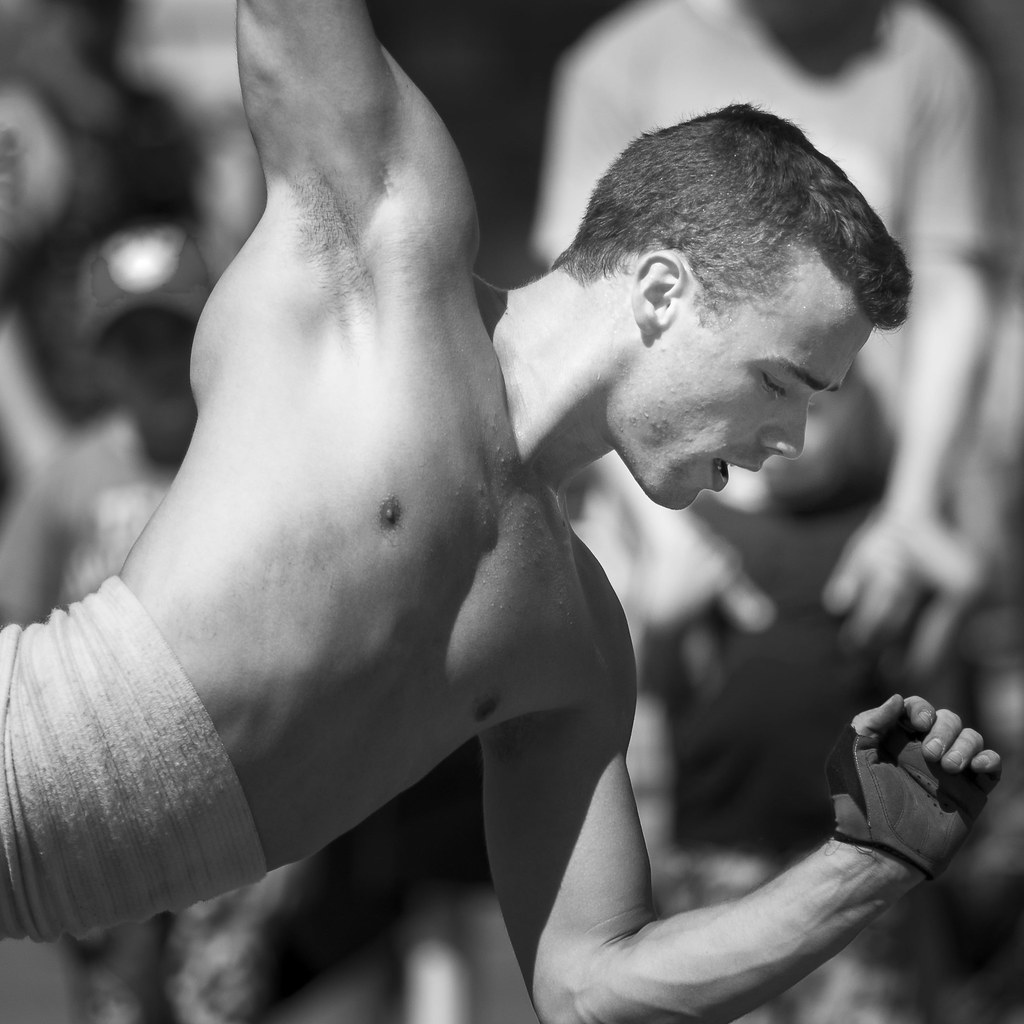
A courtly, grand, tradition; sure, but men are men, and poets, poets; so, of course behind their art is merry mischief, force of guile, if not just force; but having then been properly improper once again with risqué sonnets, sometimes merely coarse (if richly rhymed), how long must we endorse these minuets? Will someone shout, A-men!?
Step it up and shake a foot, a hand, a bodice: make it syncopated– let it, having been elaborated, settle for a minute. Strike a pose. Then strut. And put a little music in it.
*****
Daniel Kemper writes: “No Matter What, You’ve Got To Strut” –Yes, I’m quoting Buddy Love from Eddie Murphie’s version of The Nutty Professor! This, as you can tell from all the meta-textual wordplay (using a rime riche and then naming it [richly rhymed, and on and on]) was a lot of fun to write, but there’s a serious aspect to it as well. I’ve gone hog wild exploring sonnets and meters. This could be considered one of the culminating branches of that.
Sonnets in non-iambic meters: trochaic, anapestic, dactylic {sonnet “space” increased by x4}
Sonnets that used more than one meter:
Four possible meters to mix {sonnet “space” increased by x64!}
Rule: One meter: one line, no changing within a line, only between them.
Most definitions of sonnets assumed iambic meter and so did not rule out the other meters. Many also implied only one meter throughout, but so long as it’s metrically consistent, it should be considered. Maybe there’s less wiggle room here, but I think I can lawyer it anyway.
Oooh, but then, in tandem with my poetic symphony inventions, I my thoughts ran down two paths at once. Other variations that I could “legally” do and, out of all the possible sonnet types, why are only a few around?
Other variations:
Vary the line lengths: There are precedents. Shakespeare, #145 (tetrameter); Hopkins, Curtal sonnet (L11 is a half-length line), Spenserian Stanza (not a sonnet) last line is hexameter.
Vary the rhyme schemes.
In multi-sonnet pieces, what effects can be achieved by moving the rhymed lines around a bit?
Why some combinations of rhymes and not others (bridge to second path).
So I felt leeway to go hog wild with variations—however, I was bound and determined to be “legal.” (I do not care for the lack of rigor in the thinking that allows “free verse sonnets” and “blank sonnets.”) Since I was starting with tradition, well, I started with tradition… That’s for the first half of [Strut].
I got a coder to help me run some common permutations for 14 lines. If 1.) they must all rhyme and 2.) no more than two consecutive rhymes and 3.) no rhyme is separated by more than two intervening lines, then there are 165,995 possible combinations for a sonnet. Why then do we have about a dozen and a half? Sure people “invent” new ones all the time, but those one-offs die pretty fast.
I arrived at two answers. One is historical. There are only so many poets writing formal poetry over only so many years—and poets actually tend to be conservative in bringing new forms to the canon. The other is musical. There’s huge stuff here. Too much for this email. Suffice to say, there has to be a melodic contour, a musicality, a beat, a riff, a tension and release—NOT arbitrarily ordered rhymes. How does one define that “musicality”? It’s tough; what differentiates a melody from a random string of tones?
Back to [Strut]. Now you can see how the second half formed up in my mind and why the proliferation of musical terminology, also meta-textual. It is syncopated where it calls for syncopation. The meter before the volta and after are different. The rhyme pattern, btw, remains one of the traditional variations of the Petrarchan Sonnet.
As you look closer, you’ll notice that it’s not irregular; it’s highly structured. Key is that rhyming lines are the same length as each other, though different from others. That keeps the music in it—a kind of predictability despite change, an added degree of recognition. This is the future of the sonnet, the 21st century sonnet, IMO.”
*****
‘No Matter What, You’ve Got To Strut’ was first published in Rat’s Ass Review.
Daniel Kemper, a former tournament-winning wrestler, black belt in traditional Shotokan karate, and infantryman has earned a BA in English, an MCSE (Systems Engineering), an MBA, and an MA in English and had works accepted for publication at more than a dozen magazines, including a pushcart nomination. He’s been an invited presenter at PAMLA 2024 and presided over the Poetics Panel in 2025 and has been the feature poet at several Sacramento venues.
A TRIUMPHAL ODE Humbly Inſcribed to the Occaſion of The moſt Joyous and Auspicious ARRIVAL of ANDREW MOUNTBATTEN-WINDSOR, Eſq. at His Majeſty’s PRISON of BRIXTON Composed with all due Solemnity & Pomp and designed to be ſet to Muſick by the late Great GEORGE FRIDERIC HANDEL
All the echoing prison round Let great tumultuous welcome sound. Let each incarcerated fellow Loud and jubilantly bellow. Let there be no dereliction; Convicts, show your true conviction In strong words and in minatory songs That he is now where he belongs.
Let there be all kinds of musical cacophonies Let there be mighty rattling of warders’ keys Let there be synchronised humming of drug-transporting drones Let them sound, the unharmonious ringtones of contraband phones Let noise be noise in our unanimous celebration Of this long-overdue incarceration.
He comes! Let every crooked eye be fixed on The arrival of Mr Mountbatten-Windsor at Brixton. He who for so long has sinned with impunity Let him now be welcomed into the criminal community. Here with the weaklings and the wicked, Here with the druggie and the dickhead, Here among the child molesters, The frauds and Just Stop Oil protestors The terrorists, the traitors And the far-right agitators, The ponces and the nonces, plus the mugger and the blagger, The cracksman with a jemmy and the psycho with a dagger, All citizens of this prison world, the scum of every slum Rejoice and raise a happy voice that he at last is come He, born second in line to the throne, now come to live In the world where the snout baron rules, and the man with the shiv
Let him, the ex-royal, the ex-envoy for trade Come here among his kindred, to the future he has made.
*****
George Simmers writes: “The Epstein revelations have muddied the reputations of many eminent men, and nobody looks grubbier than Mr Mountbatten-Windsor. The distasteful stories and compromising photographs have told their story. The only way is down. This Ode looks forward to celebrating an event that the British public is anticipating eagerly.
“It is doubtful whether prosecutions will follow for many of Mr Epstein’s guests. Their morals may be questionable and their reputations have suffered, but illegality can be hard to prove – it was Mr Epstein himself who did all the luring and procuring. But Mr Mountbatten-Windsor, because of his distinguished family connections, was lured not only with massages, but also with financial inducements. At the time when he was an official trade envoy of the British government, he had access to financial information (such as details of a forthcoming budget) that could have been very valuable to an investor like Mr Epstein. Documents in the voluminous Epstein archive suggest that such information was indeed shared. Mr M-W could therefore be prosecuted for the very serious offence of misconduct in a public office. This ode looks forward to the time when this foolish man is made to answer for his misdeeds.
“Such are the delays that have slowed the British court system since the hiatus of the Covid years, that legal experts estimate that Mr Mountbatten-Windsor’s case is unlikely to reach a court until 2030. It’s a long time to wait, but in the final eventuality, I hope that this ceremonial ode will be sung joyously by a massed choir. I imagine it set to music by that eminent composer George Frideric Handel, who was very good at such things. To those who object that Mr Handel is dead, I would point out that there is a psychic in America who has made productive contact with the shade of Mozart. Several peasant concerti have apparently resulted. I’m sure the lady could persuade Mr. Handel’s ghost, too, to come up with the goods. I imagine something a bit like the Hallelujah Chorus, but maybe even more jubilant.”
‘A Triumphal Ode’ was first published in Snakeskin.
George Simmers used to be a teacher; when he retired he then amused himself by researching a Ph.D. on the prose literature of the Great War. He now spends his time pottering about, walking his dog and writing a fair bit of verse. He is currently obsessed by the poetry of Catullus, and has self-published a slim volume of translations. He has edited Snakeskin since 1995. It is probably the oldest-established poetry zine on the Internet. His work appears in several Potcake Chapbooks, and his most recent general collection is ‘Old and Bookish‘. Another may be on the way.
Old fool! You really think yourself the same As I who write to you, aged 22? Ha! All we’ve got in common is my name: I’ll wear it out, throw it away, You’ll pick it up some other day…. But who are you?
My life’s before me; can you say the same? I choose its how and why and when and who. I’ll choose the rules by which we play the game; I may choose wrong, it’s not denied, But by my choice you must abide…. What choice have you?
If, bored, I think one day to see the world I pack that day and fly out on the next. My choice to wander, or to sit home-curled; Each place has friends, good fun, good food, But you sit toothless, silent, rude…. And undersexed!
Cares and regrets of loss can go to hell: You sort them out with Reason’s time-worn tool. Today’s superb; tomorrow looks as well: The word “tomorrow” is a thrill, I’ll make of mine just what I will…. What’s yours, old fool?
2. Reply to Myself – Fifty Years Later
Young twit! You really think we’re not the same? That means you’re too young to extrapolate. You’re the mere seed of what I since became: a husband, father, game creator, global skills facilitator… well paid; thought great!
You claimed to thrive, renting some garbage heap; you travelled: hitchhiked, froze, thought life’s a bitch, and ate whatever you could find that’s cheap; I travel too, and I eat well, and choose to sleep in a hotel… not in a ditch!
Your search for happiness was excellent; you lived with several countries, faiths and girls, though little lasted from those years you spent; for when you can’t tell love from lust and never work out who to trust… of course life whirls!
Your limited perspective proved a sham. Your rude invective, though a load of shit, helped fertilise my growth to what I am. My resumé –kids raised, loves gained, a business built –shows much attained… what’s yours, young twit?
*****
I was proud of the form I created when I wrote the first bratty poem, with both the rhyme scheme (abaccb) and the lines getting shorter (3 pentameter, 2 tetrameter, and a dimeter) contributing to the effect of each stanza ending with a punchline. But after I wrote that first poem to my future self at age 22, I was nagged by the need to respond as I got older; and I was never able to produce anything I liked. Finally, a full 50 years later, I produced the 72-year-old’s point by point rebuttal in the same form as the original. The original took a couple of hours over two days to write; the response was done in a couple of hours in one day.
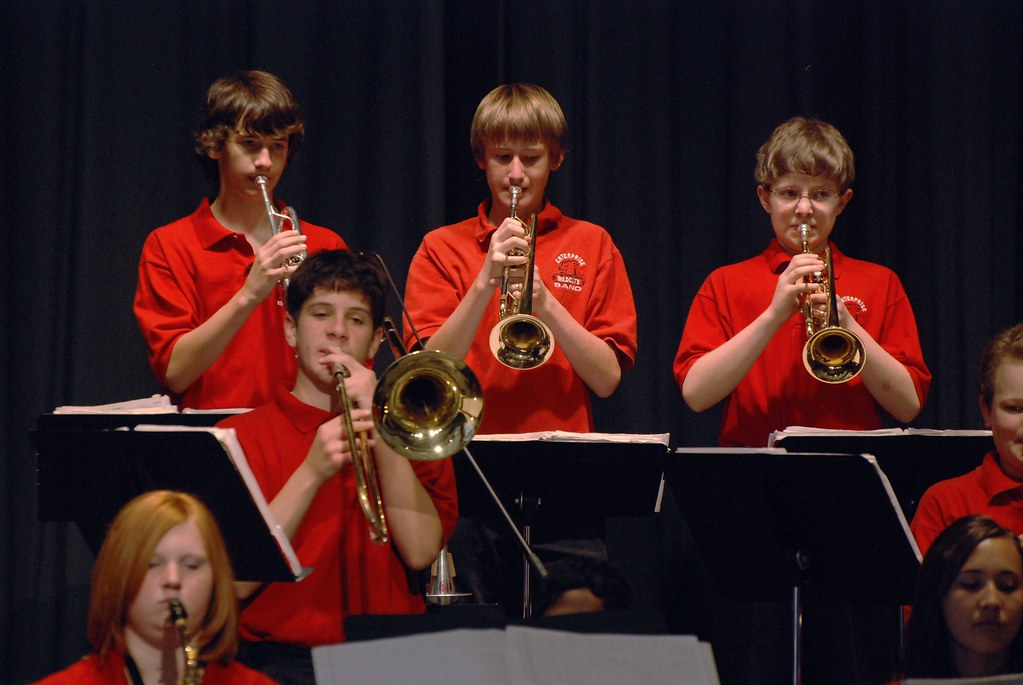
A lifetime ago, back in seventh-grade band, “The Bullwhip” had all us kids pledge to expand Our goals for our music. He went on to ask us To double our time spent in personal practice. The girls—mostly woodwinds—were eager to please; Ol’ Bullwhip could always control them with ease. We boys on the trumpets and trombones, however, Were harder to handle—we thought we were clever. We readily signed when the sheet came around— Exploited a loophole that one of us found. Response to the ask had just turned on a dime, And some even wrote that they’d triple their time! Now no one could say that we out and out lied. A math rule we’d learned was defense on our side: Go multiply zero as much as you will— The answer you come to remains zero still.
*****
William Walters “This poem tells a true story about an early class with our respected and beloved school band director, a colorful character who wore cowboy boots and carried a bullwhip around on his hip and actually went by the nickname “Bullwhip.” A remarkable educator, he managed to be strict and demanding and patient and caring and encouraging all at the same time and, by our high school years, had us rural Southwest Kansas kids whipped into shape—figuratively, not literally—and disciplined to be an excellent marching band that competed very well against the big schools from Wichita, Topeka, Kansas City, and the like when we travelled back east for contests. We had only about 170 students total in our high school, and we always had over 80 in the band! Bullwhip certainly knew how to run a music program, and he gave our sleepy little town something to be proud of!
“As far as the meter of the poem is concerned—it’s technically some kind of hendecasyllabic meter with hypercatalexis in a couple of the distichs. But I didn’t really think much about rigid adherence to any form; I just went with what seemed to flow and what sounded good to me.”
‘Interdisciplinary Indiscipline’ was first published in Allegro.
William Walters has been a professor of English and linguistics at Rock Valley College, in Rockford, Illinois, for the past thirty-seven years. He played trombone in many music groups in high school and college, and he’s a bass trombonist in a college/community band even now.
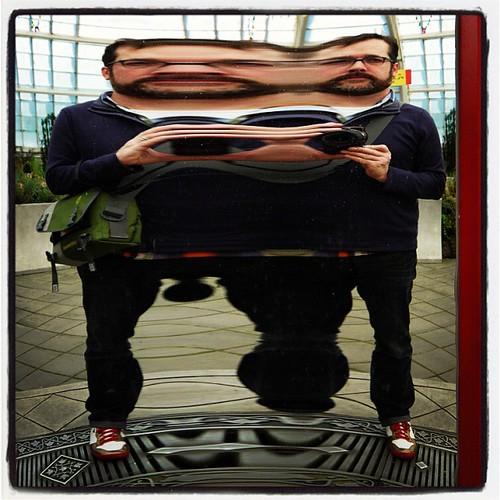
father as a funhouse mirror: somewhere in that mess is my reflection.
*****
Farah Shah writes: “I was actually not very moved at first to participate in OnlyPoems’ call for monostitch poem submissions. I’m unfortunately a woman of many words, especially in my writing. I’ve found word limits, shortening stories, and other forms of briefening composition painstaking at best. However, I’ve been trying to do things I’m not very good at (or maybe not very passionate about) because I’ve found the more you move a muscle, the stronger it becomes. I recently cut a piece of mine I loved into less than 300 characters; the Frankenstein-esque process of sewing back the body parts of that poem was difficult, but the new composition that emerged I found to be much stronger. In a way, with less to write, I had more to say. Like many peoples’ poems, mine is about my father (dads just make for such great material), and because of that, it’s also about me. My father is someone I could write almost anything about: love songs, comedies, tragedies. I didn’t think I could write about us in one line, but I tried to, and I did. Like I mentioned to Karan, the editor of Only Poems, writing this poem reminded me to call my dad.”
‘Funhouse’ was originally published in Only Poems.
Farah Shah is a recent University of Central Florida graduate, spending time between degrees learning to bake sourdough, overworking her airfryer, and penning sappy poetry while she waits for her dough to proof. She spent her formative years in Dar Es Salaam, Tanzania, and thinks the best parts of herself come from that time. She writes: “I have yet to wrangle my writing into one specific place, but I post here and there on my instagram @farahxshah, and I’ve been featured on Threads “Closing” Issue for microfiction: https://www.threads.com/@threadlitmag/post/DTTbwivjNQW?xmt=AQF0J35LQzeadqjpGB8j6qbUeGGrAMYyGhCUb3x810IEZg“
a bored and haughty wife, now sidelined and abeyed, half-pivoting within a flood-tide of brocade, smiles at the black-skinned boy who bears her dress’s train. final tercet of the French sonnet “The Dogaressa” by José-Maria de Heredia (1842–1905)
Veneto, black-skinned boys, and trains:
	displaced by devastation,
young Africans with pluck and brains
	revive that combination.
They search these railcars for remains
	of others’ dislocation,
like gleaners seeking fallen grains —
	a task of desperation.

Before each stop, the train brakes grind.
	We pause. We recommence.
A boy appears, as if assigned.
	His scrutiny’s intense.
He scans for objects left behind
	through lack of care or sense.
(I guess. I’ve yet to see one find
	a bit of recompense.)

We stop. We go. The scene repeats,
	on every train we’ve taken.
The boy surveys the floors and seats
	for anything forsaken,
and — empty-handed still — retreats,
	his eagerness unshaken.
I’ve seen his clones on city streets.
	What trades do they partake in?

Some hold out cups to beg, although
	we blind, deaf crowds move on.
(They tug our heart- and purse-strings, so
	we play automaton.)
Some boys this age get pimped, I know.
	Some pilfer things to pawn.
The train brakes shriek. We stop. We go.
	Our boy’s come back. He’s gone.

He’s trapped in this recurrent dream.
	I feel I’m trapped here, too.
The other passengers don’t seem
	to see him passing through,
except a few who show extreme
	contempt (as I construe
their narrowed eyes’ attentive gleam).
	That, too, is déjà vu.

“A zodiac of sorts,” I muse:
	The Wailing One. The Doors.
The Kid who seeks what others lose.
	The Gaggle that ignores.
The Watchdog ready to accuse
	young scapegoats it abhors.
And I, the Poet, prone to use
	portentous metaphors.

Again, these constellations wheel.
	Again, I contemplate
commuters’ faces, which reveal
	obliviousness or hate.
Another horrifying squeal.
	Another hurried wait.
Another search. How must he feel,
	this boy, about his fate?

Though circumstances brought him here,
	not slavers, is he free?
He scrambles just to live, it’s clear,
	although he ought to be
in school. He’ll be no engineer.
	No teacher. No M.D.
Survival is his life’s career,
	decides society.

I think what lives my children lead.
	I think of things I’ve read.
The long-dead voices that I heed.
	The headlines in my head.
The decadence. The waste. The greed.
	The desperate. The dead.
What choice was smooth-faced Ganymede
	presented with instead?

He rode to immortality,
	but did he have a say?
Consent’s a triviality
	to gods, some might inveigh,
and rape’s a technicality
	(defined the ancient way),
and pederasts’ carnality
	had stricter rules of play.

I know. But circumstances tore
	that kid from loved ones’ care
to Mount Olympus, where he bore
	the things that slave-boys bear.
And bears them still, forevermore.
	No beard, no death, can spare
young Ganymede, exploited for
	eternity up there.

No, no, he’s fortunate, insist
	some authors. He’s adored.
Complimented. Cuddled. Kissed.
	Ambrosia’s his reward
for having topped the favorites list
	of such a lofty lord.
The death we mortals face, he missed.
	That shouldn’t be ignored.

A palace slave is nonetheless
	a slave, and can’t decline
a burden, though it might oppress:
	a massive cup of wine;
the heavy train of someone’s dress
	who thinks herself divine;
the weight of knowing each caress
	means mainly “This is mine.”

The dogaressa eyes her toy.
	Her property. Her pet.
Some see in him what might destroy
	stability — a threat.
But I behold a human boy
	ensnared in power’s net.
What games his owner might enjoy
	will fuck him up, I bet.

But maybe I misjudge her smile.
	I view it through the prism
of factors I must reconcile,
	like French conservatism,
a splash of Afrophobic bile,
	and anti-feminism.
Perhaps she’s not a pedophile.
	(Forgive my skepticism.)

Perhaps she smiles because she’s kind
	(though labeled “bored” and “haughty”).
Perhaps the lady’s too refined
	to have a thought that’s naughty.
The dots connected in my mind
	to Ganymede are dotty,
perhaps. To me, though, they’re combined.
	These points are not staccati:

Aquarius, the catamite
	within the Zodiac;
a twisted queen who claims the right
	to toy with pawns; this black —
and therefore foreign — youngster’s plight,
	forever circling back
in search of luck. These trains unite
	on thought’s recursive track.

He’s African. He’s Syrian.
	He’s Phrygian. He’s Rom.
He’s Asian. He’s Nigerian.
	He’s white, but can’t go home.
His bedroom is empyrean:
	its roof is heaven’s dome.
His cup’s part full, in theory. In
	it? Coins. It’s styrofoam.

He’s Ganymede, collectively,
	yet every clone’s unique.
They all seem doomed to tragedy,
	but don’t mistake mystique
and myth for how things have to be.
	Inertia’s prospect’s bleak,
but railroad cars and history
	change course with friction’s shriek.

He’s made it to the Occident.
	(Let’s pause now to salute
ourselves, and our enlightenment.)
	His homeland tried to shoot
and starve him. He should be content
	he didn’t drown en route.
He’s lucky! Don’t misrepresent
	the fact he’s destitute.

Some myths should really be revised.
	Some fictions should appall.
When those who claim they’re civilized
	spew racist vitriol,
and orphaned kids are demonized
	by oligarchs, we all
should spot the pattern, unsurprised.
	The writing’s on the wall.

The doorway yawns. I stiffly rise
	on travel-swollen feet.
At noon, I crossed the Bridge of Sighs;
	my daytrip’s now complete.
The train goes on, with one surprise —
	a monetary treat
for hopeful, homeless, hungry eyes —
	between one wall and seat.
*****
“In 2016, while an estimated 363,348 refugees and other migrants successfully crossed the Mediterranean to reach Europe, an additional 5,136 people who attempted that journey were either confirmed drowned or reported missing (Source) — still a record now, ten years later.
“New installments of that ongoing tragedy were generating some of ‘the headlines in my head’ (Stanza 9, Line 4) in the summer of 2016, when I accompanied my mother on a 10-day Mediterranean cruise. We arrived in Padua a few days early so we could adjust to jet lag, and from there we made day trips by train to Ravenna and Venice before our cruise began.
“During our day in Venice, I was startled by the profusion of Moretto- or Blackamoor-themed luxury items I kept coming across, all gold-adorned: Jewelry. Doorknobs. Lamps. Tables. Atlas-like figures supporting architectural features. On the 9pm train back to our hotel in Padua, I pondered this centuries-old fascination with Blackness among Venetians of great wealth. My mind had just wandered to the little Black boy at the end of Heredia’s sonnet “The Dogaressa” when, as if on cue, a very dark-skinned African immigrant of about ten years old arrived for the first of his many hurried inspections of our train car.
“For the decade it took me to finish and find a home for ‘Ganymede in Northeast Italy (Veneto),’ that child has kept returning to my thoughts. Perhaps now he will haunt others’ thoughts, too.
“I am very grateful to David Stephenson for publishing this long poem in Pulsebeat Poetry Journal and to my fellow workshoppers at Eratosphere for telling me what wasn’t working in two earlier drafts over the years.”
*****
Julie Steiner is the pseudonym of a recovering classicist in San Diego, California. Her original poetry and verse translations from Italian, Spanish, French, Latin, and Greek have appeared in many venues — most recently, Light, Lighten Up Online, Literary Matters, The New Verse News, and The Ekphrastic Review. For links to some of these poems, visit her Substack, Off-Piste on Mount Parnassus (offpisteonmountp.substack.com).
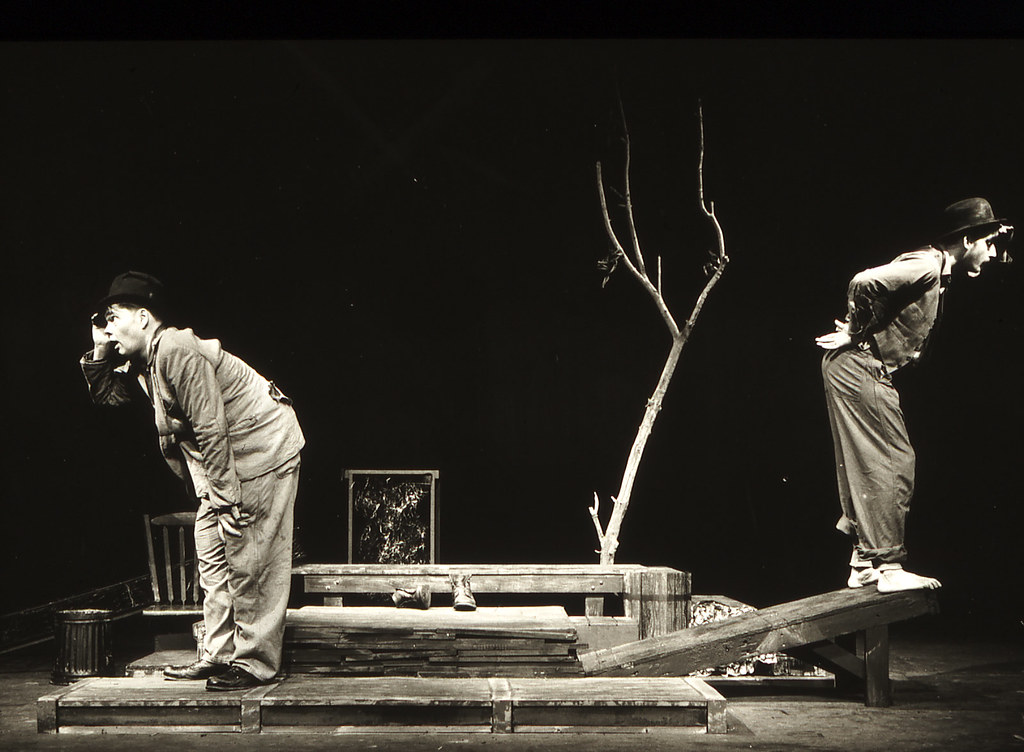
Oh no, Godot! So slow to show. Who knows how low two fools won’t go to hold off sorrow? How cold, how wrong to con or ghost hobos who long for comfort most. So go tomorrow.
*****
Susan McLean writes: “For its ‘Moon’ issue, Ecotone put out a call for submissions in the rarer French repeating forms and suggested that one way to evoke the moon was by using the word O or words in which a lot of o’s appeared. I wanted to write a rondelet using words whose only vowel was o, which made sense because the subject was the moon. Therefore, I made a list of as many words as I could think of that used no vowel but o, looking particularly for words that rhymed with one another. Luckily, that vowel can be used to represent many different sounds. I wrote a rondelet called “Solo” that later appeared in the journal. I had heard of Christian Bök’s Eunoia, a collection in which each poem uses a single vowel, and I later learned from Pedro Poitevin that it is called “univocalic verse.” I had many words left over from my search for o-words, one of which was “Godot.” I have always been a huge fan of drama, and I attended and read many plays in my youth, when Theatre of the Absurd was still in vogue. But some of my most boring and irritating theatre experiences were at plays by Samuel Beckett. I decided to write a poem that was my critique of the premise of Waiting for Godot. The poem first appeared in Pulsebeat Poetry Journal.
Susan McLean has two books of poetry, The Best Disguise and The Whetstone Misses the Knife, and one book of translations of Martial, Selected Epigrams. Her poems have appeared in Light, Lighten Up Online, Measure, Able Muse, and elsewhere. She lives in Iowa City, Iowa. https://www.pw.org/content/susan_mclean