Michael R. Burch, ‘Suffer the Little Children’

for the children of Gaza

I saw the carnage . . . saw girl’s dreaming heads
blown to red atoms, and their dreams with them . . .

saw babies liquefied in burning beds
as, horrified, I heard their murderers’ phlegm . . .

I saw my mother stitch my shroud’s black hem,
for in that moment I was once of them . . .

I saw our Father’s eyes grow hard and bleak
to see his roses severed at the stem.

How could I fail to speak?

*****

Michael R. Burch writes: “Three decades ago, I began working with Jewish Holocaust survivors and other Jewish poets to publish translations of previously unpublished poems written in Polish and Yiddish by victims of the Holocaust. Some were written by children. In some cases the poems survived but the names of the poets did not. I considered it a sacred task and believed we were saying “Never again!” to any and all Holocausts. But in my discussions with my Jewish friends, it became apparent that “Never again!” did not apply to the Palestinians. When I asked questions about Israel’s brutal abuses of Palestinians and the theft of their land – armed robbery – my Jewish friends became defensive and told me, essentially, to shut up and never question Israel. Their sudden change in attitude convinced me that something was wrong, deeply wrong. I decided to research the subject independently, invested considerable time, and came to the conclusion that the Palestinian Nakba (“Catastrophe”) is a Holocaust sans ovens, a modern Trail of Tears. And while my country, the United States, has opposed other Holocausts, it is funding this one and supplies Israel with terrible weapons that are being used to mass murder children and their mothers, fathers and families. I will continue to say “Never again!” to any and all Holocausts and invite readers to join me and do what they can to end and prevent such atrocities.”

‘Suffer the Little Children’ has been published by Art in Society (Germany), Pick Me Up Poetry, Jadaliyya (Egypt), The HyperTexts andMESPI (Middle East Studies Pedagogy Institute). According to Google the poem now appears on 462 web pages.

Michael R. Burch is an American poet who lives in Nashville, Tennessee with his wife Beth, their son Jeremy, two outrageously spoiled puppies, and a talkative parakeet. Burch’s poems, translations, essays, articles, reviews, short stories, epigrams, quotes, puns, jokes and letters have appeared in hundreds of literary journals, newspapers and magazines. He is also the founder and editor-in-chief of The HyperTexts, a former columnist for the Nashville City Paper, and, according to Google’s rankings, a relevant online publisher of poems about the Holocaust, Hiroshima, the Trail of Tears and the Palestinian Nakba. Burch’s poetry has been taught in high schools and universities, translated into 19 languages, incorporated into three plays and two operas, set to music by 31 composers, and recited or otherwise employed in more than a hundred YouTube videos. To read the best poems of Mike Burch in his own opinion, with his comments, please click here: Michael R. Burch Best Poems.   

Photo: “Untermensch – Hannukah 2008 – Palestinian children killed by Israel in Gaza” by smallislander is licensed under CC BY-NC-SA 2.0.

Using form: Acrostic Sonnet: Mike Mesterton-Gibbons, ‘Lonely As A Cloud’

Life’s trials left me lonely as a cloud
On high until I found some daffodils,
Not in an adventitious golden crowd
Extending by a lakeside near some hills
Like Wordsworth in his poem, but below
York’s city walls on sloping grassy banks,
Arrayed in row upon enticing row.
So I plucked half a dozen from the ranks
And clasped them and, like Wordsworth, felt a rapt
Companionship that filled me with renewed
Light-heartedness … until a copper tapped
On my left shoulder and rebuked me—”Dude,
Unlicensed flower picking’s stealing”—then
Detained my blooms … to leave me lone, again.

*****

Editor’s comment: Mike Mesterton-Gibbons has produced a Shakespearean sonnet acrostically spelling out the title and theme that references one of the best-known poems in the English language. A full discussion of Wordsworth’s original (text, background, modifications, reception, various photos, etc) is in Wikipedia – including the suggestion that Wordsworth originally came up with “I wandered lonely as a cow” until his sister Dorothy told him “William, you can’t put that.” But rather than Wordsworth’s blissed-out ending, Mesterton-Gibbons goes full circle to a rueful police-induced return to loneliness.

Mike Mesterton-Gibbons is a Professor Emeritus at Florida State University who has returned to England to live in York, where he once attended university after going to school in Cumbria near the Lake District.  His poems have appeared in Autumn Sky Poetry Daily, Better Than Starbucks, the Creativity Webzine, Current Conservation, the Ekphrastic Review, Grand Little Things, Light, Lighten Up Online, MONO, the New Verse News, Oddball Magazine, Rat’s Ass Review (where this poem was first published), the Satirist, the Washington Post and WestWard Quarterly.  Links to all these poems can be found at  https://www.math.fsu.edu/~mesterto/Unscramble/wordplay.html

Photo: “York: City Walls and Daffodils” by jack cousin is licensed under CC BY-NC-ND 2.0.

Using form: Quatrains: Stephen Gold, ‘So Pseud Me’

My verse is of the humorous variety,
And does its best to brighten up society.
To spread a little joy’s a noble calling,
A life without a laugh would be appalling.

Yet still, of late, I’ve had a thought that niggles;
What worth is work that just produces giggles?
Should it be judged as slight and ineffectual,
Compared to art we label intellectual?

And so I did what “proper” poets do,
And signed up to The Scrivener’s Review,
“The connoisseur of poesy’s magazine”,
Where scribes will scratch your eyes out to be seen.

I found it was a terrifying place,
Where people were obsessed with lower case,
Allusions veered from cryptic to absurd,
And “meaning” seemed to be a dirty word.

Their poetry was like the peace of God,
That passeth understanding – truly odd.
Some claimed to write for womxn and for mxn,
Though none had come across the verb, “to scxn”.

With open mind, I asked, “Is it my fault
That there is nothing here I can exalt?”
But days of dredging through this awful rot
Confirmed beyond all doubt that it was not.

Each new excrescence served to reinforce
That I had veered disastrously off course.
I wheeled around and fled back to the light
Which shines upon the droll and erudite,

Bring on a world where rhyme and meter matters,
And isn’t full of folk as mad as hatters.
Adieu to “Scrivener’s Review”, I quit.
Do I need what you’re full of? Not one bit.

*****

Stephen Gold writes: “The idea for So Pseud Me came from wading through an august poetry periodical which had better remain nameless, and coming to the following conclusion: WTF?
There was some good, thoughtful work, but much of it was pretentious drivel, written by the deservedly obscure with their heads rammed firmly up that place where the Lord causeth not the sun to shine.
If you were to ask them, I guess most would place high verse on a pedestal, way above light. But on this, I am with Kingsley Amis, who wrote in the New Oxford Book of Light Verse:
“Light verse makes more stringent demands on the writer’s technique. A fault of scansion or rhyme, an awkwardness or obscurity that would damage only the immediate context of a piece of high verse endangers the whole structure of a light-verse poem. The expectations of the audience are different in the two cases, corresponding to the difference in the kind of performance offered. A concert pianist is allowed a wrong note here and there; a juggler is not allowed to drop a plate.”
‘So Pseud Me’ is a light-hearted attempt to speak up for jugglers.”

Stephen Gold was born in Glasgow, Scotland, and practiced law there for almost forty years, robustly challenging the notion that practice makes perfect. He and his wife, Ruth, now live in London, close by their disbelieving children and grandchildren. His special loves (at least, the ones he’s prepared to reveal) are the limerick and the parody. He has over 700 limericks published in OEDILF.com, the project to define by limerick every word in the Oxford English Dictionary, and is a regular contributor to Light and Lighten Up Online (where this poem was first published).

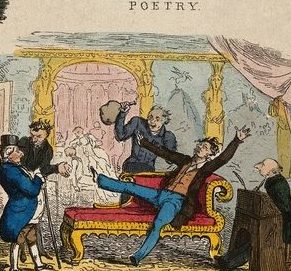
Illustration: “A group of poets carousing and composing verse under the influence of laughing gas. Coloured etching by R. Seymour after himself, 1829.” is licensed under CC BY 4.0.

Using form: Couplets: Barbara Lydecker Crane, ‘Secret Adages’

“Write nothing down in ink” is the secret’s first rule;
“You promise not to tell?” said the secret’s first fool.

A secret’s likely safe if entrusted to a stranger;
one who knows no English will further lessen danger.

Don’t hide a guilty secret no other person knows;
like mold behind a ceiling, a spreading fester shows.

Secrets may be sweet, too delicious not to share.
To savor them together might double tempting fare.

Revealing every secret, a link to each regret,
will drain away a soul to an empty fishing net.

“Three may keep a secret if two of them are dead.”
. . . but more about the bodies, Ben Franklin never said.

*****

Barbara Lydecker Crane writes: “Sometimes when I am casting around for new ideas to write about, I browse Bartlett’s Familiar Quotations.  That’s how this one got started; the rest is classified information!” (But it is known that the poem was first published in Autumn Sky Poetry Daily.)

Barbara Lydecker Crane was a finalist for two recent Rattle Poetry Prizes. She has received two Pushcart nominations and various awards from the Maria W. Faust and the Helen Schaible Sonnet Contests. Her poems have appeared in Atlanta Review, Ekphrastic Review, First Things, Light, THINK, Valparaiso Literary Review, Writer’s Almanac, many others, and in several anthologies. Her fourth collection, You Will Remember Me (ekphrastic, persona sonnets) was recently published by Able Muse Press, and is available from Amazon: https://www.amazon.com/You-Will-Remember-Me-Ekphrastic/dp/1773491261. Barb lives with her husband near Boston.

Photo: “The Secret” by CEBImagery.com is licensed under CC BY-NC 2.0.

Using form: Susan Jarvis Bryant, ‘A Monosyllabic, Monorhyme, Valentine Villanelle’

I ache to take your hand. My head says no –
You’ll sway me, play me, then you’ll let me go.
My heart says take a chance. Dance long and slow.

Which one (my head or heart) is in the know?
Fazed by your blaze, I melt like sun-soaked snow.
I ache to take your hand. My head says no.

Your wish, it heats the breeze. I hear it blow.
Your beat thrums though my veins. I feel the flow.
My heart says take a chance. Dance long and slow

Through moon-licked hues of blue as night skies glow
And gleam in scenes that steal the bright-star show.
I ache to take your hand. My head says no.

In dreams neath cream silk sheets you are the beau
Who draws my lips and hips to yours and oh…
My heart says take a chance. Dance long and slow.

But still my thoughts are skipping to and fro.
The dos and don’ts won’t stop. They grow and grow.
I ache to take your hand. My head says no…
My heart says take a chance. Dance long and slow.

*****

Susan Jarvis Bryant writes: “I like to set myself challenges when writing poetry. I’m fascinated by French lyric poetry and love a good villanelle. My Muse couldn’t resist this challenge… it was a little tricky, but I enjoyed every minute of composition.” The poem was published in this month’s Snakeskin.

Susan Jarvis Bryant is originally from the U.K., but now lives on the coastal plains of Texas. Susan has poetry published on The Society of Classical Poets, Lighten Up Online, Snakeskin , Light, Sparks of Calliope, and Expansive Poetry Online. She also has poetry published in The Lyric, Trinacria, and Beth Houston’s Extreme Formal Poems and Extreme Sonnets II anthologies. Susan is the winner of the 2020 International SCP Poetry Competition and has been nominated for the 2024 Pushcart Prize. She has just published her first two books, Elephants Unleashed and Fern Feathered Edges.

Photo: Snakeskin

Short poem: RHL, ‘God – pfft!’

All the things God could do,
all the things he doesn’t:
stop earthquakes and disease,
world war between first cousins…
Complaints at God may seem
rashly impertinent–
But so what? Life shows God
clearly omnimpotent.

*****

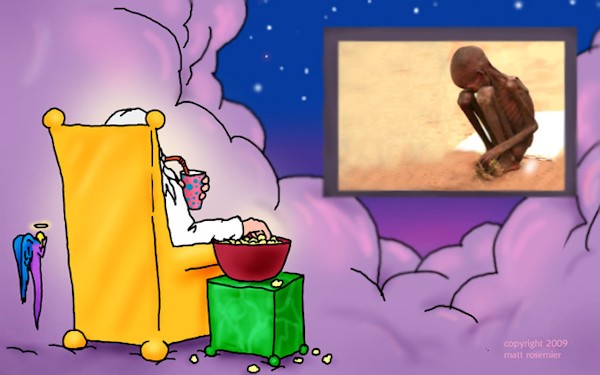
Not much to say about my rude little poems, except that a lot of them get published in Rat’s Ass Review, whose Spring/Summer issue has just (optimistically) been published – thanks, Roderick Bates! And also, well, I guess I was proud of the poem’s last word, though I’m definitely not the first person to think of it.

Cartoon: Matt Rosemier

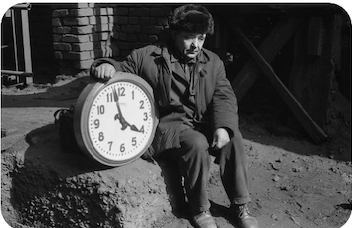
Short poem: Richard Fleming, ‘The Clock Collector’

He didn’t hurry, took his time
to gradually collect the clocks:
large clocks, small clocks, clocks with a chime,
he gathered stocks of ticks’n tocks
time-pieces, chronographs, all gold,
he harvested them like a crop.
He hoped to put his life on hold
but time, unmeasured, did not stop.

*****

Richard Fleming writes: “I think I was just playing with rhyme on this one. That it says something serious was an unexpected bonus.”

Richard Fleming is an Irish-born poet (and humorist) currently living in Guernsey, a small island midway between Britain and France. His work has appeared in various magazines, most recently Snakeskin, Bewildering Stories, Lighten Up Online, the Taj Mahal Review and the Potcake Chapbook ‘Lost Love’, and has been broadcast on BBC radio. He has performed at several literary festivals and his latest collection of verse, Stone Witness, features the titular poem commissioned by the BBC for National Poetry Day. He writes in various genres and can be found at www.redhandwriter.blogspot.com or Facebook https://www.facebook.com/richard.fleming.92102564/

Using form: Monorhyme: D.A. Prince, ‘Cold’

Outside the glittering air is bright,
frost crystals glisten in the light,
a bitter wind sharpens its bite,
teasing a few stiff leaves to flight.
It finds in restlessness a tight
fierce chill, like muscles clenched to fight,
needling uncovered skin with spite
and then breathes out a cloud of white,
a moment’s ghost, a shape so slight
it freezes almost before sight
has marked its passing. Snowflakes write
their shaky message to unite
cold’s elements in silver night.

*****

D.A. Prince writes: “This poem came together very quickly: the garden thick with frost and the idea of catching the vowel sound in ‘ice’ as a way of capturing the sharpness of the scene. A mono-rhyme, playing with this crispness, seemed the way forward. It was fun, and that’s an important element in poetry.” The poem was published in the February 2024 Snakeskin (issue 314).

D. A. Prince lives in Leicestershire and London. Her first appearances in print were in the weekly competitions in The Spectator and New Statesman (which ceased its competitions in 2016) along with other outlets that hosted light verse. Something closer to ‘proper’ poetry followed (but running in parallel), with three pamphlets, followed by a full-length collection, Nearly the Happy Hour, from HappenStance Press in 2008. A second collection, Common Ground, (from the same publisher) followed in 2014 and this won the East Midlands Book Award in 2015. HappenStance subsequently published her pamphlet Bookmarks in 2018, with a further full-length collection, The Bigger Picture, published in 2022.

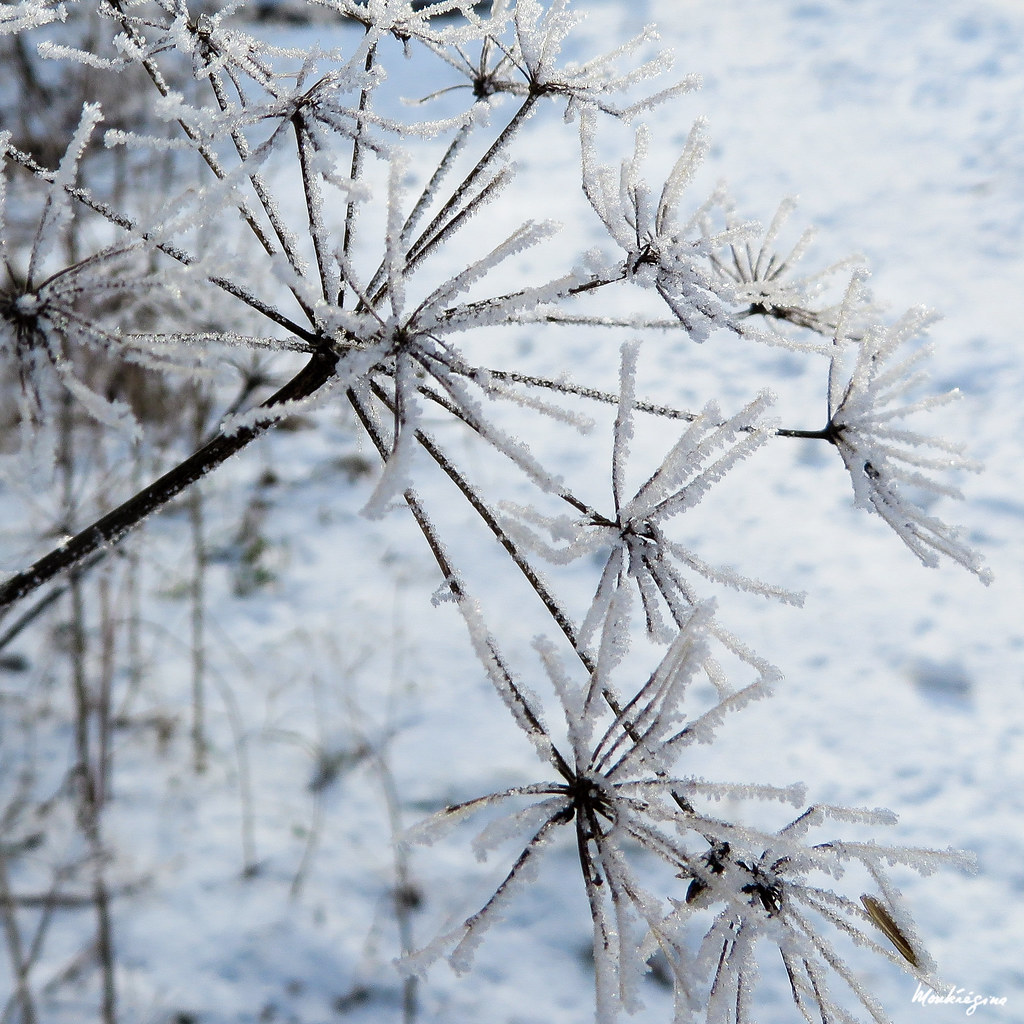
Frost Blooms – Fleurs de givre” by monteregina is licensed under CC BY-NC-SA 2.0.
Using form: Experimental: Edmund Conti, ‘Solace’

I know, I know it’s tough.
I know. It’s tough. I know.
It’s tough. I know it’s tough.
I know. I know. It’s tough.
I know it’s tough. I know.

It’s tough.

I know.

*****

Edmund Conti writes: “I guess I like because it uses just four words to say a lot.”

Edmund Conti has recent poems published in Light, Lighten-Up Online, The Lyric, The Asses of Parnassus, newversenews, Verse-Virtual and Open Arts Forum. His book of poems, Just So You Know, is published by Kelsay Books,
https://www.amazon.com/Just-You-Know-Edmund-Conti/dp/1947465899/
and was followed by That Shakespeherian Rag, also from Kelsay
https://kelsaybooks.com/products/that-shakespeherian-rag

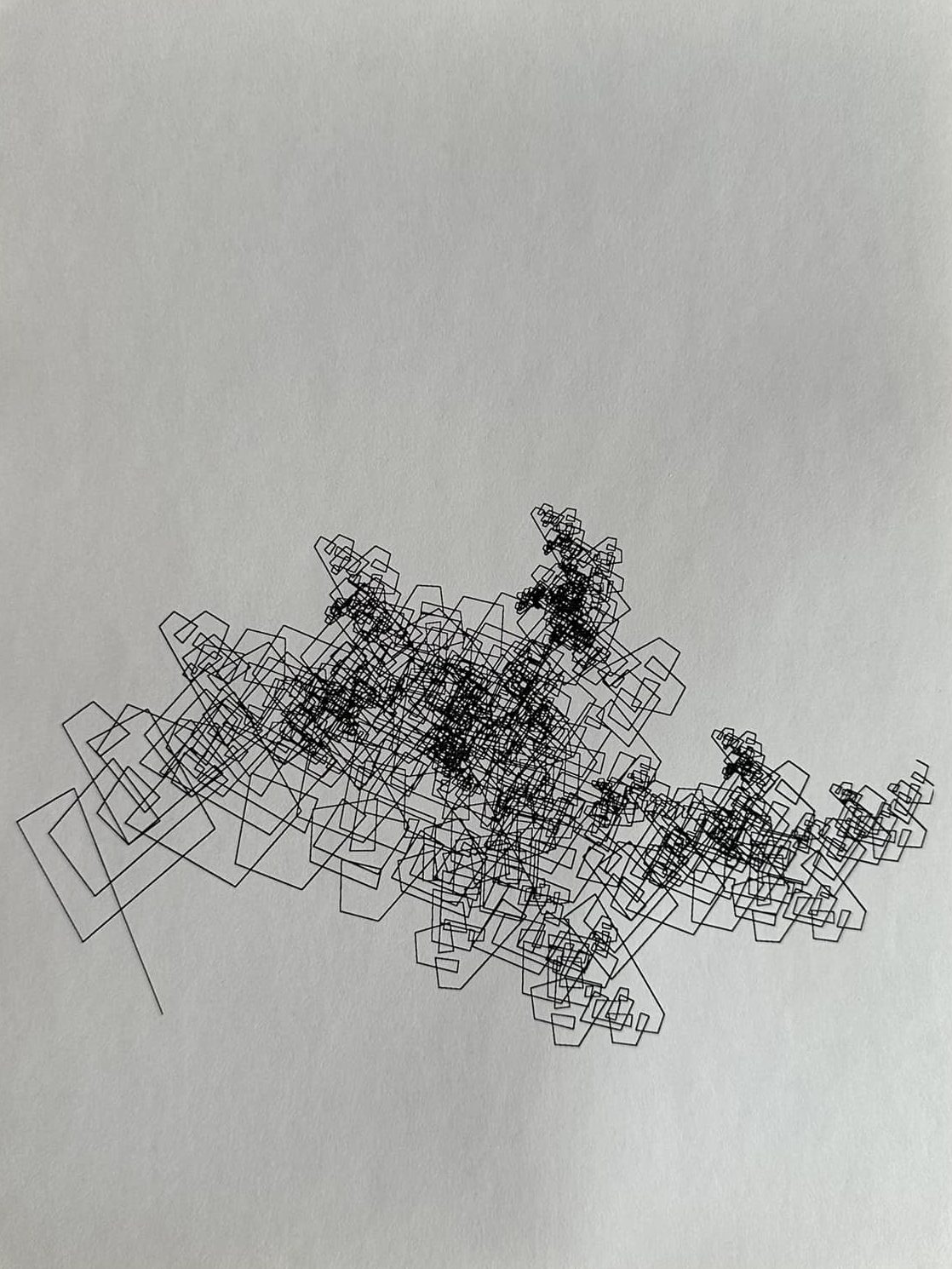
Photo: ‘Solace’ by Edmund Conti

Sonnet: J.D. Smith, ‘Elegy’

We weren’t allowed the time to contemplate
What talents he in time might come to show,
What fame or wealth he might accumulate,
What love and other passions he might know.

We had, instead, the chance to see him crawl
And graduate to solid food, to take
Some wobbling steps that ended in a fall,
To hand an uncle’s dog a piece of cake.

To say more is to claim a flare’s bright arc
Could have reached high, though it had scarcely flown
Before dissolving in the larger dark.
We fall back on the facts, which stand alone.

He seldom cried. He used to point at birds.
And now he will be missed beyond all words.

*****

J.D. Smith writes: “I will not say much about this poem, as it is based on actual events. I took  liberties with details in following formal constraints, but the sense of devastation is unchanged.”

J.D. Smith has published six books of poetry, most recently the light verse collection Catalogs for Food Loversand he has received a Fellowship in Poetry from the United States National Endowment for the Arts. This poem is from The Killing Tree (Finishing Line Press, 2016). Smith’s first fiction collection, Transit, was published in December 2022. His other books include the essay collection Dowsing and Science. Smith works in Washington, DC, where he lives with his wife Paula Van Lare and their rescue animals.
X: @Smitroverse

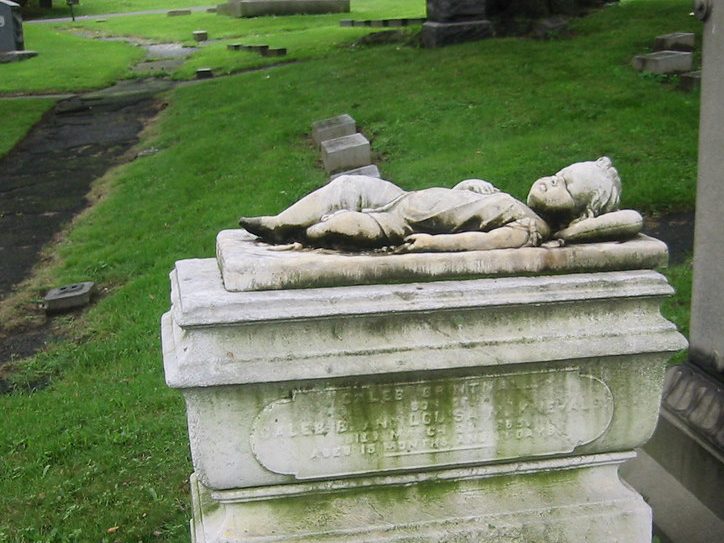
Photo: “Sleeping Child Tombstone Baby Grave Woodlawn 115-1593” by Brechtbug is licensed under CC BY-NC-ND 2.0.