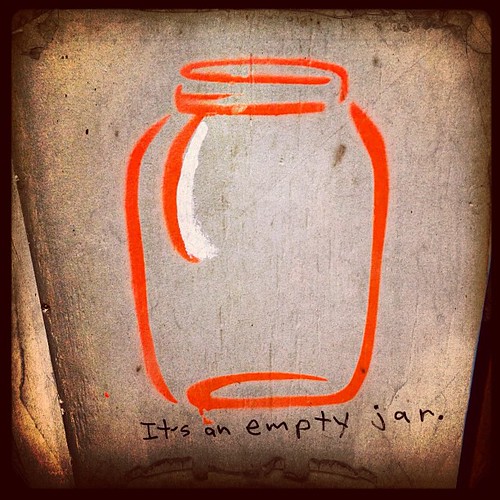
Hungry late, I clank around the kitchen for a snack. A pickle first and then, why not, I peel apart a pack
of luncheon meat, some Swiss, a leaf of something limp and wan, and now — oh no, the lid’s on tight but look — the mayo’s gone.
It feels like only yesterday I parked my father’s car, peeked at other shoppers’ carts and tootled to a jar
for slathering on hotdogs and for dolloping on frites — there’s loads of foods whose fatty goodness mayonnaise completes.
My pumpernickel won’t go down — it’s like a warning bell, the chilly clink of stainless steel on glass. I know it well.
And wonder under nibbles if at bottom human lives aren’t always scraping empty jars with tips of pointless knives.
*****
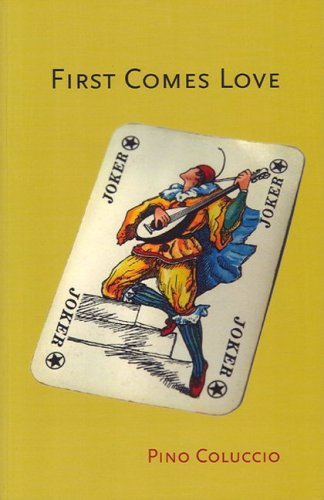
This is another of Pino Coluccio’s favourite poems from his first collection ‘First Comes Love‘. He doesn’t choose to comment on it, but I too like it; I like the way it clanks around the kitchen for a couple of verses, and then hits you with existential despair in the last lines. Which might be a matter of personal taste: I like eating limes and lemons, and I find Coluccio’s reflections equally tasty.
Pino Coluccio won Canada’s 2018 Trillium Award for English Poetry with his second collection, ‘Class Clown’. His poem ‘City Sunsets’ is featured in the most recent Potcake Chapbook, ‘City! Oh City!‘ He lives in Toronto.
I went round to Sarah’s flat one night: “Hi man,” she said, “Yeah, you can come in, sure,” apologising as she shut the door – “but not for too long, you know how it is – I’ve got two essays still to write and then exams start – I’m in quite a tizz.” She yawned and laughed, said “I’ve just changed Sam’s nappy, and now he’s fast asleep – at last!” she smiled – “Wow, but he keeps me busy!” “Also happy,” I put in. “Yes, but not all the while – he’s got a weak chest, coughs, cries with the pain, I get so uptight we both end in tears… his dad got sentenced, over drugs, eight years… that’s long: I guess we won’t get back again; I’ve got my Finals coming up, and then, after, who knows? I’ve hardly time for dreams: with Sam and studying, sometimes, it seems my life’s nappies and essays, nothing more.” She changed the record, sat to roll a joint, and said “First thing I do, even before I take Sam to that Nursery up the road – he’s bigger every day! He’s quite a load! But anyway, that’s not the point – first of all, I get stoned, and stay that way, or else I’d never make it through the day.”
A new cloud added to her soft rich room a further depth of blue, a silent pause.
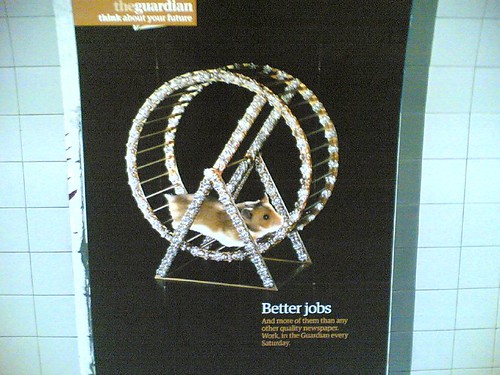
She spoke again, her thoughts already gone back to her work: “And then, they seem such fools, dividing all Philosophy in schools. You know my option is the Indian course; I know so much of what the old books mean: things of which lecturers can’t conceive, think guff, I understand, they’re places where I’ve been… I’m always trying to turn the lecturers on: if they’d drop acid, or just smoke some stuff, they’d see so much… but they’re not brave enough. So Transcendental just remains a trendy course which their students can take if other courses can’t keep them awake. But still they try their worst,” she said, nonplussed, and read “The Bhaghavad Gita retains relevance for our century. Discuss. Christ, aren’t they boring!” she said, biro poised. I let myself out, while she found her page, and Briggs, her hamster, woken by the noise, went streaming up the rat-race in his cage.
*****
This poem dates to the time after I had dropped out of the University of Dundee, but still came back to it in the years that saw most of my 25,000 miles of hitchhiking. I feel I learned more by wandering in and out of jobs, countries, languages and religions than I would have if I’d stayed on Sarah’s path. But then, I have no idea how life worked out for her, so who knows.
The poem is semi-formal – rhymed but without a rhyme scheme, in iambic pentameter with some occasional liberties taken with metre… but those liberties are comparatively acceptable, even beneficial, in a longish poem as they break up the metrical monotony. That’s my excuse anyway, and I’m sticking with it. The poem was published decades later in Snakeskin – thanks, George Simmers!
There comes a time when sitting home alone looking at your life — I’m such a knob — gets to be a drag. You hate your job, your car’s a piece of crap, and what you eat is fatty, fried and salty. But then you meet a girl. The life you made a mess of pulses. And not content to mess up just your own, you settle down and mess up someone else’s.
*****
Pino Coluccio writes that this poem is one his personal faves. It’s from his first book, also titled ‘First Comes Love‘, published by Mansfield Press. His poem ‘City Sunsets’ is featured in the most recent Potcake Chapbook, ‘City! Oh City!‘
The red leaves in the sunshine are So red! So red! So red! There are no buried Caesars here – instead, The dispossessed of all the Earth, With native wisdoms, human worth, Bleed through the trees like a reopened scar.
*****
Today is Canadian Thanksgiving; in the US, Columbus Day; in the Bahamas, National Heroes Day; in all of them “aka Indigenous Peoples’ Day”. Yes, we’re all here, across the Atlantic or the Pacific from where we or our ancestors came. Yes, there are things to be thankful for, and things to regret. But that’s the story of modern humans, walking out of Africa for the past 200,000 years, and of earlier versions walking out of Africa for the previous couple of million years.
Reparations for everything done to each other is impossible… will the Italians pay reparations to the British for 300 years of occupation and slavery? (Not that the reparations would be paid to the English, who didn’t show up until after the Romans left; payment would be to the people the English pushed out: the Welsh, Cornish, some Irish and maybe some Scots…) People have been invading and massacring, invading and enslaving, invading and intermarrying, in all parts of the world since forever.
What would be reasonable would be for all governments to grant all citizens good quality universal education and good quality universal health care at least for the first 20 years of life. Reparations to the dead may be impossible, but giving everyone a decent chance going forward would seem appropriate. And it would be in the interests of everyone who would like a healthy, well-educated society in which to live.
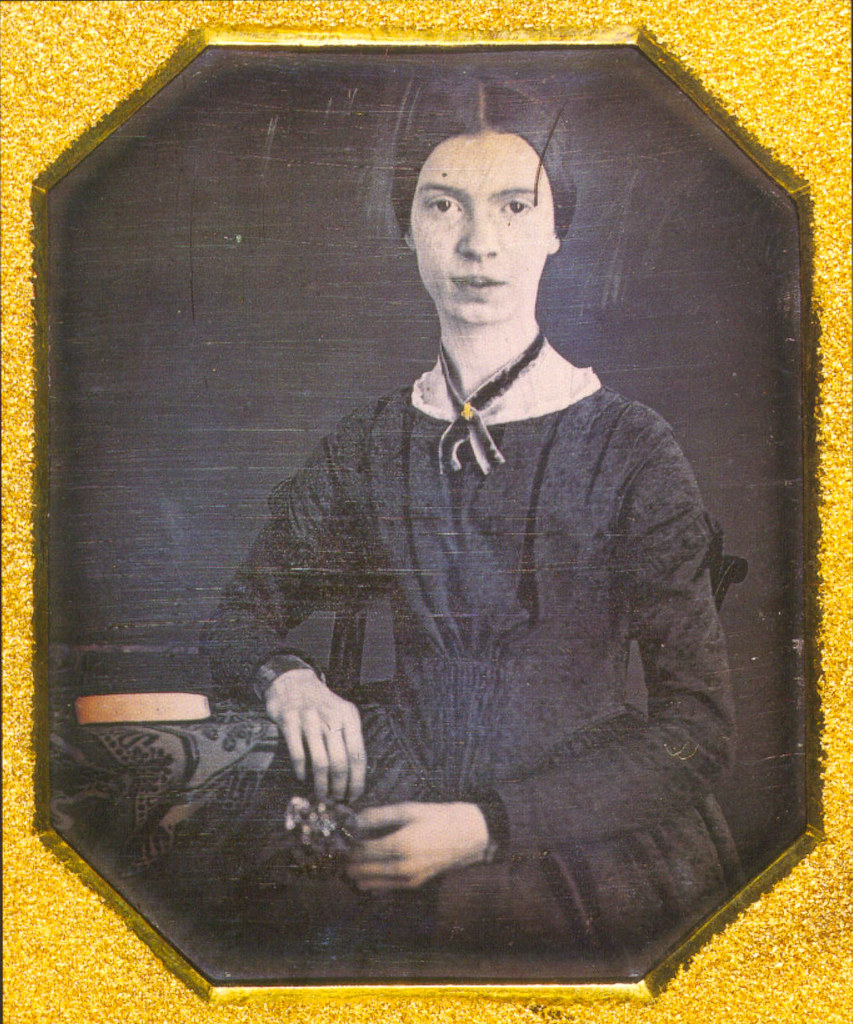
Yellow rose, yellow rose, Emily Dickinson lived in seclusion, was never a wife; wrote of her garden most anthropocentrically, talking with God, Satan, Death, all her life.
*****
There’s an old suggestion that all of Emily Dickinson’s poetry can be sung to the tune of ‘The Yellow Rose of Texas’.
I never saw a moor, I never saw the sea; Yet know I how the heather looks, And what a wave must be.
(Brave words, but I think that waves would have surprised her with their complexity and power and sensuousness.) There’s a newer suggestion that she lived so reclusively because she suffered from epilepsy, and wanted to hide it as much as possible out of a sense of shame.
Strange woman, strange life, strange little poems… but remarkably insightful, accessible, and word-for-word memorable.
How fortunate the arrogance of youth— the optimism and innumeracy, lack of experience, perspective, truth— giving hopes, visions that they’d never see if they but knew the small chance of success in major league politics, business, sports. Most fail, adopt some wage-slave form of dress that not dreams, but a family, supports.
Without those early dreams, with a clear view of stats on making it in the Big Time, they’d all give up, seeing how very few truly succeed. Then we’d miss those sublime insane few dreamers who can win their race, make the discoveries, blast into space.
*****
This Shakespearean sonnet has just been published in Shot Glass Journal – thanks, Mary-Jane Grandinetti!
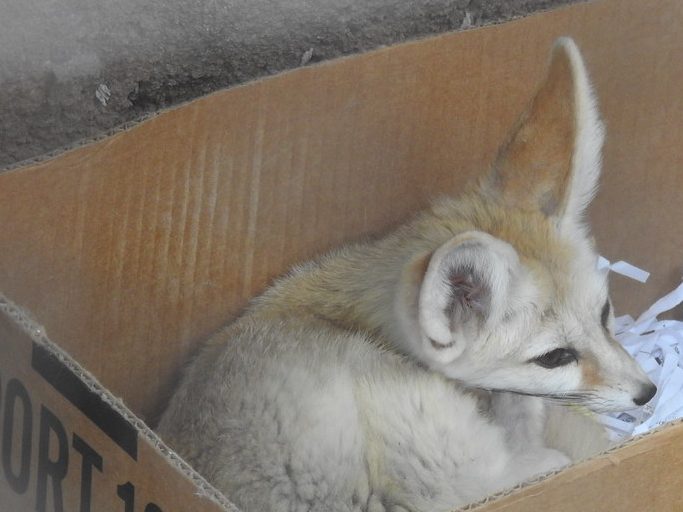
Have you seen the quantum fox, the fox in flux, the paradox? His whereabouts is rare, because he’s in his den, and in this box.
This hokum locus tends to vex the best of us; the mind rejects the concept of his flightiness as fiction or as foxy hex.
But fiction’s just refocused facts – a lens that bends, a parallax. The fact remains that Foxy lacks a fix, til someone interacts.
See, should you pry inside the box, you’ll find a fox, or not a fox, and then this quantum nonsense stops and everything is orthodox.
*****
Nina Parmenter writes: “I love reading ‘Quantum Fox’ out loud because it’s one of the few poems of mine I reliably know by heart and if performing it, I read it with props (er, a fox and a box funnily enough). Sometimes I also recite it to myself to distract my brain if it’s overheating! It’s one of the older poems in my book ‘Split, Twist, Apocalypse‘ (relatively – written around 2019 I think) and I can’t remember where the inspiration came from – I think it was just the nice feel of the words ‘Quantum Fox’!”
Nina Parmenter has no time to write poetry, but does it anyway. Her work has appeared in Lighten Up Online, Snakeskin, Light, The New Verse News, Ink, Sweat & Tears, and the Potcake Chapbook ‘Houses and Homes Forever’. Her home, work and family are in Wiltshire. https://ninaparmenter.com/
When your flesh freshly and your face flushly Face the imperatives of flesh, I find your mind now unleashed lusty-lushly… Must we not then enmesh?
*****
This little poem was triggered by pondering the nearness to each other of the words fresh, flesh and flush, and jamming them all together. The result was coherent enough for publication in (naturally) ‘Rat’s Ass Review‘ – thanks, Rick Bates!
I Because I do not do the limerick line Because I do not do Because I do not do the limerick Desiring this man’s schtick or that man’s joke I will stick to knocking out free verse (If here and there a rhyme so much the worse) In mournful moans Presented ragged-right upon the page.
II There once was a Lady with three White leopards, a juniper tree, And a bag full of bones That sang their sad moans Of what they had once hoped to be.
III At every turning of the turning stair, Your breathing hard, your eyesight edged with dark, You see the face of hope and of despair.
You breathe the vapor of the fetid air And toil as if some atmospheric shark At every turning of the turning stair
Was hunting through the gathering darkness there, While back and forth across the narrative arc You see the face of hope and of despair.
At every turning there’s a window where You contemplate a drop that’s still more stark At every turning of the turning stair.
Instead you circle upward as you swear Like you are looking for a place to park. You see the face of hope and of despair.
You can’t endure the future’s dismal dare Nor drag yourself to put out your own spark At every turning of the turning stair.
You’re learning how to care and not to care And whether you will make or be a mark. You see the face of hope and of despair At every turning of the turning stair.
IV Higgledy piggledy Here we are all of us Trudging along where some Billions have trod
Smelling the flowers and Trusting religionists’ Tergiversational Rodomontade.
V If the word that is lost isn’t lost, And the word that is spent isn’t spent Then silence is actually speaking, And meaning is something unmeant.
If the meaning is what is unheard And the word is the thing that’s unspoken Then how do you hear if a word Has a meaning that hasn’t been broken.
If the unspoken word must be still And the unheard is what it’s about To have heard the unhearable meaning The inside has got to be out.
If the unheard were out of this world And the light shone in darkness were dark Then the unlit unheard would be meaning If the snuffer provided the spark.
If the yadda can yadda its yadda And the pocus was what hocus took Then gobble must surely be gobble Though dee separates it from gook.
VI Awake! Your hope to turn or not to turn Is wasting time – but go ahead and yearn To see the light or hear the word to know A heaven human beings can’t discern.
There’s nothing there for such as you and me; We make our meaning up from what we see And hear and touch and taste and smell and think — But all there is is fragments and debris.
The steps are just the steps, the stairs the stairs, The rest is merely human hopes and prayers That do no more than hopes and prayers can do, And nothing’s chasing you except your heirs.
No unmoved mover writes upon some slate That mortals may abate or not abate; No hope and no despairing of that hope Reveals what nothing states, or doesn’t state.
Whatever happens happens because of us We get a muss when we don’t make a fuss Demanding right from wrong not mere convenience: We’re all complicit underneath this bus.
Awake! Don’t hope to turn or not to turn, Don’t pray that this is none of your concern. Awake! What will it take for you to learn That if it all burns down you, too, will burn?
*****
Marcus Bales has produced this wonderful set of parodies of the long T.S. Eliot poem ‘Ash Wednesday‘, beginning with a piece in the poem’s style for Part I, Because I do not hope to turn again Because I do not hope Because I do not hope to turn Desiring this man’s gift and that man’s scope
but then moving into a limerick for Part II’s Lady, three white leopards sat under a juniper-tree
and a 22-line villanelle for Part III’s At the first turning of the second stair
and a double dactyl for Part IV’s Who walked between the violet and the violet
and quatrains for Part V’s If the lost word is lost, if the spent word is spent If the unheard, unspoken Word is unspoken, unheard;
and finally rubaiyat with a strong flavour of FitzGerald’s Omar Khayyam for Part VI’s Although I do not hope to turn again Although I do not hope Although I do not hope to turn
‘Ash Wednesday‘ has proved one of Eliot’s best-known and most quoted poems, with its signature mixture of Christian mysticism, personal emotion, loose form and scattered rhyme, rich imagery and memorable wordplay. Bales’ ‘Slash Wednesday‘ is an appropriate tour de force of a back-handed homage, mocking Eliot’s ragged rambling with a sampling of forms that could have been used (inappropriately) instead.
Not much is known about Marcus Bales except that he lives and works in Cleveland, Ohio, and that his work has not been published in Poetry or The New Yorker. However his ’51 Poems’ is available from Amazon. He has been published in several of the Potcake Chapbooks (‘form in formless times’).
This is being posted two days late for T.S. Eliot’s birthday, but as it’s for the already late T.S. Eliot that shouldn’t matter too much…
City! Oh City! – poems on the light and dark of urban life. Thirteen of the best contemporary English-language poets present their wildly differing takes on the glamour and squalor, the joy and heartbreak, the varied people and the hidden wildlife of our modern cities.
Five of the poets are new to the Potcake Chapbook series, and I’m delighted to be adding Kate Bingham of England, Francis O’Hare of Northern Ireland, Pino Coluccio of Canada, and Quincy R. Lehr and J.D. Smith of the US. They join eight returning poets. Amit Majmudar and Maryann Corbett deserve special mention for their brilliant use of form to capture contradictory situations: Majmudar’s static street scene which suddenly changes pace to a hectic chase, Corbett’s interwoven Baroque chamber ensemble and homeless encampment with their separate realities in a shared evening in Saint Paul, Minnesota. In addition: Michael R. Burch, Jerome Betts, Terese Coe, Marcus Bales, Martin Elster and myself; everyone contributes to this memorable capture of the complexity of the modern city.
Bios, photos and links to read more of their work can all be found on the Sampson Low site’s Potcake Poets page, while all the chapbooks in the series, showing which poets are in which, are here. Each of the 12 chapbooks is profusely illustrated (of course) by Alban Low, and can be yours (or sent as an intriguing gift) for the price of a coffee.





 Form in Formless Times