Quincy R. Lehr, ‘As if by chance’

When I looked at her, and when her lips
Pulled back to show her teeth, and when her voice
Broke into laughter, I could only think
Of moments that I’d pissed away, each choice
I’d left to others, and the careless slips
That landed me beside an empty drink.
That afternoon, I could have sworn I saw
A thinner, hopeful version of my face
Staring from behind her retinas–
Familiar, yes, the eyes, the skin, the jaw,
But in that instant somehow out of place.
It cast a knowing frown. The gravitas
Was overbearing. Nonetheless, we filled
The void with gossip, anecdotes and smut,
Comparing chatty journals–note by note.
Like poets, we dissembled in the rut
That each of us was in, our chances killed
By loss of nerve or failure to emote.
But still, a sneer could not have hurt me more
Than her clear laugh that sang of expectations
So long forgotten from a distant day
When youth still spread before me, and the poor
And pitiful attempts at explanations
Still lay in ambush, only years away.

*****

Quincy R. Lehr writes: “This poem was literally about running into a high school friend of mine by chance on the day I defended my doctoral dissertation (though that’s not in the poem). It’s funny how old I thought I was at twenty-nine.”

Born in Oklahoma, Quincy R. Lehr is the author of several books of poetry, and his poems and criticism appear widely in venues in North America, Europe, and Australia. His book-length poem ‘Heimat‘ was published in 2014. His most recent books are ‘The Dark Lord of the Tiki Bar‘ (2015) and ‘Near Hits and Lost Classics‘ (2021), a selection of early poems. He lives in Los Angeles.
https://www.amazon.com/Quincy-R.-Lehr/e/B003VMY9AG

Photo: “Young woman laughing” by Snapshooter46 is licensed under CC BY-NC-SA 2.0.

Susan McLean, ‘The Mirror’s Desolation’

Once you adored me. I would bask
in looks you saved for me alone,
giving no hint—if any ask—
of secrets only I have known.
But now you find me hard to face.
I care for you too much to lie,
copying lines you would erase.
You hurry past, head down, and I,
sensing your pained indignity,
return your look of mute distress.
Though you no longer cherish me,
I do not love you any less.

*****

Susan McLean writes: “I took the idea of a talking mirror from Sylvia Plath’s poem ‘Mirror,’ but whereas she presents the mirror as being totally dispassionate, my mirror reflects the emotions as well as the faces of those who look into it. Sometimes, if you see someone beautiful, you may think “the mirror loves her (or him).” But it occurred to me that mirrors love everyone. They just as gladly reflect the old and ugly as the young and beautiful. In this poem, I imagine the mirror’s sorrow that its love is not returned. In French, “I’m sorry” is “je suis désolé” (“I’m desolated”), which always seemed charmingly over-the-top to me. It occurred to me that the phrase “the mirror’s desolation” could refer both to the sorrow the mirror feels and to the devastation it causes. This poem first appeared in Valparaiso Poetry Review, and then in my second poetry book, The Whetstone Misses the Knife.

Susan McLean has two books of poetry, The Best Disguise and The Whetstone Misses the Knife, and one book of translations of Martial, Selected Epigrams. Her poems have appeared in Light, Lighten Up Online, Measure, Able Muse, and elsewhere. She lives in Iowa City, Iowa.
https://www.pw.org/content/susan_mclean

Illustration: DALL-E

Gail White, ‘The Girls Who Got Ahead’

When all the bright young women studied law
and medicine, I thought a PhD
in Women and the Novel would unthaw
the frozen heart of Academe for me.
When all the bright girls married, where was I?
Still shacking up with poets that I met
in bars, convinced that genius and rye
would write us into fame and out of debt.
The bright girls made investments by the rules.
I kept on writing novels in my mind.
They sent their handsome kids to private schools
and I became the girl they left behind.
Bright girls got married and ahead and rich,
while I’m in debt again, and life’s a bitch.

*****

Gail White writes: “The Girls Who Got Ahead is a poem from the 90’s. Yes, everyone was in the professions or in graduate school but me. I was a poet and that means taking a vow of poverty. I thought I might as well make a sonnet out of it.”

Gail White is the resident poet and cat lady of Breaux Bridge, Louisiana. Her books ASPERITY STREET and CATECHISM are available on Amazon. She is a contributing editor to Light Poetry Magazine. “Tourist in India” won the Howard Nemerov Sonnet Award for 2013. Her poems have appeared in the Potcake Chapbooks ‘Tourists and Cannibals’, ‘Rogues and Roses’, ‘Families and Other Fiascoes’, ‘Strip Down’ and ‘Lost Love’. ‘Money Song’ is collected in ‘Asperity Street‘. Her new light verse chapbook, ‘Paper Cuts‘, is now available on Amazon.

Photo: “Women Entrepreneurs Blazing Trails” by World Economic Forum is licensed under CC BY-NC-SA 2.0.

Short poem: ‘Raven’

Every raven started as a naked nestling,
every fox was a blind nursing pup,
helpless… then looking, reaching, wrestling
into the wilderness of growing up.

*****

Written for my grandson Raven (born in October last year, and dressed by his parents in a fox outfit for Halloween). The poem was published recently in The Asses of Parnassus – thanks, Brooke Clark!

Photo: “HBT Raven Chicks” by vastateparksstaff is licensed under CC BY 2.0.

Michael Tyldesley, ‘Ballad of the Siren Song’

“Come closer and I will tell you a secret
To you, to you, only to you.
Come Closer.”

You’re perched sultry on a craggy cliff,
curvy on a windswept rock
with red dress clinging to your breasts:
you play that tune, that tune you play
it’s calling out to me.

And I’m sailing, roving, lost at sea,
bedraggled by the ocean spray
and changing course for you.

Because, that tune, that tune you play
it jolts me, hooks me, reels its prey:
from silent waves to violin,
from moonless numb to sun-kissed-skin
from topsail calm to snatching whip,
from steady course to daring trip.

I hear that tune, that tune you play
it takes me further, far away:
your spiral smile, your whirlpool lips,
they whisper songs to rolling ships.

That tune you play, with gravity
hypnotic moonstruck melody,
there’s no escape, the heavens swarm
electrostatic pulses form –

I’d love to be your thunderstorm,
whipping up the specks of you,
teasing you; perplexing you
not pleasing you; just vexing you
yet needing the effects of you,
a feeling that projects on you,
it’s squeezing me and sexing you.

And yet, that tune, that tune you play
it leads me on in some strange way –
I see beached skulls and broken hulls
shadows changing, screeching gulls,
till I’m marooned, a castaway,
a shipwreck in your taloned splay.

*****

Michael Tyldesley writes: “The poem was inspired by the trap of damaging relationships earlier in my life and the metaphor that sits behind the poem and continues to burn in me is the irresistible lure of hypomania. The poem structure was inspired by the freeform rhyming style of Jenni Doherty and the language of Dylan Thomas’s Under Milk Wood. It’s been gathering dust in my drawer over the years and it’s quite an old poem. I wrote most of it at 26 and I’m now 42. It’s slightly raunchy and I suppose I didn’t want to be judged negatively due to that but it’s always been a very popular poem when I shared it.”

Michael Tyldesley works in British submarine design. At the time of writing this post he is in Australia, doing performance poetry at Melbourne’s Vibe Union. ‘Ballad of the Siren Song’ was published in this month’s Snakeskin.

Photo: Image Creator powered by DALL·E

Edmund Conti, ‘Two’s Company’

Sweet are the uses of divinity
And sweeter yet in keeping us engrossed
Is the simple complex concept of the trinity
The Father, Son and Holy Ghost.

Is making sense of Them too much a bother?
Is there any way to master Three-in-One?
The son, the Holy Ghost and Father,
The Holy Ghost, the Father and the Son.

I use this ancient form, the cranky sonnet
To crank out my aberrant Dunciad
And what evolves from overthinking on it:
The Spook, the Kid and–dare I say it?–Dad.

It’s true that poems are made by fools like me
But only God can make himself a three.

*****

Edmund Conti writes: “I wasn’t going to get into any interpretations of the Trinity. Just noting that scholars writing about it don’t shed much light. So I decided to shed my own. Somewhere along the line I may have gone a little overboard. (Pray for me.) I think my cranky sonnet has its own rhyme scheme, not one from the books. Meanwhile I’ve forgotten what ”Dunciad” means except that it was a good rhyme word. Forgetting all that, I guess this whole thing was inspired by Joyce Kilmer’s memorable last line.”

Edmund Conti has recent poems published in Light, Lighten-Up Online, The Lyric, The Asses of Parnassus, newversenews, Verse-Virtual and Open Arts Forum. His book of poems, Just So You Know, released by Kelsay Books
https://www.amazon.com/Just-You-Know-Edmund-Conti/dp/1947465899/
was followed by That Shakespeherian Rag, also from Kelsay
https://kelsaybooks.com/products/that-shakespeherian-ragHis poems have appeared in several Potcake Chapbooks: Tourists and Cannibals
Rogues and Roses
Families and Other Fiascoes
Wordplayful
all available from Sampson Low Publishers

Photo: “Father, Son & Holy Ghost” by elston is licensed under CC BY-NC-ND 2.0.

Edmund Conti, ‘The Straight Skinny’

To say that only I am fat,
To say that I am only fat,
To say only that I am fat,
To only say that I am fat,
Is not to say, however, that
They equally are definitive.

One statement says fat’s mine alone,
One says no other trait I own,
One just has a plaintive tone,
And–overlooked and overblown–
One just splits the infinitive.

*****

Edmund Conti writes: “I guess this began with the observation that ‘only I am fat’ and ‘I am only fat’ have different meanings depending on the placement of one word. Which made me wonder if placing ‘only’ in other parts of the sentence would change it again. Which it did. Why did I use ‘fat’ as a trait? Well, it’s an easy rhyme and people can relate to it—in themselves or others. Also, it gave me a good excuse for the title.
I thought writing the second stanza would be trickier, but the rhymes just fell into place. And noticing the split infinitive and using it saved the poem. Assuming it was worth saving.”

Edmund Conti has recent poems published in Light, Lighten-Up Online, The Lyric, The Asses of Parnassus, newversenews, Verse-Virtual and Open Arts Forum. His book of poems, Just So You Know, released by Kelsay Books
https://www.amazon.com/Just-You-Know-Edmund-Conti/dp/1947465899/
was followed by That Shakespeherian Rag, also from Kelsay
https://kelsaybooks.com/products/that-shakespeherian-rag

His poems have appeared in several Potcake Chapbooks:

Tourists and Cannibals
Rogues and Roses
Families and Other Fiascoes
Wordplayful
all available from Sampson Low Publishers

Photo: “Why Am I So Fat?” by morroelsie is licensed under CC BY-NC 2.0.

Richard Fleming, ‘The Railway Line – in memory of John Simpson’

We walked together side by side,
at dusk along the disused line,
restless and glad to be outside.
I had Woodbines, you brought cheap wine.
Fifteen, unthinkingly alive,
truants from our suburban drive,
we talked excitedly of life
how we had cracked it, knew the score.
We worked the cork out with your knife
then drank sweet wine and wanted more.
We smoked our fags, ignored the cold,
could not imagine being old.

*****

Richard Fleming writes: “The Railway Line is an old poem, rescued from the archives, that remains dear to me. In it, I’ve attempted to recapture the heady recklessness of my early teenage years when the world seemed full mysteries, and friendships were more intense than those I later formed in adulthood. John didn’t make it past his early twenties so he remains, in my memories of him, forever rebellious and young.”

Richard Fleming is an Irish-born poet currently living in Guernsey, a small island midway between Britain and France. His work has appeared in various magazines, most recently Snakeskin, Bewildering Stories, Lighten Up Online, the Taj Mahal Review and the Potcake Chapbook ‘Lost Love’, and has been broadcast on BBC radio. He has performed at several literary festivals and his latest collection of verse, Stone Witness, features the titular poem commissioned by the BBC for National Poetry Day. He writes in various genres and can be found at www.redhandwriter.blogspot.com or Facebook https://www.facebook.com/richard.fleming.92102564/

“railway lines” by apdk is licensed under CC BY 2.0.

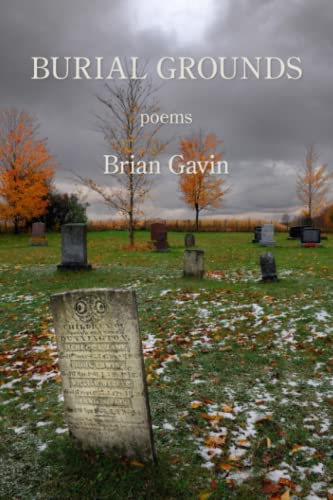
Review: ‘Burial Grounds’ by Brian Gavin

Gavin’s poems are quiet, elegant reflections on people—alive and dead—in danger of being forgotten, in towns not in the mainstream of modern life. His verse is quietly formal, usually rhymed, always rhythmic. Sometimes as brief as a sonnet, as with my personal favourite ‘Grand Opening’: an ex-serviceman, mopping floors and putting the coffee on at 4 a.m., running a business at which (apparently) four previous owners have failed, but simply doing what has to be done…

It isn’t so much hope behind these doors
as work to do. (…) He reaches for the light.
He sets his OPEN sign against the night.

There is an inherent mournfulness in these stories of people in places which once thrived but are now hanging on without major farming or industrial or commercial opportunities. Many poems are about people towards the end of their lives, or even later as the title suggests. And even when youth is included it shows up as a teen alone on a swing on a November evening, working her phone:

and nothing moves, but for the falling dark
and the quiver of her thumbs at work.

Railway stations close, businesses relocate, fires happen, towns empty out… but people are still there, poorer, aging, their prospects reduced. The overall tone is an almost religious attitude of accepting where you are, fighting the good fight, doing what must be done… moving, as we all must, into life’s inevitable landscape of burial grounds.

*****

Brian Gavin is a retired Distribution Manager who started writing poetry 10 years ago. His poems have appeared in The Journal of Formal Poetry, Peninsula Poets and Snakeskin Magazine, and in the Potcake Chapbook ‘Careers and Other Catastrophes’. He lives in Lakeport, Michigan, USA, with his wife Karen. ‘Burial Grounds’ is available from Kelsay Books.

Susan McLean, ‘Morbid Interest’

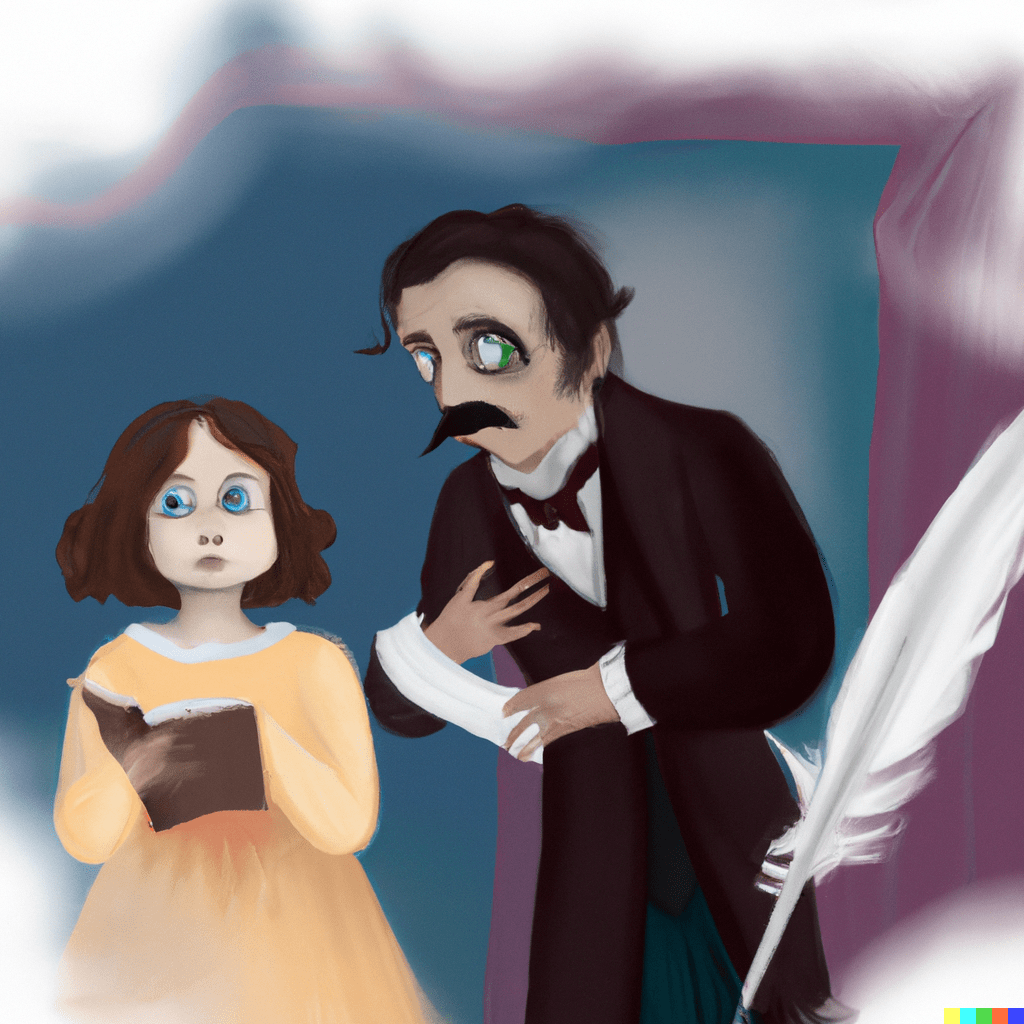
How unpleasant to meet Mr. Poe.
It gives a young lady a chill
when, just as she’s saying hello,
he asks if she’s lately been ill.

It was mid-afternoon, yet he seemed
to be tipsy or mildly sedated.
How oddly his mournful eyes gleamed
when he heard that we might be related.

He muttered some rhymes for my name,
saying nothing could be more inspiring
to a poet desirous of fame
than the sight of young beauties expiring.

Then he asked if I had a bad cough
or a semi-conversable crow.
I informed him of where to get off.
How unpleasant to meet Mr. Poe.

*****

Susan McLean writes: “In my teens, I was a big fan of Edgar Allan Poe‘s short stories and poetry. I loved his eerie subjects and crooning, incantatory lines. I memorized his poem ‘To Helen,’ and I parodied his iconic ‘The Raven.’ But in grad school, I read his essay ‘The Philosophy of Composition,’ in which he wrote that “the death . . . of a beautiful woman is unquestionably the most poetical topic in the world.” Hmmm. At that moment, it occurred to me that all of those dead women of his stories and poems might be less an outpouring of personal grief and more a product of an agenda. Years later, when responding to a challenge from the British journal The Spectator to write a poem modeled on Edward Lear’s ‘How pleasant to know Mr. Lear‘ but about another author, I imagined how Poe might seem to a young woman being introduced to him.
This poem, which was originally published in Light Quarterly, was later reprinted in Per
Contra
and in my second poetry book, The Whetstone Misses the Knife.”

Susan McLean has two books of poetry, The Best Disguise and The Whetstone Misses the Knife, and one book of translations of Martial, Selected Epigrams. Her poems have appeared in Light, Lighten Up Online, Measure, Able Muse, and elsewhere. She lives in Iowa City, Iowa.
https://www.pw.org/content/susan_mclean

Illustration: DALL-E