Tag Archives: city life

Weekend read: Aaron Poochigian, ‘Not Atoms’

When, strolling through the Village, I discover

one lonesome shoe, a jeweled but dogless collar,
the crushed rose of a hitman or a lover,
barf like an offering, a half-burnt dollar,
“Scream” masks holding traffic-light-top vigil,
loose lab rats among the morning glories
or Elmo trapped inside a witch’s sigil,

I love the universe because it’s made of stories.

*****

Aaron Poochigian writes: “I live in the East Village, which is party central, especially on the weekends. The images in this poem are mostly random stuff I saw the mornings after. I didn’t include the people passed out on the sidewalk (just check to make sure they’re still breathing). The structure (one-line beginning, six-line list, one-line ending) came to me from a beautiful Tang-dynasty poem, ‘Visiting the Taoist Priest Chang’, by Liu Changqing.”

Aaron Poochigian’s ‘Not Atoms’ was originally published in New Verse Review. For reference, here is Liu Changqing’s poem in Aaron Poochigian’s translation:

Under the faint trail’s guidance I discover

a footprint in the phosphorescent moss,
a tranquil lake where low clouds love to hover,
a lonesome door relieved by rampant grass,
a pine grown greener since the thundershowers,
a cold springs fed by mountains far away.

Mingling with these truths among the flowers,
I have forgotten what I came to say.


Aaron Poochigian earned a PhD in Classics from the University of Minnesota and an MFA in Poetry from Columbia University. His latest poetry collection, American Divine, the winner of the Richard Wilbur Award, came out in 2021. He has published numerous translations with Penguin Classics and W.W. Norton. His work has appeared in such publications as Best American Poetry, The Paris Review and Poetry.
aaronpoochigian.com
americandivine.net

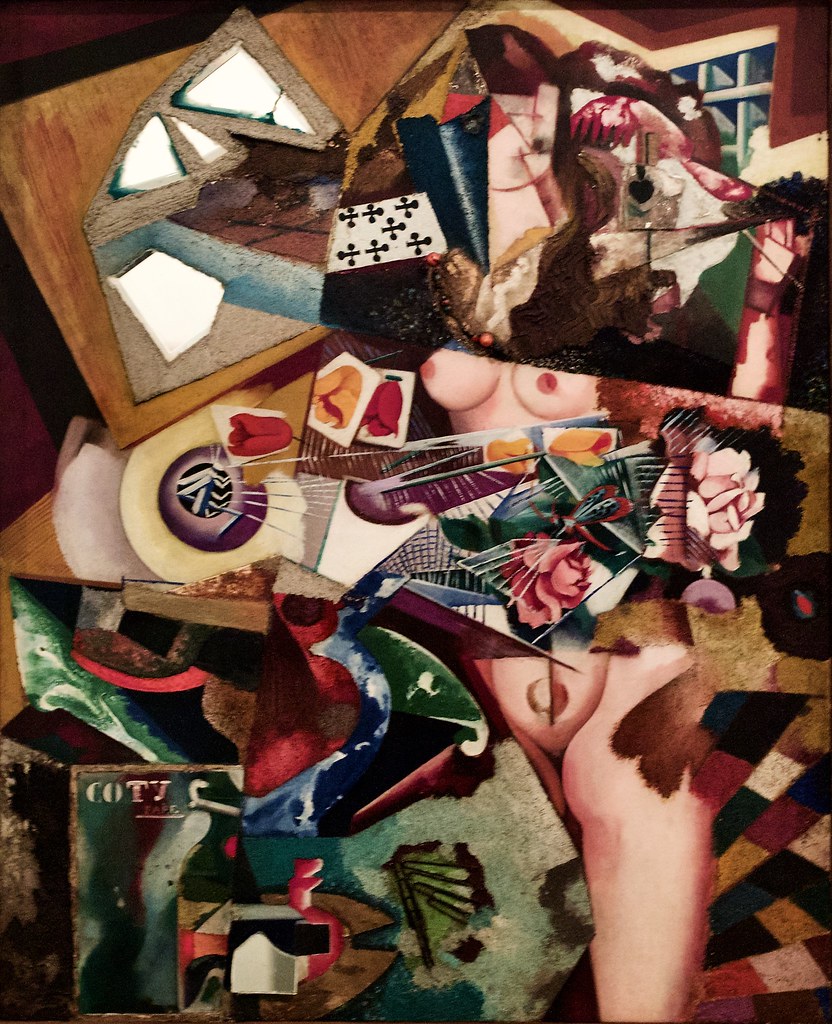
Photo: “Untitled [Coty] (c.1917) – Amadeu de Souza-Cardoso (1897-1918)” by pedrosimoes7 is licensed under CC BY 2.0.
Using form: Nonce form, riddles: Aaron Poochigian, ‘The New New Amsterdam’

I am the scam
you go in for, the diamonds in the pavement,
ecstatic evenings caught on traffic cam,
rare toilets and consensual enslavement.

Scholars and brawlers are inside of me.
What could I be?

I am
the new New Amsterdam.

I am those glam
high-rises and the derelicts’ despair,
graffiti worthy of the Met, and sham
Versace hawked to chumps in Union Square.

Purists and tourists are inside of me.
What could I be?

I am
the new New Amsterdam.

I am the ham
ironist, the perverse poobah of shock,
the firetruck stranded in a rush-hour jam
while conflagration rages round the block.

Birders and murders are inside of me.
What could I be?

I am
the new New Amsterdam.

I am the slam
Where Subway Ends, a scrum of mad musicians,
Sunday phone calls with a far-off fam,
Halal street food, and infinite ambitions.

Shoo-ins and ruins are inside of me.
What could I be?

I am
the new New Amsterdam.

*****

Aaron Poochigian writes: “Riddles go back to a time before ‘English’ was our English, before Shakespeare and Chaucer, the time of bards and Beowulf. The Anglo-Saxon riddles have the rhythms of poetry. They tell it slant like poetry does sometimes. The tantalizing, first-person self-description that defines the genre gave me a ‘way in’ to talk about a subject that would have been too vast otherwise—New York City.”

‘The New New Amsterdam’ was first published in The Rising Phoenix Review.

Aaron Poochigian earned a PhD in Classics from the University of Minnesota and an MFA in Poetry from Columbia University. His latest poetry collection, American Divine, the winner of the Richard Wilbur Award, came out in 2021. He has published numerous translations with Penguin Classics and W.W. Norton. His work has appeared in such publications as Best American Poetry, The Paris Review and Poetry.
aaronpoochigian.com
americandivine.net

Twitter: @Poochigian
Facebook: Aaron Poochigian
Instagram: aaronpoochigian

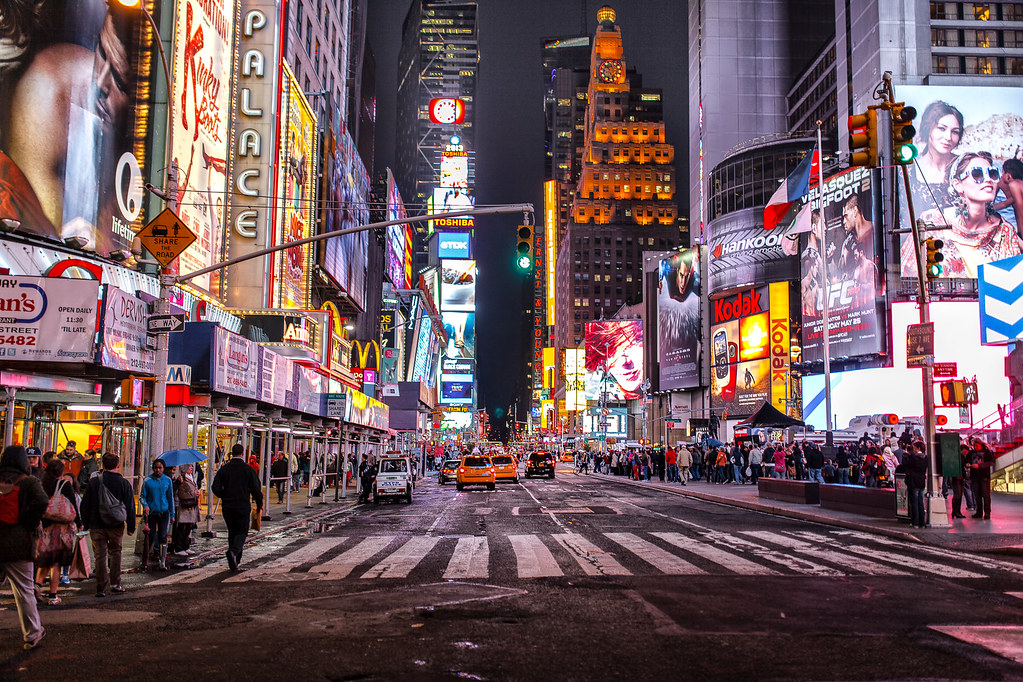
Photo: “NYC Night Life” by Tom Roeleveld is licensed under CC BY-NC-ND 2.0.

Weekend read: Quincy R. Lehr, ‘Thud!’

There’s thudding from the floor above that never seems to stop.
I’m trying to sleep, or waiting for the other shoe to drop
as midnight clomps toward 2 AM and hours of darkness dwindle
into the gray of going to work. This rent’s a fucking swindle.

Where’s my damn connection gone? The internet’s too slow.
Get me Jobs or get me Gates. Those bastards need to know.

I called her on a Friday, and we swore that we would meet.
I hailed a taxi, ended up along a different street —
similarly named, but swathed in layers of graffiti.
A drip of sweat ran down my neck; the air was cold and sleety.

Where’s that old-time romance gone? Who will sigh and blubber
over at hers at 3 AM with a lavatory rubber?

I saw a TV talking head while ordering a bagel
who talked about the budget mess — but then he quoted Hegel
about the end of history. Some Weltschmerz is okay,
but save it for the pop songs, man, and don’t get in the way.

Where’s my hometown paper gone? The owner’s on the run
from ranters on the blogosphere. Something must be done.

He met my eyes and shook my hand, and though you wouldn’t know it,
that jerk-off in a business suit calls himself a poet/
critic/impresario and manages quite well.
He smiled and quoted Dante, but I only thought of Hell.

Where’ve our tortured artists gone, Catullus or Syd Barrett?
Chasing after the latest grant and following the carrot.

The upstairs stomps are quicker now and spreading to the hall.
My head’s beneath the pillow. Damn it — won’t she ever call?
I half hope that she’s safe in bed and blithely fast asleep,
but fantasize her all alone and looking up mid-weep.

Where’s the just comeuppance gone? What happened to bad karma?
It got renamed and bottled up and bought out by Big Pharma.

There’s violence in the movies, and there’s violence on TV;
there’s violence on the city streets…. Fuck off! Don’t talk to me!
There’s anger in the headlines, and there’s fury in the verse
spat out at downtown open mikes. I don’t know whom to curse.

Where’ve the old-time standards gone? The censors look forlorn
from hip hop, emo, techno, goth. What happened to the porn?

Times Square’s gone all Disneyfied. The red-light district’s blue.
Godspeed to all you chicks with dicks, and hello, Scooby-Doo.
Farewell, Adult Emporium! You’re now a clothing store,
maybe a Planet Hollywood — and God knows which sucks more.

Where’s my filthy city gone? They smothered it in bleach,
hired a doorman, raised the rent, and placed it out of reach.

What’s to blame? Is it our greed or lack of common sense?
Is it violence in our past, or just incompetence?
Perhaps it’s economic or the crush of circumstance.
Or was it just a thwarted wish to get into her pants?

Where’s that upstairs thumping gone? The silence settles deep
into the still and humid air. I still can’t get to sleep.

*****

Quincy R. Lehr writes: “Thud! is a New York City madsong, with gentrification, insomnia, political decay, and urban loneliness mixing together in a sort of minestrone soup of misery that is also, I think, pretty funny.”

Born in Oklahoma, Quincy R. Lehr is the author of several books of poetry, and his poems and criticism appear widely in venues in North America, Europe, and Australia. ‘Thud!‘ was first published in Measure and was reprinted in the Potcake Chapbook ‘City! Oh City!‘ His book-length poem ‘Heimat‘ was published in 2014. His most recent books are ‘The Dark Lord of the Tiki Bar‘ (2015) and ‘Near Hits and Lost Classics‘ (2021), a selection of early poems. He lives in Los Angeles.
https://www.amazon.com/Quincy-R.-Lehr/e/B003VMY9AG

Photo: “sleepless” by ebrkut is licensed under CC BY-ND 2.0.

Michael R. Burch, ‘Redolence’

Now darkness ponds upon the violet hills;
cicadas sing; the tall elms gently sway;
and night bends near, a deepening shade of gray;
the bass concerto of a bullfrog fills
what silence there once was; globed searchlights play.

Green hanging ferns adorn dark window sills,
all drooping fronds, awaiting morning’s flares;
mosquitoes whine; the lissome moth again
flits like a veiled oud-dancer, and endures
the fumblings of night’s enervate gray rain.

And now the pact of night is made complete;
the air is fresh and cool, washed of the grime
of the city’s ashen breath; and, for a time,
the fragrance of her clings, obscure and sweet.

*****

Michael R. Burch writes: “I wrote the poem as the sun was going down over my son Jeremy’s pee-wee football practice. The first stanza is a pretty accurate description of the scene. However, by the second stanza I was letting my imagination run free. By the last four lines it was pure imagination. Or my wife would have killed me!”

Michael R. Burch is an American poet who lives in Nashville, Tennessee with his wife Beth and two outrageously spoiled puppies. Burch’s poems, translations, essays, articles, reviews, short stories, epigrams, quotes, puns, jokes and letters have appeared in hundreds of literary journals, newspapers and magazines. Burch is also the founder and editor-in-chief of The HyperTexts, a former columnist for the Nashville City Paper, and, according to Google’s rankings, a relevant online publisher of poems about the Holocaust, Hiroshima, the Trail of Tears and the Palestinian Nakba. Burch’s poetry has been taught in high schools and universities, translated into 17 languages, incorporated into three plays and two operas, set to music by 27 composers, and recited or otherwise employed in more than a hundred YouTube videos. To read the best poems of Mike Burch in his own opinion, with his comments, please click here: Michael R. Burch Best Poems

Photo: “Ferns at night” by ikewinski is licensed under CC BY 2.0.

Quincy R. Lehr, ‘Apartments’

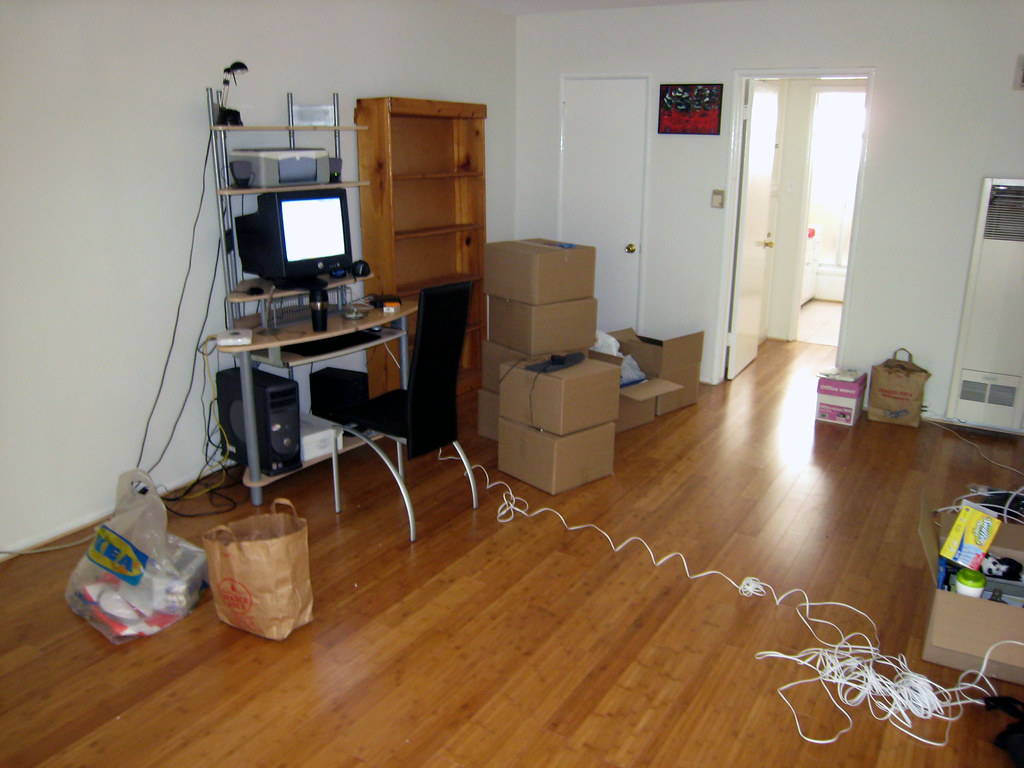
No ghosts as yet, but just a hint of fever
(the fan’s still in its box) and foreign noise.
A virgin phone squats on its new receiver.
Undusty window sills are bare but ready
for clocks, for brown, anemic plants, their poise
temporary, fragile and unsteady.

There have been other places, across the river,
or oceans, time zones–other furniture,
with curtains cutting light to just a sliver,
those old apartments populated still
with women whom you recollect as “her.”
They haven’t called; you doubt they ever will.

Each lease becomes an act of… not forgetting,
but somehow letting go. Old places live
with different faces in a familiar setting:
lives you’ll never know, but comprehend,
scenes of errors not yours to forgive,
broken hearts no longer yours to mend.

*****

Quincy R. Lehr writes: “I’m trying to remember exactly which move this poem commemorates. I moved three times in three years–Dublin 2006, Galway 2007, New York 2008. It is, from an autobiographical point of view, about feeling a bit deracinated.
But in a sense, that’s renting–you’re never the first person in a place, and you’re hardly going to be the last. You haul your shit from place to place, carrying your permanence with you, but the stuff in its person-specific configurations, like your presence in an apartment, or a city, or just in the world in general, is ephemeral.
The poem appeared in my second collection, Obscure Classics of English Progressive Rock, which was the bulk of the poems written in Ireland that were any good, as well as the first couple of years back in New York. It was first published in the Recusant in the UK.
I imagine I wrote it in the first couple of months after returning to New York, but that’s an educated guess and at least five computers ago.”

Born in Oklahoma, Quincy R. Lehr is the author of several books of poetry, and his poems and criticism appear widely in venues in North America, Europe, and Australia. His book-length poem ‘Heimat‘ was published in 2014. His most recent books are ‘The Dark Lord of the Tiki Bar‘ (2015) and ‘Near Hits and Lost Classics‘ (2021), a selection of early poems. He lives in Los Angeles.
https://www.amazon.com/Quincy-R.-Lehr/e/B003VMY9AG

New Apartment” by artindeepkoma is licensed under CC BY-NC-SA 2.0.

Poem: ‘City! Oh City!’

Cities–once all smeared with grime,
rich but dirty, full of crime–
clear the excess cars and dust
if their governments are just,
house the homeless, and among
their cares: clean water, healthy young.
Gorgeous buildings grow and twist
through a river’s gentle mist;
trees in leaf for urban hikes:
sculptures, cafes, books and bikes…
children run wild in the park
till theatre signs light up the dark;
music spills from bars at night–
the well-run city’s a delight.

*****

This poem was published (in 2021 or 2022, the Bahamas Post Office seems to have lost my copy so I’m not sure yet) in The Lyric Magazine, Jean Mellichamp calling it “a breath of fresh air”. I wrote it to be an upbeat view of the modern world in contrast to a lot of the more worrying future issues that I’m often concerned with; and when I put together the ‘City! Oh City!’ Potcake Chapbook, I included the poem to balance some of the less rosy views of urban life–though my poem is nowhere near as skilled as the pieces in the chapbook by Maryann Corbett, Amit Majmudar and others.

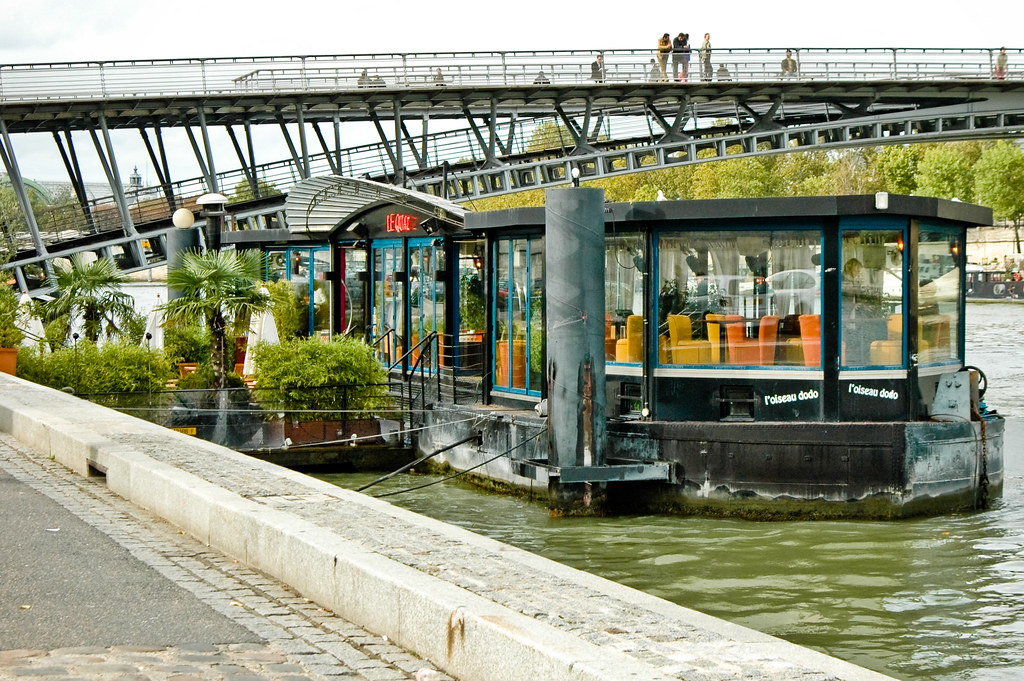
Photo: “le quai river cafe on seine” by grahamdale74 is licensed under CC BY-NC-SA 2.0.

Using form: Couplets: Maryann Corbett, ‘Fugue in October’

Baroque chamber ensemble and homeless encampment, Saint Paul

Perfect: the singers, strings, and keyboards. Perfect
Bruised sky above the tents of the squatters’ district
the little jewel-box church, its bright acoustic
calm in the year’s last mildness, the only music
softened a little in the candles’ lighting,
the mumbling underpass. The wind. No fighting
for this is God’s mind, woven of harmonies
for once. Tonight, for once, no one ODs—
and our souls thread through the flame of the vigil lamp
someone got lucky at the entrance ramp
as we hold, hold to Monteverdi’s line
(panhandling, on this warm day, with a sign)
and stop our breath until the last string dies
and parcels out his manna of salty fries
in the last great chord of his Beatus vir
while sirens wail some sorrow, far from here.

*****

Editor’s comments: “In case it isn’t clear from whatever device you are reading this on, each couplet here is comprised of a line about a musical ensemble in a church followed by a line about a homeless encampment under a highway. You can read it straight through as a soft-voiced line followed by a harsher one; or you can read every other line in one voice and the remaining lines in a different voice; either way, you are blending two very different aspects of city life into a larger, richer picture of community sharing, whether in glamour or squalor. This is an unusual and remarkably effective use of rhymed couplets of iambic pentameter.
The contrast built into the poem, and the skill with which it was done, made it a natural poem for inclusion in the ‘City! Oh City!‘ Potcake chapbook. It first appeared in Measure Review; and is included in the collection In Code.

Maryann Corbett writes: “Events that trigger a poem need not be as simultaneous as the poem makes them seem. The choral concert in this poem took place on a subzero night during the Christmas season; the rise of homeless encampments occurred at a warmer time of year–but both could be happening in my city at any time, and they probably still are.”

Maryann Corbett earned a doctorate in English from the University of Minnesota in 1981 and expected to be teaching Beowulf and Chaucer and the history of the English language. Instead, she spent almost thirty-five years working for the Office of the Revisor of Statutes of the Minnesota Legislature, helping attorneys to write in plain English and coordinating the creating of finding aids for the law. She returned to writing poetry after thirty years away from the craft in 2005 and is now the author of two chapbooks, five full-length collections already published, and a forthcoming book. Her fifth book, In Code, contains the poems about her years with the Revisor’s Office. Her work has won the Willis Barnstone Translation Prize, has appeared in many journals on both sides of the Atlantic, and is included in anthologies like Measure for Measure: An Anthology of Poetic Meters and The Best American Poetry 2018.

Her web page: http://maryanncorbett.com

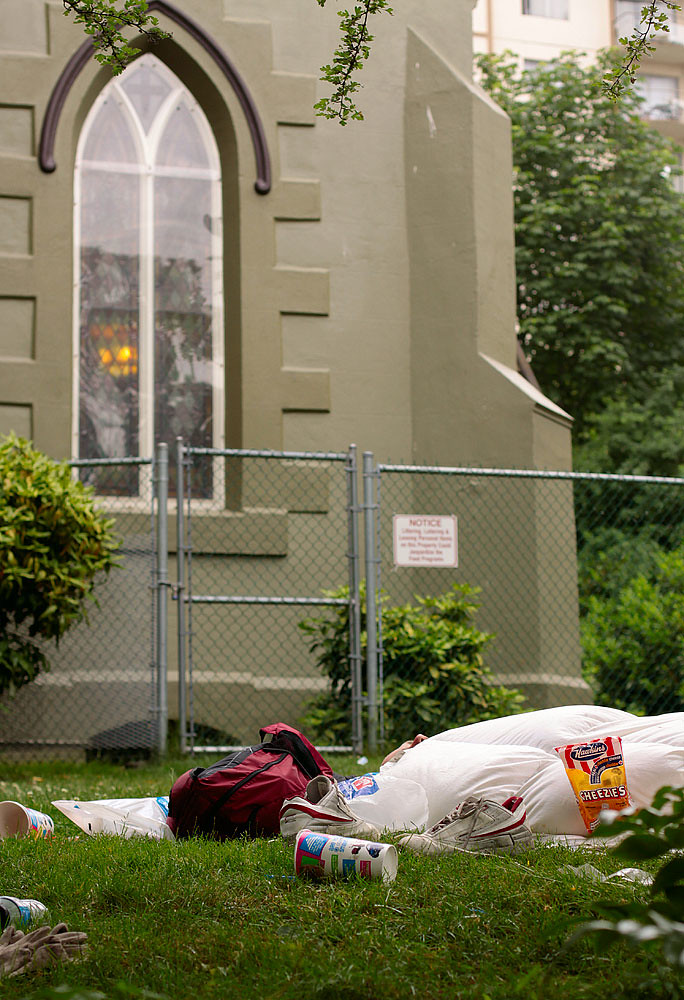
Photo: “sleeping on the rock of ages” by waferboard is licensed under CC BY 2.0.

Launch: Potcake Chapbook 12, ‘City! Oh City!’

City! Oh City! – poems on the light and dark of urban life. Thirteen of the best contemporary English-language poets present their wildly differing takes on the glamour and squalor, the joy and heartbreak, the varied people and the hidden wildlife of our modern cities.

Five of the poets are new to the Potcake Chapbook series, and I’m delighted to be adding Kate Bingham of England, Francis O’Hare of Northern Ireland, Pino Coluccio of Canada, and Quincy R. Lehr and J.D. Smith of the US. They join eight returning poets. Amit Majmudar and Maryann Corbett deserve special mention for their brilliant use of form to capture contradictory situations: Majmudar’s static street scene which suddenly changes pace to a hectic chase, Corbett’s interwoven Baroque chamber ensemble and homeless encampment with their separate realities in a shared evening in Saint Paul, Minnesota. In addition: Michael R. Burch, Jerome Betts, Terese Coe, Marcus Bales, Martin Elster and myself; everyone contributes to this memorable capture of the complexity of the modern city.

Bios, photos and links to read more of their work can all be found on the Sampson Low site’s Potcake Poets page, while all the chapbooks in the series, showing which poets are in which, are here. Each of the 12 chapbooks is profusely illustrated (of course) by Alban Low, and can be yours (or sent as an intriguing gift) for the price of a coffee.

Value the city – citification is civilisation!