Tag Archives: countryside

Michael R. Burch, ‘Redolence’

Now darkness ponds upon the violet hills;
cicadas sing; the tall elms gently sway;
and night bends near, a deepening shade of gray;
the bass concerto of a bullfrog fills
what silence there once was; globed searchlights play.

Green hanging ferns adorn dark window sills,
all drooping fronds, awaiting morning’s flares;
mosquitoes whine; the lissome moth again
flits like a veiled oud-dancer, and endures
the fumblings of night’s enervate gray rain.

And now the pact of night is made complete;
the air is fresh and cool, washed of the grime
of the city’s ashen breath; and, for a time,
the fragrance of her clings, obscure and sweet.

*****

Michael R. Burch writes: “I wrote the poem as the sun was going down over my son Jeremy’s pee-wee football practice. The first stanza is a pretty accurate description of the scene. However, by the second stanza I was letting my imagination run free. By the last four lines it was pure imagination. Or my wife would have killed me!”

Michael R. Burch is an American poet who lives in Nashville, Tennessee with his wife Beth and two outrageously spoiled puppies. Burch’s poems, translations, essays, articles, reviews, short stories, epigrams, quotes, puns, jokes and letters have appeared in hundreds of literary journals, newspapers and magazines. Burch is also the founder and editor-in-chief of The HyperTexts, a former columnist for the Nashville City Paper, and, according to Google’s rankings, a relevant online publisher of poems about the Holocaust, Hiroshima, the Trail of Tears and the Palestinian Nakba. Burch’s poetry has been taught in high schools and universities, translated into 17 languages, incorporated into three plays and two operas, set to music by 27 composers, and recited or otherwise employed in more than a hundred YouTube videos. To read the best poems of Mike Burch in his own opinion, with his comments, please click here: Michael R. Burch Best Poems

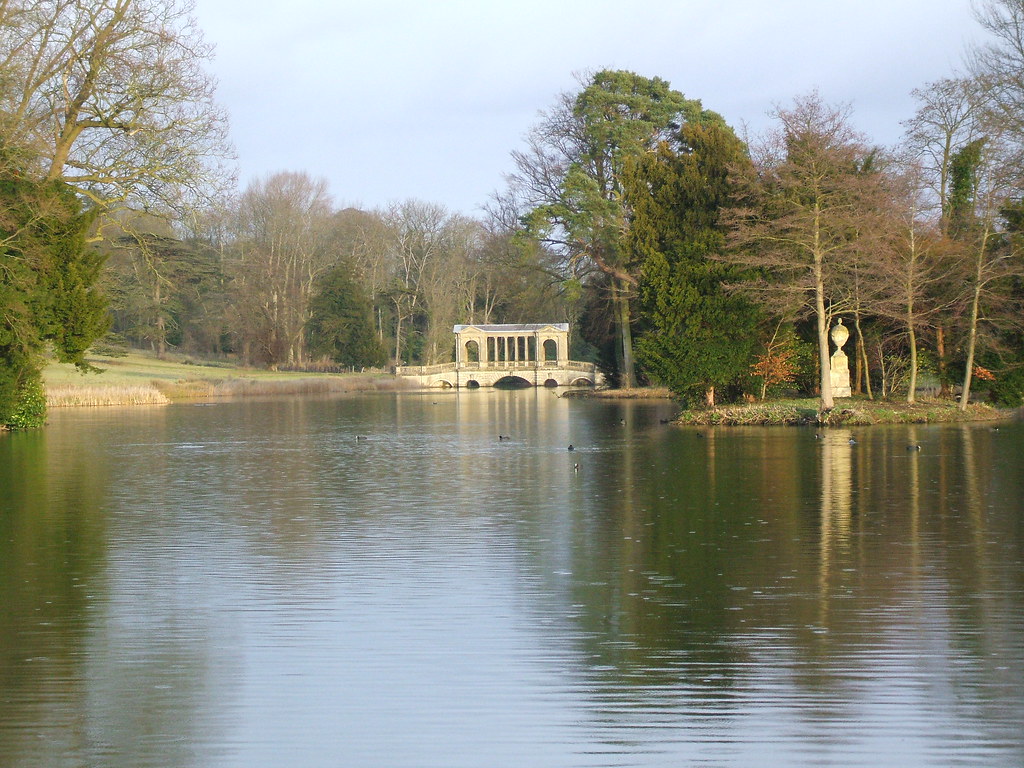
Photo: “Ferns at night” by ikewinski is licensed under CC BY 2.0.
Poem: ‘The Moon’

The birds of dawn
Sing Come out on the lawn.

Flowers
Say Seize the hours.

The day, the sun
Say Don’t stay – look, laugh, run.

Warm rain
Says More! Again!

A tree
Simply says Be.

Beyond the trees, the beach
Rumbles Extend your reach.

A cliff
Asks: If?

The sand
Calls for a handstand.

A wave
Says Misbehave.

Sunset
Asks you, Done yet?

The moon, that overhanging stone…
The moon says You’re alone.

This poem was originally published in Snakeskin. It was an attempt to capture the bittersweetness of living in–or perhaps specifically growing up in–a rural or isolated environment. It’s wonderful to be wild in the wilderness except that, almost by definition, you’re likely to be on your own. And that’s fine, a lot of the time…

Anyway, that freedom is what my childhood and stretches of my 20s were like, and what I came back to after decades away–the difference being that now I’m no longer alone! 🙂 

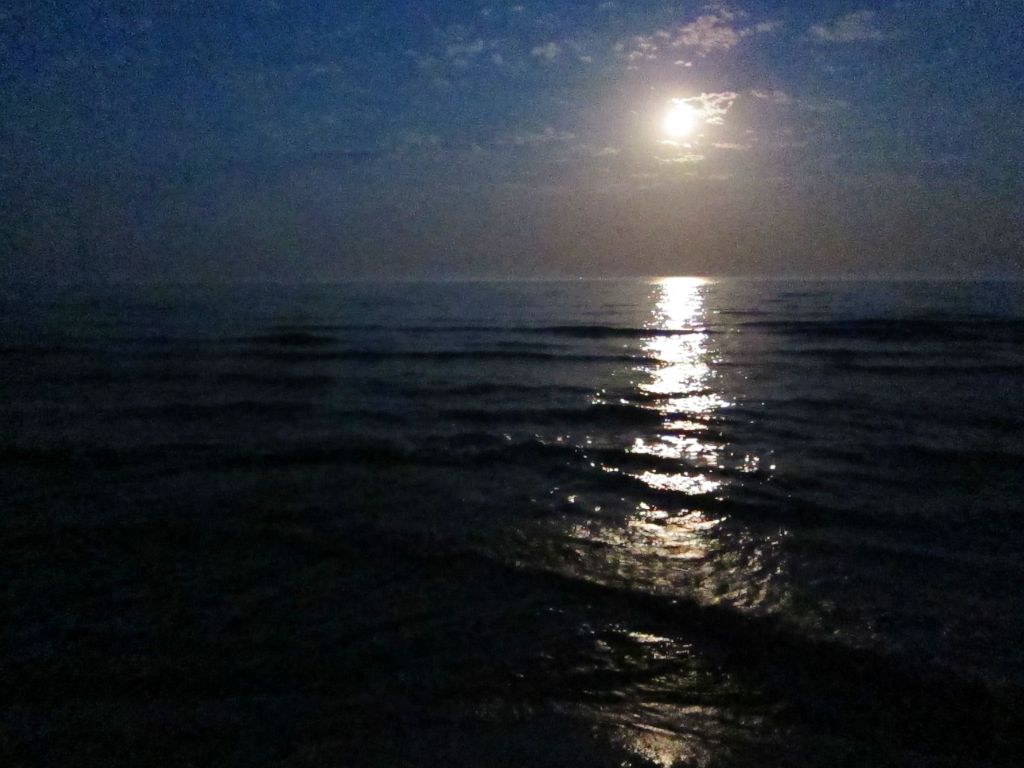
Photo: “Full Moon Beach Ride July 2012” by gasmith is licensed under CC BY-NC-ND 2.0

Sonnet: “Magnificent Young Thing”

You are the most magnificent young thing:
you bud, you blossom, fruit before my eyes,
kinetic artwork winning some great prize,
you move and flourish, and my heart takes wing.
I glory in you, as a countryside
enraptures one who loves his place of birth
and sees life blossoming, feels nature’s mirth
in fertile land the farmer takes as bride.
He loves his bulls and cows, his boars and sows;
sees orchards, beehives, pastures and is thrilled…
The piglets first, then the sow will be killed.
But beasts don’t know the fate of pigs and cows –
they know the farmer loves them, and that’s that.
And you don’t know you’ll age and run to fat.

This sonnet originally appeared in Snakeskin, for which George Simmers accepts a wide range of verse, formal or free, tender or cynical, objective or subjective – whatever catches his fancy. And this one is… well, it caught his fancy anyway.


Poem: “Smoke on the Wind”

Smoke on the wind
And ice on the glass,
Leaves off the trees
And green off the grass;
Deer in the yard
And wood in the shed;
The end of the old
And a new year ahead.

This was published in The Orchards Poetry Journal, edited by Karen Kelsay Davies. The journal typically appears in June and December, and focuses on previously unpublished formal verse – though it accepts “finely wrought free verse”, and will also republish something that hasn’t appeared online in the past three years.

“Inspired by the small plot of apple trees near Cambridge, England, where writers have gathered for years with their books and pens,” Orchards naturally attracts the bucolic. I find something engaging about the idea of traditional verse in an online format… perhaps “apple” is the link… Anyway, as we bridge the past and the future: Happy New Year!

Review: “A Joy Proposed” by T.H. White

‘A Joy Proposed’ is a nice, somewhat strange, assembly of 57 often derivative poems from across the life of T.H. White. Many of the pieces were written in Ireland where White lived as a Conscientious Objector throughout the Second World War. His love of the countryside and his previous experiences as a schoolmaster (including at Stowe, a boarding school in rural Buckinghamshire with 600 acres of grounds) shine through in the constant juxtaposition of poems about game birds, dogs and landscapes alongside anger and bitterness about innocent lives lost to war.

The style varies from extreme simplicity, as in ‘A Choirboy Singing’:

Know not, but sigh.
Think not, but die.
Hope not, but high
Ache against ill.

to outpourings evocative of Whitman or Hopkins, as in ‘A Dray Horse’:

Meek Hercules – passion of arched power bowed in titanic affection,
Docile though vanquishing, stout-limber in vastness, plunging and spurning thy road –
Tauten thy traces, triumph past me, take thy shattering direction
Through misty Glasgow, dragging in a tremendous beer-waggon thy cobble-thundering load.

His pessimism, or perhaps mere sadness, at the human condition comes through again and again in the sense of the young lives he has been educating that will now be thrown away:

When I look at your comely head
And the long fingers delicately live
And the bright life born to be dead
And the happy blood to be shed
(…)
I die within me. And I curse
The witless fate of man without all cure.
Music I curse, and verse,
And beauty worse,
And every thing that helps us to endure.

… but mitigated always by his love of Nature, both hunting (as in kestrels and dogs he owned) and hunted (as in game birds he shot).

White is primarily known for his ‘Once and Future King‘ retelling of the Arthurian legends, and those novels soon went to stage and screen as the musical ‘Camelot’ and the Disney animation ‘The Sword in the Stone’. If it wasn’t for those novels, his other novels would probably be forgotten today and his poetry would be unknown. It isn’t great poetry, and yet I have read it and reread it. He was a writer and with it he was lonely, alcoholic, bitter, witty, learned, compassionate, and alive to the natural world. All of that comes through in these verses, with his self-awareness of who he was and what he was achieving. As he wrote in ‘Lines Cut on the Cottage Window’:

A bitter heart lay here and yet
It was not bitter to the bone.
It made what Time does not unmake
All hopeful, and alone.