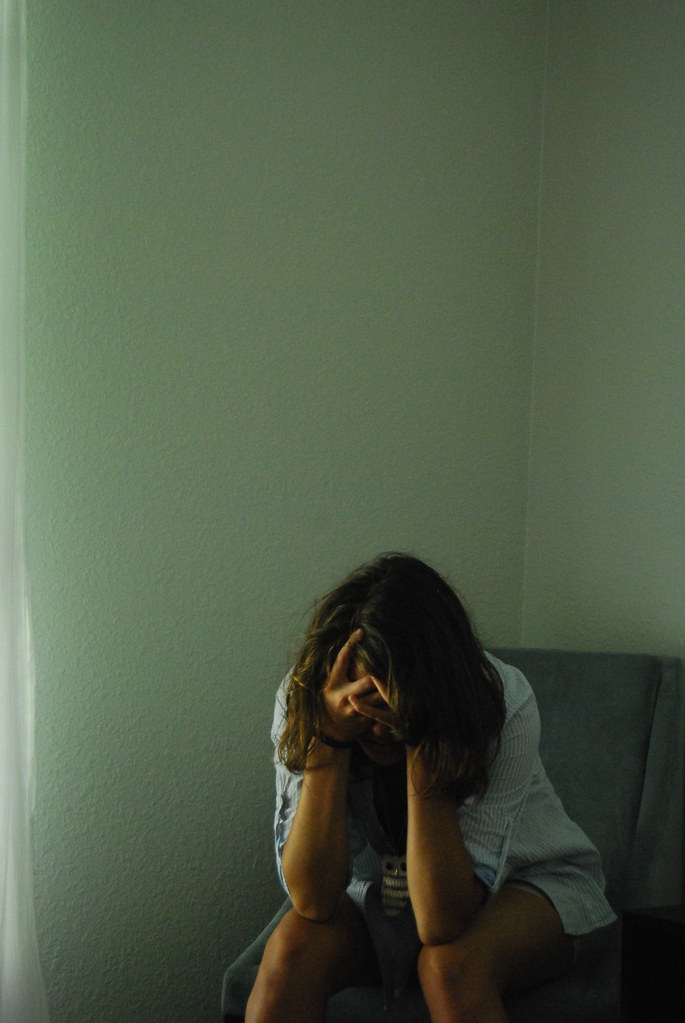
Your hours of tears won’t let you follow Those who’ve left you alone. Tonight your head lies on a pillow, Not beneath earth and stone.
The dead won’t be returning, Not for all of your pleas, Not for all your candles burning. Get up off your knees.
The deceased, removed from their rest Can take up all your hours Until your mind, denied a fair rest, Is deprived of its powers.
The road set before you is rocky and steep, So seize the night’s respite and drift off to sleep.
*****
J.D. Smith writes: “Though I do not sing, play an instrument or read music, I had Brahms’ Lullaby in the back of my mind while attempting to deal with various losses, and the poem roughly follows its tune. In adjusting to a new reality (I hesitate to say “move on” or “get over,” phrases that smack of empathic failure), sometimes all one can do is rest.”
J.D. Smith has published six books of poetry, most recently the light verse collection Catalogs for Food Lovers, and he has received a Fellowship in Poetry from the United States National Endowment for the Arts. This poem is from The Killing Tree (Finishing Line Press, 2016). Smith’s first fiction collection, Transit, was published in December 2022. His other books include the essay collection Dowsing and Science, and his seventh collection, The Place That Is Coming to Us, will be published by Broadstone Books in 2025. Smith works in Washington, DC, where he lives with his wife Paula Van Lare and their rescue animals. X: @Smitroverse
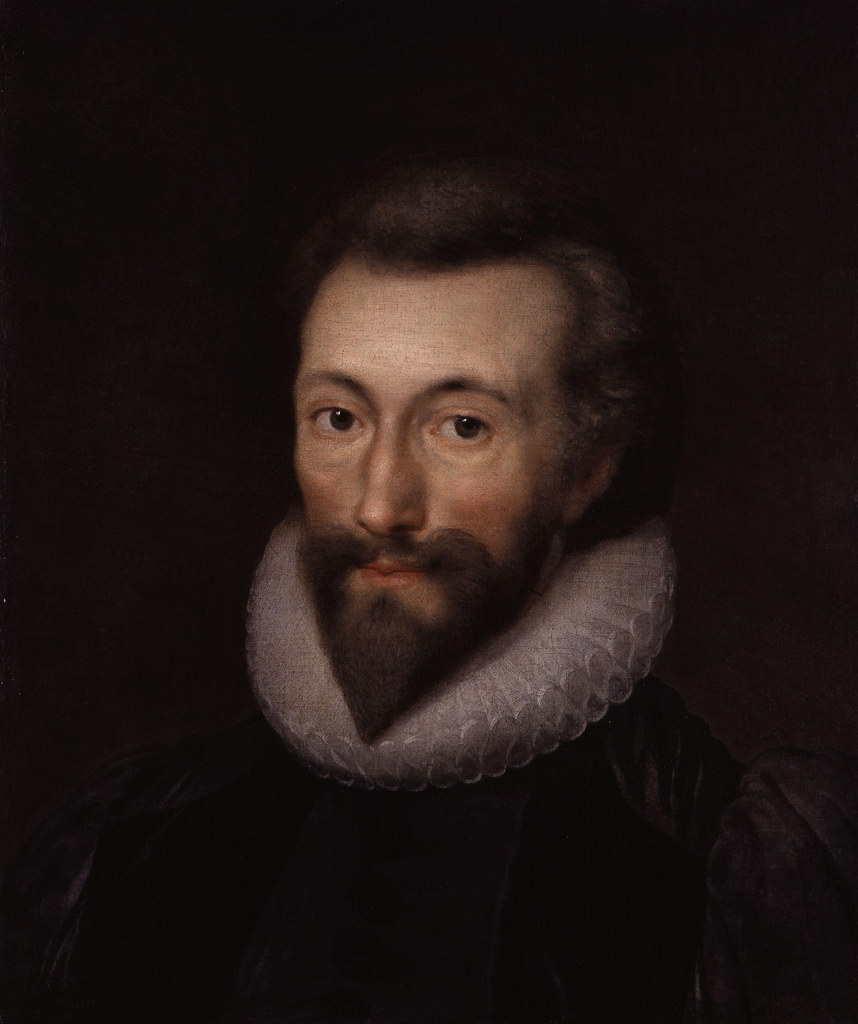
The shortest day is soon. Time for a pact. I don’t mean with Saint Lucy (Lucy’s day falls earlier in the month). But hey let’s meet and talk and counteract such darkness of the heart as coincides with winter’s formal start. We can read Donne’s ‘Nocturnal’, view its art, its provenance and what on earth it means. Location doesn’t matter. We have screens.
Nobody writes a poem now like that — not something so precise and well controlled. Of course, we hear what we are told: the world is round, a rhyme is flat, ‘poetics’ have moved on and these days no-one wants to write like Donne who was amazing, right? But dead and gone. Or not that dead. I’d say he’s still alive in stanza three and certainly in five.
They call Donne ‘metaphysical’, you know, a word still popular in jacket blurbs for living, writing bards where verbs (or verbiage) propel the flow but hard now to be sure whether they mean what Johnson meant. The more ‘meta’ you get with blurbs, the more obscure. When ‘metaphysical’ foretells a treat it might be true; it might be mere conceit.
But in ‘Nocturnal’, metaphor leans out and mystifies. It’s not the usual thing like glass or compasses or string. It’s nothing. No thing. Less than nowt. He says what he is not in several different ways. In fact, the knot of nothingness becomes his central plot. The poet in him can’t forget that ‘none’, his rhyme for ‘run’, echoes both ‘sun’ and ‘Donne’.
So he’s the sum of everything he feels: annihilated by the loss of one without whom he is not a man, just numb. And yet he still appeals to logic to make clear how dark existence is. Yes, she was dear. Each syllable recounts her loss, his fear, and this is now and then and now, since this both the year’s and the day’s deep midnight is.
*****
Helena Nelson writes: “In 1617 when, after the death of his wife, John Donne wrote ‘A nocturnall upon S. Lucies day, Being the shortest day’, St Lucy’s Day coincided with the winter solstice in the author’s hemisphere. Then they changed the calendar, and these days, Saint Lucy’s Day is 13 December. But the winter solstice falls over a week later (this year 21 December).
“Every year on the solstice, I think about John Donne’s solstice poem, every year it gets more apposite, since it is essentially about death. Last year, I did a formal online discussion about it, and I wrote an invitation using the form that is Donne’s, though obviously for a less serious purpose. It allowed me to think it through. I’m thinking about the poem again today, so here’s the invitation.”
Helena Nelson runs HappenStance Press (now winding down) and also writes poems. Her most recent collection is Pearls (The Complete Mr and Mrs Philpott Poems). She reviews widely and is Consulting Editor for The Friday Poem.
I miss believing that I’ll never die, Or is it that there won’t be a tomorrow? Both lines work out about the same: deny The day you’ll have to pay back what you borrow. It used to be I never went to bed A second night with any girl I found. No breakfast in those days–a smoke instead, Then out the door before she came around. Last night I passed a toppled garbage bin, Its liner sagging with a rat’s remains. He sank a little when I squinted in And seemed embarrassed by his greedy pains. And so much like a man, the way he sat Still in his death, and so much like a rat.
*****
Matthew Buckley Smith writes: “I wrote most of Dirge” (his first book of verse, winner of the 2011 Able Muse Book Award. – Ed.) “in a summer. I was wading through a bad depression, and having written almost nothing but free verse to that point, I set myself the challenge of writing one sonnet a day for the rest of the summer. ‘Youth’ is a survivor of that experiment, written while walking late at night through the campus of Johns Hopkins on the way to the apartment of the woman who is now my wife.”
Matthew Buckley Smith is the author of Midlife (Measure, 2024) and Dirge for an Imaginary World (Able Muse, 2012). He hosts the poetry podcast SLEERICKETS and serves as Poetry Editor of Literary Matters. https://www.matthewbuckleysmith.com/
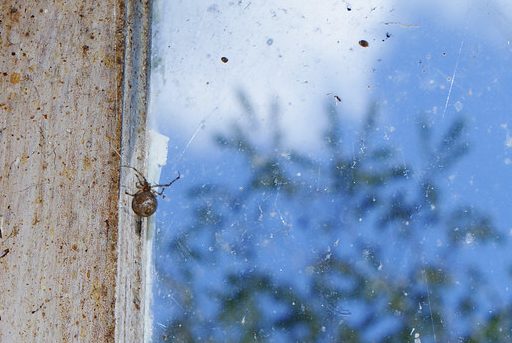
Across a sun-lit pane, deft, unconcerned, a spider struts the steps of an old dance, a set design, in no part happenstance: and I again to sun and rune returned. Stumbling along, half blind, half deaf, half-learned, in yet a day of quarrel and circumstance, I turn from cluttered web to view askance night’s daughter, she who never can be turned.
Sleek spider dame with one plan, to consume, to suck the juice from each unwary fly, with no grand need to query or presume if there was meaning in your quarry’s sigh. Here, in the corner of my fog-filled room, Atropos grins, her scissors lifted high.
*****
Janice D. Soderling writes: “I don’t write much these days, preferring to use the shortening days to read. But I woke up this morning with the last two lines in my head, and knowing it was an ending to a sonnet, I proceeded to write the rest. Perhaps it asks too much of the reader. Perhaps it is a pretentious piece, of interest only to me. Never mind, I shall keep it, having poured three hours into it.”
Janice D. Soderling has published poems, fiction and translations in hundreds of print and online journals and anthologies over the years. Her most recent poetry collection is ‘Rooms and Closets‘ available at all online bookshops.
Women I’ve failed or wronged or left behind approach my thoughts like zombies for the kill; I’ve literary walled defences – still given the chance, they’ll eat my brains, my mind.
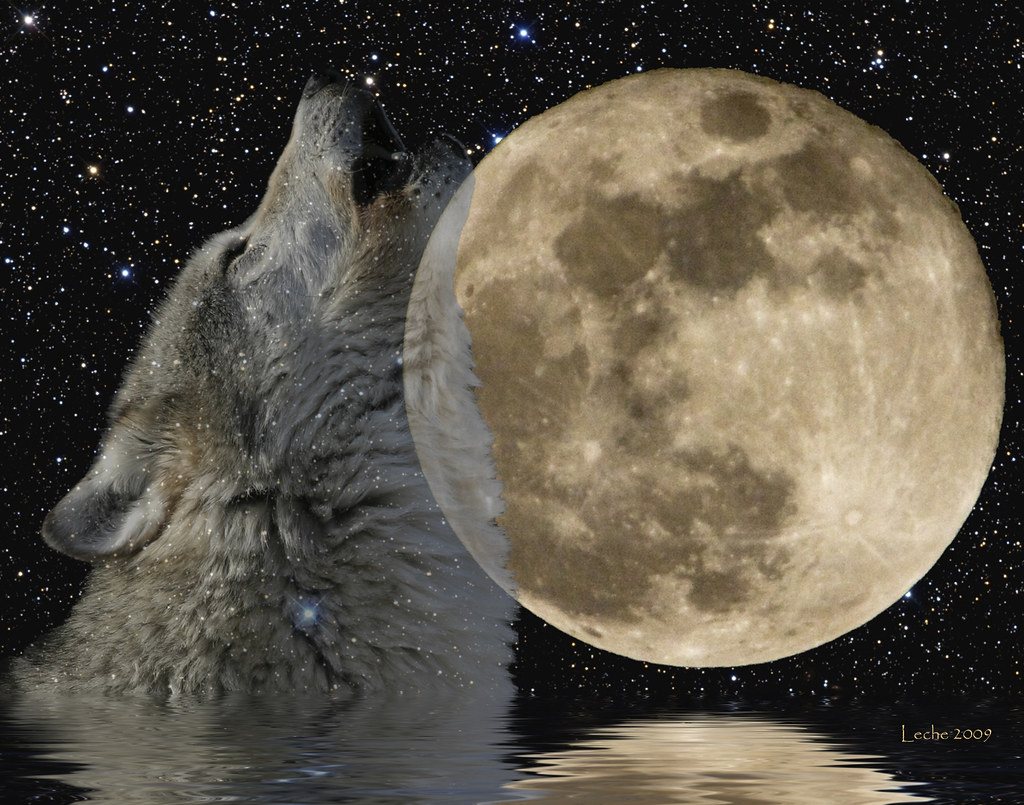
Through forest, orchard, farmyard in decay, a shadow of a wolf slips greyly in, my thoughts of death, grim, wasted, ill, rib-thin, tracking my weak resolve, hungry to slay.
Mountaintops blown apart, forests clear-cut, where’s there to hide? Nature doesn’t exist; her landscapes crushed in patriarchal fist. This former farmland hides my ruined hut.
Impotent, I still write, thus giving birth to future wolves and zombies of the earth.
*****
This sonnet was originally published in Candelabrum (a twice-yearly print magazine of formal verse that ran bravely from 1970 to 2010… now sadly defunct, eaten by wolves or zombies or whatever snacks on print poetry magazines), and republished in Bewildering Stories #1039, a decades-old online magazine of primarily speculative fiction.
Christian culture’s crucifixation nails us to our seats as, station by station, we travel the trammelled line until we find that terminal more primal.
The humanstrain’s end-of-line stop is Ragnarok. Everyone please disembark into the dark– no light, no map. Mind the Ginnungagap.
*****
This is as close as I get to religion: existential uncertainty. I’m a Militant Agnostic: “I don’t know… and neither do you!” Yet this attitude is apparently compatible with religion, being not that different from Eliot’s ‘East Coker‘: O dark dark dark. They all go into the dark, The vacant interstellar spaces, the vacant into the vacant, The captains, merchant bankers, eminent men of letters (…) I said to my soul, be still, and let the dark come upon you Which shall be the darkness of God. But Christianity? I think not. Altogether too unlikely, with so many impossibilities packed into such a small understanding of the cosmos. We don’t know where we are headed, not just as individuals with finite lives, but as a species that is simultaneously developing space travel and genetic modifications… the possibilities are endless and the future, dark as well as light, is unknowable.
The poem is semi-formal with its loose iambics and paired rhymes or slant rhymes, but no structure beyond its natural flow. It was originally published in the Experimental section of a 2019 issue of Better Than Starbucks, and republished as part of work being spotlighted in The HyperTexts in August 2024.
So time went by and they were middle-aged, which seemed a cruel joke that time had played on two young lovers. They were newly caged canary birds – amused, not yet afraid. A golden anniversary came around where jokes were made and laughing stories told. The lovers joined the laugh, although they found the joke – though not themselves – was growing old. She started losing and forgetting things. Where had she left her keys, put down her comb? Her thoughts were like balloons with broken strings. Daily he visited the nursing home to make her smile and keep her in their game. Death came at last. But old age never came.
*****
Gail White writes: “Time is the strangest of the conditions we live in. Scientists, essayists, and poets can ring endless changes on this theme. Time has devastated the lives of the couple in this sonnet, but as Solomon told us long ago, love is as strong as death.”
Gail White is the resident poet and cat lady of Breaux Bridge, Louisiana. Her books ASPERITY STREET and CATECHISM are available on Amazon. She is a contributing editor to Light Poetry Magazine. “Tourist in India” won the Howard Nemerov Sonnet Award for 2013. Her poems have appeared in the Potcake Chapbooks ‘Tourists and Cannibals’, ‘Rogues and Roses’, ‘Families and Other Fiascoes’, ‘Strip Down’ and ‘Lost Love’. ‘The Way It Ended’ was first published in 14 by 14 (which has also ended…) and is collected in her chapbook, ‘Sonnets in a Hostile World‘, also available on Amazon.
One afternoon, my father chose to die. He was like, See ya later, guys. I think I understand, since I don’t know if I
can hang, myself. But hang myself? (Don’t try, they whisper, spooked.) Too young to buy a drink, but old enough to snatch one from a guy
who says, “I’m married, but–” His twinkling eye is trained, you know, to tell me with a wink I’ve made the cut. One hand explores my thigh,
the other fingering a Miller. Why are men so callous? Nowadays, I sink beneath the comforter. I’ll never cry
because my lover’s lover’s lovely–Thai, with toned and skinny limbs, her cheekbones pink and angular. Ohio girl, a Buckeye.
I’m from a land where bleach blond angels fly. Beneath the moonlight, friends and I will clink our cups; my wondrous-child eyes defy adulthood, till I sip. It’s bitter, dry.
*****
Editor: The poem was originally prefaced with “There are those who suffer in plain sight. – Randall Mann”
Alexis Sears writes: “I wrote this poem on the eve of my 20th birthday; nearly a decade later, I still hold it dear. ‘On Turning 20’ made me realize that what I had to say may have been more meaningful than I’d thought.”
Alexis Sears is the author of Out of Order (in which this poem appears), winner of the 2021 Donald Justice Poetry Prize and the Poetry by the Sea Book Award: Best Book of 2022. Her work appears in Best American Poetry, Poet Lore, Cortland Review, Cimarron Review, Rattle, and elsewhere. She earned her MFA in poetry from the University of Wisconsin-Madison and her BA in Writing Seminars from Johns Hopkins University. Editor-at-Large of the Northwest Review and Contributing Editor of Literary Matters, she lives in Los Angeles. https://www.alexissears.com/
On an asteroid there was an alien artefact. If such it was… a droid… I’ve no idea, in fact. Its metal (leg?) seemed (deployed?) and so I touched it, but responses lacked.
Once there were women; once I was a man (touching a leg then always brought response) before the search for life and light began to change me into this dark renaissance. The teacup storms on which I’ve tossed, when she or I have bitched and bossed till all the loves I’d ever marked were all the women that I’ve lost. They chose the certainty of Dark over the uncertainty of Light.
The joys of life are what’s uncertain: hopes of what’s behind the curtain, knowing the results will grate of things that you anticipate, knowing your life could be wrecked by what you never could expect. And though you think you’re circumspect, you can’t deflect, inspect, collect. Knowing the harvest is unknown with crops that grew from deeds you’d sown, while all your greatest hopes and dreams will be exceeded by the future’s smallest gleams.
Because change never stops, you find what matters is never really known. You may get verbal assurance of your future status, but was it “throne” or “thrown”? The only certainty would be if, offered immortality, you feared what such an altered world would lose, would save, and chose instead to go into the Dark with furnace no less dark than the grave wherein there lies no risk of further blight. Most people choose the Certainty of Dark over the Uncertainty of Light.
But we who strive to stay alive long enough for rejuvenation hope, hope only, we will thrive, post-humans in a re-Creation, unknowing what our ape-based genes will do with power dominance, with war, with sex, Earth mined and undermined, but glad to take the chance. How else can we see scenes of how it all turns out — destroyed? refined? — unless we scrape through, level up with wounds and scars and watch a world we love and leave behind? So at last I am here, between the stars, transiting the darkness of the Void, the empty galaxy’s apparent night, chanting the mantra that keeps spirits buoyed: Let there be Post-Humanity’s own light!
Between the spiral arms in the near-void there’s still thin light of distant galaxy and star, still specks of dust, rarely an asteroid. Earth left (millennia in old Earth years ago), I cross the dark immortally, beyond, afar, through what is darkness only to Earth-eyes which myriad wavelengths up and down can’t know, but which I now apprize. Light here abounds, and boundlessly surrounds, astounds.
Take the smallness from slight, take the bad from the blight, take the fear out of flight and you’re left with the light, the light, the light. We stumble from dark caves of night into day, trying not to tumble; our parents the dark; post-humans the light; ourselves just the stumble.
*****
This poem (published in this week’s Bewildering Stories) is a response to conversations in which people have expressed pessimism about the value of life extension, rejuvenation, cryonic preservation and resuscitation… anything beyond the certainties of a clear end to life after a normal lifespan. “How will you… why would you… what if they… you won’t understand… you won’t have…” Ah, but everyone who has immigrated into a foreign culture has done this: had to learn a new language in order to find a job and start making friends and find out how everything works. Some of us are comfortable doing this; some people aren’t. I’ll take the uncertainty, and enjoy its discomforts… because it’s just so interesting!
We weren’t allowed the time to contemplate What talents he in time might come to show, What fame or wealth he might accumulate, What love and other passions he might know.
We had, instead, the chance to see him crawl And graduate to solid food, to take Some wobbling steps that ended in a fall, To hand an uncle’s dog a piece of cake.
To say more is to claim a flare’s bright arc Could have reached high, though it had scarcely flown Before dissolving in the larger dark. We fall back on the facts, which stand alone.
He seldom cried. He used to point at birds. And now he will be missed beyond all words.
*****
J.D. Smith writes: “I will not say much about this poem, as it is based on actual events. I took liberties with details in following formal constraints, but the sense of devastation is unchanged.”
J.D. Smith has published six books of poetry, most recently the light verse collection Catalogs for Food Lovers, and he has received a Fellowship in Poetry from the United States National Endowment for the Arts. This poem is from The Killing Tree (Finishing Line Press, 2016). Smith’s first fiction collection, Transit, was published in December 2022. His other books include the essay collection Dowsing and Science. Smith works in Washington, DC, where he lives with his wife Paula Van Lare and their rescue animals. X: @Smitroverse