
Tag Archives: Edgar Allen Poe

Poems on poets: A.M. Juster, ‘Houseguests’

There’s shouting by the stove (it’s Plath & Hughes)
as Wystan wanders off without his shoes
and Whitman picks the Cheetos off his beard.
The Larkin-Ginsberg chat is getting weird,
for after countless hours they have found
bizarre pornography is common ground.
Old Emily is not
As prim as billed—
When Dylan finds her bra-hooks—
She is thrilled.
Poe strokes his bird; Pound yawps that it’s a pity
Eliot can’t sleep without his kitty.
Rimbaud’s on eBay searching for a zebra
while sneering, “Oui, a cheemp can write vers libre!”
The Doctor’s soggy chickens start to smell
and Stevens has insurance he must sell.
The readings are spectacular, I know,
but is there any way to make them go?

*****

A.M. Juster writes: “This was first published in The Barefoot Muse. It looks like I wrote it in late 2008, it was a fairly prolific period for me and I was a little distracted because I was running the Social Security Administration. (Under his unpoetic name, Michael J. Astrue. – Editor). I don’t remember now the impetus for writing it, but I did enjoy taking these poetry idols off their pedestals and making them more human for a few laughs. This was about the time that I finished my translation of Horace’s Satires in something like 1850 heroic couplets, so I was much more comfortable with the form than I would have been five years before. I think the imitation of Emily Dickinson’s form is an amusing touch for the reader, although it is undetected when I read it because it remains in rhymed iambic pentameter.”

A.M. Juster’s poems and translations have appeared in Poetry, The Paris Review, The Hudson Review and other journals. His tenth book is Wonder and Wrath (Paul Dry Books 2020) and his next book will be a translation of Petrarch’s Canzoniere, which W.W. Norton will release in early 2024. He also overtweets about formal poetry @amjuster.

Photo: “me drunk & chris’_MMVI” by andronicusmax is licensed under CC BY 2.0.
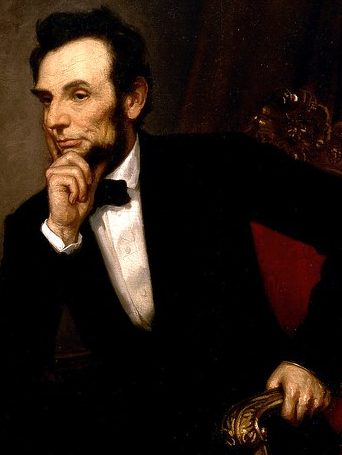
Odd poem: Abraham Lincoln, ‘The Suicide’s Soliloquy’

Here where the lonely hooting owl
Sends forth his midnight moans,
Fierce wolves shall o’er my carcase growl
Or buzzards pick my bones.

No fellow-man shall learn my fate,
Or where my ashes lie;
Unless by beasts drawn round their bait,
Or by the ravens’ cry.

Yes! I’ve resolved the deed to do,
And this the place to do it:
This heart I’ll rush a dagger through,
Though I in hell should rue it!

Hell! What is hell to one like me
Who pleasures never knew;
By friends consigned to misery
By hope deserted too?

To ease me of this power to think,
That through my bosom raves,
I’ll headlong leap from hell’s high brink,
And wallow in its waves.

Though devils yell, and burning chains
May waken long regret;
Their frightful screams, and piercing pains,
Will help me to forget.

Yes! I’m prepared, through endless night,
To take that fiery berth!
Think not with tales of hell to fright
Me, who am damn’d on earth!

Sweet steel! come forth from out your sheath,
And glist’ning, speak your powers;
Rip up the organs of my breath,
And draw my blood in showers!

I strike! It quivers in that heart
Which drives me to this end;
I draw and kiss the bloody dart,
My last—my only friend!

This poem was published anonymously in the April 25, 1838 edition of The Sangamo Journal of Springfield, Illinois, under this introduction: “The following lines were said to have been found near the bones of a man supposed to have committed suicide, in a deep forest, on the Flat Branch of the Sangamon, sometime ago.” For various reasons it is now commonly assumed that this is the poem that Lincoln’s friend Joshua Speed told Lincoln’s biographer William Herndon about, a poem that the President had written on suicide as he struggled through a period of deep depression.

A full discussion of the identification of the poem with Lincoln can be found in the magazine Shenandoah, and I happily quote their assessment of Lincoln’s merits as a poet:

The poem is similar to other mortality poems of the period, though even more melodramatic than most (the last stanza, in which the speaker continues to narrate his feelings after he has stabbed himself through the heart, is particularly painful). Aside from the historical curiosity of its authorship, the piece—with its glamourizing of suicide and its overwrought morbidity—does little to distinguish itself from other amateur poetry in the school of Poe.

Photo: “16 Abraham Lincoln” by US Department of State is marked with CC PDM 1.0