Tag Archives: formal verse

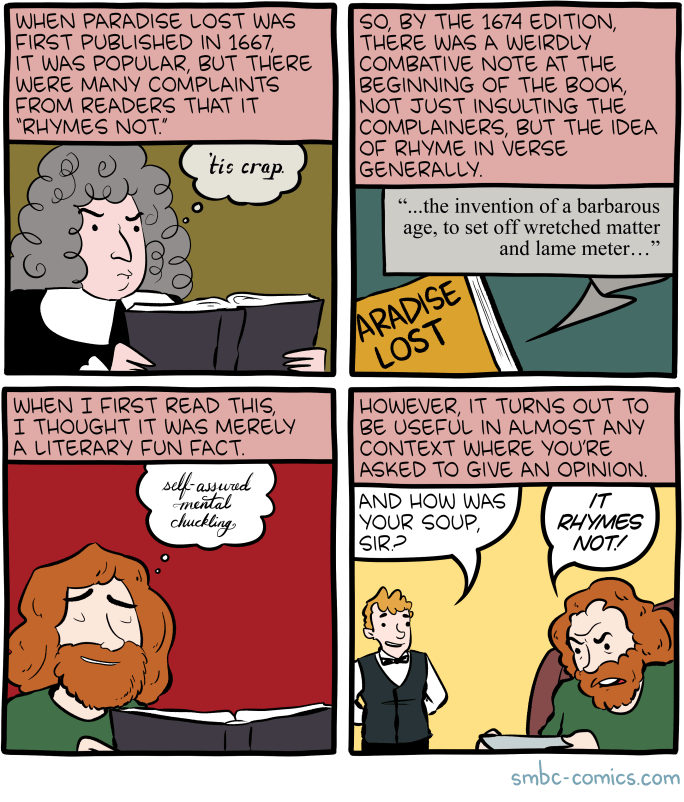
Opinion: ‘Rhymes’ by Zach Weinersmith

John Milton was perfectly capable of expressing himself in rhyme, as in his Petrarchan sonnet on his blindness, When I Consider How My Light Is Spent. Paradise Lost attracted a lot of criticism for its boring lack of rhyme (as well as a lot of unthinking religious approval for its wretched matter). At the front of the second edition of his Paradise Lost in 1674, John Milton defends his books-long use of blank verse:

“The measure is English heroic verse without rime, as that of Homer in Greek, and of Virgil in Latin—rime being no necessary adjunct or true ornament of poem or good verse, in longer works especially, but the invention of a barbarous age, to set off wretched matter and lame metre; graced indeed since by the use of some famous modern poets, carried away by custom, but much to their own vexation, hindrance, and constraint to express many things otherwise, and for the most part worse, than else they would have expressed them. Not without cause therefore some both Italian and Spanish poets of prime note have rejected rime both in longer and shorter works, as have also long since our best English tragedies, as a thing of itself, to all judicious ears, trivial and of no true musical delight; which consists only in apt numbers, fit quantity of syllables, and the sense variously drawn out from one verse into another, not in the jingling sound of like endings—a fault avoided by the learned ancients both in poetry and all good oratory. This neglect then of rime so little is to be taken for a defect, though it may seem so perhaps to vulgar readers, that it rather is to be esteemed an example set, the first in English, of ancient liberty recovered to heroic poem from the troublesome and modern bondage of riming.”

Tell that to Geoffrey Chaucer; his Canterbury Tales is longer, rhymed, more varied and more engaging. As Samuel Johnson wrote, “Milton formed his scheme of versification by the poets of Greece and Rome, whom he proposed to himself for his models so far as the difference of his language from theirs would permit the imitation.” And that’s the problem: Greek and Latin poems are simply not appropriate models for a Germanic language’s poetry.

One of the benefits of rhyme is that it prevents a writer from rambling on fluffily and indefinitely, the way anyone capable of writing blank verse can do. Indeed, when you look at a modern poet’s recent collection you are likely to see short, tight half-page pieces that rhyme, and longer, looser multi-page pieces that don’t. I invariably prefer the former. I find them more enjoyable to read, more succinctly expressed, easier to appreciate, more fun to remember and quote. The others are just lazy, uninspired fillers, or politico-religious pamphlets where zeal has replaced poetry… cf. Paradise Lost.

Illustration: ‘Rhymes‘ by Zach Weinersmith, who publishes a Saturday Morning Breakfast Comics (or SMBC) cartoon daily. He is the author of several brilliant and provocative books, including the previously reviewed ‘Shakespeare’s Sonnets: Abridged Beyond the Point of Usefulness‘.

Using form: couplets: George Simmers, ‘Trigger Warning’

Reading this do not expect
An unconditional respect

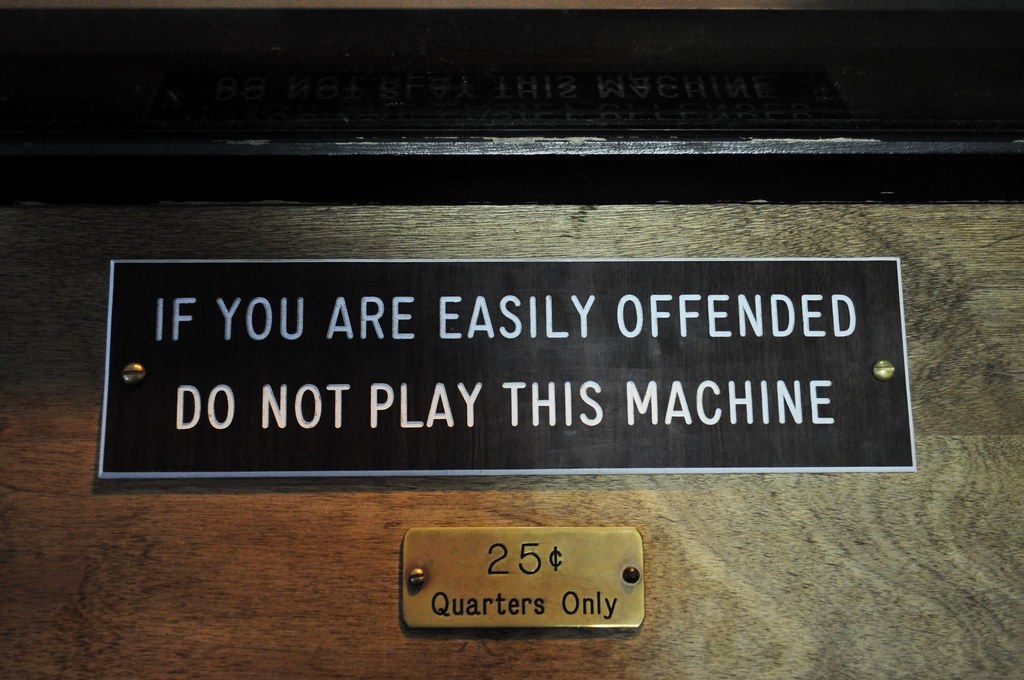
This poem is an unsafe space
You may be told things to your face

This poem may not feel the need
To be polite about your creed

It may not think your origins
Excuse your weaknesses or sins

It maybe will not lend its voice
To validate your lifestyle choice

It may resist attempts to curb
Its power to worry or disturb

It may not think its task to be
To flatter your identity

Although its author’s male and white
It may perhaps assert the right

To speak of gender and of race.
This poem is an unsafe space

*****

George Simmers continues to be amazed and amused by the warnings that some University lecturers seem to think it essential to give their students.  He writes: “Last week there was a warning that Jane Austen’s novels contain some outdated sexual attitudes. The week before that, students thinking of taking a course on tragedy needed to be told that it might contain references to violence and other disturbing themes. The week before that someone was worried that Peter Pan contained material that some students might find it hard to cope with. Why is this? Are the lecturers afraid of legal action from the helicopter parents who are the plague of some University departments today? Or do they really feel that their students are all delicate blossoms? Or do the warnings reflect their own discomfort with the canonical material they are obliged to teach? In the past people often did not think or behave the way that responsible modern people think they should have. It must be worrying.”

Editor’s comments: Poems written as a string of rhyming couplets can quickly start to feel mechanical and boring, but they are very effective when a straightforward list of ideas is being presented, as in this poem by Simmers. ‘The Latest Decalogue‘ by Arthur Hugh Clough is a classic of good usage (and also a classic of “unsafe space”).

George Simmers used to be a teacher; now he spends much of his time researching literature written during and after the First World War. He has edited Snakeskin since 1995. It is probably the oldest-established poetry zine on the Internet. His work appears in several Potcake Chapbooks. ‘Trigger Warning’ is from his ‘Old and Bookish‘ collection of poems.
https://greatwarfiction.wordpress.com/
http://www.snakeskinpoetry.co.uk/

Photo: “trigger warning” by lostcosmonaut is licensed under CC BY-NC-SA 2.0.

Using form: anapest (anapaest): Susan McLean, ‘Illicit’

I needed to take a vacation from cake
so my diet would be more judicious.
But my plan was cut short by a chocolate fudge torte,
and the relapse was truly delicious.

Next it was cheese (such as triple-cream Bries
and Gruyères) that I vowed to avoid.
But I fell in the snare of a ripe Camembert.
It was bliss. My resolve was destroyed.

When the experts all said “To lose weight, give up bread,”
I thought that was a food I could shun.
I succumbed to the spell of the beckoning smell
of a freshly baked cinnamon bun.

I have found self-denial is not such a trial
and has unforeseen good effects.
True relish is hidden in all things forbidden.
Have I mentioned I’m giving up sex?

*****

Susan McLean writes: “Like many women, from my teens on, I had periods of dieting, followed by periods of eating normally and gradually regaining weight I had lost on the diets. That pattern can cause despair for many, but in my case, it made me notice how delightful a food becomes once it is forbidden. Diets are dull, and demonizing any particular kind of food is silly, so these days I don’t deny myself anything, but just cut back on the portions. Since the poem is about pleasure (and I once heard Dr. Joyce Brothers say that all pleasures are related to one another), I decided to write it in rollicking anapests, with lots of fun internal rhymes and polysyllabic rhymes.
This poem first appeared in Mezzo Cammin, an online journal of female formalist poets,
and later was published in my second book, The Whetstone Misses the Knife.”

Susan McLean has two books of poetry, The Best Disguise and The Whetstone Misses the Knife, and one book of translations of Martial, Selected Epigrams. Her poems have appeared in Light, Lighten Up Online, Measure, Able Muse, and elsewhere. She lives in Iowa City, Iowa.
https://www.pw.org/content/susan_mclean

Photo: “Joann’s cake: Now featuring every delicious thing at once” by ginnerobot is licensed under CC BY-SA 2.0.

Max Gutmann, ‘A Letter Home’

One flat fall evening, as an undergrad,
I left the library to mail a letter
and at the mailbox had
a stirring–-I don’t know what else to call it,
but I felt certain, drifting back
on brittle leaves, surrounded by the gray,
this was my life–-a feeling new,
whole, deeply and vibratingly unstrange.

Back at the carrel, where my books still lay,
I sat some time immersed there in that moment:
me, having walked away
from books for some slight, distant human contact,
returning through the coming winter
to my small space. It struck me as both sad
and right; young as I was, I knew
it wasn’t something I would ever change.

*****

Max Gutmann writes: “Though it takes the perspective of an older man looking back, ‘A Letter Home‘ was written shortly after the experience it shares, years before I wrote any other verse (aside from some limericks); the drive to record the experience as a poem had nothing to do with habit. I couldn’t have anticipated that the “distant human contact” in my life would come to include a community of writers with whom I’ve only ever exchanged words on a screen (a community you do a lot to nourish, Robin. Thank you.)”

A Letter Home‘ was first published in the Pulsebeat Poetry Journal.

Max Gutmann has worked as, among other things, a stage manager, a journalist, a teacher, an editor, a clerk, a factory worker, a community service officer, the business manager of an improv troupe, and a performer in a Daffy Duck costume. Occasionally, he has even earned money writing plays and poems.

Photo: “McAllen mailbox” by Drpoulette is licensed under CC BY-NC-SA 2.0.

Using form: Refrain; Nina Parmenter, ‘Sense’

I am a bag of chemicals
with charge for eighty years,
I am a gassy mirage
that winks as oblivion nears.
Around me swill the stars,
my thoughts, the gods and insanity,
and nothing makes sense but this leaf
as it dances, drunk on gravity.

I am a pointless voice track
on a puff piece of DNA,
I am the ooze that awoke
and decided to live anyway.
Around me swings the void,
nirvana and calamity,
and nothing makes sense but the sea
as it dances, drunk on gravity.

*****

Nina Parmenter writes: “In 2021, in my strenuous efforts not to write pandemic poems, I probably wrote a lot of pandemic poems. This one, about focusing on tiny moments in nature to avoid thinking about the big scary things is a great example! I made it a foreword to my collection ‘Split, Twist, Apocalypse‘ because its slightly jolly air of existential dread sets the tone for the book nicely, I think.”

Editor’s comment: As with popular songs as well as verse forms such as the ballade, villanelle, triolet and rondeau, the use of a refrain (whether exact or varied) strengthens the poem by bringing the conclusion of each stanza back to a core image or message.

Nina Parmenter has no time to write poetry, but does it anyway. Her work has appeared in Lighten Up Online, Snakeskin, Light, The New Verse News, Ink, Sweat & Tears, and the Potcake Chapbook ‘Houses and Homes Forever’. Her home, work and family are in Wiltshire.
https://ninaparmenter.com/

Time Lapse of Stars During Earth’s Rotation” by Image Catalog is marked with CC0 1.0.

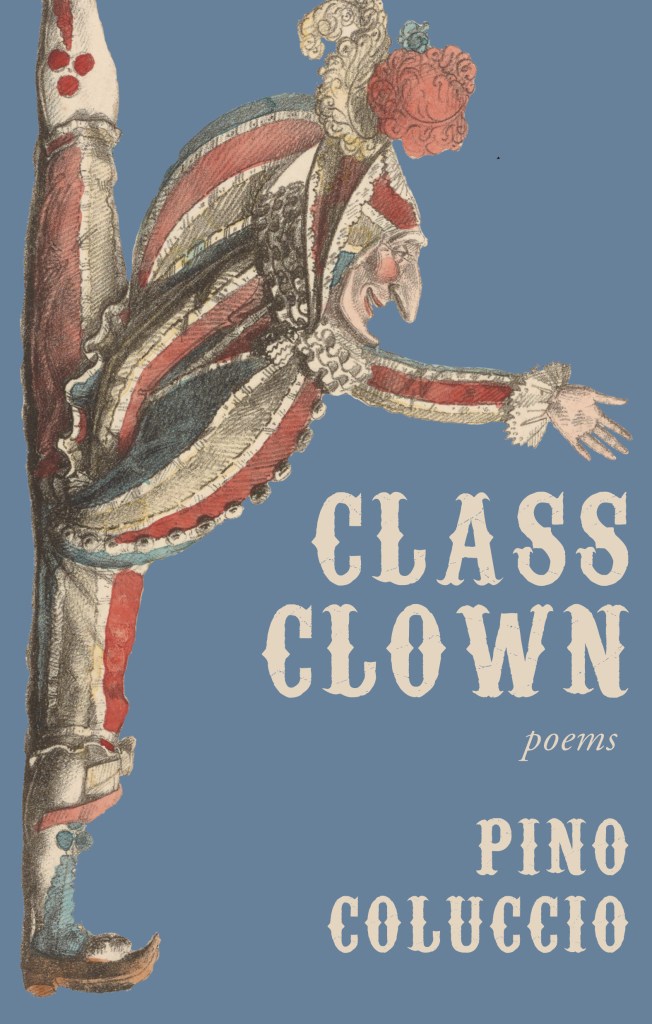
Pino Coluccio, ‘Class Clown’

They’d all be like, never say never
in classes we had, but whatever.
I turned to the windows and hallways
that always said always say always.

*****

Editor’s comments: From Pino Coluccio you should expect light and dark combined, light but deep, usually short, always well-phrased… and always existential. This, the eponymous piece of his 2017 collection, is tucked away in the middle of the book. The book won a Trillium Award, putting Coluccio in the company of Margaret Atwood, Michael Ondaatje and Alice Munro. He has given me permission to republish more of his pieces from Class Clown periodically.

Pino Coluccio lives in Toronto.

Using form: Roundel: Susan McLean, ‘No Thanks’

No one wants to be the damsel in
distress, the one in need of chivalry,
chained to a rock in nothing but her skin.
No!  One wants to be

the one who skirts the trap and steals the key,
testing the rope bridge with a shaky grin.
Whoever longs for victims he can free

is not a hero, but the villain’s twin.
So save yourself.  Don’t go expecting me
to play the clingy wimp, the might-have-been
no one wants to be.

*****

Susan McLean writes: “This poem got its start when I heard that Kirsten Dunst said, about playing Mary Jane in Spider-Man (2002), “I just don’t want to be the damsel in distress. I’ll scream on the balcony, but you’ve got to let me do a little action here.” It struck a chord with me. I was so tired of watching action movies in which the male hero does all of the derring-do and the female lead exists only to be saved, over and over again. Men still write, direct, and produce most films, so I guess it is not surprising that most movies reflect male fantasies. But women have fantasies, too, and screaming while I wait to be saved is not one of mine.
“The poem is a roundel, a poetic form invented by Algernon Swinburne. As in a rondeau, the poem has only two rhymes, and the first part of the first line appears twice more. Part of the fun of writing it lies in finding ways to vary the repeating line, and part lies in the challenge of finding five rhyme words for each rhyme. English averages fewer rhymes per word than French, the language in which the rondeau originally appeared. Swinburne chose to make the roundel shorter than the rondeau (which is fifteen lines long) in order to make it easier to write in English.
” ‘No Thanks‘ originally appeared in Mezzo Cammin, an online journal that features female formalist poets. It was also included in my second poetry book, The Whetstone Misses the Knife.”

Susan McLean has two books of poetry, The Best Disguise and The Whetstone Misses the Knife, and one book of translations of Martial, Selected Epigrams. Her poems have appeared in Light, Lighten Up Online, Measure, Able Muse, and elsewhere. She lives in Iowa City, Iowa.
https://www.pw.org/content/susan_mclean

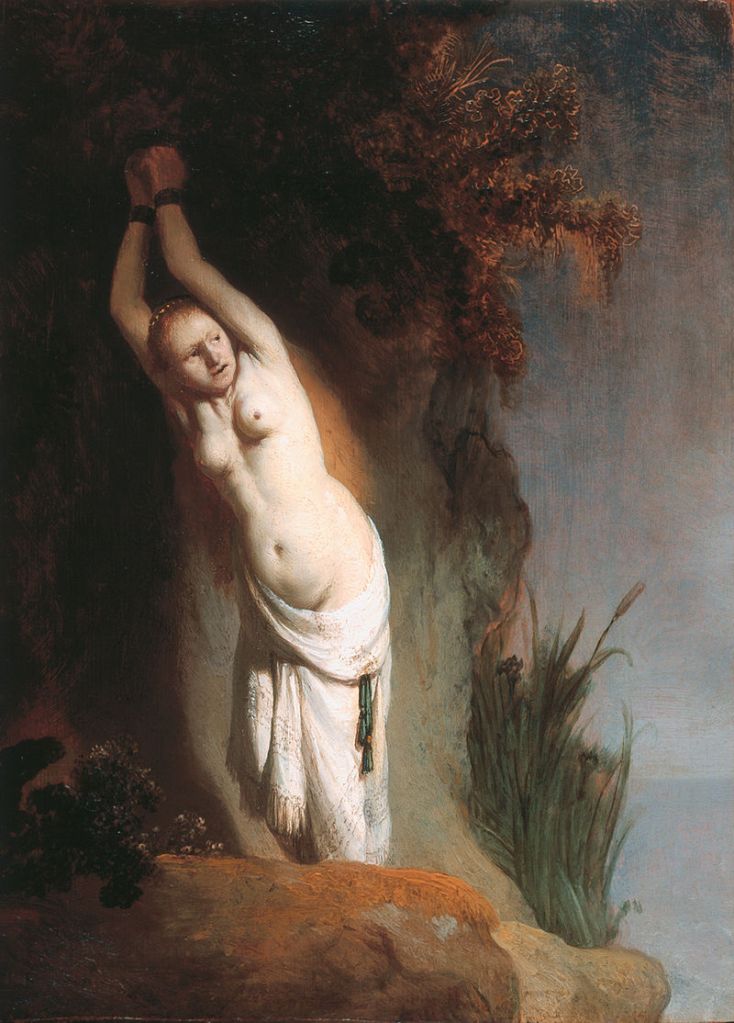
Painting: ‘Andromeda Chained to the Rocks‘ by Rembrandt Harmensz. van Rijn, ca. 1630

J.D. Smith, ‘Seven Ages of Man’

I puked and cried–that’s what Mom said.

School sucks. Why can’t I stay in bed?

I want that girl. What is her name?

I’ll kick some ass and stake my claim.

I’m fat. So what? I’ve won the game.

I limp these days, and feel the gout.

Say, now, what was all that about?

*****

J.D. Smith writes: “I hesitate to say very much about this poem, as it plays so blatantly off of Shakespeare, but a short explanation seems in order. The third-person eloquence and loftiness of the original stands in contrast to how we experience the stages of life, and it occurred to me to bring the discussion down to earth with a series of plain first-person statements.”

J.D. Smith has published six books of poetry, most recently the light verse collection Catalogs for Food Loversand he has received a Fellowship in Poetry from the United States National Endowment for the Arts. This poem is from The Killing Tree (Finishing Line Press, 2016).Smith’s first fiction collection, Transit, will be published in December 2022. His other books include the essay collection Dowsing and Science. Smith works in Washington, DC, where he lives with his wife Paula Van Lare and their rescue animals. Twitter: @Smitroverse

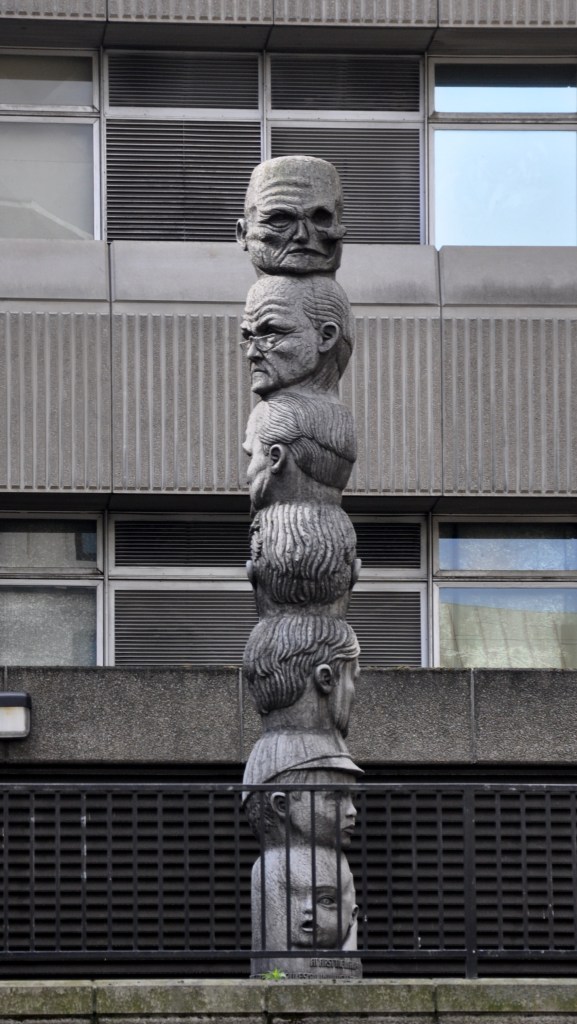
Photo: “File:Baynard House Seven Ages of Man.jpg” by Photo: Andreas Praefcke is licensed under CC BY 3.0.

Ekphrastic poem: Jenna Le, ‘Patti Smith, 1976’

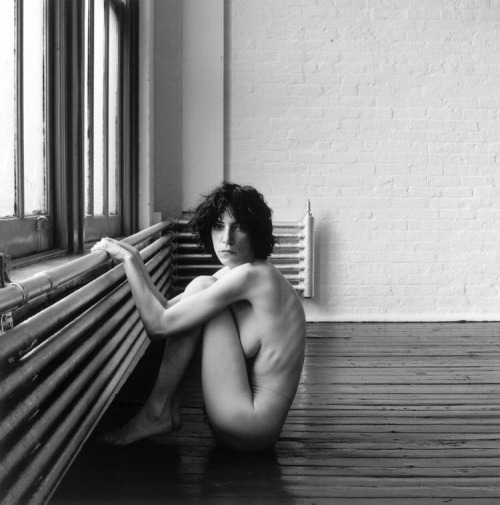
This photo, black-and-white, where Mapplethorpe
portrays his dark-mopped ex in profile, seated
nude on wooden floorboards, knees drawn up
against her breasts to hide her nipples, heated
by the sideways radiator pipes
on which she rests her palms, her bulging ribs
a set of parallel oblique gray stripes
rippling her bare white skin, unsmiling lips
a short flat line–
these were my first parameters,
my inspirations, when I learned to write.
On Patti’s ribs, the wooden flooring’s planks,
the stacked pale pipes, I modeled my pentameters.
The aim: amid such sharp lines, to be frank
and raw, yet still control what sees the light.

*****

Jenna Le writes: “I first became intrigued by the friendship and creative partnership of Patti Smith and Robert Mapplethorpe some years ago. I confess the personas of these two artists and the touted relationship between them interests me even more than either artists’ actual creative output. Based on what I have read in biographies and so forth, their friendship seems to me to represent an ideal: a dyadic connection characterized by remarkable intensity, an intimacy transcending sex and conventional relationship definitions, facilitating both parties’ creative flourishing. As one gets older and it becomes ever harder to form new meaningful adult friendships, such bonds seem to me ever more mythic and miraculous. I think this awe, this wistfulness, is the principal emotion that makes me keep returning to the photograph this ekphrastic poem is about.”

Jenna Le (jennalewriting.com) is the author of three full-length poetry collections, Six Rivers (NYQ Books, 2011), A History of the Cetacean American Diaspora (Indolent Books, 2017), and Manatee Lagoon (Acre Books, 2022). She won Poetry By The Sea’s inaugural sonnet competition. Her poems appear in AGNI, Pleiades, Verse Daily, West Branch, and elsewhere. She works as a physician in New York City.

Photo: Robert Mapplethorpe’s sole full nude portrait of Patti Smith, taken at his Bond Street Studio, 1978 © Robert Mapplethorpe Foundation. Courtesy Sean Kelly Gallery

Using form: sonnet variation: Amit Majmudar, ‘A Pedestrian’

He window shops. He yawns. He checks his watch.
He sips his Starbucks through a spillproof lid.
No one knows who he is or what he did
except a black van loitering down the block.
He buys a pack of gum. Briefly he stops
to crouch and read the headlines of the Times
before continuing up 12th and Vine.
His neck prickles. He slows. The coffee drops

and before it has landed he’s off like a hound at the races
he is hurdling strollers and ducking a chilidog raised
to the mouth checkered taxis grow fists as he cuts
into oncoming traffic our cellular phones snap shut
in amazement look billowing trenchcoats give chase
fleshcolored earpieces dangling a flush to their faces

*****

Amit Majmudar writes: “The actor Alfred Molina recorded ‘A Pedestrian‘ for the Poetry Foundation many years ago: https://www.wnyc.org/story/52133-poetry-off-the-shelf-amit-majmudar/ . It’s an excellent rendition. I remember feeling, when I heard that recording back in 2006 (at the tender age of 27), that I had finally “arrived” as a poet—after all, the guy from the opening sequence of Raiders of the Lost Ark had spoken my words! I don’t often write sonnets, but ‘A Pedestrian‘, with its metrical shift from walking to running at the volta (dovetailing with the idea of metrical “feet”), was a fun poem to write.”

Amit Majmudar is a poet, novelist, essayist, translator, and the former first Poet Laureate of Ohio. He works as a diagnostic and nuclear radiologist and lives in Westerville, Ohio, with his wife and three children. 
      Majmudar’s poetry collections include 0’, 0’ (Northwestern, 2009), shortlisted for the Norma Faber First Book Award, and Heaven and Earth (2011, Storyline Press), which won the Donald Justice Prize, selected by A. E. Stallings. These volumes were followed by Dothead (Knopf, 2016) and What He Did in Solitary (Knopf, 2020). His poems have won the Pushcart Prize and have appeared in the Norton Introduction to Literature, The New Yorker, and numerous Best American Poetry anthologies as well as journals and magazines across the United States, UK, India, and Australia. Majmudar also edited, at Knopf’s invitation, a political poetry anthology entitled Resistance, Rebellion, Life: 50 Poems Now. 
      Majmudar’s essays have appeared in The Best American Essays 2018, the New York Times, and the Times of India, among several other publications. His forthcoming collection of essays, focusing on Indian religious philosophy, history, and mythology, is Black Avatar and Other Essays (Acre Books, 2023). Twin A: A Life (Slant Books, 2023) is the title of a forthcoming memoir, in prose and verse, about his son’s struggle with congenital heart disease. 
      Majmudar’s work as a novelist includes two works of historical fiction centered around the 1947 Partition of India, Partitions (Holt/Metropolitan, 2011) and The Map and the Scissors (HarperCollins India, 2022). His first children’s book also focuses on Indian history and is entitled Heroes the Colour of Dust (Puffin India, 2022). Majmudar has also penned a tragicomic, magical realist fable of Indian soldiers during World War I, Soar (Penguin India, 2020). The Abundance (Holt/Metropolitan, 2013), by contrast, is a work of contemporary realism exploring Indian-American life. Majmudar’s long-form fiction has garnered rave reviews from NPR’s All Things Considered, the Wall Street Journal, Good Housekeeping, and The Economist, as well as starred reviews from Kirkus and Booklist; his short fiction won a 2017 O. Henry Prize.   
      Majmudar’s work in Hindu mythology includes a polyphonic Ramayana retelling, Sitayana (Penguin India, 2019), and The Mahabharata Trilogy (Penguin India, 2023). His work as a translator includes Godsong: A Verse Translation of the Bhagavad-Gita, with Commentary (Knopf, 2018).

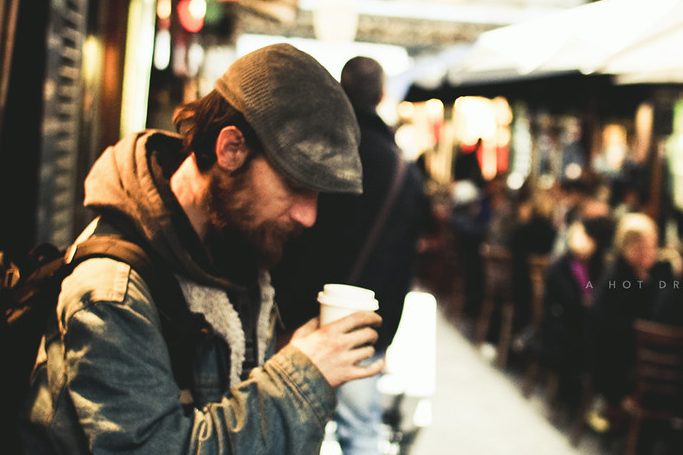
Photo: “a hot drink” by [ embr ] is licensed under CC BY-NC-SA 2.0.