Tag Archives: free verse

R.I.P. Anthony Watkins – untitled poem

Log some star date or another

All systems are failing
shadows flicker around
the darkened room

There is no captain
to report to, I am he.

Lost among the leaves.

*****

Poet, author, editor, publisher and digital creator Anthony Watkins passed away this week after a long illness. I knew him only through his creation of Better Than Starbucks, the wonderfully broad tent poetry-fiction-and-interviews magazine that came out monthly and provided for writers of all styles. It was a generous and inclusive publication, well reflective of its creator.

The poem above is one of the last messages posted by Anthony Watkins on his Facebook page, as everything was winding down.

Photo: “Hubble’s New Eyes: Butterfly Emerges from Stellar Demise in Planetary Nebula NGC 6302” by NASA Goddard Photo and Video is licensed under CC BY 2.0.

Using form: RHL, ‘Formal vs Free’

Look: formal verse can be china for tea,
a golden goblet, a mug made of clay.
Free verse is putting mouth to stream to drink.
Yes, you could cup your hands… but do you think
museums want to buy that to display
your “memorable skill”, your “artistry”?

*****

‘Formal vs Free’ is published in the current ‘Blue Unicorn‘, in a section loaded, as often, with verse about verse.

Photo: “Red-figured Greek Red-Figure Kantharos (Drinking Vessels) with Female Heads 320-310 BCE Terracotta” by mharrsch is licensed under CC BY-NC-SA 2.0.

Weekend read: Parody poem: Marcus Bales, ‘Slash Wednesday’

I
Because I do not do the limerick line
Because I do not do
Because I do not do the limerick
Desiring this man’s schtick or that man’s joke
I will stick to knocking out free verse
(If here and there a rhyme so much the worse)
In mournful moans
Presented ragged-right upon the page.

II
There once was a Lady with three
White leopards, a juniper tree,
And a bag full of bones
That sang their sad moans
Of what they had once hoped to be.

III
At every turning of the turning stair,
Your breathing hard, your eyesight edged with dark,
You see the face of hope and of despair.

You breathe the vapor of the fetid air
And toil as if some atmospheric shark
At every turning of the turning stair

Was hunting through the gathering darkness there,
While back and forth across the narrative arc
You see the face of hope and of despair.

At every turning there’s a window where
You contemplate a drop that’s still more stark
At every turning of the turning stair.

Instead you circle upward as you swear
Like you are looking for a place to park.
You see the face of hope and of despair.

You can’t endure the future’s dismal dare
Nor drag yourself to put out your own spark
At every turning of the turning stair.

You’re learning how to care and not to care
And whether you will make or be a mark.
You see the face of hope and of despair
At every turning of the turning stair.

IV
Higgledy piggledy
Here we are all of us
Trudging along where some
Billions have trod

Smelling the flowers and
Trusting religionists’
Tergiversational
Rodomontade.

V
If the word that is lost isn’t lost,
And the word that is spent isn’t spent
Then silence is actually speaking,
And meaning is something unmeant.

If the meaning is what is unheard
And the word is the thing that’s unspoken
Then how do you hear if a word
Has a meaning that hasn’t been broken.

If the unspoken word must be still
And the unheard is what it’s about
To have heard the unhearable meaning
The inside has got to be out.

If the unheard were out of this world
And the light shone in darkness were dark
Then the unlit unheard would be meaning
If the snuffer provided the spark.

If the yadda can yadda its yadda
And the pocus was what hocus took
Then gobble must surely be gobble
Though dee separates it from gook.

VI
Awake! Your hope to turn or not to turn
Is wasting time – but go ahead and yearn
To see the light or hear the word to know
A heaven human beings can’t discern.

There’s nothing there for such as you and me;
We make our meaning up from what we see
And hear and touch and taste and smell and think —
But all there is is fragments and debris.

The steps are just the steps, the stairs the stairs,
The rest is merely human hopes and prayers
That do no more than hopes and prayers can do,
And nothing’s chasing you except your heirs.

No unmoved mover writes upon some slate
That mortals may abate or not abate;
No hope and no despairing of that hope
Reveals what nothing states, or doesn’t state.

Whatever happens happens because of us
We get a muss when we don’t make a fuss
Demanding right from wrong not mere convenience:
We’re all complicit underneath this bus.

Awake! Don’t hope to turn or not to turn,
Don’t pray that this is none of your concern.
Awake! What will it take for you to learn
That if it all burns down you, too, will burn?

*****

Marcus Bales has produced this wonderful set of parodies of the long T.S. Eliot poem ‘Ash Wednesday‘, beginning with a piece in the poem’s style for Part I,
Because I do not hope to turn again
Because I do not hope
Because I do not hope to turn
Desiring this man’s gift and that man’s scope

but then moving into a limerick for Part II’s
Lady, three white leopards sat under a juniper-tree

and a 22-line villanelle for Part III’s
At the first turning of the second stair

and a double dactyl for Part IV’s
Who walked between the violet and the violet

and quatrains for Part V’s
If the lost word is lost, if the spent word is spent
If the unheard, unspoken
Word is unspoken, unheard;

and finally rubaiyat with a strong flavour of FitzGerald’s Omar Khayyam for Part VI’s
Although I do not hope to turn again
Although I do not hope
Although I do not hope to turn

Ash Wednesday‘ has proved one of Eliot’s best-known and most quoted poems, with its signature mixture of Christian mysticism, personal emotion, loose form and scattered rhyme, rich imagery and memorable wordplay. Bales’ ‘Slash Wednesday‘ is an appropriate tour de force of a back-handed homage, mocking Eliot’s ragged rambling with a sampling of forms that could have been used (inappropriately) instead.

Not much is known about Marcus Bales except that he lives and works in Cleveland, Ohio, and that his work has not been published in Poetry or The New Yorker. However his ’51 Poems’ is available from Amazon. He has been published in several of the Potcake Chapbooks (‘form in formless times’).

This is being posted a couple of days late for Ash Wednesday, but as it’s for the already late T.S. Eliot that shouldn’t matter too much…

Photo: “File:T S Eliot Simon Fieldhouse.jpg” by Simon Fieldhouse is licensed under CC BY-SA 3.0.

Marcus Bales, ‘Air Guitar’

Bit by bit they deconstruct the thing:
no frets, no pegs, no bridge, removing its
harmonic parts until at last each string
is slack, and lacking resonating bits.
They put the rest, the body, neck, and head,
aside as too much like a prop for those
whose earnestness is all they need instead
of craft and art to fake that they can sing.
So there they are, on either stage or page:
The foremost poets of the modern age,
Who, writing their relineated prose,
Will swagger as they grimace, strut, and pose
Pretending they are better than they are
While playing nothing but an air guitar.

*****

Marcus Bales writes: “Back in the day I spent more time than I should have arguing that freeverse was prose, and that freeversers are prose writers, not poets at all. Of course, when you strike at the core of a belief-system those who believe it feel you are attacking them personally, and respond with insults. They cannot address the reasoning of the arguments, so they resort to ad hominem. I was searching for a metaphor to substitute for argument, something that would reveal the fundamental paucity of the entire freeverser credo that prose is poetry if only they say it is. What I was looking for was something to demonstrate the posers as mere posers. What, besides writing prose and then arbitrarily or whimsically relineating it to resemble the ragged-right look of poetry on the page and calling it poetry, was an even more ridiculous example of that pose? Here it is.”

Not much is known about Marcus Bales except that he lives and works in Cleveland, Ohio, and that his work has not been published in Poetry or The New Yorker. However his ’51 Poems’ is available from Amazon. He has been published in several of the Potcake Chapbooks (‘Form in Formless Times’).

Photo: “Airnadette: Air Bass Guitar” by DocChewbacca is licensed under CC BY-NC-SA 2.0..

Parody poem: Marcus Bales, ‘Slash Wednesday’

I
Because I do not do the limerick line
Because I do not do
Because I do not do the limerick
Desiring this man’s schtick or that man’s joke
I will stick to knocking out free verse
(If here and there a rhyme so much the worse)
In mournful moans
Presented ragged-right upon the page.

II
There once was a Lady with three
White leopards, a juniper tree,
And a bag full of bones
That sang their sad moans
Of what they had once hoped to be.

III
At every turning of the turning stair,
Your breathing hard, your eyesight edged with dark,
You see the face of hope and of despair.

You breathe the vapor of the fetid air
And toil as if some atmospheric shark
At every turning of the turning stair

Was hunting through the gathering darkness there,
While back and forth across the narrative arc
You see the face of hope and of despair.

At every turning there’s a window where
You contemplate a drop that’s still more stark
At every turning of the turning stair.

Instead you circle upward as you swear
Like you are looking for a place to park.
You see the face of hope and of despair.

You can’t endure the future’s dismal dare
Nor drag yourself to put out your own spark
At every turning of the turning stair.

You’re learning how to care and not to care
And whether you will make or be a mark.
You see the face of hope and of despair
At every turning of the turning stair.

IV
Higgledy piggledy
Here we are all of us
Trudging along where some
Billions have trod

Smelling the flowers and
Trusting religionists’
Tergiversational
Rodomontade.

V
If the word that is lost isn’t lost,
And the word that is spent isn’t spent
Then silence is actually speaking,
And meaning is something unmeant.

If the meaning is what is unheard
And the word is the thing that’s unspoken
Then how do you hear if a word
Has a meaning that hasn’t been broken.

If the unspoken word must be still
And the unheard is what it’s about
To have heard the unhearable meaning
The inside has got to be out.

If the unheard were out of this world
And the light shone in darkness were dark
Then the unlit unheard would be meaning
If the snuffer provided the spark.

If the yadda can yadda its yadda
And the pocus was what hocus took
Then gobble must surely be gobble
Though dee separates it from gook.

VI
Awake! Your hope to turn or not to turn
Is wasting time – but go ahead and yearn
To see the light or hear the word to know
A heaven human beings can’t discern.

There’s nothing there for such as you and me;
We make our meaning up from what we see
And hear and touch and taste and smell and think —
But all there is is fragments and debris.

The steps are just the steps, the stairs the stairs,
The rest is merely human hopes and prayers
That do no more than hopes and prayers can do,
And nothing’s chasing you except your heirs.

No unmoved mover writes upon some slate
That mortals may abate or not abate;
No hope and no despairing of that hope
Reveals what nothing states, or doesn’t state.

Whatever happens happens because of us
We get a muss when we don’t make a fuss
Demanding right from wrong not mere convenience:
We’re all complicit underneath this bus.

Awake! Don’t hope to turn or not to turn,
Don’t pray that this is none of your concern.
Awake! What will it take for you to learn
That if it all burns down you, too, will burn?

*****

Marcus Bales has produced this wonderful set of parodies of the long T.S. Eliot poem ‘Ash Wednesday‘, beginning with a piece in the poem’s style for Part I,
Because I do not hope to turn again
Because I do not hope
Because I do not hope to turn
Desiring this man’s gift and that man’s scope

but then moving into a limerick for Part II’s
Lady, three white leopards sat under a juniper-tree

and a 22-line villanelle for Part III’s
At the first turning of the second stair

and a double dactyl for Part IV’s
Who walked between the violet and the violet

and quatrains for Part V’s
If the lost word is lost, if the spent word is spent
If the unheard, unspoken
Word is unspoken, unheard;

and finally rubaiyat with a strong flavour of FitzGerald’s Omar Khayyam for Part VI’s
Although I do not hope to turn again
Although I do not hope
Although I do not hope to turn

Ash Wednesday‘ has proved one of Eliot’s best-known and most quoted poems, with its signature mixture of Christian mysticism, personal emotion, loose form and scattered rhyme, rich imagery and memorable wordplay. Bales’ ‘Slash Wednesday‘ is an appropriate tour de force of a back-handed homage, mocking Eliot’s ragged rambling with a sampling of forms that could have been used (inappropriately) instead.

Not much is known about Marcus Bales except that he lives and works in Cleveland, Ohio, and that his work has not been published in Poetry or The New Yorker. However his ’51 Poems’ is available from Amazon. He has been published in several of the Potcake Chapbooks (‘form in formless times’).

This is being posted two days late for T.S. Eliot’s birthday, but as it’s for the already late T.S. Eliot that shouldn’t matter too much…

Photo: “File:T S Eliot Simon Fieldhouse.jpg” by Simon Fieldhouse is licensed under CC BY-SA 3.0.

Poem on poetry: ‘Diatribe Against Unversed Poets’

Ignoring clockwork towns and fertile farms
Tied to the sun-swing as the seas to moon,
They searched for verse in deserts without rhyme,
Lifted erratic rocks nonrhythmically
In search of poetry, then through the slough
Of their emotions hunted for a trail:

“The scent is cold. Its Spirit must have fled;
The body of its work, though dead,
Has been translated to some higher plane.
Look how the world’s translated verse
Comes to us plain—why can’t we emulate?
Then if the words themselves are unimportant,
If poetry in essence is idea,
And song is wrong,
Rhyme a superfluous flamboyance
(Like colour in Van Gogh),
Rhythm a distraction to the memoring mind,
Then we determine poetry’s true form is mime!”

While in the air the deafening blare
Confounds their silence everywhere:
Before our hearts began to beat
We were conceived in rhythmic heat;
So, billions strong, we sing along
For all the time, in time, our time, the song
Goes rocking on in rhythmic rhyme. Rock on!

“Unversed” means “not experienced, skilled, or knowledgeable”. Poetry takes different forms in different languages, but the forms all have the same desirable outcome: to make it easier to memorise and recite word-for-word. Alliteration, assonance, rhyme, metre – these are all useful tools for achieving this, along with less tangible tools such as fresh or startling imagery. Metre/beat/rhythm is viscerally important to us, because the mother’s heartbeat is the background to sensory development in the womb, and our own heartbeat and breathing rhythms continue throughout life. As humans we drum, we dance, we sing, just as we walk and run rhythmically, tap our fingers rhythmically when we are bored, teach small children to clap and sing, teach older children clapping and skipping games. Rhythm is built into us from before birth.

Rhythmic poetry didn’t die when it almost stopped being publishable. It just went into folk songs, blues, rock, country-and-western, musicals, rap, hip hop… Popular music let teenagers and adults continue to thrive with what they were not given by schools: rhythm and rhyme. This drive to make words memorable and recitable is part of who we humans are. So schools do best when they leaven “creative self-expression” with getting kids to learn things by heart, and getting them to pay attention to the qualities that make it easy to memorise and recite.

Photo: “Lost in desert” by Rojs Rozentāls is licensed under CC BY-SA 2.0

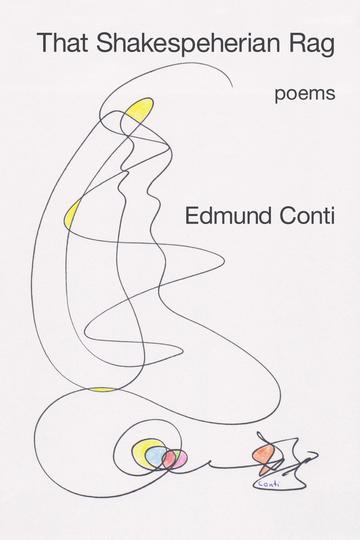
Review: ‘That Shakespeherian Rag’ by Edmund Conti

The problem of being
a 17-year
locust
is trying to stay
for 16 years
focused.

That poem is ‘Short Attention Span’ from Edmund Conti’s latest collection of verse. Originally the title was to be ‘O O O O’ in reference to T.S. Eliot’s lines from The Waste Land where the poet is being criticised by his wife:

“Are you alive, or not? Is there nothing in your head?”
But
O O O O that Shakespeherian rag—
It’s so elegant
So intelligent

It seems that the publishers sensibly preferred a title that would be more comprehensible, without the confusions of O and 0. So the next part of the quote was chosen–still idiosyncratic, but more useful. And, yes, Conti seems to have poetry singing rhythms in his head all the time, and he produces beautiful jazz-like drawings as in the book’s cover.

Both titles for the collection are pure Conti–he has a playful, Zen-like approach to life, highly literate, constantly referencing other writers (and other writers referencing other writers), expecting a level of knowledge and engagement from the reader, and often reducing his expositions to the shortest possible. So this latest volume is full of memories and meditations, jokes and puns, and threaded through with the words of others. Conti divides the book into 11 Shakespearean sections, starting with memories of childhood and youth, and then weaving through reading and writing, books and poetry, his neighbors and family (and their views of his verse), into a closer and closer look at mortality: the last four pieces having respectively four lines, two lines, one line, and nothing.

Conti writes both formal and free verse, depending what kind of playfulness he’s up to. When he parodies Emily Dickinson, of course it’s in her standard ‘The Yellow Rose of Texas’ meter and rhymes ABAB. But he’s a lot more free when he just wants some snide commens and a punchline. Here’s ‘Losing Battle’:

In a final desperate attempt
at survival, the sun sets
fire to the western sky.
Overblown, say my poet friends.
Cute, say my non-poet friends.
What does it mean? asks my neighbor.
How much will you get paid for it?
That’s from my wife.

My father’s an astronaut,
my son lies.

Engaging, amusing, thought-provoking, with many short passages that stay in the memory. A fun book for all poets. Just published this month by Kelsay Books.

Poem: ‘Warfare’

The mother’s nightmare
The child’s terror
The rapist’s freedom
The girl’s death.
The killer’s ecstasy
The band’s brotherhood
The youth’s excitement
The dying breath.

The glory of the lucky
The scream of the unlucky
The lost limbs, blindness, madness
The lifelong PTSD, homeless in the streets.
The poet’s puzzle
The politician’s porn
The aphrodisiac
The power-soaked sheets.

The demagogue’s cause
The demagogue’s solution
The warmonger’s profits
The fearmonger’s skill.
The blacksmith’s trade
The scientist’s incentive
The human fascination
The tribe’s need to kill.

The acceptance by the boys
The eagerness of teens
The avoidance by the men
The manipulation by the old.
The girl’s adoration
The woman’s greed
The widow’s grief
The body cold.

The king’s invocation
The priest’s sanctification
The scared population
The desolation.

The peasant’s loss
The trader’s loss
The teacher’s loss
The city’s loss.

The mortician’s gain
The tombstone maker’s gain
The coffin maker’s gain
The graveyard’s gain.

The medal maker’s gain.

And over it all God sits in His rocking chair
On His front porch in the sky
Saying, A crop, a very fine crop, an excellent crop this year.

Sits in His deck chair to look at the warfare waves
In the shade of a cloud in the sky
Watching the sandcastles washing away.

Sits in the night coming down on the battlefield
Watching crows, ravens, hyenas, stray dogs
Men and women pulling gold teeth from the dead.

Sits in His laboratory, looking at His guinea pigs
Sits in His concert hall, listening to the music
Thinking, All this is so interesting
All this is so tragic
All so inspiring
How far will they get till they blow themselves up?
Will these ones escape? Will they figure it out?
Can they conquer themselves and discover the universe?

Maybe it’s out of line to put this poem into a ‘formal verse’ blog… But there are two points to consider. First, there is a lot of form in the outraged chant of the beginning half–rhyme, rhythm, balance, some alliteration. Second, transitioning from that form to a less structured meditation in itself a use of form; it transitions the entire poem from one viewpoint to another by making the two halves so different. That’s my argument, anyway. Is it reasonable?

The poem originally appeared in Bewildering Stories. Thanks Don Webb and John Stocks!

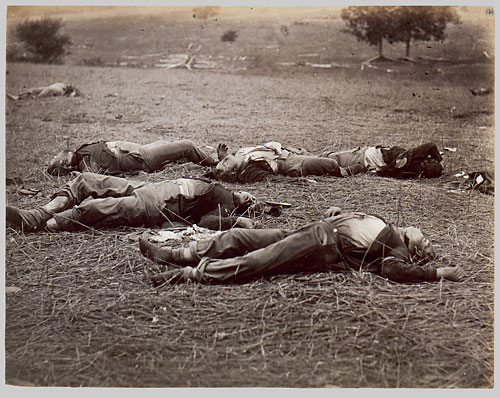
Photo: “Battlefield Dead After the Battle of Gettysburg” by elycefeliz is licensed under CC BY-NC-ND 2.0

The Greatest Early 21st c. Poet? M.A. Griffiths

M.A. Griffiths

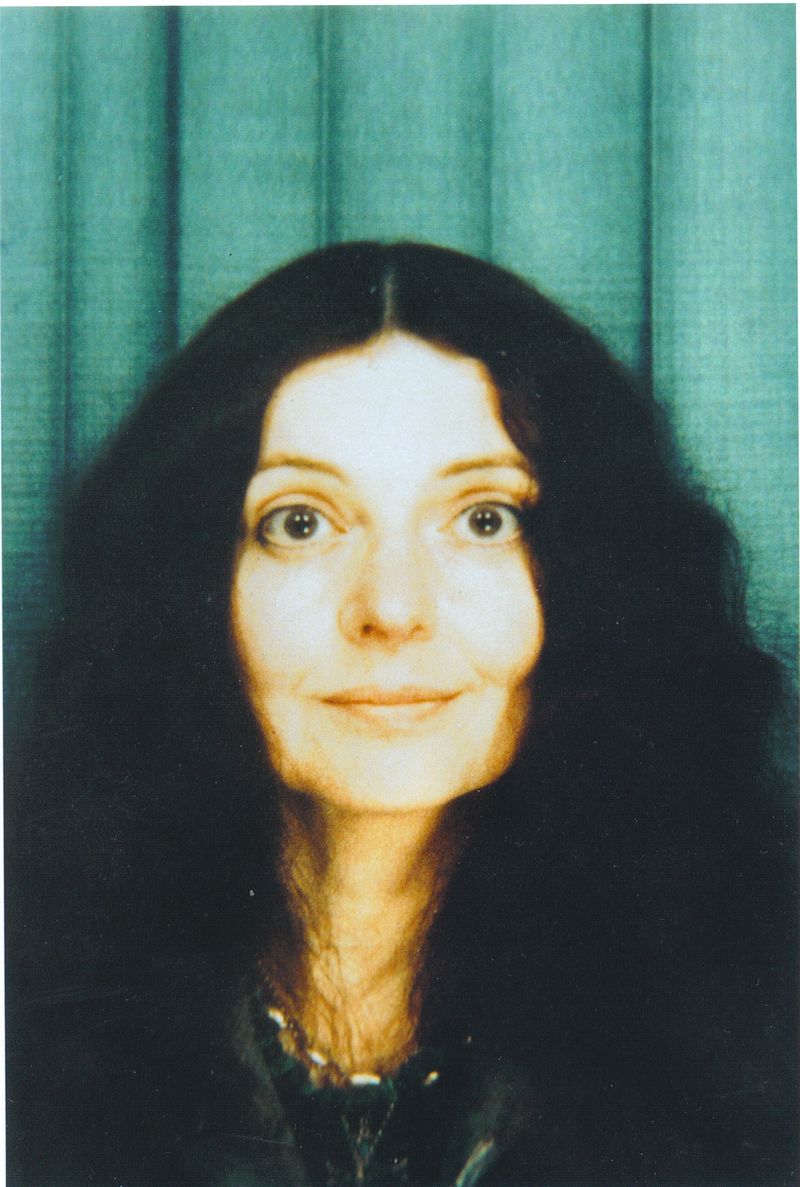
Margaret Ann Griffiths–scanned photo provided by David Adkins

Ruthless, witty, iconoclastic poetry–much of it formal, much of it free–by a lighthearted woman with much to be serious about. Just coming into international prominence as an internet-oriented poet as she turned 60, Margaret Ann Griffiths was dying of an incurable stomach ailment. She posted poems online under her own name and as “Maz” and “Grasshopper” from 2001 until her death in 2009. Her only book, Grasshopper, was assembled posthumously from her writings in print and on line around the globe; it has 352 pages of poems, plus an extensive preface by Alan Wickes.

Probably her best-known poem is the Eratosphere prize-winning Opening a Jar of Dead Sea Mud:

The smell of mud and brine. I’m six, awash
with grey and beached by winter scenery,
pinched by the Peckham girl who calls me posh,
and boys who pull live crabs apart to see
me cry. And I am lost in that grim place
again, coat buttoned up as tight as grief.
Sea scours my nostrils, strict winds sand my face,
the clouds pile steel on steel with no relief.

Sent there to convalesce – my turnkeys, Sisters
of Rome, stone-faced as Colosseum arches –
I served a month in Stalag Kent, nursed blisters
in beetle shoes on two-by-two mute marches.
I close the jar, but nose and throat retain
an after-tang, the salt of swallowed pain.

She was a brilliant sonneteer (which seems to be a less exalted compliment in the US than in the UK), but also irreverent in light verse as in Clogs which begins:

The Queen Mum’s gorn and popped her clogs;
the telly’s stuffed with Royal progs.
I’ve heard a thousand epilogues
now the old Queen Mum has popped her clogs…

skillful with dialect verse, as in Fer Blossom:

Tha’s not allowed ta bury pigs, tha knows.
I blinks et Blossom’s bulk stratched awt on
a bad of bettercups end pink-tinged deisies,
aye closed es ef ha nipped off en a nep…

skillful with unstructured verse, as in Falling:

In the library,
you fell over me.
You said, So sorry.
I said, Ouch.
Later you fell over me
on the couch…

parody, as in Cutlet, Mince of Denmark, whose Act 1 is:

What fowl noisette’s abroad this night? I walk
the battlements. Porked lightning! Next appears
my father’s goose. O Veni, son, he says. We talk
of offal oxtails – poussin in his ears!

And the rolling, sonorous Sholey, beginning

Sholey brings the summer in a shiny old tin bucket
every year. He walks head high across the mountains
carrying the flowers. In the brim of his wide hat
nestle songbird eggs in pastel clutches…

I find it impossible to quote a full range of her poetry, there is too much, too diverse. But my favourites are her sonnets, circling around her themes of pets and poets, nature and history, war, women and sex… and illness and death.

Born and raised in London, an archaeology student at Cardiff, she lived in Poole on England’s south coast for the last decades of her life. Online she worked with poets around the world; offline she lived alone and unknown, her death not discovered for a month.

Google her, read whatever shows up, and then buy Grasshopper. I would recommend it to anyone who reads or writes poetry, anyone. I dip into it periodically, and read it right through every two or three years.

M.A. Griffiths–Maz–with her technical skill, insight, imagery, empathy and vast range… might just be the early 21st century’s greatest poet.

Review: “Frozen Charlotte” by Susan de Sola

Frozen Charlotte

Susan de Sola’s ‘Frozen Charlotte’ is a book of strong poetry, both formal and free verse, collected after prior publication in 30 publications as diverse as Able Muse, Ambit, American Arts Quarterly, Amsterdam Quarterly… and The Dark Horse, and Light, and Measure. One of the pieces in this collection, ‘Twins’, has already been reprinted in the Potcake Chapbook ‘Families and Other Fiascoes’.

Her casual comfort with verse forms is shown in the last poem of the book, ‘Bounty’:

The fruit flies find our fruit, they slip
beneath the lid, a silver dome.
The dark fruit scent has drawn them in,
no other lures them out again.
They settle on apples, puckered figs,
they gorge in perpetuity,
may never fly back to their home,
(if they have ever had a home).
An allegory of choice? Well, yes–
in that we have no choice.
The fruit is fine, the day is long.
Let us feed, buzz, rejoice.

The poem divides into two pieces: the first eight lines describe the scene, and are in iambic tetrameter with mere hints of rhyme. The last four lines step back and philosophise, and alternate tetrameter and trimeter, the trimeters rhyming.

Personally, though I like the whole poem, I find the last four lines far more satisfying. The change of rhythm is good, but I don’t see any reason not to embed more formal rhyme in the first part. She is capable of sustained rhyme, as in another of my favourites, ‘Holistic Practice’. Here a middle-aged holistic therapist who has failed to create a whole life for herself – living in a one-room flat and with no family – is depicted in ten 5-line stanzas as she comes for a visit and shares pictures of her cat. The last stanza is:

But no, her Boop, he was her treasure;
her angel and her source of pleasure.
“Oh , look, how cute!”–a cat bow tie!
I grin and nod, divided by
a deep, holistic urge to cry.

I will admit that her free verse can be very engaging as well, as in her ‘ATM’:

Somehow, it’s sexual,
the rim crotch-high,
the shuffling buttocks,
the hands fumbling in secret.

Gone the dainty dialogue,
the date stamp in a little leathery
book of records, at set times. Now,
an onanism of cash, walls with mouths.

This is an example of a poem that I would hesitate to modify into a formal structure for fear of losing the way that each short line is a punchline in itself. But for the most part the less formal poems, though they often have rich ideas, are not as memorable as the well-structured ones. Blank verse in itself has no merit for me – Milton’s ‘Paradise Lost’ rambles tediously, without the need for concision imposed by rhyme. Chaucer’s ‘Canterbury Tales’ may be long but it is packed with many more stories. It rhymes, and that leaves no room for waffle. No surprise then that with Susan de Sola’s work the longest poems are unrhymed and the least tight.

As for ‘Frozen Charlotte’, the title of the book and of one of its poems, I can only say I am grateful that a page of notes at the end gives the explanation that this was a common, naked, 19th century German doll that acquired its nickname in the US in relation to some ballads. I was unfamiliar with Frozen Charlottes. As a book title it seems memorable but disconnected, as Susan de Sola’s poems are, above all, full of warmth and life.