Tag Archives: HappenStance Press

Short Poem: Andrew Sclater, ‘Dear Mother’

Dear Mother come softly across your grey veil
and onto the path in the dark where the snail
is crossing obliquely and nightjars sing sweetly
and put down your toilet bag quietly, discreetly
on the rim of the cemetery fountain. Now wash
your hair free of this mud and these worms, and squash
those white maggots that gleam in your ears,
then smile as you used to. We’ll have no more tears.

*****

Andrew Sclater writes: “I think everyone who loses a parent probably wants to resurrect them somehow. But memory is a false friend. We can’t see them clearly enough: we know, with vagueness, what they were like, but not who they were. We’d like to go back but we can’t, though this poems attempts to. Then, the realisation that we stand alone, orphaned, comes slowly, painfully and (awkward as it is) angrily as we grieve. This poem was delivered almost complete to me. It simply flowed out of the first line in a rare and rather magical way. I still like it more than almost everything I’ve written, placing my discomfort so tidily into its formal box.”

‘Dear Mother’ first appeared in Poetry Review.

Andrew Sclater is a Scottish poet currently living in Paris. He has published poems in Ambit, Best Scottish Poems, The Dark Horse, Magma, New Writing Scotland, Poetry Review, Shearsman and elsewhere. He co-founded Butcher’s Dog poetry magazine and the National Botanic Garden of Wales. He has been an editor of Charles Darwin’s correspondence and his Dinner at the Blaws-Baxters’ was published in 2016 by HappenStance Press. His newest pamphlet Quite Joyful is from Mariscat Press.

Photo: “.a…d.i.s.t.a.n.t…memory.” by DeeAshley is licensed under CC BY 2.0.
Helena Nelson, ‘The Fall (GM)’

The tree was genetically modified.
The apple was full of dioxins.
The leaves were too green;
any fool could have seen
they were vibrant with millions of toxins.

A helpful old friend (we called him ‘The Snake’)
announced he’d go up there and get it.
I said to my spouse
‘We’ve got pears in the house’
but what did he do? Adam ate it.

He snaffled a bite with a smirk of delight,
then laughed till he cried (he was manic).
‘You’ll love it my dear,’
he said, ‘and look here—
I got you some seed. It’s organic.’

Well what could I say? It wasn’t my day
for dodging his amorous athletics.
It led to sheer babel
from wee Cain and Abel—
I blame the whole thing on genetics.

*****

Helena Nelson writes: “I wrote it more than twenty years ago, and at the time people were going on endlessly about GM foods and the risks thereof. They seem to be worrying about other things these days. Anyway, this was the result, and I’ve always liked it, although it is very silly. Maybe too silly.”

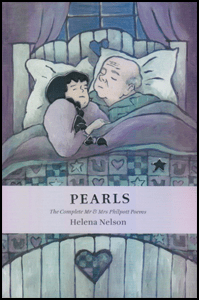
Helena Nelson runs HappenStance Press (now winding down) and also writes poems. Her most recent collection is Pearls (The Complete Mr and Mrs Philpott Poems). She reviews widely and is Consulting Editor for The Friday Poem.

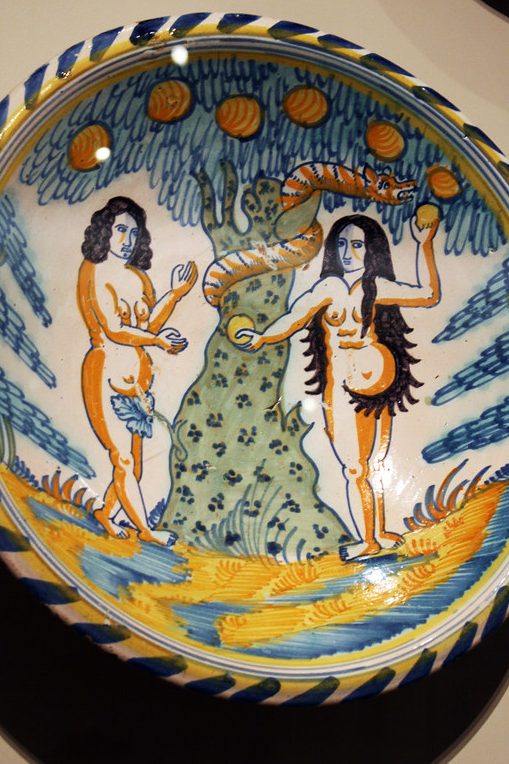
Photo: “Everyone’s pregnant in the Garden of Eden!” by quinn.anya is licensed under CC BY-SA 2.0.

Helena (“Nell”) Nelson, ‘Separation’

i

Mrs Philpott goes to bed alone.
The clock in the hall ticks on.
Philpott turns to cut glass, then stone.

All the things we do to be loved,
all of them pointless.
The clock ticks on.

Nothing but moonlight dawns.
The distance from downstairs
to upstairs yawns.

Philpott sags and snoozes alone
in the wishing chair,
in the wishing air.

All the things we do to be loved –
in the night they slip far away.
It will never be day.

The clock ticks on
as well it may.

ii

She wakes first. He has not slept
in the chair all night.

At first light
he has crept

into the bed on the other side.
He will not (cannot) say it, but

everything about him is sorry –
only half of him is under the duvet

and his eyes aren’t really shut.
She pulls the covers over them both and he falls

into a sleep as deep and sound
as a lost child who has wandered far out of sight

(while his mother calls and calls and calls)
and is finally found.

*****

This poem is one of over 80 in Helena Nelson’s ‘Pearls – the Complete Mr & Mrs Philpott Poems’. Starting with poems of the end of their first marriages, it tracks their decades-long second marriage through (as the blurb says) “dreams, anxieties and needs – even sudden spurts of happiness – despite the rainy holidays, arguments and illness. The ordinariness of their love is magical and miraculous. Because ordinary love is a kind of miracle.”

People talk about “novels in verse” but those often don’t capture the poetry of verse. This is definitely a novel in poetry, and the most rereadable novel I’ve come across in a long time.

Helena Nelson writes: “happy that you like Pearls. I made it as well as I could, but it largely came unasked for. I don’t think I have anything to say about it.”

Helena Nelson runs HappenStance Press (now winding down) and also writes poems. Her most recent collection is Pearls (The Complete Mr and Mrs Philpott Poems). She reviews widely and is Consulting Editor for The Friday Poem.

Quatrains: D.A. Prince, ‘Weeds’

for Helena Nelson

Let’s celebrate those seeded in guttering
high overhead — bird-dropped or wind-blown
in shy, shaded corners, not cluttering
the road-edge like litter or casually sown

on the garden’s margins. Buddleia, birch —
slender and whippy, fretful and restless,
only a small claw-hold on their high perch,
a loose version of themselves in endless

inventive air. No one, much, bothers them,
leaving their roots exploring the secret cracks
between bricks and flashing. Unless a stem
strangles a cable or a branch unpacks

some weathered pointing, troubling it, they’re safe:
every airhead, living only to dance
the delights of lightness, each sinuous waif
born from easy freedom, sun and rain and chance.

*****

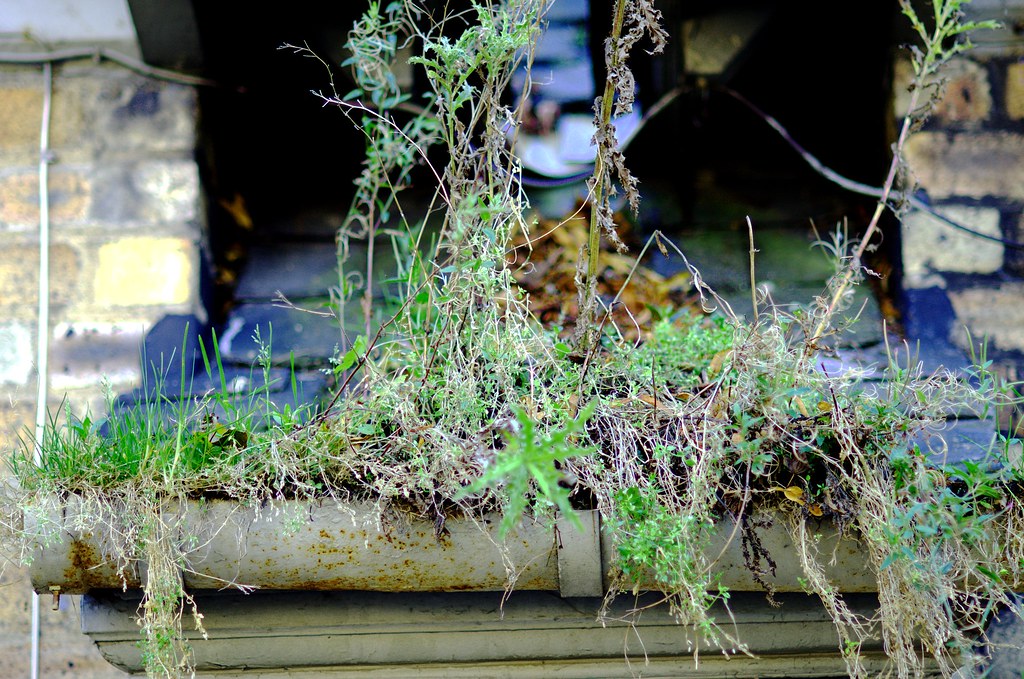
D.A. Prince writes: “There’s a tradition of poets printing some of their work privately for circulation to friends. Now that Helena Nelson (aka HappenStance Press) is making more time for her own writing she has created a series of pamphlets about those unregarded — and usually unloved — plants generally dismissed as ‘weeds’, in which each is accorded its own sonnet. Richard Mabey’s Weeds: The Story of Outlaw Plants is the source for the botanical information while she brings a poet’s attention to what makes each one individual. She has sent these pamphlets to friends so, for the moment, only a few of us have seen them.

“I don’t habitually write poems dedicated to named people: this is, I think, the first time I’ve done it but I wanted to respond, as a way of thanking her both for long friendship and for all the poetic ongoings we’ve shared. I asked her, somewhat cautiously, if she’d agree to a dedication, then — later — if she’d agree to the poem appearing in a pamphlet.

“Her poems were sonnets so if I’d written a sonnet it could have looked competitive — and that wasn’t the point. Four quatrains, rhymed, seemed to suit the subject. In its original layout it appeared as a solid sixteen-line block but when we were working on the poems that make up my latest pamphlet (Continuous Present, New Walk Editions, 2025) Nick Everett, my editor, suggested that setting it in quatrains would suit the air and space those rooftop-rooted weeds have around them, and to my mind that’s lifted the poem in a way it needed. 

“As for gardening, I’m now very happy to let the weeds flourish.”

D.A. Prince lives in Leicestershire and London. Her first appearances in print were in the weekly competitions in The Spectator and New Statesman (which ceased its competitions in 2016) along with other outlets that hosted light verse. Something closer to ‘proper’ poetry followed (but running in parallel), with three pamphlets, followed by a full-length collection, Nearly the Happy Hour, from HappenStance Press in 2008. A second collection, Common Ground, (from the same publisher) followed in 2014 and this won the East Midlands Book Award in 2015. HappenStance subsequently published her pamphlet Bookmarks in 2018, with a further full-length collection, The Bigger Picture, published in 2022. New Walk Editions published her latest pamphlet, Continuous Present, in 2025.

*****

Photo: “guttered” by bigbahookie is licensed under CC BY-NC-ND 2.0.

Sonnet: Helena Nelson, ‘Dream’

I found myself in bed with an old man.
His beard was silvery, his scrawny chest
a rack of ribs, his loose-lipped mouth open
and toothless as a baby. There he was,
there in our bed, as if he owned the place.
He snored and grunted like some ancient king
asleep after a banquet. But what feast
had led, dear heart, to this? What partying?
He turned his head to me. I saw his face—
a travesty. Some metamorphosis
had happened in our sleep, my love replaced
by a bag of windy bones. I need a piss,
he muttered, and got up. O then I knew
what age had done to us, and who was who.

*****

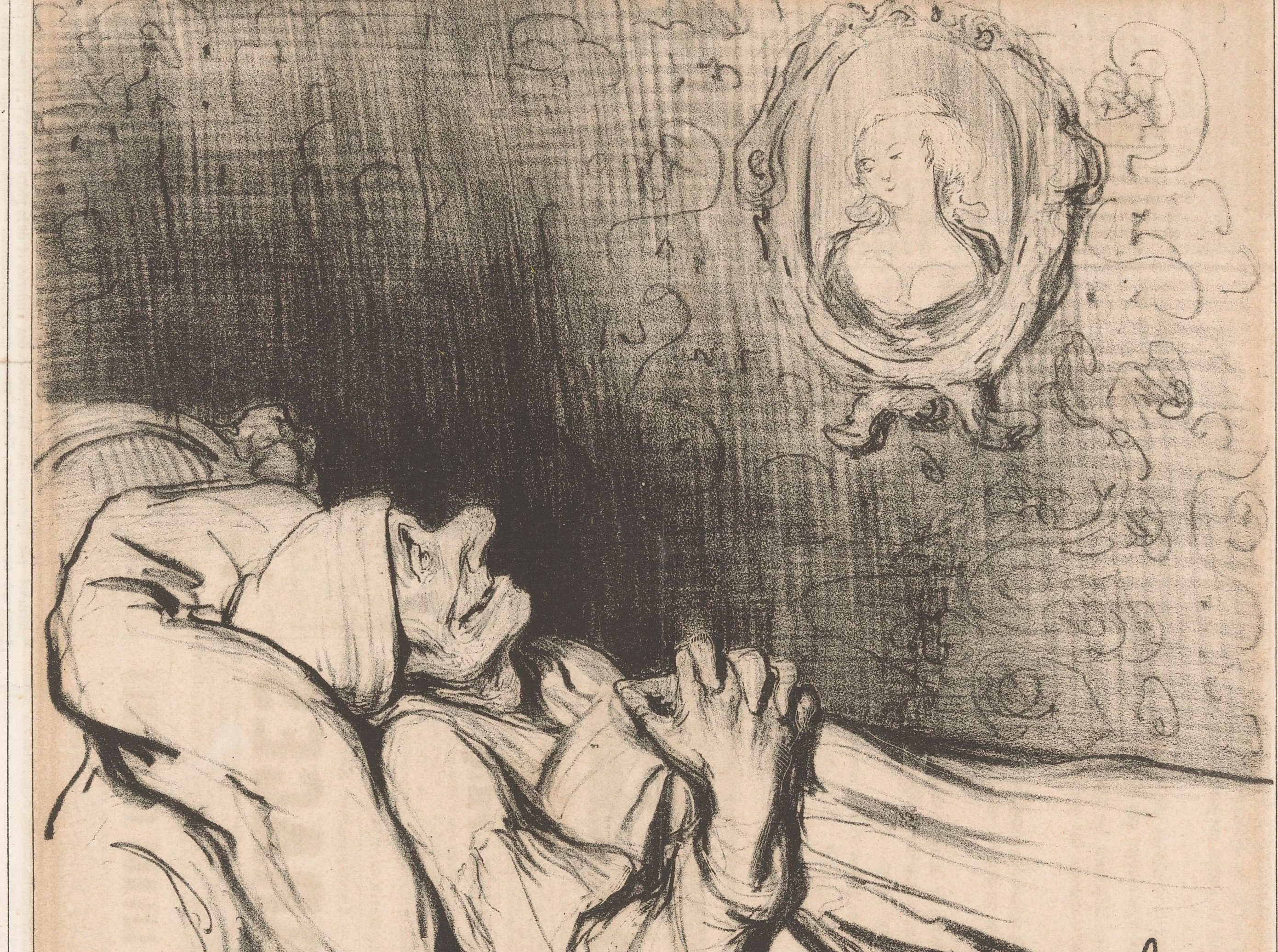
Helena Nelson writes: “Everyone experiences it eventually. You glance at your own reflection in the mirror and get a shock at how old you look. So that’s one of inspirations for this poem. The other spur to write this was a dream I had one night, though in the poem it’s intentionally unclear whether the experience is or isn’t real. I started with near rhymes in the octet and moved towards perfect rhyme at the end to convey the shock. I do hope the reader feels that shock at the end.” 

‘Dream’ was originally published in The Dark Horse.

Helena Nelson runs HappenStance Press (now winding down) and also writes poems, one of which appears in the Potcake Chapbook, ‘Lost Love’. Her most recent collection is Pearls (The Complete Mr and Mrs Philpott Poems). She reviews widely and is Consulting Editor for The Friday Poem.

Tom Vaughan, ‘On the Twilight Mountains’ (Jeremiah 13:16)

On the twilight mountains
leopards change their spots
distributing their cast-off coats
to helpworthy have-nots –

lions and lambs and lynx lie down
and tell each other tales
of how at sea the seals now go
for walks with killer whales –

lovers linger hand in hand
promising to be
truthful, faithful, thoughtful, kind,
supportive company –

and peace seems deep and peace seems long
until the morning sun
wakes us from our ancient dream
like a starter gun.

*****

Tom Vaughan writes: “The poem (published in Snakeskin 316, April 2024) is among several inspired by my current reading of Robert Alter’s magnificent – and magnificently thought-provoking – translation of the Hebrew Bible. However gloomy the concluding stanza, and however accurately that gloom may reflect the violence and slaughter always at the heart of the world, I hope the poem also catches some of the equally permanent and however illusory yearning for things to be otherwise.”

Tom Vaughan is not the real name of a poet whose previous publications include a novel and two poetry pamphlets (A Sampler, 2010, and Envoy, 2013, both published by HappenStance). His poems have been published in a range of poetry magazines, including several of the Potcake Chapbooks:
Careers and Other Catastrophes
Familes and Other Fiascoes
Strip Down
Houses and Homes Forever
Travels and Travails.
He currently lives in Brittany.
https://tomvaughan.website

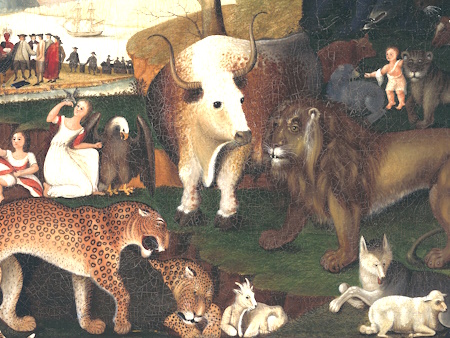
Illustration: ‘The Peaceable Kingdom’ by Edward Hicks, via Snakeskin

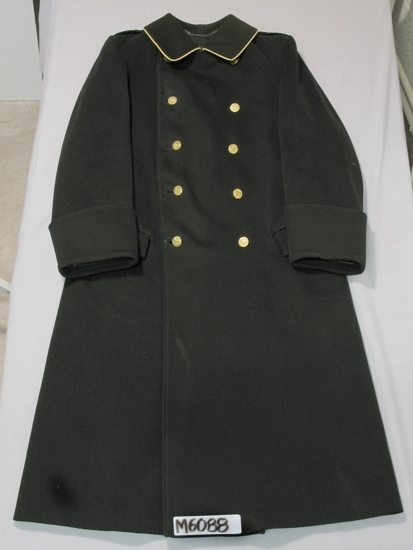
D.A. Prince, ‘The Coat’

It should have gone to Oxfam years ago
yet it clings on—through house moves, clearings-out,
declutterings—while fashion’s dictats show
just how unwearable it is. No doubt
of that. It’s heavy: woollen cloth
you’d never find these days, its tailoring
too buttoned-up, too stiff. Even the moth
finds food in something with more flavouring.

I haven’t worn it since the funeral,
that time when death demanded decency
of sober colours, darkness integral
to paying one’s respects. The legacy
hangs here, as though in waiting for some end
I can’t foresee. Then someone else will face
the final clearing, wondering where to send
this coat, and why it takes up so much space.

*****

D.A. Prince writes: “This was my coat and very much as described in the poem. It had followed me around from house to house for over fifty years. It was bought for my father’s funeral, had been worn for a couple of winters afterwards and then consigned to the wardrobe. I imagine most people have some sort of item — not necessarily clothing, just something freighted with the past — that they hesitate to part with.” The poem was published in the February 2024 Snakeskin (issue 314).

D.A. Prince lives in Leicestershire and London. Her first appearances in print were in the weekly competitions in The Spectator and New Statesman (which ceased its competitions in 2016) along with other outlets that hosted light verse. Something closer to ‘proper’ poetry followed (but running in parallel), with three pamphlets, followed by a full-length collection, Nearly the Happy Hour, from HappenStance Press in 2008. A second collection, Common Ground, (from the same publisher) followed in 2014 and this won the East Midlands Book Award in 2015. HappenStance subsequently published her pamphlet Bookmarks in 2018, with a further full-length collection, The Bigger Picture, published in 2022.

Photo: “Rock” is licensed under CC BY 4.0.

Using form: Monorhyme: D.A. Prince, ‘Cold’

Outside the glittering air is bright,
frost crystals glisten in the light,
a bitter wind sharpens its bite,
teasing a few stiff leaves to flight.
It finds in restlessness a tight
fierce chill, like muscles clenched to fight,
needling uncovered skin with spite
and then breathes out a cloud of white,
a moment’s ghost, a shape so slight
it freezes almost before sight
has marked its passing. Snowflakes write
their shaky message to unite
cold’s elements in silver night.

*****

D.A. Prince writes: “This poem came together very quickly: the garden thick with frost and the idea of catching the vowel sound in ‘ice’ as a way of capturing the sharpness of the scene. A mono-rhyme, playing with this crispness, seemed the way forward. It was fun, and that’s an important element in poetry.” The poem was published in the February 2024 Snakeskin (issue 314).

D. A. Prince lives in Leicestershire and London. Her first appearances in print were in the weekly competitions in The Spectator and New Statesman (which ceased its competitions in 2016) along with other outlets that hosted light verse. Something closer to ‘proper’ poetry followed (but running in parallel), with three pamphlets, followed by a full-length collection, Nearly the Happy Hour, from HappenStance Press in 2008. A second collection, Common Ground, (from the same publisher) followed in 2014 and this won the East Midlands Book Award in 2015. HappenStance subsequently published her pamphlet Bookmarks in 2018, with a further full-length collection, The Bigger Picture, published in 2022.

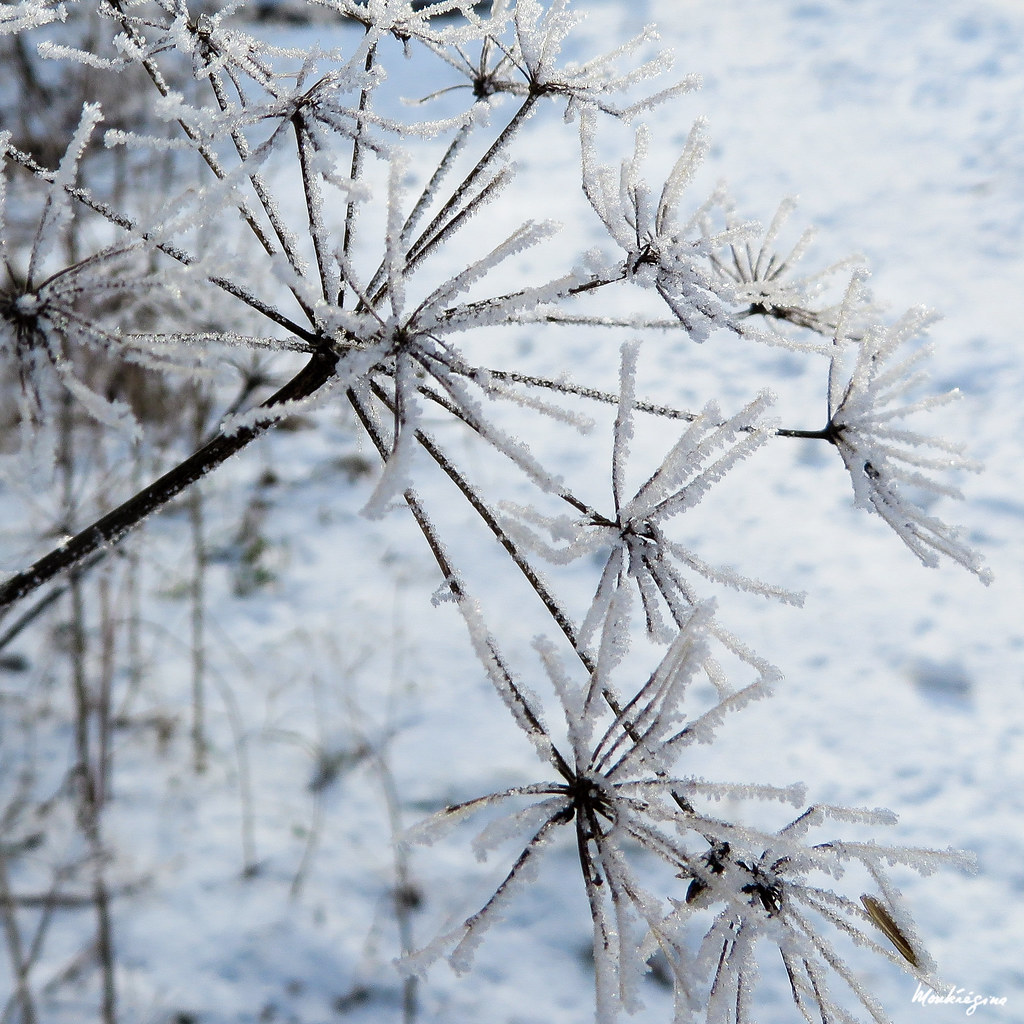
Frost Blooms – Fleurs de givre” by monteregina is licensed under CC BY-NC-SA 2.0.

Potcake Poet’s Choice: Helena Nelson, ‘On Gloom and Proper Respect’

He doesn’t exactly blame her for it. No,
it’s not her fault. She is the way she is—
incorrigibly optimistic. But
the strain of her unbridled cheerfulness

must tell. His gloom requires due diligence.
It’s there to serve a need, and needs a slow
and proper processing. That’s it—a proper pro-
cessing. To this he must commit, and hence

his necessary isolation. No,
he is not depressed. He’s just process-
ing. Some ‘thing’ is passing through. It will go
eventually, but it must run its course.

The weight of doom would be a minor stress
if she would just dispense with cheerfulness.

Helena Nelson writes: “This poem is part of a book-length sequence telling the story of an ordinary, conventional marriage (albeit a second marriage for each partner). It’s about love that struggles to survive the difficulties of aging, loss and illness. The husband, Mr Philpott, has always suffered from anxiety but he has bouts of depression too, when he withdraws into himself. In fact, he might fairly be described as a ‘difficult’ man, though he can’t help it. Here the sonnet form reflects his need for tight control, repressing his anxiety about depression, which gets squeezed uncomfortably across the line breaks. There’s humour here, too. Because how absurd it is, surely, to wish your wife were less cheerful? And yet he does. He certainly does.” 

Helena Nelson runs HappenStance Press and sometimes writes poems, one of which appears in the soon-to-be-released latest Potcake Chapbook, ‘Lost Love’. She has been writing the story of Mr and Mrs Philpott for over twenty years, and it can finally be found in its complete form as Pearls (The Complete Mr and Mrs Philpott Poems)

Review: ‘The Lesser Mortal’ by Geoff Lander

Geoff Lander has produced a score of full-page formal poems about various scientific luminaries: Maxwell, Einstein, Mendeleev and so on, combining career highlights with odd trivia about them. The poems are technically very skilful, with a variety of forms and metres being used (though the book is marred in a couple of places by the typesetting failing to follow the structure of lines and rhymes). Here is an excerpt from ‘On the Shoulders of Others’:

Does the gentle polymath,
Monsieur Henri Poincaré,
buried there in Montparnasse,
ponder how it came to pass
Einstein’s name now dominates
all things relativité?
(…)
In the central USA
near St. Louis one fine day
in 04 he first declared
E might equal mc2.

That was news to me. And it does raise the question of why Einstein should get all the recognition. Another of Lander’s poems, ‘Socks Off to Einstein’, suggests a possible answer:

While others may claim to have seen mc2,
they weren’t sock-eccentric, they weren’t spiky haired.
Their names are forgotten. Quite rightly that rankles–
the price you might pay if you coddle your ankles.
So three cheers for Albert, and get your heels bared!

Lander is a chemist by training and a computer programmer by profession, and poetry only came along when he started writing out other people’s verse to help his right hand recover from a stroke. Then, “encouraged from Scotland by Helena Nelson and from the grave by John Betjeman”, he started writing his own verse of which only a tiny fraction has been published.

New historical information and skilful light verse makes for a powerful combination! This very interesting little book from HappenStance Press contains most of what Geoff Lander has published to date.