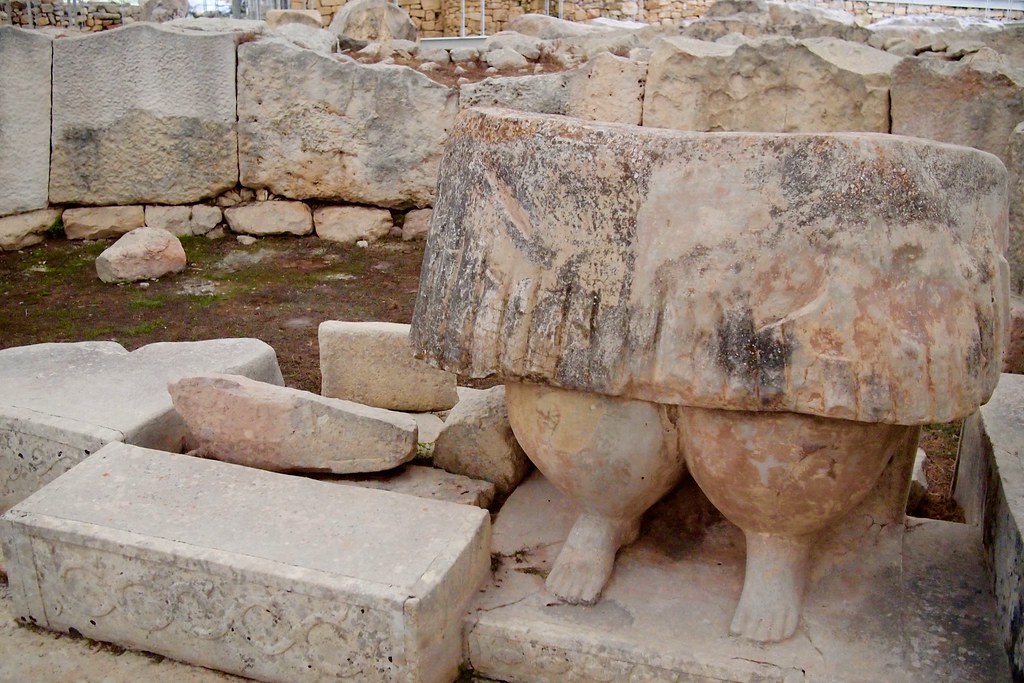
I met a traveler from an antique show, His pockets empty, but his eyes aglow. Upon his back, and now his very own, He bore two vast and trunkless legs of stone. Amid the torrent of collector’s jargon I gathered he had found himself a bargain, A permanent conversation piece post-prandial, Certified genuine early Ozymandial And when I asked him how he could be sure, He showed me P. B. Shelley’s signature.
*****
Ogden Nash‘s teasing take on Shelley’s Ozymandias is collected in ‘The Old Dog Barks Backwards’.
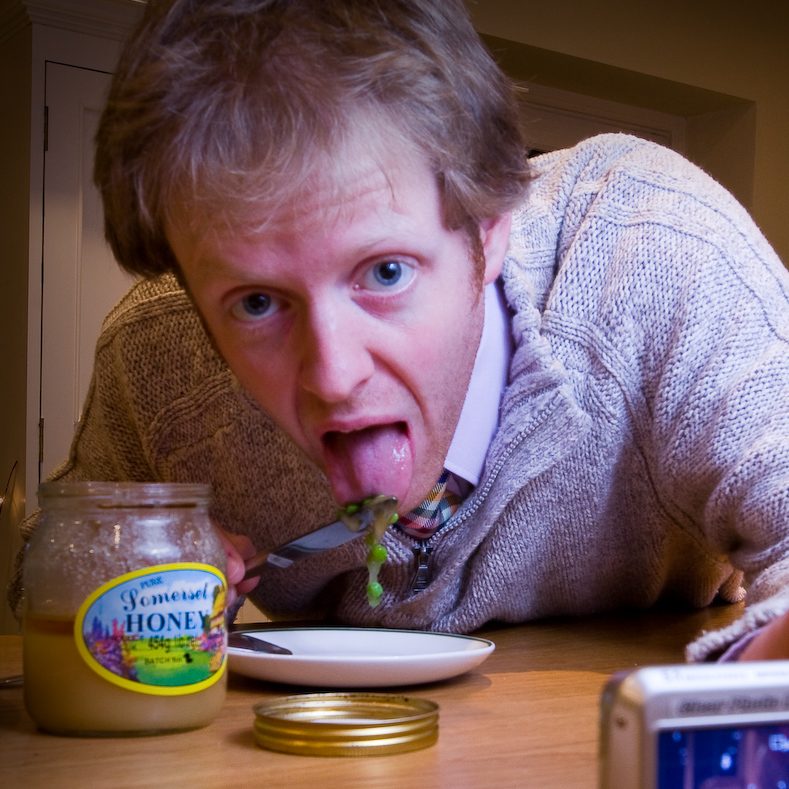
I eat my peas with honey; I’ve done it all my life. It makes the peas taste funny, But it keeps them on the knife.
*****
The staying power of well-turned nonsense rhymes is testament to the value of rhythm and rhyme for keeping something intact, perfectly remembered. The poem’s joke is well done, with a good punchline; but the word-for-word memorability comes from the magic of verse.
The Poetry Foundation recognises this poem as having been recited in the American comedy/quiz show ‘It Pays to Be Ignorant‘ on 2nd February 1944 (or more likely 7th February 1944), you can hear Harry McNaughton read it here, and my guess is that he (or another of the show’s writers) was the author. Apparently some people have thought it was written by Shel Silverstein (1930-1999), but this is denied by his Estate and its archivists. Others in the US have stated it is by Ogden Nash. In the UK it has been labeled as Spike Milligan’s. It is an object lesson in optimistic (i.e. false) attribution. But even in Arnold Silcock’s collection ‘Verse and Worse’ (Faber & Faber, 1952) it is only credited to Anonymous… whose birth was a long time ago, and whose death is not expected any time soon.
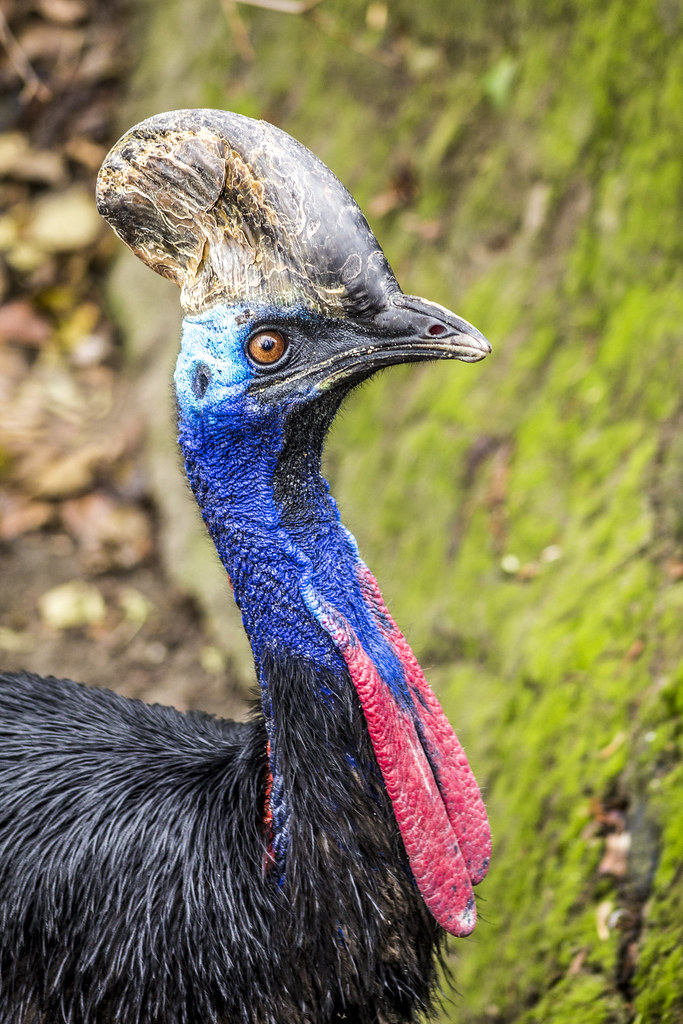
If I were a cassowary On the plains of Timbuctoo I would eat a missionary, Cassock, bands, and hymn-book too.
*****
Yes, cassowaries are from Australia and New Guinea, and Timbuktu is in Africa… but so what? The rhymes are too good to ignore. ‘Bands’, btw, refers to the pseudo-necktie thingies that priest-types and lawyer-types affect in some countries – little cloth flaps, plural because you wear two of them.
The probable author is Bishop Samuel “Soapy Sam” Wilberforce, best known nowadays for debating Thomas Henry Huxley on evolution in 1860. Huxley (Aldous Huxley’s grandfather) was commonly referred to as ‘Darwin’s bulldog’. Wilberforce is remembered for his question as to whether it was through his grandmother or his grandfather that Huxley considered himself descended from a monkey. Huxley is said to have replied that he would not be ashamed to have a monkey for his ancestor, but he would be ashamed to be connected with a man who used his great gifts to obscure the truth. Apparently everyone enjoyed the debate, and they all went off happily to dinner together afterwards.
Cassowaries are more formidable than either Wilberforce or Huxley. Standing over six feet tall, capable of running at 30 mph (and good swimmers in rivers and sea), and able to leap and strike chest-high with razor-sharp 5-inch talons, they are omnivores not to be confronted. Yes, they might well eat a missionary. Also, the cassowary’s bands are more impressive.
Forty farty arty asses Taking “Art and Humor” classes. We can easily dispense of Ten of those who have no sense of Why they’re spending time in class. Perhaps they hope the time will pass.
Thirty dirty-thinking students Driving cars with one or two dents All with New York license plates (no one comes from other states). None of them are Trappist Monks. Three of them are from the Bronx.
Twenty seven, several standing All of them aloud demanding Knowledge and some satisfaction Looking for a little action. Which brings in play some other factors: Like, the class has fourteen actors.
Thirteen thirsty knowledge seekers Most of them in hi-tech sneakers Fast-lane Yuppies causing sparks Passing Jeffs and passing Marks, Easily outclassing Freds Four of them are wearing Keds.
Nine no-nonsense neophytes New to Art and its delights Also new to thoughts of Humor Each of them a Baby Boomer. Mostly what they make is money. Eight don’t think that humor’s funny.
One remaining arty ass Thirty nine aren’t in his class. He has a strong artistic bent A witty and amusing gent But he (who is the poet) copped out, Fell between the cracks and dropped out.
*****
Edmund Conti writes: “I think was inspired by a reference somewhere to an “Art and Humor” class. And naturally I had to have students dropping out, one by one, or two by two or more. The poem immediately became a lab for rhymes and puns and whatever could go under the banner of art and humor. Just riffing mostly.”
My verse is of the humorous variety, And does its best to brighten up society. To spread a little joy’s a noble calling, A life without a laugh would be appalling.
Yet still, of late, I’ve had a thought that niggles; What worth is work that just produces giggles? Should it be judged as slight and ineffectual, Compared to art we label intellectual?
And so I did what “proper” poets do, And signed up to The Scrivener’s Review, “The connoisseur of poesy’s magazine”, Where scribes will scratch your eyes out to be seen.
I found it was a terrifying place, Where people were obsessed with lower case, Allusions veered from cryptic to absurd, And “meaning” seemed to be a dirty word.
Their poetry was like the peace of God, That passeth understanding – truly odd. Some claimed to write for womxn and for mxn, Though none had come across the verb, “to scxn”.
With open mind, I asked, “Is it my fault That there is nothing here I can exalt?” But days of dredging through this awful rot Confirmed beyond all doubt that it was not.
Each new excrescence served to reinforce That I had veered disastrously off course. I wheeled around and fled back to the light Which shines upon the droll and erudite,
Bring on a world where rhyme and meter matters, And isn’t full of folk as mad as hatters. Adieu to “Scrivener’s Review”, I quit. Do I need what you’re full of? Not one bit.
*****
Stephen Gold writes: “The idea for So Pseud Me came from wading through an august poetry periodical which had better remain nameless, and coming to the following conclusion: WTF? There was some good, thoughtful work, but much of it was pretentious drivel, written by the deservedly obscure with their heads rammed firmly up that place where the Lord causeth not the sun to shine. If you were to ask them, I guess most would place high verse on a pedestal, way above light. But on this, I am with Kingsley Amis, who wrote in the New Oxford Book of Light Verse: “Light verse makes more stringent demands on the writer’s technique. A fault of scansion or rhyme, an awkwardness or obscurity that would damage only the immediate context of a piece of high verse endangers the whole structure of a light-verse poem. The expectations of the audience are different in the two cases, corresponding to the difference in the kind of performance offered. A concert pianist is allowed a wrong note here and there; a juggler is not allowed to drop a plate.” ‘So Pseud Me’ is a light-hearted attempt to speak up for jugglers.”
Stephen Gold was born in Glasgow, Scotland, and practiced law there for almost forty years, robustly challenging the notion that practice makes perfect. He and his wife, Ruth, now live in London, close by their disbelieving children and grandchildren. His special loves (at least, the ones he’s prepared to reveal) are the limerick and the parody. He has over 700 limericks published in OEDILF.com, the project to define by limerick every word in the Oxford English Dictionary, and is a regular contributor to Light and Lighten Up Online (where this poem was first published).
We fireproof our buildings asbestos we can. Dutch cheeses taste Gouda; to Edam’s the plan. Urine the money with pay-to-pee loos. Why pick one’s own footwear? Have Jimmy Choo’s. On the value of avarice all are agreed, And we’re searching in vein to find out why we bleed. Uncouth at the centaur of ancient myth action, Half-horse plus half-man equals one whole infraction. You’ve eyed it before, so this sight’s deja view. If you’re an identical twin, I’m one, two. The teacher drew circles but said pie are squared. I’ve lost my left arm; my right’s left unimpaired. Do the rich suffer gilt in a gold-toilet suite? Does a one-legged marathon mean half defeat? Those hotdogs were bad, but these brats are the wurst. This poem is arse-backwards. It must be reversed.
*****
Chris O’Carroll writes: “It was Oscar Levant, I believe, who said that a pun is the lowest form of humor unless you are the first person to think of it. A while back The Spectator ran a contest that called for poems riddled with puns. John Whitworth used to distinguish between ‘real poems’ and ‘competition poems’, and this effort of mine is probably a candidate for the latter category, but it did win me a few quid.”
Chris O’Carroll appears in New York City Haiku and The Great American Wise Ass Poetry Anthology, yet has won British poetry prizes from Flash 500, Literary Review, the Spectator, and elsewhere. His collections ‘The Joke’s on Me’ and ‘Abracadabratude‘ are available from Kelsay Books. http://lightpoetrymagazine.com/summerfall-2015-issue-table-of-contents/
If angels ate apples, potatoes and pears they’d soon be chubby and cheerful as bears nibbling knishes and other such things, tickling your face with the tips of their wings.
If seraphim shouted and whistled at girls, drank drafts from thimbles, all friends with the world drained the best ale and chased it with rye, then fluttered in circles while trying to fly.
Angels on tables! (Watch out for your glass!) Slipping on puddles, right plop on their ass! Laughing at music that only they hear, then tweaking the barmaids a pinch on the rear.
Fuzzy fat angels, that’s something to see, as they dance to the jukebox at quarter to three, and ace out the pinball, a marvelous feat, the lights and bells flashing (though sometimes they cheat).
If angels made merry, would that be so odd? Must they always be solemn, to stay friends with God? It’s a pity that Heaven is so far away angels hardly ever come down and just play.
Geoffrey A. Landis writes: “It’s impossible to chose just one poem as a favorite, of course, and even if I could, which poem I’d pick would change from day to day, maybe even from minute to minute. Still, I’ve alway been fond about ‘If Angels Ate Apples’; it’s one that reads well out loud, and I had fun writing it. Mostly I was playing with meter and alliteration. I was happy that Gardner Dozois picked it up for Asimov’s Science Fiction, and since then it’s seen a couple of reprints.”
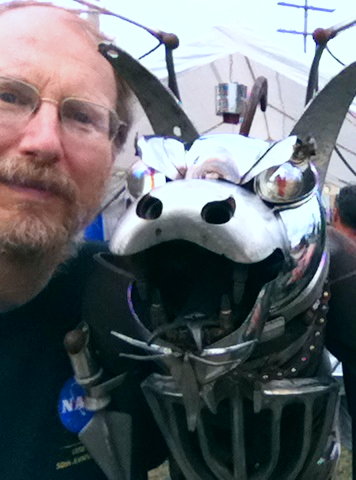
Geoffrey A. Landis is a rocket scientist who sometimes plays at being a science-fiction writer, and a science-fiction writer who sometimes plays at being a poet. In the process he’s picked up a handful of awards, ranging from science fiction’s Hugo and Nebula awards to the Science Fiction Poetry Association’s Rhysling award, and had his stories and poems appear in twenty languages. He lives in Berea, Ohio, with his wife (who is also a science fiction writer and a poet) and four cats.
What is this that roareth thus? Can it be a Motor Bus? Yes, the smell and hideous hum Indicat Motorem Bum! Implet in the Corn and High Terror me Motoris Bi: Bo Motori clamitabo Ne Motore caedar a Bo— Dative be or Ablative So thou only let us live: Whither shall thy victims flee? Spare us, spare us, Motor Be! Thus I sang; and still anigh Came in hordes Motores Bi, Et complebat omne forum Copia Motorum Borum. How shall wretches live like us Cincti Bis Motoribus? Domine, defende nos Contra hos Motores Bos!
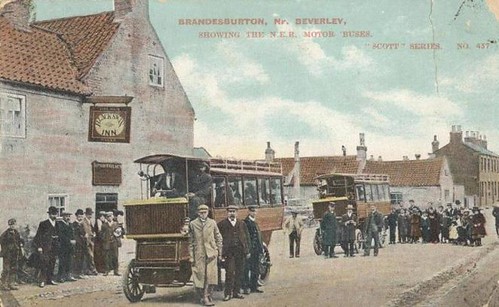
This elegant piece of nonsense was written in January 1914 to celebrate the introduction of a motorised omnibus service in the city of Oxford–hence the reference to two of its main streets, the Corn(market) and High Street. Noticing that both ‘motor’ and ‘bus’ could be the nominative singular of Latin nouns, Professor Godley wrote this series of couplets, declining and rhyming the nouns through all their presumed cases, singular and plural. (The poem presumes the old-fashioned English pronunciation of Latin with many hard vowels needed for the rhymes.) And why not? ‘Motor’ is Late Latin for ‘mover’, and ‘bus’ is a casual modern abbreviation of ‘omnibus’, Latin for ‘for everyone’. The entire piece is written in a mixture of English and Latin, and translates roughly as:
What is this that roars so, Can it be a motor bus? Yes, the smell and hideous hum Indicates a motor bus! In the Cornmarket and the High Street Terror of the motor bus fills me: To the motor bus I will call out Lest I be killed by the motor bus– You can be Dative or Ablative So long as you let us live: Where shall your victims flee? Spare us, spare us, O Motor Bus! So I sang; while still Motor buses came in hordes And the whole market place was filled With a mass of motor buses. How shall wretches like us live Surrounded by motor buses? O Lord, defend us From these motor buses!
Macaronic, or mixed languages, literature has ancient roots, showing up wherever two languages overlap in one population for a while, frequently in verse, frequently for humorous effect: alternating Persian and Arabic verses or hemistichs of Saadi and Hafez; Rumi’s occasional mix of Persian, Arabic, Turkish and Greek; Indian poetry written in alternating indigenous Hindi and the Persian of the Mughal rulers; and Latin and vernacular languages throughout Europe at the end of the Middle Ages. Modern examples include the Beatles’ ‘Michelle’ and José Feliciano’s ‘Feliz Navidad’.

 Form in Formless Times