Tag Archives: light verse

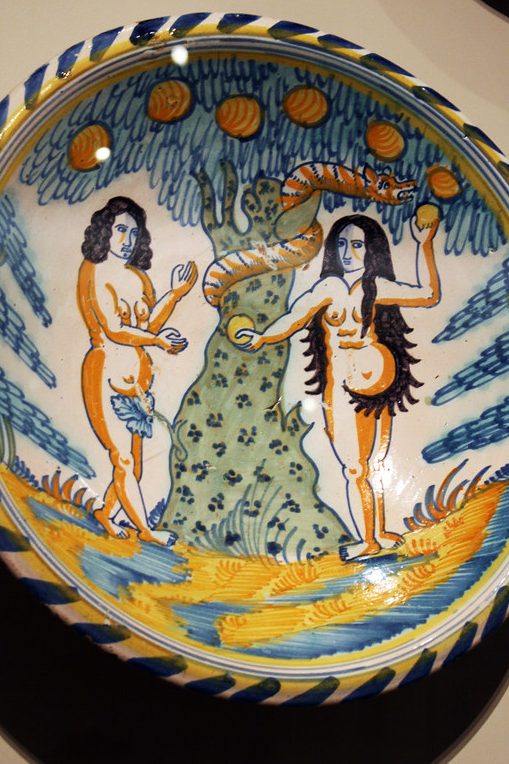
Helena Nelson, ‘The Fall (GM)’

The tree was genetically modified.
The apple was full of dioxins.
The leaves were too green;
any fool could have seen
they were vibrant with millions of toxins.

A helpful old friend (we called him ‘The Snake’)
announced he’d go up there and get it.
I said to my spouse
‘We’ve got pears in the house’
but what did he do? Adam ate it.

He snaffled a bite with a smirk of delight,
then laughed till he cried (he was manic).
‘You’ll love it my dear,’
he said, ‘and look here—
I got you some seed. It’s organic.’

Well what could I say? It wasn’t my day
for dodging his amorous athletics.
It led to sheer babel
from wee Cain and Abel—
I blame the whole thing on genetics.

*****

Helena Nelson writes: “I wrote it more than twenty years ago, and at the time people were going on endlessly about GM foods and the risks thereof. They seem to be worrying about other things these days. Anyway, this was the result, and I’ve always liked it, although it is very silly. Maybe too silly.”

Helena Nelson runs HappenStance Press (now winding down) and also writes poems. Her most recent collection is Pearls (The Complete Mr and Mrs Philpott Poems). She reviews widely and is Consulting Editor for The Friday Poem.

Photo: “Everyone’s pregnant in the Garden of Eden!” by quinn.anya is licensed under CC BY-SA 2.0.

Short poem: RHL, ‘Comparatively Speaking’

One day we’ll all be dead;
survival chances: slim.
So concentrate instead
on aspects you prefer:
“I’m winding down,“ he said,
“but not as fast as him.”
“Losing my looks,” she said,
“but not as fast as her.”

*****

Speaking as someone now in the 4th quadrant of my 1st century, what other options are there? Anyway, this was first published in the Asses of Parnassus – thanks, Brooke Clark!

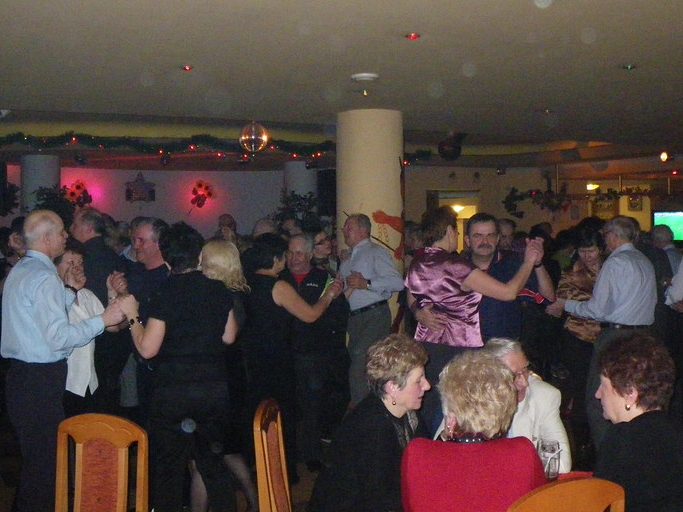
Old people party 2” by weldonwk is licensed under CC BY 2.0.

Michael R. Burch, ‘How It Goes, or Doesn’t’

My face is getting craggier.
My pants are getting saggier.
My ear-hair’s getting shaggier.
My wife is getting naggier.
I’m getting old!

My memory’s plumb awful.
My eyesight is unlawful.
I eschew a tofu waffle.
My wife’s an Eiffel eyeful.
I’m getting old!

My temperature is colder.
My molars need more solder.
Soon I’ll need a boulder-holder.
My wife seized up. Unfold her!
I’m getting old!

*****

Michael R. Burch adds the disclaimer “that the poem is pure comedy and my wife Beth is an absolute jewel. I’m lucky to have her. (Rodney Dangerfield put me up to it!)”

Michael R. Burch’s poems have been published by hundreds of literary journals, taught in high schools and colleges, translated into 23 languages, incorporated into three plays and four operas, and set to music, from swamp blues to classical, 75 times by 34 composers. He is also the founder and editor-in-chief of The HyperTexts.

OLD old Man” by bixentro is licensed under CC BY 2.0.

Using form: Odd Sonnet: Brian Bilston, ‘Neither Rhyme Nor Reason’

To make poems rhyme can sometimes be tough
as words can seem to be from the same bough,
yet each line’s ending sounds different, though,
best covered up with a hiccough or cough.

Was this upsetting to Byron or Yeats?
Dickinson, Wordsworth, Larkin or Keats?
Did they see these words as auditory threats?
Could they write their lines without caveats?

What does it matter when all’s said and done
if you read this as scone when I meant scone?
It’s hardly a crime. There’s no need to atone:
language is a bowl of thick minestrone.

So mumble these endings into your beard –
this poem should be seen, rather than heard.

*****

Brian Bilston is a poet who knows it. He writes about the human condition, relationships, and buses. Agent: Jane Finigan (email: info@lutyensrubinstein.co.uk)

Photo: Brian Bilston, Facebook

Short poem: RHL, ‘Heart Attack’

Lust –
Thrust –
Bust –
Dust.

*****

One of the things that intrigues me is the way certain word endings fall into groups, evoke a common mood, sometimes seem to tell their own story. Some of these groups seem natural with overall positive “light, bright, flight, height, white” or negative “dusty, musty, fusty, gusty”; “bumble, crumble, grumble, fumble, stumble, tumble” connotations… but I acknowledge that with the first set I’m ignoring “blight, night, shite” and so on. Some seem random, especially perhaps when the different spellings suggest unrelated origins: “beauty, duty, fruity, snooty,” but still lead to a story.

Happily, I’m not alone in these idle thoughts. Melissa Balmain’s Tale of a Relationship in Four Parts comes to mind… and from Maz (Margaret Ann Griffiths) we have ‘The Drowning Gypsy’:

Flamboyant
Clairvoyant
Unbuo
o
o
o
o
y
a
n
t

Maz’s work is collected in ‘Grasshopper‘; Melissa Balmain’s poem is collected in ‘Walking in on People‘ from Able Muse Press; ‘Heart Attack’ was recently in The Asses of Parnassus.

Photo: “heart-attack” by Pixeljuice23 is licensed under CC BY-SA 2.0.

Marcus Bales, ‘Rule Number One’

For Linda, who said it first

 If you’re going to have a reading
then no matter where you are
for a minimum of breeding
you have got to have a bar.

You will fill up all the seating,
they will come from near and far,
if the best part of your greeting
is “Why, yes we have a bar!”

But the evening will be fleeting
even if you’ve booked a star
when it’s alcohol they’re needing
and you do not have a bar.

They will freeze in scanty heating
and they’ll swelter till they char
if you advertise by leading
with the fact you have a bar.

Though it’s raining or it’s sleeting
if you offer them a jar
they’ll be aleing, beering, meading,
and absinthing at the bar.

But when poetry starts bleeding
out of every scab and scar
all you’ll see is me retreating
if you haven’t got a bar.

*****

Marcus Bales writes: “For an interesting while I had an art gallery in a downtown mall in Cleveland. The mall rules said it had to be open on Saturdays — when there was no mall traffic and so no real reason to be open. So I held the Every Saturday at Noon in the Galleria Poetry Reading. Dramatically unsuccessful at first it eventually found its audience and we had a good time. But in talking about why, serving only coffee, Linda pointed out that if we could serve alcohol attendance would improve. Since it was an art gallery, and there is a tradition in art galleries of serving wine at openings, I changed the title to the Poetry Reading Art Opening and said wine and coffee would be available in limited quantities. That did the trick. It quickly became the best-attended poetry reading in the city, any day, any time. Then the authorities got wind of it and someone from the city visited and pointed out gently that while it was a tradition to serve wine at art openings in art galleries, it is technically illegal by state law, even if it is free, and they cited the appropriate code. In the end it didn’t matter much, since even the most successful poetry readings count their audiences in the low-to-mid-tens of people, and by then people had got in the habit of Saturday At Noon, and kept coming anyway even after we stopped serving wine. But the idea for the poem had formed.” 

Not much is known about Marcus Bales except that he lives and works in Cleveland, Ohio, and that his work has not been published in Poetry or The New Yorker. However his ‘51 Poems‘ (which includes the above) is available from Amazon. He has been published in several of the Potcake Chapbooks – Form in Formless Times.

Photo: “Open Bar” by Trevor Benedict – MrEcho is licensed under CC BY-NC-ND 2.0.

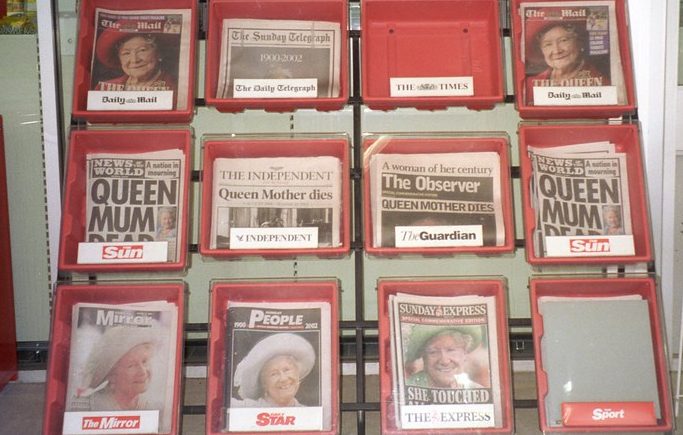
‘Maz’ Griffiths, ‘Clogs’

The Queen Mum’s gorn and popped her clogs;
the telly’s stuffed with Royal progs.
I’ve heard a thousand epilogues
now the old Queen Mum has popped her clogs.

The Queen Mum’s gorn and popped her clogs
so let’s fish out our mourning togs
and toast her name in small eggnogs.
Our dear old Queen Mum’s popped her clogs.

The Queen Mum’s gorn and popped her clogs.
Oh, Gawd, we’ll all go to the dogs,
and princes will turn into frogs
now the old Queen Mum has popped her clogs.

*****

The always delightful Margaret Ann “Maz” Griffiths published in a huge range of voices: formal sonnets of wildlife and of the illness that finally killed her, blank verse rants against warfare or injustice, sad songs of the female loss of innocence, flippant anti-establishment sarcasm about the British Royal Family…

‘Grasshopper’, her 350-page collection of poetry (and also one of her nicknames) was assembled by fans after her death and published by Arrowhead Press in the UK and Able Muse Press in North America. It is readable and rereadable. I post the occasional poem in this blog.

Photo: “Queen Mum Dead” by Joe Shlabotnik is licensed under CC BY-NC-SA 2.0.

Short poem: RHL, ‘Many Marriages’

Lots of marriage is good –
go ahead! We all should…
but bigamy sadly‘s illegal.
The solution, of course,
is: Encourage divorce!
And remarry. Kings do it. Be regal!

*****

Just published in The Asses of Parnassus – thanks, Brooke Clark!

Photo: “Charles Camilla Jamaica 2008” by Mattnad is licensed under CC BY-SA 3.0.

Short NSFW poem: RHL, ‘The Fig Tree’

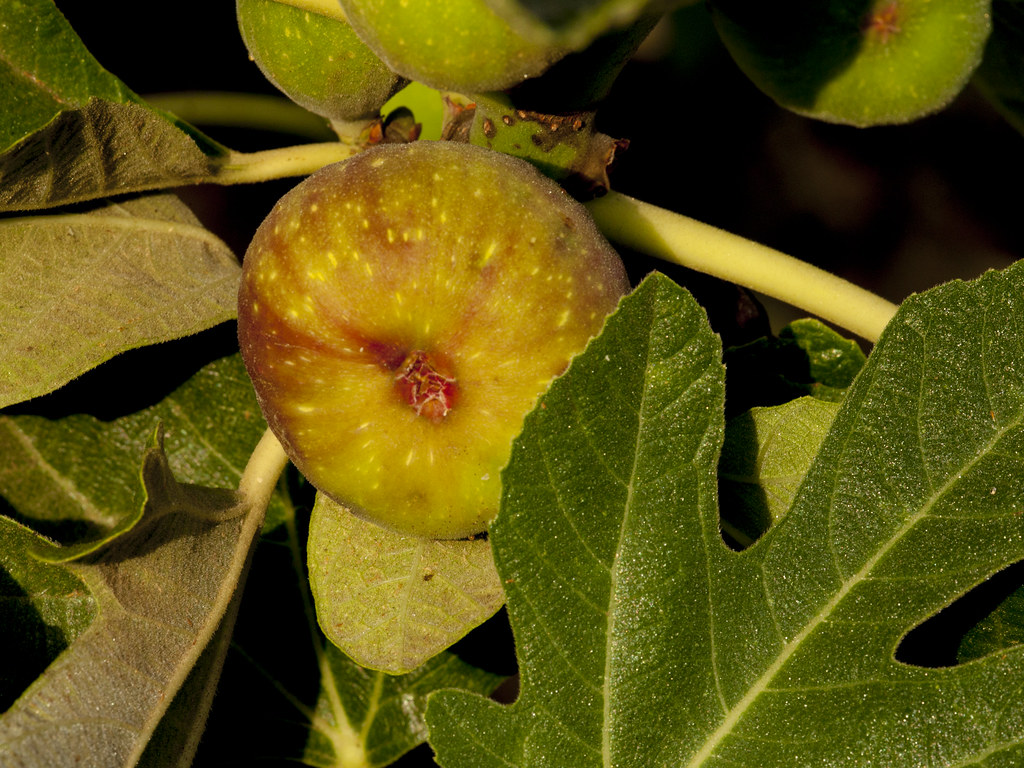
The fig leaf symbol’s one of History’s greats
As, inter alia,
It hides, discloses and exaggerates
Male genitalia.
The fruit itself suggests the female form —
Dripping with honey
The little hole breaks open, pink and warm…
The Bible’s funny.

First published in The Asses of Parnassus, this poem was republished in Better Than Starbucks, which earned a “Kudos on your brilliant ‘The Fig Tree'” from Melissa Balmain, editor of Light. And it has now been added by Michael R. Burch to my page in The HyperTexts. That’s a wonderful set of editorial acceptances – it makes me proud, and I have to erase my lingering suspicion that the poem would be thought too rude for publication. Now I rate the poem more highly, as being not just a personal favourite but also acceptable to a wider audience.

It sometimes feels that all I write is iambic pentameter. It is always reassuring when a poem presents itself with half the lines being something else, and the result is a lighter, less sonorous verse. The rhymes are good; the poem’s succinct and easy to memorise. I’m happy with it.

Photo: “Ripe Fig at Dawn” by zeevveez is licensed under CC BY 2.0.

Odd poem: Light verse: Richard Fleming, ‘The Equestropede’

George, wishing to proceed at speed,
built the world’s first Equestropede.
This fusion of a horse and cart,
a tribute to the welder’s art,
had a strong engine, 12 hp,
which meant George travelled speedily.
It ran on oats and gasoline,
a strange concoction, unforeseen
by Elon Musk and the X folk
who would have seen it as a joke.
George, Michelangelo reborn,
treated the neigh-sayers with scorn.

*****

Richard Fleming writes: “The Equestropede, when it was first unveiled at the Exposition Universelle in 1901, proved to be the centaur of attraction. I post a rhyming poem every day on my Facebook page https://www.facebook.com/richard.fleming.92102564/ and accompany it with a quirky image that I’ve found online. Does the poem precede the image or vice versa? That depends. In the case of ‘The Equestropede’ the strange image definitely preceded the rhyme and fairly begged to be ‘poeticised’. The Equestropede name, however, is purely my invention as is its unveiling at the Exposition Universelle.”

Richard Fleming is an Irish-born poet (and humorist) currently living in Guernsey, a small island midway between Britain and France. His work has appeared in various magazines, most recently Snakeskin, Bewildering Stories, Lighten Up Online, the Taj Mahal Review and the Potcake Chapbook ‘Lost Love’, and has been broadcast on BBC radio. He has performed at several literary festivals and his latest collection of verse, Stone Witness, features the titular poem commissioned by the BBC for National Poetry Day. He writes in various genres and can be found at www.redhandwriter.blogspot.com or Facebook https://www.facebook.com/richard.fleming.92102564/