Melissa Balmain writes: “Often, monorhymes end up feeling a bit forced, so I’m happy when I manage to write one that feels natural (at least to me). Plus, it’s always nice to have a poem in the love-gone-wrong category. Not only is this a prerequisite when you apply for your poetic license, but it can land you in great company. (See Kiss and Part, a 2005 anthology edited by Gail White, where ‘Tale of a Relationship’ rubs elbows with verse by the likes of Dorothy Parker, Wendy Cope, XJ Kennedy, and many poets whose work has appeared in Form in Formless Times.)”
Melissa Balmain’s third poetry collection, Satan Talks to His Therapist, is available from Paul Dry Books (and from all the usual retail empires). Balmain is the editor-in-chief of Light, America’s longest-running journal of light verse, and has been a member of the University of Rochester’s English Department since 2010. She will teach a three-day workshop on comic poetry at the Poetry by the Sea conference in Madison, CT, in May 2024.
Odin wrote runey verse Rumi wrote Sunni verse Edward Lear? Loony verse. Question the universe with your buffoony verse.
*****
Sometimes you jot down a little light piece inspired more by wordplay than anything else, and the more you look at it the more it resonates. This is one such. The characters are diverse, coming from pre-literate Scandinavia, Renaissance-inspiring Islam, and Victorian England – they touch the roots of my cultural identity. They are from the past, but their searches are timeless, fully modern, quintessentially human. And I fully subscribe to the idea that we should question everything, and that the Fool‘s tools of succinct and enigmatic wordplay may be as good an approach as any in trying to formulate – let alone answer – all questions, physical and existential.
It further resonates for me in being published (which I find important); in being published just now in Light (which is a wonderfully reassuring place to be); in having been improved in response to Light’s editorial comments (meaning, yes, I am proud that sometimes I am open to criticism and it’s useful); and in being my 400th poem published (by one of my conflicting counts).
Nothing is definite, not the historical reality of historical and semi-historical figures, not the permanence of printed words, not the definition of a poem, not the count of things hard to define, not the nature of physical reality. So though we have to make prosaic choices based on appearances and best guesses, that should be balanced by questioning everything. Preferably in verse.
TL;DR: Even short poems can be unpacked.
Illustration: DALL-E by RHL, ‘Rumi, Odin and Edward Lear are writing poetry to question the universe’
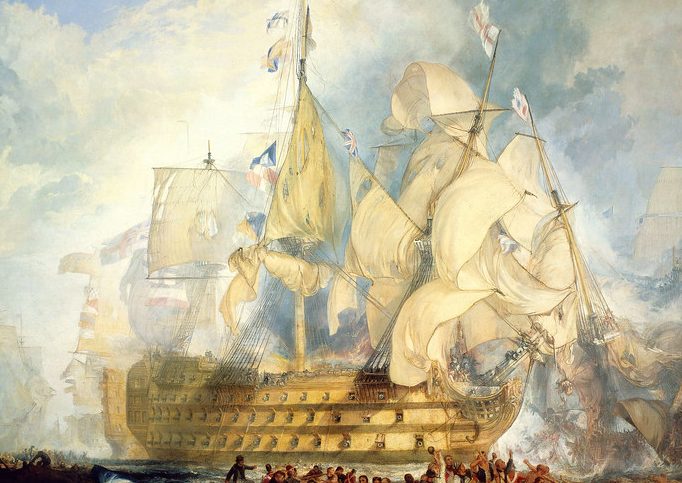
The men of war in the man o’ war (and the many more) who rode the ship’s bottom where the admirals put ’em would often think this has to stink If we ever sink we’re sunk.
At least that’s what I think they thunk.
*****
Edmund Conti writes: “I guess I was thinking if there is a Man O’ War, then there have to be Men O’ War. And where would they be put to be kept out of the way until called on. One idea led to another, one simple rhyme led to more, and voila!”
Money won’t buy you the moon and stars, but trips abroad and enormous cars and fancy drinks in exclusive bars, can all be purchased with money.
Money won’t buy you wisdom and truth or permanent beauty or lasting youth, but it makes a very good substituth, which makes it nice to have money.
The dog and the cat that you adore– money won’t make them love you more, but it keeps the wolf away from the door, which is why I wish I had money.
I’d have a fabulous London flat, a house in Provence and a Persian cat, and I’d give up being a Democrat, if only I had enough money.
When all the sins of excessive wealth had left me ruined, by speed or stealth, I’d still have memories of my health, and the fun I had with my money.
*****
Gail White writes: “I wrote the poem as a sort of updating of Arthur Clough’s ‘Spectator ab Extra‘, which has the refrain line ‘How pleasant it is to have money.’ Some things never change.”
Gail White is the resident poet and cat lady of Breaux Bridge, Louisiana. Her books ASPERITY STREET and CATECHISM are available on Amazon. She is a contributing editor to Light Poetry Magazine. “Tourist in India” won the Howard Nemerov Sonnet Award for 2013. Her poems have appeared in the Potcake Chapbooks ‘Tourists and Cannibals’, ‘Rogues and Roses’, ‘Families and Other Fiascoes’, ‘Strip Down’ and ‘Lost Love’. ‘Money Song’ is collected in ‘Asperity Street‘. Her new light verse chapbook, ‘Paper Cuts‘, is now available on Amazon.
The Head was ambitious and nobody’s fool, A big man, efficient, and proud of his school.
At the start of the term, as he sorted his post, The item of mail that intrigued him the most
Was a piece puffing National Poetry Day, Including a list of the poets who’d stay
And workshop and somehow persuade the whole school That poets were ‘groovy’ and poems were ‘cool’.
‘Here’s status,’ the Head thought. ‘It’s not to be missed.’ The one problem, though, was the names on the list;
Though doubtless they wrote quite respectable stuff, Not one of them, frankly, was famous enough.
His school deserved more; his ambition took wing, And so he decided to do his own thing.
With his usual flair, and with chutzpah exquisite, He invited the whole English canon to visit.
Geoffrey Chaucer came first, on an equable horse, And Spenser, and Marlowe, and Shakespeare, of course
(Who was grabbed by the teachers of English, imploring ‘Do come and persuade the Year Nines you’re not boring.’)
Keats arrived coughing, Kipling marched vigorously; Matthew Arnold began to inspect the school rigorously –
Which delighted the Head, who with pride and elation Showed the bards of the ages today’s education.
Vaughan was ecstatic, though Clough was more sceptical. Ernest Dowson puked up in a litter receptacle.
Coleridge sneaked off to discover the rates Of an unshaven person outside the school gates;
Soon he’d sunk in a private and picturesque dream, While Auden was ogling the basketball team.
Plath lectured the girls: ‘Get ahead! Go insane!’ Algernon Swinburne cried: ‘Bring back the cane!’
Dylan Thomas soon found the head’s cupboard of booze, And Swift was disdainfully sniffing the loos.
And then the Head twigged, with a horrified jolt, That something had sparked a Romantic revolt.
Shelley’d gathered the students out in the main quad, And roused them to rise against school, Head, and God.
Byron soon joined him, and started to speak. (He showed his best profile, and spouted in Greek.)
The bards of the thirties were equally Red, And Milton explained how to chop off a head.
Decadents undermined all the foundations. Surrealists threw lobsters and rancid carnations.
Pre-Raphaelites trashed the technology room And the First World War poets trudged off to their doom.
Sidney with gallantry led a great charge in (Tennyson cheering them on from the margin).
The Deputy Head, who was rather a dope, Got precisely impaled on a couplet by Pope
(Who, while not so Romantic, was never the chap To run from a fight or keep out of a scrap).
Then the whole solid edifice started to shake As it was prophetically blasted by Blake.
Soon the School was destroyed. Eliot paced through the waste, And reflected with sorrow and learning and taste,
Which he fused in a poem, an excellent thing, Though rather obscure and a little right-wing.
He gave this to the Head, who just threw it aside As he knelt by the wreck of his school, and he cried
Salty tears that went fizz as they hit the school’s ashes. He said words that I’d better imply by mere dashes:
‘——– Poets! ——– Poetry – rhyme and free verse! Let them wilt in the face of a Headmaster’s curse!
‘Let poetry wither! How sweet it would be If all of the world were prosaic as me!’
*****
George Simmers writes: “Poets in Residence was written as a celebration of National Poetry Day many years ago. Several people had been mouthing blandly off about how lovely poetry was in contrast to that horrible pop music young people listen to. Schools were being encouraged to give children a lot of poetry because it was nice and beautiful, and would make them nice. ‘Do these people have no idea of how incendiary the English canon is?’ I wondered. I really enjoyed demolishing the school around the ears of the pompous and pretentious head. I was a teacher at the time.”
George Simmers used to be a teacher; now he spends much of his time researching literature written during and after the First World War. He has edited Snakeskin since 1995. It is probably the oldest-established poetry zine on the Internet. His work appears in several Potcake Chapbooks, and his recent diverse collection is ‘Old and Bookish’.
Whenever I wake up and don’t feel well, I like to read a women’s magazine. I know that I can count on Vogue or Elle,
Cosmo or Glamour, Self or Mademoiselle, instead of pills, elixirs or caffeine, whenever I wake up and don’t feel well.
Page Eight has bathing suits that look just swell if you’re six foot and live on Lean Cuisine. I know that I can count on Vogue or Elle.
Page Nine’s a list of “wardrobe musts” that sell at reasonable prices—for a queen. Whenever I wake up and don’t feel well,
Page Ten says how to age, yet stay a belle. The photo? It’s a model of eighteen. I know that I can count on Vogue or Elle
to make my time in bed such living hell, I’m out of there in sixty seconds clean. Whenever I wake up and don’t feel well, I know that I can count on Vogue or Elle.
*****
Editor: The villanelle is a highly structured poem, its two key lines rhyming and repeating several times. One of its challenges is to make each repetition fresh and interesting, either by developing and deepening the context, or by varying the repeated lines slightly or, as with this one, by having the same words resonate differently. Here “I know that I can count on” gives an initial impression of a favourable attitude to women’s magazines, but at the end the words show total disgust. This ‘Villain Elle‘ is typical of Balmain’s twists and puns and absolute control of form.
Melissa Balmain edits Light, America’s longest-running journal of light verse. Her poems and prose have appeared widely in the US and UK. She’s the author of the full-length poetry collection Walking in on People (Able Muse Press), chosen by X.J. Kennedy for the Able Muse Book Award, and the shorter, illustratedThe Witch Demands a Retraction: Fairy-Tale Reboots for Adults (Humorist Books). Her next full-length collection, Satan Talks to His Therapist, is due out in fall 2023.
The artist said the wit was “full of it”, disparaged him. The punster tore the painter limn from limn.
*****
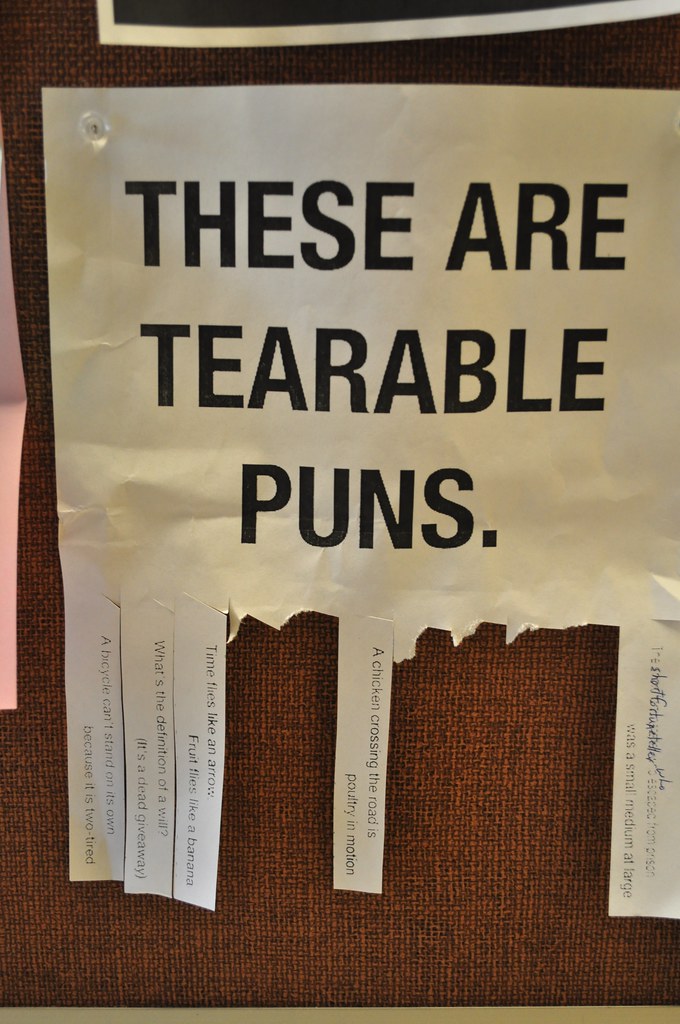
Apparently some people believe that puns are “the lowest form of humour”, but I would suggest that those people are not good at wordplay, and therefore have no poetic sensibility. Look to Homer, Shakespeare and Samuel Johnson for puns; enjoy more discussion and examples here.
This short poem was published in The Asses of Parnassus, home of “short, witty, formal poems”. Thanks, Brooke Clark!
Things started so well: found a chick in a box, got her out, and days later, we wed– such a snap because, speaking of life’s pleasant shocks, my stepmom-in-law turned up dead.
Home that night, after finally fooling around (happy ending for both!), I sighed, “Heaven.” But my wife simply stared at the ceiling and frowned: “Is that it? I’m accustomed to seven.”
*****
Melissa Balmain writes: “This poem comes from my latest collection, The Witch Demands a Retraction. To anyone who has mistakenly bought a copy of it for little kids: I am sorry. Maybe the book’s subtitle (fairy tale reboots for adults) should have been printed bigger. Or maybe the illustrator, Ron Barrett, should have made his drawings less adorable. Either way, to prevent further disasters in gift-giving, here’s a partial list of topics in the book: Interspecies adultery. Corrupt puppets. Kinky princes. Elderly cannibals. Impotent baked goods. Porcine insurance fraud. And, yes, eightsomes that include Sneezy, Happy and Dopey.”
Melissa Balmain edits Light, America’s longest-running journal of light verse. Her poems and prose have appeared widely in the US and UK. She’s the author of the full-length poetry collection Walking in on People (Able Muse Press), chosen by X.J. Kennedy for the Able Muse Book Award, and the shorter, illustratedThe Witch Demands a Retraction: Fairy-Tale Reboots for Adults (Humorist Books). Her next full-length collection, Satan Talks to His Therapist, is due out in fall 2023.
As a kid growing up in New York, I considered our fall second rate: how I longed for the grand, mythological land we exotically labeled Upstate.
In that Eden, I’d heard, leaves turned bright, endless acres of yellows and reds, while my single tree browned, dropping one tiny mound that I kicked to the curb with my Keds.
Now I live several hours to the north, and the maples and oaks truly blaze— hues so loud they look fake—till the time comes to rake without stopping, for numberless days.
And I daydream of trips farther south, of the places I’ll shop, stroll and dine in that part of the map where the leaves may be crap but you don’t need a rod in your spine.
*****
Melissa Balmain writes: “Like so many poems I write, this is a case of making lemonade out of lemons—or, more accurately, salad out of way too many leaves. My husband would like it known that in our family, he does most of the raking. But I do most of the talking about raking.”
‘Fallen’ was first published in Lighten Up Online.
Melissa Balmain edits Light, America’s longest-running journal of light verse. Her poems and prose have appeared widely in the US and UK. She’s the author of the full-length poetry collection Walking in on People (Able Muse Press), chosen by X.J. Kennedy for the Able Muse Book Award, and the shorter, illustrated The Witch Demands a Retraction: Fairy-Tale Reboots for Adults (Humorist Books). Her next full-length collection, Satan Talks to His Therapist, is due out in fall 2023.
Two walkers once, who left the path With fleeting union in mind, Were reaped – oh, tragic aftermath! – And permanently here combined.
*****
Jerome Betts is the Featured Poet in the current issue of Light. I was glad to provide an introduction to the man and his poetry in that magazine’s Spotlight – the short poem I’ve quoted above is a personal favourite: it is a tight, well-structured play on the ‘grim reaper’ and the ‘combine harvester’.
He lives in Devon, England, where he edits the quarterly Lighten Up Online. Pushcart-nominated twice, his verse has appeared in a wide variety of UK publications and in anthologies such as Love Affairs At The Villa Nelle, Limerick Nation, The Potcake Chapbooks 1, 2 and 12, and Beth Houston’s three Extreme collections. British, European, and North American web venues include Amsterdam Quarterly, Better Than Starbucks, Light, The Asses of Parnassus, The Hypertexts, The New Verse News, and Snakeskin.