Tag Archives: love

RHL, ‘How Sweet It Is’

To be loved by you is like floating on my back,
falling asleep in the sea’s slack.
Sometimes. Sometimes it is more unnerving,
leaping with a wave for bodysurfing,
being swept facedown up the beach,
hair and ears full of sand.
That too is love, and grand.
Sometimes, again, I hope for more that’s out of reach –
(and you do too – don’t glower!)
and sometimes we get gifts hard to believe,
dolphins swimming with us half an hour
till mutually we and they
just turn away,
they to sea and we to shore,
and then they come back suddenly once more
and leap, so close, and leap, and leap again… and leave.

All those are in “loved by” –
the calm; the turbulent rift,
the sparkling fizz,
the sudden unexpected gift.
What can I say? I couldn’t, wouldn’t, choose to deny
how sweet it is.

*****

Thirty-five years with Eliza and still going strong. Who knew.

‘How Sweet It Is’ was published in the current Snakeskin.

Free sea summer scenery background image” by Ajda Gregorčič is licensed under CC BY-SA 2.0.

Martin Parker, ‘Fifty Ways to Leave a Lover. No. 51’

No bitterness and no recriminations,
no flesh hacked off in gladiatorial sport,
no claims for unpaid debts, no scornful laughter
to mock experience so dearly bought.

But differences all gently papered over,
cracks filled and memory’s cobwebbed cupboards cleared.
Receipts for all the good times carbon copied
our life divides more simply than we’d feared,

with dogs and books and vinyl all apportioned,
all ledgers balanced with forgiveness sought
and paid for with a parting smile.
For this had once been love – or so we’d thought.

*****

Martin Parker writes: “Sadly I can offer no significant thoughts about its background.  I simply wrote it then left it in a drawer for about ten years as it did not seem to fit with anything I was writing at the time.  But I do remember hoping that I had written something gentler and more civilised and sympathetic than much of what was appearing on the net at the time. And my ancient hope seems to have been justified in the light of recent reactions to the poem.

“My website at www.martinparker-verse.co.uk gives details and excerpts from my two hopefully humorous and only occasionally wrily depressing books in which parody, pastiche, satire, farce and poetic irreverence should appeal to all but the most po-faced of poetry fans.”

‘Fifty Ways to Leave a Lover. No. 51’ was originally published in Snakeskin.

Martin Parker is a writer of mainly light and humorous verse much of which has appeared in national publications including The Spectator, The Oldie and The Literary Review. In 2008 Martin founded the quarterly light verse webzine, Lighten Up Online at www.lightenup-online.co.uk, now edited by Jerome Betts.

Illustration: “|||||||| DIVIDER |||||||| — *** CAUGHT UP! ***” by Claire CJS is licensed under CC BY-NC-SA 2.0.

Sonnet: Amit Majmudar, “The Only Holy War”

Oh what a glorious war we waged on time,
you in your peacock pleats and jasmine braid
and ankle bells portraying a warrior goddess,
me at my laptop redeploying rhyme
like roving arrows on a map of fate.
We fought our Passchendaele, entrenched in bodies,
my dugout deep in yours. We woke up, ate,
went on our morning walks, we made love, played
old board games, ditched our iPhones, stormed the beachhead,
kamikazed straight into the sun
while knowing we would likely never reach it,
while knowing no Great War was ever won,
each night, each decade together one more mission
prolonging this timeline, this lifegiving war of attrition.

*****

Amit Majmudar writes: “My twin sons, so recently in diapers, just submitted their college applications. My beard has now more white hairs than black. How did this happen? At the cellular level, at the level of fast-twitch muscular contractions and verbal elan, time causes depletion, the radioactive decay of the youthfully glowing complexion, the degradation of collagen, the degradation of memory…. Sophocles, Goethe, and Yeats wrote beautifully into their later lives. Shakespeare stopped writing, voluntarily, when he was less than a decade older than my current age. Two things take me out of time: love, and the creative flow state. This poem represents (both in its subject matter, and as an example of my creativity) the intersection of the two. Yet time really doesn’t stop during that interval. I just cease to register it. The aging goes on, unchecked: the piecemeal conquest of the body, follicle by follicle, neuron by neuron; the tick-tock wastage of love’s remaining years together…. It demands a war effort, and total war at that, all one’s resources of spirit and body utilized to fight it: a Crusade to retake one’s youth, the war against time a Manhattan Project, a veritable Mahabharata: “the only holy war.”

‘The Only Holy War’ was originally published in the New Verse Review.

Amit Majmudar’s recent books include Twin A: A Memoir (Slant Books, 2023), The Great Game: Essays on Poetics (Acre Books, 2024), and the hybrid work Three Metamorphoses (Orison Books, 2025). More information about his novels and poetry collections can be found at www.amitmajmudar.com.

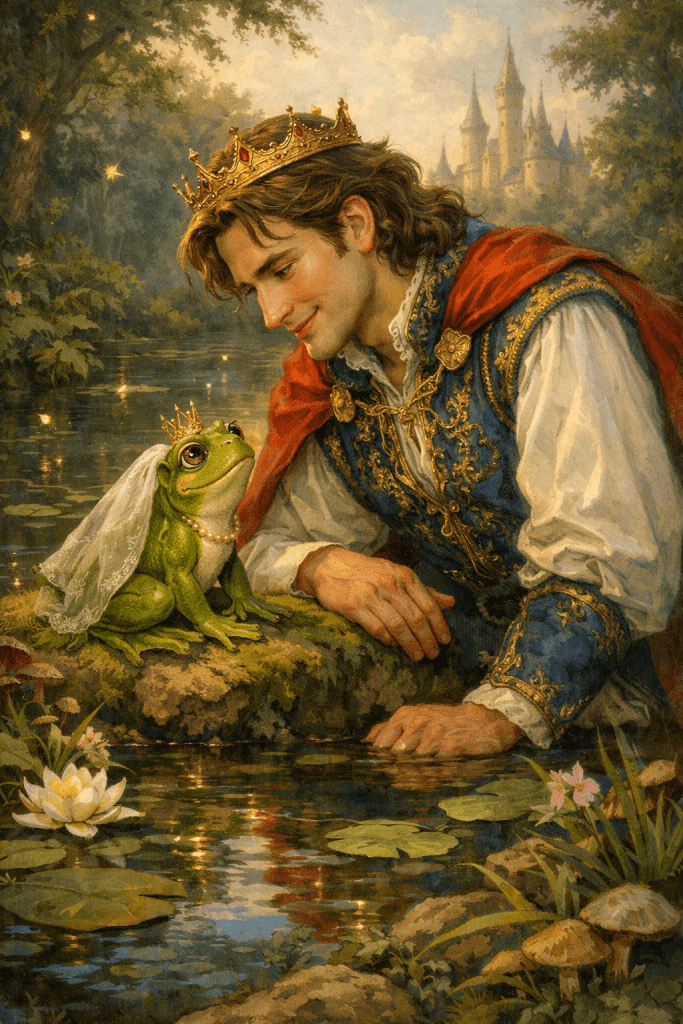
Illustration: RHL and ChatGPT

Using form: Tritina: Nicole Caruso Garcia, ‘Love Poem in Winter, with Blackout Shades’

Beginning with a line by Aimee Nezhukumatathil

My husband is a pale blur. The dark
turns grainy as the blue hour tints our bedroom,
my glasses somewhere near the nightstand’s edge.

He could almost be U2’s guitarist, Edge:
goatee, pale arms, black T-shirt, trademark dark
wool skull cap. Me: his groupie. His hotel room.

Distortion fades. Before he leaves the room,
I feel a toe-squeeze, hear an air-kiss: edge
of day, his way of sugaring the dark,

our portrait in the darkroom of a marriage.

*****

Nicole Caruso Garcia writes: “The inspiration for the tritinaLove Poem in Winter with Blackout Shades‘ came from a workshop led by Matt. W. Miller at the 2022 Poetry by the Sea Conference. He had us select one line from among a dozen or so poems by other poets, then use the line use as a springboard and incorporate it somewhere in a new poem of our own. My poem’s first sentence is a line from the middle of Aimee Nezhukamatathil’s ‘I Could Be a Whale Shark‘.” 

Love Poem in Winter with Blackout Shades‘ was first published in Crab Orchard Review.

Nicole Caruso Garcia’s full-length debut OXBLOOD (Able Muse Press) received the International Book Award for narrative poetry. Her work appears in Crab Orchard ReviewLightMezzo CamminONE ARTPlumeRattleRHINO, and elsewhere. Her poetry has received the Willow Review Award and won a 2021 Best New Poets honor. She is an associate poetry editor at Able Muse and served as an executive board member at Poetry by the Sea, an annual poetry conference in Madison, CT. Visit her at nicolecarusogarcia.com.

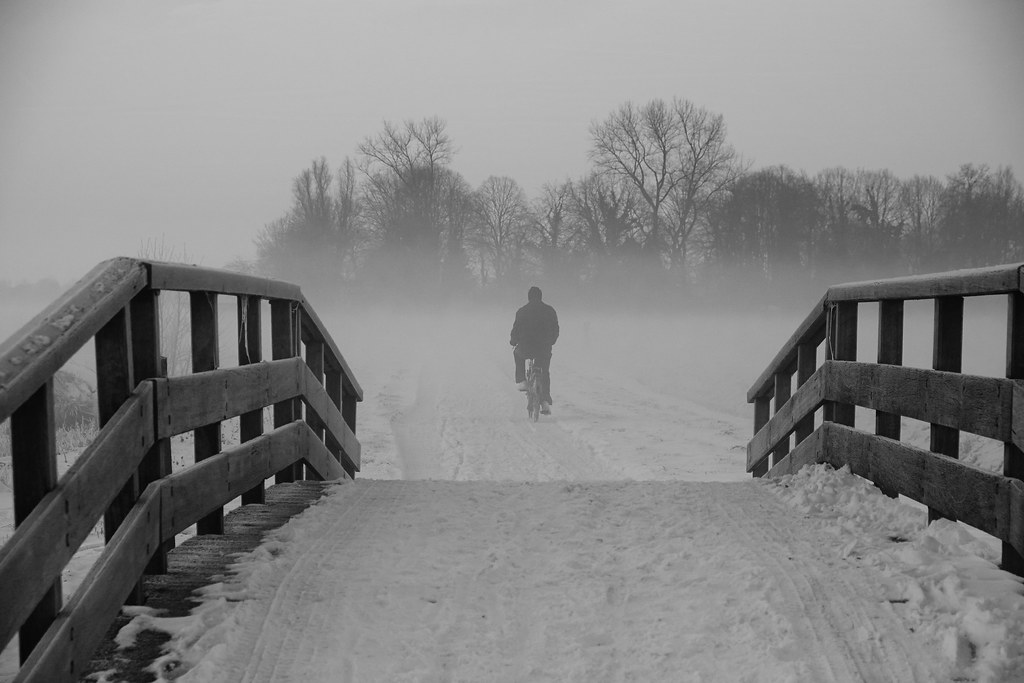
Photo: “29/05/2009 (Day 3.149) – We Are Sane” by Kaptain Kobold is licensed under CC BY-NC-SA 2.0.

Helena (“Nell”) Nelson, ‘Separation’

i

Mrs Philpott goes to bed alone.
The clock in the hall ticks on.
Philpott turns to cut glass, then stone.

All the things we do to be loved,
all of them pointless.
The clock ticks on.

Nothing but moonlight dawns.
The distance from downstairs
to upstairs yawns.

Philpott sags and snoozes alone
in the wishing chair,
in the wishing air.

All the things we do to be loved –
in the night they slip far away.
It will never be day.

The clock ticks on
as well it may.

ii

She wakes first. He has not slept
in the chair all night.

At first light
he has crept

into the bed on the other side.
He will not (cannot) say it, but

everything about him is sorry –
only half of him is under the duvet

and his eyes aren’t really shut.
She pulls the covers over them both and he falls

into a sleep as deep and sound
as a lost child who has wandered far out of sight

(while his mother calls and calls and calls)
and is finally found.

*****

This poem is one of over 80 in Helena Nelson’s ‘Pearls – the Complete Mr & Mrs Philpott Poems’. Starting with poems of the end of their first marriages, it tracks their decades-long second marriage through (as the blurb says) “dreams, anxieties and needs – even sudden spurts of happiness – despite the rainy holidays, arguments and illness. The ordinariness of their love is magical and miraculous. Because ordinary love is a kind of miracle.”

People talk about “novels in verse” but those often don’t capture the poetry of verse. This is definitely a novel in poetry, and the most rereadable novel I’ve come across in a long time.

Helena Nelson writes: “happy that you like Pearls. I made it as well as I could, but it largely came unasked for. I don’t think I have anything to say about it.”

Helena Nelson runs HappenStance Press (now winding down) and also writes poems. Her most recent collection is Pearls (The Complete Mr and Mrs Philpott Poems). She reviews widely and is Consulting Editor for The Friday Poem.

Sonnet Crown: Amit Majmudar, ‘Recourse’

1.

Time, like love, is cyclic. Please come back
to me. I’ll stand here waiting, wanting while
the mare without her rider rounds the track.
I want to weave a crown for you, design
a daisy chain whose threaded stems become
a bracelet that handcuffs your wrist to mine.
My shadow’s gnomon tilts like a sun dial’s.
I know you’re somewhere close. I feel a thrum,
a thrill beneath the stillness of the earth,
the way a woman, days before the birth,
places her husband’s hand on the sea swell
that rises out of her and passes through her,
and, touching so much vastness, he can tell
for all their time as one, he never knew her.

2.

For all our time as one, I never knew you—
but doesn’t learning come from repetition?
I’ll do this better if I do it over.
I’ll know your every need by heart, pursue you
like truth. I’ll learn to be a truthful lover.
I’ll circle back to freshman year and woo you.
No song’s recorded in a single session.
No sinner’s shriven after one confession.
It’s time that grows the pearl. Nacre layers
the sand grain, like a secret in the mouth.
Repentance grows, too—grows by daily prayers
into a faith whose trigger seed was doubt.
I am a pearl diver in your depth.
I never left. I just came up for breath.

3.

I never left, I just came up for breath,
but now I am ready to follow you all the way down.
I’ve read we get euphoric as we drown.
Samsara swirls us under. When we break
the whitecaps for an instant, that is death.
Don’t make us wait to be reborn before
we love again. You know me—I’ll just make
the same mistakes. Or make things even worse.
So what if time’s a circle? Doesn’t mean
we have enough of it. The now we’re in
will never come again. So come again
into my life, and love me sight unseen.
We’re both at sea, and no good at dead reckoning.
A burning town’s the only lighthouse beckoning

4.

Our house of light is burning down. It beckons in
the gloaming. The road I’m roaming is a ring.
All time is circular. We’re only seconds in.
All reasoning is circular. I sing
the seasons all the way around the year.
There was a chemist once whose dream disclosed
benzene’s atomic structure. What appeared
before him was a serpent swallowing
its tail—aroma’s O, ouroboros.
I’m wise at last to what the image knows.
I see my answer now, my big mistake.
A ring! Why couldn’t it have been this clear
back then? I see it best when I’m awake.
I’ve circled back. But there is no one here.

5.

I’ve circled back, but there is no one where
the ring road ends. It ends in newfound ruins,
a shell-flecked nest, a rain-worn blade that bears
a message for us. Who can read the runes?
Nietzsche proclaimed the eternal return
and threw his arms around a bleeding horse
to feel the centuries reversing course.
His gooseflesh rose like spores that pock a fern.
Let vultures circle, only widdershins
above the ring road where I wait alone,
knifing in bark a promise of my own.
I know the ring road ends where it begins.
Time is a circle I can put to use:
a wheel to roll things back, a crown, a noose.

6.

A wheel to roll things back, a crown, a noose:
My own Venn diagram of rings to choose
from. Fill its center up with hourglass sand,
and that’s where Archimedes, kneeling, draws.
This is the Roman siege of Syracuse;
he’s hard at work on time, its shape and laws.
He looks up from a boot. A soldier stands
above him, dripping gladius in hand.
Do not disturb my circles, says the Greek.
The soldier studies them, then runs him through—
and so reveals what Archimedes seeks,
the circle, like a circuit, broken, weeks
and months and centuries and aeons spilling
in slow, concentric circles from the killing.

7.

In slow, concentric circles from the still-pink
narcotic kiss print of the cupping glass,
let your memories ripple outward, killing
the pain I’ve caused you. We are not our past,
though time is cyclic. Cycles can be broken,
souls reborn in this life, sleepers woken.
Not that I can sleep beneath this star.
Horizon, magic circle, boxing ring—
time is the space, the spell, the place we spar,
the dome in which your name is echoing.
It’s where I pray the theory into fact
that love, like time, is cyclic. Please come back.

*****

Amit Majmudar writes: “The sonnet crown is a naturally recursive form of forms. The beginning of each sonnet is also an ending, and vice versa. A candle tilts to light a candle that tilts to light a candle, until the occult circle of flame is complete, and the poet sits inside it, meditating the next line, which may well be the line just written.

“This sonnet crown took, as its subject, the tendency of lovers, or at least their memories, to relapse. “Relapse” means to fall back, etymologically. To fall back in love; to fall back out of love. The sonnets enact through form and content alike the recrudescence of the past. The last line of the overall crown matches the first line of the overall crown. The reappearance of the old pain makes it a crown of thorns.

“I wrote this sonnet crown first line to last. I had never even attempted one before, but I relinquished myself to the music-making. I could do that because I circled around a theme–recursion in love–rather than trying to tell a story or present a philosophical argument or any such prosaic thing. Just pure pursuit of the right sounds. This crown came at the end of a sonnet-writing tear so my hand was in practice, as it were.

“Close readers will notice that the crown is imperfect, however. In the final, truncated sonnet, the speaker makes haste to return to the beginning, to break the process of endless recursion. Accordingly, the rhyme word of the line where the deviation begins is “broken”–and it’s there that the formal pattern–the “cycle”–itself is broken. Broken/woken collapses the separated rhyme sounds into a couplet, with a second couplet to conclude the 12-line ending–a couplet of couplets, the original pair formation and the hoped-for repeat pair formation, embodied in the music of the ending that is, at last, a new beginning. “

*****

Amit Majmudar is a poet, novelist, essayist, and translator. He works as a diagnostic nuclear radiologist in Westerville, Ohio, where he lives with his wife and three children. Recent books include Twin A: A Memoir (Slant Books, 2023), The Great Game: Essays on Poetics (Acre Books, 2024), and the hybrid work Three Metamorphoses (Orison Books, 2025). “Recourse” was first published in Plume Poetry, and will be appearing in Majmudar’s forthcoming collection, Things My Grandmother Said, in early 2026. 
More information at www.amitmajmudar.com

Photo: “0103-IVAM – Please Come Back 05” by gibbix1 is licensed under CC BY-NC 2.0.

Sonnet: Marion Shore, ‘Embarking’

Despite the dreams and yearnings that lie drowned,
the flotsam of desire, the fearful straits,
the capsized hope, the passion gone aground,
the tides too treacherous to navigate,
you lift your gaze each time love reappears
like an ocean liner gliding through the dark,
without a thought you rush down to the pier
and climb aboard and once again embark,
and stand upon the deck ablaze with light,
and raise your glass beneath the glittering stars,
and watch the harbor slowly fade from sight,
not caring where you’re going, or how far —
knowing the odds are slim that you’ll survive,
yet never having felt quite so alive.

*****

Marion Shore writes: “Embarking is a riff on Petrarch’s sonnet Passa la nave mia colma d’oblio (Canzoniere 189), contrasting the festive departure of the ocean liner into the unknown, with the inevitable shipwreck of Petrarch’s beleaguered vessel. You could say “Embarking“ is sort of a prequel to Petrarch’s poem–with a hint of Titanic thrown in.”

Marion Shore is the author of For Love of Laura: Poetry of Petrarch, a collecion of Petrarch’s poetry in translation published by the University of Arkansas Press in 1987. Her work has also appeared in Poems from Italy; Petrarch in English; 150 Contemporary Sonnets; and Rhyming Poems: A Contemporary Anthology. Her poems and translations have been published in numerous journals including The Formalist, Light Quarterly, Iambs and Trochees, First Things, and Measure. Recipient of the 2010 Richard Wilbur Award for Sand Castle (from which this poem is taken) and two-time winner of the Howard Nemerov Sonnet Award, she lives in Springfield, MA.

Photo: “Berlin Cruise liner docked at Waterford” by mike65ie is licensed under CC BY-NC-SA 2.0.

Max Gutmann: Planet of Love

Venus, our neighbor that lies toward the sun,
    Is a sultry and amorous spot;
The astrologers tell us our passion and fun
   Are engendered right there, where it’s hot.

She’s the brightest of stars yet she’s hidden in cloud,
  So her pull on our psyches is double,
An enticing enigma concealed in her shroud
  And, like all such allurements, big trouble.

To the faithfully married, the word from above
  About passionate partnership stings.
There’s a planet we’re told governs all earthly love,
   And it isn’t the one with the rings.

*****

Max Gutmann writes: “I’m afraid I can’t think of anything interesting to say about ‘Planet of Love,’ which exists to support its punchline. The joke popped into my mind, so I wrote the poem.”

‘Planet of Love’ was published in the March 2025 issue of Lighten Up Online.

Max Gutmann has contributed to New StatesmanAble MuseCricket, and other publications. His plays have appeared throughout the U.S. (see maxgutmann.com). His book There Was a Young Girl from Verona sold several copies.

Photo: “Venus” by katmary is licensed under CC BY 2.0.

A poem’s origins: Robert Burns, ‘A Red, Red Rose’

O my luve’s like a red, red rose
That’s newly sprung in June:
O my luve’s like the melodie
That’s sweetly play’d in tune.

So fair art thou, my bonnie lass,
So deep in luve am I;
And I will luve thee still, my dear,
Till a’ the seas gang dry.

Till a’ the seas gang dry, my dear,
And the rocks melt wi’ the sun:
And I will love thee still, my dear,
While the sands o’ life shall run.

And fare thee weel, my only luve!
And fare thee weel awhile!
And I will come again, my luve,
Tho’ it were ten thousand mile!

*****

January 25th being the birthday of Robert Burns (and the opportunity for a Burns Night celebration), it seems the right day to post an interesting fact that I was unfamiliar with until reading a 1964 Canadian high school poetry text book: ‘A Red, Red Rose’ was fashioned from three distinct songs that Burns had heard in the Highlands of Scotland. Part of each song was reworked by him into a single poem:

(Song 1)
Her cheeks are like the roses
That blossom fresh in June;
O, she’s like a new-strung instrument
That’s newly put in tune.

(Song 2)
The seas they shall run dry,
And rocks melt into sands
Then I’ll love you still, my dear,
When all these things are done.

(Song 3)
Altho’ I go a thousand miles
I vow thy face to see,
Altho’ I go ten thousand miles,
I’ll come again to thee, dear love,
I’ll come again to thee.

Wikipedia (as often) is a good place to look for more information, and here is an extensive quotation from its article on the poem:

Sources
Burns is best understood as a compiler or a redactor of “A Red, Red Rose” rather than its author. F.B. Snyder wrote that Burns could take “childish, inept” sources and turn them into magic, “The electric magnet is not more unerring in selecting iron from a pile of trash than was Burns in culling the inevitable phrase or haunting cadence from the thousands of mediocre possibilities.”

One source that is often cited for the song is a Lieutenant Hinches’ farewell to his sweetheart, which Ernest Rhys asserts is the source for the central metaphor and some of its best lines. Hinches’ poem, “O fare thee well, my dearest dear”, bears a striking similarity to Burns’s verse, notably the lines which refer to “ten thousand miles” and “Till a’ the seas gang dry, my dear”.

A ballad originating from the same period entitled “The Turtle Dove” also contains similar lines, such as “Though I go ten thousand mile, my dear” and “Oh, the stars will never fall down from the sky/Nor the rocks never melt with the sun”. Of particular note is a collection of verse dating from around 1770, The Horn Fair Garland, which Burns inscribed, “Robine Burns aught this buik and no other”. A poem in this collection, “The loyal Lover’s faithful promise to his Sweet-heart on his going on a long journey” also contains similar verses such as “Althou’ I go a thousand miles” and “The day shall turn to night, dear love/And the rocks melt in the sun”.

An even earlier source is the broadside ballad “The Wanton Wife of Castle-Gate: Or, The Boat-mans Delight”, which dates to the 1690s. Midway through the ballad, Burns’ first stanza can be found almost verbatim: “Her Cheeks are like the Roses, that blossoms fresh in June; O shes like some new-strung Instrument thats newly put in tune.” The provenance for such a song is likely medieval.

Thank you, Wikipedia! Love you!

And everyone: Have a good Rabbie Burns Day!

O my Luve’s like a red, red rose that’s newly sprung in June” by Cait Clerin is licensed under CC BY-NC-ND 2.0. The work is ‘A Summer Bouquet’ by George Elgar Hicks, 1878.

Barbara Loots, ‘Love Song’

You are the butterfly whose wings
stir up a rainfall in Peru.
The tropic fern unfurled that brings
an earthquake in Tibet is you.

The cry bursting from blackbirds’ throats
that turns the tide on Iceland’s shore
is you, and Sahara’s dusty motes
rosing the sunset in Lahore.

Who is the breath of an infant’s sigh
that sparks the heart of a unicorn?
The rock streaking the moonless sky
that wafts a feather around Cape Horn?

You, the invisible silver thread
between Zanzibar and Amsterdam.
Even by thought unlimited,
whatever the you may be, I am.

*****

Barbara Loots writes: “On my way to copy out the poem I meant to send you, I ran across this one. It has appeared only once in print, so I decided to give it another chance at immortality. Love is too small a word to contain the energy field of creation, evolution, and eternity. But this little verse (published in my second collection Windshift, from Kelsay Books, 2018) helps connect me with ‘whatever the you may be‘ right here and now.”

Barbara Loots resides with her husband, Bill Dickinson, and their boss Bob the Cat in the historic Hyde Park neighborhood of Kansas City, Missouri. Her poems have appeared in literary magazines, anthologies, and textbooks since the 1970s. She is a frequent contributor to lightpoetrymagazine.com. Her three collections are Road Trip (2014), Windshift (2018), and The Beekeeper and other love poems (2020), at Kelsay Books or Amazon. More bio and blog at barbaraloots.com

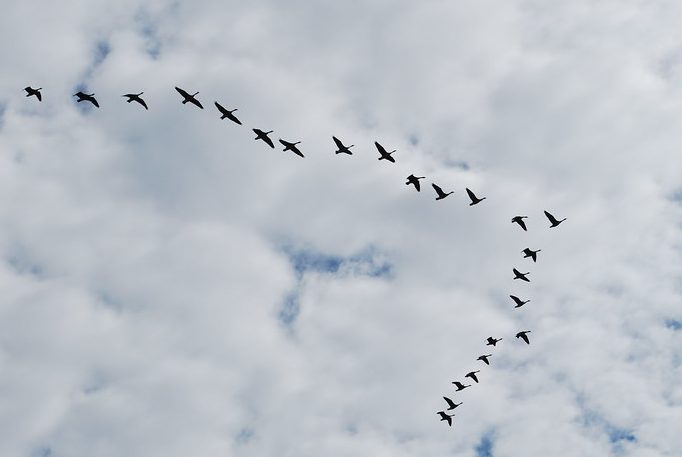
Photo: “September 1st 2008 – They’re Back” by Stephen Poff is licensed under CC BY-NC-ND 2.0.