Tag Archives: marriage

Sonnet: Gail White, ‘The Way It Ended’

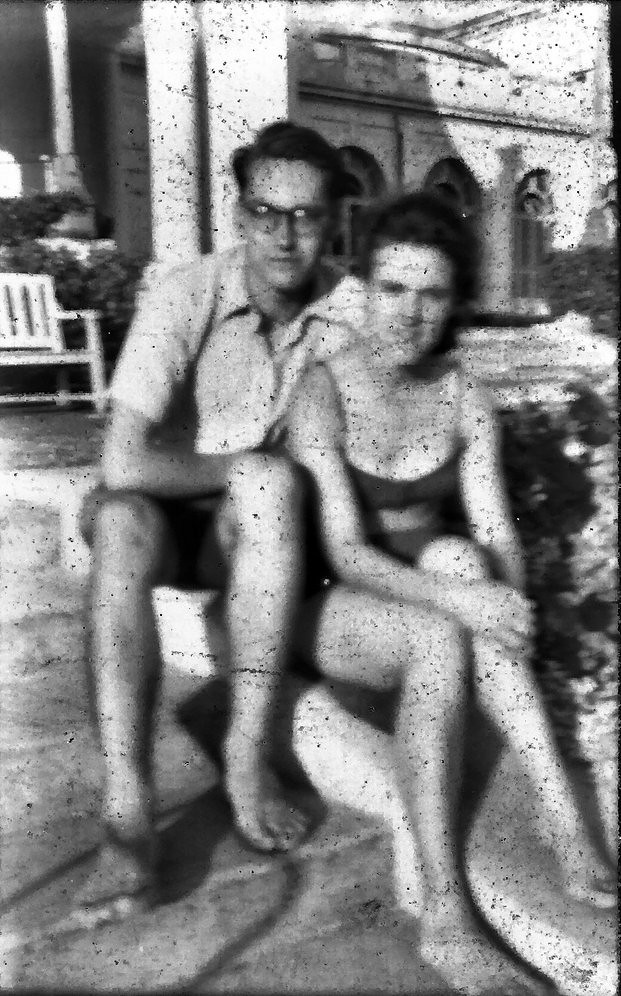
So time went by and they were middle-aged,
which seemed a cruel joke that time had played
on two young lovers. They were newly caged
canary birds – amused, not yet afraid.
A golden anniversary came around
where jokes were made and laughing stories told.
The lovers joined the laugh, although they found
the joke – though not themselves – was growing old.
She started losing and forgetting things.
Where had she left her keys, put down her comb?
Her thoughts were like balloons with broken strings.
Daily he visited the nursing home
to make her smile and keep her in their game.
Death came at last. But old age never came.

*****

Gail White writes: “Time is the strangest of the conditions we live in.  Scientists, essayists, and poets can ring endless changes on this theme.  Time has devastated the lives of the couple in this sonnet, but as Solomon told us long ago, love is as strong as death.”

Gail White is the resident poet and cat lady of Breaux Bridge, Louisiana. Her books ASPERITY STREET and CATECHISM are available on Amazon. She is a contributing editor to Light Poetry Magazine. “Tourist in India” won the Howard Nemerov Sonnet Award for 2013. Her poems have appeared in the Potcake Chapbooks ‘Tourists and Cannibals’, ‘Rogues and Roses’, ‘Families and Other Fiascoes’, ‘Strip Down’ and ‘Lost Love’. ‘The Way It Ended’ was first published in 14 by 14 (which has also ended…) and is collected in her chapbook, ‘Sonnets in a Hostile World‘, also available on Amazon.

Photo: “young couple being photographed at the beach” by phlubdr is licensed under CC BY 2.0.

Sonnet: RHL, ‘Your Lot’

From prairie city to an island town;
from city festivals to empty sea;
from continental seasons, white, green, brown
to changeless warmth and high humidity.
No one could hope for love more fierce, more loyal,
more honest, constant through good times, harsh tests,
raising our varied children as they boil
off along individual paths and quests
with a fierce love for them in their success
and even more, their fulfilled happiness.
You miss the north’s reliable forethought,
but not your parents, siblings and cold strife.
There’s always trade-offs, getting where you’ve got.
Just don’t look back. You chose your lot in life.

*****

Two questions: Is it a “sonnet” if the rhyme scheme is non-standard and there’s no real volta? And is it better to accept the unconventional form that the poem was comfortable in, or to try to beat it into more standard shape?

Obviously, I chose to leave it with its imperfections as I wrote it; but that might be from laziness more than anything else. Yes, I *do* work on poems after the first draft… usually… but once I’ve got something halfway acceptable I tend to stop. If I’ve got it to the point where I could easily learn to recite it, then it’s good enough.

But non-traditional sonnets are simply not as engaging, as well-balanced, as rhetorically forceful, as either the Petrarchan or the Shakespearean can be. Those forms have an elegance, a beauty, a structure that leads to a sudden insight or a punchline in a way that at its best (partly due to the rhyme scheme and partly due to the unbalanced “halves” separated by the volta) feels not just well-phrased but unquestionably true.

So this sonnet, if it is a sonnet, is second best. Still good enough to have been published recently in Pulsebeat – thanks, David Stephenson!

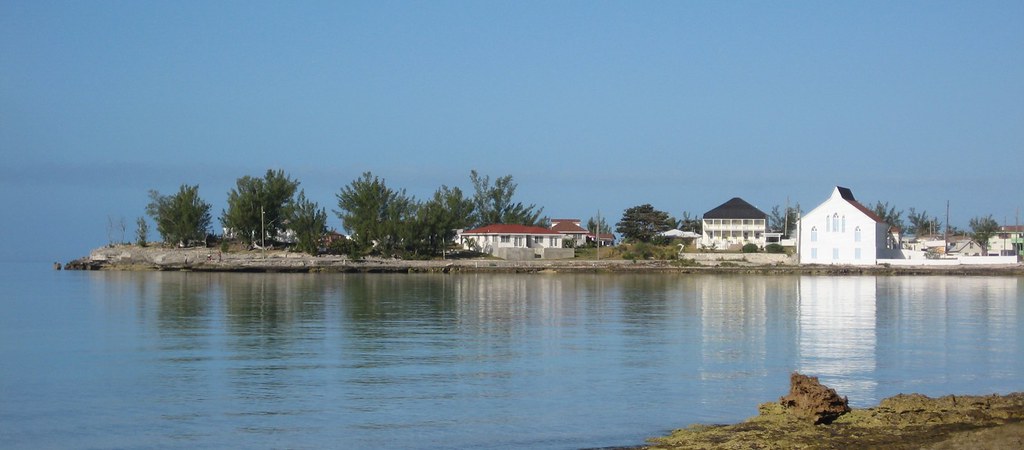
Photo: “Part of Governor’s Harbour, Across the Bay” by tylerkaraszewski is licensed under CC BY 2.0.

Using form: Sonnet variation: Peggy Landsman, ‘How We Live Now’

We’ve been living on this planet a lot longer
Than we had any right to hope we ever would.
The beliefs we cannot shake are growing stronger
And what we know, we know does us no good.

It can be awful knowing nothing matters.
It can be awful knowing we don’t care.
But we view our life in a gentle light that flatters
And dare to live exactly as we dare.

So here’s to life, this tricky one-way ride,
And to our love which makes it all worthwhile.
Two existential nomads, side by side,
We’ll live in beauty, Lebenskünstler style.

Our where is here, our when is now;
There is no why, no one knows how.

*****

Peggy Landsman writes: “I wrote ‘How We Live Now‘ for my husband’s 56th birthday (17 years ago). The clock was ticking and I couldn’t come up with anything to give him when, suddenly, I found myself writing like mad. This sonnet was his gift. He loved it then and still loves it now. He says it perfectly captures who the two of us are together. 
It was also a gift to me. The final couplet is one of my favorite bits of my own writing. Each line has only eight syllables, but I’m fine with that. Lots of lines in this sonnet are not the absolute regulation iambic pentameter, but since the poem says ‘And dare to live exactly as we dare…,‘ why not?”

Editor’s comment: “The final couplet is not just a summation of the attitude of the sonnet’s quatrains, but as a stand-alone is also the neatest, tightest existential statement that I know of.”

Peggy Landsman is the author of the full-length poetry collection, Too Much World, Not Enough Chocolate (forthcoming from Nightingale & Sparrow Press, 2023), and two poetry chapbooks, Our Words, Our Worlds (Kelsay Books, 2021) and To-wit To-woo (Foothills Publishing, 2008). She lives in South Florida where she swims in the warm Atlantic Ocean every chance she gets. A selection of her poems and prose pieces can be read on her website: https://peggylandsman.wordpress.com/

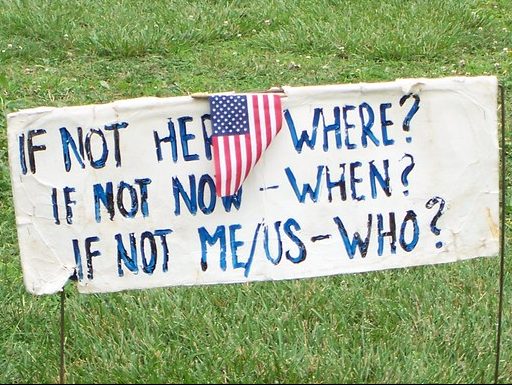
Photo: “if not here, where? if not now, when? if not me, who?” by kafka4prez is licensed under CC BY-SA 2.0.

Using form: choice of metre: John Beaton, ‘Request for a Dance’

Step with me, float with me, over the floor;
weave with me, waltz with me, out through the door;
slide to the deck where the crowdedness clears;
glide through the garden and tear off your fears.

Step with me, sneak with me, down to the lake,
onto its waters; the mirror won’t break;
lilt in a ball gown of luminous mist;
twirl till you’re breathless and need to be kissed.

Step with me, skim with me, let yourself go,
dazzling and dizzy, then flowingly slow;
whirl till our swirls make a maelstrom of night;
pass through the portal from here to delight.

Step with me, sway with me, feel yourself swing,
hammocked on rhythms of hearts on the wing;
move to the measures of seasons and years;
sweep to that island where time disappears.

Step with me, slip with me, up to its crypt,
quaff a last laugh from the pleasures we’ve sipped;
curtsey and smile at a parting of hands
joined in this dancing by two wedding bands.

*****

John Beaton writes: “Inspired by Richard Wilbur’s beautiful ‘For C,’ and by my own marriage, I wanted to write a poem about lifelong love. For the beginning, a wedding dance came to mind and that expanded into an extended metaphor. The theme needed a form that danced the reader along.
I adopted a four-line stanza rhymed aabb with the meter of each line being a form of dactylic tetrameter: DA-da-da, DA-da.da, DA-da-da, DA. To kick off each stanza dancingly, I used near-repetition in the first two dactyls. Then a lot of alliteration and internal rhyme help it swirl along.
The poem develops the dance into a shared lifelong experience, one that must end but does so with a sense of fulfilment and beauty. I’ve recited it at weddings.”

John Beaton’s metrical poetry has been widely published and has won numerous awards. He recites from memory as a spoken word performer and is author of Leaving Camustianavaig published by Word Galaxy Press. Raised in the Scottish Highlands, John lives in Qualicum Beach on Vancouver Island.
https://www.john-beaton.com/

Photo: “Wedding Dance” by DonnaBoley is licensed under CC BY 2.0.

Susan McLean, ‘Out-of-Town Conference Texts’

He:      Met with a colleague for cocktails.  Last night is a blur.
            Having a wonderful time.  Wish you were her.

She:     I’ve been tidying up and arranging while you’ve been gone.
            When you want to retrieve your things, they’re out on the lawn.

*****

These two couplets by Susan McLean were recently published in The Asses of Parnassus; she comments: “I got the idea for this poem by misreading a line in a poem by Amit Majmudar.  It is not the first time I have gotten an idea for a line by misreading or mishearing something: aging has its unforeseen benefits.  The line was the standard phrase from postcards, “Wish you were here,” which I misread as “wish you were her.”  I immediately saw the comic potential of that phrase, and at first I thought of the exchange as written on postcards. But then I realized that conferences are often short, making sending a postcard impractical, and that no one tends to send postcards anymore.  So I reconceived the poem as texts–which also have to leave a lot unsaid because of their length.  I left open the question of whether “her” was an accidental typo or a deliberate choice.”

Susan McLean has two books of poetry, The Best Disguise and The Whetstone Misses the Knife, and one book of translations of Martial, Selected Epigrams. Her poems have appeared in Light, Lighten Up Online, Measure, Able Muse, and elsewhere. She lives in Iowa City, Iowa.
https://www.pw.org/content/susan_mclean

Photo: “Business Affairs” by edwicks_toybox is licensed under CC BY-NC 2.0.

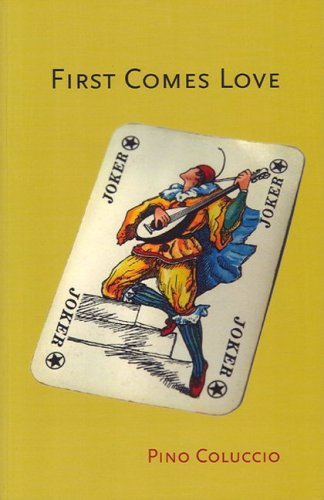
Potcake Poet’s Choice: Pino Coluccio, ‘First Comes Love’

There comes a time when sitting home alone
looking at your life — I’m such a knob —
gets to be a drag. You hate your job,
your car’s a piece of crap, and what you eat
is fatty, fried and salty. But then you meet
a girl. The life you made a mess of pulses.
And not content to mess up just your own,
you settle down and mess up someone else’s.

*****

Pino Coluccio writes that this poem is one his personal faves. It’s from his first book, also titled ‘First Comes Love‘, published by Mansfield Press. His poem ‘City Sunsets’ is featured in the most recent Potcake Chapbook, ‘City! Oh City!

Pino Coluccio lives in Toronto.

Potcake Poet’s Choice: ‘Scenes From A Marriage II’, Kathy Lundy Derengowski

When, at last, auditions ended
parts were cast and roles assigned.
By the time the vows were taken
expectations had declined.

She replaced the silk with sweatshirts
He drank beer instead of wine,
They had tired of pretending
Both agreed that it was fine.

Sometimes laundry went unfolded,
furniture grew thick with dust.
They had made accommodations
Every happy couple must.

When her garden went unweeded
when he failed to take out trash
they hung in there, through the hard times
long on love, though short on cash.

Through the years of strife and struggle,
obstacles they couldn’t plan
they held fast, to face the future-
each the other’s biggest fan.

Leading man and leading lady
both had heard the casting call.
Their romantic comedy
became the envy of us all.

Kathy Lundy Derengowski writes: “I selected this poem for submission, because it is one that just “fell into place” and because it still captures the essence of a satisfying marriage.”

Kathy Lundy Derengowski’s work has appeared in Summation, California Quarterly, Silver Birch Press, Autumn Sky Daily, Turtle Light Press, the Journal of Modern Poetry, as well as the latest Potcake Chapbook, ‘Houses and Homes Forever‘. She has won awards from the California State Poetry Society and was a finalist in the San Diego Book Awards poetry chapbook category.

Although she does not have a website or blog, you can find a reading of a few of her earlier poems on YouTube under Kathy Lundy Derengowski.

Poem: “Optimism”

Do you have a clear detection
Of an unexpired affection?
Are you reckoned to come second in her life?
Was there someone there before you?
Let it be, don’t let it bore you;
It’ll maintain her somewhat saner as your wife.

This little throwaway poem was recently published in Lighten Up Online. In my mind its value is not so much as a commentary on modern marriage, as an enjoyable way to string some rhymes together. I no longer have any idea what was on my mind when I wrote it.

Many poets would analyse this as written in trochees with lines of either four or six feet, the third line being

ARE you RECKoned TO come SECond IN her LIFE?

but to my mind the lines have only either two or three strongly accented syllables, with the third line being

Are you RECKoned to come SECond in her LIFE?

It is a short piece of patter, which is emphasised by the internally stressed rhymes of reckoned/second and maintain-her/saner. But that leads to a problem: there is a difficulty with the beginning of the last line, and it is hard to find a smooth flow.

Originally it read

‘Twill maintain her —

Archaic, said LUPO editor Jerome Betts, and requested a change for publication as

It’ll keep her —

I accepted this, not noticing that I was losing the rhyme with saner. So why not

It’ll maintain her —

Now the problem is that there is one syllable too many, and we don’t have a smooth flow from the previous line.

You’ll maintain her —, perhaps?

That gives a brand new problem, a subtle shift of meaning from the abstract “it” to the personal “you”, with a much more active sense of “maintain her” and even a suggestion of financial concern.

If it was just an oral presentation, you could probably slide by with

‘t’ll maintain her —

but is that acceptable, comprehensible, in print?

My operating principle with poetry is that there is always a solution. But in this case I haven’t yet found it.