Tag Archives: medicine

Using form: Helena Nelson, ‘Post-NSTEMI, as prescribed’

We want your heart to function at its best.
Bisoprolol’s a helpful little pill (lol)
and aspirin’s a friend. You’re less impressed,
it seems, by side-effects of Ramipril
but the cough may pass. Any chesty pains?
Squirt GTN under your tongue. It’s droll
how nitro-glycerin expands the veins
and arteries. As for Lansoprazole,
undoubtedly protecting your digestion
from anti-platelets such as Prasugrel,
yes, take it. Eplerenone is my suggestion
as best antagonist. Won’t you pop that in,
O protagonist? And zap LDL
for sure before you snore—Atorvastatin.

*****

Helena Nelson writes: “After a heart attack, I was fitted with a stent in one cardiac artery and prescribed eight drugs, though one was optional (the GTN spray) and another only for the first six months (Prasugrel). I struggled to remember their names and purposes, so I put them in a sonnet, and as much about them as I could manage. LDL is so-called ‘bad cholesterol’. Bisoprolol is a beta-blocker and helps regulate blood pressure. Eplerenone is an aldosterone antagonist (this supposedly helps keep the heart muscle in shape). Make of that what you will. As they say on FaceBook, ‘it’s complicated’.”

Helena Nelson runs HappenStance Press (now winding down) and also writes poems. Her most recent collection is Pearls (The Complete Mr and Mrs Philpott Poems). She reviews widely and is Consulting Editor for The Friday Poem.

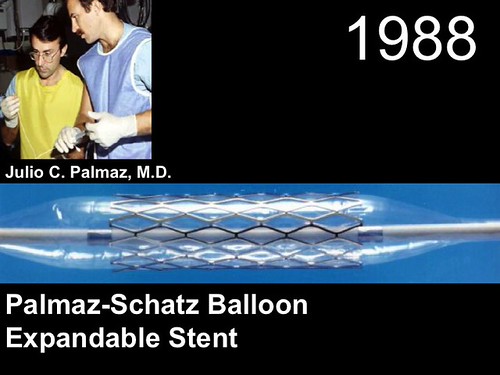
Illustration: “San Antonio Dr. Julio Palmaz and Schatz invent balloon expandable heart stent” by gunaxi is licensed under CC BY-NC-SA 2.0.

Wired Magazine: Poetry, Doctors, Patients and the Pandemic

Dr. Rafael Campo

Dr. Rafael Campo

Here is an excerpt from a recent Wired interview with Dr. Rafael Campo, Poetry Editor at the Journal of the American Medical Association! (The full thing is here.)

WIRED: Why do you think poetry has become so important to so many doctors during the pandemic?

Rafael Campo: I think doctors in particular are really searching for ways to give voice to their experiences of this terrible disease and what we’re all going through in confronting it.

It’s particularly poignant, I think, because we’re so isolated by this virus. We’re all practicing physical distancing and social distancing, so I think poetry becomes a way of connecting with other people and having our story heard. So I find it actually really energizing. It helps me feel less isolated, less disconnected, as I read through these poems.

WIRED: Is there something unique about poetry that makes that kind of connection possible?

RC: We’re hardwired to hear the kinds of rhythms that are present in poetry and the ways in which the rhythms of our bodies are expressed in meter, in the music of poetry. I think especially now, when we’re feeling in some ways estranged from our own bodies and disconnected, having that visceral experience of hearing the music and language is just compelling.

I think other reasons have to do with the brevity of poetry. In a way, poetry fits into the fragmented spaces that we have as doctors, as we’re running around trying to deal with this crisis.

Then one other thing is that I always associate poetry with activism. When we think of some of the protests that are going on in the streets now—people are out there chanting—they’re actually using a spoken-word form of poetry.

Poetry has that ability to grab us and to speak in the most urgent terms. It’s a very physical language. It calls us to action. I always think back to my time when I was really early in my training as a physician, during the height of the AIDS crisis. Similarly, then people were out in the streets shouting: “Silence equals death! Silence equals death!” That still resonates in my mind today. Those poems, that urgent language, really changed the course of that pandemic.


And he’s a poet in his own right.

And then there’s Dr. Campo’s Ted Talk…