Tag Archives: doctors

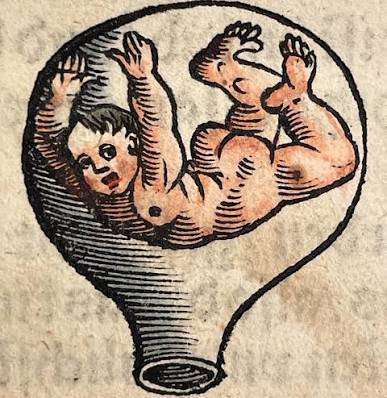
Bartolomeo Dotti, ‘Abortion in a Flask’, tr. John Gallas

To Giacopo Grandis, doctor and anatomist

Dear Giacopo, this sad, obscene disaster,
forever motherless, and piped of breath,
if ever it was living, died too soon,
and goes untimely to the feast of death.
And are the Humours of its tiny tub
sweet milk, or tears? For sure, its mother’s womb,
its first and living globe, was made of flesh,
and not the glass that rounds it in this tomb.
The embryo is dead: long live the corse.
Its promised Immortality cut short,
it floats in blood, aborted, come to naught.
O Man! O Slab Professors! Learn perforce
that this is Woman’s flesh and blood: more sweet,
more frail than glass; less strong than aquavit.

*****

John Gallas writes: “The ‘Abortion’ poem by Bartolomeo Dotti (1651-1713) is part of a work in progress (a History of Italy in Poems – featuring not the Great Monuments but the lesser poets from the 1st poem in Italian up to a poet b.1935). If you ever want any more, there’s 84. At least 60 rhyme and bounce.”

VII
L’ABORTO NELL’AMPOLLA
A Giacopo Grandis, fisico e anatomico

     Questo, Giacopo mio, sconcio funesto
cui diè morto natale il sen materno,
se maturo nascea, moria ben presto,
e voi d’intempestivo il fèste eterno.
     Non so se dolce latte o pianto mesto
gli sia di quel cristal l’umore interno;
so ben che l’alvo suo fu come questo,
poi ch’utero da vetro io non discerno.
     Vive quasi per voi chi per sé langue;
embrïone morì, scheletro nacque,
fatto parto immortal d’aborto essangue.
     Uomo, impara! Insegnarti al Grandi piacque
che sia ventre di donna e maschio sangue
piú fral del vetro e men vital de l’acque.

There is a brief outline of Dotti’s turbulent life here.

John Gallas, Aotearoa/NZ poet, published mostly by Carcanet. Saxonship Poet (see www.saxonship.org), Fellow of the English Association, St Magnus Festival Orkney Poet, librettist, translator and biker. 2025 Midlands Writing Prize winner. Presently living in Markfield, Leicestershire. Website is www.johngallaspoetry.co.uk which has a featured Poem of the Month, complete book list, links and news.  


Wired Magazine: Poetry, Doctors, Patients and the Pandemic

Dr. Rafael Campo

Dr. Rafael Campo

Here is an excerpt from a recent Wired interview with Dr. Rafael Campo, Poetry Editor at the Journal of the American Medical Association! (The full thing is here.)

WIRED: Why do you think poetry has become so important to so many doctors during the pandemic?

Rafael Campo: I think doctors in particular are really searching for ways to give voice to their experiences of this terrible disease and what we’re all going through in confronting it.

It’s particularly poignant, I think, because we’re so isolated by this virus. We’re all practicing physical distancing and social distancing, so I think poetry becomes a way of connecting with other people and having our story heard. So I find it actually really energizing. It helps me feel less isolated, less disconnected, as I read through these poems.

WIRED: Is there something unique about poetry that makes that kind of connection possible?

RC: We’re hardwired to hear the kinds of rhythms that are present in poetry and the ways in which the rhythms of our bodies are expressed in meter, in the music of poetry. I think especially now, when we’re feeling in some ways estranged from our own bodies and disconnected, having that visceral experience of hearing the music and language is just compelling.

I think other reasons have to do with the brevity of poetry. In a way, poetry fits into the fragmented spaces that we have as doctors, as we’re running around trying to deal with this crisis.

Then one other thing is that I always associate poetry with activism. When we think of some of the protests that are going on in the streets now—people are out there chanting—they’re actually using a spoken-word form of poetry.

Poetry has that ability to grab us and to speak in the most urgent terms. It’s a very physical language. It calls us to action. I always think back to my time when I was really early in my training as a physician, during the height of the AIDS crisis. Similarly, then people were out in the streets shouting: “Silence equals death! Silence equals death!” That still resonates in my mind today. Those poems, that urgent language, really changed the course of that pandemic.


And he’s a poet in his own right.

And then there’s Dr. Campo’s Ted Talk…