Tag Archives: Mezzo Cammin

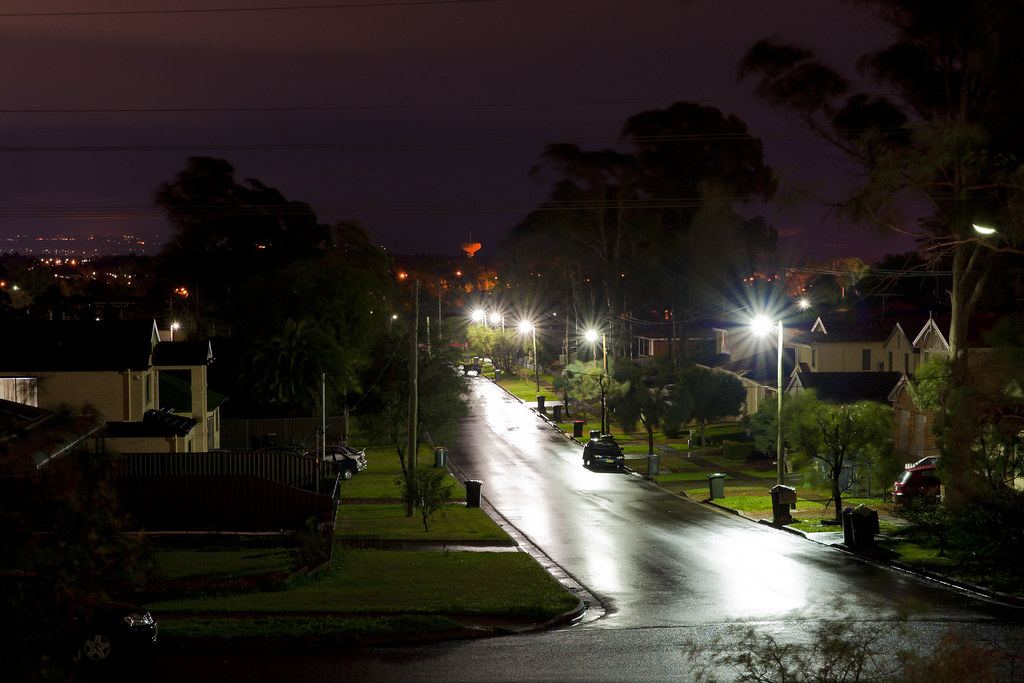
Maryann Corbett, ‘October’

I fail at them, these scenes
where beauty is married to fear.
I have failed before with this one.
How can I make it clear

when the moment itself was a blur?
My son and I, that night,
stepped through the warm, wet air
that had magicked every light

to a wide, all-hallowing halo.
He said–I think he was ten,
still with his clear soprano–
It’s lovely out here.
And then

the edge of every nimbus,
pale gold through a fog scrim,
shivered, knowing that beauty soon
would be bullied out of him.

*****

Maryann Corbett writes: “This poem (first published in Mezzo Cammin) is indeed based on one of those indelible memories, the sort that lodge in a parent’s brain for decades. And I have in fact tried to write about it before without succeeding. I’ve never asked my very adult son whether he remembers this moment at all.”

Maryann Corbett earned a doctorate in English from the University of Minnesota in 1981 and expected to be teaching Beowulf and Chaucer and the history of the English language. Instead, she spent almost thirty-five years working for the Office of the Revisor of Statutes of the Minnesota Legislature, helping attorneys to write in plain English and coordinating the creation of finding aids for the law. She returned to writing poetry after thirty years away from the craft in 2005 and is now the author of two chapbooks and six full-length collections, most recently The O in the Air (Franciscan U. Press, 2023). Her work has won the Willis Barnstone Translation Prize and the Richard Wilbur Award, has appeared in many journals on both sides of the Atlantic, and is included in anthologies like Measure for Measure: An Anthology of Poetic Meters and The Best American Poetry.

Photo: “Bright Lights of Quakers on a Wet Night” by Frank.Li is licensed under CC BY-NC-SA 2.0.
Claudia Gary, ‘Mountain Fire’

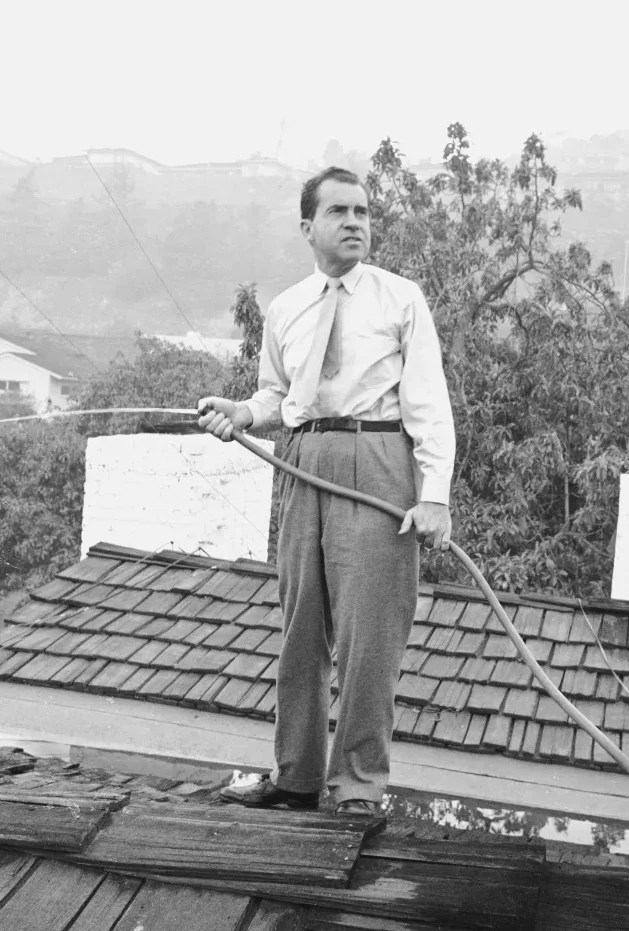
“Sunday, November the 5th, 1961, was hot and windy in Los Angeles…. As dawn approached on Monday the 6th… Fire Station 92 [received] a teletype from headquarters, noting the day would be considered a ‘high hazard’ day in the Santa Monica mountains….” –Los Angeles Fire Department Historical Society

Who is this with a garden hose
on a gravel roof, watering wind,
ignoring pleas from firemen?
Oh yes, he knows,

but can’t stop. Neighbors’ houses broil
to concrete slabs with chimneys,
melted-down pipes, dead brush and trees,
eroded soil.

Wild Santa Ana wind has tossed
burning wood shingles, leveling
castles, condos. Leave everything
or you’ll be lost.

Later in the newsreel,
a mother steers her family’s car
down Roscomare, and there we are,
too scared to feel.

An offer on the radio
says “Stay for free at Disneyland!”
Mother and daughter drive and plan,
deciding No.

Allowed back, they are lucky: See?
Fire has spared their modest home.
The child’s toy bin contains a poem.
Unscathed — or isn’t she?

*****

(First published in Mezzo Cammin)

Claudia Gary writes: “Thinking of today’s residents of Los Angeles, with firsthand knowledge that even if a home is not lost, fire (and evacuation) can be traumatic.”

Claudia lives near Washington DC and teaches workshops on Villanelle, Sonnet, Meter, Poetry vs. Trauma, etc., at The Writer’s Center (writer.org) and privately, currently via Zoom. Author of Humor Me (2006) and chapbooks including Genetic Revisionism (2019), she is also a health/science writer, visual artist, composer of tonal songs and chamber music, and an advisory editor of New Verse Review. Her 2022 article on setting poems to music is online at https://straightlabyrinth.info/conference.html. For more information, see pw.org/content/claudia_gary
@claudiagary

Photo: During the 1961 BelAir-Brentwood fire in Los Angeles, Richard Nixon was among those who tried to save their homes (in Nixon’s case, a rental house) with garden hoses. Finding this photo for this blog post was coincidental; Claudia Gary did not have Nixon in mind when she wrote the poem. – RHL

Sonnet: Gail White, ‘A Visit on All Saints Day’

Hello. I’ve brought your favorite flowers again.
How is going under there, my dead?
On this side, we’re no better off than when
you walked beside us. (Yes, I know I said
the same last year.) The human race is not
improvable. Ask any saint you meet.
We’ve gone to war again without a thought.
Our leaders shuffle bribes, our heroes cheat.
Your children haven’t turned out awfully well,
but who expected it? You’re not to blame.
They’ll manage, and nobody burns in hell.
Goodbye for now. I’m always glad I came.
I make no promises about next year,
but one way or another, I’ll be here.

*****

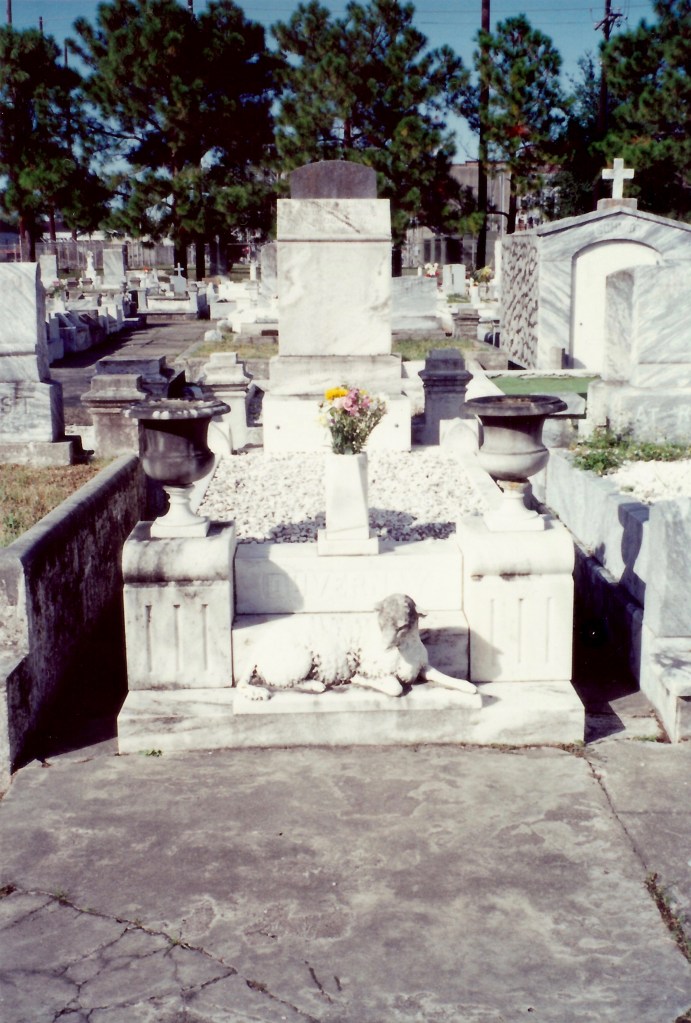
Gail White writes: “I wrote this while living in New Orleans, where the dead are buried above ground (mostly) because the city is below sea level.  All Saints Day is still a big deal, when the family tomb gets a new coat of whitewash and flowers are placed on every grave.  It’s time to reflect on family and faith and our all ending up in the same place, as I’ve tried to do here.”

Gail White is the resident poet and cat lady of Breaux Bridge, Louisiana. Her books ASPERITY STREET and CATECHISM are available on Amazon. She is a contributing editor to Light Poetry Magazine. “Tourist in India” won the Howard Nemerov Sonnet Award for 2013. Her poems have appeared in the Potcake Chapbooks ‘Tourists and Cannibals’, ‘Rogues and Roses’, ‘Families and Other Fiascoes’, ‘Strip Down’ and ‘Lost Love’. ‘A Visit on All Saints Day’ was originally published in Mezzo Cammin, and collected in her chapbook, ‘Sonnets in a Hostile World‘, also available on Amazon.

Photo: “New Orleans Cemetery DUVERHAY tomb” by Infrogmation of New Orleans is licensed under CC BY-SA 4.0.

Odd poem: Parody of a Self-Parody of a Self-Parody: Melissa Balmain, ‘How Unpleasant to Meet Mrs. Hughes’

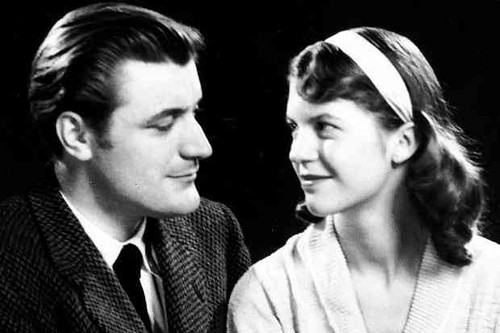
From the files of Sylvia Plath

How unpleasant to meet Mrs. Hughes,
Who’s so thoroughly, willfully odd.
It’s a wonder Ted happened to choose
Such a creature. (He’s rather a god.)

Her lipstick is always a mess.
She’ll go on for an hour or three
About Nazis or bees—as you’d guess,
This does not get her asked out to tea.

Her headbands aren’t quite comme il faut.
(They’re a match for her queer Yankee frocks.)
She knows more than a lady should know
Of low-voltage electrical shocks.

Come to think of it, lately she’s been
More appalling than ever before.
She looks sullen and terribly thin;
If you knock, she won’t answer the door.

Her complexion grows whiter and whiter.
She wears the most horrible shoes.
You can certainly tell she’s a writer.
How unpleasant to meet Mrs. Hughes!

*****

Melissa Balmain writes: “I believe this one started when a contest—probably in The Spectator—called for poems riffing on Edward Lear’s self-mocking ‘How Pleasant to Know Mr. Lear’ (and T.S. Eliot’s equally self-mocking parody of it). I found it funny and sad to imagine Sylvia Plath writing about how her English neighbors might see her. The poem was published in Mezzo Cammin.”

Melissa Balmain’s third poetry collection, Satan Talks to His Therapist, is available from Paul Dry Books (and from all the usual retail empires). Balmain is the editor-in-chief of Light, America’s longest-running journal of light verse, and has been a member of the University of Rochester’s English Department since 2010.

Photo: “TED HUGHES AND SYLVIA PLATH” by summonedbyfells is licensed under CC BY 2.0.

Using form: Rondeau: Gail White, ‘Opera Rondeau’

And then she dies—since men are no damn good—
Mimi, consumptive and misunderstood,
or Desdemona, most defamed of brides—
the woman is abandoned on all sides—
she so believes in love (as women should)
and in the end she burns like firewood.

Here Tosca on the tower a moment stands,
first throwing back her hood and then her hands
and then one step—invisibly she flies—
and then she dies.

Poor Butterfly, who meant to be so good.
Tough Carmen, using all the wiles she could
to get her man. So many suicides,
so many murders. Violetta hides
but can’t escape—she’s found, she’s understood—
and then she dies.

*****

Gail White writes: “One of my favorites in my new book Paper Cuts is ‘Opera Rondeau’.  It was written after a friend pointed out to me that most summaries of opera plots could end with the words “then she dies.” Although the poem doesn’t conform perfectly to the rondeau rhyme scheme, it does provide the perfect refrain. And gives me a chance to mention a few of the many opera heroines who win, lose, or miss love altogether – and die.”

Gail White is the resident poet and cat lady of Breaux Bridge, Louisiana. Her books ASPERITY STREET and CATECHISM are available on Amazon. She is a contributing editor to Light Poetry Magazine. “Tourist in India” won the Howard Nemerov Sonnet Award for 2013. Her poems have appeared in the Potcake Chapbooks ‘Tourists and Cannibals’, ‘Rogues and Roses’, ‘Families and Other Fiascoes’, ‘Strip Down’ and ‘Lost Love’. ‘Opera Rondeau’ was first published in Mezzo Cammin and is collected in her new light verse chapbook, ‘Paper Cuts‘, also available on Amazon.

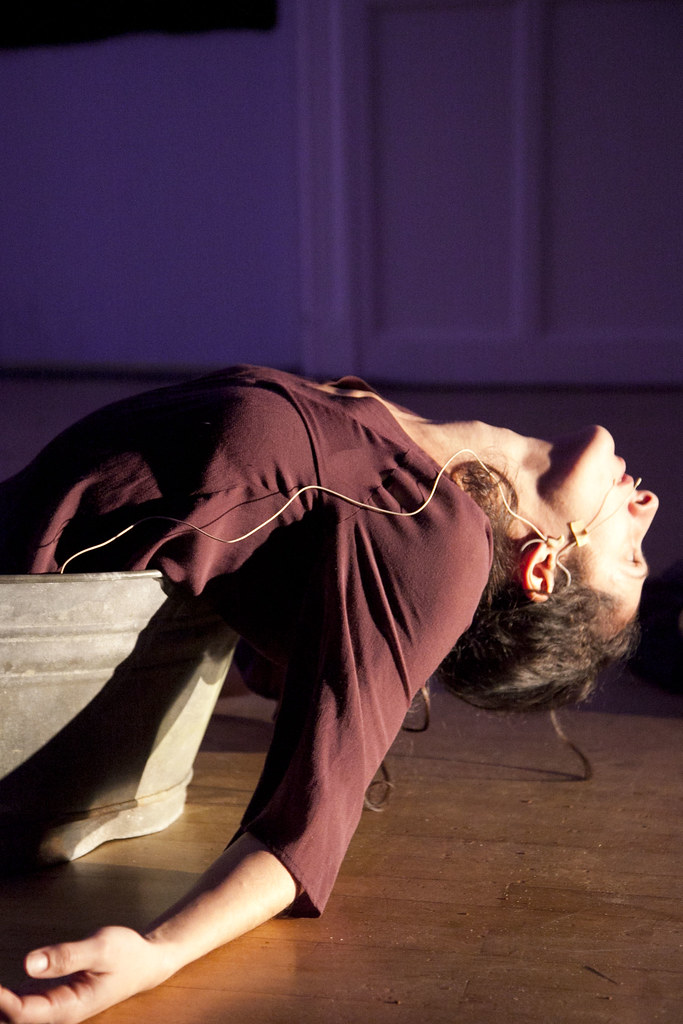
Photo: “Heroine – a female lament” by Yo! Opera is licensed under CC BY-NC-SA 2.0.

Maryann Corbett, ‘Dissonance’

We dress ourselves
from the Goodwill store
since Art has kept us
genteelly poor
and we laugh together
at how we’ve slummed
amid vocalises
and arias hummed
and the mirth for both of us
seemed sincere
so I joked, where others
would overhear,
about our finds
in the plaids and prints

and saw you wince.

*****

Maryann Corbett writes: “Perhaps every poem that seems to portray one small moment is really a goulash of hundreds of moments. That’s certainly true of ‘Dissonance‘. There really was a friend who was a fellow singer, fellow poet, and fellow fan of the bargains to be found in charity shops. And there really was an awkward moment when I misjudged her feelings about artistic penury, a penury I’d escaped in a very un-artistic job. But folded into the writing of the poem were all my student years, years when I was much younger, much poorer, and much more in solidarity with friends still following their dreams.”

Dissonance‘ was first published in Mezzo Cammin, and gave its name to a 2009 chapbook collection published by Scienter Press.

Maryann Corbett earned a doctorate in English from the University of Minnesota in 1981 and expected to be teaching Beowulf and Chaucer and the history of the English language. Instead, she spent almost thirty-five years working for the Office of the Revisor of Statutes of the Minnesota Legislature, helping attorneys to write in plain English and coordinating the creation of finding aids for the law. She returned to writing poetry after thirty years away from the craft in 2005 and is now the author of two chapbooks and five full-length collections. Her work has won the Willis Barnstone Translation Prize and the Richard Wilbur Award, has appeared in many journals on both sides of the Atlantic, and is included in anthologies like Measure for Measure: An Anthology of Poetic Meters and The Best American Poetry. Her sixth book, The O in the Air, is forthcoming from Franciscan University Press.

Photo: “Goodwill outlet store” by sparr0 is licensed under CC BY-SA 2.0.

Susan McLean, ‘The Whetstone Misses the Knife’

I answered your desire to meet
resistance and be honed by friction.
Sharp as you were, you couldn’t beat
the zero-sum of contradiction.

Abrasion was your privilege,
the only stroking I have known.
Now you have lost your cutting edge
and I am just another stone.

*****

Susan McLean writes: “This poem was inspired indirectly by the suicide of a talented poet whom I had seen at conferences, but had never had a conversation with. I heard that she had killed herself on Christmas Eve because of an unhappy love affair. Since I knew nothing about her personal life, this poem is not about her, but her fate made me think about unhappy relationships, particularly those in which both partners have strong but conflicting personalities. I had in mind such stormy creative relationships as those of Sylvia Plath and Ted Hughes, Diego Rivera and Frida Kahlo, Camille Claudel and Auguste Rodin, in which the clashes are initially part of the attraction, yet turn destructive eventually. However, the imaginary relationship depicted in this poem is not based on the specifics of any of those relationships.
Balance and antithesis are the key characteristics of the theme of this poem, so I thought two quatrains with a rhyme scheme of ABAB would give equal weight to the “I” and the “you” of the poem.
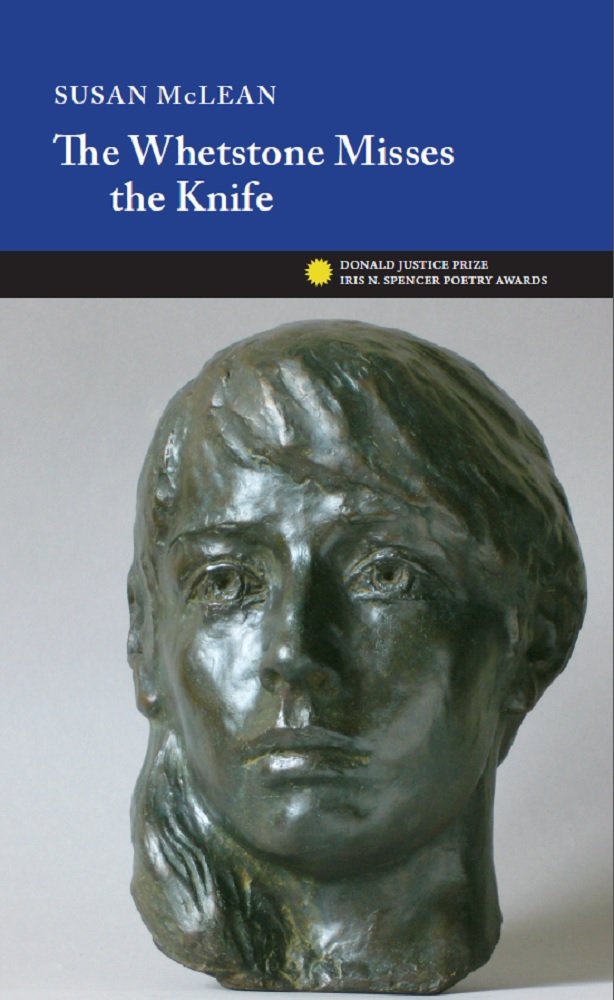
This poem first appeared in Mezzo Cammin, an online journal of female formalist poets, and later was published in my second book, The Whetstone Misses the Knife, which featured a bronze bust of Camille Claudel by Jacques Chauvenet on the cover.”

Susan McLean has two books of poetry, The Best Disguise and The Whetstone Misses the Knife, and one book of translations of Martial, Selected Epigrams. Her poems have appeared in Light, Lighten Up Online, Measure, Able Muse, and elsewhere. She lives in Iowa City, Iowa.
https://www.pw.org/content/susan_mclean

Using form: anapest (anapaest): Susan McLean, ‘Illicit’

I needed to take a vacation from cake
so my diet would be more judicious.
But my plan was cut short by a chocolate fudge torte,
and the relapse was truly delicious.

Next it was cheese (such as triple-cream Bries
and Gruyères) that I vowed to avoid.
But I fell in the snare of a ripe Camembert.
It was bliss. My resolve was destroyed.

When the experts all said “To lose weight, give up bread,”
I thought that was a food I could shun.
I succumbed to the spell of the beckoning smell
of a freshly baked cinnamon bun.

I have found self-denial is not such a trial
and has unforeseen good effects.
True relish is hidden in all things forbidden.
Have I mentioned I’m giving up sex?

*****

Susan McLean writes: “Like many women, from my teens on, I had periods of dieting, followed by periods of eating normally and gradually regaining weight I had lost on the diets. That pattern can cause despair for many, but in my case, it made me notice how delightful a food becomes once it is forbidden. Diets are dull, and demonizing any particular kind of food is silly, so these days I don’t deny myself anything, but just cut back on the portions. Since the poem is about pleasure (and I once heard Dr. Joyce Brothers say that all pleasures are related to one another), I decided to write it in rollicking anapests, with lots of fun internal rhymes and polysyllabic rhymes.
This poem first appeared in Mezzo Cammin, an online journal of female formalist poets,
and later was published in my second book, The Whetstone Misses the Knife.”

Susan McLean has two books of poetry, The Best Disguise and The Whetstone Misses the Knife, and one book of translations of Martial, Selected Epigrams. Her poems have appeared in Light, Lighten Up Online, Measure, Able Muse, and elsewhere. She lives in Iowa City, Iowa.
https://www.pw.org/content/susan_mclean

Photo: “Joann’s cake: Now featuring every delicious thing at once” by ginnerobot is licensed under CC BY-SA 2.0.

Julia Griffin: ‘Arachne’s Double’

We had a lot in common:
Grey eyes to stop and summon;
A taste for shifts and shuttles,
For instigating battles;
An aptitude for order,
A talent to embroider.
We kept ourselves in stitches;
We were each other’s matches.

As deity and woman,
We shared a kind of famine;
Vicarious in action,
Our work confined to fiction,
To woven elegiacs,
We craved our own heroics:
To beat our favourite heroes;
To share their blazing sorrows.

What have we now in common,
Besides not being human?
Only the understanding
Of what is past amending:
That all this endless weaving
Is just suspended living.
That loving is devouring.
That starving is enduring.

*****

Julia Griffin writes: “That appeared in Mezzo Cammin 14.2 (Winter, 2019). I’m pleased with it because I feel the form works with the subject-matter. It was inspired by a dear friend of mine, Candy Schille, who died tragically in November 2017: she was so quick and charismatic, and we had a sort of sparring relationship before we became friends.”

Julia Griffin lives in south-east Georgia/ south-east England. She has published in Light, LUPO, Mezzo Cammin, and some other places, though Poetry and The New Yorker indicate that they would rather publish Marcus Bales than her. Her poem ‘Wasp Waste’ was reprinted in the Potcake Chapbook ‘Robots and Rockets‘, and much more of her poetry can be found in Light, at https://lightpoetrymagazine.com/?s=julia+g&submit=Search

Photo: “Arachne” by J. Star is licensed under CC BY-NC-SA 2.0.