Tag Archives: New Verse Review

Sonnet: Amit Majmudar, “The Only Holy War”

Oh what a glorious war we waged on time,
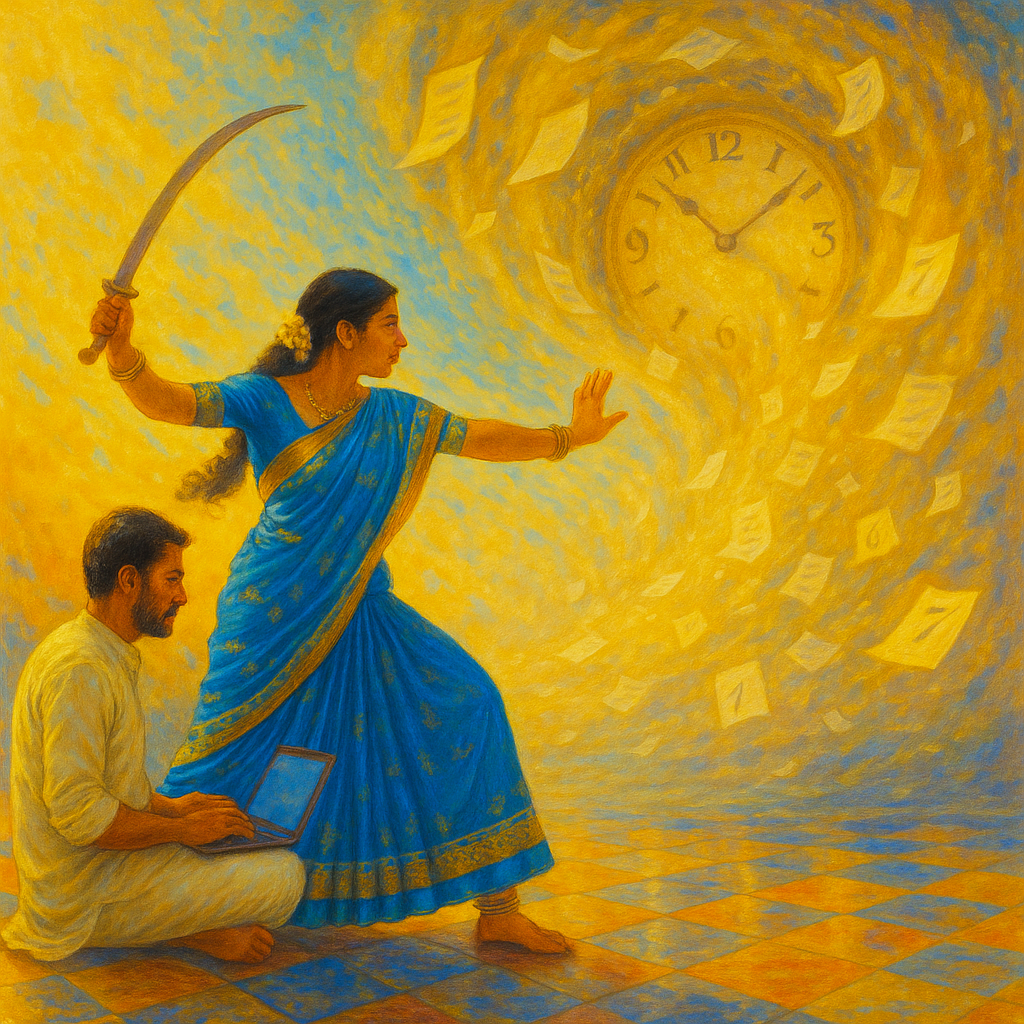
you in your peacock pleats and jasmine braid
and ankle bells portraying a warrior goddess,
me at my laptop redeploying rhyme
like roving arrows on a map of fate.
We fought our Passchendaele, entrenched in bodies,
my dugout deep in yours. We woke up, ate,
went on our morning walks, we made love, played
old board games, ditched our iPhones, stormed the beachhead,
kamikazed straight into the sun
while knowing we would likely never reach it,
while knowing no Great War was ever won,
each night, each decade together one more mission
prolonging this timeline, this lifegiving war of attrition.

*****

Amit Majmudar writes: “My twin sons, so recently in diapers, just submitted their college applications. My beard has now more white hairs than black. How did this happen? At the cellular level, at the level of fast-twitch muscular contractions and verbal elan, time causes depletion, the radioactive decay of the youthfully glowing complexion, the degradation of collagen, the degradation of memory…. Sophocles, Goethe, and Yeats wrote beautifully into their later lives. Shakespeare stopped writing, voluntarily, when he was less than a decade older than my current age. Two things take me out of time: love, and the creative flow state. This poem represents (both in its subject matter, and as an example of my creativity) the intersection of the two. Yet time really doesn’t stop during that interval. I just cease to register it. The aging goes on, unchecked: the piecemeal conquest of the body, follicle by follicle, neuron by neuron; the tick-tock wastage of love’s remaining years together…. It demands a war effort, and total war at that, all one’s resources of spirit and body utilized to fight it: a Crusade to retake one’s youth, the war against time a Manhattan Project, a veritable Mahabharata: “the only holy war.”

‘The Only Holy War’ was originally published in the New Verse Review.

Amit Majmudar’s recent books include Twin A: A Memoir (Slant Books, 2023), The Great Game: Essays on Poetics (Acre Books, 2024), and the hybrid work Three Metamorphoses (Orison Books, 2025). More information about his novels and poetry collections can be found at www.amitmajmudar.com.

Illustration: RHL and ChatGPT

Weekend read: Cherokee myth: “Nursery Rhyme for Lazy Children” by Jennifer Reeser

They live at bottom of the deep
In ocean waters or in fresh.
They feed with greed on human flesh.
They kill the ones who oversleep.

You never will be fully grown.
They shoot with arrows while you dream,
Then drag you down like cod or bream,
But first replace you with a clone.

They leave it sleeping in your tent.
It has your eyes. It has your cheeks.
It wakes up early and it speaks.
The tribe won’t wonder where you went.

It does your chores and may amaze.
Like you, it plays and even thinks
But very soon, your double shrinks
And it will die in seven days.

Your people will not ever know.
You’ll never love. You’ll never marry.
Your twin’s the one that they will bury
For you’ve gone where the fish bones go.

But if you listen you will thrive:
Get out of bed and brush your hair.
The hunter’s coming. Be aware
Lest you be swallowed up, alive.

*****

Jennifer Reeser’s ‘Nursery Rhyme for Lazy Children’ was first published in New Verse Review. She cites the following Cherokee myth, ‘The Water Cannibals‘:

Besides the friendly Nûñnë’hï of the streams and mountains there is a race of cannibal spirits, who stay at the bottom of the deep rivers and live upon human flesh, especially that of little children. They come out just after daybreak and go about unseen from house to house until they find some one still asleep, when they shoot him with their invisible arrows and carry the dead body down under the water to feast upon it. That no one may know what has happened they leave in place of the body a shade or image of the dead man or little child, that wakes up and talks and goes about just as he did, but there is no life in it, and in seven days it withers and dies, and the people bury it and think they are burying their dead friend. It was a long time before the people found out about this, but now they always try to be awake at daylight and wake up the children, telling them “The hunters are among you.”

This is the way they first knew about the water cannibals: There was a man in Tïkwäli’tsï town who became sick and grew worse until the doctors said he could not live, and then his friends went away from the house and left him alone to die, They were not so kind to each other in the old times as they are now, because they were afraid of the witches that came to torment dying people.

He was alone several days, not able to rise from his bed, when one morning an old woman came in at the door. She looked just like the other women of the settlement, but he did not know her. She came over to the bed and said, “You are very sick and your friends seem to have left you. Come with me and I will make you well.” The man was so near death that he could not move, but now her words made him feel stronger at once, and he asked her where she wanted him to go. “We live close by; come with me and I will show you,” said the woman, so he got up from his bed and she led the way down to the water. When she came to the water she stepped in and he followed, and there was a road under the water, and another country there just like that above.

They went on until they came to a settlement with a great many houses, and women going about their work and children playing. They met a party of hunters coming in from a hunt, but instead of deer or bear quarters hanging from their shoulders they carried the bodies of dead men and children, and several of the bodies the man knew for those of his own friends in Tïkwäli’tsï. They came to a house and the woman said “This is where I live,” and took him in and fixed a bed for him and made him comfortable.

By this time he was very hungry, but the woman knew his thoughts and said, “We must get him something to eat. She took one of the bodies that the hunters had just brought in and cut off a slice to roast. The man was terribly frightened, but she read his thoughts again and said, “I see you can not eat our food.” Then she turned away from him and held her hands before her stomach–so–and when she turned around again she had them full of bread and beans such as he used to have at home.

So it was every day, until soon he was well and strong again. Then she told him he might go home now, but he must be sure not to speak to anyone for seven days, and if any of his friends should question him he must make signs as if his throat were sore and keep silent. She went with him along the same trail to the water’s edge, and the water closed over her and he went back alone to Tïkwäli’tsï. When he came there his friends were surprised, because they thought he had wandered off and died in the woods. They asked him where he had been, but he only pointed to his throat and said nothing, so they thought he was not yet well and let him alone until the seven days were past, when he began to talk again and told the whole story.

*****

Jennifer Reeser is the author of seven books of poetry. She is an author with Penguin Random House, London’s “Everyman’s Library” series, and Able Muse. Her poems, translations, essays and critical reviews have appeared internationally in POETRY, The Hudson Review, RATTLE, and elsewhere, with new work forthcoming in Nimrod from the University of Tulsa. She divides her time between her Gulf Coast estate and home on the Cherokee reservation in Indian Country, Oklahoma.

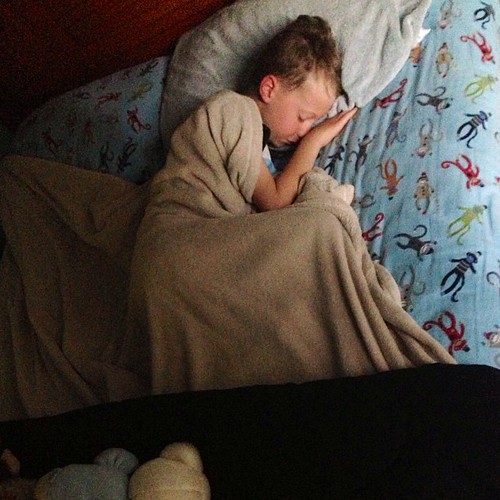
It’s too late to take up ‘sleeping in’ kid, time for school 🙂” by Brent Halstead is licensed under CC BY-NC 2.0.
Weekend read: Aaron Poochigian, ‘Not Atoms’

When, strolling through the Village, I discover

one lonesome shoe, a jeweled but dogless collar,
the crushed rose of a hitman or a lover,
barf like an offering, a half-burnt dollar,
“Scream” masks holding traffic-light-top vigil,
loose lab rats among the morning glories
or Elmo trapped inside a witch’s sigil,

I love the universe because it’s made of stories.

*****

Aaron Poochigian writes: “I live in the East Village, which is party central, especially on the weekends. The images in this poem are mostly random stuff I saw the mornings after. I didn’t include the people passed out on the sidewalk (just check to make sure they’re still breathing). The structure (one-line beginning, six-line list, one-line ending) came to me from a beautiful Tang-dynasty poem, ‘Visiting the Taoist Priest Chang’, by Liu Changqing.”

Aaron Poochigian’s ‘Not Atoms’ was originally published in New Verse Review. For reference, here is Liu Changqing’s poem in Aaron Poochigian’s translation:

Under the faint trail’s guidance I discover

a footprint in the phosphorescent moss,
a tranquil lake where low clouds love to hover,
a lonesome door relieved by rampant grass,
a pine grown greener since the thundershowers,
a cold springs fed by mountains far away.

Mingling with these truths among the flowers,
I have forgotten what I came to say.


Aaron Poochigian earned a PhD in Classics from the University of Minnesota and an MFA in Poetry from Columbia University. His latest poetry collection, American Divine, the winner of the Richard Wilbur Award, came out in 2021. He has published numerous translations with Penguin Classics and W.W. Norton. His work has appeared in such publications as Best American Poetry, The Paris Review and Poetry.
aaronpoochigian.com
americandivine.net

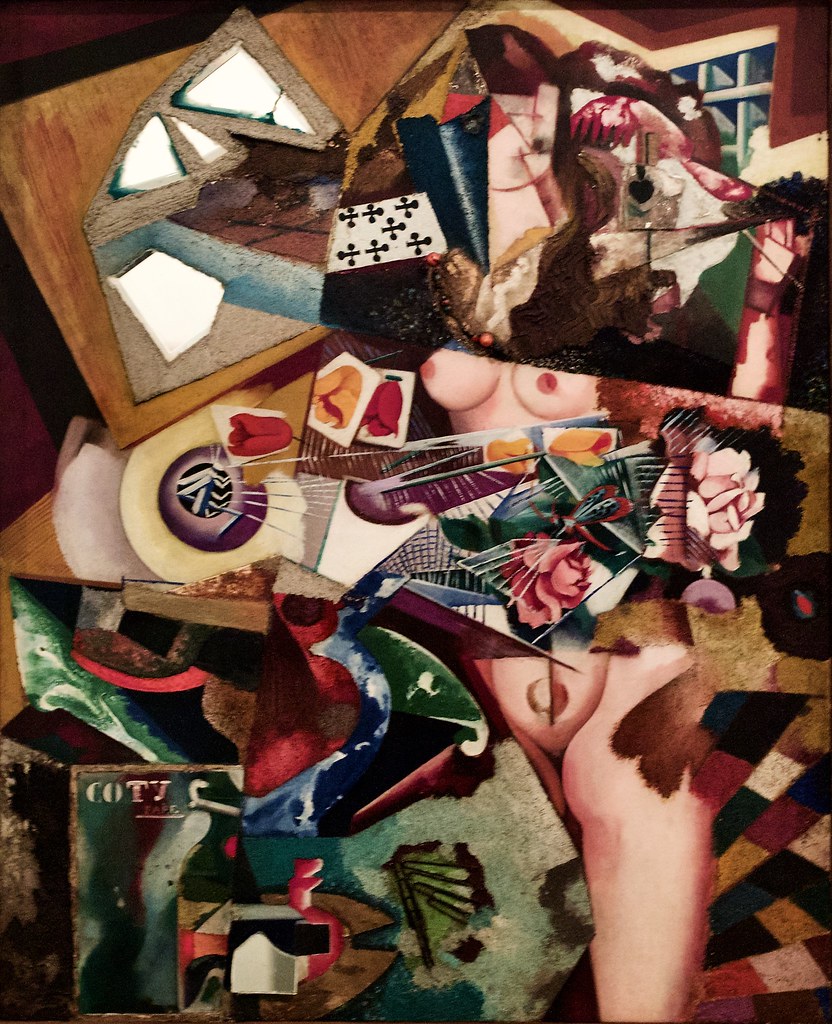
Photo: “Untitled [Coty] (c.1917) – Amadeu de Souza-Cardoso (1897-1918)” by pedrosimoes7 is licensed under CC BY 2.0.

Quatrains: Susan McLean, ‘Pain Management’

The management has gauged how much you’ll take
before you buckle or walk out. They care
about your health—at least until you break,
use up your sick leave, or require repair.

The management endorses your retiring
early. They will help you out the door,
so that they can economize by hiring
fresh blood for half of what they paid before.

The management can’t monetize your gain
in knowledge or experience. They doubt
that anything you’d do if you remain
could beat their savings if you’re shunted out.

They needn’t lay you off, just raise your stress
through higher workloads and adverse conditions,
until exhaustion, strain, and hopelessness
force you to leave, fulfilling their ambitions.

*****

Susan McLean writes: “In my lifetime, I’ve worked in private businesses, government agencies, and academia; most of them abused or exploited workers at some level, which is not surprising when power relations are one-sided. However, I was most shocked by what happened when the business model was applied to education. Education suffers when students are treated as products to be turned out as cheaply as possible, and when teachers are treated as easily replaceable cogs in a machine. But the mistreatment of workers to increase profitability is widespread across many forms of employment, so I did not want to limit the poem’s relevance to the academic world.

“Over the thirty years that I taught at a state university, states reduced the amount they paid for public higher education, shifting the economic burden more and more to the students, and creating budget crises for the universities. In response, university administrators reduced their hiring of professors, often increasing class sizes dramatically, shifting teaching of many classes to ridiculously underpaid grad students or adjunct instructors with no job security, and shutting down departments in order to lay off tenured professors. Students were paying more and getting less; professors were overworked and fearful of losing their jobs at ages at which no one else would be likely to hire them; recent PhDs were unable to find teaching jobs with a livable wage or any prospect of long-term employment. Meanwhile, administrative jobs were burgeoning, adding more deans and assistant deans to bolster the status and shoulder the duties of those in charge.

“The stress and overwork that many professors experienced under the business model of higher education took a physical toll on many, with some disciplines suffering more than others. Those who had to spend endless hours at computers or grading papers tended to develop back pain and a host of other ailments common to sedentary jobs. When administrators offered incentives for them to accept early retirement, so that the university could save money by replacing them with lower-paid workers, many retired. I was one of them.

“This poem got its start when I noticed that “pain management” (usually associated with using analgesics or other methods to reduce pain) could also mean “management by means of pain.” It was published in New Verse Review.”

Susan McLean has two books of poetry, The Best Disguise and The Whetstone Misses the Knife, and one book of translations of Martial, Selected Epigrams. Her poems have appeared in Light, Lighten Up Online, Measure, Able Muse, and elsewhere. She lives in Iowa City, Iowa.
https://www.pw.org/content/susan_mclean

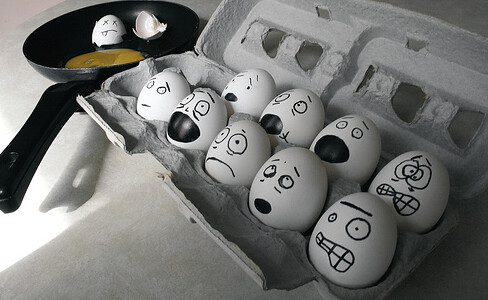
Photo: “Stress” by topgold is licensed under CC BY 2.0.

Sonnet variation: Juleigh Howard-Hobson, ‘Sylvan Episode’

He looked at me as if I ought to know
just who he was
but I did not. I looked away, then so
did he. Alas
I didn’t recognize the Great God Pan
in human form.
I simply thought he was another man.
I felt a warm
gaze inviting me once more. I turned to
see him changed. A
God again, hooves and furry legs, horns grew.
He gestured “Hey?”
I was too dumbstruck to do more than stare.
He shook his curls and sprinted off somewhere.

*****

Juleigh Howard-Hobson writes: “I wrote this when I lived off-grid on ten acres up in rural Washington State.The forest that made up half my property was dark and creepy. The Great God Pan was no more out of place than BigFoot or werewolves. All of which I imagined I saw/heard from time to time (I use italics as I am not absolutely convinced it was all imagination). Nothing out there ever hurt me, so all’s well that ends well–I’ve since moved back to civilization, which is far more frightening in many ways. As for the form–well, that just was how the poem decided to be.”

Juleigh Howard-Hobson’s work can be found in Think Journal, Able Muse, New Verse Review (including this poem), The Deadlands, Autumn Sky Poetry and other venues. She has been nominated for “The Best of the Net”, Pushcart, Elgin & Rhysling Awards. Her latest book is Curses, Black Spells & Hexes (Alien Buddha). A member of the HWA and the SFPA, she lives on the coast of the Pacific Northwest. In a poetically haunted house. 
X: poetforest

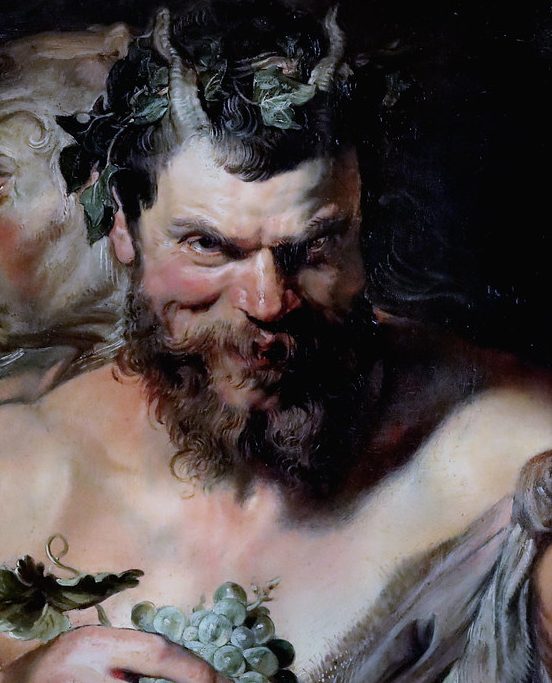
Photo detail “IMG_4017RBA Peter Paul Rubens 1577-1640 Anvers Deux Satyrs Two Satyrs ca 1619 Munich Alte Pinakothek” by jean louis mazieres is licensed under CC BY-NC-SA 2.0.

Weekend read: Semi-formal: Darlene Young, ‘Sisters’

for Marilyn

Litter mates. Glitter mates. Mirror
of what you hate, what you adore
about yourself. Sleep together on the floor.
Giggles and snorts, kicks, forts
of chairs and furry blankets. Fury. Tangle.
Tussle and brush. Braid and wrangle, pulling hair;
it’s just not fair. One of you is picked.
Not it! On your mark, get set and go! Kicked
gameboards; slam and pout. Crossing the street
when the mean dog is out. I dare you.
A secret meeting place under the willows
against the fence. Sheets and pillows.
Toothbrushes, blood, things buried in mud.
All-ee, All-ee in free! Quit looking at me.
Canned peaches, cold beaches. You
and not-you;
anyone but you.

So sick of that piano song! Scented
markers. Shotgun! Wishing she was anyone.
Wanting to be anyone. Else. Lure the cat
to your lap from hers, pointing out
how loud he purrs. Making cookies.
Making up. Stealing make-up. Just shut up.
Together, bang the pots on New Year’s.
Pretend that you don’t hear her tears. Her
bad boyfriend that you hate. And yours.
Get home late. Will you, won’t you? Tattle-tell.
Pounding on the bathroom door, shirt that’s wadded
on the floor. You,
not you.

Share a mattress in the tent,
trees and stars and what you meant.
The thrilling doorbell. That weird noise
she makes in her throat. You both finish
the movie quote. Belting songs in underwear,
saying that you love her hair. Midnight soda run,
car windows down—U2 blasting to the edge of town.
Knowing look, shared favorite book,
all the things
you’ll always keep.
Someday, you’ll rock her child to sleep.

*****

‘Sisters’ was published in New Verse Review, and nominated for a Pushcart Prize. Darlene Young writes: “I’ve been blessed with two radiant, hilarious, gifted sisters. The one closest to my age has been battling cancer this year, something that took our mother when we were in our early twenties. I wrote this poem in honor of her, her courage, and all she has meant in my life.”

Darlene Young is the author of three poetry collections (most recently, Count Me In from Signature Press, 2024). She teaches writing at Brigham Young University and has served as poetry editor for Dialogue and Segullah journals. Her work has been noted in Best American Essays and nominated for Pushcart Prizes. She lives in South Jordan, Utah. Find more about her at darlene-young.com and @darlylar.

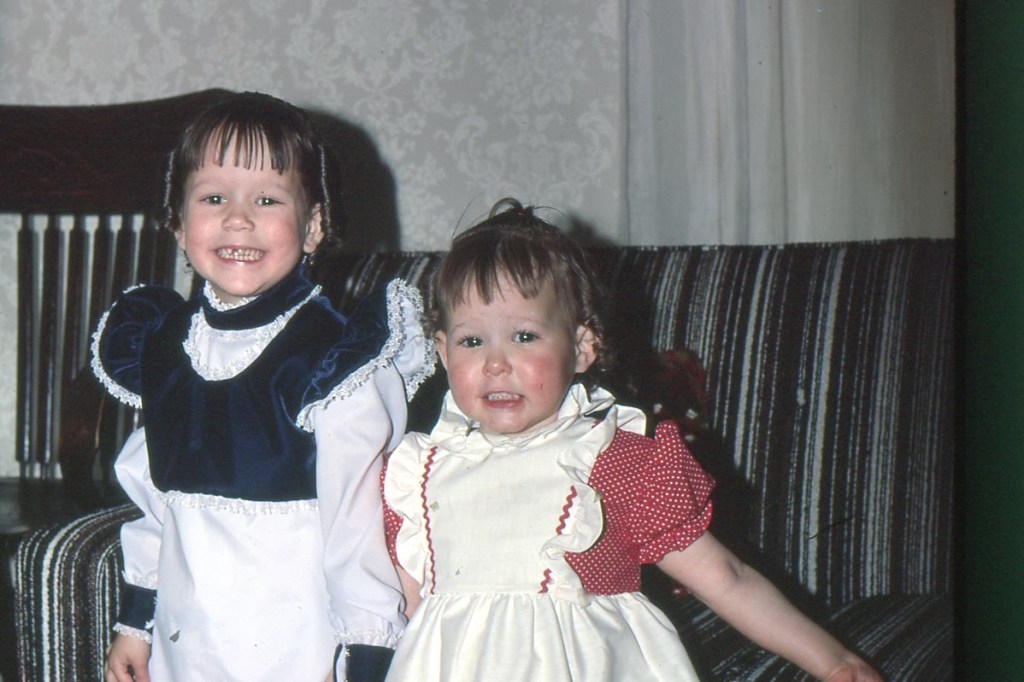
Photo: Darlene Young and her sister.