Tag Archives: political poem

Odd poem: Xi Jinping, ‘In Memory of Jiao Yulu’

Ten thousand miles away your soul has flown;
the rivers, mountains and land yearn for your return.
The people mourn the loss of a caring official,
tears flooding under the empress trees you planted.
Having dedicated your life to the desert,
to the betterment of people’s lives, your legacy lives on
no matter how many years come and go.

The moon shining bright as always,
I think of you and your life’s work.
You toiled long and hard, claiming no credit.
Serving and benefiting the people:
such was your ambition and is also mine.
Many a trickle will add a touch of green to the desert
and create a wellspring of hope.”

*****

Xi Jinping, born in 1953, has been the general secretary of the Chinese Communist Party and chairman of the Central Military Commission, and thus the paramount leader of China, since 2012. Since 2013, Xi has also served as the president of China.

Jiao Yulu was a Chinese politician, highly respected for his hard work even as he was dying of liver cancer in his early 40s.

From the Chinese Embassy in the US:
Xi Jinping has always held Jiao Yulu in high esteem and regarded him as a role model. At the time of writing this poem, Xi was the Party Secretary of Fuzhou. One night in July 1990, he read an article entitled “People Yearn for the Return of Jiao Yulu.” The poem was inspired as literary thoughts surrounding the deceased upright man welled up in Xi’s heart. When he inspected Lankao in 2014, Xi recalled emotionally how he learned from the example of Jiao Yulu more than 40 years ago. “On February 7, 1966, the People’s Daily carried a long article by Comrade Mu Qing and others entitled ‘Jiao Yulu: A Model County Party Secretary.’ Back then, I was a grade one student in junior high school. The teacher of political education choked with sobs while reading the article to us. I was deeply moved when I heard Comrade Jiao Yulu kept on working even in the late stage of liver cancer, pressing a stick against his liver to relieve the pain. The pressure from the stick wore a hole into the right side of his rattan chair over time.”

Jiao Yulu is no stranger to the Chinese people. After being appointed Party Secretary of Lankao County, he mobilized the local residents in a great struggle to tackle water-logging, sandstorm, and alkaline soil. Leading by example, he was always at the frontline at the height of sandstorms and in torrential rainfalls to identify the wind corridor, forecast quicksand and gauge flood waters. Amid blinding blizzards, he visited poor families to deliver food and financial relief to their homes. He was devoted entirely to all the people of his county but himself. Despite severe illness, he carried on work till the last moment of his life, and is revered as the “model county Party secretary.”
Odd, political poem: Emperor Qianlong, ‘My Feelings After the Ambassador of the Red-Haired English King, Macartney, Came to Pay Tribute and Give Offerings to Me’

Formerly Portugal presented tribute, now England is paying homage.
They have traveled further than Shu Hai and Heng-zhang;
My ancestors’ virtue must have reached their distant lands.
Though their tribute is nothing special, my heart approves sincerely.
Curios and their ingenious devices I do not prize.
Though what they bring is meager,
in my kindness to men from far away I make generous recompense –
Wanting to preserve my good health and power.”

*****

Original Poem:

《红毛英吉利国王差使臣马嘎尔尼奉表贡至,诗以志事》

  博都雅昔修职贡,英吉利今效荩诚。

  竖亥1横章输近步,祖功宗德逮远瀛。

  视如常却心嘉焉,不贵异听物翊2精。

  怀远薄来而厚往,衷深保泰以持盈。

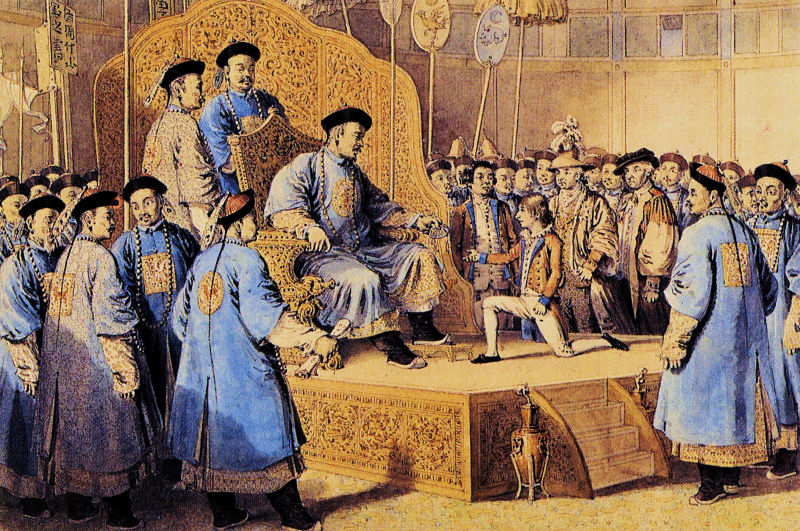
This poem was written by the Qianlong Emperor (25 September 1711 – 7 February 1799; also known by his temple name Emperor Gaozong of Qing, personal name Hongli) after his meeting with the British ambassador Lord Macartney at the Emperor’s grand tent in his Summer resort at Jehol (Chengde) on September 14th, 1793. The embassy was then sent back to Beijing, the Emperor followed and saw the previously prepared British gifts on September 30th. The gifts and embassy did not impress and so they were ordered home on the following day. The whole two-year expedition is detailed here.

Lord Macartney was not impressed either, and wrote: “The Empire of China is an old, crazy, first rate man-of-war, which a fortunate succession of able and vigilant officers have contrived to keep afloat for these 150 years past, and to overawe their neighbors merely by its bulk and appearance, but whenever an insufficient man happens to have the command upon deck, adieu to the discipline and safety of the ship. She may perhaps not sink outright; she may drift some time as a wreck, and will then be dashed to pieces on the shore; but she can never be rebuilt on the old bottom.”

Illustration: William Alexander’s drawing of the reception of the Macartney embassy to China. Young Thomas Staunton (kneeling not kowtowing) receives a gift from the Emperor. Image by William Alexander available under a Creative Commons License

Odd, political, semi-formal verse: Aung San Suu Kyi, ‘In The Quiet Land’

In the Quiet Land, no one can tell
if there’s someone who’s listening
for secrets they can sell.
The informers are paid in the blood of the land
and no one dares speak what the tyrants won’t stand.
In the quiet land of Burma,
no one laughs and no one thinks out loud.
In the quiet land of Burma,
you can hear it in the silence of the crowd

In the Quiet Land, no one can say
when the soldiers are coming
to carry them away.
The Chinese want a road; the French want the oil;
the Thais take the timber; and SLORC takes the spoils…

In the Quiet Land….
In the Quiet Land, no one can hear
what is silenced by murder
and covered up with fear.
But, despite what is forced, freedom’s a sound
that liars can’t fake and no shouting can drown.

Free bird toward to a free Burma

My home…
where I was born and raised
used to be warm and lovely
now filled with darkness and horror.

My family…
whom I had grown with
used to be cheerful and lively
now living with fear and terror.

My friends…
whom I shared my life with
used to be pure and merry
now living with wounded heart.

A free bird…
which is just freed
used to be caged
now flying with an olive branch
for the place it loves.

A free bird toward a Free Burma.

Why do I have to fight???

They killed my father a year ago,
And they burnt my hut after that
I asked the city men “why me?” they ignored
“I don’t know, mind your business,” the men said.
One day from elementary school I came home,
Saw my sister was lifeless, lying in blood.
I looked around to ask what happened, if somebody’d known,
Found no one but living room as a flood.
Running away by myself on the village road,
Not knowing where to go but heading for my teacher
Realizing she’s the only one who could help to clear my throat,
But this time she gave up, telling me strange things in fear.
Why, teacher, why.. why.. why?
I have no dad nor a sister left.
To teach me and to care for me you said, was that a lie?
This time with tearful eyes she, again, said…
“Be a grown one, young man,
Can’t you see we all are dying?
And stop this with your might as soon as you can,
For we all are suffering.”

*****

Aung San Suu Kyi is the daughter of Aung San, who negotiated Burma’s independence from the UK in 1947 (but was assassinated the same year). Aung San Suu Kyi was the leader of the National League for Democracy when it won 81% of parliamentary seats in the 1990 General Election, causing the ruling military junta to nullify the elections and put her under house arrest for most of the next 21 years.

She was awarded the Nobel Peace Prize in 1991; but claims she chose non-violence as an expedient political tactic, stating in 2007, “I do not hold to nonviolence for moral reasons, but for political and practical reasons.” Several of her international honours have been withdrawn in response to her perceived failings regarding ethnic minorities in Myanmar; she remains politically active and under attack in the courts.

I don’t know enough about her and her situation to have an opinion about her, other than “it’s complicated”.

Sonnet: Maryann Corbett, ‘Saturday Edition’

Page one, above the fold: the world in flames.
A luxury hotel gapes like a sore.
In mammoth type, the headlines yell the names
of prophets stoking hells of holy war.

In Business, meanwhile, there is calm discussion
of sales rates for the sexy underclothes
pitched by Victoria’s Secret, and a fashion
for surgical revision of the nose.

It isn’t news to those who sell the paper:
their readers can take only so much hell.
They proffer me the surgeon and the draper
as pastures where my bovine brain may dwell,

ignoring, while it chews on this confection,
the screams of children from the other section.

*****

Maryann Corbett writes: “My records tell me that ‘Saturday Edition’ is one of my very earliest sonnets and very earliest acceptances, appearing in The Barefoot Muse in 2007 and included in Mary Meriam’s Irresistible Sonnets in 2014. It was among the poems that gave me the lightbulb realization that I tend to write sonnets when I’m angry.”

Maryann Corbett earned a doctorate in English from the University of Minnesota in 1981 and expected to be teaching Beowulf and Chaucer and the history of the English language. Instead, she spent almost thirty-five years working for the Office of the Revisor of Statutes of the Minnesota Legislature, helping attorneys to write in plain English and coordinating the creation of finding aids for the law. She returned to writing poetry after thirty years away from the craft in 2005 and is now the author of two chapbooks and six full-length collections, most recently The O in the Air (Franciscan U. Press, 2023). Her work has won the Willis Barnstone Translation Prize and the Richard Wilbur Award, has appeared in many journals on both sides of the Atlantic, and is included in anthologies like Measure for Measure: An Anthology of Poetic Meters and The Best American Poetry.

Photo: “UN School in Gaza Attacked” by United Nations Photo is licensed under CC BY-NC-ND 2.0.

Political poem: Janet Kenny, ‘Broken’

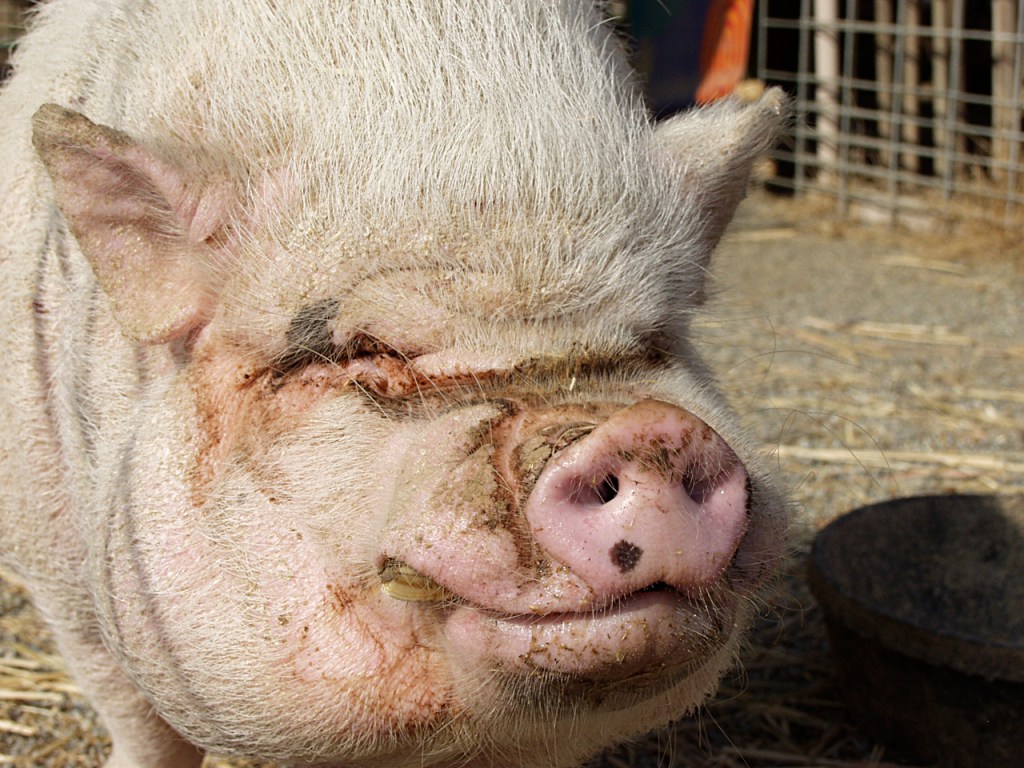
The pig smashed the music
and turned off the sun.
As the pig couldn’t use it
nor should anyone.

O remember the time when the violins played
and the meadows were blooming and we, unafraid
dared to splash in the river and lie in the grass.
But they’re mowing the field now and scattering glass.

The mother in China,
the daughter in Spain,
must learn to design a
new habit again.

The athletes are anxious, the singers are dumb,
the children are fractious and calling for Mum.
Now Dad is in futures and selling his shares
and his foreign computers are yesterday’s wares.

Who let the pig loose
in the garden? and why
have we cooked our own goose?
I await a reply.

*****

This poem was originally published on Facebook. Concerning the trigger for creating it, Janet Kenny writes: “The only event was the world economy being interfered with by the folly of one awful man. One ignorant bully can dismantle the world.”

Janet Kenny left New Zealand to pursue a career as an operatic and concert singer in London, then settled in Sydney, Australia, where she worked in the anti-nuclear movement and jointly compiled, wrote and edited a book about the nuclear industry, Beyond Chernobyl, published by Envirobook in 1993.

Her poems have been published in printed and online journals, including AvatarThe ChimaeraFolly14 by 14Iambs & TrocheesThe Literary ReviewMi PoesiasThe GuardianThe SpectatorThe New FormalistThe Barefoot MuseThe Raintown ReviewThe Shit Creek ReviewSnakeskinLavender ReviewSoundz ineVictorian Violet PressThe Susquehanna Quarterly and Umbrella. Her work is in the collections The Book of Hope and Filled With Breath: 30 sonnets by 30 poets and in the Outer Space anthology, Cambridge University Press. She shared an anthology of bird poems, Passing Through, with Jerry H. Jenkins. She has received three Pushcart nominations.

Her latest book, Whistling in the Dark (2016, Kelsay Books) can be ordered from https://www.amazon.com/Whistling-Dark-Janet-Kenny/dp/1945752092. Her previous book, This Way to the Exit (White Violet Press), can be ordered from http://www.amazon.com/This-Way-Exit-Janet-Kenny/dp/0615615937. You can read several poems from her books at https://janetkenny.netpublish.net/

Photo: “Pig-hog” by Kusukhtak is licensed under CC BY 3.0.

Political poem: George Simmers, ‘Navalny’

In memory of Alexei Navalny, killed at the IK-3 penal colony,
16 February, 2024.

1.
Rough and chivvying cold winds blow
The helpless dead leaves to and fro.
Leaves have no say in where they go
But we’re alive so can say no –
Let us praise those men who show
Resistance to the easy flow.

2.
Navalny, prisoner in the snow,
In numbing twenty-eight below,
Has paid the price for saying no;
He’s gone the way we feared he’d go.

That’s Putin, making sure all know
That retribution comes in tow
For those who won’t go with the flow.
‘All dissidents will finish so,’
The message is: ‘Go with the flow,
Or you too could end on Death Row.’

I imagine his warders: Did they know
A twinge of guilt at this, or show
Regret or shame? I doubt it. No –
Why should men let a conscience grow
When they can just go with the flow?
When life is so much easier so,
When every television show,
The papers and the radio
All radiate a conformist glow
Incessantly, so all men know
Life’s comfier with the status quo.
It’s only awkward sods say no,
Go their own way, not with the flow.
Those have a dangerous row to hoe,
And who can blame the average Joe
For on the whole deciding: ‘No,
That’s not for me. I’d rather toe
The line, collect my wages, know
I’m safe and needn’t undergo
What brave men have to suffer. No,
Go with the flow, go with the flow.’

3.
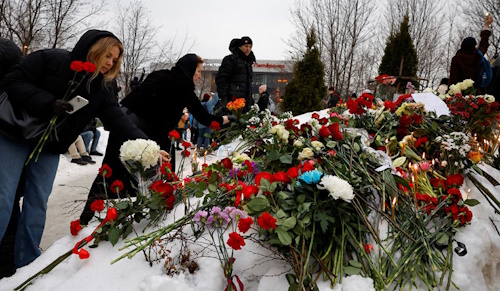
In Moscow brave girls risk a blow
By laying flowers in the snow
To honour him for saying ‘No’.
Brave girls. I admire them so.

*****

George Simmers writes: “This poem began because our local Arts Festival announced its theme as ‘Flow’. Which made me grumble a bit: was I supposed to write stuff about how nice it was that rivers flowed? Not my style. But then I thought about people who go against the flow by saying ‘No!’ and that suggested a subject and a rhyme scheme. It was only after I’d scribbled a few possible lines that I came across a photo of young women in Moscow placing flowers in the snow as tributes to the murdered Russian dissident, Alexei Navalny. In some towns, such protestors had been arrested or beaten up by the police.

“It’s thirty-odd years since I visited Russia. That was at the time of perestroika and hopefulness. We had a contact in Moscow who took us to see the sights, including the Arbat, a popular meeting- place. He said: ‘Can we stop and talk here for a few minutes? I ask because a few years ago If I had been seen here in conversation with a foreigner, I should have been arrested.’ Freedom was precious then, but repression returned.

“Navalny was a lawyer who campaigned against the corruption endemic in Russian political life. In 2020 he was poisoned with Novichok (probably by the Federal Security Service) ; after hospital treatment in Berlin that saved his life, he returned to Russia, even though he knew of the dangers. He was immediately arrested, and ended up in an Arctic Circle corrective colony. The exact circumstances of his death still remain unclear, but while in prison he had suffered from malnourishment and mistreatment.

“Writing this poem I remember Auden’s words: ‘Poetry makes nothing happen.’ Auden pointed out that political poems make the writer feel better, but have no positive effect in the real world. He was right, as usual, which is why I mostly avoid writing poems about politics. But I don’t really see this as a poem about Navalny. I could have chosen to write about Alan Bates and his twenty-five year battle for justice for postmasters, or about Kathleen Stock and others, who opposed the dangerous ideology of the Tavistock clinic. Going against the flow matters everywhere, not just Russia. The form is monorhyme, mostly because that’s how the poem started, and it wasn’t too difficult to keep going. Monorhyme is easier than it looks, so long as you choose the right rhyme word to start with. Don’t try it with ‘month’ or ‘silver’.

“Nalvalny’s death made a news splash in February, but since then more recent horrors have displaced it on the news pages. So maybe this poem will do a little good as a reminder of a brave man. Thank you for re-blogging it.”

The poem will be part of the film ‘Wordflow’ (a film by John Coombes with a soundtrack of stories and poems by Holmfirth Writers’ Group in a continuous showing from 10am-4pm), presented at the Holmfirth Arts Festival in Yorkshire on Sunday, June 16th, upstairs at the ‘Nowhere’ bistro, Norridge Bottom, Holmfirth, HD9 7BB.

George Simmers used to be a teacher; now he spends much of his time researching literature written during and after the First World War. He has edited Snakeskin since 1995. It is probably the oldest-established poetry zine on the Internet. His work appears in several Potcake Chapbooks, and his recent diverse collection is ‘Old and Bookish’.

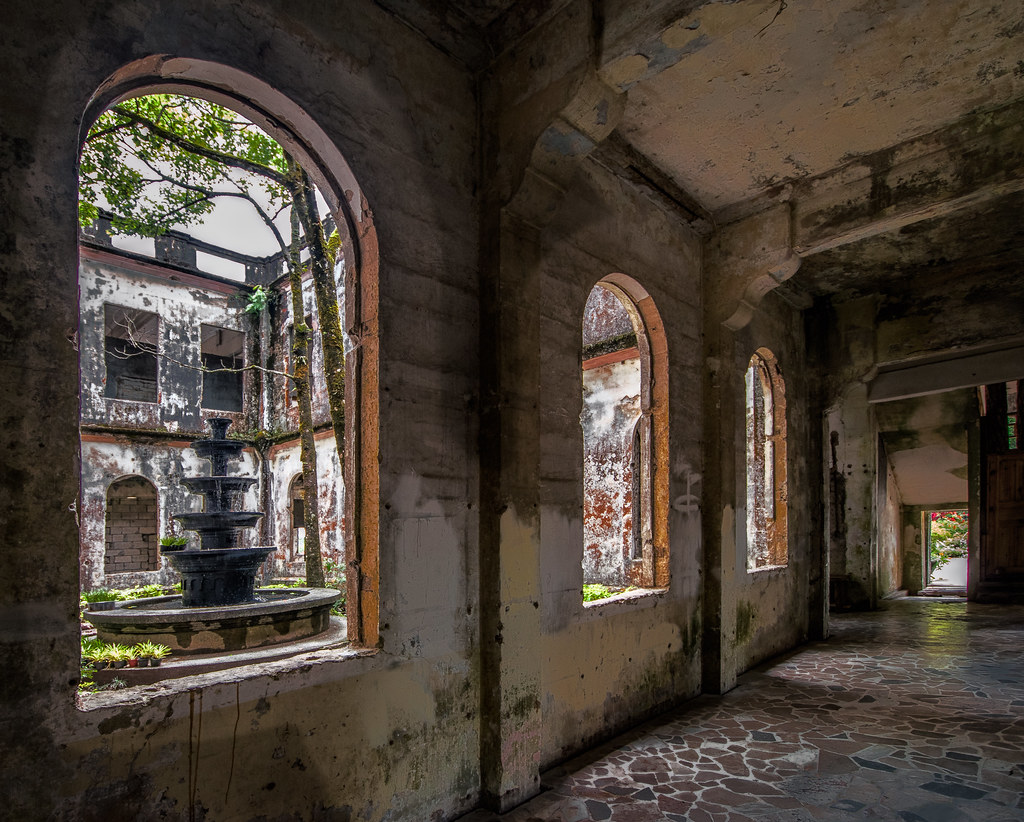
‘Sonnet Found in a Deserted Madhouse (fantasy of an alternative future)’

The winds of winter wind through empty halls,
scraps of abandoned paper blow like leaves
to settle in odd corners of old walls.
Once a community lived here, but no one grieves:
the place was nothing but a wasteful home
for the sick, sad, psychotic and insane
who, locked in rooms or left alone to roam,
babbled their lives away, inept, inane.
All funding for the loonies has dried up;
guards, nurses, admin, tea ladies: dismissed.
And all because Brussels came out on top
and closed this home of British mental mist.
Now Big Ben chimes, tolling a final knell.
Farewell, old Houses; Westminster, farewell.

*****

As an Anglo-Dane raised in a third country, I’m naturally in favour of a borderless world. I loathe Brexit and the lies, greed and social inequities that allowed it to happen. Brexit and Trump were the two big foreign policy successes of Putin, stoking lies and fear and division. Sorry, rant over.

This Shakespearean sonnet was just published in the biannual poetry magazine Allegro, edited by Sally Long.

Abandoned Dominican Building #2” by FotoGrazio is licensed under CC BY-NC-ND 2.0.